|
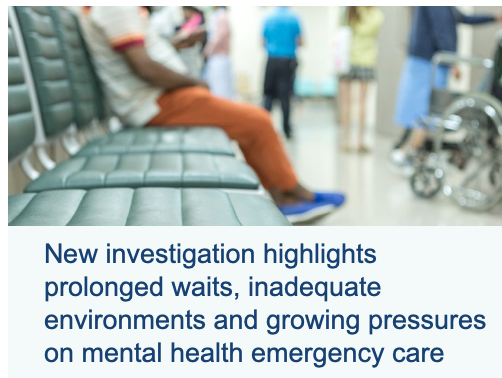
They sat, on plastic chairs, in outpatients, some looking up, searching the blue sky above the atrium…
... maybe, for hope, waiting for their lives to be changed, hopes dashed, dreams to come true, relief…
… thirty or so, of the rainbow-millions the NHS treats every week, but…
… there is one patient who will never sit there. One patient the NHS will never meet… never treat.
The average patient…
… despite an extraordinary amount of healthcare organised around them.
- Pathways,
- protocols,
- guidelines,
- waiting-time standards,
- appointment lengths,
- productivity measures and
- models of care…
… all of which assume a degree of sameness.
If you have this condition… go here, undergo these tests, go there. See these people… emerge there. It makes sense.
The NHS hates variation, it is the enemy of quality. Hence;
- Guidelines.
- Protocols.
- Checklists.
- Pathways.
- Best practice.
- Getting It Right First Time.
Standardise. Normalise. Good... but... healthcare has a problem.
Patients are different. The same disease presents differently. People have different histories, different families, different tolerances of pain and different attitudes to risk.
Some live alone. Some have families wrapped around them. Some understand immediately…
… others need things explained three times. Some want every possible treatment. Others don't.
Then there’s another complication… the people treating them are also, different.
Doctors, nurses, therapists, pharmacists, porters and carers bring experience, personality, judgement, intuition and inevitably variation.
Which brings us to the most important point.
The interface between the patient and the practitioner is the most important part of healthcare… and also the most unpredictable and potentially unreliable.
Everything may depend upon it…
-
Did the clinician ask the right question?
-
Did the patient understand it?
-
Did they feel able to answer honestly?
-
Did the professional notice the hesitation?
-
Was something important left unsaid?
-
Was there enough time?
-
Was there trust?
A pathway can specify that a consultation takes place. It cannot specify what happens inside it.
Hospitals, are professional bureaucracies…
… they aren't factories where managers can specify every movement of every worker.
They depend upon trained professionals applying knowledge and judgement to circumstances that can never be completely predicted.
-
You can standardise their training.
-
You can standardise equipment.
-
You can standardise the evidence.
-
You should certainly standardise things where variation causes harm, but…
… eventually standardisation runs out.
It reaches what I think of as the most important measurement in healthcare…
... the last three feet… as near as a touch or as far as a distant mountain.
The distance between the practitioner and the patient.
Across those three feet, something happens… healthcare becomes human…
A conversation.
A question.
A hesitation.
A clinician noticing something that doesn't quite fit.
A patient saying…
‘… actually, there's something else…'
Suddenly the standard patient isn't standard anymore. Averages have no meaning. This matters enormously as the NHS pursues the Holy Grail of productivity.
The temptation is to borrow from manufacturing. If industrial production became cheaper, faster and more reliable through standardisation, perhaps healthcare can do the same.
Up to a point.
Standardise the repeatable. Automate the routine. Remove pointless duplication. Use AI where machines can do things faster and more reliably. Make administration boringly dependable, but…
… don't confuse unwarranted variation with human variation.
The first should be eliminated.
The second has to be understood.
This is the paradox at the heart of healthcare… the last three feet… where it goes horribly wrong… or, perfectly right.
The closer we get to the patient, the harder healthcare becomes to standardise… and the more important it becomes.
Two people with apparently identical diagnoses may need different conversations, different support and sometimes different decisions.
The great management challenge for the NHS isn't eliminating variation... it's knowing which variation to eliminate and which variation to protect.
Standardise the science.
Standardise safety.
Standardise the things we know work.
Then give professionals the time and space… the authority and trust... to deal with everything that isn't standard...
... and that means almost everyone.
There's an irony. AI, genomics, diagnostics and personalised medicine are increasingly telling us there is no average patient. At precisely the same time, much of healthcare management is trying harder to create one.
The postcode lottery is unacceptable. Poor practice masquerading as professional discretion is unacceptable. Variation created by badly designed systems is unacceptable, but…
… variation because people are different?
That's not a defect in healthcare but it is why we need the care, in healthcare.
NHS managers should do the easy-job; make everything standard that safely can be. Then support the professions to concentrate on the difficult bit; the last three feet.
The unpredictable, sometimes unreliable, utterly human encounter where healthcare actually happens.
The last three feet.
|