Support of the Monday Morning Update | | For 2026 please consider a donation to help support delivery of the Monday Morning Update to your email every week by 5:30 am. Our distribution of this update is over 11,000 and growing. Your consideration is greatly appreciated. Thank you! | | |
June 2026 Featured Member Highlight
Human Response Network
| |
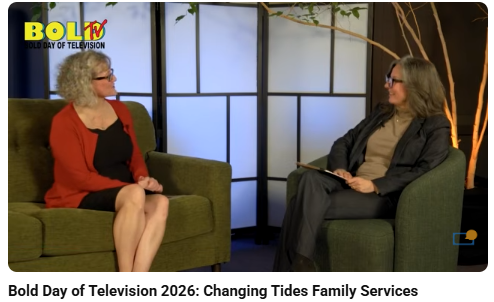
Human Response Network is a private, community-based, nonprofit organization that serves Trinity County in Northern California with a wide array of social and educational services.
Established in 1980 by women determined to provide needed resources to families in Trinity County, HRN is dedicated to protecting each person's right to live in safety with dignity. The agency grew out of a grassroots movement to provide support to women and children who were victims of domestic violence, abuse, or sexual assault. Since then, HRN has expanded its role in the community to include a variety of services for children, individuals, and families of all types and sizes.
Get to know them and the full scope of their work and how they are supporting the needs of family child care providers and families in Trinity county.
| |
The Thriving Families CA (TFC) Foundation is dedicated to strengthening families via connections to child care and other essential services that are critical to breaking the cycle of poverty and achieving economic self-sufficiency. Our community-based programs and services are located in each of California’s 58 counties and are uniquely positioned to address the complex and evolving needs of underserved and marginalized populations. Every day, our membership verifies and provides subsidies for tens of thousands of impoverished working families to access child care needed to support employment and a robust workforce, as well as comprehensive wraparound supports—including food security, stable housing, transportation, mental health services, domestic violence intervention, home visiting, health care access, legal assistance, and immigration support. Learn more about our network of 70+ public and private community-based organizations here.
| |
California's Election Offers an Opportunity to Rethink Child Care
By Denyne Micheletti, CEO, Thriving Families California Foundation
As Californians head to the polls tomorrow, much of the conversation surrounding the primary election has focused on familiar issues: housing affordability, public safety, health care, the cost of living, and the future of California's economy.
For working families, child care is not a peripheral issue. It is the infrastructure that allows parents to work, employers to retain employees, and local economies to function. Yet despite years of investment and broad bipartisan recognition of its importance, California continues to struggle with a frustrating reality: thousands of families remain on waiting lists while significant child care funding goes unspent.
The problem is not a lack of demand.
The problem is that our systems have not kept pace with the policies we have adopted.
The upcoming transition in state leadership presents an opportunity to bring fresh eyes to a challenge that has become increasingly complex. New legislators, new committee leaders, and eventually a new Governor will have the opportunity to ask a simple but important question: Why are families waiting for care when funding exists to serve them?
The answer is more complicated than many realize.
For years, policymakers have focused appropriately on expanding access to child care by funding additional slots. But far less attention has been paid to the infrastructure required to actually enroll families, support providers, administer contracts, and ensure those funds are successfully deployed in communities.
Today, agencies administering child care programs are operating in a vastly different environment than they were just a few years ago. They are implementing Cost of Care reforms, administering 24-month eligibility and contract requirements, navigating increasingly complex reporting obligations, and working within systems that were designed for an entirely different era of child care administration.
At the same time, many community-based agencies are being asked to absorb new responsibilities without corresponding investments in the staffing, technology, and operational capacity required to carry them out.
The result is predictable.
Families wait longer to be enrolled. Agencies carry larger caseloads. Administrative backlogs grow. Providers face uncertainty. And funding that legislators intended to reach children becomes increasingly difficult to deploy efficiently.
None of this reflects a lack of commitment from the agencies administering these programs. In fact, quite the opposite.
Across California, child care agencies continue to stretch limited resources, innovate, and find ways to serve families despite mounting operational pressures. Many are doing so while absorbing rising business costs and implementing significant policy changes that require substantial administrative effort long before a child ever enters care.
What often goes unseen is the amount of work required before enrollment occurs. Agencies routinely report that a significant percentage of families who begin the eligibility process never complete enrollment. Yet agencies must still invest staff time and resources into outreach, eligibility determination, documentation review, and case management.
These are not administrative luxuries. They are essential functions that connect families to care.
As California's leaders look ahead, there is an opportunity to move beyond the traditional debate about how many slots should be funded and instead focus on how those slots are delivered.
The next generation of child care policy must recognize that implementation matters. Systems matter. Administrative capacity matters.
If California wants to maximize every child care dollar, reduce waiting lists, and improve outcomes for working families, we must invest not only in services, but also in the infrastructure necessary to deliver them.
Fresh perspectives can be valuable, particularly when longstanding challenges persist despite years of effort. New leaders have the opportunity to ask different questions, challenge assumptions, and engage directly with the agencies responsible for administering these programs every day.
The child care community stands ready to be part of that conversation.
California has made significant investments in child care over the past decade. The next challenge is ensuring that those investments translate into real access for families.
That will require more than additional funding. It will require a renewed commitment to understanding how the system actually operates—and a willingness to strengthen the infrastructure that makes access possible.
Working families deserve nothing less.
| | California State Budget, Legislature & The Capitol | |
Thank You to Our Generous 2024-25 Thriving Families CA Foundation Champions!
Thank you to the following Champions who stepped up in 2024-25, with funding to enhance our ability to serve the field. These agencies have made it possible for TFC to support our field with more tailored support of individual organizations, ability to pay for legal, advocacy and social media supports, enhanced regional trainings, improving data collection, and more.
| | | | |