THURSDAY TIDINGS

Dear Naval Historical Foundation Family,


In this final NHF Thursday Tidings we extend to our beloved Foundation members, “fair winds and following seas”, as well as best wishes for a happy and holy holiday season. As reported by our Chairman in his weekend message, the Naval Historical Foundation will align with the United States Naval Institute at the beginning of the year, where the spirit of our Foundation will continue on and endure. As the Executive Director of the Foundation for the past four years, it has been an honor and privilege serving you. I believe you will be very pleased by the stewardship of USNI, under the leadership of LCDR Tom Cutler USN (Ret). Thank you all for your magnanimous support all these years.


In this edition of Thursday Tidings we offer a rebuttal review by Capt. J.R. Reddig, USN (Ret.) in the wake of Dr. Charles Kolb’s review of Pam Ribbey’s War Alert last week. If you have a naval history book that you have recently published and would like to have reviewed, please send it to:


Naval History Book Reviews

c/o Naval War College Fleet Seminar Program

1008 Eberle Place SE

Building 220, Suite 110

Washington Navy Yard, DC 20374-5116  

   ATTN: Dr. C. Chadbourn

As always, fair winds and following seas shipmates. This email is best viewed as a webpage for your reading convenience and best quality.


{View as Webpage}

Watch the Recap

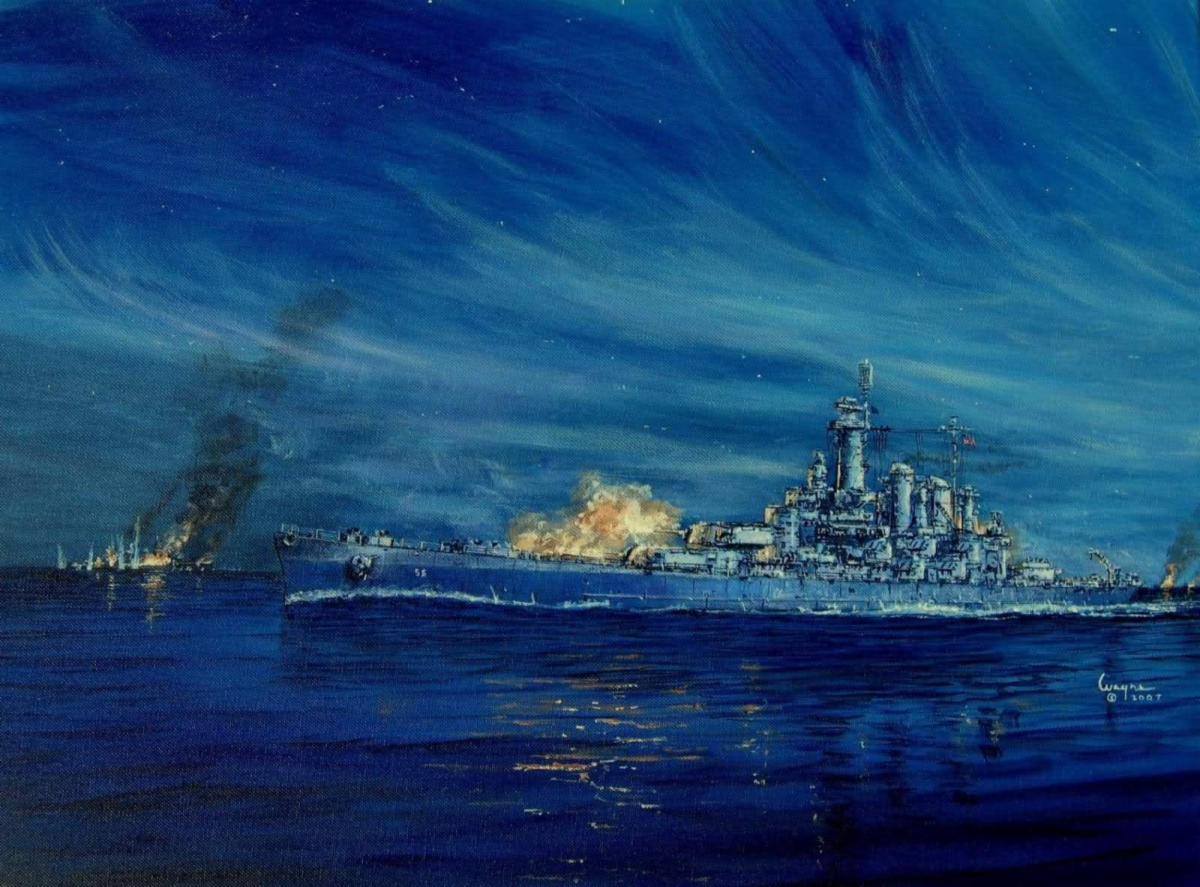
The Naval Battle of Guadalcanal

Did you miss our latest Second Saturday on The Naval Battle of Guadalcanal? You can watch the full program on our YouTube page by following the link HERE. This event featured Trent Hone and Paul Stillwell.

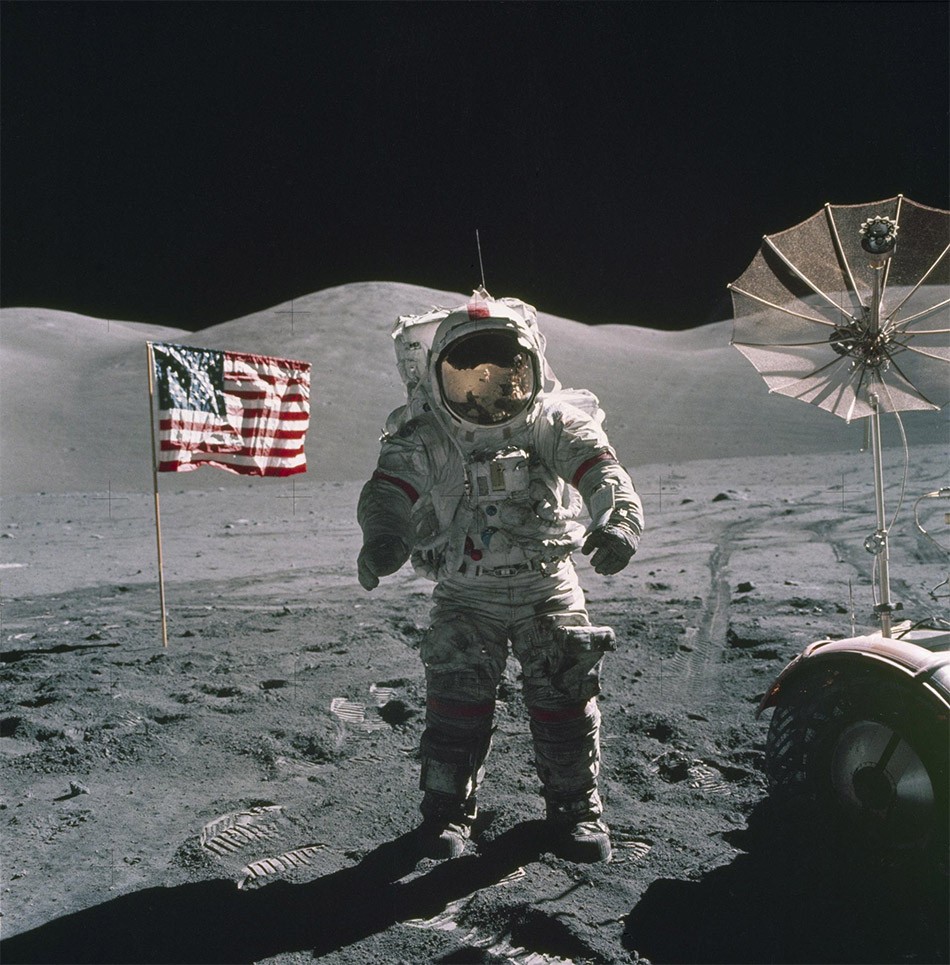
On December 12, 1972, during Apollo 17, the last manned mission to the moon, Capt. Eugene A. Cernan, commander of Apollo 17, walked on the Moon and raised the United States flag.

Apollo 17 Mission

This is an Apollo 17 astronaut standing upon the lunar surface with the United States flag in the background.

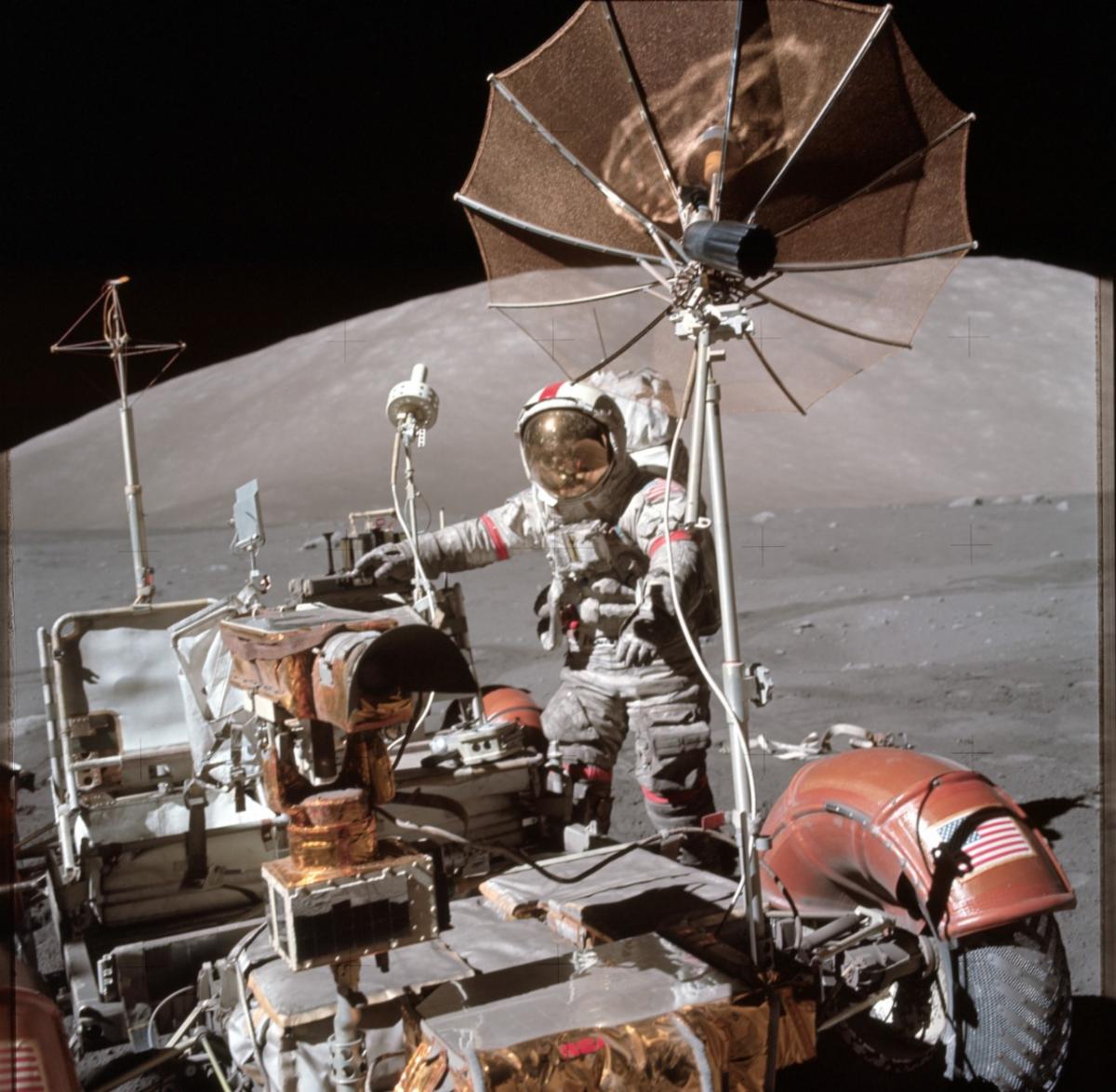
Here, Apollo 17 commander Eugene Cernan approaches the parked Lunar Roving Vehicle. NASA's Marshall Space Flight Center designed, developed, and managed the production of the Lunar Roving Vehicle that astronauts used to explore the moon.

Apollo 17 launched on 7 December 1972. Captain Eugene A. Cernan, USN, served as commander. Commander Ronald E. Evans, USN, was command module pilot. Apollo 17 featured the most extensive lunar exploration of the program, with three moonwalks that each lasted more than seven hours. The mission lasted 12 days, 13 hours and 52 minutes. Recovery was by HC-1 helicopters from USS Ticonderoga (CVS-14).


CLICK FOR MORE INFORMATION

Mission Objective

The lunar landing site was the Taurus-Littrow highlands and valley area. This site was picked for Apollo 17 as a location where rocks both older and younger than those previously returned from other Apollo missions, as well as from Luna 16 and 20 missions, might be found.


The mission was the final in a series of three J-type missions planned for the Apollo Program. These J-type missions can be distinguished from previous G- and H-series missions by extended hardware capability, larger scientific payload capacity and by the use of the battery-powered Lunar Roving Vehicle, or LRV.


Scientific objectives of the Apollo 17 mission included, geological surveying and sampling of materials and surface features in a preselected area of the Taurus-Littrow region; deploying and activating surface experiments; and conducting in-flight experiments and photographic tasks during lunar orbit and transearth coast. These objectives included deployed experiments, such as the Apollo Lunar Surface Experiments Package, or ALSEP, with a heat flow experiment; lunar seismic profiling, or LSP; lunar surface gravimeter, or LSG; lunar atmospheric composition experiment, or LACE; and lunar ejecta and meteorites, or LEAM. The mission also included lunar sampling and lunar orbital experiments. Biomedical experiments included the Biostack II experiment and the BIOCORE experiment.


READ FULL REVIEW

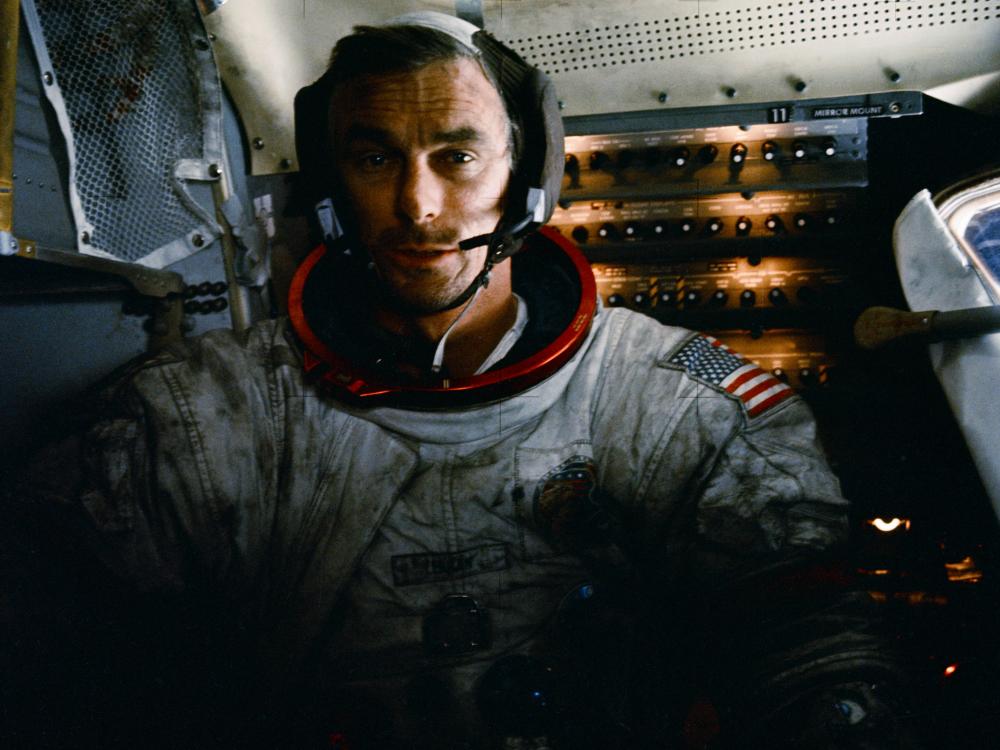
Remembering Capt. Eugene Cernan

By Michael Neufeld

“Gene” Cernan will always be remembered as the “last man on the Moon”—at least until the next person walks there. As commander of Apollo 17, the final expedition of that program, he spent three days on the Moon with Harrison “Jack” Schmitt. Yet that is not all he accomplished in a storied astronaut career. He was the second American and third human to walk in space, on Gemini IX-A in 1966. Cernan was also the lunar module pilot on Apollo 10, descending to less than 15,000 meters (47,000 feet) above the Moon’s surface with Thomas Stafford during the dress rehearsal for the first landing. He was one of a mere dozen astronauts to set foot there and one of only three to go to the Moon twice.


Eugene Andrew Cernan was born on March 14, 1934, in Chicago and attended school in the city and suburbs. He received an electrical engineering degree from Purdue University in Indiana in 1956, became a naval aviator and flew carrier-borne attack jets. In 1963, he completed a master’s in aeronautical engineering at the Naval Postgraduate School, the same year he was selected to be one of the third group of NASA astronauts.


The unfortunate death of the Gemini IX prime crew in an airplane crash vaulted him into the right seat of a trouble-plagued mission, renamed Gemini IX-A after the first docking target failed to reach orbit. Launched on June 3, 1966, Cernan flew with Thomas Stafford as commander. He made his spacewalk two days later, with the goal of strapping on a jet pack and flying around the capsule. But he found the effort of putting the pack on was utterly exhausting. He reportedly lost 6 kilograms (13 pounds) of water, his visor fogged up and he barely made it back inside the spacecraft. His nearly fatal spacewalk spurred NASA to overhaul its spacesuits and training methods significantly. Afterward, Cernan made important contributions to extravehicular activity (EVA) preparation, establishing underwater simulation as the essential training method for spacewalks.


READ FULL ARTICLE


Apollo 17: The Last Men on the Moon

(Space Documentary)

Apollo 17: The Last Men on the Moon (Space Documentary)

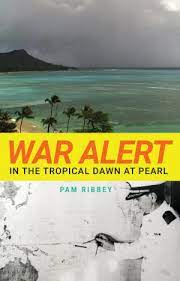
War Alert in the Tropical Dawn at Pearl

By Pam Ribbey, Washington, DC: Opus Self-Publishing, Politics and Prose Bookstore (2022)

Reviewed by Capt. J.R. Reddig, USN (Ret.)


The tension between Navy and War Departments is not the focus of War Alert, nor the schism between communications and intelligence. It does play directly into her description of what happened to make the surprise attack on Pearl not exactly what we have been told. Her account is essential reading at the baseline, since it depicts a Navy that was not “sleeping at dawn,” but had been ready, under layers of secrecy, for combat but did not act. By design.


Her craftsmanship reflects the decades-long effort to collect the memories of those who still lived. They were free of the cloak of secrecy around the narrative. Her work fills a void regarding the consolidation of the radio intelligence branches of two cabinet departments into a single large and (largely) independent National Security Agency in 1947. 


There is more to tell on that story, some of it legitimately still in classified channels. But the story contained Pam Ribbey’s War Alert contains invaluable context for how the fight over information began. It is invaluable in understanding the desire to integrate ‘information’ in the digital age into a single inclusive as a main battery of the Navy's warfighting capabilities, and firmly establish the U.S. Navy's prominence in intelligence, cyber warfare, and information management.


Pam Ribbey’s War Alert is a useful analytic effort to deconflict how the pieces were set in motion. Secrets that were kept, and some that remain buried today


READ FULL REVIEW

Books Available for Review

For requesting books for review or if you have a book still out that you are reviewing, you can still reach Dr. Winkler at david.winkler@usnwc.edu. The current list of books available are below.


BIOGRAPHICAL


Submariner: 30 Years of Hijinks & Keeping the Fleet Afloat

By LCDR Jerry Pait USN (Ret.)

A semi-autobiographical collection of sixty stories from his service with the submarine fleet from the perspective of an individual who served in enlisted and officer ranks covered the 1960s into the 1980s the include the recovery of CHALLENGER.


Be Bold: How a Marine Corps Hero Broke Barriers for Women at War

By Tom Sileo, Fidelis Publishing (2022)

Sileo tells the story of USNA graduate Major Megan McClung who was the first female alum to die in combat in Iraq.


A World War II Secret: Glenn P. Larson and the U-505

By Beverly Larson Christensen Hellgate Publishing (2022_

A daughter chronicles her father service in the Atlantic during World War II. Larson was assigned to USS Guadalcanal under Captain Dan Gallery and was a member of the boarding party that captured U-505.


20th CENTURY TO PRESENT


A Strange Whim of the Sea: The Wreck of the USS Macaw

By Tim Loughman, University of Kentucky Press (2022)

On January 16, the submarine salvage ship USS Macaw ran aground at Midway while attempting to tow the stranded submarine USS Flier. As the title indicates, it did not go well afterwards. Loughman provides a history of the loss of the ship and an overview of this auxiliary ship’s service in the Pacific in the USN.


Crushing the Japanese Surface Fleet at the Battle of the Surigao Strait: The Last Crossing of the T

By Walter S. Zapotoczny Jr. Fonthill Press, UK (2022)

Besides overview narratives, Zapotoczny has published the action reports of the various U.S. surface combatants involved in the engagement and has included eight appendices to include biographies of the lead admirals on both sides. This could more be considered a reference book.


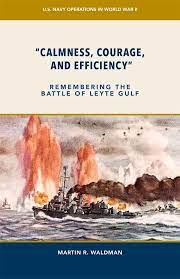
Calmness, Courage, and Efficiency: Remembering the Battle of the Leyte Gulf

By Martin R. Waldman, NHHC Washington DC (2022)

Part of a new softcover booklet initiative to get history out to the fleet in handy packaging covers the various aspects of this notable climatic battle.


More Lives Than A Ship’s Cat: The Most Highly Decorated Midshipman in the Second World War – G A (Mick) Stoke MBE DSC RN

By Jeremy Stoke – Pen & Sword, UK (2022)

An interesting biography written my Stoke’s youngest son. Title says it all.


The Royal Navy in Action: Art from Dreadnought to Vengeance

By John Fairly, Pen & Sword (2022)

A hard-cover coffee table – type book with splendid illustrations of the Royal Navy broken into WW 1, WW 2 and post war sections. Narrative discusses the art and the actions depicted.


Naval Eyewitnesses: The Experiences of War, 1939-1945

By James Goulty, Pen and Sword, (2022)

The author centers his chapters on the experience of Royal Navy sailors on various ship classes through the war.


Tales of the Sea Cloud: Luxury Yacht, Integrated Naval Vessel, Legendary Ship.

Ken W. Sayers Texas A&M University Press

The narrative discusses the history of a 1920s sailing yacht built for Marjorie Merriweather Post that comes into the service of the U.S. Coast Guard in WW II and serves as platform for an integrated crew to include some 80 African Americans including three Black officers.


The Great Nightfall: How We Win the New Cold War

J. William Middendorf II Heritage Harbor Foundation (2020)

The Director Emeritus of the NHF who served as Secretary of the Navy under President Ford addresses threats from an emerging China and Russia and the role sea power should play in addressing these potential threats. 


19th CENTURY & AGE OF SAIL


Victory: 100-Gun First Rate 1765

By Kerry Jang Shipcraft 29 (2022)

A well-illustrated short history of HMS Victory with an extensive section on how to accurately model the ship.


Death By Fire and Ice: The Steamboat Lexington Calamity

By Brian E. O’Connor, Naval Institute Press, (2022)

Gripping account oof the explosion, burning, and sinking of the steamboat Lexington in Long Island Sound on January 13,1840. Only four of 147 survive….and that’s only the beginning of the story.


MARITIME/MISC.


Our Greatest Strength: Navy Wives and the Manpower Crisis in the 1970s US Navy

By Joel Hebert, NHHC, Washington, DC (2022)

Another new NHHC publication in a easy to carry soft-cover format aimed to get good naval history content out to the fleet about a critical period in the post-Vietnam – era when the decision to have an all-volunteer force meant you needed to accommodate spouses and families. 


A Tradition of Change: CPO Initiations to CPO 365 and Back

By Master Chief Jim Leuci (Self-published 2021)

This is an expanded edition of an earlier volume that shed light and destroyed mythology about a uniquely Navy ritual.


HISTORICAL FICTION


In the Shadows of Guadalcanal

By Phillip Parotti, Casemate (2022)

Story of the CO and crew of a Patrol Craft that after escorting convoys up and down the East Coast that is sent to the South Pacific to support operations off Guadalcanal.


Hunters in the Stream: A Riley Fitzhugh Novel By Terry Mort · (McBooks Press, 2021)

Riley Fitzhugh goes through officer training and is assigned to PC 475, a new anti-U-boat vessel stationed in Key West. The 475 is nicknamed Nameless by her crew because patrol craft vessels were only given numbers…


Dead Man Launch: A Todd Ingram Novel of the Cold War By John Gobbell · 2017

It’s 1968, a time when global upheaval seems the norm. The war in Southeast Asia rages along with prolonged civil unrest at home. Amongst this, turncoat Navy Warrant Officer Johnnie Walker begins an extended relationship with the Soviet Union by selling top-secret crypto key lists to them to fulfill a voracious appetite for the good life.

Review Request

If you are interested in the Battle of the Leyte Gulf, please consider reviewing Calmness, Courage, and Efficiency: Remembering the Battle of the Leyte Gulf, by Martin R. Waldman.


Guidelines for getting involved in the NHF Book Review program can be found here,

and a list of titles available for review can be found here.

Preble Hall Podcast

A naval history podcast from Preble Hall - the United States Naval Academy Museum in Annapolis, Maryland. Preble Hall will interview historians, practitioners, military personnel, and other experts on a variety of naval history topics from ancient history to more current events. 


Listen to the most recent episode:

Admiral Mike Mullen, Part III


See Podcast Here

2023 McMullen Naval History Symposium

The year 2023 marks several significant milestones and events in Naval history: the 35th anniversary of Operation PRAYING MANTIS, the centenary of the Honda Point Disaster and of the initiation of the U.S. Navy’s Fleet Problems between the World Wars, the 150th anniversary of the establishment of the Naval Institute, 200th anniversary of the declaration of the Monroe Doctrine, 250th anniversary of the Royal Navy’s arctic expedition aboard HMS Racehorse and Carcass which included a young Lieutenant Nelson, among many others.


The History Department of the United States Naval Academy invites proposals for papers to be presented at the 2023 McMullen Naval History Symposium on these and any other topics related to American or world, Naval and maritime history. While we encourage in-person attendance and participation, the 2023 McMullen will include availability for virtual participation.


Proposal deadline: 13 February 2023


Online registration for the conference will begin in the spring of 2023.

See Flyer

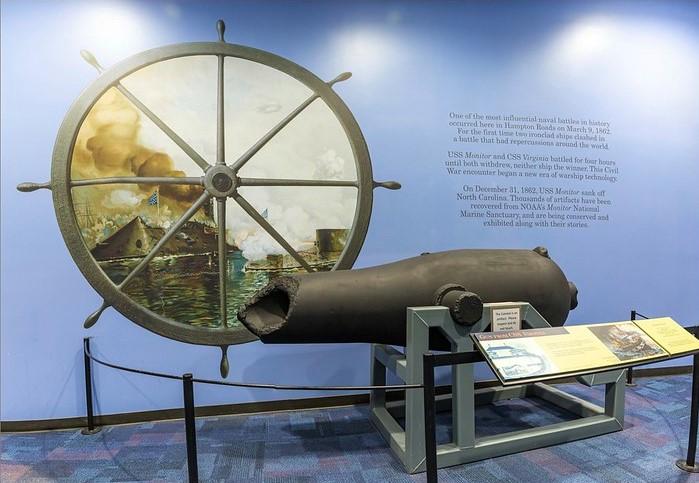
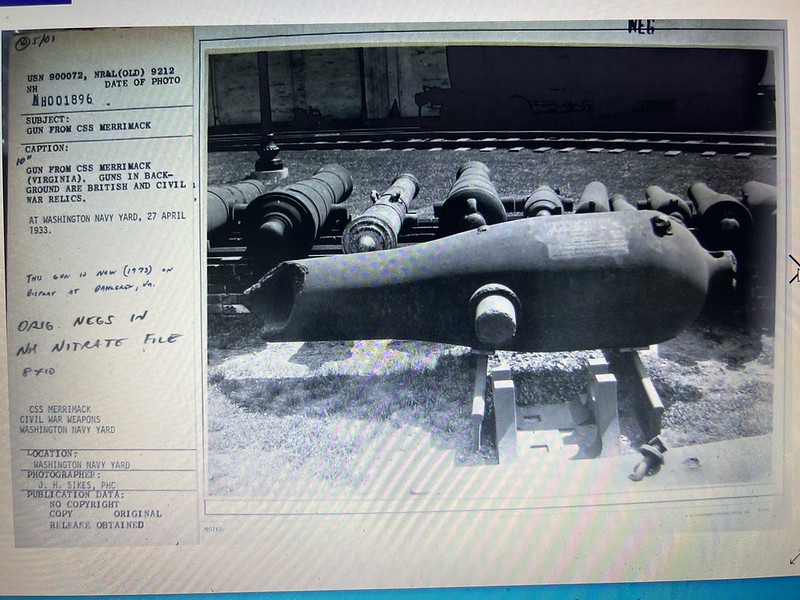
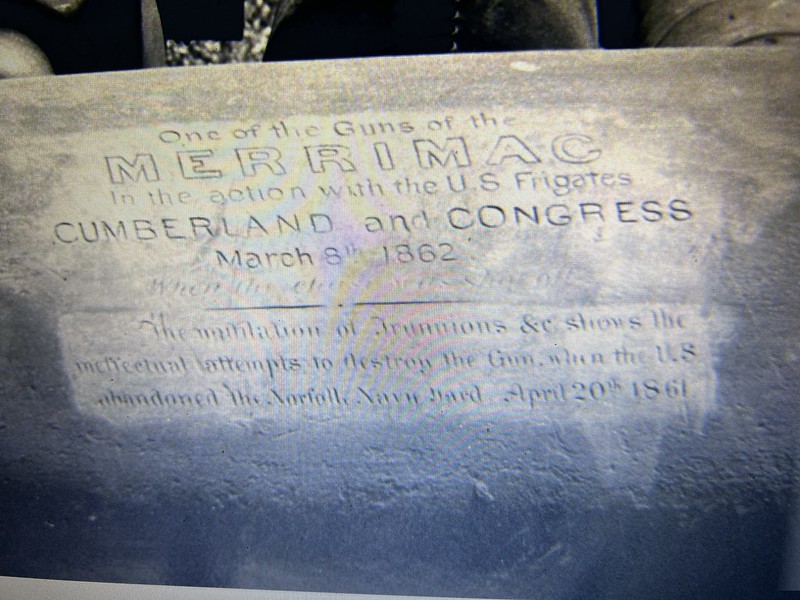
Historic USS Merrimack-CSS Virginia Cannon 

By John L. Morris

This battle-damaged IX-inch Dahlgren gun was part of the original gun battery of USS MERRIMACK. It was aboard that ship when it was burned at the pier in Norfolk, VA in April 1861 to prevent use by the Confederacy. Union forces tried but failed to destroy the gun prior to abandoning the Gosport, VA Navy Yard. It was originally cast by Tredegar Ironworks in Richmond in 1859. The Confederates rebuilt the burned USS MERRIMACK adding massive amounts of iron plating topside for armor, and re-naming her CSS VIRGINIA. On 8 March 1862, VIRGINIA attacked and sank USS CUMBERLAND but two of VIRGINIA’s IX-inch Dahlgren guns, including this one, were damaged by gunfire from CUMBERLAND. CSS VIRGINIA also attacked USS CONGRESS on 8 March. After her famous but indecisive battle with USS MONITOR on 9 March, VIRGINIA returned to the Gosport yard and offloaded the damaged guns. These guns were recovered by the U.S. when Union troops recaptured Norfolk on 10 May 1862. Since then this gun has been engraved with its history and displayed at the Washington Navy Yard, NSWC Dahlgren, VA, Fredericksburg, VA, and currently at the “Monitor Center” of The Mariner’s Museum and Park, Newport News, VA. The author’s interest in this wonderful artifact began when he reported for duty as “Armaments Proof Officer” at the Naval Surface Warfare Center, Dahlgren, VA, in 1975, where it was displayed just inside the main gate.


Photos of the cannon, November, 2022, at The Mariner’s Museum and Park


Photos of it in May 1933 at the Washington Navy Yard:  https://www.flickr.com/photos/189102681@N07/shares/j5bG880KzD


The Mariner’s Museum and Park info courtesy of Jay E. Moore PhD, The Mariners’ Museum and Park


Color photos: Amanda Shields, The Mariners’ Museum and Park

Enjoying Thursday Tidings? Click here and donate to the Naval Historical Foundation today!

If you would like to recommend online content to be passed on to our Naval Historical Foundation Members in an upcoming edition of Thursday Tidings, please email Jessie Henderson, at: jhenderson@navyhistory.org

Did you know that the Naval Historical Foundation participates in the Combined Federal Campaign? Our CFC number is: 11010

Naval Historical Foundation |http://www.navyhistory.org/
Facebook  Twitter  Linkedin