|
Dear Naval Historical Foundation Family,
Welcome back to Thursday Tidings.
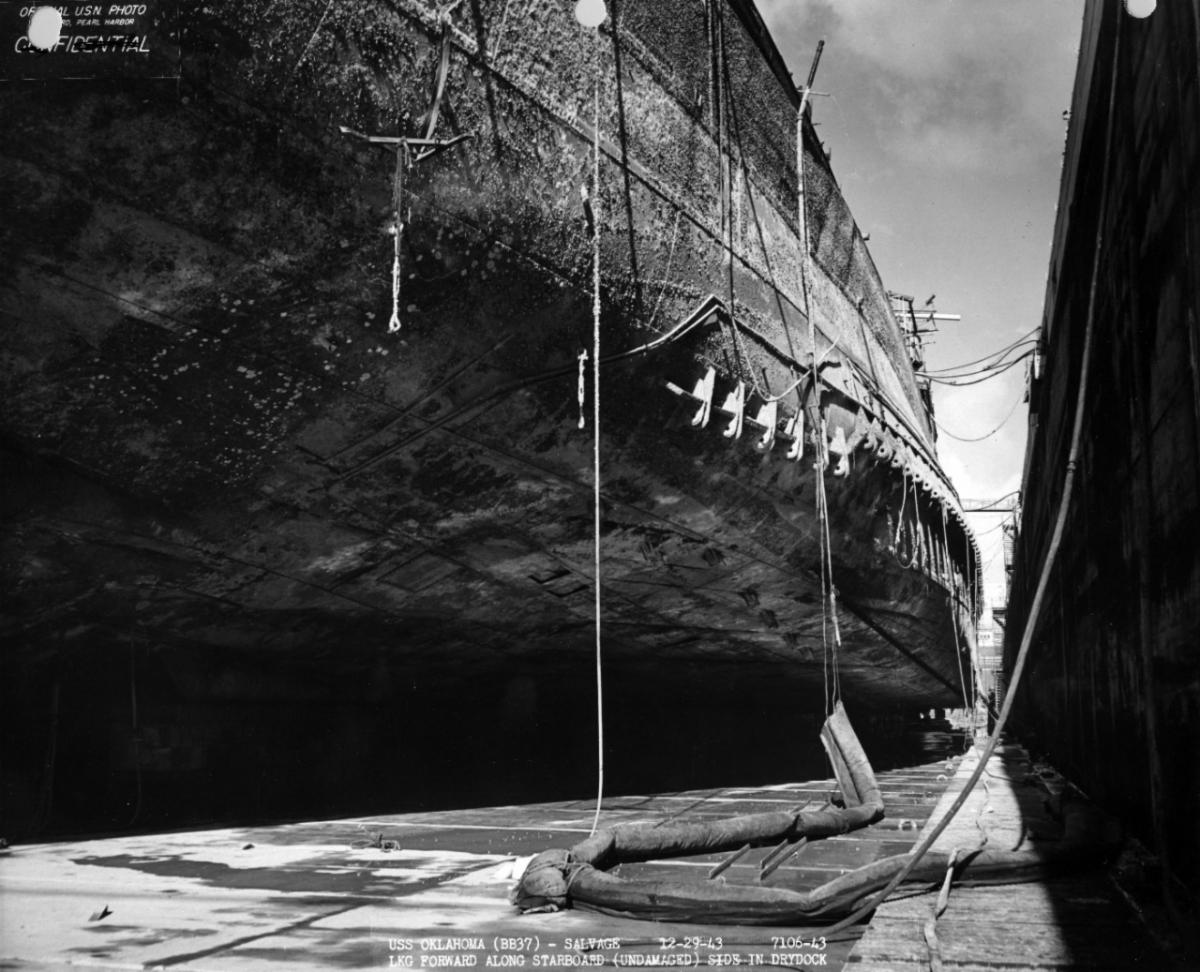
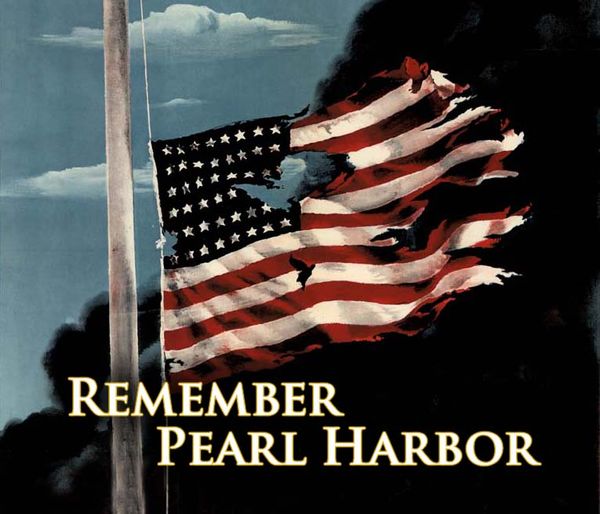
In the immediate aftermath of the Japanese attack at Pearl Harbor, the Pacific Fleet appeared completely broken. In the darkest days of December 1941, the intrepid workers of the Pearl Harbor Navy Shipyard set about repairing the heavily damaged ships. The shipyard played an absolutely critical role in getting the United States Navy back to fighting strength in the immediate months following the surprise attack. Of the eight battleships hit during the attacks, all but two were successful repairs and returned to the Pacific Fleet. In fact, West Virginia and California were completely raised from their sunken state and returned to fighting shape.
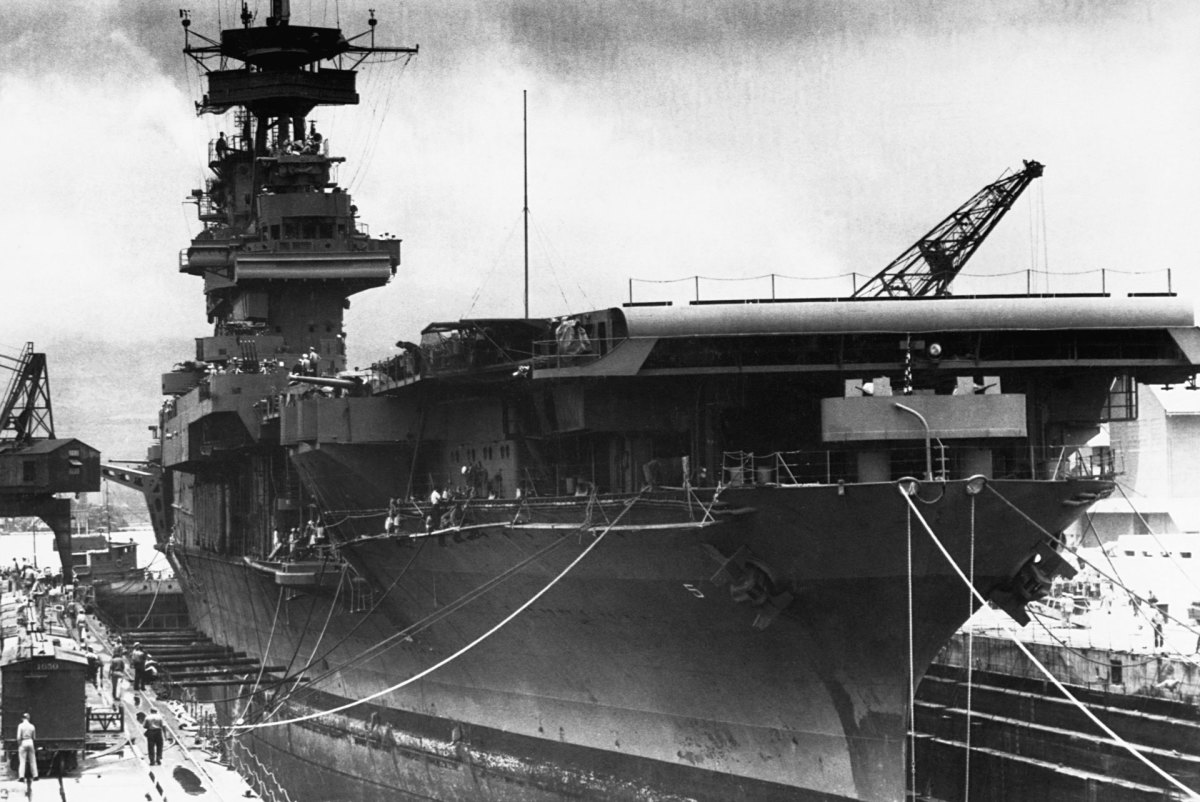
After the Battle of the Coral Sea, USS Yorktown limped back to Pearl Harbor on 27 May. The ship, having sustained multiple critical hits to her hull during the battle, was ordered by Admiral Nimitz to be repaired in three days. Over the next few days, 1,400 repairmen worked around the clock to complete the task. On the morning of 30 May, the patched-up ship steamed out of Pearl Harbor to rendezvous with Enterprise and Hornet at “Point Luck” for a potential conflict at the small base at Midway Island. As they say, the rest is history.
It is in that spirit that our focus this week is on shipyard and ship repair excellence, from World War II to today. The links and information included in this week’s Thursday Tidings will serve as an excellent primer for our upcoming Second Saturday with Dr. Craig Symonds, titled “Getting Our Ships Back in the Game: The Story of Shipyard and Ship Repair Excellence From World War II to Today.” The event will feature an expert panel, including Vice Admiral Paul Sullivan and Rear Admiral Bill Cobb, as they talk about the heroes of our Repair facilities.
Details for the Second Saturday are below. There is still time to sign up!
This week's book review by Ernie Marshall and Diana Ahmad focuses on the legacy of Admiral Hyman Rickover and an autobiography by Charles H. Bogart about his service as an enlisted sailor from 1958 to 1961. We have also once again included some helpful links on the U.S. Navy's role in the ongoing crisis in Ukraine.
As always, fair winds and following seas shipmates. This email is best viewed as a webpage for your reading convenience and best quality.
{View as Webpage}
| |
|
LAST CHANCE TO REGISTER!
Second Saturday:
Getting Our Ships Back in the Game: The Story of Shipyard and Ship Repair Excellence From World War II to Today
With Dr. Craig Symonds
14 May 2022 | 11 am EST
| | |
|
|
Join Dr. Craig Symonds who tells the story of Yorktown's remarkable turnaround at the Pearl Harbor Navy Shipyard following Coral Sea that enabled her to be at Midway!
Featuring an expert panel including Captain Rick Hepburn and Rear Admiral Bill Cobb as they talk about the heroes of our Repair facilities.
| |
|
New Memoir Available:
AMM2 I. Robert Miller
| | |
|
I. Robert Miller grew up in New York and joined the Junior Naval Reserve as a young boy. He enlisted in the US Navy in 1941 and underwent basic training at Newport, R.I. His career included service on USS Wyoming, USS Raven, and USS Chenango. During his time in the Navy, he served during Operation Torch (Invasion of North Africa, Operation Dragoon (Invasion of Southern France), Lingayen Gulf, Iwo Jima, and Okinawa. He was honorably discharged in 1946. | |
|
Pearl Harbor: Why, How, Fleet Salvage and Final Appraisal
By VADM Homer N. Wallin, USN (Ret.)
(Naval History and Heritage Command)
| |
|
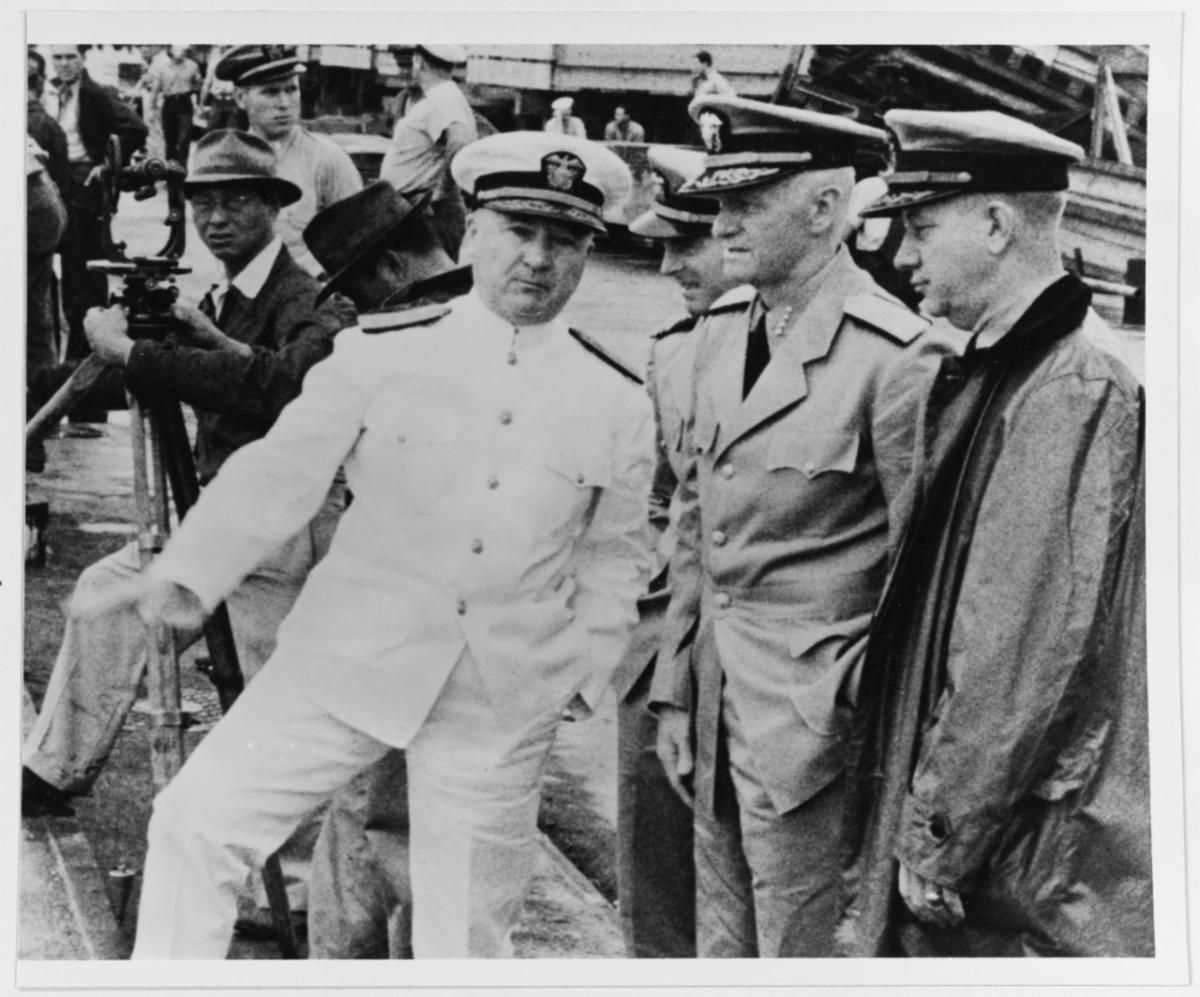
Admiral Chester W. Nimitz, USN (center), Commander in Chief, Pacific Fleet Observes efforts to right the capsized USS Oglala (CM-4) at Pearl Harbor, where she had been sunk during the 7 December 1941 Japanese air raid. With him are Rear Admiral William R. Furlong (left), Commandant, Pearl Harbor Navy Yard, and Captain Homer N. Wallin (right), who was in charge of the salvage operations. The photograph was taken in April-May 1942, possibly during the initial righting attempt on 11 April. Official U.S. Navy Photograph, from the collections of the Naval History and Heritage Command.
| |
|
Pearl Harbor will long stand out in men's minds as an example of the results of basic unpreparedness of a peace loving nation, of highly efficient treacherous surprise attack and of the resulting unification of America into a single tidal wave of purpose to victory. Therefore, all will be interested in the unique volume that follows. It is Admiral Wallin's own handicraft, with only minor modifications by this staff.
The Navy has long needed a succinct account of the salvage operations at Pearl Harbor that miraculously resurrected what appeared to be a forever shattered fleet. We were delighted when Admiral Wallin agreed to undertake the job. He was exactly the right man for it -- in talent, in perception, and in experience. He had served intimately with Admiral Nimitz and with Admiral Halsey in the South Pacific, has commanded three different Navy Yards, and was a highly successful Chief of the Bureau of Ships.
On 7 December 1941 the then Captain Wallin was serving at Pearl Harbor. He witnessed the events of that shattering and unifying "Day of Infamy." His mind began to race at high speeds at once on the problems and means of getting the broken fleet back into service for its giant task. Unless the United States regained control of the sea, even greater disaster loomed. Without victory at sea, tyranny soon would surely rule all Asia and Europe. In a matter of time it would surely rule the Americas.
Captain Wallin salvaged most of the broken Pearl Harbor fleet that went on to figure prominently in the United States Navy's victory. So the account he masterfully tells covers what he masterfully accomplished. The United States owes him an unpayable debt for this high service among many others in his long career.
READ THE FULL ARTICLE
| | |
|
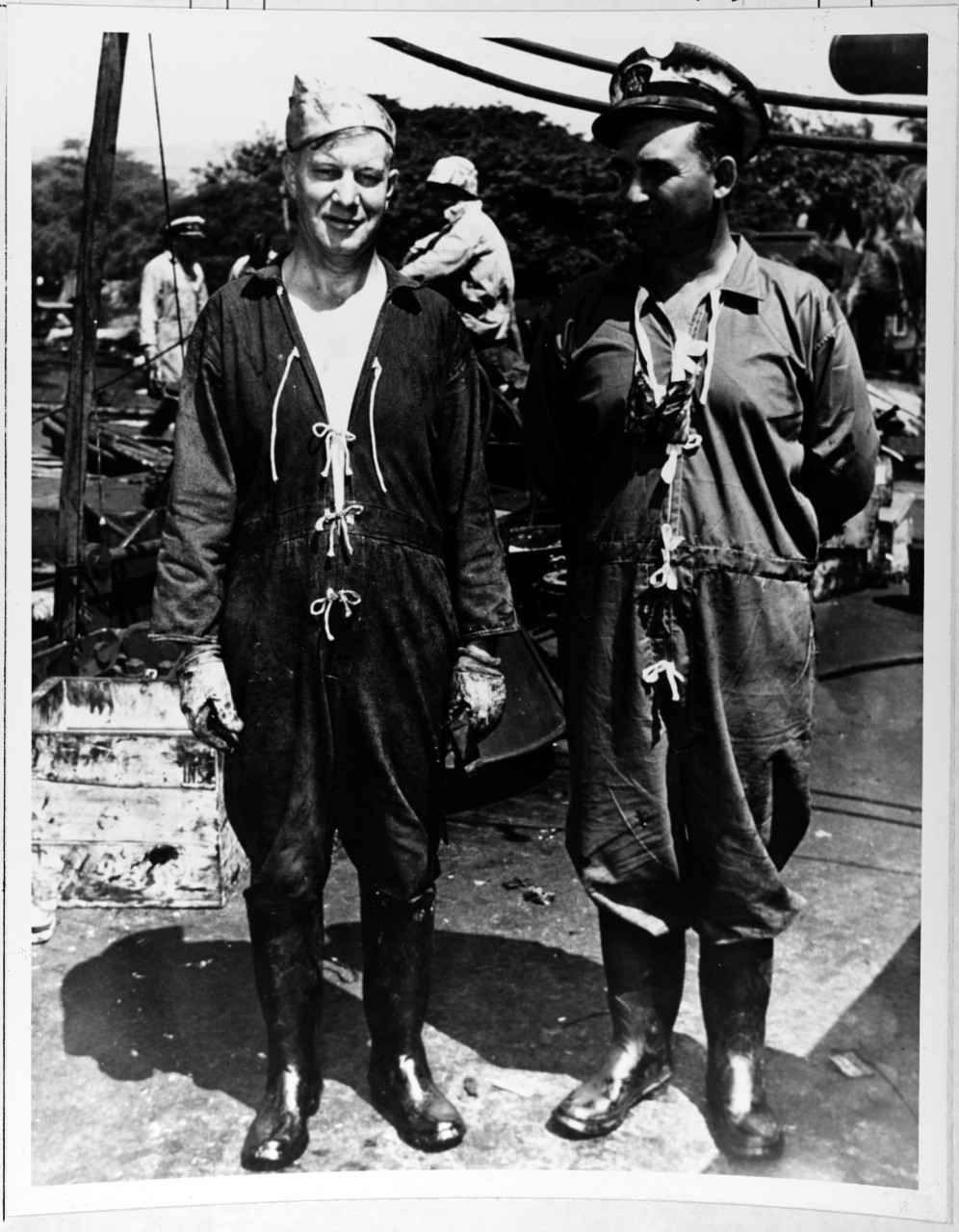
Captain Homer N. Wallin (left), Salvage Officer, and Lieutenant Commander W. White, Commanding Officer of USS West Virginia, on board the ship while she was under salvage at Pearl Harbor in 1942. They are wearing the tank suit coveralls and knee-length rubber boots used by Pearl Harbor salvage team members when engaged in particularly dirty work. Official U.S. Navy Photograph, from the collections of the Naval History and Heritage Command. | |
|
Fighting for Survival
By David Lee Bergeron
Naval History Magazine (December 2019: Vol. 33, No. 6)
A city cannot survive without a determined force of first responders. These vigilant individuals are trained to meet emergent catastrophes. A U.S. Navy aircraft carrier must be similarly self-sustaining. It requires skilled teams of technicians and tradesmen to respond to damage incurred while at sea. These first responders—damage control (DC) repair parties—are crucial to the ship’s survival. They fight fires, react to power and propulsion damage, maintain watertight integrity, and patch the flight deck to keep aircraft flying. DC teams saved the USS Yorktown (CV-5) multiple times during and after the Battle of the Coral Sea and during the Battle of Midway, but details of their actions are rarely highlighted in battle accounts.
READ THE FULL ARTICLE
| |
|
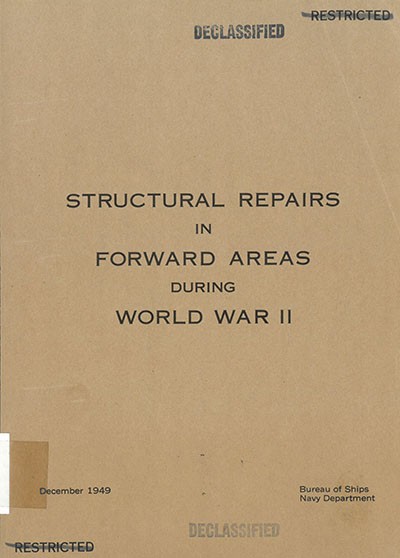
Structural Repairs in Forward Areas During World War II
By The Naval History and Heritage Command
(Originally Published 1949; Republished 2017)
| | |
|
|
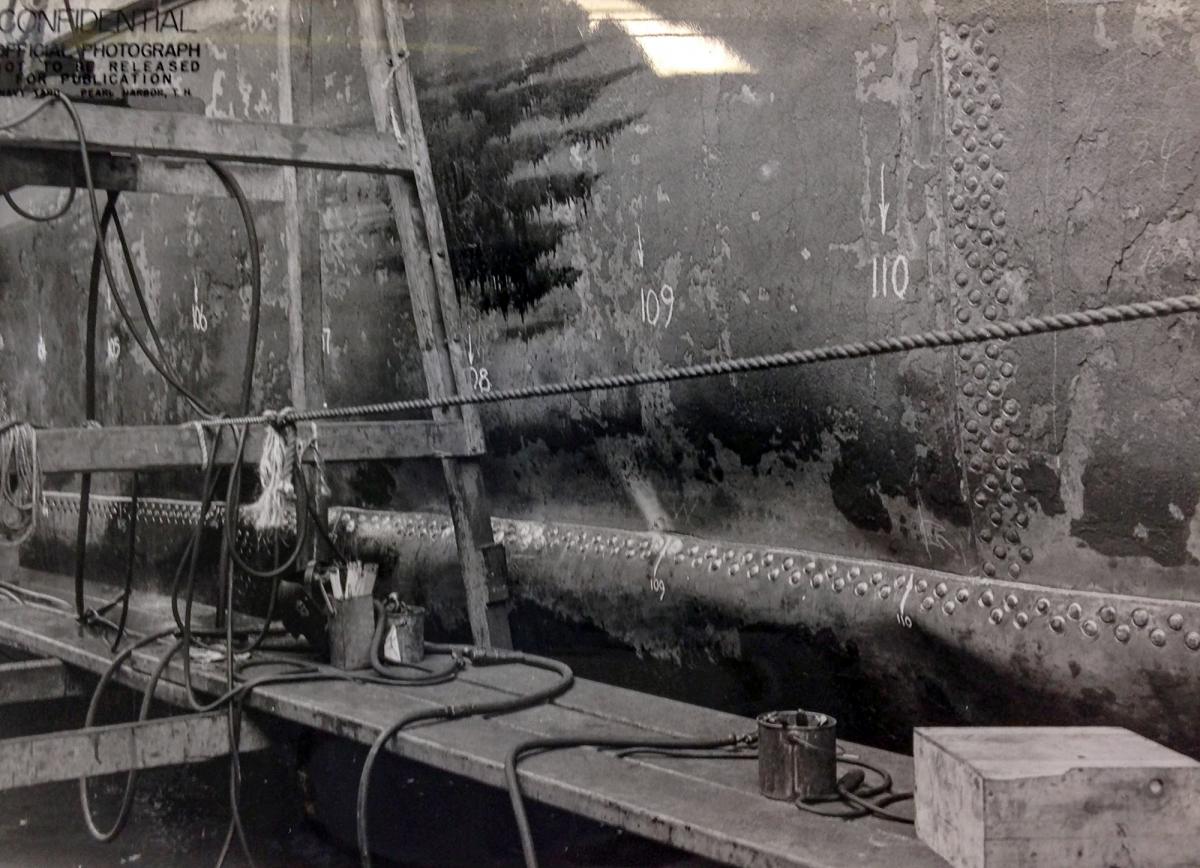
The problem of effecting temporary repairs to damaged ships was encountered frequently during World War II and was handled with varying degrees of success. It was never feasible to make complete repairs to seriously damaged vessels in the forward area. Accordingly, repair work ordinarily was limited to that which would enable the ship to proceed to a larger repair activity and eventually to a shipyard. Repairs to machinery and electrical equipment were in most instances limited to rerouting piping, installation of spare parts, preservation and baking out of intact equipment that had been in flooded spaces, or repairs normally considered within the capacity of the ship's force. These types of repairs are treated thoroughly in manufacturers instruction books, the Bureau of Ships Manual, training instruction books and other readily available sources. Comparatively little data is available, however, concerning the more important repairs to seriously damaged structure which are required to enable a ship to withstand the hazards of a voyage in the open ocean.
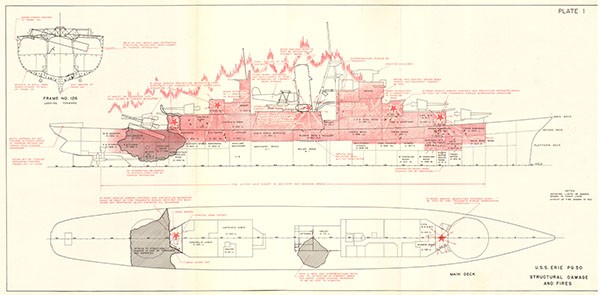
Examples of repairs made during World War II are presented to familiarize repair activities with types of problems with which they may be confronted and to facilitate their solutions of them. The selection of examples has been influenced by the desire to include representative types of damage, the availability of information concerning the repairs made and the effectiveness of the repairs. In most instances, the action of the repair activity was soundly conceived and executed. The cases of O'Brien and Erie are included in contrast to emphasize the serious consequences of inadequate repairs or poorly conceived procedures. For the sake of brevity, details of procedures for unwatering flooded spaces, making attachments between original and replacement structures, removing damaged structure and the results of stability and strength calculations are presented only for selected examples. However, these phases are of paramount importance in all cases of damage repairs.
Ideally, repairs should restore the ship to her condition before damage. Usually, sufficient plans are available aboard a ship to indicate the scantlings of essential structure. In the event no plans are available, it is possible to obtain measurements from adjacent structure. However, limitations of time, manpower, materials and facilities usually will necessitate some compromise with the ideal. Nevertheless, it is imperative that the repairs, even though temporary, embody sound engineering principles and practices, be adequate to permit safe passage of the ship and be accomplished safely and without hazard to the ship or personnel.
| |
|
Puget Sound Naval Shipyard & Intermediate Maintenance Facility:
A Legacy of Service
(Joe Shipyardworker/YouTube)
| |
More Links on Shipyard and Ship Repair Excellence | |
|
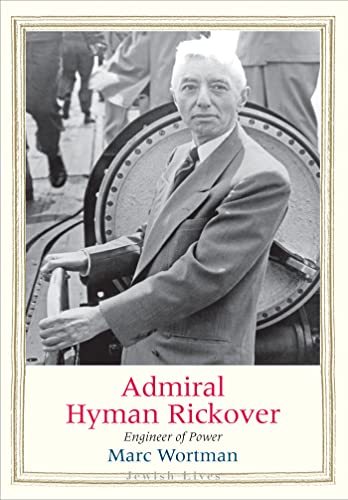
Admiral Hyman Rickover: Engineer of Power
By Marc Wortman
| |
|
Reviewed by Dr. Ernie Marshall
With half a score of books written about Admiral Rickover, Wortman’s book is largely a retelling of the story but with his interpretive view of the man. Rickover is one of the most interesting figures in U.S. Naval history. He was born Chaim Godalia Rykower in the small Polish town of Mako’w-Mazowiecki to devoutly orthodox Jewish parents. His family immigrated to the U. S. to escape both their poverty and a dangerous anti-Semitic environment. Americanizing their names, Chaim was changed to Hyman. In 1918, he received an appointment to the United States Naval Academy where he discovered a form of antisemitism to be alive and well. There were few Jews among the midshipmen and Hyman, diminutive in stature, was often referred to by his fellows as the “little Jew.” He was not widely liked but battled through to be graduated with the class of 1922.
Wortman’s book fills an important void. It is a title in the Jewish Lives award-winning series published in partnership with Yale University Press and the Leon D. Black Foundation and, thus, cements a place for Admiral Rickover and the American Navy in the Jewish experience. While not highly original in content, it is a delightful, entertaining, and informative read. Highly recommended to anyone interested in the history of the American Navy.
Continue Reading the Full Review Here
| |
|
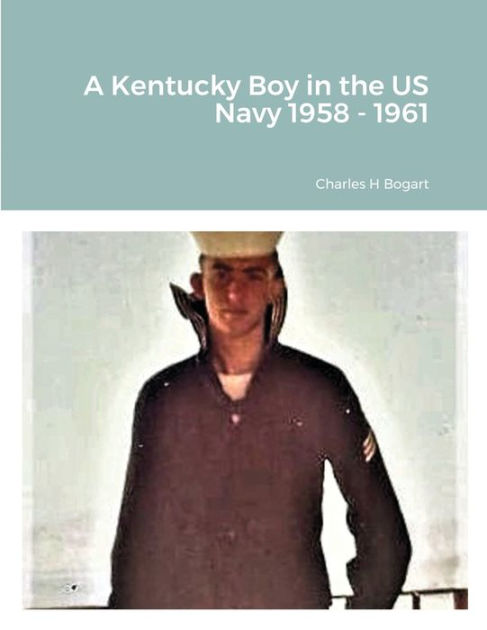
A Kentucky Boy in the U.S. Navy, 1958-1961
By Charles H. Bogart
| |
|
Reviewed by Diana L. Ahmad
In his autobiography, Charles H. Bogart has provided readers with a thoroughly enjoyable look at his experiences in the United States Navy from 1958 to 1961. Written with a good sense of humor, the book provides an intimate look into the day-to-day experiences of young men on board the radar picket destroyer, USS Dennis J. Buckley (DDR 808), that operated out of Long Beach, California. Bogart served as a radarman, occasionally worked at “mess cooking,” and even attended firefighting school.
For a seasoned sailor, the book will bring back many memories, good and bad, but for those unfamiliar with life onboard a destroyer, Bogart provides an excellent look into a sailor’s experiences. Bogart gives his readers an enthusiastic sense of his positive experience in the United States Navy.
Continue Reading the Full Review Here
| | |
|
|
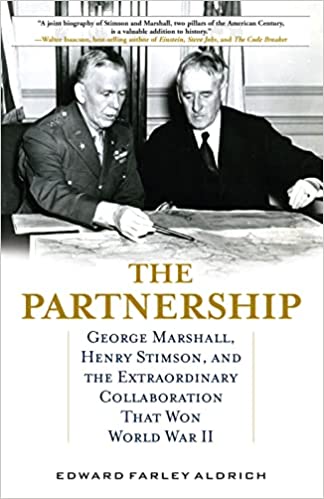
If you are interested in figures of history, please consider reviewing The Partnership: George Marshall, Henry Stimson, and the Extraordinary Collaboration That Won World War II, by Edward Aldrich.
Guidelines for getting involved in the NHF Book Review program can be found here,
and a list of titles available for review can be found here.
| |
|
History in the Making: The U.S. Navy and the Ukrainian Crisis -- Select Links and Topics of Interest
| |
|
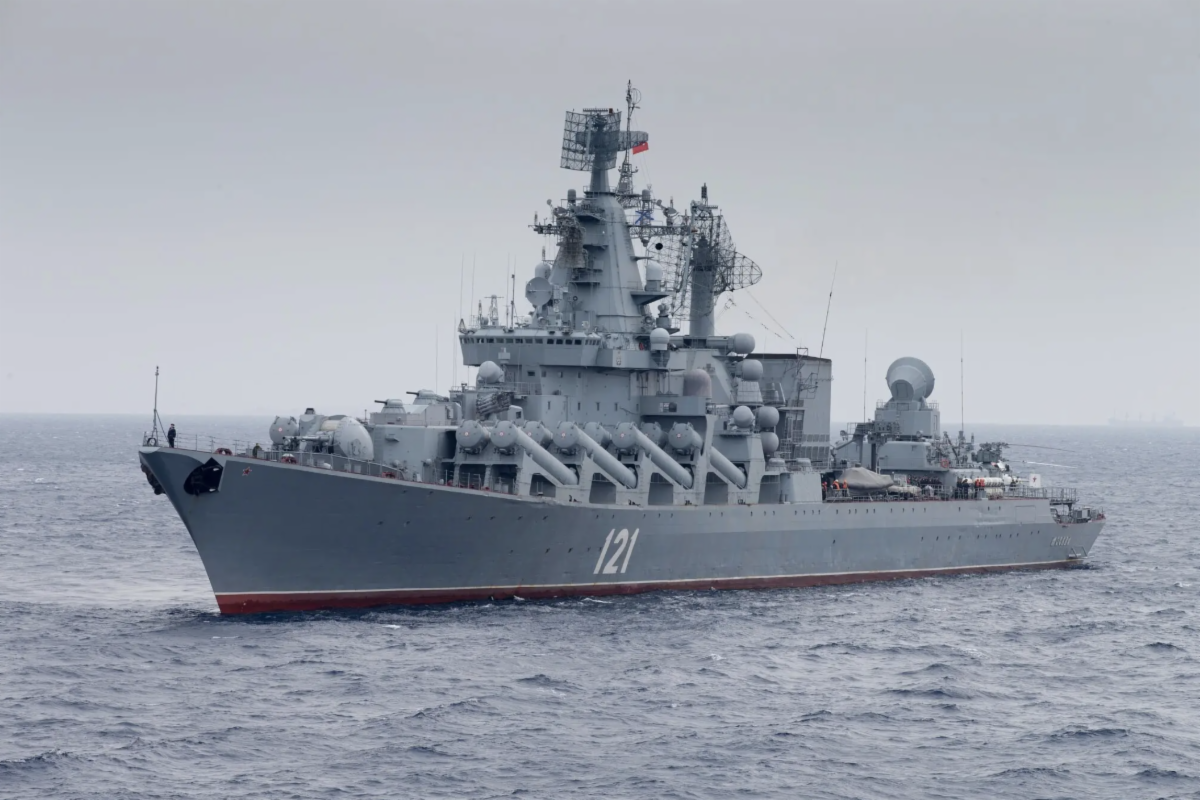
We are currently witnessing history in the making with the situation involving the Russian invasion of Ukraine beginning last week. How does the U.S. Navy fit in? How are strategists, theorists, and journalists gauging the role of the U.S. Navy in any impending conflict? Here are several articles of note that seek to answer these questions as the situation progresses. Article opinions reflect those of the authors and do not necessarily reflect any stance by the Naval Historical Foundation.
| |
|
Anti-Ship Cannon Projectiles, Part 2: Expanding Shot
By John L. Morris
| |
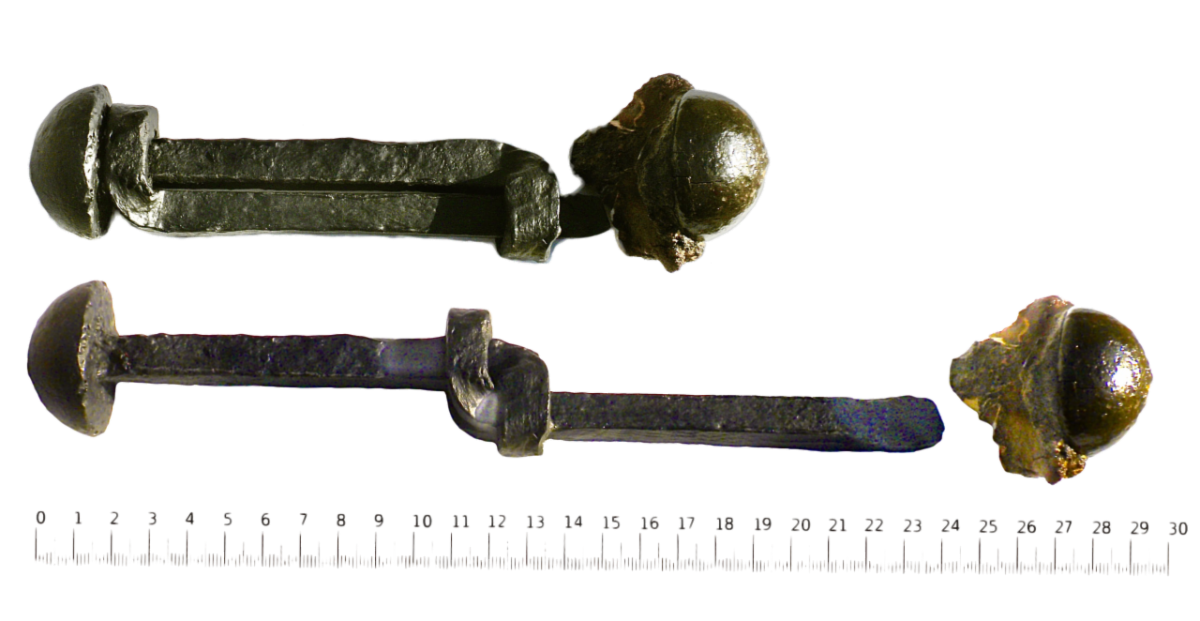
Expanding (sliding) Bar Shot | |
|
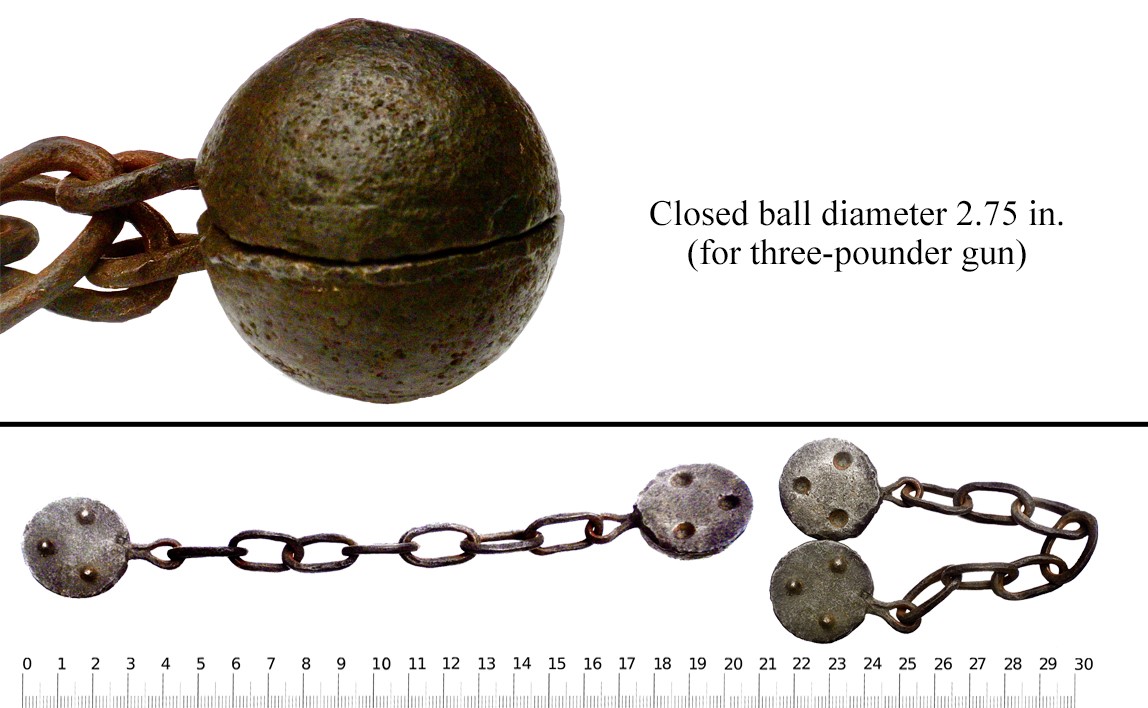
In Part 1, we discussed and pictured three examples of 18th C. “Bar Shot” which resemble dumbbells. 18th and 19th Century seamen and iron founders knew the simple bar shot could be improved to make more effective topside-shredding devices and came up with many imaginative designs. Some of these were removed from ships captured by the British Royal Navy and subsequently stored in the Tower of London. Drawings of these are here. The author has not seen a more comprehensive catalog of expanding projectiles.
The expanding projectiles pictured are from a private Fairfax County, VA, collection. Both were constructed using cast iron hemispheres connected by wrought iron components. Wrought iron can withstand the shock of very sudden acceleration as in firing from a cannon, so it was used for the highly-stressed components in expanding projectiles. The first example is the Expanding (or Sliding) Bar Shot, which is broken near one end but otherwise intact. The second is a Chain Shot. Chain Shot are often fancifully depicted as two round shot connected by a chain, but the author has yet to see an authentic example of such a configuration. Authentic examples like the one shown here have two cast-iron hemispheres with a key or keys on the flat faces to keep the halves mated until exiting the gun muzzle after firing. The chain shot was probably packaged in some type of cloth while in “ready service” stowage aboard ship, with a clear indication of the end holding the chain so the gunner would insert that end first in the muzzle when loading. Wadding and/or a wooden sabot may have been included in/on the round, but intact, unfired rounds of this type don’t seem to exist.
| |
|
The Naval Historical Foundation Recognizes
Asian American and Pacific Islander Heritage Month
#AAPI
| |
Defending the Flag at the Fourteenth Latitude: American Samoa, Fitafita, and the United States Navy | "I go along with somebody who says that when Samoa heard that the US government was at war with Japan, the call came around and they offered their hands to help." Tuala Sevaaetasi, Former Fitafita Guardsman By Matthew T. | | | |
Asian Americans and Pacific Islanders in the U.S. Navy | Large format banners. Downloadable files for six-panel banner set. Provides chronological overview while also focusing on the service and sacrifice of individual Sailors such as Engineman 2nd Class Edward C. Cruz. Enginemen 2nd Class Cruz served in the Vietnam War and was killed during a patrol in 1968. | | | |
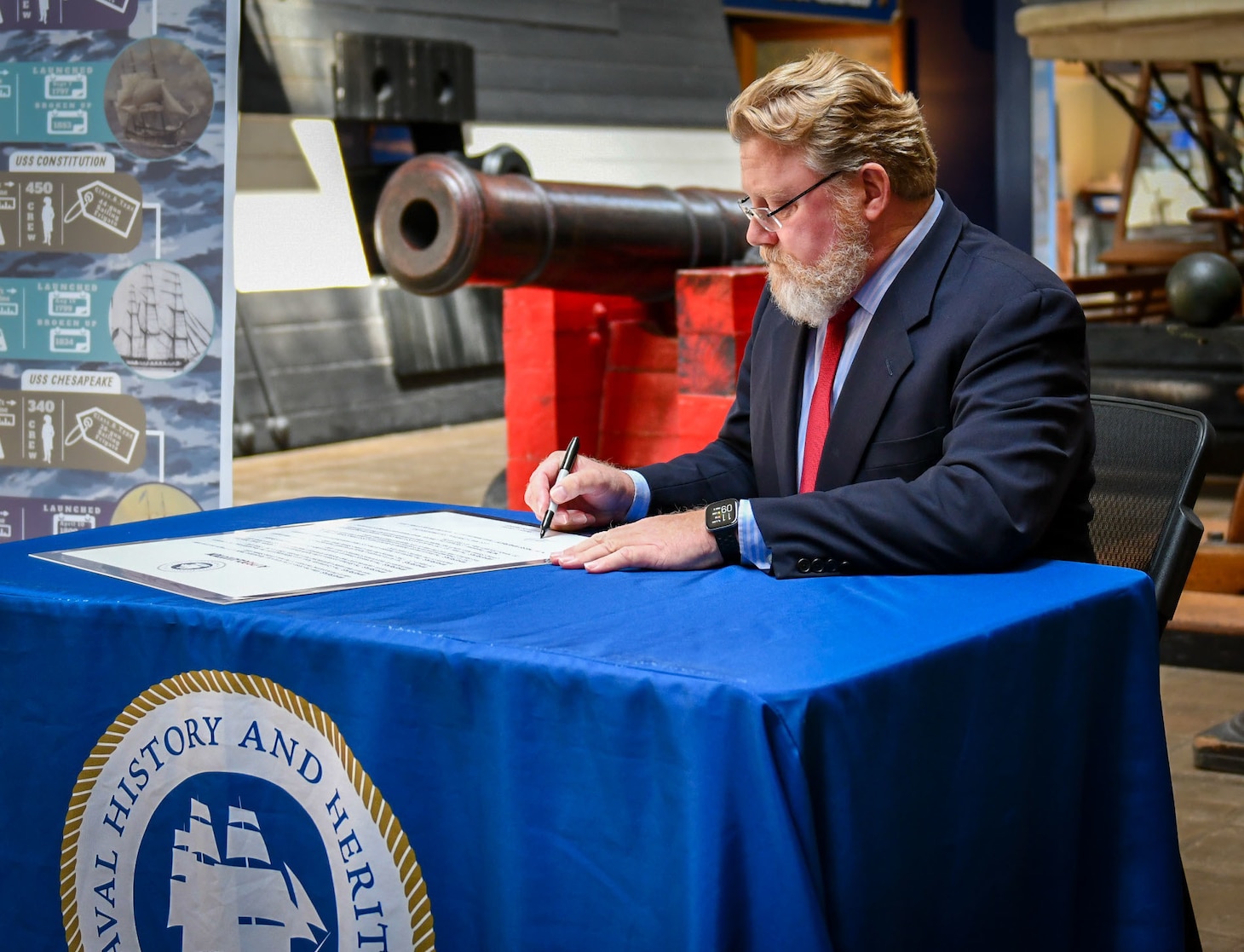
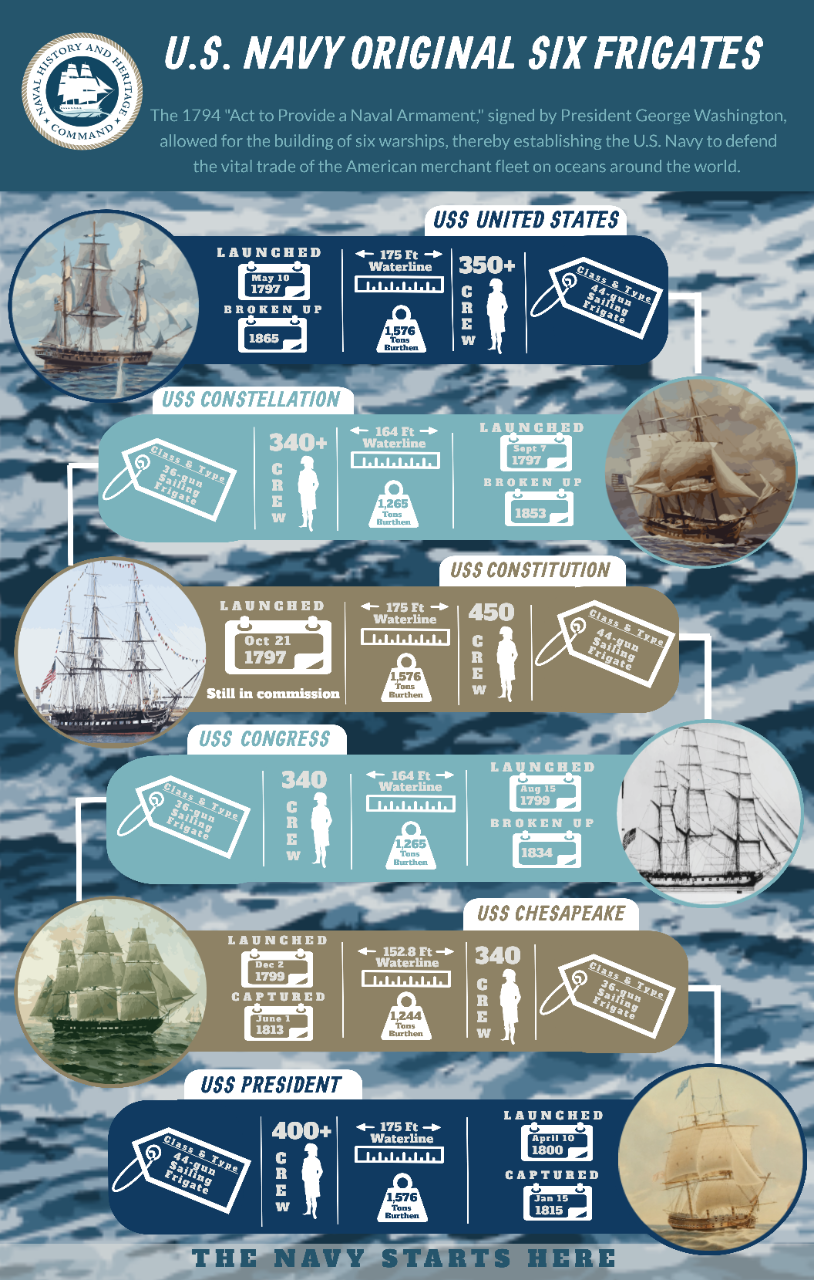
NHHC Proclamation: 'U.S. Navy Original Six Frigates Day' | WASHINGTON NAVY YARD - Naval History and Heritage Command (NHHC) Deputy Director Patrick Burns, on behalf of NHHC Director Sam Cox, signed a proclamation May 9, proclaiming May 10, 2022, "U.S. Navy Original Six Frigates Day" during an event held at the, | | | |
Navy considers how to repair multiple battle-damaged ships simultaneously | Federal News Network | More than 75 years have passed since the Navy has had to repair several battle-damaged ships all at once. Now naval planners are wondering whether this capability might be needed once again. But the way they're going about planning it is operating without a compass. | | |
5. Pearl Harbor: Salvage and Rescue - Remembering Pearl Harbor | Pearl Harbor: Sixty Years of Echoes - Part Five: Salvage and Rescue Japan makes the biggest error in the entire attack. | | | |
|
The Salvage of Pearl Harbor, Pt. 1: The Smoke Clears
(Drachinifel/YouTube)
| |
The Salvage of Pearl Harbor, Pt. 2: Up She Rises!
(Drachinifel/YouTube
| |
The Salvage of Pearl Harbor, Pt. 3: The First and the Last
(Drachinifel/YouTube)
| |
This Day in Naval History: May 12 | USS Enterprise (CV 6) is commissioned. Notable service during WWII include the Doolittle Raid, the Battle of Midway, the Guadalcanal Campaign, Battle of the Santa Cruz Islands, the Battle of the Philippine Sea, the Battle of Leyte Gulf, and the Okinawa Campaign, where she was badly damaged by a kamikaze strike. | | | |
This Day in Naval History - 12 May | | | |
If you would like to recommend online content to be passed on to our Naval Historical Foundation Members in an upcoming edition of Thursday Tidings, please email Matt Eng, at: meng@navyhistory.org
| |
Did you know that the Naval Historical Foundation participates in the Combined Federal Campaign? Our CFC number is: 11010
| | | | | |