Breaking It Down (Compost) | |
|
Decay is a natural process that breaks down food and other plant material into nutrient-rich, organic matter called compost. There are many benefits to composting food waste and yard materials. It reduces greenhouse gas emissions like methane and can return valuable nutrients and organic matter to the soil, supporting healthy plant growth. Compost acts like a sponge, holding onto moisture and adds important micronutrients that help break down and make fertilizers available to the plants.
We can all play an important role in the compost cycle by putting food scraps, food-soiled paper, and yard waste into curbside food and yard waste bins provided by your local trash and recycling collection services. After the organic material is picked up it is sent to a commercial composting facility, Silver Springs Organics or Brady Trucking, where it’s turned into compost that can be purchased by the public.
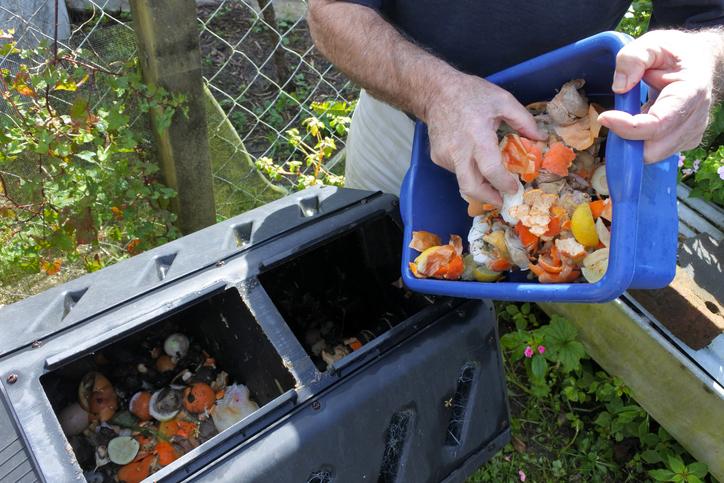
Composting at home is another great way to recycle food scraps and plant material that would otherwise be sent to a landfill. Composting food and yard waste at home can create nutrient-rich, organic matter for use in gardens, around trees, bushes, and even lawns.
WSU’s Master Recycler Composter (MRC) program has many free resources to help Thurston County residents dive deep into all things waste and recycling, including compost. The MRC program focuses on ways to reduce waste and increase the public’s awareness of opportunities to prevent waste, recycle and compost in Thurston County. In addition to educating the public, the MRC program trains adults to become Master Recycler Composter volunteers. MRC volunteers help to educate the public on composting, recycling and waste reduction. Visit their website for details about the next volunteer training.
Interested in composting and waste reduction but not ready to commit to mastering it? Attend a free workshop. The next workshop is an Introduction to Home Composting on Tuesday, March 11, from 12-1 p.m. on Zoom.
Compost is a gift from the planet, for the planet! Read on and learn how to use this valuable resource for healthier landscapes and a healthier world.
| |
How To: Clean a Kitchen Food Waste Bin | |
|
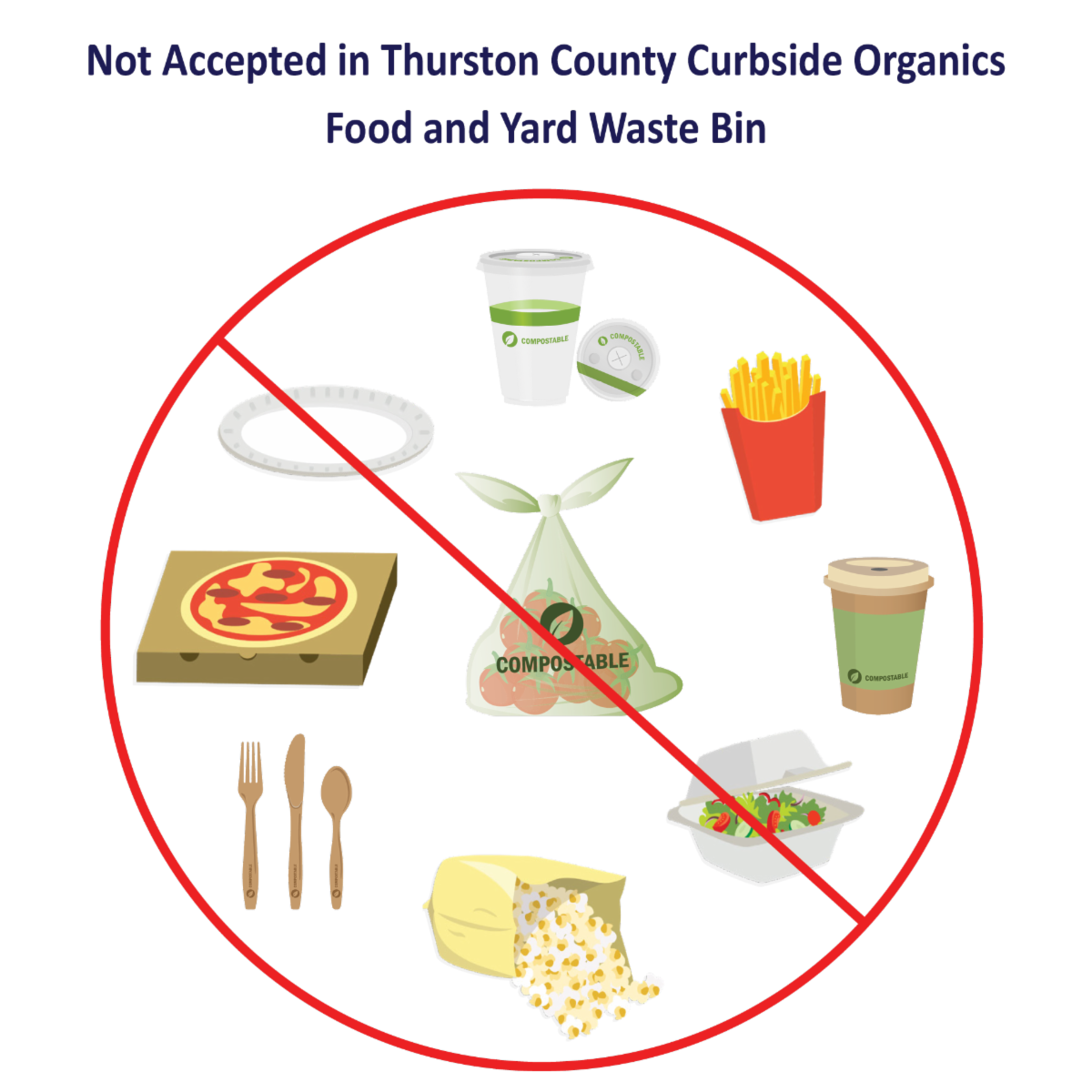
Composting is a smart way to reduce waste sent to a landfill and help nutrients eventually return to the soil. Before you begin, check with your local municipality to see what food waste they accept in their curbside food and yard waste bin, and what needs to be disposed of in the trash. In Thurston County, your garbage, recycling, and food and yard waste will be collected by the City of Olympia or LeMay. Regardless of which company collects your waste, no items labeled “compostable” are allowed in Thurston County food and yard waste bins (learn more in “Why Can’t I Compost ‘Compostable’ Bags in Thurston County?” article in this newsletter).
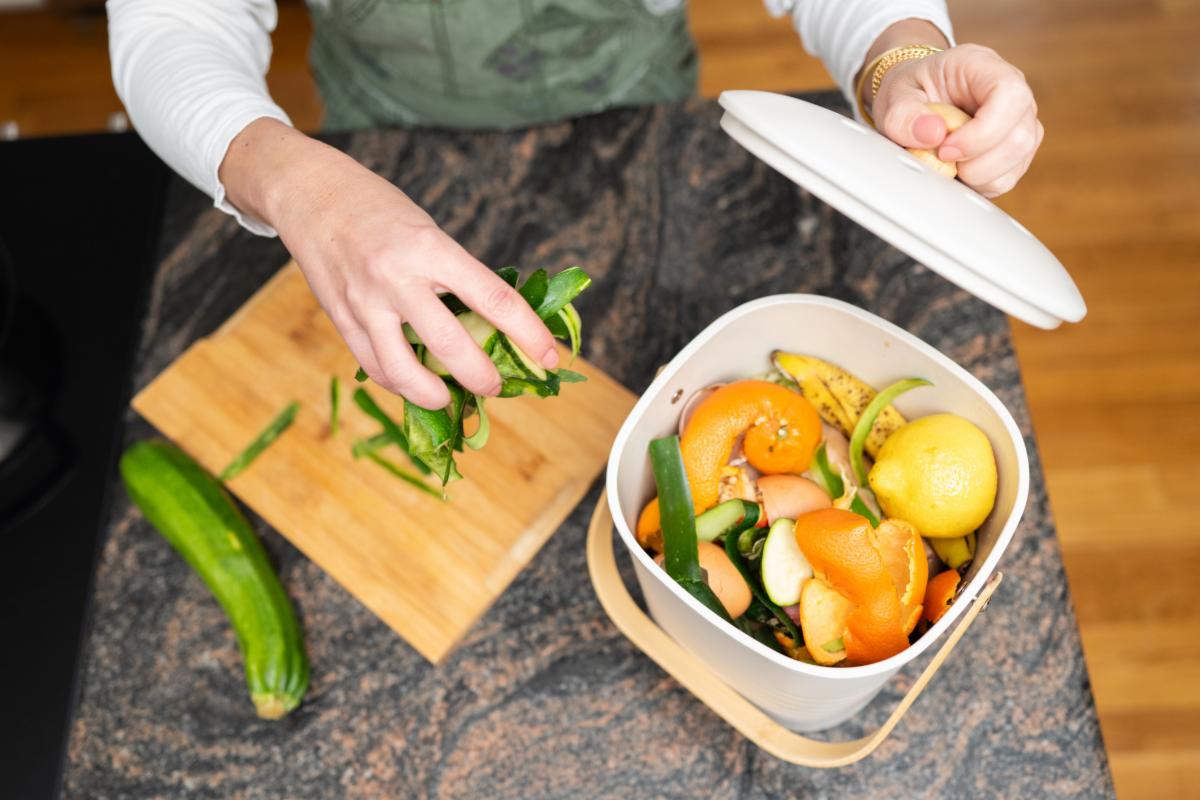
Most people store their food waste bins on the counter, under the sink, or in the freezer. Where you store your bin will depend on how often you use it, your preference for ease of access, the indoor temperature, if you struggle with fruit flies or other pests, and where in your home you have space to spare.
Kitchen food waste bins temporarily store decomposing food. They shouldn’t have a noticeable odor if you follow the food waste disposal guide, empty your food waste bin into your curbside food and yard waste bin regularly, and clean it at least once a week. As we’ve stated above, compostable bags can’t go into the curbside food and yard waste bin, so it’s better not to line it at all and rinse it regularly.
To clean your bin, rinse the inside with water and drain liquids into the kitchen sink. Then use a scrub brush (ideally one with a long handle), some soap, and water to remove any built-up food waste. If needed, you can make a 1:1 mixture of vinegar and water and apply it to the inside of the bin with a spray bottle. Let it sit for about ten minutes for the vinegar to remove any unpleasant smells. Rinse again with water, then air dry. If your nose still catches a whiff of something funky after cleaning it, sprinkle some baking soda in the bottom of the bin, let it sit for an hour, and then wipe it out.
Kitchen food waste bins are a great way to keep food waste out of the trash. We all eat food, and if you have access to a curbside food and yard waste bin or home composting bin, you’re helping the planet and are one step closer to becoming a Master Recycler Composter. If you don’t have a food and yard waste bin and you’re interested in adding this to your service, contact your local hauler.
| |
|
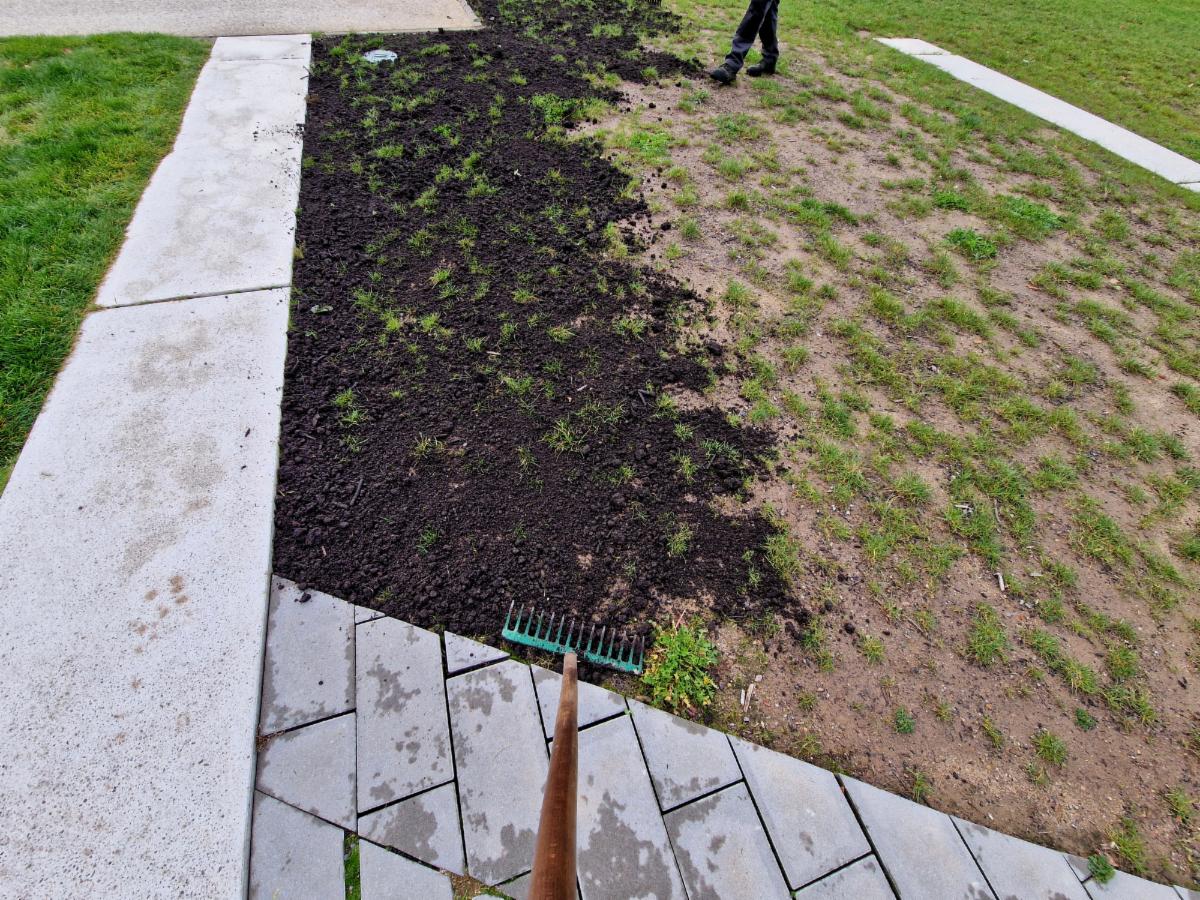
Adding a thin layer of compost to the lawn can be the difference between a lush, drought-tolerant lawn and one that has more moss than grass with water running-off rather than soaking in.
There are many ways to know if your lawn would benefit from the addition of compost.
-
A soil test is the best way to know if the soil supporting the lawn is low in organic matter.
- Weeds with long tap roots like dandelions can indicate that there is low organic matter in the soil.
- Moss is an indication of compacted soil and low fertility that can often be improved with compost.
- Lawn that doesn’t absorb water and allows rain and irrigation to run-off.
- A yard without worms and other beneficial soil creatures.
Adding compost can help with many of these issues and will allow the soil to utilize slow-release fertilizers by adding organic matter to break down the nutrients. Compost also helps your lawn retain water, leading to less run-off and creating a resilient, drought tolerant yard.
If you choose to add compost to an existing lawn:
- Apply it in late spring or early fall.
- First, mow the lawn short. Use a bagging mower or a rake to collect the cut grass.
- Next, aerate the lawn to allow the compost to sink in towards the roots.
- Choose finely sifted compost.
-
Ask these questions before buying compost.
-
Add a thin layer of compost, about one half inch deep, to the lawn. After applying, you should still see grass poking through.
- After adding compost to the lawn, you may need to add lime or slow-release fertilizer, depending on the information provided by your soil test.
-
Finally, overseed with a Pacific Northwest-adapted grass seed blend. Choose a blend that is shade tolerant or sun-loving, depending on your site.
| |
Free Compost Giveaway and Home Compost Workshops | |
|
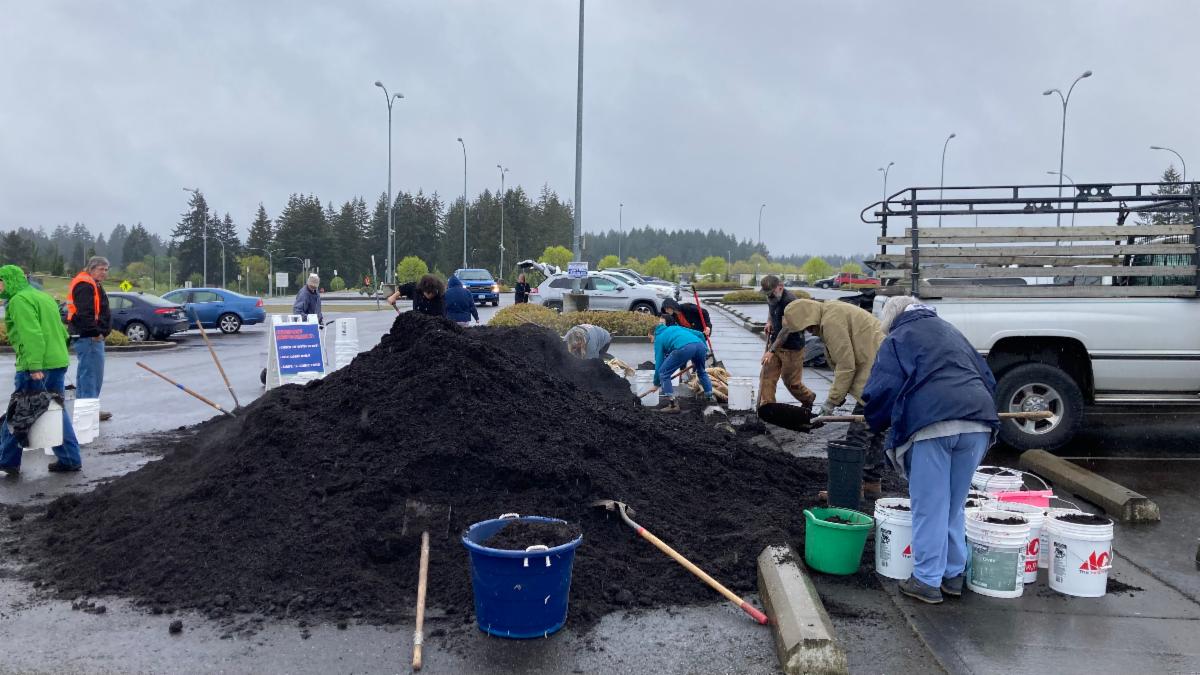
Thurston County residents are invited to come pick up a free, ½ cubic yard of bulk compost as a “thank you” for diverting food and yard waste from the landfill! Please bring a shovel and be prepared to load your own material.
When: Saturday, May 3 from 11 a.m. – 2 p.m. (while supplies last)
Limit: 1/2 cubic yard (20 x 5-gallon buckets)
Where: Hawks Prairie Park N Ride: 2548 Hogum Bay Rd NE in Lacey
This first-come, first-served event is in partnership with Brady Trucking Co., Inc., Intercity Transit, and the Master Recycler Composter Program of Thurston County. Compost offered at this event started as food and yard waste from local residents and businesses. It was then composted by Brady Trucking Co., Inc., in Shelton, WA, who is generously donating it in celebration of “International Compost Awareness Week” (May 4-10). More details are available online at ThurstonSolidWaste.org/community.
| |
Additionally, in-person, home composting workshops are being offered next door at Closed Loop Park Demonstration Garden:
- 9:30 a.m. – 11 a.m., Yard Waste Composting
- 11:30 a.m. – 12:30 p.m., Worm Composting
The workshops will be held rain or shine so please dress for the weather. Workshops are free and open to the public with no advance registration required. Seating is limited and filled first-come, first-served. If you plan on arriving late you are welcome to bring your own chair. Details about these workshops can be found at Washington State University’s Composting Workshops page.
| |
Compost: Gardeners are doing it for themselves! | |
|
If you have a bit of unused space in the yard, you can create your own compost!
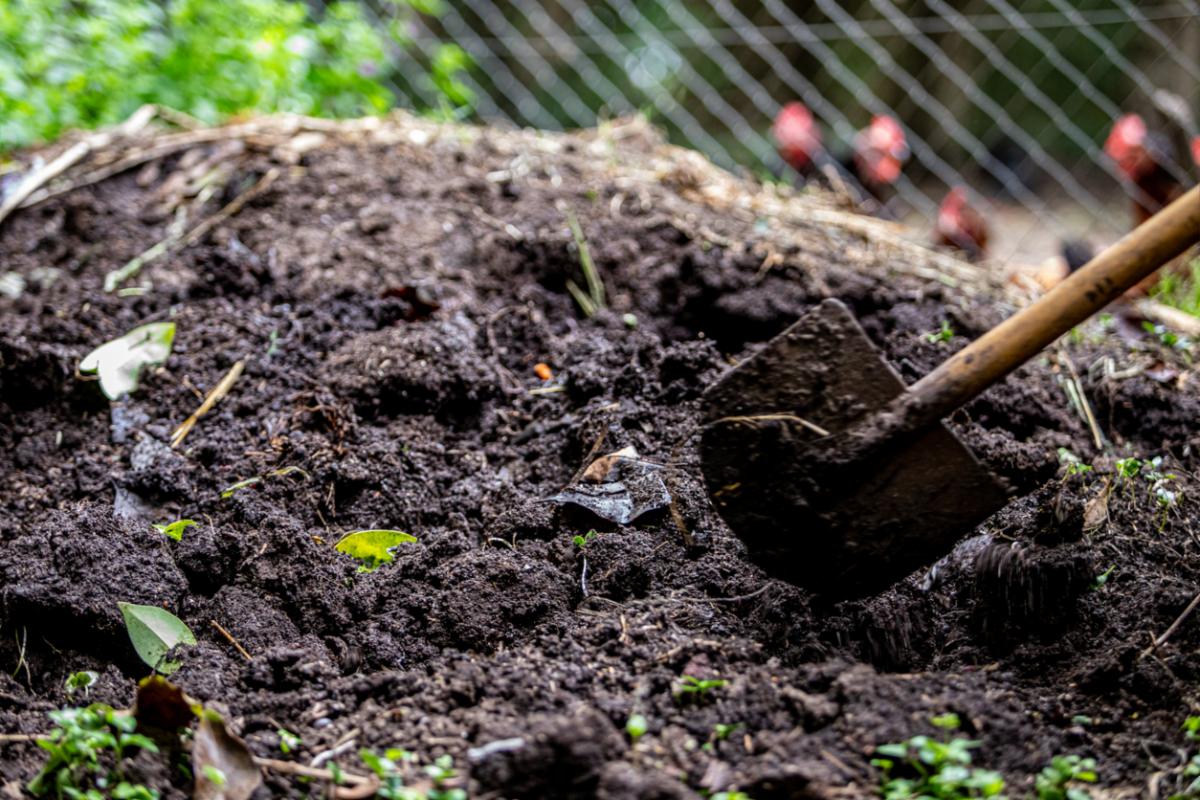
Compost is created by adding food and yard waste into a pile or barrel. For the fastest composting and to keep the pile from getting smelly or slimy, you need a good mix of materials. A simple rule of thumb is to dump one bucket of “green” material followed by two buckets of “brown” material. The ratio is based on the amount of material so instead of buckets it could be pitchforks, or wheelbarrows. Once you are finished adding your “greens” and “browns” it is best to have a layer of “browns” at the top of your pile. For example, if you have a bucket of non-invasive weeds (in other words, those NOT listed as noxious weeds) to add to the pile, cover them with two buckets of finely chopped tree limbs or straw. Water your pile until it’s moist but not dripping water.
Examples of:
| |
|
Green Materials
Food scraps
Green plant trimmings
Grass clippings
Coffee Grounds
| |
|
Brown Materials
Leaves
Straw
Wood chips
Sawdust
| |
|
Never Add
Pet or human waste
Meat or dairy
Treated wood
Diseased or invasive plants
| |
|
Want compost in a hurry? Turn the pile more often. If composting in a pile, simply use a pitchfork to remove, fork by fork, re-stacking into another pile.
During the rainy season, it’s best to cover compost piles to prevent them from getting too wet. Cover with a tarp and/or a thin layer of chicken wire at the base of your pile if animals are an issue. In general, if the green and brown layers are balanced and you don’t add meat or dairy, smells will be kept to a minimum and animal attraction reduced.
We’ve tried to compost any fear or trepidation that you may have about composting. Start a pile and reap the rewards of keeping garden amendments out of the trash and (eventually) into the garden!
Check out the Master Recycler Composters for more composting tips and tricks.
| |
Can You Compost Pet Waste? | |
|
We all love our furry friends and the sweetness of having a pet means having to deal with pet waste. Even if you don’t have a pet, someone else’s animal might use your yard as a bathroom, and you’ll want to dispose of the waste properly. What should you do with the waste? Where should it go? Can you compost it?
The bottom line is pet waste can’t be composted. Pet waste needs to be put into a plastic bag and into the trash. Every pile, every time.
Disease-causing pathogens like roundworms and E. coli found in cat and dog waste need high temperatures over many days to be killed, which is too challenging in most local composting facilities, and isn’t possible in home bins. Even dog waste bags advertised as “compostable” cannot be put in the compost.
According to Thurston County’s Stream Team, “a single gram of dog poop (about the size of a single pea) contains 23 million fecal coliform bacteria, almost twice as much as human waste!” This is why it can’t be flushed down the toilet. Septic systems aren’t designed to handle pet waste and LOTT, our local wastewater treatment plant that processes sewage, can’t filter out all the contaminants in pet waste.
It is critical to clean up after our pets, because if we don’t, millions of parasites, bacteria, and viruses can get into our waterways, making it unsafe to swim, fish, or harvest shellfish. Our drinking water can also become contaminated, and most of us would prefer our glass of water without a splash of dog poo.
| |
|
Do you have a question for the Thurston Home and Garden editors or a topic you’d like to learn more about? We’d love to hear from you!
Please contact us at 360-867-2674 or send us an email at healthyhomes@co.thurston.wa.us
| |
Why Can't I Compost "Compostable" Bags in Thurston County? | |
|
Compost facilities in Thurston County do not accept any type of “compostable” packaging items like bags, utensils, plates, or pizza boxes.
Food and yard waste bins, allow material to skip the trip to the landfill. Instead, it makes its way to local compost facilities, Silver Springs Organics in Rainier, and Brady Trucking in Shelton. These facilities use technology to speed up the natural process of composting and transform our organics into a nutrient-rich material used in yards, gardens, and farms.
Food, including bones and shells, along with other yard waste materials, provide carbon, nitrogen, and other nutrients needed for the composting process. Compostable packaging items do not add nutrients to the process and may contain perfluoroalkoxy alkanes (PFAs) – highly toxic “forever” chemicals that are linked to harmful health effects in humans and animals.
Our local facilities certify their finished compost for use on organic crops and food production. Accepting compostable packaging would risk that certification. If compostable packaging makes its way to the compost facility, it’s considered “contamination” and needs to be removed before processing.
Contamination in the organics stream is a widespread and costly issue. Sometimes items labeled as “compostable” require specific conditions that are not available at our local composting facility. Other times, companies use misleading or false claims, and the item is not compostable under any conditions. These items must be removed from the accepted materials. If not, operations staff will treat the load as garbage. This wastes resources and is more expensive.
Washington State is making great strides towards reducing the confusing and misleading marketing claims on products. We now have a law that no product in Washington can be labeled “biodegradable,” “degradable,” “decomposable,” or “oxo-degradable” along with a form to report violations on products seen in-person or online. Although this law also sets rules related to what can be labeled “compostable,” compost facilities throughout Washington use different composting processes and current rules do not directly translate to how items will breakdown locally. We continue to support our local facilities by not accepting packaging of any kind in the organics stream. This helps produce high quality material and maintains the organic certification for finished compost. It also ensures this service remains available to all county residents at a lower cost than garbage.
| | |
|  |
| | | |