|
Vol. 11, No. 5
Happy Fall Y'all!
There’s a little bit of everything in this month’s newsletter! We’re sharing helpful tips and information to keep you, your family, and your homes and yards healthy and safe—from what to do if you encounter a bat, to safely cleaning and disinfecting your home and choosing safer ways to control weeds.
You’ll also find tips on how to properly clean your ice machine, plus some fun and practical information about pickling. Have you ever wondered where our garbage goes after it leaves your home? We’ll take you behind the scenes to explore what happens next.
Finally, check out our upcoming events and see where you can find our Environmental Health team in the community. We hope you’ll stop by, say hello, and learn something new along the way!
| | |
Bats benefit people and the environment by pollinating plants, dispersing seeds, and managing pests, like mosquitos. However, many people associate bats with jump scares, creepy caves, and spooky season. While it’s true that bats are mainly seen at night and will always give some people the heebie-jeebies, there’s a lot less to fear about these winged wonders once you learn how to live safely around bats. Fortunately, learning to live harmoniously with bats is a lot easier than learning to communicate via echolocation or sleeping upside down.
Bats and Rabies
We can’t talk about bats without addressing the widespread concern of rabies. Bats are the primary vectors of the rabies virus in Washington. Fortunately, there have only been two reported human cases of rabies infection in the past 50 years; one in 1995 and one in 1997. So far this year, Thurston County does not have any recorded rabies cases in humans, pets, or wildlife. Rabies is mainly contracted through the bite of an infected animal, but it can also be passed on through other exposures like saliva or a scratch. You cannot get rabies by touching a bat’s fur, urine, droppings, or blood. If you're exposed to a rabid or potentially rabid animal, it's crucial to receive medical help as soon as possible. To protect your pets from contracting rabies, make sure your dogs, cats, and ferrets are up to date on their vaccines. You can’t test a living animal for rabies. According to the National Association of State Public Health Veterinarians, an unvaccinated animal that may have encountered a potentially rabid animal must be euthanized for testing or kept in strict quarantine for six months. Most people are unwilling to do either. Visit the Washington Department of Health’s Rabies FAQ page to learn more.
What to Do if You Find a Bat
Never touch a bat with your bare hands! If you must move a bat, wear leather gloves and use a shovel to gently pick it up. Most bats struggle to take flight from the ground, so try to relocate the bat to a protected and high area, like a tree, and away from pets and children. To prevent a possible bat encounter, bring and keep your pets and kids inside until the bat is gone. If you find a bat with white nose syndrome, you can submit your findings to the Washington Department of Fish and Wildlife (WDFW). They also request that you report any bat colony you find. You should report a sick or injured bat(s) to a wildlife rehabilitator.
Threats to Bats
There are many factors contributing to the decline in bat populations, including:
-
White nose syndrome is a fungal disease that has already killed millions of bats in eastern North America since it was first recorded in 2006. Learn what scientists are doing to fight the fungus and what you can do to help prevent the spread of the disease, too.
-
Outdoor cats kill millions of amphibians, birds, reptiles, and small mammals every year and their feces can spread diseases. If your cat wants to spent time outside, consider building them a catio. If your cats already live indoors, or you want to make the transition inside, make sure to provide plenty of enrichments.
-
Artificial Light at Night (ALAT) drastically impacts insect and wildlife behavior. Learn about some solutions to light pollution and responsible outdoor lighting.
-
Wind power turbines that bats fly into and become injured or die from.
-
Habitat loss from continuous human development leads to fewer places for bats to live. Plant a bat garden to attract insects that bats eat, add a water source, and provide supplemental shelter through bat boxes to support bat populations where you live. The WDFW has a webpage dedicated to creating bat habitat. On the same page, you’ll also find the application for the WDFW Habitat at Home certification.
-
Pollution and pesticides can make the insects that bats eat and the water they drink dangerous. Dispose of hazardous household and yard care products safely, and for free, at HazoHouse in Lacey. If you must use pesticides, choose the safest product for the job by visiting Grow Smart Grow Safe.
-
Climate change leads to unpredictable and extreme weather events and patterns that threaten bats’ ability to live.
Celebrate and bring awareness to the many benefits of bats during Bat Week, October 24th - 31st. This fall, keep your eyes turned toward the night sky, and in the off chance you see a bat transform into a vampire, let us know! We might have a few questions for them.
| | |
Are you mourning summer’s end? Let us suggest a visit to a farmer’s market to stock up on late-summer's produce. There are still cucumbers, carrots, onions, peppers and green beans that just need some salt and vinegar along with your time and effort to preserve them and bring sunshine into the gray days of winter. Check out some of these recipes: How To Make Quick Pickles (Any Vegetable!), and these recipes from the canning leaders themselves, The Ball Jar Company..
Using vinegar and salt to preserve summer’s bounty is a time-tested way to offer gratitude to summer’s freshness while preparing for the munching needs of the future.
Vinegar is an all-purpose, affordable, and easy-to-find household staple that can be used for many things like cleaning, weed control, and of course, as an ever-popular condiment for fish and chips! In this issue we’ll go deeper into vinegar’s abilities and limitations for cleaning and its widespread use for weed control.
Some folks don’t like to use it for cleaning because it can leave behind a pickle-like smell. We defend its use as a cleaner because, pickles are delicious! The smell of vinegar in a home indicates that a safe product has been used and, when combined with baking soda, it is nearly unstoppable as a scum remover!
| | The Safer Way to Clean, Sanitize, and Disinfect Your Home | | |
Vinegar is a staple in many of our homes. It can be used to cook, freshen laundry, and when mixed with baking soda, water, and Castile soap, it can be used to clean your entire home. There are many uses for vinegar, but it can’t be used as a sanitizer or disinfectant. Luckily, safer alternatives are available to replace hazardous cleaning products.
How to Identify Hazardous Products
Read the label! Look for the signal words “caution,” “warning,” “danger,” and “poison.” Those descriptive words indicate the hazard level of the product. “Caution” and “warning” represent moderate hazard and “danger” and “poison” indicate the most hazard. No signal words may mean that product does not pose a hazard risk or it could be mislabeled. To learn more about reading the labels of household products, visit our Healthy Homes and Yards webpage, and submit our workshop request form to schedule a, Create a Healthier Home presentation.
Choose Safer Products
Look for a third-party certified label on the product. The most common labels are the EPA Safer Choice and Green Seal. Products with these labels have gone through extensive health and safety testing to make sure they're safer for you, your family, and the environment. If you’re specifically interested in finding products that sanitize and disinfect, check out the EPA Design for the Environment website.
Cleaning, Sanitizing, and Disinfecting
The first step to sanitizing and disinfecting a surface is cleaning! You must always clean a surface by removing residue with soap and water before applying a sanitizer or disinfectant. If you don’t clean a surface with soap and water first, the product will not be able to sanitize or disinfect. Our Safer Cleaning Recipe Card explains how to make your own non-toxic, kid-friendly, all-purpose, vinegar-based cleaners at home!
Sanitizing reduces the number of germs on a surface to a safe level and disinfecting is when a product kills most germs on a surface. It’s a good idea to sanitize surfaces that meet our mouths, like kids’ toys, baby feeding supplies, countertops, and other surfaces where food is prepared.
Disinfecting kills the majority of germs on a surface. Disinfection is only needed when someone is sick, immune compromised, or you’re cleaning up bodily fluids.
Be careful of sanitizing and disinfecting too much. Doing so can create super-germs that become resistant to the sanitizing and disinfecting agents and require stronger chemicals to remove them. Remember to utilize the EPA Design for the Environment website to find safer sanitizers and disinfectants. Here’s to happier, healthier, homes!
| | |
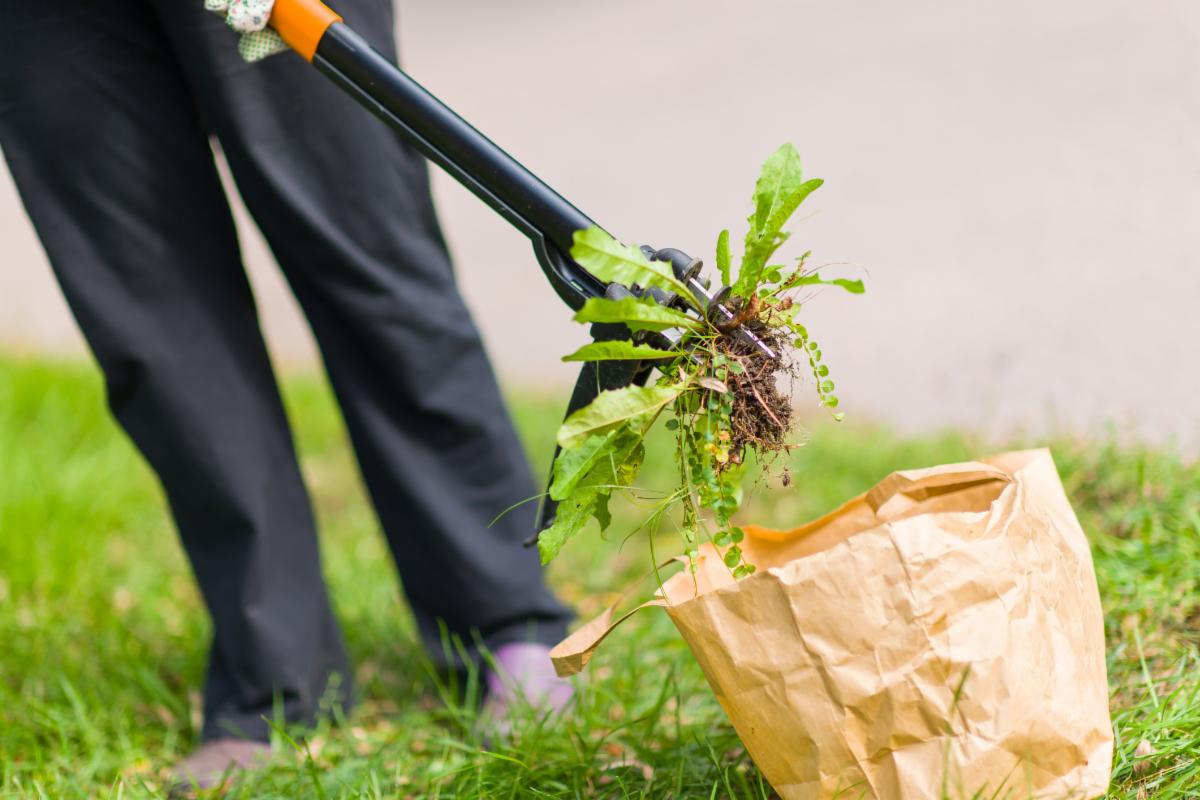
The safest weed control products are long-handled weed tools. They're easier on your back than smaller hand tools and by avoiding the use of herbicides, safer for you and the planet we share. Hands down, hand pulling is the safest option for dealing with weeds. Remember that whenever you pull a weed from the lawn, it’s important to replace it with a small handful of grass seed mixed with compost to prevent another weed from growing in that same spot.
There's a lot of anecdotal evidence that vinegar can be an effective weed killer. Since vinegar is not a registered herbicide, we can’t give advice on that specific use in your yard. However, we’ve heard that it works, especially when used on a sunny day. Allow local gardening writer Cisco Morris to share more about using vinegar as weed control.
Refer to Grow Smart Grow Safe for the safest weed and insect control products.
Make time for the free, self-paced Go Green Yard Care Program! This online program guides users through planning the yard you want and the steps needed to create it.
| | ICE, ICE, BABY! Fresh Ice Starts Here | | |
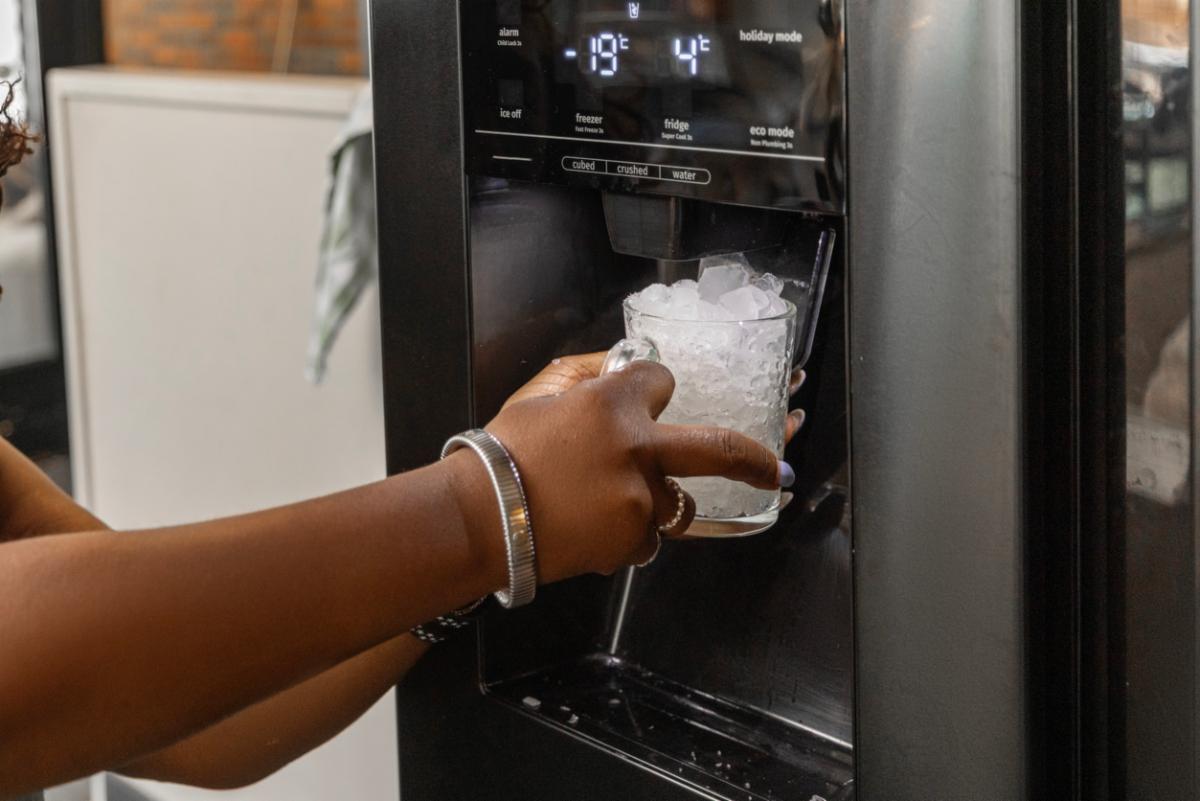
When was the last time you cleaned your ice machine? If you’re like most of us, the answer might just be, “Huh…we’re supposed to do that?” While we regularly clean our countertops, refrigerators, floors, and other kitchen appliances, the ice maker can easily be forgotten. But, because it’s constantly exposed to water and moisture, it can collect mineral buildup and grime and grow mold over time.
The good news is that giving it a good cleaning doesn’t have to be a big chore! Here are some simple tips to help keep your ice machine and your ice - fresh and clean:
* Always check your ice maker’s owner’s manual before cleaning. Some machines have specific cleaning cycles or products they recommend, and following the manufacturer's instructions is the best way to protect your appliance.
Safety first
- Unplug it or turn off the ice machine before you begin.
Empty the ice
- Remove all the ice from the storage bin.
Wipe down the inside and outside
-
Use a clean cloth and lukewarm, soapy water, and thoroughly clean the inside and outside of the ice maker. Pay extra attention to corners and crevices. Hand-wash the bin only rather than placing in the dishwasher. Intense heat from the dishwasher can warp or crack the plastic. Dishwasher heating elements reach temperatures that can easily weaken plastics, and the sudden shift from freezer cold to hot water risks cracking the ice bin. Over time, harsh detergents and extreme heat will also leave clear plastic looking cloudy.
Tackle mineral buildup
- If you notice white, chalky buildup caused by hard water, clean it with white vinegar (equal parts white vinegar and warm water) or a manufacturer-approved cleaner. Be sure to follow the instructions in your ice maker’s user manual. Allow the cleaner to sit only for the recommended amount of time by the manufacturer, then wipe away the loosened buildup thoroughly.
Rinse really well
- This step is important. Rinse the inside several times with clean water to remove the soap or cleaning solution. You don’t want your ice water tasting like vinaigrette!
Make fresh ice
-
Put everything back together and follow the manufacturer’s instructions for restarting the machine. Make and discard the first batch of ice after cleaning, then you’re ready to enjoy fresh, clean ice.
| | |
Where Does Thurston County's Garbage Go?
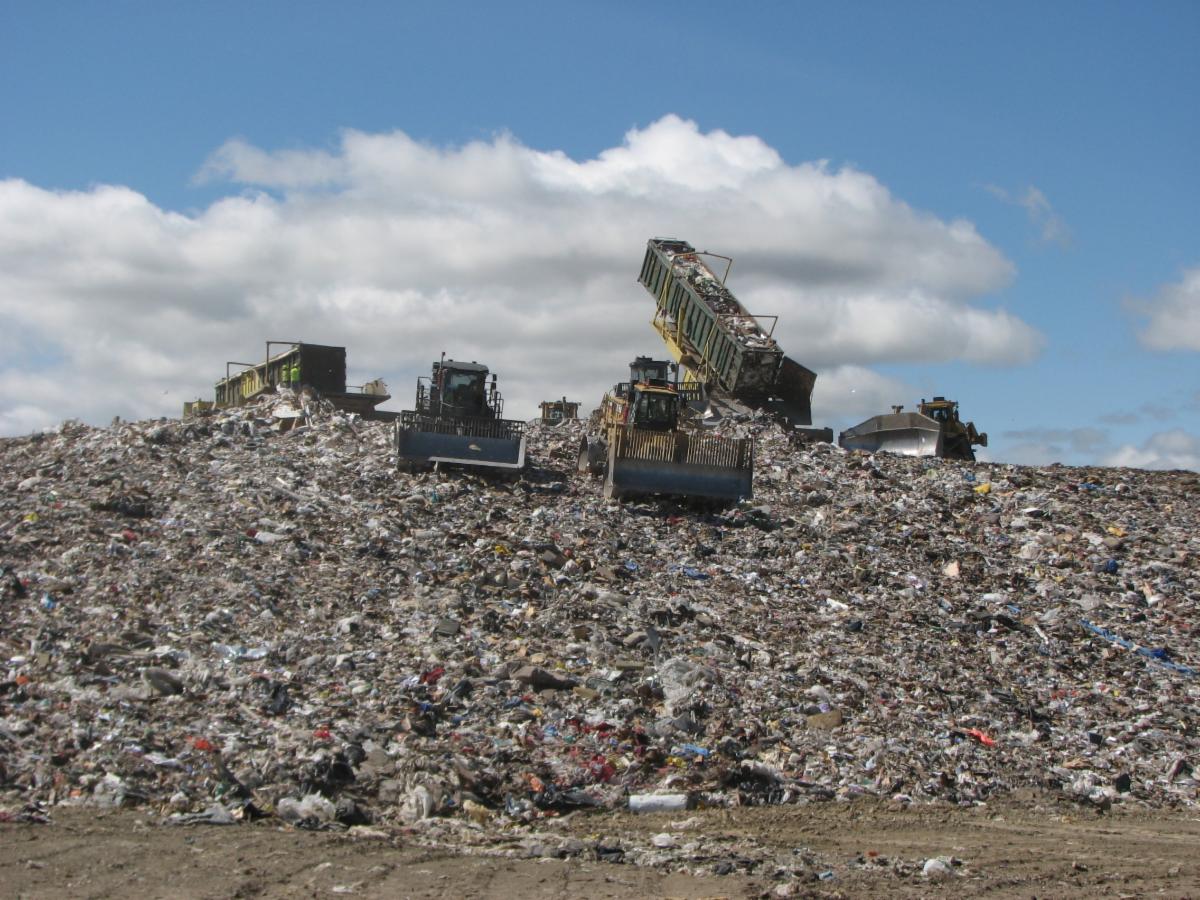
Here's a fun fact many Thurston County residents don't know: your trash doesn't stay here. It takes a long trip east to the Roosevelt Regional Landfill in Roosevelt, Washington, a tiny community on the north bank of the Columbia River, across from Arlington, Oregon. Read on to learn how your garbage gets there, and why a landfill in Roosevelt makes more sense than one in Thurston County.
The trip starts in Lacey
When a garbage truck empties your curbside bin, the garbage goes to the Waste and Recovery Center (WARC) in Lacey. The WARC sits on the site of an old landfill that operated from 1972 to 2000. Thurston County stopped burying garbage locally more than 25 years ago.
At the WARC, crews use a machine called a compactor to press the garbage into dense bales which are packed into shipping containers. This step is important because compacting garbage means fewer containers and fewer trips, keeping costs down. The WARC recently installed a new compactor and held a naming contest to name this important piece of equipment, which is how it received the name Smashquatch! Once Smashquatch fills a container, the long haul begins.
From Lacey to Roosevelt
Trucks carry the containers south to Centralia, where they are loaded onto rail cars. From there, a train takes them across the state to Roosevelt, in Klickitat County. Trains move heavy loads over long distances using less fuel than trucks, and they keep trucks off the highway. When the train reaches Roosevelt, the containers go onto trucks one more time for the short drive up to the landfill.
Why Roosevelt?
A landfill should be built where it can do the least harm. Roosevelt has four things that make it a much more ideal location than Thurston County.
- It's dry. Rain is costly and hard to manage at a landfill. Water that seeps through garbage can pick up pollutants, creating a dirty liquid called leachate. Leachate must be carefully controlled and is regulated by the Washington State Department of Ecology. Roosevelt gets around 10 inches of rain and snow a year, while Olympia averages about 50 inches.
- The ground is a natural barrier. The landfill sits on about 300 feet of solid clay and 1,500 feet of basalt (hardened lava). These barriers protect the groundwater from potential contamination.
- It's easy to reach. Nearby rail lines and river barges make it practical to bring in trash from far away and a natural gas pipeline brings methane from the landfill to be converted into energy.
- There are few neighbors. The landfill covers about 2,500 acres, or roughly four-square miles. It is tucked behind a ridgeline, so most people driving Highway 14 never see it. Roosevelt is home to roughly 200 people, and many of them work at the landfill, the town's largest employer.
What you can do
Even a well-built landfill is a last resort. The less we throw away, the less we ship and bury. Recycling, composting, and repairing or donating things that still work all help keep trash out of the landfill. Want to do more? Visit community.thurstonsolidwaste.org for upcoming presentations and events on recycling, composting, and repairing.
| | Should I Use Sanitizing & Disinfecting Wipes to Remove Germs? | | |
We don’t recommend using sanitizing/disinfecting wipes for many reasons. One of the main reasons is because most sanitizing/disinfecting wipes contain harsh, toxic chemicals that are dangerous to human health when touched, eaten, or breathed in. A lot of times, people use sanitizing/disinfecting wipes with their bare hands, allowing the chemicals to get absorbed into their skin. People may also forget to wash their hands after using the wipes and then eat food, allowing the chemicals to get into their mouth.
When wipes are used in places with poor ventilation, chemicals can become airborne and enter our lungs when they're breathed in.
Another reason we don’t recommend sanitizing/disinfecting wipes is because they usually don’t leave the surface wet enough for the product to do its job. You should always read the labels on products to learn how to safely use, store, and dispose of them. If you can’t follow the direction on the label, don’t use the product. The label will tell you how long the product needs to remain wet on the surface for it to sanitize (usually 30 seconds) and disinfect (usually 4 minutes). This is called the dwell time. If the product dries before the dwell time is up, the surface did not get sanitized or disinfected.
Finally, sanitizing/disinfecting wipes can’t be used by people under the age of 18. You may be surprised to learn that you don’t need to sanitize and disinfect your home as often as you think. Visit the EPA’s website to learn when and how to clean and disinfect your home. If you determine that you do need to sanitize or disinfect, choose an EPA Design for the Environment product that is proven safer for you, your family, and the environment.
If you have kids or pets, it may feel like you always need to be cleaning. For routine cleaning, we recommend making your own safer cleaners with ingredients you probably already have, like soap, baking soda, water, and vinegar. This homemade cleaner can be used by people under 18, and there’s no excuse for them not to help! You can thank us later.
| | |
Do you have a question for the Thurston Home and Garden editors or a topic you’d like to learn more about? We’d love to hear from you!
Please contact us at 360-867-2674 or send us an email at: healthyhomes@co.thurston.wa.us
| | Here's where you can find us in the upcoming months! | | |
Tumwater Clean-Up, Drop-Off Event
Safely discard expired prescription medications; donate non-perishable food and reusable grocery bags (paper/plastic); and shred personal documents.
Saturday, October 3rd, 2026
9:00 AM - 12:00 PM
Nisqually Housing Fair
Open to Nisqually Tribal Members, Tribal Community, and Employees
Friday, October 9th, 2026
12:00 PM - 2:30 PM
Chehalis Tribe Community Wellness Event
Open to all Tribal members, families, and community members
Tuesday, October 13th, 2026
10:00 AM - 2:00 PM
Thurston County Veteran Resource & Job Fair
Current or former military men and women are invited to attend this FREE event. Information on community resources, available services, workforce development and more. Free lunch and giveaways will be provided!
Thursday, November 5th, 2026
10:00 AM - 3:00 PM
Thurston County Septic $ense Workshop
Learn simple, low cost ways to prolong the life of your septic system and protect the health of your family and our community's drinking water
Thursday, November 12th, 2026
Location: Griffin Fire Dept. - Station #2
6:30 PM - 8:00 PM
If you'd like to register for this Septic $ense workshop, please call 360.867.2674 or email: healthyhomes@co.thurston.wa.us
| | | | |