|
Winterizing means getting ready for cold days, rainy grays, and longer nights that are on their way. This issue of Thurston Home and Garden focuses on winterizing our homes and yards. We can also winterize our heads and hearts by visiting the local library to stock up on books and movies, make time to visit local farmer’s markets to taste the seasons, and prioritize connecting with friends and family to prepare for the damp darkness ahead.
The darker seasons can help us slow down, take a break, and snuggle in. If you’ve been in denial that our lovely fall weather eventually transitions to more rain and frost, here’s your reminder to get a few things done before hibernation begins! Preparing for the cold months and deep darkness can make our experience of them more relaxing.
| | Prepare Gutters for Winter | | |
Many different areas around your house require maintenance as fall fades to winter, and a great place to start is the gutters. A properly functioning gutter helps move water away from the home to prevent structural damage, mold, and other moisture issues. A debris-free gutter is also less likely to attract rodents and other pests looking for a new home. Before you get started, make sure you have the proper tools and personal protective equipment (PPE) for the job and a plan for how to clean your gutters safely. Avoid cleaning your gutters on a rainy or windy day. Hire a professional for help, if needed.
Personal Protective Equipment:
- Wear work gloves and wait to remove debris from the gutters until it is dry. If that’s not possible, put a pair of waterproof gloves (rubber or latex) inside your work gloves.
- Wear safety glasses to keep leaves and other debris out of your eyes.
Safety on a Ladder:
- Never climb above the second-to-last step/rung. It is not designed to hold much weight.
- Do not extend your reach. It can cause you to lose your balance or hurt yourself.
- Step ladders should be used on solid ground whenever possible.
- If you have a two-story home, use an extension ladder and a ladder stabilizer to keep your ladder in place.
Directions:
- Remove debris closest to the downspout and work your way towards the closed end of the gutter.
- Larger twigs and branches can be removed by hand, and compacted debris can be removed with a gutter scoop or trowel.
- Collect the debris in a bucket. Hook the bucket on the ladder so you can use both hands to scoop debris and stabilize yourself.
-
Dispose of debris in the garbage. Do not put gutter debris into the curbside yard waste bin or into your home compost pile since shingle debris or any hazardous products that were used on the roof can transfer toxic chemicals into the compost.
It’s a good idea to clean your gutters twice a year; first in early spring and again in early fall before the heavy rains begin. If you have trees near your home, you should clean your gutters every three months to reduce the chance of pine needles and leaves clogging the gutters and downspouts. Be aware of your surroundings and always choose level ground for ladders because leaves should be the only thing falling this time of year!
| | |
Fuel-using tools like lawn mowers and weed trimmers need to be drained of oil and gas so they don't turn to sludge, causing engine damage. The leftover fuel should go to HazoHouse for free, safe disposal.
Remove the batteries from electric tools so that they don’t accidentally start up in the winter as temperatures fluctuate.
Scrape and/or rinse off all grass and dirt from blades. Now is a great time to take off the mower’s blades and sharpen them. The lawnmower deck and wheels should be thoroughly rinsed after use because grass left behind can decompose and cause damage to your machine. A good coat of oil before you store will make sure the blades are ready in the spring as soon as you are.
| | Cold Weather, Warm Compost: Winter Preparation Tips | | |
As the days get shorter and colder, your garden and compost pile need a little extra care to prepare for winter. A few simple steps in the fall can keep your compost system healthy and make sure you have rich, finished compost ready for spring planting.
1. Check Your Compost Setup
Before winter sets in, look over your compost area. What worked well this year? Did your pile heat up? Was your bin easy to use? Make notes and, if possible, take a few photos. Reviewing your setup each fall helps you track progress and plan improvements for the year ahead.
2. Tidy Up and Prep Tools
After fall clean-up, give your compost tools a little extra attention. Clean, sharpen, and oil them so they’ll be ready to go in the spring. Keep an eye out for any tools that need replacing, as you may catch some good end-of-season sales.
3. Stockpile Fall Leaves
Leaves are one of the best things you can add to your compost pile! Dry, crushed leaves are an excellent carbon source (sometimes called “browns”). Collect and store them in clean garbage cans or bags to use next year. Having a leaf stockpile makes it easier to balance nitrogen-rich food scraps (“greens”) in the spring when leaves are harder to find.
4. Get Your Bin Winter Ready
Now’s the time to prepare your compost pile for the cold months:
-
Turn and water: Give your pile one last turn to add oxygen. Add water to the pile until it feels like a wrung-out sponge.
-
Stop adding new scraps: Pick a date to add your last round of food and yard waste. After that, let the pile rest so it can “cook” all winter. This way, you’ll have finished compost by spring.
-
Watch for pests: Slugs and snails lay eggs in the fall. The eggs are small, round, and white or translucent. Removing them now will help reduce the number of slugs you see next year. Once you've removed the eggs from your compost pile, be sure to squash them.
Don’t have a compost pile yet? Fall is a great time to start! A balanced mix of browns and greens will break down over winter, setting you up with healthy compost next season.
5. Winter Care for Worm Bins
Outdoor worm bins need extra attention in cold weather:
-
Move or insulate: If possible, place the bin in a protected spot like a garage, shed, or under an eave. If it is too large to move, insulate it with cardboard, newspaper, or straw.
-
Refresh bedding: Add moist bedding (like shredded paper or cardboard) so it feels like a wrung-out sponge.
-
Feed carefully: Worms eat and move less in winter. Add food scraps only near where they are gathered. Check the bin after feeding worms to avoid rotten food collecting in your bin.
Why It Matters
By taking a little time now to winterize your compost bins, you’ll keep your system working smoothly, prevent pest problems, and ensure your worms and microbes stay healthy. Come spring, you’ll be rewarded with nutrient-rich compost for your garden.
Learn more:
Got composting questions? Email the WSU Master Gardener and Master Recycler Composter Q&A Clinic at master@co.thurston.wa.us.
| | |
Throw on a warm jacket and slide into a pair of rainboots; it’s time to winterize your outdoor spaces! This big project can be broken down into many smaller ones and will look different depending on the areas you’re working with. Some tasks might be time-consuming and tedious but maintaining outdoor spaces this time of year will help protect your investments and make spring-prep much easier. Your busy spring self will thank you for all the efforts put in now.
To reduce the chance of burst pipes, turn off the outdoor water supply and drain the faucet to prevent freezing. You can also cover the taps with foam covers to insulate them during the winter months. Disconnect and drain garden hoses, wrap them up to prevent kinks that can turn into cracks or holes, and store them flat.
If you have outdoor appliances or furniture, cover them with weather-resistant covers or store them somewhere dry and out of the elements. If applicable, refer to the owner’s manual for instructions on winterizing fountains and ponds.
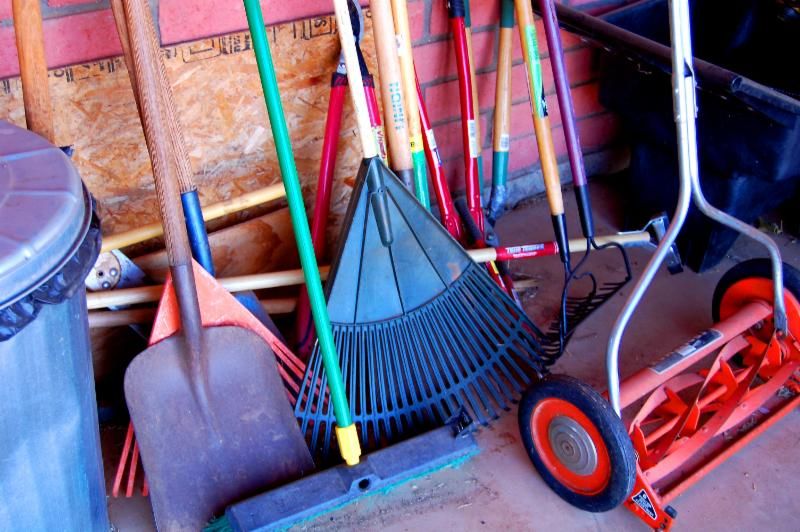
This is also a great time of year to maintain hand tools before storing them for the season. Doing so will increase their lifetime, avoid expensive repairs, and enhance their performance. Scrape dirt and other debris off the metal parts of your tools with steel wool or a coarse wire brush, rinse thoroughly with water, and dry completely. Use sandpaper to remove rust on metal and splinters on wooden parts of the tool. With a rag, rub a light layer of mineral oil on metal parts to prevent rust, and linseed oil on wooden parts to prevent drying and cracking. If the tool has a wooden handle, sand the rough surface with sandpaper and then apply a coat of linseed oil to prevent future drying and cracking. Visit WhereDoITakeMy.org for information on how to safely dispose of oily rags.
Sharpen bladed tools such as hoes, shovels, spades, pruners, and lawn mowers with a metal file until a shine appears. Lastly, store your garden tools on a rack so they are organized, out of your way, and off the ground where moisture could damage them. If you follow these steps, your tools will be ready for springtime in a few short months.
| |
How can the community help our unhoused neighbors prepare for winter?
| | |
To keep our unhoused community safe from freezing temperatures, Interfaith Works converts Sergio’s Place from a day center into a temporary overnight shelter. These events, especially when they occur over several days, put a heavy strain on shelter staff. Volunteers are highly needed during these emergency events, and we need the community’s help.
During a Hazardous Weather Event, Olympia Mutual Aid Partners (OlyMAP) receives funding to provide critical shelter-in-place outreach. Instead of encouraging people to leave encampments and head to shelters, OlyMAP staff and volunteers go directly to where unhoused people are staying. They distribute essential cold weather supplies — such as sleeping bags, tents, hand warmers, and warm clothing — and offer connection to services and health and safety check-ins. This outreach ensures that even those who choose or need to remain unsheltered are supported with life-saving resources during extreme weather conditions.
Become a volunteer
Interfaith Works hosts a homeless shelter volunteer training on the second Saturday of every month from 10am – 1pm.
Located at: Interfaith Works Administration Office: 110 11th Ave SE, Olympia, in the basement of The United Churches of Olympia. The training includes basics on harm reduction and trauma-informed care and always comes with coffee and donuts. Walk-ins are welcome, or you can register online. Learn more at: iwshelter.org/volunteer.
Volunteers with OlyMAP work alongside staff to help with direct outreach, supply distribution, basic office tasks, and more. Learn more at www.olymap.org/volunteer.
Donate supplies
Donating supplies during the cold weather season is another great way to contribute to hazardous weather response.
Donations are accepted during regular business hours at Sergio’s Place.
Tuesday – Friday from 10:00am – 5:00pm at 3501 Mary Elder Rd NE (Sergio’s Place donation collection entrance). No parking on Martin Way. For more information, contact Sergio’s Place: 360-706-2287
Cold weather donations needed: blankets, twin/single bed sheets, ramen, non-perishable snacks, instant coffee, creamer, hot tea, hot chocolate, disposable cups and utensils, socks, long johns, underwear, tarps, ponchos, hand warmers, sleeping bags, tents, gloves/mittens, hats, warm clothing.
Learn more about donating with:
Interfaith Works
OlyMAP
To learn more about local affordable housing and homeless response efforts, sign up for the new quarterly newsletter from the Thurston Regional Housing Council (RHC).
The Thurston Regional Housing Council newsletter includes updates from the RHC, highlights from housing work around the county, and some deeper dives into housing topics specific to Thurston County. Reading this newsletter is a great way to keep up with local housing news and find opportunities to get involved. Here is the Fall 2025 issue to give you a peek.
This article was written by guest author, Elisa Sparkman, Housing & Homeless Prevention Communications Specialist for Thurston County Public Health and Social Services.
| | |
Do you have a question for the Thurston Home and Garden editors or a topic you’d like to learn more about? We’d love to hear from you!
Please contact us at 360-867-2674 or send us an email at healthyhomes@co.thurston.wa.us
| | Rate Increase at Thurston County Waste and Recovery Center | | Rates are increasing at the Thurston County Waste and Recovery Center (WARC) and at the Rainier and Rochester Drop-Boxes in 2026 and 2027. We wish we could keep them the same forever, and we almost have. Our last increase was in 2012! Since then, the costs of fuel, labor, power, and maintenance have increased significantly. Beyond that, our aging facility and equipment need repair or replacement to stay operational. As the population of Thurston County grows, we create more trash and recycling. In fact, we are operating above the original WARC facility design capacity at times. The rate increases will help fund necessary upgrades to our facility, create redundant systems to avoid downtimes, keep pace with inflation, and enhance environmental protections. It will also keep recycling free and make it easier than ever! Whether you're a resident or commercial hauler, you should experience shorter wait times, increased safety, and the assurance that your local solid waste facilities will continue to deliver fantastic service for years to come. For more information, visit: https://thurstoncountywa.info/solidwasterates | | Here's where you can find us in the upcoming months! | | | | |