|
Susan McCarthy, RN, Shares How Nursing Improves Mental Health Treatment
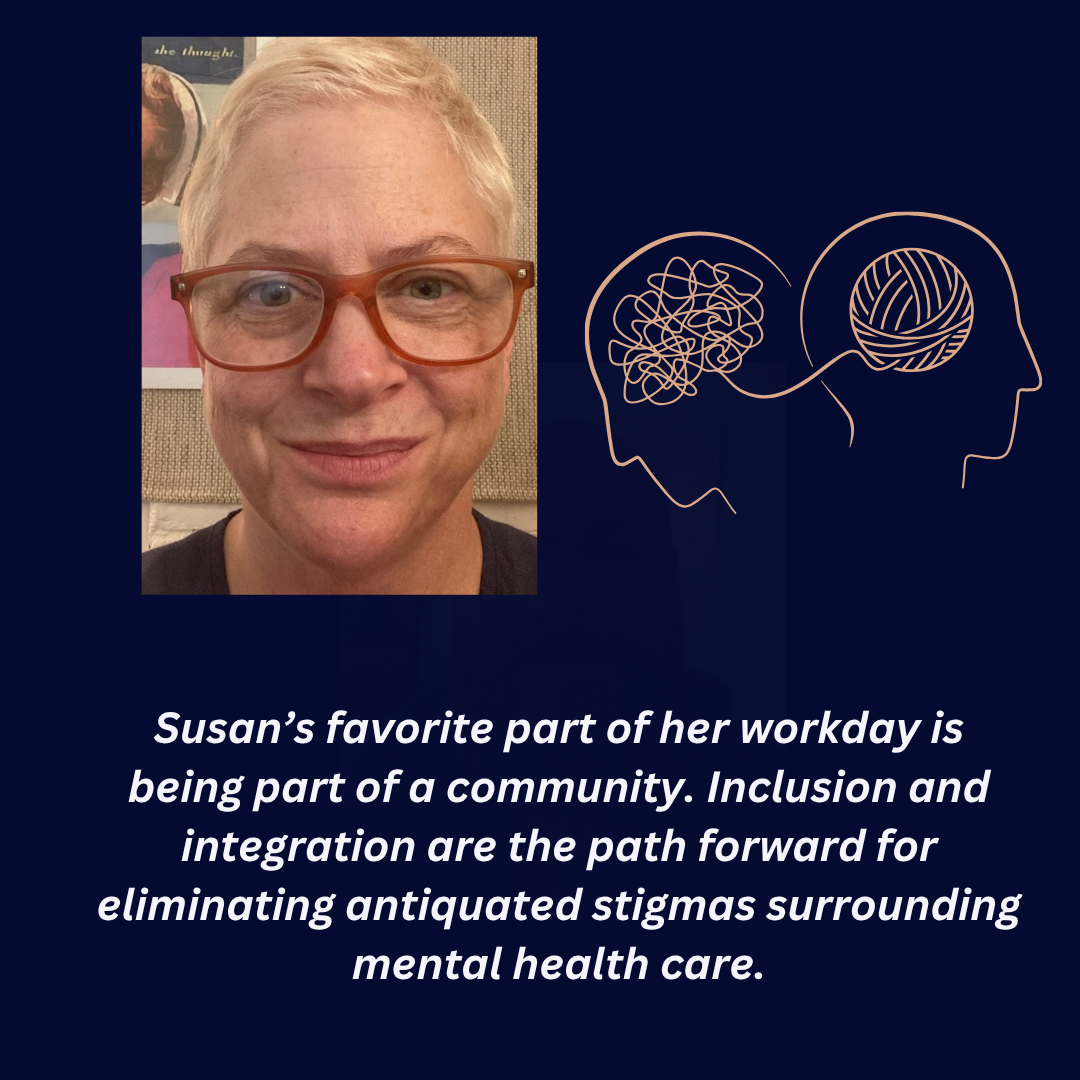
Susan is a Nurse with West Central. She has 10+ years of nursing experience with a background in patient care, including working with individuals facing behavioral challenges.
How does nursing fit into West Central’s Certified Community Behavioral Health Clinic (CCBHC) model of care?
The role of the nurse is to bond with the client in a neutral and non-judgmental way. The level of trust has to be high because clients trust us to administer powerful medications. We educate the client on possible side effects, reporting on efficacy, and safe practices on medication storage. We also monitor clients by assessing physical ailments and advocating for treatment when indicated.
What is a nurse’s role in integrated care — a CCBHC requirement?
At the moment, integrated care is challenging. Nurses at WCBH are part of the Assertive Community Treatment (ACT) team, and our involvement necessitates travelling into the community to reach at-risk clients. This can be over 50 miles in a day. Our goal is to perform Holistic Health Inventories (HHI) for these clients.
A better model of care is our ultimate goal.
Are you seeing improved outcomes for clients through integrated care?
Any opportunity to assess and engage clients in the HHI is revelatory. It can surprise the nurse and the client when an issue with physical health has been overlooked or neglected. People struggling with mental illness are historically underserved by the medical community for a variety of reasons. Implementing these new initiatives will definitely improve client outcomes.
Do you have recommendations to bridge the gap between mental health and physical health?
When we go to our PCP, they are aware of any specialists that we see: endocrinology for diabetes, cardiology for heart health, and pulmonology for respiratory issues. These would be considered bridges between the PCP and the wider medical team. This bridge rarely exists for mental health. Our initiative to provide integrated care will be a leap forward in understanding holistic health, body, and mind. It will require providers to consider possible hurdles in healthcare for clients experiencing mental illness. Hopefully, our example will encourage other community-based behavioral health facilities to duplicate our model.
Clients have small victories and small setbacks. They live very much in the moment. I am happy with victories and empathetic when clients stumble. But I am aware that everything is transitory. This helps me to stay centered, and it reminds me that anyone at any time can experience mental illness and its domino effect. WCBH has done amazing, life-changing work in our community.
|