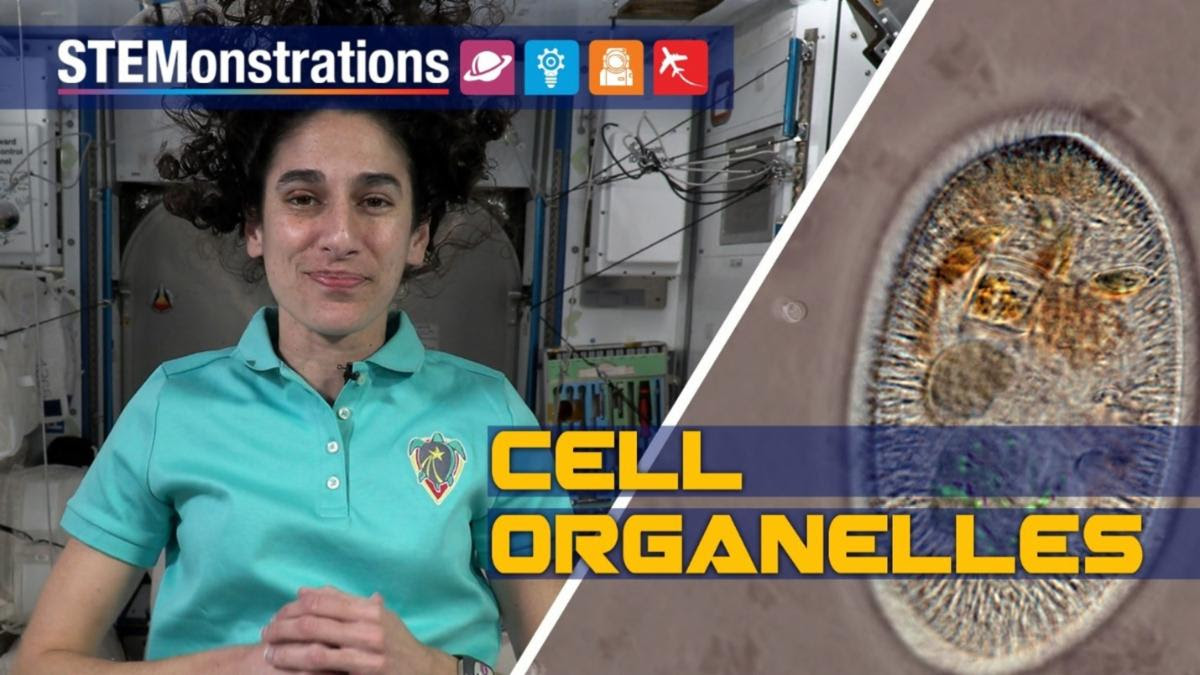
In the latest STEMonstration episode, NASA astronaut Jasmin Moghbeli shows students around the International Space Station and compares its parts to the major organelles of a cell. Explore the parallels between cellular functions and the functions of the space station.


Learn how studying cells in microgravity helps us better understand the human body and solve biomedical problems. 


In the corresponding classroom connection, students learn about the space station and explore the functions of prokaryotic and eukaryotic cell organelles.


Click here to explore more STEMonstrations and activities.

Cover Art Contest: Scientific Ballooning Handbook – 50th Anniversary Edition


Audience: Artists ages 13 to 18

Entry Deadline: Oct. 1

Contact: sarah.roth@nasa.gov


The NASA Balloon Program Office is organizing an update to the Scientific Ballooning Handbook and inviting students to design the cover. Entries may be submitted by individuals or students working together in teams.


The winning artwork will be the cover for the 50th-anniversary edition handbook, which NASA will digitally publish in the public domain. The winning art will also be professionally printed and flown on a NASA Scientific Balloon. The art will then be returned to the artist(s), compliments of the NASA Balloon Program Office.

ACTIVITIES

3D Print with Sand: No 3D Printer Required!


Don't have your own 3D printer? No problem! In this fun activity you will make your own colorful 3D prints using craft sand and glue. No 3D printer required!

 Read more

Candy Rainbow


Here is a fun project you can try with leftover candy you have. You will make some amazing art using nothing but colored candy and hot water—and a little bit of science. Save some of your candy and get started! 

Read more

Fish Use Physics to Avoid Running into Each Other


Groups of birds and fish may harness fluid dynamics to keep just the right distance from each other. Understanding how could help engineers build better robots.


Shimmering schools of fish provide some of nature’s most captivating displays of synchrony. Swimming in perfect unison, these groups almost appear to move as one giant organism. But with so many individuals in the mix, it’s a wonder that more of them don’t crash into each other or fall out of formation.


According to a study published today in the journal PNAS, animals that move in groups through fluids like air or water might have a hefty dose of physics working in their favor. By surfing in the wake of individuals up ahead, schooling fish and flocking birds can keep pace with their leaders—even without mimicking their every move. Understanding these interactions could help engineers build more energy-efficient underwater vehicles and prove useful for harvesting renewable energy from wind or water.


Continue reading

We're Hiring!

Education Manager

Reports to: Chief Executive Officer 

Status: Full-time, Exempt 


Click HERE to learn more

Facebook  Twitter  Linkedin  Instagram  

website | email | 602.734.5434