|
You may have heard that mold in the home is not healthy, but did you realize that exposure to mold can cause serious health problems?
Symptoms linked to mold exposure include fever, pneumonia-like symptoms, heart disease, rheumatic disease, asthma, sinusitis, immune suppression, cancer, memory loss, vision loss, chronic fatigue, skin rashes, depression, ADHD, anxiety, and liver damage. Those with pre-existing health problems are at greatest risk.
Exposure to toxic mold can have a significant impact on the cardiovascular system, potentially leading to heart problems. The impact of mold toxicity on the cardiovascular system can range from mild to severe, depending on the extent and duration of exposure.
Studies have shown that prolonged exposure to toxic mold can cause inflammation, which can in turn lead to damage to the heart and blood vessels. Mold toxicity can also cause changes in heart rate and rhythm, as well as affect blood pressure and oxygen levels in the blood, both resulting in strain on the heart.
Mold toxicity can cause myocarditis (inflammation of the heart muscle), endocarditis (an infection of the lining of the heart), and damage to the heart muscle and damage to the heart valves. It can also cause blood vessels to become inflamed and narrow, which can lead to decreased blood flow to the heart. This can lead to the formation of blood clots, which can block blood flow to the heart and cause a heart attack.
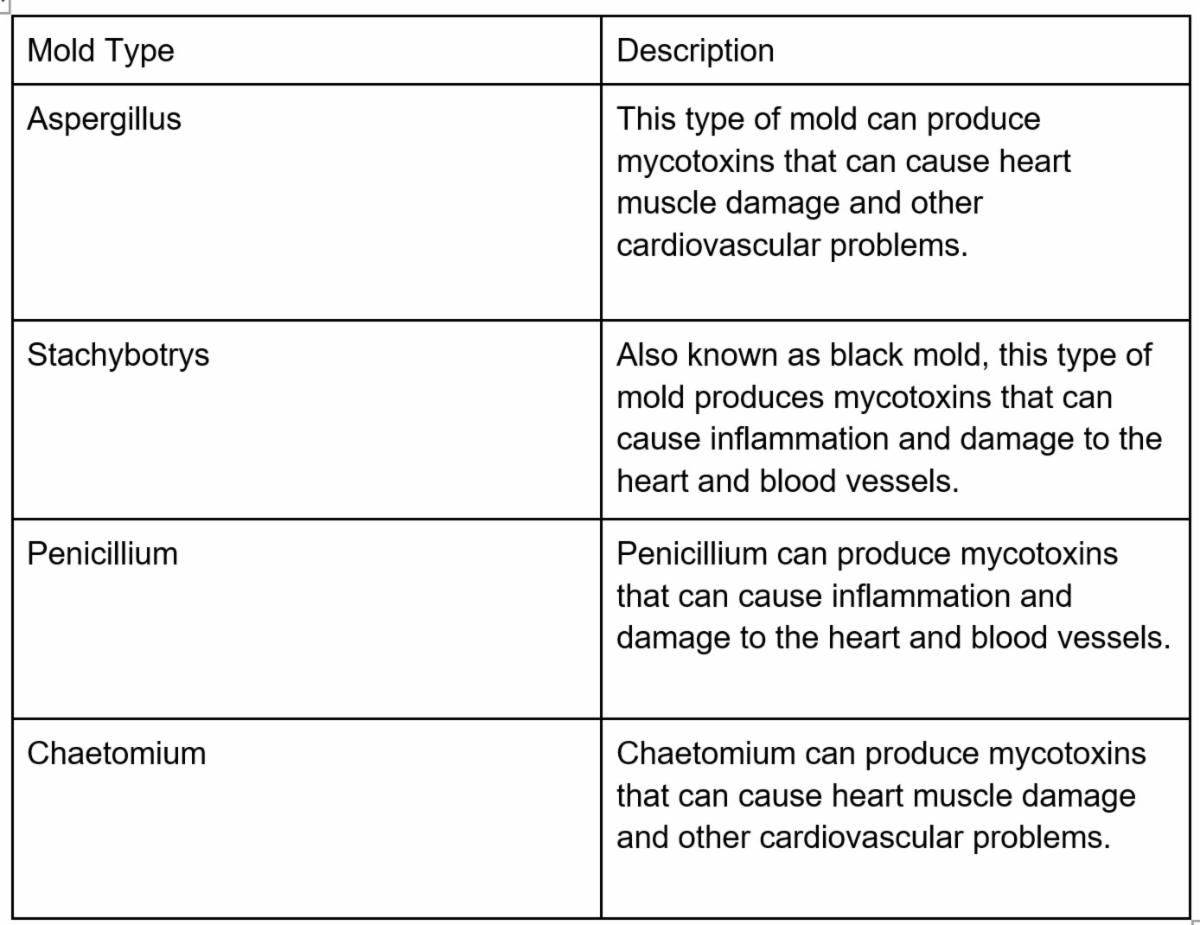
Here are some of the most common types of molds that have an impact on heart health:
|