January/February 2025

Trail Mail

BlockFarewell to the Morgan's


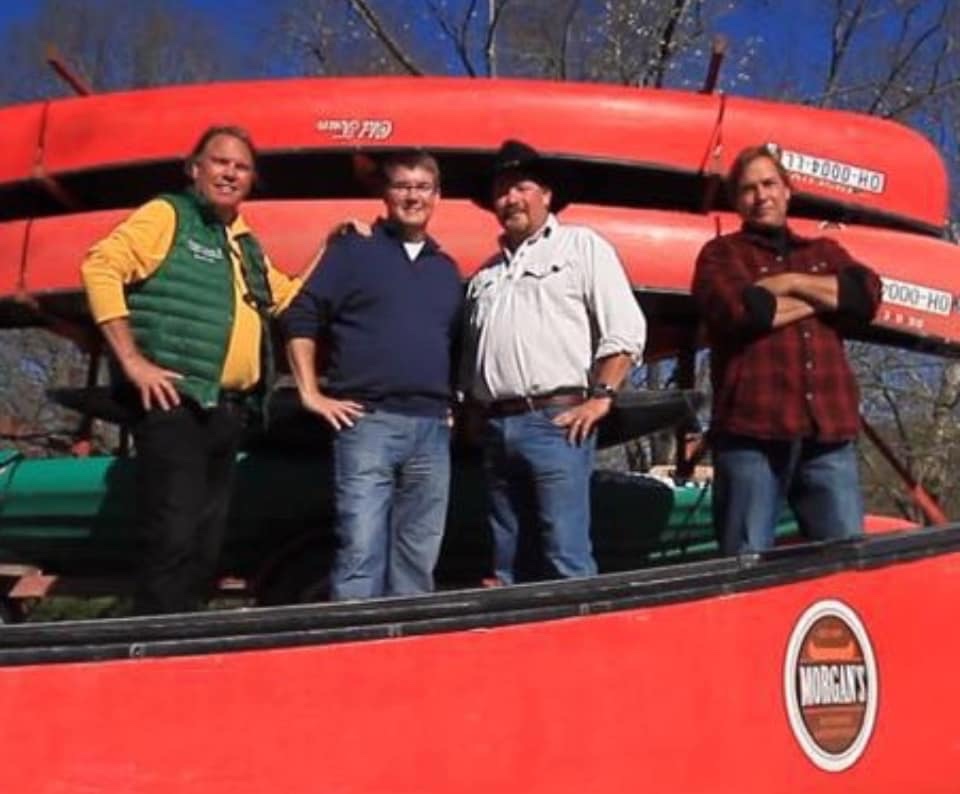
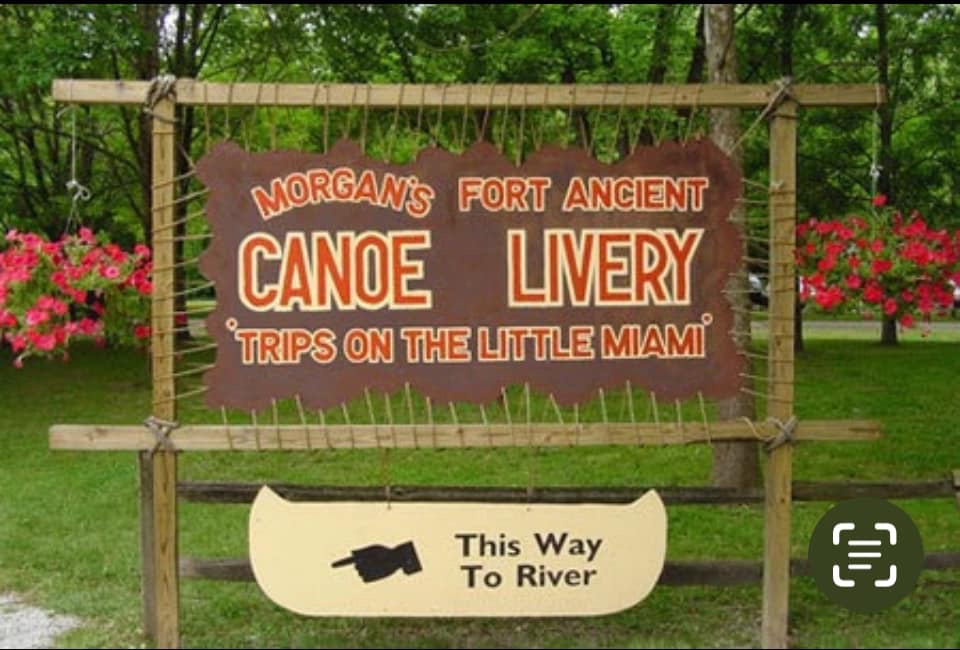
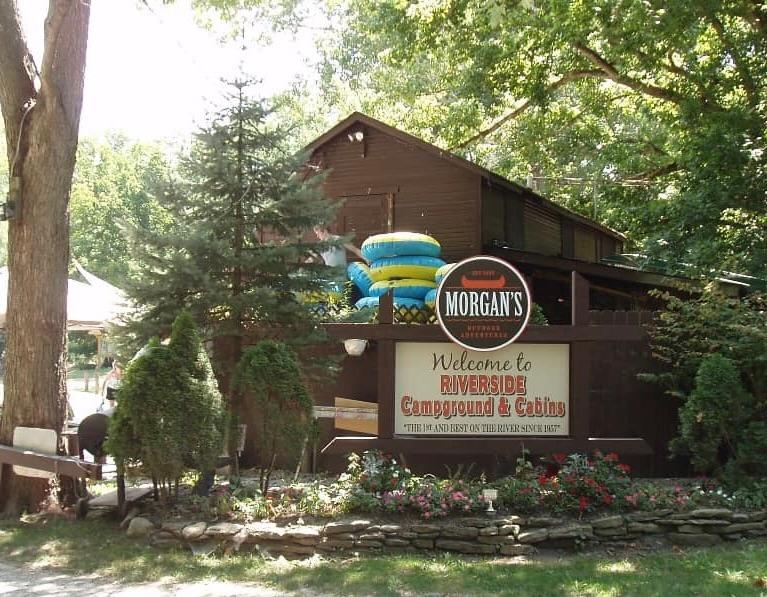
January brought some bittersweet news to the greater Little Miami community. The Morgan family announced closure of Morgan's Canoe and Outdoor Adventures, both the canoe livery and the campgrounds along the Little Miami River. While we are sad to see these ventures close, FLMSP is heartened to learn that the 25+ acres involved will be conserved, with the help of the Little Miami Conservancy, ODNR and the Susan Geier Peters Foundation.


To learn more about the Morgan's and their lifetimes on the river, here is an article from Cincinnati Magazine Leaving Their Legacy on the River

You can read more about the closure on their Facebook page Morgan's Canoe FB


The Morgan family have been great supporters of the FLMSP, as active volunteers on trail maintenance, providing venues and donations for FLMSP events and supporting the organization. We wish all of the Morgan family success with their future endeavors and adventures.


Y

Wonderland Trail

by Rick Forrester


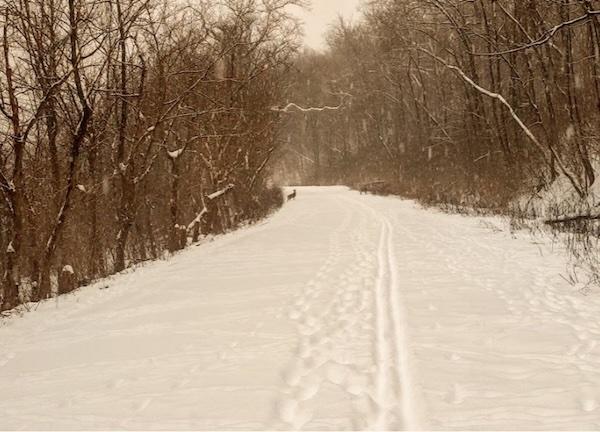
Winter is an incredible time to visit the trail. After our snowstorm in January, I decided to venture head out on my cross-country skis from Fosters heading south. I was immediately greeted by repeated calls of a red tail hawk who shadowed me for over a minute. The next milestone of note was the Judy Seacrist bench topped with six inches of snow where openings between the slats yielded a curious and artistic picture. Somewhat startled by an odd commotion, I spied a “blizzard” of juncos. Yes, “blizzard” is the technical term for a flock of juncos as they often gather in large flocks in the winter.


Skiing on, I crossed over a patch of thousands upon thousands of animal tracks leading in all directions followed by a highway of deer tracks. I saw seven deer on my four-mile trek. At the 39-mile marker prairie on the river side, I stopped to admire the hard work it took to install the prairie over the course of three years and that we maintain with regular invasive species removal. I placed my Motorola phone on the camera post installed there, and snapped a photo to be added to the time-lapse photo montage we have been collating at the site since January 2024. You can view it at Chronolog.io/site/FLM103.


With the leaves gone, you can easily view the beauty of the Little Miami River, which is otherwise often hidden from view. With 111 miles meandering through 5 counties, portions of the river were designated as Ohio’s first State Wild and Scenic River in 1968 and then later elevated to a National Wild and Scenic River in January of 1974. Where it joins the Ohio River in the neighborhood of California, it discharges 1280 cubic feet of water per second into the larger waterway- After rains, it can discharge 84,100 cubic feet per second. The river was named for the Miami, an Algonquian Native American people, and the river formed the eastern boundary of the historical Symmes Purchase (yr 1788) and the western boundary of the Virginia Military District (yr 1794).


In the current time, I met only one other soul during my journey, a woman out walking her dog. After a pleasant conversation, we continued on our ways with her indicating she intended to break out her own skis the next day. It is always a treat to encourage and inspire others to use the trail this time of year. With over a million visitors to the LM Park every year, it was a pleasant surprise to be almost completely “people-free” for a couple of hours.


With the afternoon light waning, snow falling, and skiing in absolute silence (except for the sound of my skis crunching the snow), I turned around at the Salt Run bridge, and after passing more deer, finished off a wonderful afternoon on our winter wonderland trail. 


Little Miami State Park in the Spotlight


The new bridge at Loveland was the backdrop for the winning "Trail Event" photo for the 2024 American Trails National Recreation Trail photo contest! Photographer Howard Ammons captured the moment when Nancy Chovan Hoffner completed the 1444 miles of the Buckeye Trail. She chose The Little Miami State Park trail at Loveland as the place to complete, and was accompanied by friends and family from around the country as she hiked her final 4 miles.


American Trails Photo

National Scenic Trail Initiative


Speaking of the Buckeye Trail...There is still time for you to help make the Little Miami Scenic Trail part of a National Scenic Trail. The National Park Service is looking at turning the Buckeye Trail, which include the LMST from Loveland to Caesar Creek State Park, into a National Scenic Trail. This designation would open up funding for additional recreation opportunities along the trail. To read more or to post your own comment, click here

NPS National Scenic Trail Initiative

Hurry, the comment period ends Feb. 19, 2025.


Camp's Loose Cannon


by Phillip Obermiller


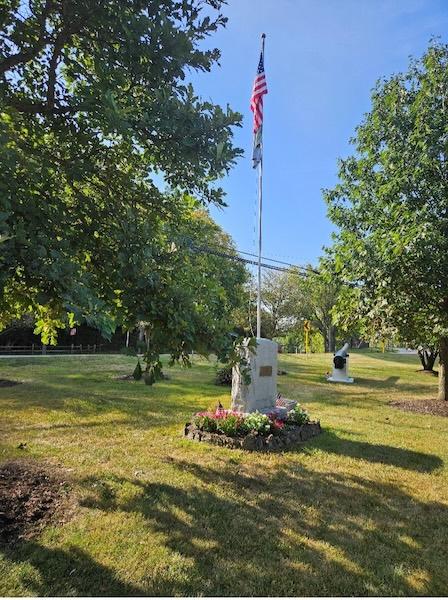
A small triangular park near mile marker 49 on the trail hosts a Civil War memorial known as the Secrest Monument.  According to the Cincinnati Times Star “more than 1,000 persons” gathered there for the October, 1932, dedication of a bronze plaque honoring the Union army units that trained at Camp Dennison. The following year a flagpole was dedicated there to honor Dr. Alfred Buckingham, a Civil War surgeon.


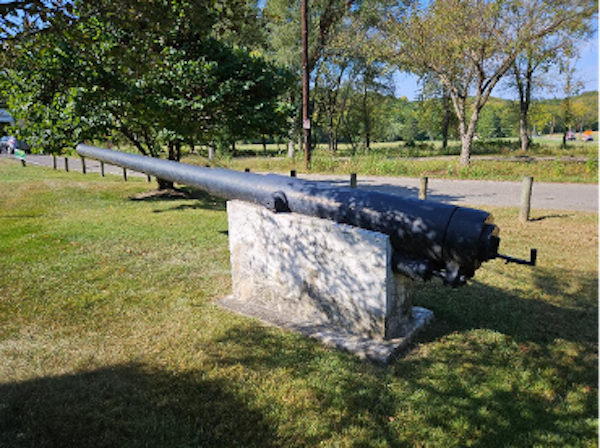
Located a few yards from the plaque and pole is a large artillery piece with no signage. Cannons have long been part of the design vernacular of war memorials, but an anonymous gun mounted alongside the trail is catnip for a curious Trail Mail reporter.


A search of area newspapers published between 1920 and 1960 found no mention of an artillery piece being placed at the monument. Staff at the Cincinnati and Hamilton County Public Library, in the Symmes Township administration, volunteers at the Camp Dennison Civil War Museum and at the Indian Hill Historical Society all drew a blank as well. 


It is possible the gun was acquired and donated by a Civil War remembrance association such as the Grand Army of the Republic or the Allied Patriotic Organizations of Hamilton County, groups that were instrumental in establishing the Secrest Monument. A review of minutes in the Library of Congress from these and similar groups also failed to produce the proverbial “smoking gun.” 


In any event, Congress must authorize the donation of military ordinance to local law enforcement agencies or civic organizations. An examination of the Hein Online Congressional Documents Library from 1932 to 1940 failed to show any cannons or artillery pieces authorized for donation in Ohio.


Casting the net a little wider, I sent a query to the U.S. Civil War Monuments Project at the University of St. Andrews in Scotland. No luck there, but I received a nice offer to include the Secrest Monument in their database if I would write something about it for them.  


Time to get out my magnifying glass and do some sleuthing. Under the paint on the gun’s barrel is an engraving: “U.S.N. 4.7” Maxim 45QF No.2, W.S., Wt 1374 lbs, 1898.” This Maxim quick-fire gun was capable of firing a 45-pound round at targets over six miles away. Produced in England by the Maxim Nordenfeldt Guns and Ammunition Company (it became Vickers, Sons and Maxim after 1897), the gun was apparently acquired by the Navy and test fired by “W.S.” The weight shown does not include a gun carriage, recoil tube, or aiming mechanism. 


There’s a different etching under the paint on the breech: an anchor symbol and “Vicker’s Sons & Maxim 4.7” R.F. Gun Mark I 1901 EHCL – L.M.G.  No.2 Wt 5721 lbs.” This means that at one point the Secrest gun was located at the Washington Navy Yard under the command of Rear Admiral Eugene Henry Cozzens Leutz (EHCL). L.M.G. were likely the initials of the person responsible for test-firing the gun. It’s possible the Navy mated a 1901 breech to the 1898 barrel for test purposes.The dates etched on the gun indicate that the Secrest gun somehow survived WW I and WW II scrap drives when metal, rubber, and paper were salvaged and repurposed for war use.


But the question remains - how did a nearly 3-ton, 17-foot-long naval artillery piece manufactured in England around the turn of the twentieth century make its way to a Civil War monument in Camp Dennison? 

According to the NavWeaps.com website, “The Navy acquired two 4.7” Mark I guns from Vickers & Sons in the 1890s apparently for evaluation purposes…these guns were ‘surveyed and condemned’ sometime prior to 1924.” (Surveyed and condemned often meant tested and put into storage.) A query sent to the Naval History and Heritage Command in Washington provided another lead: an answer might be found in the Navy’s Bureau of Ordnance records in the National Archives and Records Administration (NARA). 

The archives’ Register of Naval Guns and Ordnance does in fact list two English-made Mark I Maxim rapid-fire guns. One was sent to the Naval Proving Ground at Indian Head, Maryland, for testing in October of 1898, while no further information is provided for the other. It seems likely that one of these two guns is now located at the Secrest Memorial, but there the search ends; no entry was made in the NARA files about the disposition of either gun. The military bureaucracy had somehow lost track of a piece of heavy artillery, essentially making the Secrest gun a loose cannon.

In July of 1883, fearing a Confederate attack from across the Ohio River, the Cincinnati Chamber of Commerce requested permission from the Ohio Adjutant General to form an artillery battery with its own cannon. The request was denied, but the basic idea seems to have prevailed. Although Camp’s loose cannon showed up decades later, it remains steadfastly on guard pointed symbolically, some might even say defiantly, south.


Phil Obermiller is a FLMSP Sentinel who rides the well-guarded far south end of the trail. He appreciates the assistance of Will Elsbury, a military history specialist at the Library of Congress; David A. Manning, a curator at the Naval History and Heritage Command; Bill Pitman, Symmes Township Director of Public Works; Carol Sims, member of the Symmes Historical Society; Craig Swaim, contributing editor (Civil War category) at the online Historical Marker Database; Keiko Winsch, registered researcher at the National Archives and Records Administration; and Elizabeth Woods, Director of Archives and Libraries at the Ohio History Connection.


The Secrest Memorial

Camp's Loose Cannon

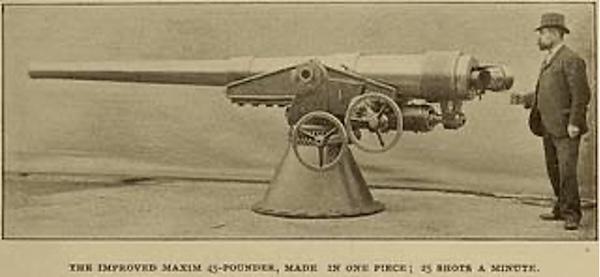
1895 photo with a caption exaggerating the “Quick Fire” capability of Maxim artillery. 

Aboard ship it was closer to six rounds a minute.


Safe Trails: Dress for Success

by Erick Wikum


As someone who has spent over 30 years of my life enjoying winters in Wisconsin and as a long-time cross-country skier, I feel imminently qualified to provide you with advice on how to dress for success for winter outings on the Little Miami Scenic Trail. Note that the Ohio Department of Natural Resources does not plow the trail, and you should exercise sound judgment in using the trail, especially when snow and ice are present.


When selecting what to wear for your outing, pay attention to three things—your top, your bottom, and everything in between.


TOP: Cover your head. Depending on the conditions, wear a headband, a light hat, a heavy hat, or a balaclava. Additionally, wear a neck gaiter, which can be extended to cover more of your head if the need arises. Carry one or more additional head coverings in your pocket in case you guess wrong. Wear glasses or goggles to protect your eyes and upper face from the cold wind. Use lip balm to protect your lips.


BOTTOM: Wear sturdy, warm boots or shoes with good traction. Consider adding strap-on cleats. Wear light-weight inner socks and heavier-weight warm outer socks to manage moisture and prevent blisters.


IN BETWEEN: Dress in layers. Start with a base layer consisting of a long-sleeved shirt and pants. (Base layers made of technical fabric are widely available in a variety of styles and weights.) Add one or more outer layers. Wear a wind-proof outermost layer, one that can be zipped or unzipped to manage your body temperature. Wear warm gloves, preferably mittens or “lobster” gloves, which keep fingers together and hence warmer.


Before venturing out, consider carefully if your wardrobe is sufficient when it comes to the weather conditions. Wearing just A hat or SOME gloves may not be enough to keep you warm. Discretion is the better part of valor. With proper clothing, you can brave the winter weather and enjoy the trail. If you question whether you have adequate clothing for the weather and trail conditions - Let it Go, wait for the warmer day that is just around the corner. Don’t be Frozen.


Volunteer Opportunity

In the past FLMSP has held safety events, like distributing helmets to cyclists or holding trail safety sessions. We would like to continue having these types of events, working with ODNR. However, we need some extra hands to pull the event(s) together and organize volunteers at the events. If this is something you are interested in and can commit some effort, send us your name and contact info.

Enjoy the Winter!

Friends of the Little Miami State Park


littlemiamistatepark.org

Trail hotline: 513-212-6958

Connect with us
Facebook  X