|
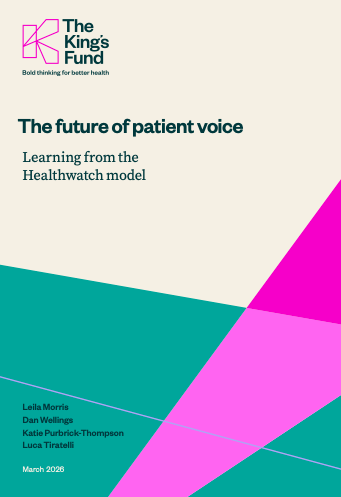
The King’s Fund has published yet another thoughtful, well-argued report on the importance of listening to patients.
How many of these are there on the shelves?
It makes all the right points...
...patient experience is patchy. Feedback is inconsistently used. The system is too focused on targets... not enough on people.
All true, but ...
... it ducks the harder question. Not whether the NHS should listen, but...
... whether it actually can.
The modern NHS is not designed for listening. It is designed for flow.
It's a conveyor belt; sick and poorly in at one end... fixed up, out the other.
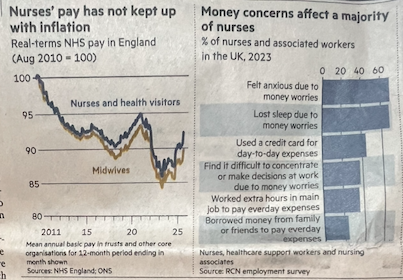
Seven million people on waiting lists. General practice stretched to the limit. Emergency departments running hot.
Workforce shortages everywhere you look...
... in that environment, the organising principle of the NHS is not dialogue, it is throughput.
Getting people in, processed, treated and out again. As safely and quickly as possible.
Listening, properly listening, takes time, patience, and space.
It means longer consultations, deeper conversations, follow-up, reflection.
It means staff who are trained and supported to hear not just what is said, but what's meant.
That's not a marginal adjustment; it's a structural shift, and...
... time is the one commodity the NHS simply does not have.
There's a cost, too.
Real listening needs infrastructure; systems to gather insight, analyse it, act on it and as Chris Argyris tells us, time to close the learning loop.
In a service already cutting management, chasing productivity and trying to do more with less, this is not an easy sell.
Every pound spent on listening is a pound not spent on treatment... sounds crude, I know, but...
... it is the reality of a cash-limited system.
And, then there's the most uncomfortable truth of all... intent.
The King’s Fund frames the problem as cultural...
... as if the NHS doesn’t listen because it hasn’t quite got round to it yet...
... a training issue...
... a leadership gap...
...something that can be fixed with the right framework, but...
... what if the system has learned not to listen? Dare not listen?
-
Listening unearths demand you cannot meet.
-
Raises expectations you cannot fulfil.
-
Exposes gaps you cannot close...
... in a system already at capacity, listening is not neutral... it's destabilising.
So the NHS does something else. It manages pressure by moving people around the system;
- Digital triage.
- Virtual wards.
- Community pathways.
- Signposting.
- Self-management...
... all perfectly sensible in isolation. However, taken together, they represent a shift away from engaging with patients and towards directing them.
Move the patient, don’t redesign the system.
Here’s the paradox.
The louder the patient voice becomes, the harder the system is to run, because ...
... every story, every concern, every unmet need, adds friction to a machine that is already close to seizing up.
Of course, the King’s Fund has a point. Not listening has consequences...
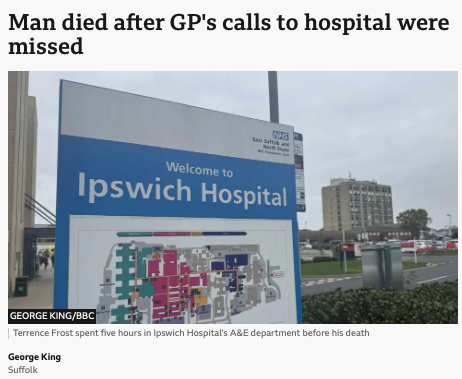
... repeat attendances, complaints, safety failures.
The emerging evidence is clear; done well, listening can reduce demand and improve outcomes.
Initiatives that give patients and families a voice can, quite literally, save lives, but...
... that only sharpens the dilemma.
This is not a question of principle. It is a question of capacity.
The NHS cannot listen to everyone, about everything, all the time. It has neither the time, nor the money, nor... if we are honest... the headroom.
The real issue is not whether to listen, but...
... where it matters most...
... where it makes the biggest difference...
... where the risk of not listening is simply too great.
The King’s Fund is right in theory and incomplete in practice.
The NHS should listen more, but...
... until demand, workforce and funding are brought back into some kind of balance, this will remain an aspiration rather than a reality.
When a system is overwhelmed, it does not become more compassionate.
It becomes more transactional.
|