Transformational Times
Words of Hope, Character & Resilience from our Virtual Community
Friday, February 5, 2021
|
|
Director's Corner
-
Adina Kalet, MD, MPH: Providing Space to Shed Tears may be Key to a Better, Post-COVID Future
Perspectives/Opinions
-
Chris Decker, MD, and Julia Schmitt: The Innovator Mindset: A Growth Mindset in Action!
-
David Cipriano, PhD: Growth Mindset and Well-Being: Getting off of the Roller Coaster
-
Marty Muntz, MD: Learning about Growth Mindset from our Students
-
Katie Dercks: The Power of Yet
Poetry Corner
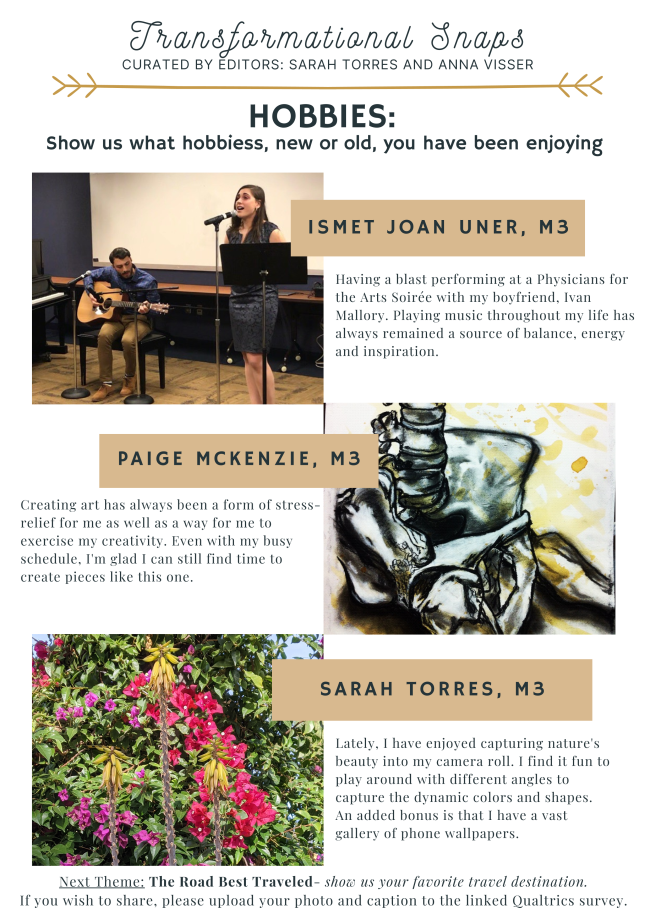
Transformational Snaps
- Ismet Joan Uner, M3 Medical Student
- Paige McKenzie, M3 Medical Student
- Sarah Torres, M3 Medical Student
Your Turn
-
See how readers answered last week's prompt: What is your favorite "snow day" memory?
-
Respond to this week's prompt: How do you plan to treat yourself, or someone special, on Valentine's Day this year?
-
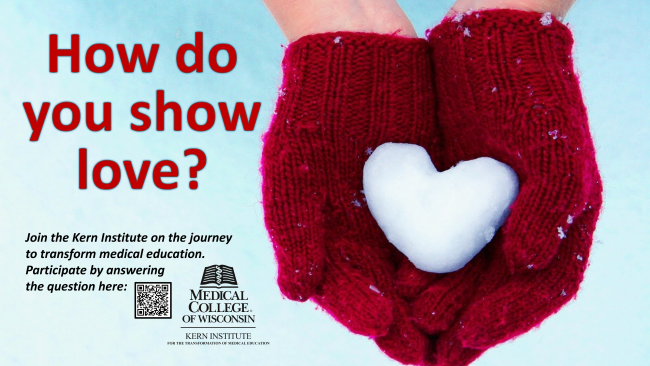
Respond to this week's character question: How do you show love?
Announcements & Resources
- Apply to the Kern Institute's Transformational Ideas Initiative (TI2) Seed Grant Program
- Register for Kern's Upcoming Virtual Events
- Kern National Network News & Events
|
|
Director's Corner
Providing Space to Shed Tears may be Key to a Better, Post-COVID Future
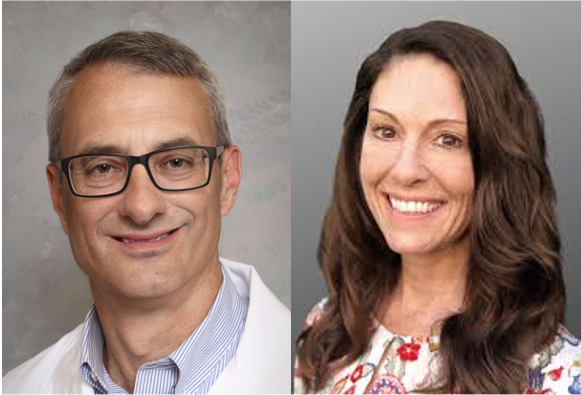
by Adina Kalet, MD, MPH
COVID-19 is wreaking havoc in the lives of working women. In this Director’s Corner, Dr. Kalet shares some learnings from Dr. Ellinas’s work in the Center for the Advancement of Women in Science and Medicine (AWSM) and talks about what to do when someone cries…
Over the past couple of weeks, I have witnessed more tears among my colleagues and mentees than I normally see in a year. Even though I care deeply, I am not particularly worried about those who have cried. I find it reassuring that they reached out, seeking support and a reliable pep talk. I know that while shedding tears in someone else’s presence makes one vulnerable, it is also a sign of strength, resilience, and self-care. These individuals are bending under the prolonged pressures of the COVID pandemic but are unlikely to break.
|
|
Perspective/Opinion
The Innovator Mindset: A Growth Mindset in Action!
by Chris Decker, MD, and Julia Schmitt
In Mindset, author Carol Dweck, PhD, defines Growth Mindset as the mindset of a person who thrives on challenge, seeing failure and setbacks as a springboard for growth. She describes people who believe that their success depends on time and effort as having a growth mindset, a belief that their skills and intelligence can be improved with effort and persistence. The Kern Institute’s Transformational Ideas Initiative (TI2) puts the power of growth mindset into action as the foundation to building successful projects and programs here at MCW.
Each year, all MCW students, staff, residents, fellows, and faculty are encouraged to submit innovative project ideas to improve the educational experience here at MCW. Once advanced into the TI2 program, teams are coached through the development of their idea - an innovation journey of “learning by doing” - developing an innovator mindset. Applications to the 2021-22 program are open now and have been extended through February 19, 2021.
|
|
Perspective/Opinion
Growth Mindset and Well-Being: Getting off of the Roller Coaster
by David J. Cipriano, PhD
Dr. Cipriano shares that developing a “growth mindset” can help learners smooth the bumps along the way, viewing setbacks as opportunities rather than signs of failure…
“Tell a story about you at your best.”
“Now, tell a story about you at your worst.”
For many, there would be a sharp decline in mood with the second part of this exercise. But not for people with a growth mindset – for them, both outcomes would be taken in stride. Both scenarios would be followed with, “What did I learn from this?” and the worst scenario would be followed by, “What will I do differently next time?” Growth mindset – the belief in our capacity to change and grow our abilities, not just our skills or effort, but our supposedly innate abilities – is a natural self-esteem preserver.
|
|
Perspective/Opinion
Learning about Growth Mindset from our Students
by Marty Muntz, MD
Dr. Muntz shares how to recognize a fixed mindset and shares how small group coaching exercises can be game changers…
How often have you heard someone say, “I believe my intelligence, personality, or character is inherent and static. Locked-down or fixed. My potential is determined at birth and doesn’t change?” Rarely, if ever, hopefully. But have you worked with a learner or colleague who hides failures, desires to look smart, sticks to what they know, avoids challenging tasks, seems threatened by the success of others, is intensely self-critical, or seems resistant to feedback? These behaviors, which may signify a fixed mindset that can limit achievement and ongoing improvement, are not uncommonly observed in our clinical learning environments.
|
|
Perspective/Opinion
The Power of Yet
by Katie Dercks
In this essay, Ms. Dercks, a fourth-grade teacher, describes a thoughtful approach to fostering a growth mindset that she and her teaching partner implemented in their classrooms…
“I can’t do this!” “I’m not good at this.” “I don’t get it!” These words have unfortunately found a common place within classrooms. They are a reflection of a child’s frustration and go deeper into the child’s own self-beliefs. I have been a teacher at St. Robert for nine years now, and I have watched as more students come into my fourth grade classroom with anxieties wrapped around tests, assignments and self-worth. Instead of putting the focus on learning and growing, these students are focused on “the grade” and looking “dumb” in front of peers.
|
|
In this time of transition, we wanted to share
You are going
To get where
You need to be
When you are
Meant to be there.
You are going to be
Guided by endless
Light,
Even in
The middle
Of nowhere.
|
|
Milwaukee winters are not what made me move to Wisconsin.
When people learn that I grew up in Germany, they assume that I must love winters. I attribute this to nostalgic flashbacks to “A Sound of Music.” They are mistaken, my favorite season is summer.
It so happened that my first blizzard experience was under less than ideal circumstances. My husband was traveling, my son was too young to understand the concept of “snow removal,” a full outpatient schedule weighing on my conscientious self, and an undertrained body.
I had high hopes for the (small) snowblower that my husband bought at low cost from a parting resident (not psychiatry) the previous summer. The saying about price and value turned out to be painfully true: I lost the fight with the snowblower.
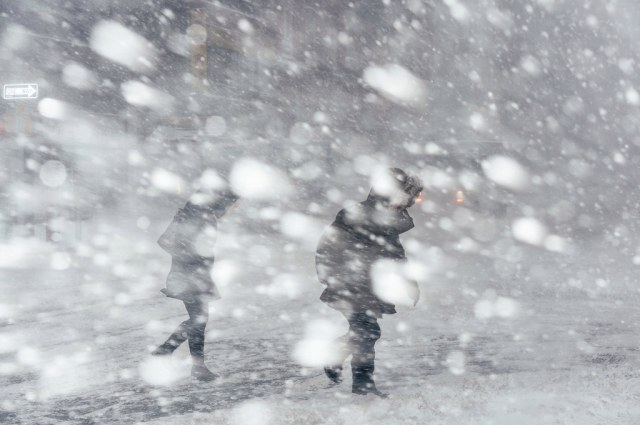
I went into battle, bundled up, snow shovel in hand, pager on my side. I couldn’t see past 2 meters (yes, I’m metric). After some time of sisyphean efforts I got this sinking feeling: “I can’t do this, this is bigger than me.” I went inside to cool down, thanked my lucky stars that all my patients had the wherewithal to cancel. Relieved, I put the pager aside. After gathering some strength, aided by a cup of tea, I put on my half-dry clothes, went outside – my son had long deserted me – and thought to myself whoever said that hell is a place where it’s hot never was in a blizzard.
The blowing storm drowned out my bilingual curses. At some point I just cried.
Then, out of nowhere it came: (my favorite snow day memory): in all the white there appeared something dark. The outline came into focus and manifested into my neighbor, along with an enormous snowblower.
“Do you need help?”
I never felt more relief in my life. (Well, maybe after passing oral boards.)
Needless to say, I got a working snowblower the same month. And the neighbor got a well-deserved cake.
-Mary-Anne Kowol, MD, MCW Faculty
|
|
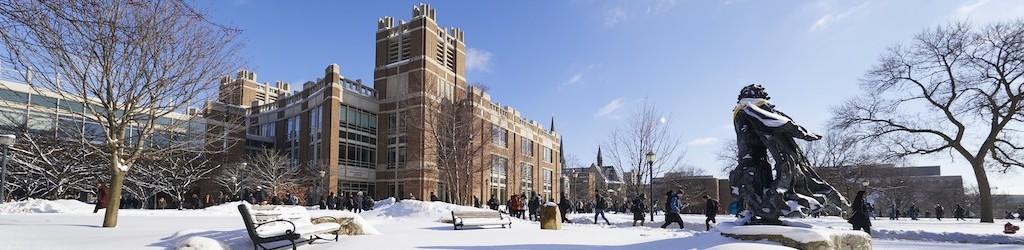
During my 1st semester at Marquette University, a very long time ago, we had a major snow storm in December. That month was the first time I'd seen snow ~ that day, I saw A LOT! MU shut down and the dorm's power was out, so my friends and I spent several hours helping cars get through intersections. Best 1st snow day ever!
-Mara Koffarnus, MCW Staff
|
|
My favorite snow day memory was a snow day on my 13th birthday. My friends came over and we played outside for hours!
– Katy Mayer, MCW Medical Student
|
|
My favorite snow day memory was having school canceled and playing Xbox with my friends.
– Daniel Bor, MCW Medical Student
|
|
Respond to next week's reflection prompt:
How do you plan to treat yourself, or someone special, on Valentine's Day this year?
|
|
Call for Transformational Ideas!
How would you innovate medical education?
The Kern Institute's Transformational Ideas Initiative is a seed grant program to develop and test ideas, creating opportunities for students, staff, residents, fellows, and faculty to innovate the educational experience at the Medical College of Wisconsin.
|
|
This year, we are looking for proposals that address one of the many changes we are currently experiencing - whether with curriculum revision, inclusion and diversity initiatives, or adapting to a more virtual environment - while focusing on ensuring that the voices of those most affected (students, staff, faculty, residents, fellows) are part of the creative process.
Teams will be guided through the development of their idea through a series of summer workshops led by trained professionals from the Kern Institute's Human-Centered Design Lab. Funding and deployment of each project will span the 2021-22 academic year, and budgets for each project will be individually granted based on the needs of each project.
|
|
Common Read Book Discussion
Black History in Medicine: Past, Present and Future
Everyone is welcome! Please plan to attend this book discussion, a collaboration between White Coats for Black Lives, SNMA, and the MCW Common Read.
|
|
|
|
February 11, 2021
Live Virtual Presentation
12:00 noon - 1:00 pm CT
|
|
Kern Grand Grand Rounds
Healing in the Aftermath of Hate
Please Please plan to join us for a unique Grand Rounds discussion with Pardeep Singh Kaleka, Executive Director of Interfaith Conference of Greater Milwaukee, Founder of Serve2Unite, and published author of "The Gift of Our Wounds" and Arno Michaelis, author of "My Life After Hate" and co-author of "The Gift of Our Wounds."
When white supremacist Wade Michael Page murdered seven people and wounded four in a Sikh Temple in Wisconsin in 2012, Pardeep Kaleka was devastated. This tragedy followed by suicide would be one of the deadliest mass-murder hate crimes committed in US History. One of the victims that day was Pardeep’s father, Satwant Singh Kaleka. Meanwhile, Arno Michaelis, a former skinhead and founder of one of the largest racist skinhead organizations in the world, had spent years of his life committing terrible acts in the name of white power. When he heard about the attack, waves of guilt washed over him and he knew he had to take action to fight against the very crimes he used to commit.
In the aftermath of the Oak Creek shooting, Pardeep reached out to Arno for answers. What would follow this meeting was a journey of two men who breached a great divide to find brotherhood and love. In a world that seems to be tearing itself apart at the the seams, divided by identity, becoming more intolerant, xenophobic, and spiritually ill, it is essential that we remain committed to compassion. This talk will explore the role of both communal and individual trauma and healing.
|
|
|
|
February 18, 2021
Live Virtual Presentation
9:00 - 10:00 am CT
|
|
Well-Being Summit
Improving Institutional Culture to Optimize Well-Being in Academic Medicine
Everyone is welcome to attend. Please register by February 21, 2021
|
|
|
|
February 25, 2021
Live Virtual Presentation
8:00 am - 12:00 noon CT
|
|
MCW COVID-19 Resource Center |
|
The Transformational Times publishes weekly, delivering stories of hope, character and resilience to our virtual community. |
|
Editorial Board: Kathlyn Fletcher, MD, Adina Kalet, MD, Wendy Peltier, MD, Julia Schmitt, Olivia Davies, Scott Lamm, Eileen Peterson, Sarah Torres, & Anna Visser
|
|
Not getting our newsletters? Sign-up today!
|
|
|
|
|
|
|