|
What on earth is going on with the Labour Party?
Wes Streeting… forced to deny he is scheming to replace The Charmer.
What to make of that?
Either it’s true, in which case it won’t be just doctors, formerly-known-as-juniors, that will be leaving the country…
... get behind me in the queue.
Or, it isn’t and enemies of Streeting are trying to flush him out.
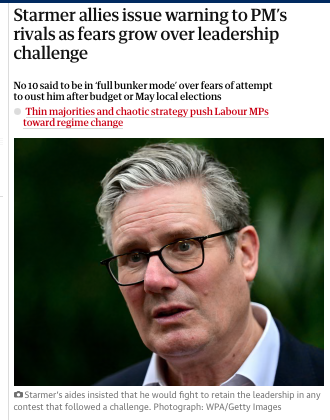
Whatever is true; Number 10 is battening down the hatches, preparing for an attack by ferrel Labour backbenchers.
Streeting has a tiny constituency majority of 528. It’s unlikely he’ll be reelected next time round. If he does manage to finagle his way into Downing Street, he won’t be there long enough to change the curtains.
If Streeting was wise, he’d stop looking for a leadership job now and start looking for a proper job for after the election.
Driving waiting lists down, improving cancer standards and repairing industrial relations are the three key jobs Streeting had to do.
Each one is a fail.
Trusting him with nuclear weapons, international trade, the economy and stopping the boats… I don’t think so.
What’s gone wrong? Where has Charmer failed to charm?
We forget, being Prime Minister is really only about being a leader. It’s a tough role, for sure, but it is governed by the same rules and guidelines that all leadership roles have.
He's gone wrong in all the places any other leader can go wrong.
Common errors;
> Failure to define and communicate a clear narrative
Leaders often fall into the trap of thinking they are managing the top job, rather than leading the people. They talk about processes, plans and structures but neglect to paint a vivid picture of purpose and destination.
It's basic; a leader is visible, has a vision and shares it, often.
Without a clear story, people struggle to connect emotionally or feel involved.
Competence without conviction looks dull. Charmer, trying to find a narrative now will look plastic. He’s left it too late for the...
... emotional dimension of leadership
A leader may be clever, disciplined and ethical but still fail to inspire.
> Rational leadership appeals to the head; great leadership reaches the heart.
Emotional connections come from showing authenticity, humility and empathy. Not buttoned down perfection. The most effective leaders reveal something of themselves… what they care about, why it matters.
How others fit into that mission.
Charmer is a technocrat, too clever. Like a lot of politicians, cautious and boring.
That’s why there’s been a surge of populism. Populist politicians say and keep saying; ‘…this is all wrong, we need to do it differently.’ They gather the people to achieve it and at the same time keep their freedom of expression.
They always hire people better than them.
> Over-control and under-trust
Leaders often centralise decision-making to maintain coherence or reduce risk but that stifles initiative.
Charmer has weekly stock-take meetings with NHS top brass… it’s done no good and wastes bosses time in preparation.
A healthy organisation balances accountability with autonomy; a great leader creates the time and space for good people to do great things.
> Ambiguity or drift in priorities
When a leader tries to please too many audiences or avoids hard choices, the result is confusion…
… they can’t answer ‘What do we stand for?’ Or ‘What matters most?’
Without clear priorities, even the best strategies dissolve into inertia.
Leaders must choose. Communicate their choices consistently, even if they’re unpopular.
> Caution mistaken for wisdom
Excessive caution breeds timidity and inaction. The absence of visible progress erodes confidence, both inside and outside the organisation.
Leadership demands moments of boldness that demonstrates courage and conviction. People will forgive failure (he tried); they rarely forgive drift (he never bothered).
What to do? Ten things things;
-
Create and live the narrative… a compelling story of purpose, anchored in values people recognise. That’s why… ‘Make America Great Again’… worked and ‘get the NHS back on its feet' would have worked’ but complaining about ‘it’s broken’… failed.
-
Show vulnerability. Admit when things go wrong.
-
Listen to the people you lead.
-
Empower others, decentralise control.
-
Don't claim to have all the answers; it’s about creating space where others can find answers.
-
Build teams you can trust. Talk about them. Trust them publicly.
-
Reward initiative.
-
Choose priorities, what matters most.
-
Boast about progress, however small.
-
Explain the ‘why’. People respect honesty, more than perfection.
Starmer’s predicament underscores a timeless truth:
Leadership that relies solely on competence risks becoming managerial…
… leadership that combines competence with courage, clarity and connection becomes transformational.
|