|
Most of the time in law enforcement you learn not to take things personally. People may curse at you, insult you, but you just have to let that roll off your back. Other times, though, a deputy can’t help taking certain offenses a little personally. When I rode with Deputy Kayla Lundh during a recent DUI Wolf Pack operation she explained why she takes driving under the influence of alcohol or drugs so seriously, and so personally.
“When I was about five, my family was in a bad accident,” Deputy Lundh said. “A drunk driver decided to run the stop sign at a high rate of speed. The truck hit my family’s SUV in between the front driver’s side tire and front door.” From her experience on the Major Accident Investigation Team she’s dealt with countless vehicle fatalities and knows that as bad as her accident was, it could have been even worse. “Knowing what I know now, it’s very clear to me that if the crash had occurred a second later than it did I would have lost one, if not both of my parents.” Everyone in the car suffered injuries, and then had to deal with not only the mental trauma that followed but the legal battle for justice that seemed to never end. “There are no excuses to drink and drive or be impaired under any substance. It’s not worth your own life, or that of others around you.”
The tragedy of DUI also touched her – and the entire agency – when Deputy Michael Magli was killed in the line of duty while trying to stop a drunk driver in 2021. Deputy Magli was her friend, and a mentor when she started her career in law enforcement. “Magli was one of the deputies to help me get on my feet after being released on my own after field training, and to lose someone like him to a dumb decision will forever weigh on a lot of us here.”
The Pinellas County Sheriff’s Office, in partnership with other local law enforcement agencies, often conducts Wolf Packs during high-volume weekends or holidays when history has shown that more impaired drivers are on the road. The Wolf Packs are only part of an ongoing commitment to stopping DUIs. “It’s also important for people to remember this isn’t a once a month thing – we are always out, and if you’re driving impaired you’re going to get caught.”
As she patrols the City of Seminole, taking dispatched calls and looking for suspicious activity, she’s constantly alert for any signs of impairment in drivers. Not every impaired driver is veering drunkenly into mailboxes – often the signs are more subtle. “Some indicators include fluctuations in speed, failing to maintain their lane, not turning on their lights at night, or sitting through light cycles.” As we drive behind various vehicles she activates her camera and starts narrating what she sees in case the next stop turns out to be an impaired driver. “She’s weaving within her lane. Not crossing the line but veering over to that left line over and over.” That narration could prove invaluable in court as she explains why she initiated the stop. At this point the driver could be looking at their phone, or even suffering a medical episode. Only when she pulls them over can she look for telltale signs such as bloodshot watery eyes, slurred speech, or the distinct odor of alcohol.
The PCSO widely publicizes its Wolf Packs, letting everyone in the county know that deputies will be out in extra force – and that if you’re impaired, you’ll be going to jail. Hopefully this keeps impaired drivers off the road, and for us that seemed to be the case that night. Even as it passed midnight and approached closing time when people head home from bars we couldn’t find any DUIs. Were drivers finally making good decisions? (Deputies in other areas of the county had better results – the Wolf Pack netted 30 DUIs and a total of 190 citations that night.) Deputy Lundh stopped at least ten people for various minor infractions but let most of them off with a warning. For the PCSO the goal is always about education, and if the fault isn’t egregious and the driver is pleasant they can often avoid a ticket. Speeding through a school zone? That’s a ticket for sure. Not coming to a complete stop for a right-on-red turn? That’s an opportunity for a deputy to spread knowledge. But the driver’s information is officially entered in the system and if another deputy stops them for the same thing they won’t be so lucky.
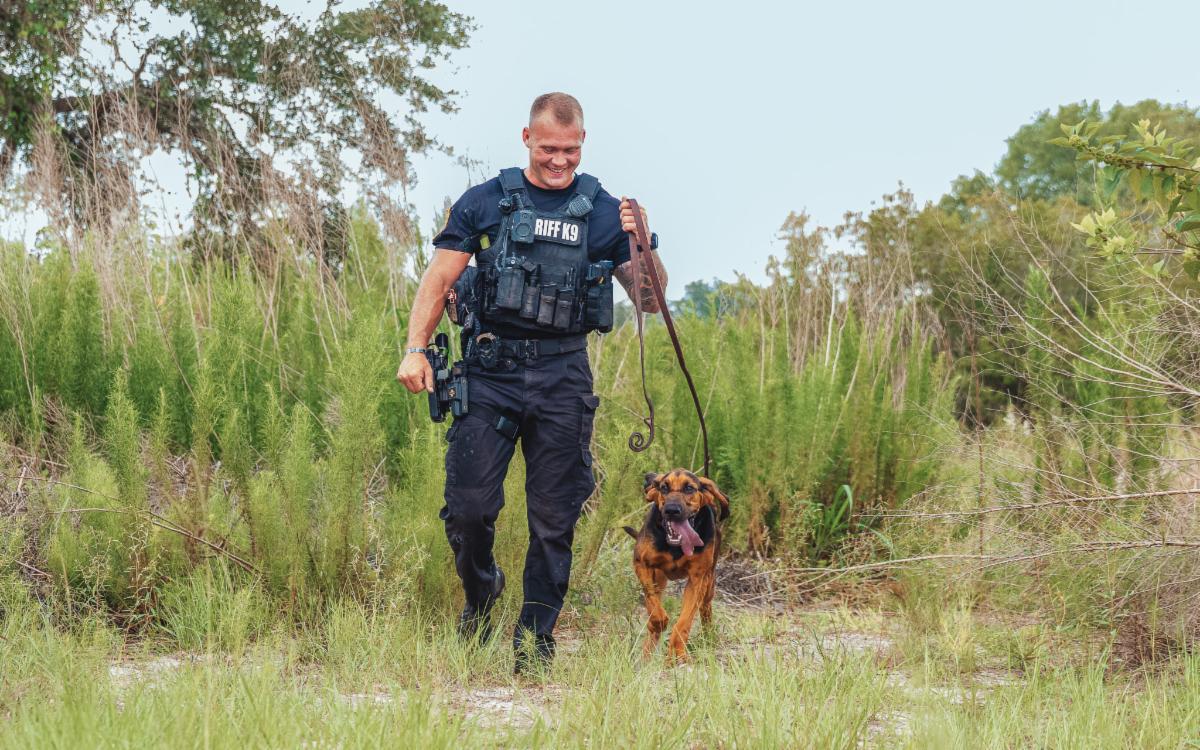
Finally in the wee hours of the morning – so late that yours truly, a day-shift girl to the core, was yawning in the passenger seat of the Tahoe and thinking about calling it quits – dispatch announced that a vehicle had fled from a neighboring agency’s traffic stop and was now driving recklessly. As we headed in that direction to assist we heard events play out over the radio in a perfect example of why the PCSO has a flight unit. Why engage in a risky pursuit if the Eagle can spot the speeding vehicle and follow it from the sky, letting units below know exactly where to set up to deploy stop sticks? Everything went like clockwork: the stop stick shredded the vehicle’s tire and it soon came to a stop. The driver bailed but thanks to the Eagle, units had already set up a good perimeter and K-9 tracked the driver within moments.
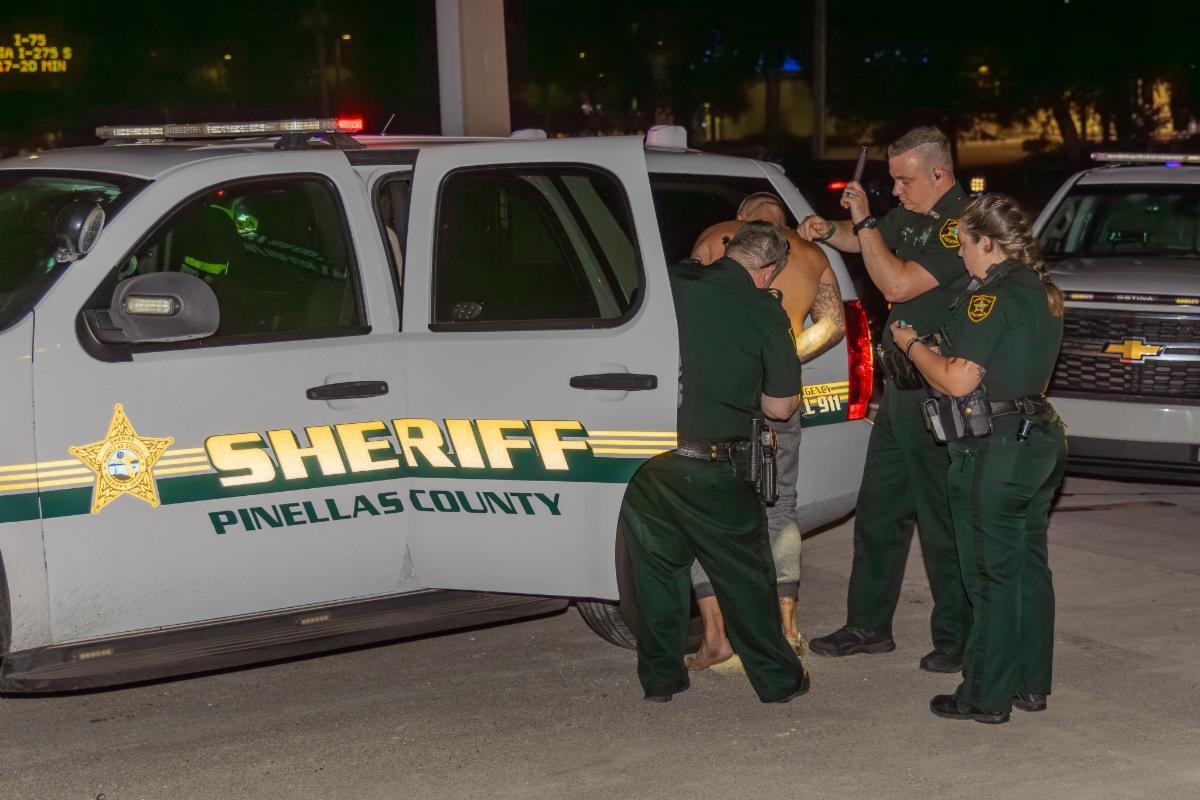
Unsurprisingly, the driver appeared to be impaired. Deputy Lundh volunteered to take the DUI portion of the case and Field Sobriety Tests (FST) began. We didn’t catch it ourselves, but we had our DUI for the night.
The tests are no secret – you can look them up online, and even practice walking the line or standing on one foot while counting. It won’t make any difference. If you’re impaired, you’ll still probably fail. The FSTs are conducted at the scene of the stop, and then again at Central Breath Testing. Afterward, the driver is asked to submit to a breath test to determine their alcohol level. If they refuse, their license is automatically suspended. Have you looked at your license lately? Right on the front it says, “Operation of a motor vehicle constitutes consent to any sobriety test required by law.” If they blow a 0.0 but still seem impaired a Drug Recognition Expert can perform an evaluation to determine what class of drugs they may be on.
You’ve probably driven behind someone who you suspect might be impaired. Deputy Lundh says that if you’re not sure, you can call the PCSO non-emergency number (582-6200) if it is safe to do so and let them know the make, model, tag, and any distinctive feature like stickers so that deputies can look out for the vehicle. If you’re sure something is wrong with the driver and they’re posing a serious threat to public safety you should call 911.
Deputy Lundh’s passion for public service is a family obsession. Her father is a firefighter, currently Gulfport’s Deputy Fire Chief, and she grew up around firehouses, but decided that law enforcement was the best fit for her. “It’s also an added benefit to go back and forth with my dad with different cop and firefighter jokes!”
“I was born and raised in Pinellas County, and it’s been fulfilling to get to help the people around me who I’ve known growing up,” Deputy Lundh said. “I’d encourage anyone who would like to go into this career to not let fear hold you back. The best decision I could have made for myself was going into this career, and being able to help people when they are going through the worst days. Showing people a little bit of light and comfort in those situations can make all the difference, and I’m excited to see what the next 20 years hold for me. I’ve found life-long friends who are more like family here and I hope to show people we are all human no matter what uniform we wear.”
|