|
In cybersecurity, security is usually treated as something added after the fact. A system is built, and then it is protected with keys, passwords, encryption, monitoring, audits, and policies. But matter itself suggests another starting point.
An atom does not remain an atom because a firewall surrounds it. A molecule does not keep its form because it has been externally secured. Under lawful conditions, matter already preserves boundary, relation, continuity, and identity. It carries a native stability.
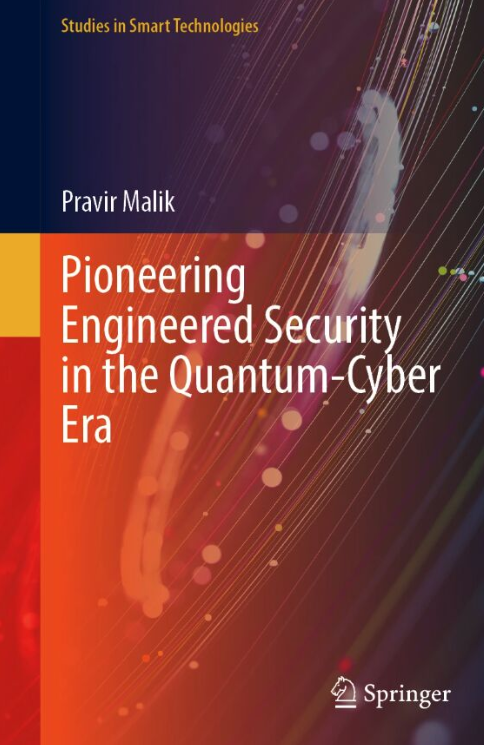
This is the insight behind “Pioneering Engineered Security in the Quantum-Cyber Era.” In the QIQD view, a root of trust should not begin as a readable secret that can eventually be copied, leaked, replayed, or modeled. It should begin as a non-exportable structure, grounded in matter, whose surface can be used and verified without exposing the deeper source.
This shifts the meaning of security. It is no longer only a contest over who can better protect a secret. It becomes an architecture of lawful relation: what may appear, what must remain hidden, and how continuity can be proven without turning the protected core into a transcript.
The deeper lesson is simple. Matter already knows how to preserve identity through structure. Engineered security should learn from that.
Here is a link to the forthcoming book: Pioneering Engineered Security in the Quantum-Cyber Era
|