|
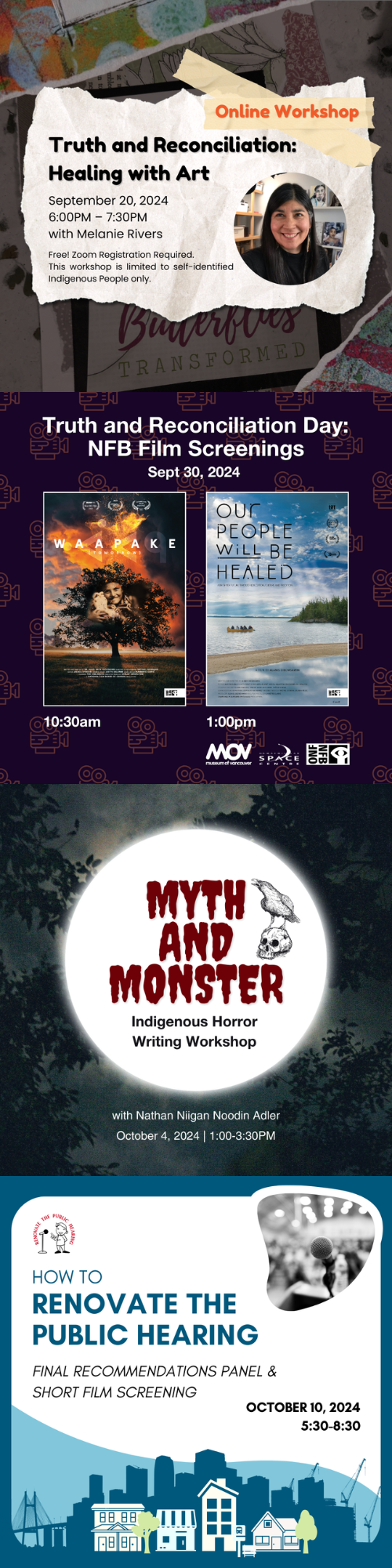
Truth and Reconciliation: Healing with Art
Friday, September 20
A special online workshop for people who self-identify as Indigenous.
Medicine Cards are a personal and expressive art form that promotes healing and builds self-esteem through creative processes. Led by Melanie Rivers, this session will guide you through the steps to create your own personalized set of Medicine Cards. Register here.
Truth and Reconciliation Day: NFB Film Screenings
Monday, September 30
See films by Indigenous directors for Truth and Reconciliation Day. Admission to the MOV is free on September 30th with the option to donate to the Indian Residential Schools Survivors Society and includes access to view the films.
10:30am: WaaPake (Tomorrow) is a deeply personal documentary that unravels the tangled threads of silence suffered by residential school Survivors.
1:00pm: Our People Will Be Healed is about the Helen Betty Osborne Ininiw Education Resource Centre, where students develop abilities, pride and connections with their ancestral culture.
Both films will be preceded by Orange Shirt Day is Every Day, a short film featuring Survivors who return to the grounds of St. Mary's Indian Residential School located in Mission, BC.
The National Day for Truth and Reconciliation is for learning and mourning heavy histories. Medicine bundles by Lil’wat healer Jackie Andrew will be available.
Click here for more info, including the trailers.
Myth and Monster: Indigenous Horror Writing Workshop
Friday, October 4
Delve into the essentials of writing horror, including monster creation, setting atmosphere and crafting scenes of gore. Facilitated by Jewish, Anishinaabe, two-spirit member of Lac des Mille Lacs First Nation, Nathan Niigan Noodin Adler, author of Wrist and Ghost Lake, the session will also reflect on Indigenous perspectives in horror storytelling. Participants will engage in interactive exercises designed to spark creativity and build tension. Sign up here.
How to Renovate the Public Hearing
Thursday, October 10
Decisions about the way we use the land we live on significantly shape our communities and our daily lives. Traditionally, public hearings have been the main forum for the public to gather and be heard regarding land use decisions in their communities. However, 100 years after public hearings were first established, many people are questioning their efficacy and asking to explore alternatives. The Renovate the Public Hearing Initiative will present their investigation into alternative engagement strategies for public participation, plus there’ll be a panel and interactive exhibit. Sign up here.
|