"One of the greatest pleasures in life is realizing that two weeks ago your body couldn't do what it just did"
|
|
Check Out Our New Beginner's Level Class
This is the perfect ride for all who are starting off cycling and/or veterans looking to sharpen and perfect their riding skills and techniques. Don't worry - You will break a sweat!
So, join Luke this Sunday (2/7) at 8:45 a.m. for this great ride!
Also, we have a new class at 8:45 a.m. on Tuesday (2/2) with Jill. And it's a Blackout Ride!
Sign up for these great classes today.
|
Coming Soon...Join Francesca & Leah for a Live Blackout DJ Ride!
This amazing class will be held next week on Tuesday, 2/9 at 7 p.m. Join Leah and Francesca as they tandem teach to some great Live-DJ music. It'll be dark. It's be loud. It'll be fun. Sign up today!
|
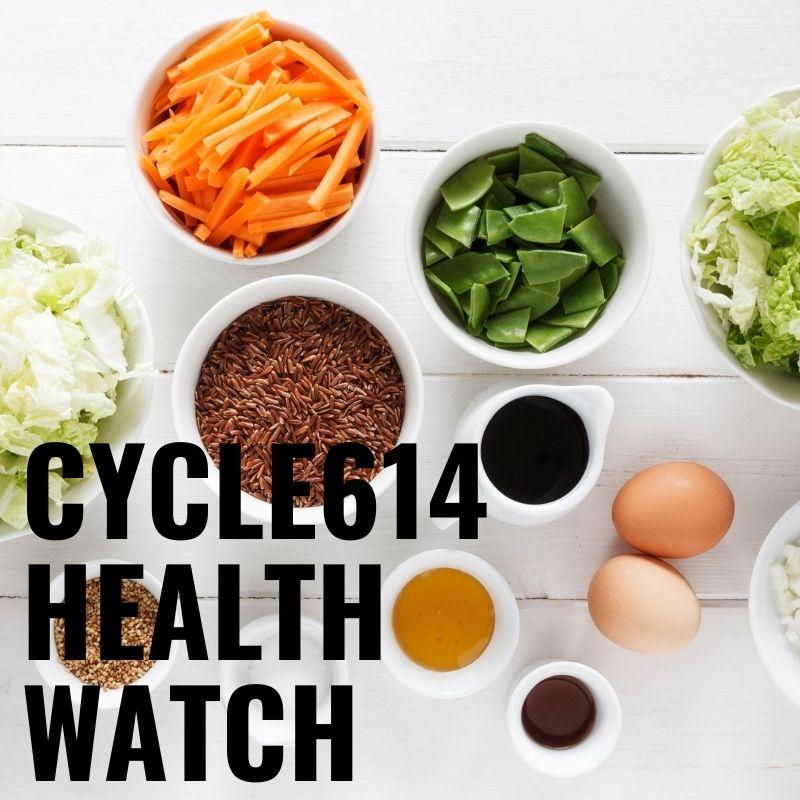
Counting Calories Isn't Necessary for Weight Loss...
...in fact it can be harmful. In a recent SELF article, Abby Langer, a registered dietician, tells us why. Here's an excerpt.
As a registered dietitian, the thought of anyone counting calories, aka the energy you get from what you eat and drink, causes me to sigh audibly. Counting calories is a time-consuming, soul-sucking practice that's actually a lesson in futility, as far as I'm concerned.
Yet people continue to do it. They pull out their calorie-tracking apps and plug in whatever foods they've eaten, feeling guilty when they go over their "recommended" calorie amounts, then running to the gym to try to undo it all. And I can't blame them: The idea that monitoring all your calories is key for weight loss is a popular one.
While I do think there's value in recording the foods you've eaten to understand what you're consuming and offer accountability, and while I do think it's important to know relative calories (e.g., cake: high, broccoli: low), it's a colossal waste of time to drill it down to every single calorie that passes your lips.
Of course, calories do count, since they're what you consume when all is said and done. But counting calories can be a real drag at best, and a dangerous practice at worst. Not only does it get you focusing on numbers instead of enjoying the food you're eating, it can be a slippery slope from paying attention to calorie counts to obsessing over them. For anyone with a history of disordered eating, counting calories might be something to avoid. If you have or are in recovery from an eating disorder, it's best to talk to your doctor before changing your eating habits or tracking your food.
I should also note that weight loss is about so much more than calories. It encompasses exercise, how you sleep, how stressed you are, and health issues that you may not be able to control, like hormonal changes. That's why, if losing weight is your goal, it's important to acknowledge how individual a process it is and figure out how to do it in a way that's healthy for you. Make sure your goals are realistic for your body as well as the amount of time and energy you have to devote to the process.
No matter your goals, spending vast amounts of energy and time poring over calories might not get you very far. Here's why.
1. You likely have no idea how many calories you actually need.
In order to accurately count calories for weight loss, you'd need to know your basal metabolic rate, or how many calories your body burns each day simply to stay alive and keep all your systems running. And unless you've done indirect calorimetry, which I can almost guarantee you haven't-it involves lying with a mask on, hooked up to a very expensive piece of machinery for a prolonged period of time to measure your oxygen intake and carbon dioxide expulsion-you really are playing with arbitrary numbers. Although it's the "gold standard" of figuring out how many calories you use per day, like anything else, indirect calorimetry can have flaws.
Yes, you can approximate the number of calories you use in a day via equations and apps, but that's all you get: an approximation. If even the "gold standard" machine can be wrong, then why let some app or equation determine how much you should be eating?
2. You don't know how many calories your body is absorbing from food.
Let's say that by some miracle, you know exactly how many calories you need to eat per day for weight loss. That's great, but you're not out of the woods, thanks to the question of absorption.
We used to think that since 3,500 calories equal a pound, every time you eat 3,500 extra calories beyond what your body needs, you end up gaining that weight. Now we know better: Not all calories are equal like we thought.
Everything from how your food is processed to how much fiber it contains determines how many calories you're absorbing from it. Even the bacteria in your gut may play a part in how you digest food and how many calories you derive from it. For example, you'll absorb more calories from cooked meat versus raw, and peanut butter versus whole peanuts. Due to size differences, one sweet potato varies in calories from another before you even take it off the shelf at the store. Calories absorbed is a complex business that's light years beyond any calorie-counting app on the market.
3. Calorie counts on packages aren't necessarily accurate. But wait! Even if you know how many calories you need and how many you're absorbing, you're not done! In fact, the Food and Drug Administration allows up to 20 percent margin of error in the numbers on those nutrition labels you likely rely on to count many of your calories. Meaning, that 250-calorie snack you're eating might actually have 200 calories-or 300.
Want to read the rest of the article? Click here CALORIES
|
|
|
Make sure you are safe out there! And please remember, If we can ever serve you better, or if you just have a great idea, come see one of us. Or email us at info@cycle614.com. Your feedback is always welcome!
Demi & Mark
Co-Owners
Cycle614 |
|
|
|
|
Copyright © 2021. All Rights Reserved.
|
|
|
|