|
13 January 2026
Welcome back to our National Maritime Historical Society members and friends who share a love for naval history!
| | |
Happy 59th anniversary to the office of the Master Chief Petty Officer of the Navy (MCPON). On this date in 1967 MCPON Delbert D. Black was appointed as the Senior Enlisted Advisor to the Chief of Naval Operations.
Next up on the conference calendar is the Western Naval History Association Symposium on the aircraft carrier Midway next month. The agenda and registration information is below! Meanwhile the Naval Dockyards Society has extended its submission deadline for their East OF Suez conference scheduled at the end of March. The updated call for papers is also below. There are also two calls for papers deadlines of 15 January listed below!
Congratulations to Dr. Christian Jentzsch of the German Navy, Dutch naval historian Dr. Anselm van der Peet, British naval scholar Dr. Richard Harding, and well-known naval history podcaster Alex Pocklington on your selection to the board of the International Journal of Naval History. The content for the spring edition is nearly set; IJNH seeks content for this year’s upcoming Issue 2 and Issue 3.
A new shipment of books for review arrived courtesy Casemate! Reviewers Wanted! Thank you, Dr. Kolb on reviewing the latest Pen & Sword imprint about German and Japanese manned suicide attack aircraft.
| |
| |
Tuesday Tidings is compiled by Dr. David F. Winkler and Jessie Henderson as a benefit for members of the National Maritime Historical Society and friends of naval history.
As always, comments and naval history news items are welcome at nmhs@seahistory.org.
| | Tuesday Tidings is published by the National Maritime Historical Society with support from the US Naval Institute. Interested in joining USNI? Click on the USNI logo to become a member! | | |
ITEMS OF IMMEDIATE INTEREST | |
Tuesday–Thursday, 13–15 January – Surface Navy Association Annual Symposium
Theme: Surface Warfare: Combat Ready Warfighters for 250 Years
Regency Crystal City, Arlington, Virginia
Wednesday, 14 January – Naval Order Heritage Night
The Japanese attack on Darwin on 19 February 1942
With Tom Lewis, PhD (OAM)
8 PM EST (Streaming)
Thursday, 22 January – NOUS Maritime Virtual Lecture Series
“Hawaii Prepares for War with Japan.”
With CAPT Michael Lilly, USN, Ret.
7 PM EST
Friday, 23 January – Monitor Legacy Program
USS Minnesota: Flagship of the North Atlantic Blockading Squadron
With John V. Quarstein
Mariners’ Museum Newport News, VA
Noon–1 PM EST (In person/streaming)
| | Naval Order of the United States Creates Nucleus For National Maritime Speaker Bureau | | |
One of the initiatives launched at the recent Naval Order of the United States Congress in Philadelphia was the recruitment of speakers—subject matter experts through either research or experience—who could address various audiences on a wide range of naval and maritime history topics. Under the leadership of Vice Commander General for Maritime History Steve Sinclair, the program is intended to grow beyond the list below of Naval Order Companions, to include members of other maritime heritage organizations, academic scholars, recent authors, knowledgeable veterans, and others. Sinclair noted: “The vision is to share the list with the Navy Speakers Bureau, NROTC and NJROTC program managers, maritime museums, historic ships, universities, retirement communities, and other institutions to support maritime heritage community public outreach programs.”
Speakers are not expected to travel out of their “homeport” region unless the requesting group would be willing to cover expenses. Of course, online presentations require no travel!
The list below provides limited information. Those interested in participating will be asked to provide biographical material, educational background, a summary of publications and presentations as well as contact information. Naval Order of the United States Historian General Dave Winkler is coordinating submissions. He can be contacted through his e-mail, listed below. You should also reach him if you see someone on the list that you would love to have address your organization! So far, the list includes:
THOMAS BRIGGS -- AREAS OF EXPERTISE: Naval warfare in the mid to late 18th century, with a focus on traditional vessels used by European nations. HOMEPORT: Richmond, VA
NATHAN A. CANESTARO -- AREAS OF EXPERTISE: The Pacific naval campaign 1941–1945, with a focus on US light carriers and submarine operations.
HOMEPORT: Washington, DC
STANLEY D.M. CARPENTER -- AREAS OF EXPERTISE: American Revolution, US Civil War, World War I &II.
HOMEPORT: Rhode Island
THOMAS J. CUTLER -- AREAS OF EXPERTISE: Vietnam (Brown Water Navy); World War II (Battle of Leyte Gulf). HOMEPORT: Maryland
TOM DUFFY -- AREAS OF EXPERTISE: Middle East, maritime strategy, navy force structure, intersection between strategy and policy, general naval and military history.
HOMEPORT: Northern Va./ forays to Long Beach, Ca.
JOHN D. HOOPER -- AREAS OF EXPERTISE: US Coast Guard History, China Threat
HOMEPORT: Norfolk, VA
TAYLOR BALDWIN KILAND -- AREAS OF EXPERTISE: Vietnam prisoners of war, Vietnam War
HOMEPORT: Washington, DC and San Diego, CA
MICHAEL A. LILLY -- AREA OF EXPERTISE: Military History, WWII in the Pacific, FAdm. Chester W. Nimitz, attack on Pearl Harbor, Hawaii during WWII
HOMEPORT: Hawaii
MICHAEL LOWREY -- AREA OF EXPERTISE: WWI naval operations, U-boat ops, submarine wreck ID, merchant ships of late 19th and early 20th century, German naval officers
HOMEPORT: Charlotte, NC
CHARLES P. NEIMEYER -- AREAS OF EXPERTISE: All major US Wars – especially the American Revolution, USMC History
HOMEPORT:Quantico,VA
JAMES P. RANSOM III -- AREAS OF EXPERTISE: WWII Asiatic Fleet submarines, American Rev.; WWI, WWII naval; sub warfare, design/doctrine; 20th Century military history.
HOMEPORT: Jacksonville, FL
JOHN RODGAARD -- AREAS OF EXPERTISE: WWII naval war, Cold War at Sea, Sailing navies of the 18th–19th centuries, Royal Navy, joint operations, naval operational intelligence.
HOMEPORT: Northern Virginia/ Central Florida
DAVID F. WINKLER -- AREAS OF EXPERTISE: US Navy 20th Century, WWII War in the Pacific, USN-Soviet Navy interactions, US naval aviation, naval museums
HOMEPORT: Northern Virginia
E-MAIL: winkler58@msn.com
| |
| Annual Symposium for the Western Naval History Association | | |
The Board of the Western Naval History Association is pleased to announce that the program for its annual symposium has been set and welcomes you to sunny San Diego next month!
https://www.paypal.com/ncp/payment/RXTAGMS4A8PNW
Draft WNHA Symposium for Saturday 21 February–Sunday 22 February 2026:
Saturday, 21 February
- 0800–0830: Registration & Refreshments
- 0830–0845: Welcome Remarks (Tangredi) and Remarks by CEO, Midway
- 0845–0900: 1.John Rodgaard: “Case for a Japanese Midget Submarine Attack on Battleship Row, 7 Dec 41”
- 0900–0915: 2. Alan Zimm: “Case Against a Japanese Midget Submarine Attack on Battleship Row, 7 Dec 1941”
- 0915–0930: 3. Dave Miller: “Japanese Midget Submarine Attack on Battleship Row, 7 Dec 1941: Photographic Evidence”
- 0930-0945: Break
- 0945-1045: 4. Roundtable- Was there a Fifth Midget Sub Attack? Moderator: Sam Tangredi, John Rodgaard, Alan Zimm, Dave Miller
- 1045–1100: Break
- 1100–1145: 5. Alan Zimm: “Operations Analysis of the Pearl Harbor Attack”
- 1145–1230: Lunch/Book & Wargame Signing/Midway Walkabout
- 1230–1330: 6. Amy Allison: Suppression of the Barbary Pirates
- 1330–1345: Break
- 134–-1430: 7. Stephen McLaughlin: “Four Oceans, Two Wars, and a Revolution: The Career of the Russian Cruiser Askold"
- 1430–1445: Break
- 1445–1530: 8. Sid Burks: “ServRon 10 at Ulithi”
- 1530–1615: 9. Len Heinz: “Spanish Civil War at Sea”
- 1615: Recap & Closing First Day
Sunday, 22 February
- 0800–0830: Registration & Refreshments
- 0830–0930: 10. Evan Mawdsley (virtual): "Comparing Two Challenges to American Supremacy: The Soviet Navy in the 20st Century and the PLA Navy in the 21st"
- 0930–0945: Break
- 0945–1030: 11. Vince O’Hara: “The Greatest Naval War: WWII Narratives that Need to be Reevaluated”
- 1030–1115: 12. John Burtt: “New Georgia, the Forgotten Campaign: Success or Failure”
- 1115-1130: Break
-
1130–1215: 13. Trent Hone: “10th Fleet and the Evolution of ASW”
- 1215–1300: Lunch/Book & Wargame Signing/Midway Walkabout
- 1300–1345: 14. Lonnie Gill: “Modeling the Battle of Dogger Bank”
- 1345–1400: Break
- 1400–1445: 15. Hal Friedman: “Gilded Age Marines”
- 1445–1500: Break
- 1500–1545: 16. Chris Languell: “US Atlantic Fleet Ops Before Pearl Harbor”
- 1545–1630: 17. Jamie Orr: The Prophetic Rhetoric of Alfred Thayer Mahan
- Farewell
| |
|
Naval Dockyards Society 30th Annual Conference
National Maritime Museum Greenwich, Saturday, 28 March 2026
Sponsored by the Society for Nautical Research
Aftermath of the 1956 Suez Crisis: Global Ramifications and Reflections for Dockyards and Shipyards
Call for Specific Dockyard Presentations
| | |
Whilst we have received a number of proposals discussing the general aftermath of this momentous event we are seeking more content related to the specific experiences of each of the Imperial Dockyards at home and abroad. Our preferred topics for any of these dockyards are:
- The Dockyard’s Imperial role
- Impact on the Dockyard of the End of Empire
- Local/social/economic effects
- The Dockyard today
The Dockyards to be considered are:
- Portsmouth
- Devonport
- Chatham
- Rosyth (Scotland)
- Pembroke Dock
- Malta
- Gibraltar
- Bermuda
- Halifax
- Jamaica
- Simon’s Town
- Sierra Leone
- Bombay
- Trincomalee
- Hong Kong
- Singapore
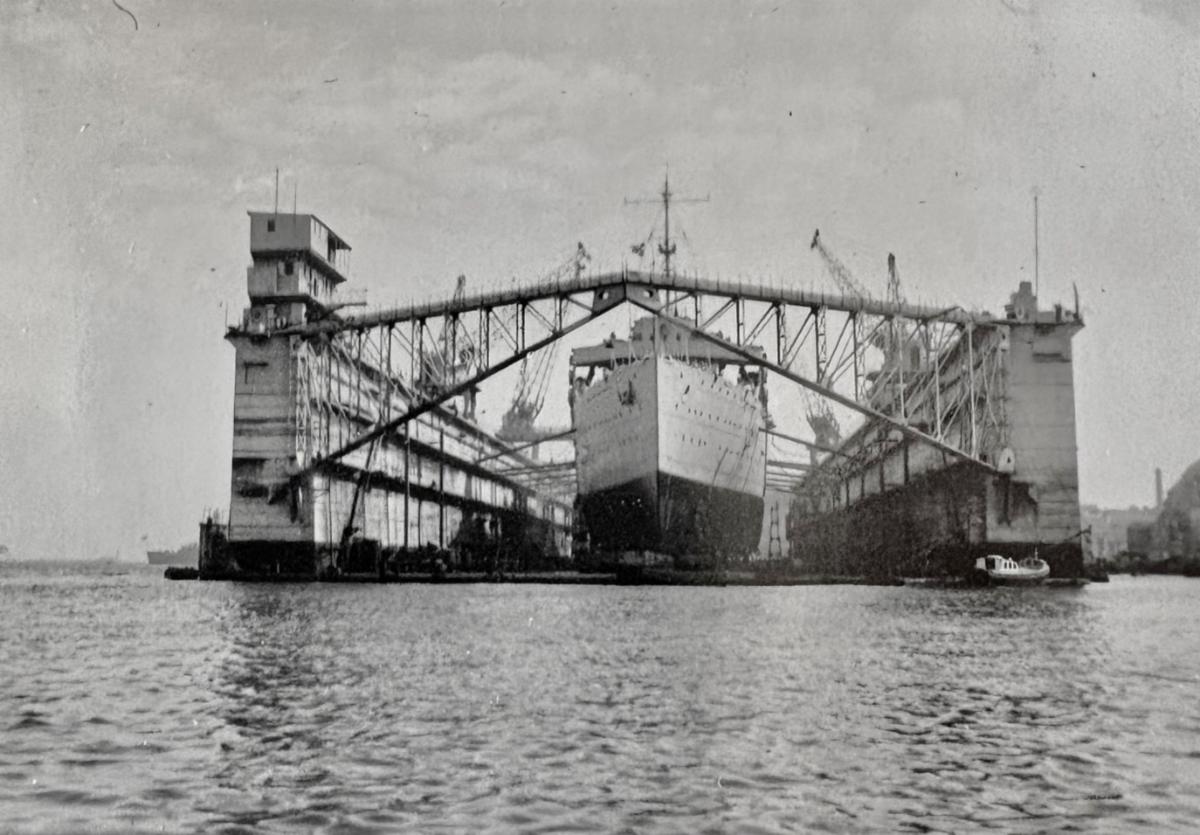
| | AFD 35 Grand Harbour Malta 1956. Photo Roger Bendall | | |
The Suez Crisis 1956
Writing a decade after the Suez crisis, one contemporary politician dismissed the affair as merely ‘the dying convulsion of the British Empire’.* This view is still widely held today, but how authentic is that interpretation in hindsight?
How did the Suez crisis redefine Britain’s international identity and economic profile and its relationship with former colonies and ongoing allies? And how did it influence attitudes among Britain’s allies, including France and Israel, who had taken part, and the United States who had forced an early end to the action?
Critically, for this conference, how did the Suez aftermath and its often bitter recriminations shape future British naval policy on home and overseas dockyards and shipyards and their communities?
Please send your expression of Interest and/or proposal for a talk of c.30 minutes. We require a title, a 300-word synopsis and a 100-word biography by mid-January 2026.
If your proposal is accepted, you will present in-person or online. We shall refund UK/European travel fares to the conference (other overseas: travel from UK airport to Greenwich), your fee, lunch and contribute to accommodation, publish your paper in our Transactions Journal and give you a journal volume (see journal details below). Your printed paper will be 6–10k words, due 30 June 2026.
Your proposal should be sent to:
Dr Ann Coats avcoatsndschair@gmail.com
and
Roger Bendall roger@rogerbendall.com
N.B. The proposal should present original research.
NDS Conference Transactions Journals
After each of our conferences, all papers are published in the NDS Journal Transactions. This journal is a substantial and high-quality hardcopy annual publication for members which features NDS themed conference papers, book reviews, and additional articles. See the Transactions list and Author Index for details.
You can also buy papers from our past conferences on Amazon as either print-on-demand or Kindle editions. Transactions on Amazon
| |
| NAVAL HISTORY BOOK REVIEWS | | |
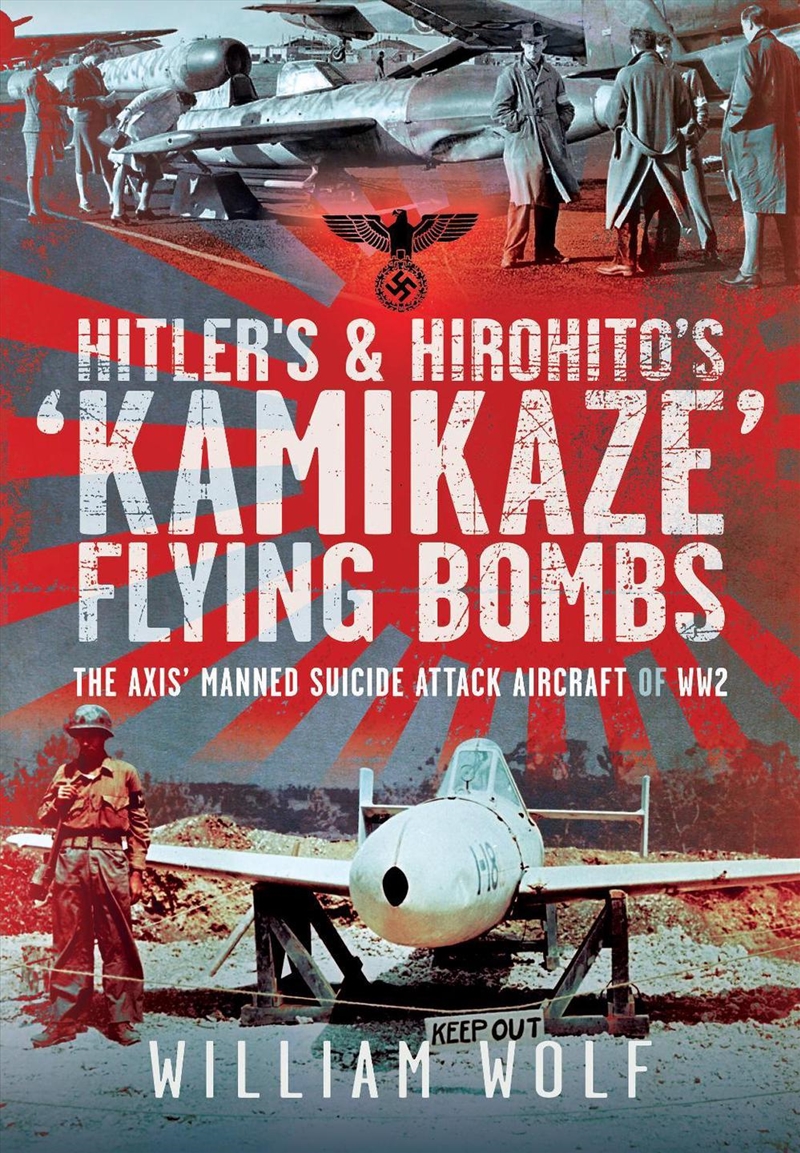
Hitler’s and Hirohito’s Kamikaze Flying Bombs: The Axis’ Manned Suicide Attack Aircraft of WW2 By William Wolf, Barnsley, Yorkshire, UK and Philadelphia, PA: Air World, an imprint of Penn & Sword Books, Ltd, (2025).
Reviewed by Charles C. Kolb, Ph.D
| | |
Dr. William “Bill” Wolf is an aviation historian, collector, and author of 28 World War II aviation books with several others waiting to be published. He has written for Bloomsbury Publishing, Osprey, Schiffer, and Pen & Sword, among others. His recent publication Special Operations Consolidated B-24 Liberators: The Unknown Secret and Specialized Duties Aircraft (August 5, 2025), is followed by Hitler’s and Hirohito’s Kamikaze Flying Bombs: The Axis’ Manned Suicide Attack Aircraft of WW2 (November 30, 2025), the subject of this review.
The title appears rather strange as it combines German aircraft with Japanese suicide “composites.” Composites are defined as aircraft consisting of two components, “a larger mother parasite that takes off, flies as a single aircraft with the parasite able to separate in flight and continue as an independent aircraft to either conduct its own assigned mission or support the primary mission of the carrier” (p. ix).
Wolf packed the narrative (x + 222 pages) with detailed—nearly overwhelming—historical information and added splendid black-and-white photographs and other illustrations (141 photos and 49 drawings). The book has a brief introduction and has two parts: “German Manned Parasite Suicide Aircraft,” and “Japanese Manned Suicide Composites.” The single 67-item bibliography lists 43 books, 8 magazine titles, and 16 reports and papers. A useful index completes the volume. A brief synopsis of the contents follows:
The German part has three chapters. “Me 328 Manned Parasite Suicide Aircraft, Reichenberg Precursor” reports the development and testing of Me 328 variants A, B (bomber), and C fighter), specifications, performance, and armament details and Me 328 V1 to V7 prototypes. The Fiesler Fi 103 flying bomb tested at Peenemunde on 24 December 1944 and the disruption of production by Allied bombers are reviewed. The operation of V-1 in late May 1944 has detailed descriptions of its components, assembly, and mating with Argus pulsejet. Allied countermeasures are part of Operation Driver. He considers the Arado Jet 234s as motherships since the planned He 111 failed to be able to carry Fiesler Fi 108 flying bombs. In addition, Wolf mentions the American composite Buzz Bomb JB-2/B-17, reverse engineered from a captured V-1 Argus pulsejet engine in July 1944; it was carried under the wing of a B-17. “Fi 103R Reichenberg Manned Suicide V-1 Parasite” details (with splendid photos) the cockpit, controls, ejection seat, propellant evaluations, and equipment of four variants and air launch procedures. Wolf refers to flight testing by Hanna Reitsch and Otto Skorzeny and their autobiographies or memoirs. “Nazi Drawing Board Suicide Parasite Proposals” is divided into three sections: 1) Nazi drawing board suicide parasite proposals with Arado Ar E.377 Parasite/Ar 234 or He 162 composite, 2) Zepplin Rammjager (Ramjet Fighter) with reinforced wings designed to crash into American bombers, and 3) Focke-Wulf Kamikaze Project with 2,268 kg of explosives carried by parasites. The latter two plans did not progress beyond the drawing board.
The Japanese part has seven chapters. “Japanese Ohka Parasite/G4M2e Betty Mothership Suicide Composite” is the longest, highly detail chapter in the book. Wolf discusses the origins of Kamikaze and covers the Battle of the Philippine Sea (19–20 June 1944) which eliminated the IJN’s ability to conduct large-scale carrier actions. Biographies of Motoharu Ohkumura and Takijuro Onishi demonstrate their roles in developing the G4M Betty twin engine attack bomber and mothership – 2,224 of them were built by Mitsubishi. Ohka development is traced from prototypes to G4M1 Model 11 that carried a 2,640 lb. warhead. Specifications, rudimentary cockpit, performances, controls, and propellants are documented as are the creation of units, training, recruiting of pilots, and tactics. The initial successful flight of Ohka/Betty was on 19 November 1944 and deployment began with the Allies Operation Iceberg (the Invasion of Okinawa) on 1 April 1945. “USN Kamikaze Detection and Defences: Picket Ships, CAP, and AA Defences” focuses on Allied response to Kamikaze and unanticipated new Japanese tactics compelling the need to change Allied battle tactics. Picket ship deployment is reviewed and Combat Air Patrol “Big Blue Blanket” defensive strategy adopted by Navy, Marine, and Army air forces; the F4U-1D Corsair proved most effective. Gunnery including the 20mm Oerlikon, 40mm Bofors, 5in/38 cal and 3in /50 cal AA are reviewed, as are radar interception and improved shipboard radar. “Conventional Kamikaze Attacks: A Synopsis” provides an assessment of the first attacks in the Philippines followed by Iwo Jima, and Okinawa; Japanese and Allied strengths, tactics, losses, naval vessels involved, damages, and sinkings are reported.
“Ohka Combat Operations” covers the new Japanese Shinaro and older and smaller Unryu and Ryuho and the initial Ohka attacks of 1 March 1945 resulting in the “Betty Turkey Shoot” with heavy losses of both Bettys and Zeros resulting in changes in Ohka tactics. The Allies recognized that the best option for protection was to destroy the motherships and their Ohka before reaching the launching points. All ten Japanese attacks are documented as are the separate losses and results. The attacks began on 1 March 1945 and ended on 22 June. Wolf summarizes that during the war there were 896 raids with ca. 4,000 Japanese aircraft destroyed (1,900 were Kamikaze) with the Allies suffering 4,907 sailors killed and 4,874 wounded. At Okinawa 26 ships were sunk, 225 other damaged, and 3,389 Americans died; there were 793 Kamikaze attacks, of which 181 (23%) hit their targets. “Ohka Further Design and Development” reports that the production of Ohka Model 11 production ceased during March 1945 and that Kugisho Model 22 with solid fuel rocket propulsion began testing in April. Kugisho Model 33, Yokosuka Models 11 and 22 were still on the drawing board. The Allied offensive impacted the Japanese defensive plan and American plans for the invasion of Japan.
“Kawanishi Baika (Plum Blossom)” was a pulsejet under development towards the end of the war (pp. 205211). Here, for the first time, readers learn about German influence in the form of the Japanese-German Technical Agreement of 1943. The Japanese received manufacturing rights, intelligence, and blueprints for the German 163 Komet rocket fighter which resulted in the production of Mitsubishi J8M Susui; the Me 262 jet fighter gave rise to the Nakajima J9Y Kikka; data on the Fiesler Fi 103R series served as prototypes for the Kawanishi Baika. Several Baika Types I and II pulsejets resulted, as did the Maru Ka-10 pulsejet version of Argus 014. Plans, material, and actual German engines and even disassembled aircraft were transported by U-boat from Germany to Japan during the end of the war. There were more than a few Axis submarine transits between Germany and Japan, mostly from Europe to the Japanese homeland. An excellent review of this topic (not cited by Wolf) is Germany’s Last Mission to Japan: The Failed Voyage of U-234 by Joseph Mark Scalia (Annapolis: Naval Institute Press, 2000) and Axis Blockade Runners of World War II by Martin H. Brice (Annapolis: Naval Institute Press,1981). Lastly “Mizuno Shinryu II (Divine Dragon)” was a suicide rocket glider planned by the Japanese in May 1945 to attack Allied B-29 Superfortress bombers; it was never built. These brief notes on the chapters’ content only scratch the surface as to the quality and quantity of detailed information Wolf provides in his encyclopedic book. It is highly recommended for libraries and scholars of World War II militaria.
William Wolf retired from dentistry in Fort Lauderdale, FL, at age 45 to pursue his lifelong fascination with World War II aviation history. He has collected more than 27,000 books, copied material, and magazines, and 10,000+ photographs. He has acquired more than 800 videos and DVDs, and 1,500+ CDs containing multiple scanned manuals, technical reports, and books. His microfilm collection includes a multitude of USAAF, USN and USMC group and squadron histories, hundreds of aircraft manuals, complete Japanese monograph series, and US and British Strategic Bombing Survey,s as well as USAF Historical Studies and thousands of vintage intelligence, technical, and original combat reports. This irreplaceable collection now resides in the National Museum of WW2 Aviation in Breckenridge, CO. See also https://www.vintageaircraftheritage.com/william-wolf.html
Dr. Kolb is a United States Naval Institute, Golden Life Member
| |
| NAVAL HISTORY BOOKS AVAILABLE FOR REVIEW | |
EP. 475: 250 Years of the Marine Corps, from the Marine Corps History Division: 23 December 2025
Host Eric Mills talks with retired Marine Corps Lt. Col. Shawn P. Callahan, Director of the Marine Corps History Division about their latest feature publication celebrating 250 years of the US Marine Corps.
Semper Fidelis is available for free digital download or order via their website here>>
Listen here>>
| | 2026 CNO Naval History Essay Contest | | |
The Chief of Naval Operations (CNO) announces the 2026 CNO Naval History Essay Contest. Participants are invited to submit their essays no later than 30 April 2026. This contest represents an excellent opportunity to engage in the rich legacy of naval history. The Naval History and Heritage Command (NHHC) is the lead for the contest and the U.S. Naval Institute is supporting it.
The Challenge
The CNO invites entrants to submit essays that apply lessons from naval history to solving today’s Navy challenges. Entrants should consider, for example: Chinese and Russian expansion across the spectrum of military operations and domains; the rise of China as an economic and maritime power; the increased importance of navies, sea control, and allies and partners; the proliferation of advanced weaponry and erosion of key US technological advantages; and fundamental strategic and technological shifts and advances that promise to change the character and conduct of naval warfare.
CNO's Intent
Navigation Plan 2024 emphasizes that strategic agility stems from proactive and practical thinking and that there is no time to waste. This essay contest aims to harness the collective expertise and intellectual engagement of the US maritime services community, including the Navy, Marine Corps, Coast Guard, and Merchant Marine, as well as cadets and midshipmen. The goal of this essay contest is to examine and reflect on historic approaches to similar conditions and stimulate discussion and insights on achieving and maintaining maritime superiority in the context of renewed great power competition.
MIDSHIPMEN AND CADETS
Eligibility
(1) Navy, Marine Corps, Coast Guard, and Merchant Marine Academy midshipmen and cadets (Naval Academy, NROTC, Coast Guard Academy, Kings Point) and state maritime academy midshipmen.
Submission Guidelines
-
Word Count: 3,000 words maximum (excludes endnotes/footnotes).
- All entries must include either enumerated footnotes or enumerated endnotes; a bibliographic list of sources at the end of the essay is not permitted as a substitute for the footnotes or endnotes.
-
Submit essay by 30 April 2026 as a Word document online at: www.usni.org/cnonhessaycontestmidn-cadet
- Include word count on title page of essay but do not include author name(s) on title page or within the essay.
- Note: Essays must be the author's original work, neither previously published (online or in print) or currently under consideration for publication elsewhere, nor previously submitted to the CNO Naval History Essay Contest.
- Entrants may submit multiple essays, but the judging panel will select only one winning essay per entrant.
- The short biography should detail the author's eligibility for the contest.
Prizes
$4,000 — First Prize
$2,000 — Second Prize
$1,000 -- Third Prize
PROFESSIONAL HISTORIANS
Eligibility
(1) US and international professional historians, including history museum curators, archivists, history teachers/professors, PhDs, and published history authors.
(2) Authors of books on naval history (not including self-published works); or
(3) Civilians who have published articles in an established historical or naval journal or magazine.
Submission Guidelines
-
Word Count: 3,500 words maximum (excludes endnotes/footnotes).
- All entries must include either enumerated footnotes or enumerated endnotes; a bibliographic list of sources at the end of the essay is not permitted as a substitute for the footnotes or endnotes.
-
Submit essay by 30 April 2026 as a Word document online at: www.usni.org/cnonhessaycontestprofessional
- Include word count on title page of essay but do not include author name(s) on title page or within the essay.
- Note: Essays must be the author's original work, neither previously published (online or in print) or currently under consideration for publication elsewhere, nor previously submitted to the CNO Naval History Essay Contest.
- Entrants may submit multiple essays, but the judging panel will select only one winning essay per entrant.
- The short biography should detail the author's eligibility for the contest.
Prizes
$5,000 — First Prize
$2,500 — Second Prize
RISING HISTORIANS
Eligibility
Those that do not fall in the Professional Category and are either:
(1) Active duty, reserve, retired, and federal civilian personnel from the U.S. Navy, Marine Corps, Coast Guard, and Merchant Marine; or
(2) Members of foreign militaries who have orders and are serving in an official billet in one of the above Services.
Submission Guidelines
-
Word Count: 3,000 words maximum (excludes endnotes/footnotes).
- All entries must include either enumerated footnotes or enumerated endnotes; a bibliographic list of sources at the end of the essay is not permitted as a substitute for the footnotes or endnotes.
-
Submit essay by 30 April 2026 as a Word document online at: www.usni.org/cnonhessaycontestrising
- Include word count on title page of essay but do not include author name(s) on title page or within the essay.
- Note: Essays must be the author's original work, neither previously published (online or in print) or currently under consideration for publication elsewhere, nor previously submitted to the CNO Naval History Essay Contest.
- Entrants may submit multiple essays, but the judging panel will select only one winning essay per entrant.
- Essays in the Rising Historian category may be co-authored, with both authors meeting the Rising Category qualifications.
- The short biography should detail the author's eligibility for the contest.
Prizes
$5,000 — First Prize
$2,500 — Second Prize
$1,500 -- Third Prize
In addition to the prize money winner will be offered:
a. Invitational travel orders to the 2026 CNO Naval History Essay Contest Awards Reception (to be determined) to meet the CNO and potentially present their papers.
b. Winners will be published in Naval History magazine or Proceedings and online with the Naval History and Heritage Command (NHHC). Other essays may be published in Naval History or Proceedings and/or online by NHHC.
c. Copper sheathing from USS CONSTITUTION (provided by NHHC)
d. Recognition on NHHC's website.
e. A one-year Naval Institute membership and a one-year subscription to Naval History magazine (courtesy of the Naval Institute).
Judging
Essays will be judged on the following criteria:
a. Relevance to the topic: Applying lessons from naval history to establishing and maintaining maritime superiority in an era of great power competition;
b. Readability;
c. Thoroughness of research;
d. Quality of insights based on historical events; and
e. Uniqueness/novelty of ideas presented.
All essays are judged in the blind. A six-person panel will select the winning essays. We will notify you via email if your essay is selected for a prize or for publication.
Note: For non-winning essays, since we receive so many submissions (more than 100 per month!), notification of acceptance on one of our platforms may take 4-6 months.
For more details about the contest, please visit https://www.history.navy.mil/get-involved/essay-contest.html.
For questions, please contact Steve A. Hill, NHHC: email: Stephen.a.hill6.civ@us.navy.mil.
For advice and guidance on writing essays, please email: essayquestions@usni.org.
| | |
The John Lyman Book Awards are given annually by the Society in the following eight categories:
- Maritime and Nautical Archaeology
- Maritime and Naval Biography and Memoir
- Maritime and Naval Reference Works and Edited Primary Sources
- Maritime and Naval Science, Technology, and the Environment
- North American Maritime History
- North American Naval History
- World Maritime History
- World Naval History
Books published during the previous year or bearing a copyright date of the previous year qualify for consideration. The closing date for submissions of books published in 2025 is 1 February 2026.
For further information, contact the Awards Committee chair, Dr. Abigail Mullen, abby@abbymullen.org.
| | |
13th Royal Canadian Navy History Conference in conjunction with the Canadian Nautical Research Society 25–27 June 2026 | CFB Esquimalt, British Columbia
Theme: Sea Power on the Pacific Rim: History, Heritage, and the Canadian Experience
The Royal Canadian Navy History Conference, convened in partnership with the Canadian Nautical Research Society, invites proposals for papers, panels, and roundtables for its 13th meeting, to be held at Canadian Forces Base Esquimalt, 25–27 June 2026.
This conference coincides with the RCN’s longstanding presence on the Pacific Coast and provides a timely opportunity to explore the multifaceted history of sea power on the Pacific Rim. From Indigenous maritime traditions to imperial rivalries, from the Pacific theatres of the world wars to Cold War operations, and from heritage preservation to contemporary strategic challenges, the Pacific has always been a dynamic space of maritime interaction.
We welcome proposals that engage with the broad theme of “Sea Power on the Pacific Rim: History, Heritage, and the Canadian Experience.” Topics may include, but are not limited to:
- The evolution of the Royal Canadian Navy’s Pacific presence, from Esquimalt’s 19th-century origins to the modern fleet
- Canada’s role in Pacific conflicts and operations, including the World Wars, Korea, the Cold War, and post–Cold War missions
- Indigenous maritime history and perspectives on Pacific seafaring and sovereignty
- Naval heritage, commemoration, and the preservation of material culture on the Pacific coast
- Comparative and transnational studies of sea power in the Pacific, including the Royal Navy, US Navy, Imperial Japanese Navy, and regional maritime forces
- The impact of geography, trade, migration, and technology on Pacific naval and maritime history
- Historiographical and methodological approaches to studying Pacific naval history
Proposals focused on other topics may also be submitted
Submission Guidelines
- Individual papers: Please submit an abstract of no more than 300 words, along with a brief (150-word) biographical note.
- Panels and roundtables: Submit a 500-word proposal outlining the panel theme, plus abstracts and bios for each participant.
- Proposals are welcome from academics, students, naval professionals, independent scholars, heritage practitioners, and those interested in maritime history.
Deadlines and Details
- Proposal submission deadline: 15 January 2026
- Notification of acceptance: 15 February 2026
-
Submissions and inquiries should be sent to: rcncnrsconference@gmail.com
The 13th RCN History Conference promises to be a significant opportunity for dialogue between historians, naval personnel, and the wider community. We look forward to welcoming participants to Esquimalt, the historic heart of the Royal Canadian Navy on the Pacific Coast.
Submit proposals and inquiries to: rcncrnsconference@gmail.com
Join us in Esquimalt for an engaging exchange on Canada’s Pacific naval history!
| | |
Friends of the National World War II Memorial is pleased to invite proposals for presentations at our 11th Annual Summer Teachers Conference, taking place next year, July 20–24, 2026, in Washington, D.C.
Our 2026 theme—Defending Democracy at Home and Abroad: The Ongoing Legacy of Service in the American Story—honors the diverse Americans who, across 250 years, have served our nation in uniform while advancing the cause of equality and democracy.
We welcome proposals from educators, historians, authors, public history professionals, community partners, and others whose work can help illuminate this powerful and inspiring story.
Full details about the theme, suggested topics, and proposal guidelines, as well as the submission form, are available on our website:
👉 https://www.wwiimemorialfriends.org/summer-teachers-conference/presentation-proposal
All submissions are due by Friday, 6 February 2026.
If you have any questions about the conference or the proposal process, please don’t hesitate to reach out.
We look forward to reviewing your proposals and hope you’ll join us next summer in Washington, D.C.!
| | Bringing Federal History to the Public During America’s 250th Anniversary | | |
Proposals Due 15 January 2026
Please submit proposals using this Google form.
14–15 May 2026
Library of Congress
James Madison Memorial Building
Anniversaries offer an opportunity to reflect on the past and consider what the future might bring. With the semiquincentennial of the United States, federal historians and allied professionals are uniquely positioned to offer insights, reflections, analysis and understanding, as well as to consider the current context of its celebration, and what issues future federal historians may face.
Federal history practitioners will be celebrating the 250th anniversary through myriad projects and programs. The raised profile of this event brings with it an opportunity for a fresh framework on public history, to highlight the relevance and importance of federal history, and for outreach and deeper connection to a wide range of audiences. How are practitioners bringing federal history to the public now? What research and resources on federal history have risen to attention in light of the 250th anniversary?
SHFG invites federal history practitioners from all specialties, including but not limited to scholars, public historians, educators, museum professionals, archivists, and communications professionals, to submit presentations for the annual meeting. Suggested topics may include creatively and engagingly framed narratives and innovative public facing delivery, projects working toward transparency and availability of historical documentation and data, and development of creative and relevant connections between the 250th anniversary of the Declaration of Independence and the subsequent development of the federal government and its workforce throughout the history of the United States.
The Program Committee invites proposals for the following formats and encourages non-traditional panel formats:
ROUNDTABLE: Includes short presentations by panelists, followed by discussion and feedback from panelists and from the audience. 3–6 participants.
STRUCTURED CONVERSATION: Facilitated, participant-driven discussions designed to prioritize audience dialogue and contain little or no formal presentations. 3–6 participants.
LIGHTNING ROUNDS: Participants make short presentations—no more than 5 minutes each—to summarize their research or projects. Up to 15 participants.
WORKSHOP: A workshop provides concrete practical tools and lessons for a smaller group of attendees on a specific subject or skill. Organizers submit proposals, and after acceptance attendees can register for the workshop. 15-30 participants.
TRADITIONAL PANEL: At least three presenters, a chair, and a commentator. 3–6 participants.
INDIVIDUAL PAPERS: While individual proposals are welcome, individual presentations will be combined with similar proposals to make a full session. The Program Committee will consider proposals for entire sessions before reviewing individual papers.
OTHER: Proposals for additional formats not described above are welcome.
Submission Process:
All proposals should include a title and session abstract (200–300 words), brief abstracts of each participant (200-300 words), and biographical paragraphs and contact information for each participant. Individual paper proposals should include a brief abstract (200-300 words), a brief biographical paragraph for the presenter, and contact information.
All proposals should be submitted using this Google form.
Please direct any questions to the Program Committee at: shfg.primary@gmail.com
| | |
Maritime Margins: Missing Voices, Overlooked Places, and New Perspectives
New Haven, Connecticut, 27–29 May 2026
| | |
The North American Society for Oceanic History invites you to its annual conference at the Canal Dock Boathouse and Hotel Marcel in New Haven, Connecticut, 27–29 May 2026. From the Black engineer William Lanson, who once made New Haven’s Long Wharf the longest structure of its kind in North America, to the birth of industrialized oystering in the waters between river, harbor, and Long Island Sound, New Haven sits at multiple margins of human and natural histories. The city is also the “cultural capital of Connecticut,” boasting renowned museums, research libraries, and some of the best “apizza” outside Naples.
All scholars of the history or archaeology of fresh and saltwater, maritime cultural landscapes, navies, maritime security and strategy, and maritime actors (including the natural environment itself) are encouraged to submit proposals. We particularly seek presentations that highlight historically marginalized people, places, and subjects, including papers that consider race, class, gender and imperial, colonial, and environmental histories.
The program committee invites panel proposals of at least three and no more than four papers. We also welcome roundtable and individual paper proposals. The committee will consider a limited number of remote presentations from international participants only on a case-by-case basis. Participants from the United States must present in-person.
Proposal submissions should be in single document (.doc or .docx) and include: A) panel or paper title; B) 150-200 word abstract for the full panel and for each paper submitted; C) phone number, address, affiliation, and email of presenter(s); and E) any special requests to include remote participation by international presenters or any physical or technical accommodations required beyond a basic projector, laptop, and screen. Conference registration is required for all participants.
Proposals should be submitted electronically to nasoh.conference@gmail.com by
2 February 2026. Contact Dr. Jason W. Smith at smithj131@southernct.edu for general questions about the conference.
Student Grants and Awards
All students applying to present are automatically considered for NASOH’s Chad Smith Travel Grants. Students are also encouraged to submit their paper to be considered for the Clark G. Reynolds Student Paper Award. Additional information on award guidelines can be found on the NASOH website.
| | Call for Papers: International Journal of Naval History | | UPCOMING NAVAL & MARITIME HISTORY GATHERINGS | | |
10–12 February 2026: The US Naval Institute and AFCEA International 36th Annual WEST Conference. San Diego.
21–22 February 2026: Western Naval History Annual Symposium; USS Midway San Diego
26–29 March 2026: 92nd Annual Meeting of the Society for Military History, Arlington, VA
28 March 2026: Naval Dockyards Society Conference (hybrid), Greenwich, UK
22–25 April 2026: Council of American Maritime Museums Annual Conference Mystic Seaport, CT.
14–15 May 2026: Society for the History of the Federal Government Annual Meeting, Washington, DC
27–31 May 2026: NASOH Annual Meeting, New Haven, Connecticut
25–27 June 2026 13th: Royal Canadian Navy History Conference In conjunction with the Canadian Nautical Research Society | CFB Esquimalt, British Columbia
Submit proposals and inquiries to: rcncrnsconference@gmail.com
| PREBLE HALL NAVAL HISTORY PODCAST | |
A naval history podcast from Preble Hall—the United States Naval Academy Museum in Annapolis, Maryland—featuring interviews with historians, practitioners, military personnel, and other experts on a variety of naval history topics from ancient history to more current events.
Click here for the latest episode: 253 - Paul Stillwell - Battleship New Jersey: The Complete History>>
Click here for all Preble Hall Podcasts >>
|
DRACHINIFEL YOUTUBE CHANNEL
|
NAVY HISTORY MATTERS
Welcome to Navy History Matters, the Naval History and Heritage Command’s biweekly compilation of articles, commentaries, and blogs related to history and heritage. Every other week, they gather the top-interest items from a variety of media and social media sources that link to related content at NHHC’s website, your authoritative source for Navy history.
Click here for most recent article>>
| SUPPORTING US NAVAL HISTORY & HERITAGE | |
Tuesday Tidings is free to all—but it exists because NMHS members keep our work moving forward. Membership supports research, publications, seminars, educator resources, and the community that shares these stories. If you enjoy reading Tuesday Tidings, becoming a member is the best way to sustain it. Thank you!
Click here to become a member of NMHS today >>
| | | | |