|
31 March 2026
Welcome back to our National Maritime Historical Society members and friends who share a love for naval history!
| | |
On this day, 172 years ago, Commodore Matthew Perry negotiated the Treaty of Kanagawa, which allowed for trade between the US and Japan!
A Huzzah to the Naval Dockyard Society (NDS) and the Society for Military History (SMH), both of which held successful annual meetings and conferences this past weekend. A note about the transactions (proceedings) of the NDS conference is below. Next on the conference docket is the British Maritime Commission Conference for New Researchers on 17–18 April at the University of Southampton, UK, followed a few days later by the Council of American Maritime Museums at Mystic Seaport. Looming on the horizon is the North American Society for Oceanic History conference/National Maritime Historical Society annual meeting in late May in New Haven, CT.
In our “Upcoming Events of Immediate Interest,” we note a concert that will take place in Norfolk in two weeks to celebrate the 400th anniversary of the French navy. Numerous other 400th anniversary commemorative events are planned, including a cross-Atlantic sail with French and US Navy midshipmen that will arrive at New York for the US 250th and a major academic conference at the Sorbonne in October. In this issue, we highlight a forthcoming art exhibition.
For our Naval History Book Review, we thank Barrett Tillman, who critiques a new book on F4U Corsairs. Five new books have been added to the review pile!
For our “In Case You Missed It,” we showcase the Naval Order’s newest companion, Master Chief Jim Rhodes, who conducts an encore of the presentation he gave to the 12th Maritime Heritage Conference on World War II naval officer training and operations leading to D-Day.
| |
| |
Tuesday Tidings is compiled by Dr. David F. Winkler and Jessie Henderson as a benefit for members of the National Maritime Historical Society and friends of naval history.
As always, comments and naval history news items are welcome at nmhs@seahistory.org.
| | Tuesday Tidings is published by the National Maritime Historical Society with support from the US Naval Institute. Interested in joining USNI? Click on the USNI logo to become a member! | | |
ITEMS OF IMMEDIATE INTEREST | |
Tuesday, 7 April – Friends of the American Merchant Marine Museum
Meet Doug Most, the author of Launching Liberty: The Epic Race to Build the Ships that Took America to War
6:30 PM (EDT) (in person/free)
The Mariner Estate, Great Neck, NY
RSVP to rpkaye@fammm.org
Wednesday, 8 April – Naval Order Heritage Program
Intrepid’s Fighting Squadron 18: Flying High with Harris’ Hellcats
With Mike Fink
8 PM EDT (Virtual)
Thursday, 9 April – Tall Ship Providence Sea Story Lecture Series
Alexandria, VA
7 PM EDT (In Person)
Thursday, 9 April – NMHS First Thursdays Seminar Series (on the second Thursday this month!)
USCGC Eagle: The Legacy of the Coast Guard’s Flagship
With Will Sofrin
7 PM EDT (Virtual)
Sunday, 12 April – Joint Navy Concert
A special performance will honor the 400th anniversary of the French navy.
With the Musique de la Marine Nationale (National Band of the French Navy) and the United States Fleet Forces Band
3 PM EDT Harrison Opera House Norfolk, VA
Sunday, 12 April – Mare Island Navy Hospital Walking Tour
With Dr. Tom Snyder
2 PM PDT
Monday, 13 April – New York Naval Order Commandery Luncheon
An American Original – Commander Charles “Chick” Parsons, USNR
With Dr. Donald Chisholm
Noon–1:30 EDT
Tuesday, 14 April – San Francisco Naval Order Commandery Luncheon
The Imperial German Naval Airship Service and the Center of Gravity
With Professor Mark Hull
Noon–1:30 PDT (in person/virtual)
Wednesday, 15 April – Naval Order Lecture Series
Commanding Petty Despots!
With Tommy Sheppard
8 PM EDT (Virtual)
Saturday-Sunday, 17–18 April – British Maritime Commission Conference for New Researchers
University of Southampton, UK
Wednesday – Saturday, 22–25 April – Council of American Maritime Museums Annual Conference
Mystic Seaport, CT
| | |
French Navy 400
Special Exhibition to open from 13 May to 2 August
| | |
The Navy and Painters: Four Centuries of Art and Power
As part of the 400th anniversary of the French navy in 2026, the French National Maritime Museum will present a major exhibition starting next month dedicated to the painters who, from the 17th to the 20th century, shaped the visual representation of naval history. Featuring nearly 150 artworks, this original exhibition explores the connections between art, power, and the maritime world.
From the 17th century onwards, the affirmation of sovereign power was also expressed through the arts. While marine painting, traditionally associated with landscape art, introduced a renewed perception of the sea and maritime environments, artists were commissioned to enhance the image of the navy and the maritime world. Among them are Claude Lorrain, Vernet, Gudin, Morel-Fatio, Manet, Ziem, Signac, Marquet, Méheut, and Marin-Marie.
The exhibition will follow the major artistic movements from classicism to the avant-garde of the 20th century, reflecting the technical, political, and aesthetic transformations of modernity. The rise of leisure sailing, seaside resorts, and sea bathing profoundly changed perceptions of the sea, inspiring new artistic forms while preserving the distinctive features of naval representation.
The exhibition will also examine the complex relationships between the navy and artists: painters for the King’s seas, painters of the royal navy, and later the Official Painters of the Navy (Peintres officiels de la Marine—POM), a corps established in 1830. It highlights the diversity of artistic paths and statuses while questioning the role of military and cultural institutions in artistic creation.
For more on French naval museums, visit Musée national de la Marine | Official website
| | Transactions Of The Naval Dockyards Society | | |
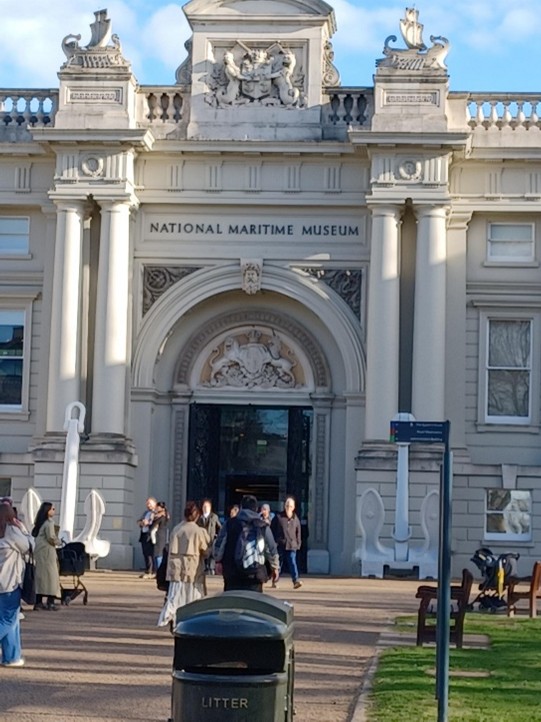
The Naval Dockyards Society was inaugurated in 1996 and officially constituted in 1997 at the National Maritime Museum, Greenwich, London, England. The Society’s primary aim is to stimulate the production and exchange of information and research into naval dockyards and associated organisations. It runs annual themed conferences, publishes conference papers in annual Transactions, conducts annual tours to the UK and overseas sites, and has carried out campaigns to preserve dockyard sites at Sheerness, Deptford, Devonport, Gibraltar and Bermuda. The NDS is supported by the National Maritime Museum, Greenwich.
The Naval Dockyards Society is an international organisation that is concerned with and publishes material on naval dockyards and associated activities, including victualling, medicine, ordnance, shipbuilding, shipbreaking, coastguard stations, provisions and supplies; all aspects of their construction, history, archaeology, conservation, workforce, surrounding communities and family history; and all aspects of their buildings, structures and monuments relating to naval history. The Society is therefore involved closely in the terrestrial and underwater heritage of all these sites.
Annual conference papers are published as a series of books. There are currently 18 of these. They are all available to you through Amazon, and more will be added in the years to come. If you visit Amazon and search for Transactions of the Naval Dockyards Society, you will be able to buy these as either a print version or as an electronic Kindle version.
These are the titles
Vol. 1: Portsmouth Dockyard in the Age of Nelson (ed. Ray Riley, 2006) (107 pages)
Vol. 2: Gibraltar as a Naval Base and Dockyard (ed. Ray Riley, 2006) (87 pages)
Vol. 3: Structures, Communities & Re-use, Conferences 2001, 2002 & 2003 (ed. Ray Riley, 2007) (130 pages)
Vol. 4: Management & Construction, Conferences 1998, 1999, 2000 & 2001 (ed. Ray Riley, 2008) (114 pages)
Vol. 5: Venice & Malta, Conferences 1996, 1998, 2006 & 2007 (ed. Ray Riley, 2009) (99 pages)
Vol. 6: Surgeons and the Royal Navy, 2008 Conference (ed. Ray Riley, 2010) (102 pages)
Vol. 7: Building Victory: Mid-Eighteenth Century Naval Warfare – Roles of Dockyards and Shipbuilding, 2009 Conference (ed. Ray Riley, 2011) (85 pages)
Vol. 8: Pepys and Chips: Dockyards, Naval Administration & Warfare in the Seventeenth Century, 2010 Conference (ed. Ray Riley, 2012) (130 pages)
Vol. 9: Treason's Harbours: Dockyards in Art, Literature and Film, 2011 Conference (ed. Philip MacDougall, 2014) (98 pages)
Vol. 10: Bermuda Dockyard and the War of 1812, 2012 Conference held in association with National Museum of Bermuda (ed. Philip MacDougall, 2017) (112 pages)
Vol. 11: Five Hundred Years of Deptford and Woolwich Royal Dockyards, 2013 Conference (ed. Philip MacDougall, 2018) (156 pages)
Vol. 12: British Dockyards in the First World War, 2014 Conference (ed. Philip MacDougall, 2019) (164 pages)
Vol. 13: The Royal Dockyards and the Pressures of Global War, 1793–1815, 2015 Conference (ed. Nicholas Blake, 2020) (140 pages)
Vol. 14: Naval Air Stations and the Defence of Dockyards, 2016 Conference (ed. Nicholas Blake, 2021) (106 pages)
Vol. 15: The role of naval bases in maritime operations in the Mediterranean during the eighteenth century & Dockyards and naval bases in North America, the Atlantic and the Caribbean Conferences of 2018 and 2019 (ed. Nicholas Blake, 2021) (186 pages)
Vol. 16: Where Empires Collide: Dockyards and Naval Bases around the Indian Ocean & Dockyards and Baltic Campaigns (1721–2021): Comparisons and Transformations Conferences of 2020 and 2021 (ed. Nicholas Blake, 2022) (198 pages)
Vol. 17: Dockyards as Nodes of Naval Architecture, Maritime Traditions and Cultural Heritage, 2022 Conference (ed. Nicholas Blake, 2024) (288 pages)
Vol. 18: Dockyards Workers’ Experiences and Economic and Social Impact of Dockyard and Shipyard Closures & Heritage Renewal: Lessons to be Learned, Conferences of April 2017 and April 2023 (ed. Nicholas Blake) (182 pages)
| | NAVAL HISTORY BOOK REVIEWS | | |
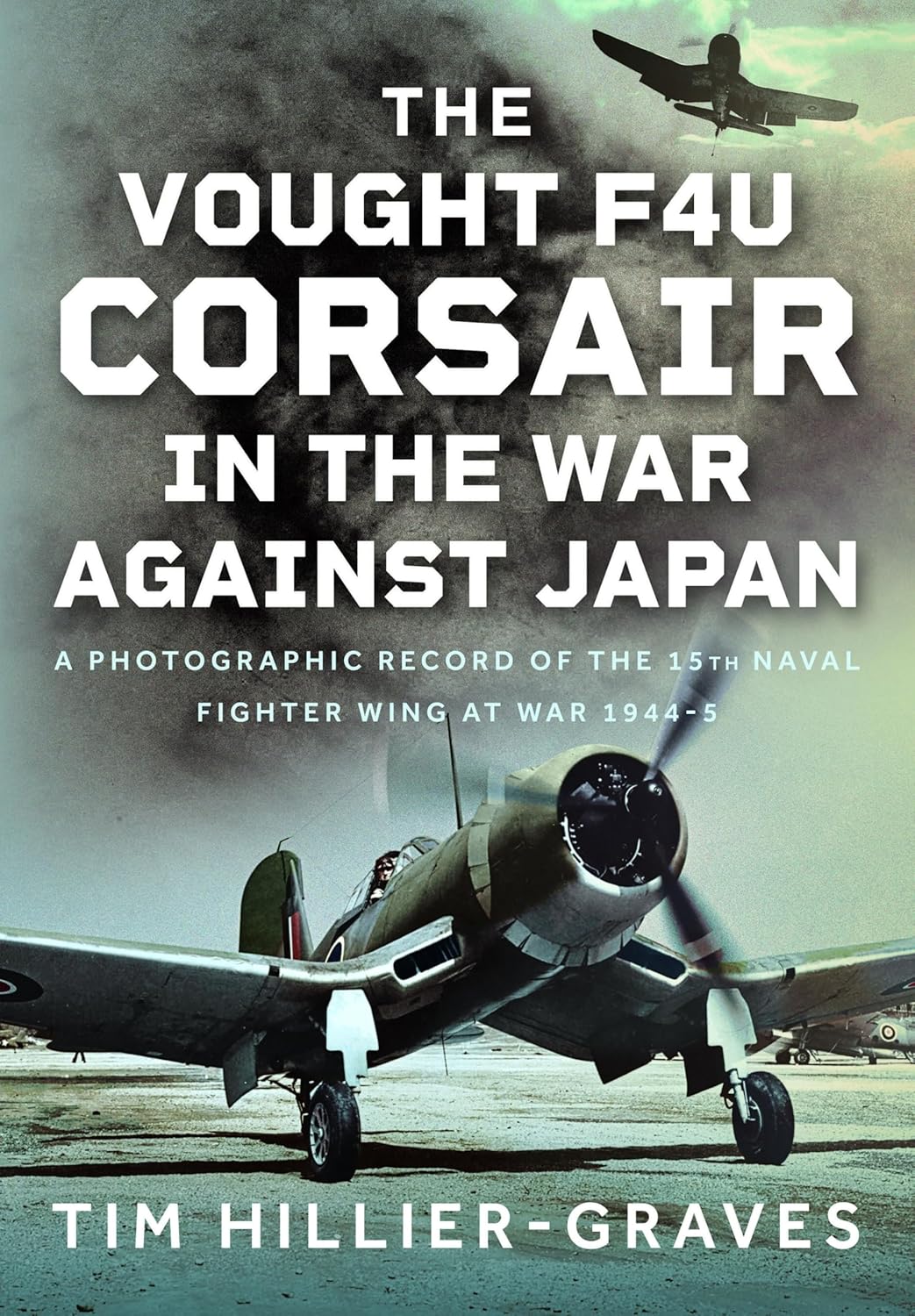
The Vought F4U Corsair in the War Against Japan: A Photographic Record of the 15th Naval Fighter Wing at War By Tim Hillier-Graves, Air World, UK, (2025).
Reviewed by Barrett Tillman
| | |
The main title of Tim Hillier-Graves’ new book implies a universal treatment of Vought’s classic F4U Corsair fighter in the Pacific War 1943–45. Presumably the scope includes the US Navy and Marine Corps plus the carrier-based British Fleet Air Arm and the land-based Royal New Zealand Air Force.
But the subtitle is more specific: “A Photographic Record of the 15th Naval Fighter Wing at War 1944–45.” It’s a subject the author knows well, with two previous treatments: Heaven High, Ocean Deep: Naval Fighter Wing at War (2019) and Widow Maker: Living and Dying with the Corsair (2020).
When World War II began in 1939 the Royal Navy’s Fleet Air Arm badly needed single-seat monoplane fighters, largely relying upon American types starting with the Grumman F4F Wildcat (originally Martlet) in 1940. Later domestic efforts produced the Hawker Sea Hurricane of 1941 and Supermarine Seafire of 1942, based upon RAF types not designed for naval use.
As the subtitle states, illustrations are the book’s main appeal. The variety and quality generally are excellent with nearly 250 photographs (45 in color) from personal and archival sources including combat imagery. It’s instructive that nearly 20 black-and-white photos show accidents and wreckage.
The text provides considerable detail of the varying fortunes of No. 15 Fighter Wing’s two squadrons—Nos. 1830 and 1833—amid a broader coverage of FAA Corsairs generally.
British Commonwealth pilots and maintainers received their first Corsairs in the US in mid-1943, training at Brunswick, Maine, and Quonset Point, Rhode Island. US Navy escort carriers provided the British early carrier qualification trials, revealing flaws in pilots and equipment. Subsequently the wing was established in November 1943, and throughout its career lost 40 percent of its pilots to all causes.
Vought Aircraft already had solved most of the F4U’s problems in the first three US Navy squadrons. Fighting 17 retained Corsairs through its Solomon Islands combat tour in 1943-44. Fighting 12 transitioned to F6Fs before deploying in USS Saratoga (CV 3) in late 1943. However the text omits the unique Observation-Fighting Squadron 1 (VOF-1) established in December 1943, which converted to Hellcats in March 1944.
The author distinguishes between the original F4U-1 “birdcage” canopy Corsairs that early squadrons operated with perennial problems, and the subsequent F4U-1A “blown canopy” versions incorporating most of the fixes, including modifications to landing gear, tailhooks, and cockpit geometry. Once those flaws were corrected, safety slowly began improving.
The wing’s wartime service largely was aboard HMS Illustrious, a 23,000-ton prewar carrier in the British Pacific Fleet. During a brief period in the spring of 1944, Illustrious and her Corsairs operated alongside Saratoga with VF-12’s former F4U pilots. During Indian Ocean operations the Americans impressed their allies with routine efficiency in launching and recovering aircraft—a standard that No. 15 Fighter Wing strove to attain.
Unfortunately, the text repeats egregious internet assertions about Royal Navy influence on US Corsair use. An outrageous photo caption echoes mindless online claims on the subject. Hillier-Graves asserts that after No. 15 Wing took Corsairs to sea “This allowed the US Navy to eventually approve the type for use on its carriers.” The author really should know better: he corresponded with veterans of VF-12 and VF-17. Yet one of the British pilots also accepts the falsehood.
Online the “Brits first” absurdity usually is accompanied by a so-called Royal Navy “special technique,” flying a curving approach to the stern of aircraft carriers. Neither claim is true, easily disproven by primary sources. The fact is: in the World War II era, nearly every carrier aircraft flew a curving approach for pilots to see the landing signal officer (RN “batsmen”) and the deck. There are scores of internet videos clearly showing the process. Nor did the British beat the US Navy to flying F4Us in combat, as sometimes claimed. The first Royal Navy Corsair mission was a Norwegian shipping strike from HMS Victorious in April 1944. The Americans initiated F4Us to Solomons combat beginning in February 1943, and from carriers (as night fighters!) from January 1944.
Britain’s January 1945 strikes against Japanese oil facilities in Sumatra incurred heavy losses, as many as five a day. But the missions provided Royal Navy Corsairs their first aerial encounters with enemy aircraft, to the pleasure of eager pilots. Hillier-Graves includes numerous accounts by No. 15 Wing veterans, providing insight not only to training and operations but reflections of life ashore and afloat. Morale was especially affected during 1945 service with the US Third Fleet’s unrelenting op tempos and oppressive environment. Amid the strain of combat and perennial losses a few Corsair pilots reveled in the power of their mounts. The author quotes one aviator thusly: “I needed to fly my Corsair not as a weapon…but simply as an aeroplane and revel in being young and being able to fly this most beautiful, powerful machine.”
Tim Hillier-Graves served as a Royal Navy science ministry finance officer until retiring in 2011. His previous titles include transportation and naval subjects.
Barrett Tillman is a self-employed author and speaker with more than 40 books and 800 articles published worldwide. He has received 10 awards for history and literature including two Naval Institute honors.
| |
| NAVAL HISTORY BOOKS AVAILABLE FOR REVIEW | | |
Naval Order Heritage Night
90-Day Wonders and Reverse Lend-Lease Ships
With Master Chief Jim Rhodes
Watch here>>
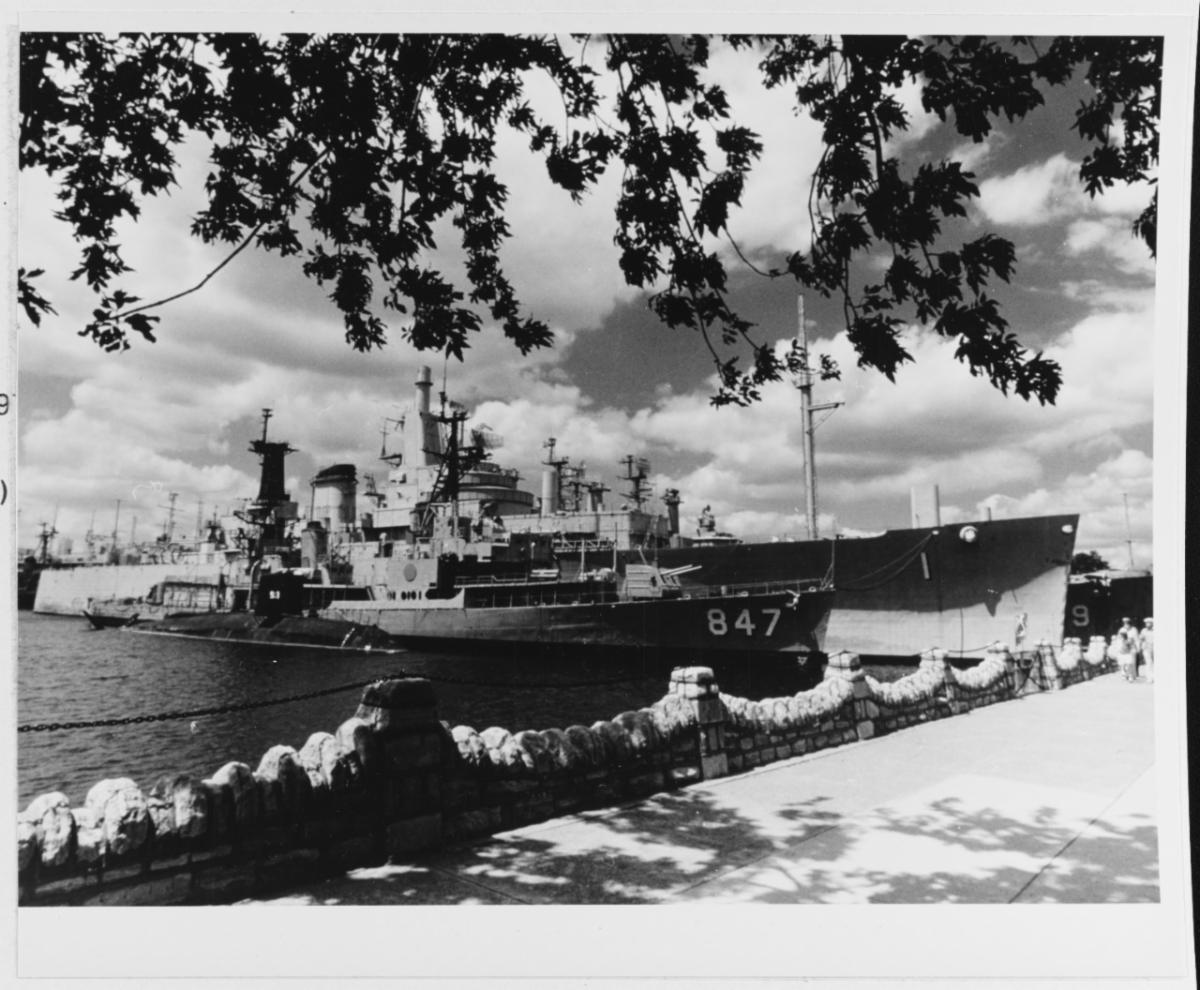
| | Call for Papers: International Journal of Naval History | | Call For Papers for Philly Naval Shipyard Conference! | | Mothballed ships in the Reserve Fleet Basin, August 1976. They are (l-r): USS Albacore (AGSS-569); USS Robert L. Wilson (DD-847), USS Northampton (CC-1). Photo courtesy NHHC. | | |
From 1801 to 1996, the Philadelphia Navy Yard served as a construction, repair, and research facility for the United States Navy, located first in the Southwark section of the city, and later on League Island. From the 74-gun ship of the line Franklin to the command ship Blue Ridge, ships built at the Navy yard participated in naval operations from the mid-nineteenth century through the Global War on Terror. It constructed the Navy’s first steam warship and participated in early nuclear research. The Navy Yard also played a significant role in the political, economic, and social history of the greater Philadelphia region. The year 2026 marks several anniversaries related to the Philadelphia Navy Yard: the 225th of its opening in Southwark, the 150th of the opening of League Island, and the 30th of the decommissioning.
The Battleship New Jersey Museum and Memorial is hosting a one-day symposium on Saturday, 26 September, to examine the history of the Philadelphia Navy Yard. In developing the program, papers are being solicited from scholars doing original research on any aspect of the Philadelphia yard’s history: including, but not limited to: ship construction, social aspects, research, political history, economic impact, and reuse. Special consideration will be given to students and young scholars. Presentations should be 15 minutes, and can include PowerPoint presentations. Submissions should include a one-page description and C.V., and be submitted by April 6 to Education@BattleshipNewJersey.org.
| | UPCOMING NAVAL & MARITIME HISTORY GATHERINGS | | |
14–15 May 2026: Society for the History of the Federal Government Annual Meeting, Washington, DC
27–29 May 2026: NASOH Annual Meeting, New Haven, Connecticut
25–27 June 2026: 13th Royal Canadian Navy History Conference In conjunction with the Canadian Nautical Research Society | CFB Esquimalt, British Columbia
Submit proposals and inquiries to: rcncrnsconference@gmail.com
14–17 September 2026: Historic Naval Ship Association Symposium, Evansville, IN
| PREBLE HALL NAVAL HISTORY PODCAST | |
A naval history podcast from Preble Hall—the United States Naval Academy Museum in Annapolis, Maryland—featuring interviews with historians, practitioners, military personnel, and other experts on a variety of naval history topics from ancient history to more current events.
Click here for the latest episode: 258 - Tom Duffy - Tanker War in the Gulf>>
Click here for all Preble Hall Podcasts >>
|
DRACHINIFEL YOUTUBE CHANNEL
|
NAVY HISTORY MATTERS
Welcome to Navy History Matters, the Naval History and Heritage Command’s biweekly compilation of articles, commentaries, and blogs related to history and heritage. Every other week, they gather the top-interest items from a variety of media and social media sources that link to related content at NHHC’s website, your authoritative source for Navy history.
Click here for most recent article>>
| SUPPORTING US NAVAL HISTORY & HERITAGE | |
Tuesday Tidings is free to all—but it exists because NMHS members keep our work moving forward. Membership supports research, publications, seminars, educator resources, and the community that shares these stories. If you enjoy reading Tuesday Tidings, becoming a member is the best way to sustain it. Thank you!
Click here to become a member of NMHS today >>
| | | | |