Tuesday Tidings is published by the National Maritime Historical Society with support from the US Naval Institute. Interested in joining USNI? Click on the USNI logo to become a member! | | | |
25 November 2025
Welcome back to our National Maritime Historical Society members and friends who share a love for naval history!
| | |
Today we mark the 64th anniversary of the commissioning of the Navy’s first nuclear-powered aircraft carrier, USS Enterprise (CVAN 65). It was originally planned to be the lead ship of a class of six; the costs of constructing and operating an eight-reactor propulsion plant ship sent designers back to the drawing board. The result was the Nimitz class; the lead ship celebrated the 50th anniversary of its commissioning this past May and she is currently on her final deployment in the South China Sea. With the George H. W. Bush commissioned as recently as 2009, Nimitz-class carriers will be with us for decades to come!
As noted last wee,k we are dedicating space in this edition to remember two individuals who made notable contributions to naval history: Dr. Gary E. Weir and Rear Adm. Larry R. Marsh. Also note that we have a new call for papers from Canada!
Following the decision by the Secretary of the Navy to cancel the Washington Navy Yard land swap deal as first reported in Tuesday Tidings, The Virginian Pilot has published an editorial: “Let’s bring the Navy Museum home to Norfolk.” https://www.pilotonline.com/2025/11/22/column-lets-bring-the-navy-museum-home-to-norfolk/
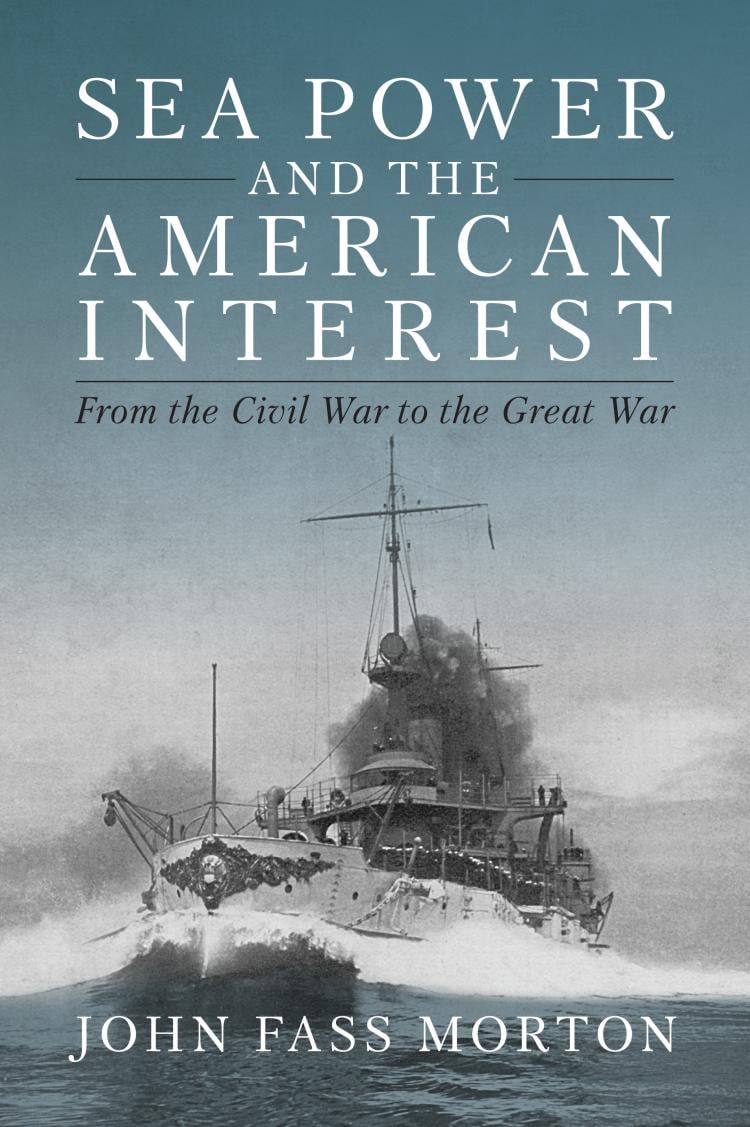
For Naval History Book Reviews, we thank Capt. Richard Dick for his review a of the latest book from John Fass Morton. The book bin has ample offerings!
We wish all safe travels and a warm Thanksgiving holiday.
| | |
Tuesday Tidings is compiled by Dr. David F. Winkler and Jessie Henderson as a benefit for members of the National Maritime Historical Society and friends of naval history.
As always, comments and naval history news items are welcome at nmhs@seahistory.org.
| |
ITEMS OF IMMEDIATE INTEREST | |
Saturday, 29 November – WWII Discussion Forum
Saving MacArthur: The Story of America’s Most Daring Rescue and the Men it left Behind
With Rudy Tomedi
1 PM EST (Zoom)
Sunday, 7 December – Pearl Harbor Commemoration Dinners
SEE BELOW
Wednesday, 10 December – NOUS Heritage Night
TWO WWII OFFICERS – James L. Holloway III and Robert M. Prestidge
With David F. Winkler and Susan Prestidge Woodward
8 PM EST (Zoom)
Tuesday, 16 December – WWII Discussion Forum
Chamber Divers: The Untold Story of D-Day Scientists who changed Special Operations Forever
With Rachel Lance
8 PM EST (Zoom)
Friday, 19 December – Mariners’ Museum Monitor Legacy Program
David Dixon Porter
With John V. Quarstein
Newport News, VA
Noon–1 PM EST, (in person/streaming)
| | |
Notable Passings
Dr. Gary E. Weir and Rear Adm. Larry R. Marsh
| | |
Dr. Gary Edward Weir, born 28 June 1951, in Queens, New York, and who passed away on 15 November 2025, in Flagler Beach, Florida, earned his PhD from the University of Tennessee and built a remarkable career as a scholar, educator, and public historian. He held academic posts at the US Naval Academy and the University of Maryland before spending nearly two decades with the US Navy’s History and Heritage Command. He then served as chief historian and director of the history program at the National Geospatial-Intelligence Agency, retiring in 2020 after shaping the historical understanding of an 18,000-person intelligence enterprise.
His former boss at the then-Naval Historical Center, Dr. William S. Dudley, noted: “We have lost one of our outstanding historians. I valued him for his quick wit, outspoken nature, and especially for his productivity and interest in the scientific and technical side of naval history.” Sharing similar sentiments, former Navy Senior Historian Edward J. Marolda reflected: “During and after his twenty years with Navy history, Gary Weir published award-wining books, including Forged in War: The Naval-Industrial Complex and American Submarine Construction, 1940–1961; Rising Tide: The Untold Story of the Russian Submarines that Fought the Cold War; and An Ocean in Common: American Naval Officers, Scientists, and the Ocean Environment.” Both Dudley and Marolda praised Weir as “a man of passion dedicated to intellectual integrity, academic professionalism, and a deep concern for the welfare of other human beings.”
Weir’s work earned some of the field’s highest honors, including the Theodore and Franklin D. Roosevelt Naval History Prize, the John Lyman Book Award, the Richard W. Leopold Prize, the Superior Civilian Service Medal, and the Distinguished Civilian Service Medal. Several of his works remain as touchstones in naval and ocean science history, a legacy that Weir carried great pride in because they embodied his belief that history should illuminate the decisions of today.
In his leadership roles at both the Naval History and Heritage Command and National Geospatial-Intelligence Agency he took a keen interest in the professional development of his peers and those who had recently entered the profession. Understanding the need in the profession to “publish or perish,” Weir became concerned following the demise of American Neptune that limited publication opportunities existed for good naval history scholarship. He thus initiated the International Journal of Naval History and, given his reputation, was able to recruit top scholars from around the world to his editorial board. His successor at the journal, Dr. Charles C. Chadbourn, reflected that Weir “was ahead of his time in creating a digital journal to examine naval history from an international perspective. He encouraged many young scholars, as well as seasoned veterans, to share their scholarship. He played a significant role in bringing naval historians from around the world together.” Chadbourn concluded, stating that Weir “made a difference, and as a community of naval historians we are stronger because of his legacy.”
In 2020, after leaving NGA, Gary Weir and his wife, Catherine Tuggle, moved to Flagler Beach to be close to his daughter, Lili Tuggle-Weir, her husband, Andrew Koswaski, and their young daughter, Nico, his beloved “purple girl.” Gary was diagnosed with end-stage kidney disease in 2021 and began what would be a 5-year battle from which he never backed down.
Unaware of Weir’s condition, Dudley and others were surprised to read of Weir’s premature death at age 74. In conclusion Dudley wrote: “He will not be forgotten. Too soon gone and may he rest in peace.”
Dr. Weir's expertise and insights can still be appreciated through his multiple appearances on C-SPAN, where he discussed naval history and intelligence matters with a national audience. These presentations remain available for viewing at https://www.c-span.org/person/gary-e-weir/1015939/.
| | |
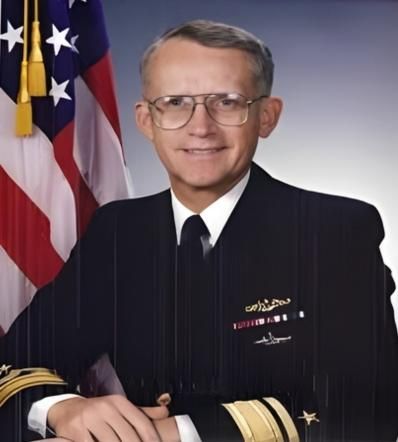
Recently the Director of the Naval History and Heritage Command Rear Adm. Sam Cox sent out an e-mail to his fellow flag officers that opened with: “It is with deep regret I inform you of the passing of Rear Admiral Larry Roy Marsh on 31 October 2025 at age 83.” Cox then provided an extensive summary of the service Marsh gave to the Navy and the nation. A graduate of the US Naval Academy Class of 1963, Marsh would successfully survive an interview by Admiral Rickover for the Naval Nuclear Power Program that put him on a trajectory in the submarine community to command a ballistic missile submarine, a submarine squadron, and a submarine group. Along the way he was selected as a Navy candidate for an Olmsted Scholarship, and after gaining proficiency in German at the Defense Language Institute East Coast Branch at Naval Station, Washington, DC, while taking political science and international relations classes, he continued his studies at Ludwig-Maximillian University of Munich, Germany.
In March 1981, Marsh was assigned to Naval Military Personnel Command in Washington, DC, as Head Submarine/Nuclear Power Branch. Selected to be a Fellow on the Chief of Naval Operations Strategic Studies Group, he reported to SSG in Newport, Rhode Island, in August 1983. SSG was tasked with developing strategies for dealing with Soviet client states (Cuba and Libya) and SSG’s work influenced the formulation of the Navy’s then-classified Maritime Strategy (first published as a document in 1984.) It was during his time at SSG that he met Dr. David Alan Rosenberg, who was during similar work for Defense Secretary Caspar Weinberger. “We worked together on multiple projects in the Pentagon in the 1980s and 1990s,” Rosenberg recalled, “and later served together on the Naval Historical Foundation board of directors for many years.”
As a rear admiral in June 1994, he assumed duty in the Bureau of Naval Personnel as assistant chief of naval personnel for readiness and community support. In July 1997, he assumed duty as deputy chief of naval personnel. It was during this period he became interested in having the sailors in the fleet gain an appreciation for their heritage on par to what he had seen within the Marine Corps. Rosenberg recalled: “He loved and supported naval history. As deputy chief of naval personnel, he decided to start a video project that became Our Navy's Story.” Retiring from active duty on 1 July 1998, Marsh signed on with the board of the Naval Historical Foundation.
Rosenberg recounted how Marsh worked with Bill Dudley, director of naval history; Ed Marolda, Naval Historical Center senior historian; retired Cdr. Bob Rostizke (USNA, 1957), president of Empire Video; and himself to create US Navy Heritage Mini-Series Videos – a vivid and entertaining set of short historical episodes that accurately captured naval history and illustrated the Navy core values of Honor, Courage and Commitment. Distributed to the fleet, these videos became a staple of Navy general military training. Video project collaborator Marolda noted: “On the personal side, Larry was a warm, thoughtful, and virtuous man devoted to his family, his faith, and his country.”
In addition to serving as a treasurer for the Naval Historical Foundation, Marsh served as executive vice president and then president and chief executive officer of the George and Carol Olmsted Foundation in Falls Church, Virginia, where he expanded the number of scholarships offered each year and initiated the Foundation’s various undergraduate programs. He retired again on 1 May 2011. Rosenberg commented: “I always appreciated his wisdom, advice and good humor and will miss him very much.” Those sentiments will be shared by many, including Rear Admiral Co,x who closed his homage by stating: “As with other Cold War submarine officers, the idea of work-life balance was a pipe dream, and the Navy and nation owes a debt of gratitude to his family for their great sacrifice that enabled his distinguished service in an extremely demanding, and dangerous, environment. But his legacy lives on. Rest in Peace Admiral Marsh.”
Rear Adm. Marsh’s awards include the Legion of Merit (five awards), Meritorious Service Medal (two awards,) Navy Commendation Medal, Meritorious Unit Commendation, Battle Efficiency Ribbon (two awards), Navy Expeditionary Medal (two awards,) National Defense Service Medal (two awards) and Sea Service Deployment Ribbon (three awards.)
| | |
New Exhibit at Arlington National Cemetery Features Artifact from USS Maine
By Arlington National Cemetery
November 17, 2025
| | |
ARLINGTON, Va.—Army National Military Cemeteries (ANMC) is pleased to announce the opening of a new exhibit in the Memorial Amphitheater Display Room, featuring a rare artifact from the USS Maine. The US Navy ship tragically exploded in Cuba’s Havana Harbor on Feb. 15, 1898—killing more than 260 sailors and Marines and leading to the Spanish-American War.
Army National Military Cemeteries and Office of Army Cemeteries Executive Director Karen Durham-Aguilera emphasized the importance of the exhibit in preserving history and honoring those who served. “This exhibit reflects Arlington’s commitment to educating visitors about the sacrifices made by our service members and the pivotal moments in our nation’s 250-year history,” said Durham-Aguilera.
The centerpiece of the exhibit is a wooden fragment of the Maine’s spar mast that survived the explosion and was recovered after the ship sank. The Pascack Historical Society in New Jersey generously donated the spar fragment to ANC in 2023.
Following two years of conservation and research, the current exhibit interprets this unique USS Maine relic in the context of the Spanish-American War. The artifact “serves as a tangible link to a catastrophe that led to our first major foreign excursion since the Mexican War,” Army National Military Cemeteries Superintendent John Knapp explained.
The exhibit also features a stereoview photograph depicting the Maine’s destruction, along with a stereoscope—a late 19th-century device that offered three-dimensional views of such photographs. These artifacts provide visitors with a vivid and immersive perspective on the event that shaped American history.
The USS Maine Memorial, which features the ship’s mast, stands just outside Memorial Amphitheater, rising above the gravesites of approximately 230 crew members. Located near the Maine Memorial and gravesites, the exhibit allows visitors to better understand the historic significance and human costs of the Maine’s destruction.
The Maine was “one of the most famous ships in American military history,” said Arlington National Military Cemeteries Command Curator Roderick Gainer, “and its destruction was a critical event in our nation’s history.”
Visitors may view the exhibit anytime during Arlington National Cemetery’s regular public hours (8 AM to 5 PM daily). The Display Room is located at the top of Memorial Amphitheater’s steps, directly behind the Tomb of the Unknown Soldier plaza.
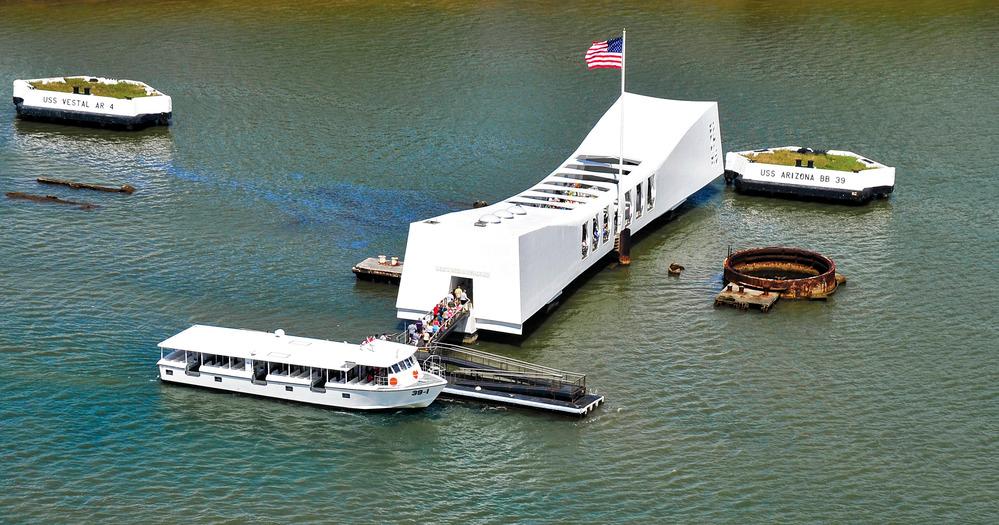
| | December 7 Memorial Dinners | | Arizona Memorial. Photo Courtesy US Park Service. | | NAVAL HISTORY BOOK REVIEWS | | |
Sea Power and the American Interest: From the Civil War to the Great War; By John Fass Morton; US Naval Institute, Annapolis, MD; 2024
Reviewed by Capt. Richard Dick, USN (Ret.)
| | |
Sea Power and the American Interest: From the Civil War to the Great War has a number of surprises for the unsuspecting reader. For example, the student who opens the book expecting to learn about the Navy’s recovery from its post-Civil War doldrums, about Harvey armor or the development of the ABCD ships would probably be better off looking at Paul Pedisich’s Congress Buys a Navy, or the earlier editions of Sea Power: A Naval History by Professor E. B. Potter and Fleet Adm. Chester W. Nimitz. Morton’s book offers something different—and more difficult to find. He examines American economic development in the latter half of the 19th century and the early years of the 20th century, and its intersection with the changing nature of American maritime power, particularly examining how growing economic strength fostered maritime power and how maritime power encouraged the growth of US naval power. The development of the steel navy is part of his story, but not nearly all of it.
The author begins by sketching the growth of the “Atlantic System”—the development of land and maritime means of getting American resources (and, later, American industrial products) to and from America’s primary trading partners in Europe. Similar systems eventually grew up to move foreign raw materials to the US and American industrial products to Latin America and Asia.
Morton explains how politically powerful American moneyed interests (especially individuals in iron and steel but also including Southern agricultural exporters) encouraged the government to pursue policies like the Open Door and President Taft’s Dollar Diplomacy. These were designed to discourage European economic competition, primarily in Latin America, and to ensure American access to developing markets in Latin America and Asia.
Robust access to foreign markets was of little use if companies had no access to reliable maritime transportation. With the collapse of the American merchant marine during and after the Civil War, foreign carriers (mostly British) met most of that need. The author examines in depth the various efforts by American legislators, government officials, and industrialists to wrest this trade back into American hulls, with mixed success. Morton also looks at how many influential American progressives came to support the construction of an American navy competitive with European and Japanese fleets, in order to protect US shipping in time of war and to exert influence in the Western hemisphere. The author concludes his history by looking at the impact of World War I in igniting phenomenal growth in American maritime and naval power.
In Sea Power and the American Interest, Morton builds on extensive in-depth research to craft a well-written, interesting, and interdisciplinary look at how political-economic interests and maritime strength intersected during a seminal period of American history. Highly recommended.
John Fass Morton, son of Rear Adm. Thomas H. Morton (prominent in the evolution of American naval ordnance), is the author of Sea Power in the American Interest, Mustin: A Naval Family of the 20th Century, Next Generation Homeland Security, and Backstory in Blue: Ellington at Newport ’56. He has contributed to many major defense publications and has been sought after as a national security consultant. Prior to his writing career, he worked as an actor and stuntman in Hollywood, appearing in The Empire Strikes Back and other films.
| | NAVAL HISTORY BOOKS AVAILABLE FOR REVIEW | | |
Naval Order Maritime Virtual Lecture
20 November 2025
Dr. Dave Winkler discusses a chapter from the recent US Naval Institute book Destroyers at War, which he edited. This chapter discusses how Holloway’s father set up a destroyer escort training group in Bermuda, which eventually would depend on Italian Navy submarines to train our sailors in anti-submarine warfare.
Watch here>>
| | Call for Applications: 2026 Summer Seminar in Military History | | |
Through the generous support of the John A. Adams ’71 Center for Military History and Strategic Analysis at the Virginia Military Institute, and the Society for Military History, the 2026 Summer Seminar in Military History will be held on the VMI campus in beautiful Lexington, Virginia, June 1–12, 2026.
This two-week in-residence experience draws on the long tradition of Summer Seminars. This year, the theme will be “Foundations of Military History.” Participants will engage with visiting scholars, VMI faculty, and the program director to develop core skills and concepts in the study of military history. Seminar Fellows will also interact with public historians and archivists and participate in a battlefield staff ride.
The seminar is open to advanced doctoral students (ABD at time of application) in history or a closely related field, early career scholars no more than five years beyond the conferral of their PhD, or scholars new to the discipline of military history (including public historians or historians employed in government positions).
Due to funding constraints, the seminar is only open to US citizens or permanent residents.
Summer Seminar Fellows will receive:
- lodging for the duration of the seminar
- select meals, including a welcome dinner, lunch each seminar day, and a closing banquet
- all reading materials
- a $1,300 stipend to help offset transportation costs to and from Lexington, Virginia, and other costs, such as evening meals, laundry, etc..
Seminar Fellows are encouraged to seek additional support from their home institutions to supplement travel and other costs.
Applications will be submitted via https://form.jotform.com/252778234204053. The application consists of a brief form, plus the following items to be uploaded:
- A two-page letter of interest, outlining the applicant’s motivation, qualifications, and goals for the seminar and their future career
- A CV/Resume
Doctoral students will include the name and contact information of their academic supervisor, who will submit a letter of reference.
Applications will be accepted through 12 December 2025. Applicants will be selected based on their potential contributions to the field of military history and on the contribution the program can make to their future teaching and research. Selected Fellows must be members in good standing of the Society for Military History. Click here for membership information.
Questions about the program can be sent to the Director, Dr. Adam Seipp (Professor of History, Texas A&M University), at aseipp@tamu.edu.
| | |
13th Royal Canadian Navy History Conference In conjunction with the Canadian Nautical Research Society 25–27 June 2026 | CFB Esquimalt, British Columbia
Theme: Sea Power on the Pacific Rim: History, Heritage, and the Canadian Experience
The Royal Canadian Navy History Conference, convened in partnership with the Canadian Nautical Research Society, invites proposals for papers, panels, and roundtables for its 13th meeting, to be held at Canadian Forces Base Esquimalt, 25–27 June 2026.
This conference coincides with the RCN’s longstanding presence on the Pacific Coast and provides a timely opportunity to explore the multifaceted history of sea power on the Pacific Rim. From Indigenous maritime traditions to imperial rivalries, from the Pacific theatres of the world wars to Cold War operations, and from heritage preservation to contemporary strategic challenges, the Pacific has always been a dynamic space of maritime interaction.
We welcome proposals that engage with the broad theme of “Sea Power on the Pacific Rim: History, Heritage, and the Canadian Experience.” Topics may include, but are not limited to:
· The evolution of the Royal Canadian Navy’s Pacific presence, from Esquimalt’s 19th-century origins to the modern fleet.
· Canada’s role in Pacific conflicts and operations, including the World Wars, Korea, the Cold War, and post–Cold War missions.
· Indigenous maritime history and perspectives on Pacific seafaring and sovereignty.
· Naval heritage, commemoration, and the preservation of material culture on the Pacific coast.
· Comparative and transnational studies of sea power in the Pacific, including the Royal Navy, US Navy, Imperial Japanese Navy, and regional maritime forces.
· The impact of geography, trade, migration, and technology on Pacific naval and maritime history.
· Historiographical and methodological approaches to studying Pacific naval history.
· Proposals focused on other topics may also be submitted.
Submission Guidelines
· Individual papers: Please submit an abstract of no more than 300 words, along with a brief (150-word) biographical note.
· Panels and roundtables: Submit a 500-word proposal outlining the panel theme, plus abstracts and bios for each participant.
· Proposals are welcome from academics, students, naval professionals, independent scholars, heritage practitioners, and those interested in maritime history.
Deadlines and Details
· Proposal submission deadline: 15 January 2026
· Notification of acceptance: 15 February 2026
· Submissions and inquiries should be sent to: rcncnrsconference@gmail.com
The 13th RCN History Conference promises to be a significant opportunity for dialogue between historians, naval personnel, and the wider community. We look forward to welcoming participants to Esquimalt, the historic heart of the Royal Canadian Navy on the Pacific Coast.
Submit proposals and inquiries to: rcncrnsconference@gmail.com
Join us in Esquimalt for an engaging exchange on Canada’s Pacific naval history!
| | |
Aftermath of the 1956 Suez crisis: Global Ramifications and Reflections
for Dockyards and Shipyards
Naval Dockyards Society 30th Annual Conference (hybrid)
National Maritime Museum Greenwich, Saturday, 28 March 2026
Sponsored by the Society for Nautical Research
| | |
Writing a decade after the Suez crisis, one contemporary politician dismissed the affair as merely “the dying convulsion of the British Empire.”* This view is still widely held today, but how authentic is that interpretation in hindsight?
How did the Suez crisis redefine Britain’s international identity and economic profile and its relationship with former colonies and ongoing allies? And how did it influence attitudes among Britain’s allies, including France and Israel, who had taken part, and the United States who had forced an early end to the action?
Critically, how did the Suez aftermath and its often bitter recriminations shape future British naval policy on home and overseas dockyards and shipyards and their communities?
Conference themes will include:
- Overview of how the Suez crisis shaped subsequent British and Allied naval strategy and deployment in the Cold War
- Political, local, social and economic effects of Suez on dockyards and shipyards globally
- Global strategic threats and opportunities arising from Suez
- Suez accelerated the global power shift from Britain to the United States—evidence?
If your proposal is accepted, you will present in-person or online. We shall refund UK/European travel fares to the conference (other overseas: travel from UK airport to Greenwich), your fee, and lunch, and contribute to accommodation, publish your paper and give you a journal volume. Your talk will be c.30 minutes, the printed paper 6–10k words, due 31 June 2026.
Send your title, a 300-word synopsis and a 100-word biography by 15 December 2025 or earlier to Roger Bendall roger@rogerbendall.com and Dr. Ann Coats avcoatsndschair@gmail.com. N.B.: The proposal should present original research.
https://navaldockyards.org/conferences/ https://navaldockyards.org/ Facebook: NavalDockyardsSocietyhttps://www.facebook.com/groups/1443502952760615
* Nutting, Anthony. No End of a Lesson. Constable, 1967. p. 108. A noted Arabist, Nutting resigned as Under-Secretary of State for Foreign Affairs in protest at the invasion of Egypt.
| | |
Maritime Margins: Missing Voices, Overlooked Places, and New Perspectives
New Haven, Connecticut, 27–29 May 2026
| | |
The North American Society for Oceanic History invites you to its annual conference at the Canal Dock Boathouse and Hotel Marcel in New Haven, Connecticut, 27–29 May 2026. From the Black engineer William Lanson, who once made New Haven’s Long Wharf the longest structure of its kind in North America, to the birth of industrialized oystering in the waters between river, harbor, and Long Island Sound, New Haven sits at multiple margins of human and natural histories. The city is also the “cultural capital of Connecticut,” boasting renowned museums, research libraries, and some of the best “apizza” outside Naples.
All scholars of the history or archaeology of fresh and saltwater, maritime cultural landscapes, navies, maritime security and strategy, and maritime actors (including the natural environment itself) are encouraged to submit proposals. We particularly seek presentations that highlight historically marginalized people, places, and subjects, including papers that consider race, class, gender and imperial, colonial, and environmental histories.
The program committee invites panel proposals of at least three and no more than four papers. We also welcome roundtable and individual paper proposals. The committee will consider a limited number of remote presentations from international participants only on a case-by-case basis. Participants from the United States must present in-person.
Proposal submissions should be in single document (.doc or .docx) and include: A) panel or paper title; B) 150-200 word abstract for the full panel and for each paper submitted; C) phone number, address, affiliation, and email of presenter(s); and E) any special requests to include remote participation by international presenters or any physical or technical accommodations required beyond a basic projector, laptop, and screen. Conference registration is required for all participants.
Proposals should be submitted electronically to nasoh.conference@gmail.com by
2 February 2026. Contact Dr. Jason W. Smith at smithj131@southernct.edu for general questions about the conference.
Student Grants and Awards
All students applying to present are automatically considered for NASOH’s Chad Smith Travel Grants. Students are also encouraged to submit their paper to be considered for the Clark G. Reynolds Student Paper Award. Additional information on award guidelines can be found on the NASOH website.
| | Call for Papers: International Journal of Naval History | | |
With the November publication of Issue 18, Vol. 2 on the new International Journal of Naval History website, the editors are seeking submissions for three planned Issue 19 volumes in 2026. Submissions from graduate students working toward a doctoral degree are especially encouraged. For inquiries, please contact the managing editor at IJNH@seahistory.org. The journal also seeks book reviews; the book review editor can be contacted at IJNHReviews@seahistory.org. Submission guidelines can be found at
Submissions – International Journal of Naval History.
| | Brigadier General James L. Collins Jr. Book Prize in Military History | | |
The US Commission on Military History proudly announces the submission date for all books for consideration for the Brigadier General James L. Collins Book Prize in Military History. The prize entails a $2,000 award to the author, irrespective of nationality, of the best book written in English on any field of military history published during 2024. The Book Prize Committee, comprising USCMH members Dr. Edward J. Marolda, (Chair), Dr. Jeffrey Clark, and Dr. John Hosler, will review the submitted books and select the winner. Topics in all periods and all aspects of military history (including naval and air warfare) will be considered.
One copy of books for consideration by the Collins Prize Committee must be submitted to each of the following addresses:
Dr. Edward J. Marolda
15570 Golf Club Drive
Montclair, VA 22015
Dr. Jeffrey Clarke
1011 North Van Dorn Street
Alexandria, VA 22304
Dr. John Hosler
Command and General Staff College
Department of Military History
100 Stimson Avenue
Fort Leavenworth, KS 66027
Copies must be postmarked no later than 31 December 2025. Upon notification from the
selection committee, the Collins Prize will be presented at the USCMH Annual General Meeting
usually held in early November of the following year. For further information contact the Collins
Prize Committee Chair at: edwardmarolda@yahoo.com
| | UPCOMING NAVAL & MARITIME HISTORY GATHERINGS | | PREBLE HALL NAVAL HISTORY PODCAST | |
A naval history podcast from Preble Hall—the United States Naval Academy Museum in Annapolis, Maryland—featuring interviews with historians, practitioners, military personnel, and other experts on a variety of naval history topics from ancient history to more current events.
Click here for the latest episode: 253 - Francis Ducoin - Monitor's Shield at Preble Hall>>
Click here for all Preble Hall Podcasts >>
|
DRACHINIFEL YOUTUBE CHANNEL
|
NAVY HISTORY MATTERS
Welcome to Navy History Matters, the Naval History and Heritage Command’s biweekly compilation of articles, commentaries, and blogs related to history and heritage. Every other week, they gather the top-interest items from a variety of media and social media sources that link to related content at NHHC’s website, your authoritative source for Navy history.
Click here for most recent article>>
| SUPPORTING US NAVAL HISTORY & HERITAGE | |
At NMHS, we preserve the stories of America’s sailors and the Navy that has safeguarded our nation for 250 years. With your support, and through publications like Tuesday Tidings, we keep naval history alive and accessible to all.
Click here to donate today >>
| | | | |