|
28 April 2026
Welcome back to our National Maritime Historical Society members and friends who share a love for naval history!
| | |
On this date in 1971, Capt. Samuel L. Gravely Jr. was promoted to rear admiral, making him the first African-American to do so. In this short Naval Historical Foundation video clip, historians Paul Stillwell and Regina Akers recount how Gravely was informed of his selection. Gravely would go on to retire as a vice admiral in August 1980, after traveling up to Penn State to commission several first-class midshipmen to become US Navy ensigns and US Marine Corps second lieutenants. Among those ensigns would be one of the co-compilers of this e-letter!
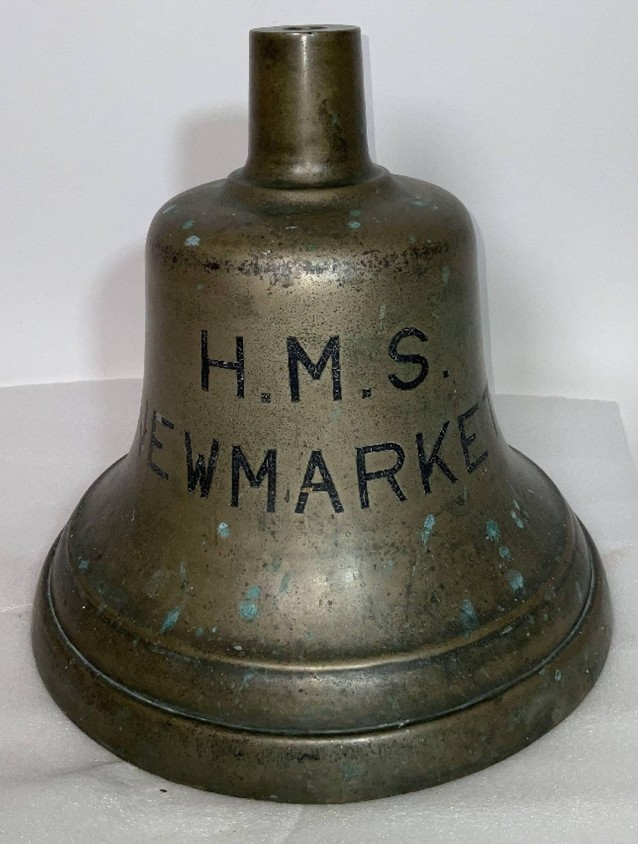
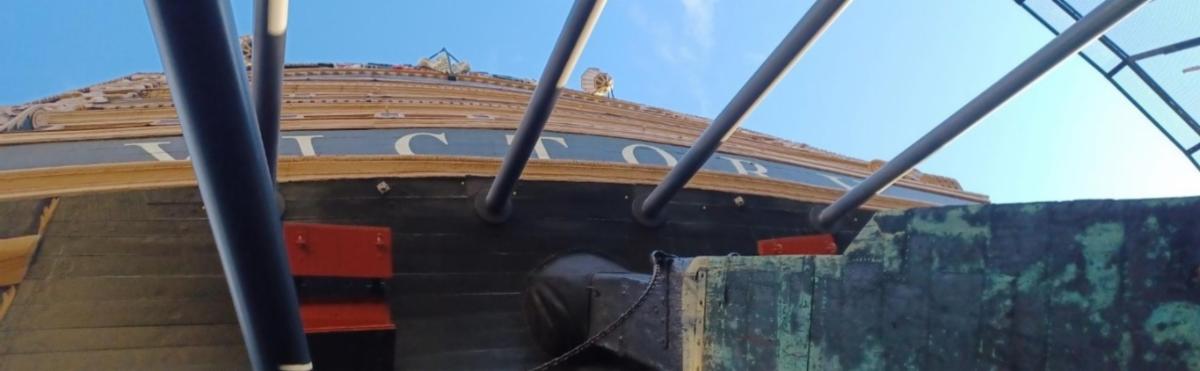
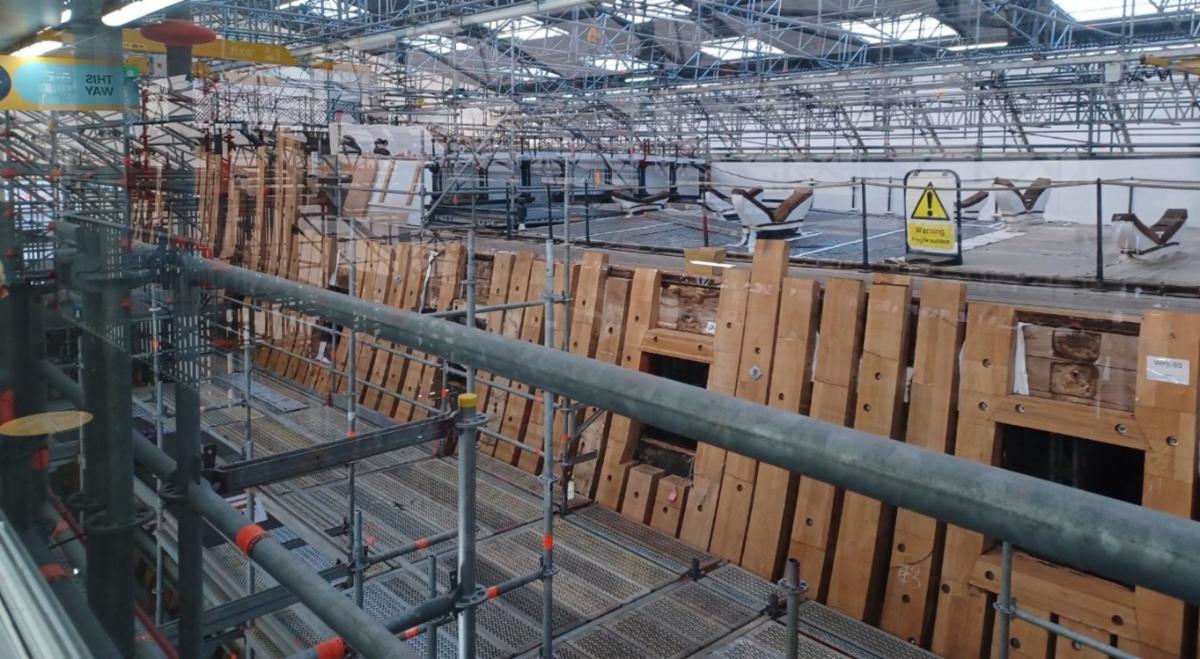
Our lead feature discusses the acquisition of a bell from a ship that served in both the US and Royal Navy. Speaking of the Royal Navy, HMS Victory remains under wraps as part of a project dubbed “The Big Repair.” The University of Portsmouth has shared a link for an upcoming talk on how the work is coming along, as 2028 will mark the 250th anniversary of the commissioning of that famed warship.
For our Naval History Book Review section, we offer a doubleheader, with Michael Lowrey reviewing a book about German U-Boat Iron Cross recipients and Vice Adm. Bob Dunn evaluating a study on electronic warfare aircraft in Vietnam. New titles are in for review! For “In Case You Missed It,” join Dr. John Sherwood as he interviews Dr. Stephen Phillips about his recent book on the last time the US Navy confronted Iran.
Mark your calendars! The next International Congress of Maritime History, organized by the International Maritime History Association, will be 29 May–1 Jun 2028 in Tallinn, Estonia. The local host will be the Estonian Maritime Museum, which has a collection and exhibition that will certainly be of special interest to the naval history community due to its large number of Soviet era vessels.
| |
| |
Tuesday Tidings is compiled by Dr. David F. Winkler and Jessie Henderson as a benefit for members of the National Maritime Historical Society and friends of naval history.
As always, comments and naval history news items are welcome at nmhs@seahistory.org.
| | Tuesday Tidings is published by the National Maritime Historical Society with support from the US Naval Institute. Interested in joining USNI? Click on the USNI logo to become a member! | | |
ITEMS OF IMMEDIATE INTEREST | |
Thursday, 7 May – First Thursdays Seminar Series: Painting The Commonwealth of Massachusetts: Birthplace of the US Coast Guard
7–8 PM, EST
Zoom
Wednesday, 13 May – USNI Annual Meeting
America’s Navy in a New Strategic Era
4:00–7:30 PM, EST
Annapolis, MD
Wednesday, 13 May – Naval Order History Happenings
The MARAD National Fleet Anchorages
With Dr. Anna Holloway
8–9 PM EDT
Zoom
Thursday, 14 May – Mariners’ Museum – Up Pops Monitor: The Battle of Hampton Roads in Popular Memory
With Dr. Anna Holloway
2–4 PM EST
Newport News, VA
Thursday, 14 May – Tall Ship Providence Sea Story Series
“We were Highball to Highball and they were First to Clink:” John Warner and Negotiating the Incidents at Sea Agreement
With Dr. Dave Winkler
7 PM (in person)
Alexandria, VA
Friday, 15 May – Mariners’ Museum – Turret Evolutions
With John V. Quarstein
Noon–1 PM EST
Newport News, VA
Wednesday, 21 May – Naval Order Author Lecture
“We were Highball to Highball and they were First to Clink:” John Warner and Negotiating the Incidents at Sea Agreement
With Dr. Dave Winkler
8-9 PM EDT
Zoom
| | Unique bell from US Navy/Royal Navy destroyer acquired at auction by the Naval Order of the United States | | |
In the early days of World War II, while American isolationists advocated neutrality and warned against getting embroiled in the conflict—and long before the Japanese made that involvement decision moot with their December 1941 attack on Pearl Harbor—President Franklin D. Roosevelt was looking for ways to support the British Empire and its Commonwealth as they fought against Germany and Italy.
One result of his efforts was the “Destroyers for Bases Agreement” in September 1940, when the US transferred 50 surplus US Navy destroyers to the Royal Navy in exchange for basing rights at British possessions. Those Caldwell-, Wickes- and Clemson-class destroyers became the British Town-class ships, using names of towns or rivers found in both countries.
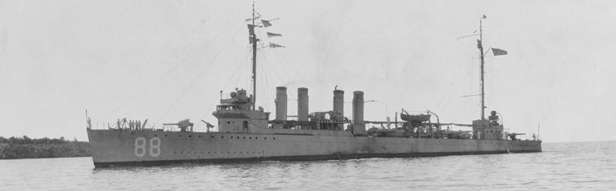
| | USS Robinson (DD 88), US Navy photo | | |
One such destroyer was USS Robinson (DD 88), commissioned at Mare Island Navy Yard on 19 October 1918, just weeks before the World War I armistice brought hostilities to a close. Decommissioned in August 1922, the ship remained in “mothballs” until August 1940, when she was reactivated and transferred in Halifax, Nova Scotia, to the Royal Navy and commissioned HMS Newmarket in December 1940. (Newmarket, New Hampshire, is the counterpart to Newmarket, Suffolk, in the United Kingdom.)
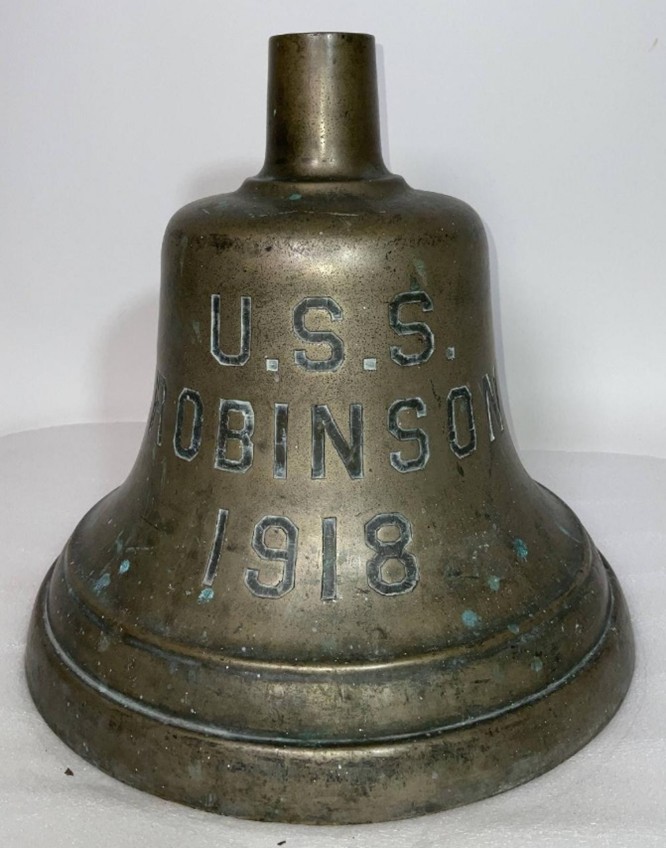
Newmarket kept busy as a North Atlantic convoy escort and later as an aircraft target ship before being decommissioned and scrapped at the end of World War II in September 1945. At some point in that scrapping process, her bronze bell, cast with “USS Robinson/1918” on one side and painted with “HMS Newmarket” on the other, fell into the hands of collectors.
| | “Ding-Ding!” Photographs courtesy Captain Creekman | | |
Over 80 years later, that bell came up for auction as part of a large Royal Navy-related collection. Alerted to the opportunity and learning that artifacts of this unique World War II alliance arrangement were rare in government collections, retired Navy Capt. Todd Creekman enlisted the help of fellow companions of the Naval Order of the United States (NOUS) in mid-April to mount a successful short-notice effort to bid on and acquire that bell.
Established in 1890, the NOUS remains the oldest American hereditary naval society, which encourages research and writing on naval and maritime subjects, preservation and promotion of America’s proud maritime heritage, and fellowship among its members or “companions.” The nation-wide network of those companions responded enthusiastically to the auction opportunity by pledging enough funds to the nonprofit NOUS Foundation to permit Captain Creekman to make the successful bid for the bell.
In the coming months, the Naval Order will determine the disposition of this unique and historic reminder of a shared World War II history.
| | HMS Victory - What’s Going On? | | HMS Victory is currently undergoing a multi-year, multi-million-pound restoration. Come behind the scenes to find out what is being done, why, and what has been found so far. Get a glimpse into the challenges of preserving a 260-year-old warship, and find out when the masts are due to go back! | | |
AJ Noon from the National Museum of the Royal Navy will be giving a talk under the auspices of the University of Portsmouth Research Seminars on the ongoing restoration of HMS Victory on Friday 15th May from 10:00-11:00 AM EDT. More details, including the meeting link, can be found below.
Bio: AJ Noon has worked for the National Museum of the Royal Navy in Portsmouth for the last ten years, with the last two-and-a-half working for Victory’s Big Repair project. In his spare time, he writes naval history, with a focus on the royal navy in the Georgian period. His new series takes classic accounts from the period and annotates and supplements these accounts, such as William Beatty’s The Death of Nelson and Captain William Bligh’s South Seas Mutiny on the Bounty.
Meeting link: https://teams.microsoft.com/meet/356215013121679?p=RJC57dCv2uEiBVaYTx
Meeting ID: 356 215 013 121 679
Passcode: Ke7zL6xd
| | NAVAL HISTORY BOOK REVIEWS | | |
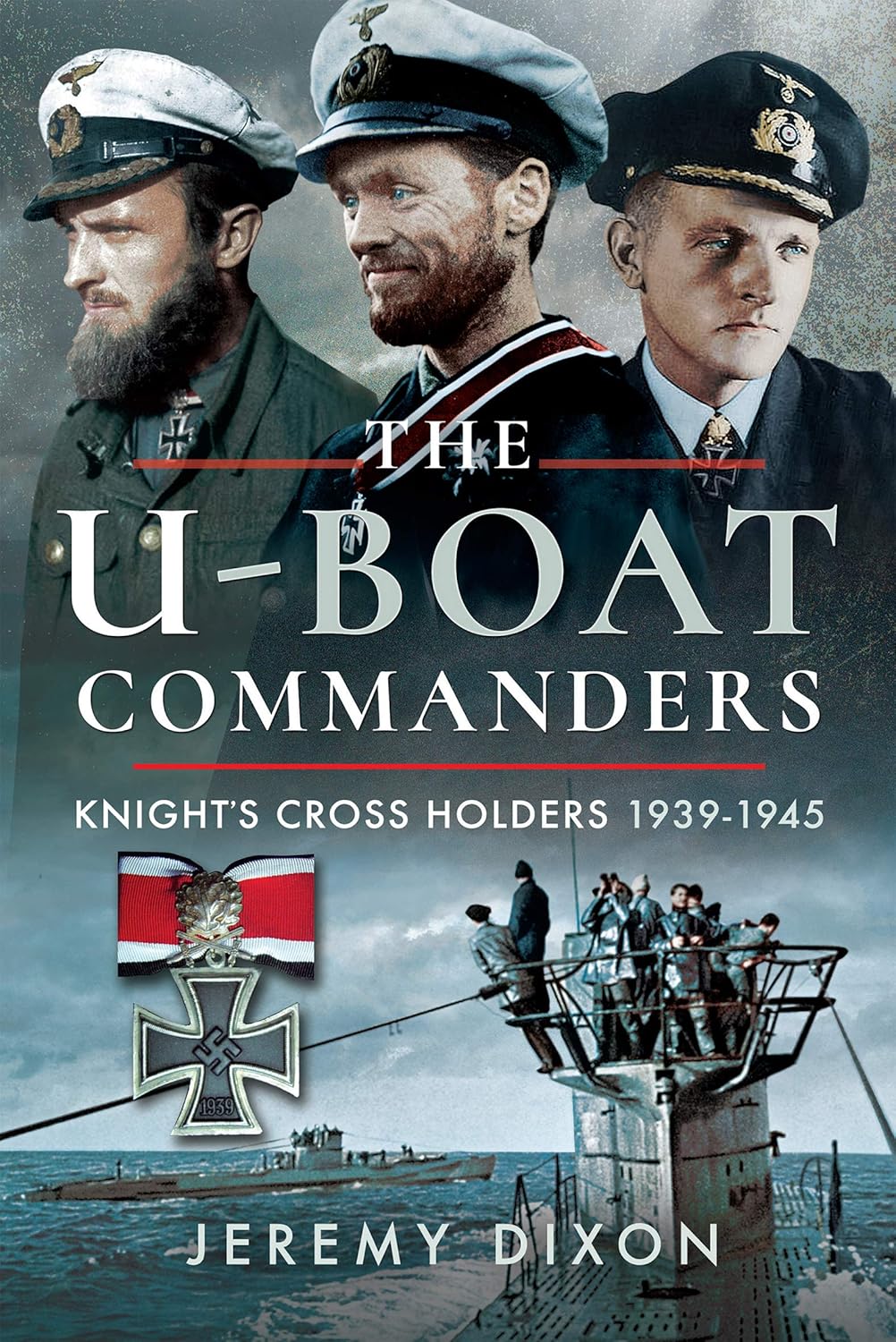
The U-Boat Commanders: Knight’s Cross Holders 1939–1945 By Jeremy Dixon, Pen & Sword Maritime, (2025).
Reviewed by Michael Lowrey
| | |
During World War II, Germany’s highest military awards were the various grade of the Ritterkreuz, the Knight’s Cross of the Iron Cross. Worn around the neck, this prestigious decoration was awarded for highly exemplary combat leadership or extreme valor under fire. The Ritterkreuz was awarded some 7,320 times in total across all branches of the German military.
Jeremy Dixon’s The U-Boat Commanders offers short biographies of such highly-decorated heroes of the German U-boat force. The book’s scope is exactly as the title suggests and it is meant to be a reference work. Knight’s Cross awards in the German submarine force were not restricted to U-boat commanders, though those officers certainly received the majority of awards and got (and continue to get) the most attention. Dixon’s work doesn’t include the 14 engineering officers or seven petty officers awarded the Knight’s Cross for their service on U-boats.
The book is organized into 122 mini-chapters of a page and a half to four pages each. Each chapter covers the career of a U-boat commander who was awarded the Knight’s Cross of the Iron Cross, with the organization being by degree of Knight’s Cross (Knight’s Cross, Knight’s Cross with Oak Leaves etc.) and then alphabetic within each award level.
Individual entries follow a standard pattern. Each tells where and when an officer was born and when he entered the German navy. Next, his instruction on school ships is described, followed by any service on active warships before transferring to U-boats. Dixon briefly summarizes each officer’s service on U-boats before assuming command themselves. The description of the time each officer spent while in command of a U-boat is more detailed and includes patrol information and details of ship sinkings.
Where relevant, a paragraph then covers any late-war staff work, post-war service or employment, and when and where the officer died.
The entries end with a listing of the other decorations—the Iron Cross First and Second Class, war badges, and the like—with award dates that the officers received before or during the war.
Dixon is a competent writer, though most of what he’s doing here is stringing dates, details of ships hit, and other specific facts together into coherent and concise wholes. The somewhat repetitive, fact-heavy format means that readers are likely to consult individual entries as they see the need rather than pore over the book at once, in its entirety.
There’s nothing really new or unique in Dixon’s description of those officers. The U-boat Commanders’ bibliography highlights this limitation. All the works cited, except for a few post-war memoirs, are secondary sources; no other primary or official sources were used to craft Dixon’s work. He’s just taking information from a variety of other published sources to create short summaries of officers’ careers.
Like other works that take this approach, The U-Boat Commanders can only be as good as those sources used. And while much of the information checks out, that conventional literature does have some issues. Promotion dates in particular are a problem in many books on U-boat commanders, and this extends to Dixon’s work; the dates given sometimes do not match what’s listed in the Kriegsmarine’s own yearly Rangliste of German naval officers and officer candidates.
Our understanding of the U-boat war also continues to evolve, with ship sinking claims and U-boat loss attributes subject to reassessment. Dixon misses at least one recent U-boat wreck identification: Oberleutnant zur See Heinz Siedler’s U 984 has been found in the English Channel southwest of Brighton, lost by unknown cause on or after 2 August 1944. Dixon gives the older fate for the U-boat, that Knight’s Cross holder Siedler and his crew were killed when their U-boat was depth charged by Canadian destroyers west of Brest on 20 August 1944. This error is surprising, as The U-Boat Commanders includes the best book on U-boat losses, Axel Niestlé’s German U-Boot Losses during World War II: Details of Destruction, which gives the corrected fate, in its bibliography.
Despite the handsome cover, Pen & Sword’s edition of The U-Boat Commanders isn’t going to be the best-illustrated book in a typical naval historical collection. Images throughout are minimal and consist mainly of portrait photographs of the officers plus the occasional photo of warships they sunk or photo on a U-boat.
Of greater note is that the paper quality is only acceptable; most naval history paperbacks are of higher quality printing. Those for whom this might be a significant issue may wish to seek out the earlier Naval Institute Press hardcover edition of The U-Boat Commanders on the used-book market.
Overall, though, The U-Boat Commanders is a perfectly serviceable if dry work. Though not without flaws, it’s a useful reference for those with an interest in the Battle of the Atlantic or the Knight’s Cross who would like accessible, at hand, career outlines of the most successful U-boat commanders to supplement their other reading and research.
Jeremy Dixon has been interested in Nazi Germany for over thirty-five years and has written five books on the subject. Dixon works for the Metropolitan Police and lives in Kent.
Michael Lowrey handles much of the World War I material for the uboat.net website and works with divers and others to locate and identify submarine wrecks in the North Sea and English Channel. An economist by training, he currently teaches at Wingate University in North Carolina.
| |
| |
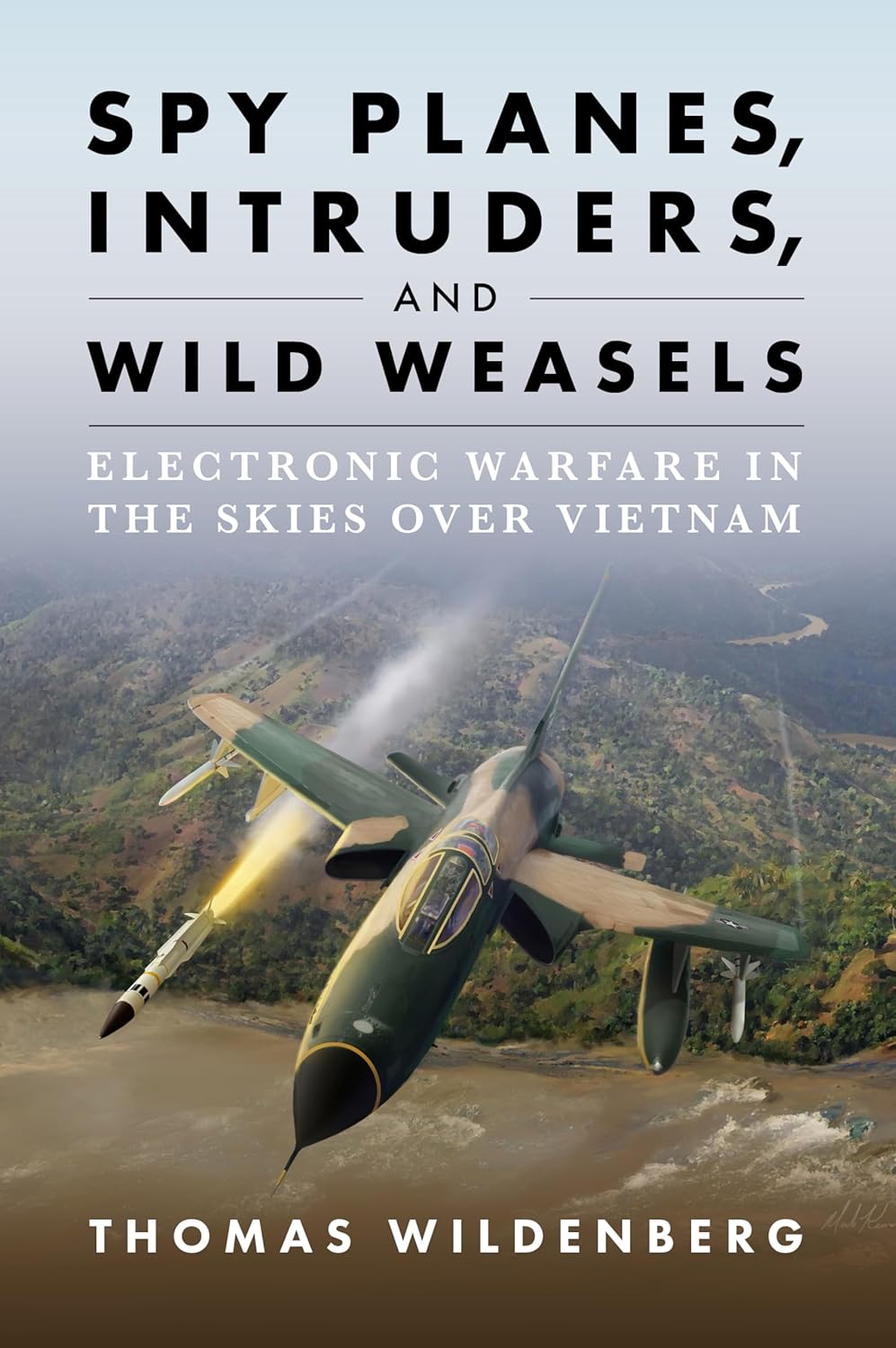
Spy Planes: Intruders and Wild Weasels Electronic Warfare In the Skies Over Vietnam By Thomas Wildenberg, Naval Institute Press, (2025).
Reviewed by Vice Adm. Robert F. Dunn, USN (Ret)
| | |
Don’t think from the title that this book is dated. The airplanes and equipment may be from another era, but the lessons learned could well be applied today. However, don’t start in the beginning. Start with Chapter 18, “Linebacker II.” Yes, that describes what happened toward the end of the Vietnam War, but it’s also when the SAM threat was reduced to a workable dimension, anti-aircraft fire was reduced and the North Vietnamese agreed to go to the peace table.
Before that, the then-newly re-elected President Nixon wanted to end the war in the fall of 1972 but the North Vietnamese demanded unpalatable conditions. Hence, B-52s were brought in as a heavy hammer. Tactical fighter and fighter-bombers from the Seventh Air Force in Thailand were beefed up and Navy fighter and attack aircraft from Seventh Fleet ships in the Gulf of Tonkin joined in. The object was to pound the enemy back to the negotiation table.
At first, Linebacker II, as the effort was named, didn’t succeed. Too many American aircraft were lost and, it seemed, the enemy would never run out of surface-to-air missiles and anti-aircraft fire. Part of the blame for lack of quick success was the tenacity of the North Vietnamese, but part was also due to long-standing restrictions on the tactics available to B-52s “owned” by the Strategic Air Command. Once those restrictions were relaxed, things got a bit better. This part of Spy Planes, Intruders and Wild Weasels is well worth the read, both as an education in electronic warfare and as an important part of history.
The first ninety pages of the book are filled with descriptions of electronic counter-measure, radar hazard and warning systems chaff pods, anti-radiation missiles and the like, designed one might think, to orient the reader to the environment. If one is pressed for time or knows the subject fairly well, start on page 111.
Even though the book covers an era long-since passed, it has lessons for today. The names may have changed, and the tactics, but what’s important has not. Tom Wildenberg has done a good job reminding us of that.
Thomas Wildenberg is an award-winning scholar with a specialization in aviation, aviators, and technical innovation in the military. He is the author of numerous books, including The Origins of Aegis: Eli T. Reich, Wayne Meyer, and the Creation of a Revolutionary Naval Weapons System (2024) (previously reviewed in Tuesday Tidings in 2025) and Fighting in the Electromagnetic Spectrum: US Navy and Marine Corps Electronic Warfare Aircraft, Operations, and Equipment (2023), both from Naval Institute Press.
Vice Admiral Dunn left active service as the top naval aviator, Deputy Chief of Naval Operations for Air Warfare, responsible for establishing materiel requirements and setting policies for the training, operations, management and personnel throughout the Navy’s aviation establishment. He has served as the president of the Naval Historical Foundation, president of the Naval Academy Class of 1951, and as a contributor of book reviews to the Washington Times.
| | NAVAL HISTORY BOOKS AVAILABLE FOR REVIEW | | Preble Hall Podcast: EP. 259 – Dr. Stephen Phillips - A Poisoned Chalice: The US Navy in the Persian Gulf, 1987–1988 | | |
Dr. Stephen Phillips discussed his new book A Poisoned Chalice: The US Navy in the Persian Gulf, 1987–1988, with Dr. John Sherwood. Dr. Phillips is a US Naval Academy Class of 1992 graduate and a former US Navy EOD officer.
Listen here>>
| | Brigadier General James L. Collins Jr. Book Prize in Military History | | |
The US Commission on Military History proudly announces the submission date for all books for consideration for the Brigadier General James L. Collins Book Prize in Military History. The prize entails a $2,000 award to the author, irrespective of nationality, of the best book written in English on any field of military history published during 2025. The Book Prize Committee, comprised of USCMH members Dr. Edward J. Marolda, (Chair), Dr. Jeffrey Clark, and Dr. John Hosler, will review the submitted books and select the winner. Topics in all periods and all aspects of military history (including naval and air warfare) will be considered.
One copy of books for consideration by the Collins Prize Committee must be submitted to each of the following addresses:
Dr. Edward J. Marolda
15570 Golf Club Drive
Montclair, VA 22015
Dr. Jeffrey Clarke
1011 North Van Dorn Street
Alexandria, VA 22304
Dr. John Hosler
Command and General Staff College
Department of Military History
100 Stimson Avenue
Fort Leavenworth, KS 66027
Copies must be postmarked no later than 31 December 2026. Upon notification from the selection committee, the Collins Prize will be presented at the USCMH Annual General Meeting usually held in early November of the following year. For further information contact the Collins Prize Committee Chair at: edwardmarolda@yahoo.com
| | |
CNO Essay Contest has been extended until May 30.
Details HERE!
| | Call for Papers: International Journal of Naval History | | UPCOMING NAVAL & MARITIME HISTORY GATHERINGS | | |
13 May 2026: USNI Annual Meeting, Annapolis, MD
14–15 May 2026: Society for the History of the Federal Government Annual Meeting, Washington, DC
27–29 May 2026: NASOH Conference, New Haven, Connecticut; NMHS Annual Meeting held during the conference. *Please note that registration is separate for each.
18–20 June 2026: Society for Nautical Research (SNR) Annual General Meeting (AGM) and Conference in Liverpool
25–27 June 2026: 13th Royal Canadian Navy History Conference In conjunction with the Canadian Nautical Research Society | CFB Esquimalt, British Columbia
Submit proposals and inquiries to: rcncrnsconference@gmail.com
26–28 June 2026: Cinque Ports Conference, Dover, UK
14–17 September 2026: Historic Naval Ship Association Symposium, Evansville, IN
| PREBLE HALL NAVAL HISTORY PODCAST | |
A naval history podcast from Preble Hall—the United States Naval Academy Museum in Annapolis, Maryland—featuring interviews with historians, practitioners, military personnel, and other experts on a variety of naval history topics from ancient history to more current events.
Click here for the latest episode: 259 - Dr. Stephen Phillips - A Poisoned Chalice: The US Navy in the Persian Gulf, 1987-1988>>
Click here for all Preble Hall Podcasts >>
|
DRACHINIFEL YOUTUBE CHANNEL
|
NAVY HISTORY MATTERS
Welcome to Navy History Matters, the Naval History and Heritage Command’s biweekly compilation of articles, commentaries, and blogs related to history and heritage. Every other week, they gather the top-interest items from a variety of media and social media sources that link to related content at NHHC’s website, your authoritative source for Navy history.
Click here for most recent article>>
| SUPPORTING US NAVAL HISTORY & HERITAGE | |
Tuesday Tidings is free to all—but it exists because NMHS members keep our work moving forward. Membership supports research, publications, seminars, educator resources, and the community that shares these stories. If you enjoy reading Tuesday Tidings, becoming a member is the best way to sustain it. Thank you!
Click here to become a member of NMHS today >>
| | | | |