|
3 February 2026
Welcome back to our National Maritime Historical Society members and friends who share a love for naval history!
| | |
This week, we salute the five inductees into the Surface Navy Association Hall of Fame. The nomination write-ups offered below are most impressive! In addition, we just received the line-up for the Naval Dockyards Society “Suez Crisis” conference in Greenwich, UK next month. Posted below.
Given the number of books shipped out this past week for review, it would appear that many of Tuesday Tidings readers are snowed in with time on their hands (though one book is en route to Hawaii)! With more reviews inbound, we are obliged to start clearing a backlog of reviews that have arrived in the past couple of months, so this week, we thank Capt. Richard Dick and Dr. Judith Pearson for reviews of two Naval Institute Press aviation titles.
Important note for those interested in competing in the CNO’s Naval History Essay Contest: our friends at the Naval History and Heritage Command have sent over additional essay guidelines, see below! Speaking of NHHC, last Thursday, a press release announced the Devastator Project, a collaborative effort to recover a torpedo bomber that was lost in the Marshall Islands on 1 February 1942. Look to Tuesday Tidings for updates on this initiative.
| |
| |
Tuesday Tidings is compiled by Dr. David F. Winkler and Jessie Henderson as a benefit for members of the National Maritime Historical Society and friends of naval history. Be sure to check out the NMHS Virtual Seminar this Thursday with former Director of Marine Corps History Dr. Charlie Neimeyer as we are coming up on the 250th anniversary of the Navy/Marines raid on the Bahamas. Link below!
As always, comments and naval history news items are welcome at nmhs@seahistory.org.
| | Tuesday Tidings is published by the National Maritime Historical Society with support from the US Naval Institute. Interested in joining USNI? Click on the USNI logo to become a member! | | |
ITEMS OF IMMEDIATE INTEREST | |
Wednesday, 4 February – National WWII Museum Webinar
Free Teacher Webinar: Port Chicago and the Blast that Shook a Nation
6–7 PM CST
Thursday, 5 February – The Marine Raid on the Bahamas in 1776
NMHS First Thursdays Seminar Series
With Dr. Charles Neimeyer
7–8 PM EST (online ZOOM)
Tuesday, 10 February – Naval Order San Francisco Commandery Luncheon
Rosie the Riveter and Port Chicago
With Cecilia Gaerlan
11:30 AM
Wednesday, 11 February – Naval Order Heritage Program
Tanker War in the Gulf: Operation Earnest Will, Diplomacy and Seapower in Practice
With Tom Duffy
8–9 PM (EST)
Tuesday–Thursday, 10–12 February – The US Naval Institute and AFCEA International 36th annual WEST Conference. San Diego.
Wednesday, 18 February – Naval Order Lecture Series
Cold War Storm - The US Navy at the Fall of Vietnam and the Looming Soviet Threat
With Dr. Ed Marolda
8–9 PM
(Link forthcoming)
Friday, 20 February – Monitor Legacy Program at Mariners' Museum
Alabama Ironclads
With John V. Quarstein
Noon–1 PM EST (Live/virtual)
Saturday–Sunday, 21–22 February – Western Naval History Annual Symposium
USS Midway, San Diego
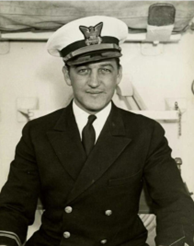
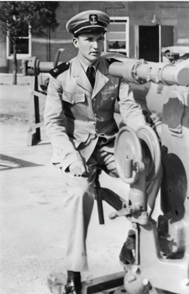
| | Surface Navy Association Names Five to Hall of Fame | | At the Surface Navy Association (SNA) 38th National Symposium held last month, five individuals were inducted into the organization’s Hall of Fame; their nominations are provided below. With the merger of the Coast Guard Cuttermen Association with SNA a decade ago, a number of veterans of that service gained admission to this exclusive club. Indeed, two of the five inducted this year served in the Coast Guard. In addition, this year’s class includes a cadet from the US Merchant Marine Academy. Of note is the induction of Capt. Floyston A. “Bud” Weeks. Unlike the major sports leagues that require a candidate to be retired for five years before consideration, the SNA did not waste any time with Captain Weeks. Read his nomination, and you will see why. To see who else is in the Surface Navy Hall of Fame visit: Surface Navy Association | | Images courtesy Surface Navy Association | | Lt. Jimmy Crotty is nominated based on his service in defense of the Philippines in 1942. A 1934 graduate of the Coast Guard Academy, he was assigned to the Navy for specialized training in mine warfare in 1941, graduating from the Mine Warfare School in Yorktown, VA and the Mine Recovery School at the Washington DC Navy Yard. Initially assigned to the InShore Patrol Headquarters at the Cavite Navy Yard in Manila in October 1941, he served as second-in-command on board the minesweeper USS Quail from the middle of December 1941 until mid-April 1942. During his brief assignment to Quail, the vessel swept mines, shot down enemy aircraft and bombarded enemy troops threatening American and Filipino forces on the Bataan Peninsula. Lieutenant Crotty supervised the demolition of strategic civilian and military facilities to keep them from falling into enemy hands. These assets included the fleet submarine USS Sea Lion, which the enemy had damaged during the December 10 air attack. Crotty had the sub stripped of useful parts, filled it with depth charges and blew it up sometime around Christmas Day. Sources indicate that Crotty participated in further demolition work at Cavite and the Navy’s Sangley Point Naval Station, before the enemy occupied the bases around Manila. With the surrender of US and Filipino forces on Bataan Peninsula on 9 April, Crotty transferred from Quail to Corregidor where he served as adjutant to the headquarters staff of the 16th Naval District. After the Japanese landing on May 5th, Crotty served as a member of the Marine Corps 4th Regiment, 1st Battalion supervising the gun crew of a 75mm field howitzer on Malinta Hill until the surrender of Corregidor on the 6th. With the surrender, Crotty became the Coast Guard’s first prisoner of war since the War of 1812. Crotty survived the trip to the Cabanatuan Prison’s Camp #1 where he died of diphtheria on July 19. In 2019, Crotty’s remains were positively identified and exhumed from the Manila American Cemetery and flown to Buffalo for interment in the family plot. Records indicate that Jimmy Crotty was the only active-duty Coast Guardsman who fought the Japanese at Bataan and Corregidor, operations that merited authorization of the Defense of the Philippines battle streamer for the Coast Guard. He is the only American to single-handedly earn a battle streamer for his service. The official US Marine Corps history for the defense of Corregidor concludes that those who fought in the ranks of the Fourth Marine Regiment, “whatever their service of origin, were, if only for a brief moment, Corregidor Marines.” As a temporary member of the 4th Marine Regiment, he also qualified for the Presidential Unit Citation, which equates to the Navy Cross Medal on an individual basis. | | Signalman Third Class Joseph Gerczak, USCG | |
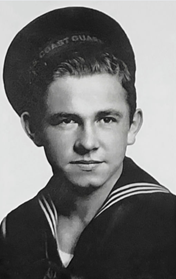
| |  | Joseph Gerczak was born on Feb. 10, 1922, in Philadelphia, Pennsylvania. He graduated from Simon Gratz High School in June 1939 and enlisted in the United States Coast Guard on Sept. 26, 1942. He was initially assigned to the Coastal Pickets, CG-75003 and CG-46015 on Nov. 20, 1942. He was later transferred to LST Flotilla 8 on Feb. 11, 1943 and assigned to USS LST-66 on April 3, 1943. While a part of LST-66’s crew, he was promoted to signalman third class on Nov. 1, 1943. Gerczak was on board LST-66 during the initial assault against the Japanese-held Borgen Bay Area of New Britain on Dec. 26, 1943. As seven Japanese dive bombers suddenly attacked his ship as it stood in the bay awaiting other vessels then unloading cargo on the beach, Gerczak immediately manned his battle station and was the first to open fire. When the planes came in and struck from starboard, he poured his drums of ammunition into the attackers with unrelenting fury, blasting two from the sky and into the sea near his vessel. With his ship struck by bomb fragments each bursting successively closer, he dauntlessly continued delivering a steady stream of bullets against the enemy until he was fatally struck down by a violent blast which forced shrapnel into his gun shield and silenced his weapon. By his expert marksmanship, unwavering perseverance, and cool courage in the face of tremendous odds, he contributed to the success of this and previous assault and reinforcement landings during the New Guinea Campaign. His constant devotion to duty throughout was in keeping with the highest traditions of the Naval Service. In recognition for having gallantly given his life for his country, Gerczak was posthumously awarded the Silver Star. He also posthumously received the Purple Heart and Presidential Unit Commendation that was awarded to LST-66 for meritorious service in action against the Japanese. One of the Sentinel-class fast response cutters is named for Signalman Third Class Joseph Gerczak (2018).
| | Cadet Edwin Joseph O’Hara | |
| | | Edwin Joseph O’Hara was born on November 27, 1923, in Lindsay, California and grew up on the family farm where his father grew oranges and wheat, and young Edwin was a member of the Future Farmers of America. However, Edwin dreamt of seeing the world and in late 1941 he was accepted in the Cadet program at the US Merchant Marine Academy. Before graduation, students were required to spend time at sea and thus on March 14, 1942, Engine Cadet O’Hara signed on aboard the troop ship SS Mariposa. However, a knee infection required he sign off theMariposa when it arrived in San Francisco on May 3, 1942, and on May 16, with the infection cleared up, he signed on for duty at San Francisco aboard the newly delivered Liberty ship SS Stephen Hopkins. Her maiden voyage took Stephen Hopkins from San Francisco to Bora Bora, New Zealand, Australia, South Africa, and then into the Atlantic Ocean bound for British Guiana, where on the morning of September 27, 1942, she met her fate off Surinam. While proceeding through haze she spotted two ships coming out of the fog not far away. The ships were the German surface raider Stier and its supply ship Tannerfels. The Stier was a former merchant ship disguised as a neutral-flag cargo ship, and she now carried six 5.9-inch guns hidden behind false deck panels. A scant three minutes after the two ships were sighted and they neared to about 1,000-yards, shots suddenly pierced the Stephen Hopkins superstructure. As Navy Armed Guard gunners and mariners assigned as loaders raced to their guns, they saw a ship off the starboard bow about their same size firing at them. Thus, one of the most remarkable surface battles of World War II began. Explosions rocked the ship and machine gun fire was raking the decks. The order was given to steer the ship so the stern with its single World War I- era 4-inch gun would point at the enemy and at the same time present the smallest target. Although severely wounded, the commander of the Armed Guard expertly directed the 4-inch gun at the waterline of the German raider, getting a shot off about every 45-seconds. They made every shot count as they hit the Stier’s rudder and then damaged its forward guns. Stephen Hopkins took damaging shots, and the ship went almost dead in the water. Stier continued putting shell after shell into the upper works of Stephen Hopkins. A large caliber shell hit near the 4-inch stern gun killing all the men nearby. Engine Cadet O’Hara saw the 4-inch gun was deserted, so although untrained, he ran to the gun. His first duty was traumatic as he had to clear away the dead bodies of men. He then managed to muscle the remaining five 91-pound rounds into the breach of the gun, aimed it and fired the gun all by himself. Survivors later said that all five rounds O’Hara fired hit the Stier. Survivors said that immediately after firing the last round, O’Hara was killed by incoming fire as he stood next to the gun. Others said he was killed by machine gun fire while attempting to help some of the wounded into the one undamaged lifeboat as it prepared to leave the sinking ship. What is known for sure is that his body went down with the ship. The firefight lasted about half an hour leaving Stier in shambles as was Stephen Hopkins. Both ships were on fire and sinking. After an hour or so she sank as did Stier. As the battle concluded, surviving crew members lowered the only seaworthy lifeboat into the water and soon nineteen survivors managed to board it. The sole surviving officer took command of the lifeboat which had no navigational instruments other than a compass. With little food and water, a course was set for land 2,200 miles away. The small boat beat her way westward for thirty-one days. Despite all efforts in their behalf, three wounded crewmembers died and there were times when delirium threatened. Finally, sixteen desperate men made a safe landing at a remote fishing village in Brazil. A US Navy lieutenant sent to meet them commented that they “were never for one moment beaten. After days of being battered together on a cramped lifeboat, they were still lavishing praise on one another, helping one another.” When news of the battle was released, the Stephen Hopkins was hailed as a “Hero Ship” and the ship and its crew were awarded the US Maritime Commission’s Gallant Ship Unit Citation. During World War II it was the only US merchant ship to sink a German surface warship. Engine Cadet O’Hara was posthumously awarded the Merchant Marine Distinguished Service Medal, the highest award which can be bestowed upon members of that service. In his honor, the merchant ship SS Edwin O’Hara was later named for him. Additionally, a painting is on display at the US Merchant Marine Academy depicting Engine Cadet O’Hara loading the 4-inch gun of the SS Stephen Hopkins and the Academy Gymnasium is named in his honor.
| | Fireman Second Class Telesforo de la Cruz Trinidad | |
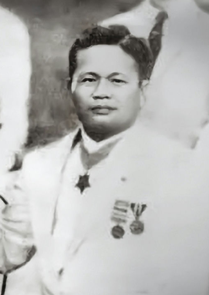
| | | Fireman Second Class Telesforo de la Cruz Trinidad, born November 25, 1890, in New Washington, Aklan Province, Panay Island, Philippines, enlisted in the United States Navy’s Insular Force around 1909 and went on to serve with distinction through World War I, World War II, and until his retirement around 1945. His defining act of heroism occurred on January 21, 1915, aboard USS San Diego in the Gulf of California, when a series of devastating boiler explosions tore through the ship’s firerooms following a high-speed endurance trial. Blown out of fireroom No. 2 by the initial blast, Trinidad instinctively re-entered the smoke-filled, steam-saturated compartment to rescue Fireman Second Class R. E. Daly. While carrying Daly toward safety through fireroom No. 4, a second explosion from the No. 3 boiler erupted, burning Trinidad across the face. Despite his injuries, he completed Daly’s rescue and then turned back once more into the hazardous, debris-strewn space to assist another wounded sailor. For his extraordinary heroism in the line of duty during peacetime, he received the Medal of Honor under General Order No. 142, becoming the only Filipino-American and only Asian-American Sailor in US Navy history to earn the Medal of Honor for non-combat valor. His bravery, steadfast professionalism, and selfless devotion to his shipmates embody the core values and enduring spirit of the Surface Navy. Trinidad’s cultural and historical significance continues to resonate throughout the Fleet, culminating in the Secretary of the Navy’s 2022 decision to name a future destroyer, USS Telesforo Trinidad (DDG-139), in his honor. For his unparalleled courage, lifetime of service, and lasting impact on the heritage of the Surface Force, Fireman Second Class Telesforo de la Cruz Trinidad stands as an exceptionally deserving candidate for induction into the Surface Navy Hall of Fame.
| | Capt. Floyston A. “Bud” Weeks, United States Navy (Retired) | |
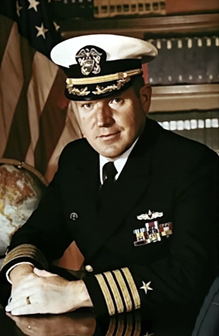
| | | It is with the highest respect and enthusiasm that we (SNA Newport Chapter) nominate Capt. Floyston A. “Bud” Weeks, United States Navy (Retired), for induction into the Surface Navy Association Hall of Fame. Captain Weeks’ legacy—defined by exceptional combat service, distinguished command tours, and transformative leadership in training and education—makes him a representative of the very best of our Surface Warfare community. Captain Weeks’ naval service spans over 50 years of active duty and civilian leadership. His career reflects the core values of Honor, Courage, and Commitment, and his contributions—both on the field of battle and ashore—embody the intent of the Hall of Fame: to recognize those who have performed exceptional or heroic actions in combat or have significantly advanced the operational readiness of the US Navy’s sea forces. Captain Weeks first served in combat during the Vietnam War, where he operated along the coastline in Patrol Boats, Fast (PTFs), conducting high-risk missions under fire. His experience in Vietnam shaped his philosophy of leadership, emphasizing presence, decisiveness, and personal accountability in high-risk environments. Over the course of his active duty career, Captain Weeks commanded USS Direct (MSO 430), USS Aubrey Fitch (FFG 34), USS Jouett (CG 29), and USS Yosemite (AD 19). He led ships during complex deployments, conducted Naval Gunfire Support missions, and served as one of the Navy’s first Air Defense Commanders in the Arabian Gulf following the Iran-Iraq War. His reputation for integrity, warfighting expertise, and leadership under pressure led to his selection as an investigator following the USS Stark (FFG 31) missile attack in 1987. Following retirement from active duty, Captain Weeks continued to shape the future of the Navy as an instructor and later as Director of the Navigation, Seamanship, and Shiphandling (NSS) Department at Surface Warfare Officers School (SWOS) in Newport, Rhode Island. There, he became an institutional cornerstone—championing high standards of mariner skill, seamanship, and leadership. Under Captain Weeks’ leadership, SWOS introduced key reforms, including:
- Implementation of Bridge Resource Management (BRM) training for senior leaders
- Development of the Surface Navigator Course and robust shiphandling assessments
- Creation of standardized simulator-based instruction across Fleet Concentration Areas
- Enforcement of rigorous instruction and testing on the Nautical Rules of the Road
- Mentorship of over 25,580 students, from junior Sailors to officers bound for Major Command.
Captain Weeks was also instrumental in the successful development and operational implementation of the Mariner Skills Training Centers (MSTC) in San Diego and Norfolk—two of the largest maritime training facilities in the world. His guidance ensured that the expansion of simulator-based training did not compromise instructional rigor or warfighting effectiveness. Captain Weeks is widely regarded as the most seasoned and respected mariner in the Surface Navy. Since the passing of Admiral Arleigh Burke, no other individual—uniformed or civilian—has had a more profound impact on the Surface Warfare Officer community. His influence is present in every ship that sails today, carried forward by officers he personally trained, all the way up to the acting Chief of Naval Operations and other four-star Admirals. Captain Weeks' enduring commitment to excellence in combat readiness and leadership development marks him as one of the great mentors and trailblazers of modern surface warfare. Naming the future generations of surface warriors as “Weeks’ Surface Warriors” is more than a tribute—it is an acknowledgment of the indelible mark he has made on the Fleet. For his decades of service, his heroic actions in combat, his revolutionary impact on training and education, and his unwavering commitment to the operational excellence of the US Navy’s Surface Forces, we respectfully and strongly recommend Captain Floyston A. "Bud" Weeks for induction into the Surface Navy Association Hall of Fame. His legacy will guide our Fleet for decades to come.
| | |
Aftermath of the 1956 Suez crisis: Global Ramifications and Reflections for Dockyards and Shipyards
Naval Dockyards Society 30th Annual Conference (hybrid)
National Maritime Museum Greenwich
Saturday 28 March 2026 Sponsored by the Society for Nautical Research
| | |
PROGRAMME
9.30–11.00 REGISTRATION Coffee/Tea/Biscuits
10.00–10.50 AGM (NDS members only)
11.00–12.20 Morning Conference Laying the foundations for the post-Suez global transfer of naval power Chair Ian Stafford
11.00–11.40 Dr Samantha Middleton, ‘From Convoys to Crisis: How the WWII Maritime Infrastructure Shaped Britain’s Strategic Failure in Suez and Its Aftermath for Dockyards and Shipyards’
11.40–12.20 Dr David F. Winkler, ‘Setting the Stage: The Suez Crisis and Eventual Withdrawal of British Presence East of Suez’
12.20–1.20 Buffet Lunch
1.20–2.00 Afternoon Conference Home and overseas dockyard case studies Chair Dr Andrew Jeffrey
1.20–2.00 Richard Holme, MPhil, The aftermath of Suez – Sheerness
2.00–2.40 Chen BI, ‘From Imperial Base to Commercial Lease: The Governance Transformation of Malta Dockyard after the Suez Canal Crisis’
2.40-3.20 Jin H. Han, PhD, ‘Malta’s Dockyards After Suez: Retrenchment, Resistance, and Postcolonial Transformation’
3.20–3.40 Afternoon break
3.40–4.20 Afternoon Conference continued A springboard for further study Chair Dr Ann Coats
3.40–4.20 Andrew Livsey, MA, The British naval requirement for dockyards and support facilities, 1956 to 2026’
4.20 Brief questions, comments, Valediction
4.30 END
| | NAVAL HISTORY BOOK REVIEWS | | |
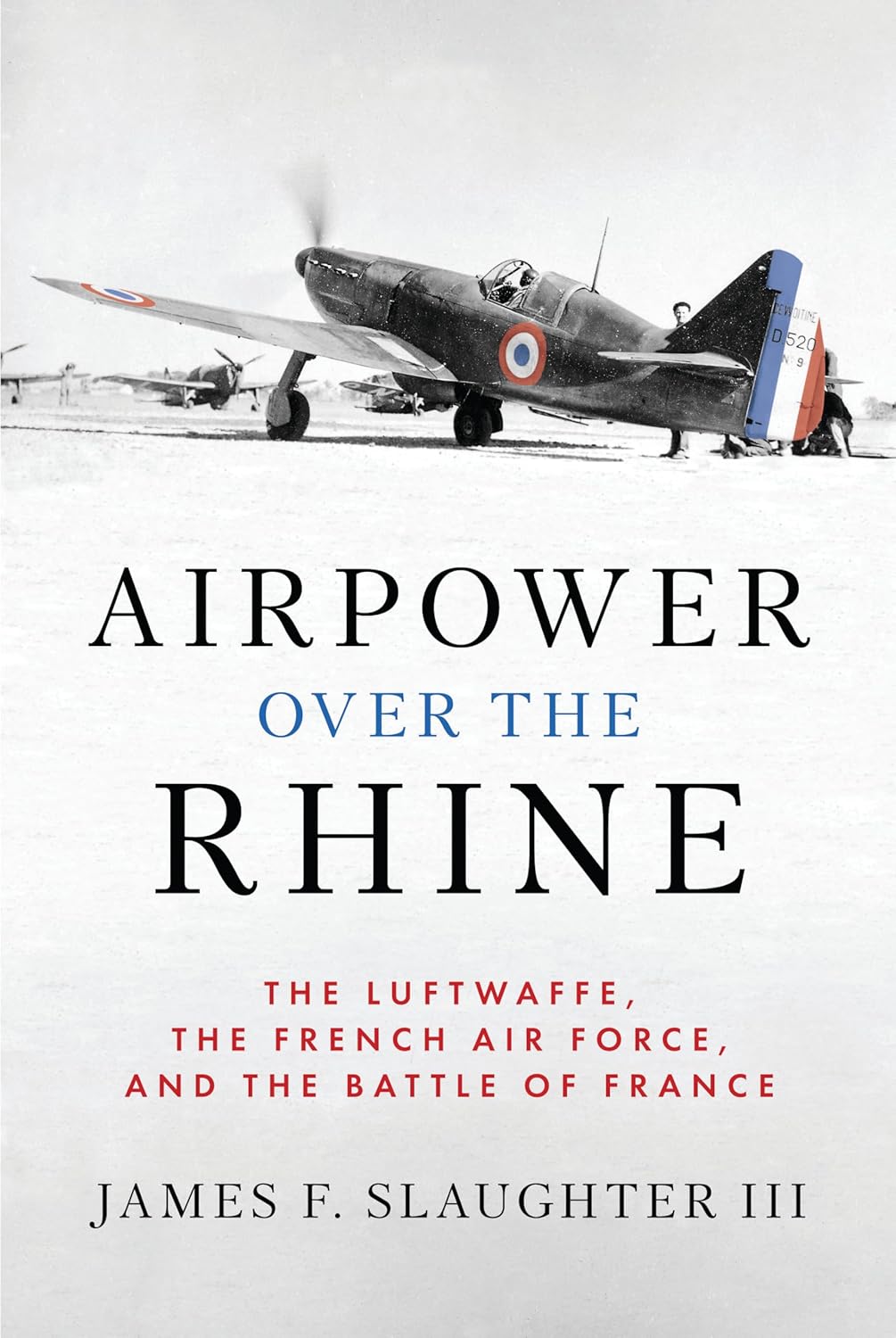
In Airpower Over the Rhine, James Slaughter examines the battle between the French Air Force and the Luftwaffe, from the initial German attack in May 1940 to the French surrender in June. Looking for the reasons behind the French defeat in the air, he examines six areas: aircraft and equipment, aircraft industries, intelligence, the effects of the Spanish Civil War, doctrine and training, and the interaction between politics and airpower.
The author begins by evaluating the interwar development of combat aircraft in each service. In 1919, the French Air Force was one of the two most powerful air forces in the world and the German air force had ceased to exist, a state that would persist officially until 1935. While this would seem to bode well for the quality of French aircraft in 1940, it proved not to be the case. In May 1940, France fielded 637 fighters, the great majority of which were decidedly inferior to the over 1,200 fighters in the Luftwaffe, including large numbers of the Bf-109, one of the finest fighters in the world. The situation was similar with respect to bombers, although Slaughter is probably too dismissive of French light and medium bombers like the LeO-451 and the Douglas DB-7.
One of the book’s most interesting sections concerns the respective aircraft industries. He devotes most of his attention to the French aviation industry, examining the financial starvation of that industry until 1938, the subsequent nationalization of the industry in that year under Air Minister Pierre Cot, and the impact of the deep divisions in French society between right and left on the industry. These fissures showed up in cases of industrial sabotage, work stoppages, and blatant favoritism in placement and promotion based on political affiliation. While the German industry certainly had problems (starting, as it did, essentially from nothing), its problems were minor compared to the French.
In looking at intelligence, the author concludes that French aviation intelligence was quite good but had little impact on French policy. Also, French overestimates of Luftwaffe strength may have had a baneful effect on the government’s willingness to stand firm during the Munich crisis. German intelligence on the French air force was good at the tactical and operational levels, but weak strategically.
Slaughter looks at the effect of the Spanish Civil War on both services, assessing that French intelligence on the war was good for the most part but, as noted above, it had little impact. German participation in the war significantly affected Luftwaffe tactical doctrine and aircraft technology (especially in driving improvements in engine power and fighter armament).
The author then turns to an in-depth analysis of the doctrine and training of each service, highlighting the dramatic differences between them, especially regarding air-ground cooperation. While the Luftwaffe and the German army worked together closely and effectively, their French counterparts did not. For example, French army doctrine severely restricted the use of radios on or near the battlefield, out of concern over interception. This effectively crippled the ability of the French air force to provide timely and effective close air support, since they could not communicate with the army after takeoff. Another serious obstacle was the return of the air force to being subordinated to the army in 1938, since few (if any) army officers understood the employment of air power in supporting troops.
The final analytical frame is the impact of politics on French airpower. Here, he reinforces the points he has made in earlier chapters on the effects of the deep left-right political divide. Slaughter concludes by reexamining the common assessments of French air force performance in 1940—that the air force simply failed to show up for the fight. Using French and German records, he shows that, despite crippling shortfalls in aircraft, equipment, doctrine, and leadership, the French air force fought bravely and inflicted many (if not the majority) of the Luftwaffe’s losses in May and June 1940. While the book is a bit repetitive at times and one could quibble about some of the author’s technical assessments, overall Professor Slaughter makes his case effectively and backs up his major assessments solidly.
Professor James F. Slaughter III is an educator and historian, currently serving as an adjunct professor at Marshall University. He has taught at levels from primary school to university, having a self-described passion for education and especially for developing critical thinking skills in students. He has researched, taught, and written extensively in history, particularly in the histories of France and Germany from 1870 to 1945 and in the American Civil War.
Captain Dick, USNA ’75, is a retired submariner; he also served over 29 years in the defense intelligence community in scientific and technical intelligence, intelligence support to the acquisition process, and foreign materiel.
| |
| |
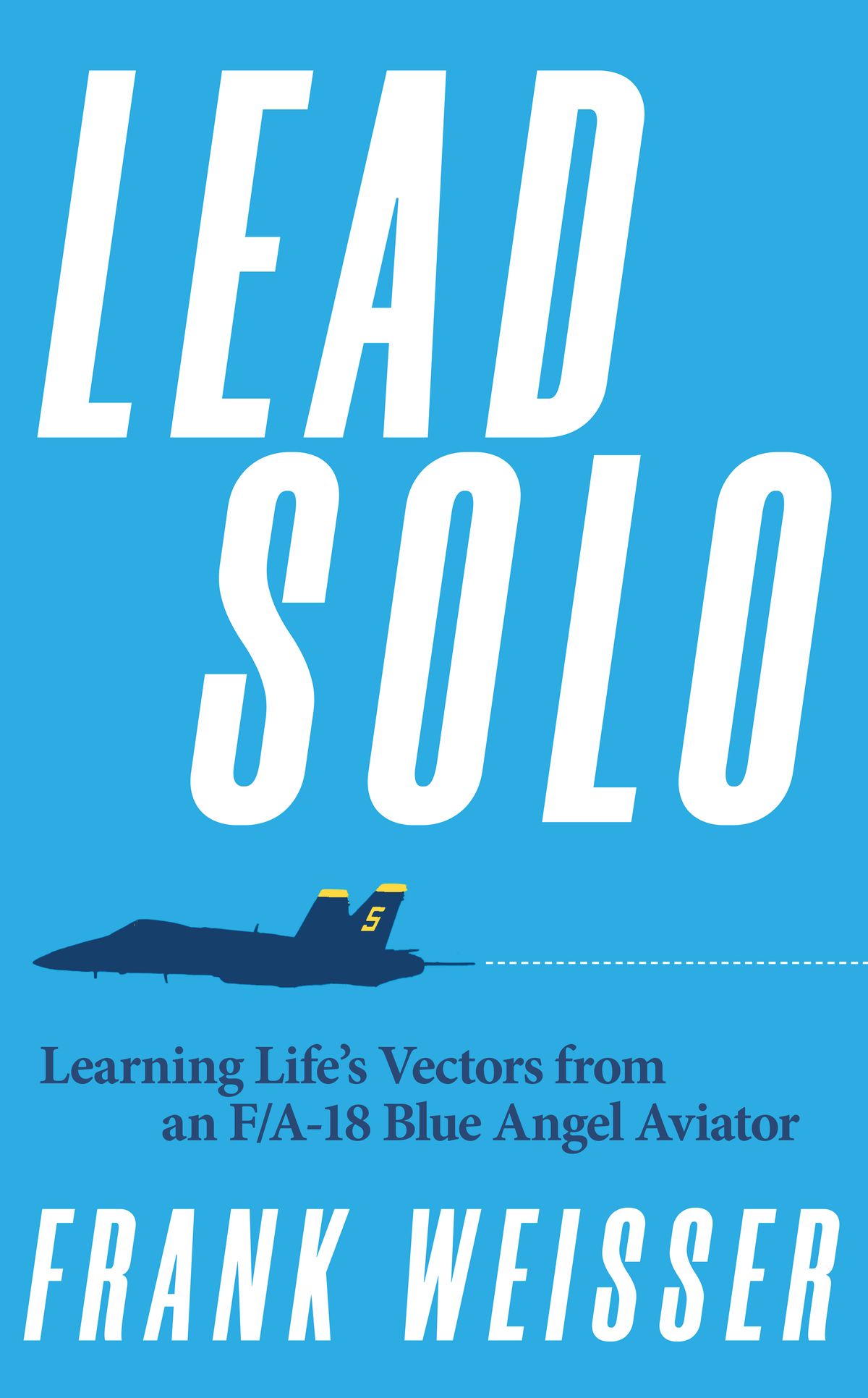
Lead Solo By Cdr. Frank Weisser USN (Ret.) Naval Institute Press, Annapolis MD, (2025).
Reviewed by Judith E. Pearson, PhD
| | |
Lead Solo extols the qualities of character and leadership, based on the life lessons that Commander Frank Weisser learned from the cockpit of a Navy F/A-18 fighter. Through seven chapters, Weisser shares how he learned the importance of focusing on the tasks and priorities at hand; a broadened perspective (to include empathy); interpersonal trust; clear, honest communication; rising to the challenges of adversity; learning from failure; and the courage to demonstrate grace, empathy, and integrity under pressure.
The author’s approach is not new. Other authors have written about their personal experiences as a springboard for describing the characteristics of high-functioning people. The late motivational speaker Steven Covey, for example, wrote The Seven Habits of Highly Effective People, using much the same formula. What makes Lead Solo unique is Weisser’s recounting of exciting, suspenseful, harrowing, and danger-filled episodes from his 25 years as a Navy pilot deployed in combat, as the Lead Solo for the Navy Blue Angels, and as the stunt pilot for the blockbuster movie Top Gun: Maverick.
These episodes are not brags about professional accomplishments. Rather, Weisser authentically describes some of his toughest moments, in which focused thinking and precision actions made the difference between life and death. Through these episodes, we see the absolute dedication, concentration, and countless hours of training and preparation required of successful naval aviators. I ended this book with a deeper appreciation for the skills of combat pilots and stunt pilots, knowing that they defy the possibility of death every time they climb into the cockpit.
Weisser writes convincingly that the lessons he learned carried over into other areas of his life, and that readers can benefit from what he learned. An underlying theme is that obstacles, inconveniences, emergencies, and challenges can test one’s commitment to the outcome, relationships with others, and one’s ability to adapt, survive, and acquire confidence and maturity. The “flight sequences” were too technical for my understanding, but their action-packed descriptions and the emotional perspectives of those involved made for high readability.
Anyone would agree that the seven qualities of this book are worth striving for. Weisser advises readers on how to acquire each one. To develop focus, for example, he advises:
- Take care of physical needs (hunger, sleep, etc.) ahead of the task.
- Clear away distractions.
- Apply practice and persistence to master the skills required.
- Prioritize the task, giving it your time and energy.
Weisser adds that our priorities help us decide how to best use the 24 hours we have each day.
Chapter 5 on adversity was, for me, the most gripping chapter. Weisser tells of a moment in his early flight training when he nearly lost his life. During a training mission, he became extremely tired and disoriented due to hypoxia (lack of oxygen). His division lead, in another plane, yelled into his microphone “Pull your green ring”—an action that would activate the flow of oxygen into the cockpit. Weisser pulled the green ring and avoided a loss of consciousness that would have resulted in crashing his aircraft.
At the debrief, Weisser’s team determined that the oxygen supply system in his plane had malfunctioned. The incident was reported across all Navy and Marine Corps flight squadrons, after which additional malfunctioning systems were found. The honest reporting of this incident saved lives. Not only did Weisser learn how to recognize the signs of hypoxia, he says this experience also emphasized the value of teamwork, and taking correct action in an emergency, as well as the importance of honest appraisal and reporting.
In Chapter 7 on courage, Weisser reminds readers, through examples, that courage can be found in the small acts of everyday living: the courage to respectfully disagree with a superior, to own one’s mistakes and be held accountable, to remain calm under pressure, and to accept constructive criticism. His inspiring philosophy is that “It’s never too early to effect positive change in your life, and it’s never too late to reinvent yourself for the better.”
Lead Solo is a good read for military pilots, anyone who has worked around military pilots and planes, anyone who enjoyed Top Gun: Maverick, and anyone who has felt the thrill of watching a Blue Angels air show.
Judith E. Pearson, PhD is the recorder to the i805 Club Council and co-editor of the Trafalgar Chronicle. A companion with the Naval Order of the United States she holds a PhD in Mental Health Counselling and is a retired Licensed Professional Counsellor and certified master practitioner/trainer in hypnotherapy and Neuro-Linguistic Programming (NLP).
| | NAVAL HISTORY BOOKS AVAILABLE FOR REVIEW | | American Society of Naval Engineers (ASNE) Talk a Little, Learn a Lot Podcast | |
E39: VADM David Lewis - WWII Submarine Production
In a November 2025 podcast from the American Society of Naval Engineers (ASNE), Dr. Stephen Phillips interviews Vice Adm. David Lewis about World War II submarine production.
Listen here>>
| | World War II Museum Book Awards | | |
As historians and authors unearth new details and impactful insights from World War II, public discourse and understanding of this monumental time in human history is deepened, and sometimes even redefined.
Now, with the launch of its annual book awards, the National WWII Museum will recognize the most outstanding nonfiction books on WWII history published each year. This initiative will help promote the field of WWII historical research, expand its audience, and support authors in their scholarly endeavors. Awards in two categories will celebrate new works for their excellent contributions to public understanding of the war that changed the world.
The Best Book in WWII History Award will recognize the top English-language nonfiction book on World War II of the calendar year with a prize of $50,000. The Best Debut Book in WWII History Award will recognize an excellent English-language nonfiction book on World War II from a first-time published author with a prize of $10,000. Along with bolstering visibility of their work, the book awards and associated prizes will support awardees’ continued research, writing, and contributions to the library of World War II.
The inaugural book awards will be bestowed upon works published in 2026. Finalists and awardees will be announced each spring, and the winning authors in both categories will be hosted at the National WWII Museum in New Orleans later in the year to participate in a public program discussing their work.
For further details, visit: The National WWII Museum Book Awards | The National WWII Museum | New Orleans
| | 2026 CNO Naval History Essay Contest | | |
The Chief of Naval Operations (CNO) announces the 2026 CNO Naval History Essay Contest. Participants are invited to submit their essays no later than 30 April 2026. This contest represents an excellent opportunity to engage in the rich legacy of naval history. The Naval History and Heritage Command (NHHC) is the lead for the contest and the US Naval Institute is supporting it.
The Challenge
The CNO invites entrants to submit essays that apply lessons from naval history to solving today’s Navy challenges. Entrants should consider, for example: Chinese and Russian expansion across the spectrum of military operations and domains; the rise of China as an economic and maritime power; the increased importance of navies, sea control, and allies and partners; the proliferation of advanced weaponry and erosion of key US technological advantages; and fundamental strategic and technological shifts and advances that promise to change the character and conduct of naval warfare.
CNO's Intent
Navigation Plan 2024 emphasizes that strategic agility stems from proactive and practical thinking and that there is no time to waste. This essay contest aims to harness the collective expertise and intellectual engagement of the US maritime services community, including the Navy, Marine Corps, Coast Guard, and Merchant Marine, as well as cadets and midshipmen. The goal of this essay contest is to examine and reflect on historic approaches to similar conditions and stimulate discussion and insights on achieving and maintaining maritime superiority in the context of renewed great power competition.
MIDSHIPMEN AND CADETS
Eligibility
(1) Navy, Marine Corps, Coast Guard, and Merchant Marine Academy midshipmen and cadets (Naval Academy, NROTC, Coast Guard Academy, Kings Point) and state maritime academy midshipmen.
Submission Guidelines
-
Word Count: 3,000 words maximum (excludes endnotes/footnotes).
- All entries must include either enumerated footnotes or enumerated endnotes; a bibliographic list of sources at the end of the essay is not permitted as a substitute for the footnotes or endnotes.
-
Submit essay by 30 April 2026 as a Word document online at: www.usni.org/cnonhessaycontestmidn-cadet
- Include word count on title page of essay but do not include author name(s) on title page or within the essay.
- Note: Essays must be the author's original work, neither previously published (online or in print) or currently under consideration for publication elsewhere, nor previously submitted to the CNO Naval History Essay Contest.
- Entrants may submit multiple essays, but the judging panel will select only one winning essay per entrant.
- The short biography should detail the author's eligibility for the contest.
Prizes
$4,000 — First Prize
$2,000 — Second Prize
$1,000 -- Third Prize
PROFESSIONAL HISTORIANS
Eligibility
(1) US and international professional historians, including history museum curators, archivists, history teachers/professors, PhDs, and published history authors.
(2) Authors of books on naval history (not including self-published works); or
(3) Civilians who have published articles in an established historical or naval journal or magazine.
Submission Guidelines
-
Word Count: 3,500 words maximum (excludes endnotes/footnotes).
- All entries must include either enumerated footnotes or enumerated endnotes; a bibliographic list of sources at the end of the essay is not permitted as a substitute for the footnotes or endnotes.
-
Submit essay by 30 April 2026 as a Word document online at: www.usni.org/cnonhessaycontestprofessional
- Include word count on title page of essay but do not include author name(s) on title page or within the essay.
- Note: Essays must be the author's original work, neither previously published (online or in print) or currently under consideration for publication elsewhere, nor previously submitted to the CNO Naval History Essay Contest.
- Entrants may submit multiple essays, but the judging panel will select only one winning essay per entrant.
- The short biography should detail the author's eligibility for the contest.
Prizes
$5,000 — First Prize
$2,500 — Second Prize
RISING HISTORIANS
Eligibility
Those that do not fall in the Professional Category and are either:
(1) Active duty, reserve, retired, and federal civilian personnel from the U.S. Navy, Marine Corps, Coast Guard, and Merchant Marine; or
(2) Members of foreign militaries who have orders and are serving in an official billet in one of the above Services.
Submission Guidelines
-
Word Count: 3,000 words maximum (excludes endnotes/footnotes).
- All entries must include either enumerated footnotes or enumerated endnotes; a bibliographic list of sources at the end of the essay is not permitted as a substitute for the footnotes or endnotes.
-
Submit essay by 30 April 2026 as a Word document online at: www.usni.org/cnonhessaycontestrising
- Include word count on title page of essay but do not include author name(s) on title page or within the essay.
- Note: Essays must be the author's original work, neither previously published (online or in print) or currently under consideration for publication elsewhere, nor previously submitted to the CNO Naval History Essay Contest.
- Entrants may submit multiple essays, but the judging panel will select only one winning essay per entrant.
- Essays in the Rising Historian category may be co-authored, with both authors meeting the Rising Category qualifications.
- The short biography should detail the author's eligibility for the contest.
Prizes
$5,000 — First Prize
$2,500 — Second Prize
$1,500 -- Third Prize
In addition to the prize money winner will be offered:
a. Invitational travel orders to the 2026 CNO Naval History Essay Contest Awards Reception (to be determined) to meet the CNO and potentially present their papers.
b. Winners will be published in Naval History magazine or Proceedings and online with the Naval History and Heritage Command (NHHC). Other essays may be published in Naval History or Proceedings and/or online by NHHC.
c. Copper sheathing from USS CONSTITUTION (provided by NHHC)
d. Recognition on NHHC's website.
e. A one-year Naval Institute membership and a one-year subscription to Naval History magazine (courtesy of the Naval Institute).
Judging
Essays will be judged on the following criteria:
a. Relevance to the topic: Applying lessons from naval history to establishing and maintaining maritime superiority in an era of great power competition;
b. Readability;
c. Thoroughness of research;
d. Quality of insights based on historical events; and
e. Uniqueness/novelty of ideas presented.
All essays are judged in the blind. A six-person panel will select the winning essays. We will notify you via email if your essay is selected for a prize or for publication.
Note: For non-winning essays, since we receive so many submissions (more than 100 per month!), notification of acceptance on one of our platforms may take 4-6 months.
For more details about the contest, please visit https://www.history.navy.mil/get-involved/essay-contest.html.
For questions, please contact Steve A. Hill, NHHC: email: Stephen.a.hill6.civ@us.navy.mil.
For advice and guidance on writing essays, please email: essayquestions@usni.org.
| | |
Friends of the National World War II Memorial is pleased to invite proposals for presentations at our 11th Annual Summer Teachers Conference, taking place next year, 20–24 July 2026, in Washington, DC.
Our 2026 theme, Defending Democracy at Home and Abroad: The Ongoing Legacy of Service in the American Story, honors the diverse Americans who, across 250 years, have served our nation in uniform while advancing the cause of equality and democracy.
We welcome proposals from educators, historians, authors, public history professionals, community partners, and others whose work can help illuminate this powerful and inspiring story.
Full details about the theme, suggested topics, and proposal guidelines, as well as the submission form, are available on our website:
👉 https://www.wwiimemorialfriends.org/summer-teachers-conference/presentation-proposal
All submissions are due by Friday, 6 February 2026.
If you have any questions about the conference or the proposal process, please don’t hesitate to reach out.
We look forward to reviewing your proposals and hope you’ll join us next summer in Washington, D.C.!
| | Call for Papers: International Journal of Naval History | | UPCOMING NAVAL & MARITIME HISTORY GATHERINGS | | |
26–29 March 2026: 92nd Annual Meeting of the Society for Military History, Arlington, VA
28 March 2026: Naval Dockyards Society Conference (hybrid), Greenwich, UK
22–25 April 2026: Council of American Maritime Museums Annual Conference Mystic Seaport, CT.
14–15 May 2026: Society for the History of the Federal Government Annual Meeting, Washington, DC
27–31 May 2026: NASOH Annual Meeting, New Haven, Connecticut
25–27 June 2026 13th: Royal Canadian Navy History Conference In conjunction with the Canadian Nautical Research Society | CFB Esquimalt, British Columbia
Submit proposals and inquiries to: rcncrnsconference@gmail.com
| PREBLE HALL NAVAL HISTORY PODCAST | |
A naval history podcast from Preble Hall—the United States Naval Academy Museum in Annapolis, Maryland—featuring interviews with historians, practitioners, military personnel, and other experts on a variety of naval history topics from ancient history to more current events.
Click here for the latest episode: 255 - Chas Henry - Fuji Fire: Sifting Ashes of a Forgotten US Marine Corps Tragedy>>
Click here for all Preble Hall Podcasts >>
|
DRACHINIFEL YOUTUBE CHANNEL
|
NAVY HISTORY MATTERS
Welcome to Navy History Matters, the Naval History and Heritage Command’s biweekly compilation of articles, commentaries, and blogs related to history and heritage. Every other week, they gather the top-interest items from a variety of media and social media sources that link to related content at NHHC’s website, your authoritative source for Navy history.
Click here for most recent article>>
| SUPPORTING US NAVAL HISTORY & HERITAGE | |
Tuesday Tidings is free to all—but it exists because NMHS members keep our work moving forward. Membership supports research, publications, seminars, educator resources, and the community that shares these stories. If you enjoy reading Tuesday Tidings, becoming a member is the best way to sustain it. Thank you!
Click here to become a member of NMHS today >>
| | | | |