Tuesday Tidings is published by the National Maritime Historical Society with support from the US Naval Institute. Interested in joining USNI? Click on the USNI logo to become a member! | | | |
16 December 2025
Welcome back to our National Maritime Historical Society members and friends who share a love for naval history!
| | |
Again, thank you to those who made individual contributions to support the efforts of the National Maritime Historical Society to promote our naval and maritime heritage. We are also pleased to affirm that the US Naval Institute has agreed to continue to partially underwrite the annual costs of sustaining Tuesday Tidings through 2026! Thank you Rear Adm. Ray Spicer and your team in Annapolis for your support and the efforts the US Naval Institute makes to promote our heritage through its social media, publications, archival collections, forums, and recognition programs. We look forward to additional partnership opportunities in the new year.
Note that USNI partially underwrites Tuesday Tidings. They need not have a monopoly on the organizational logo on the bannerhead. If Tuesday Tidings aligns with your organization’s interests, we’d love to hear from you!
In addition to support of Tuesday Tidings, the Society made a major investment this year to revitalize the International Journal of Naval History. That publication would also welcome sponsors. We lead off this edition of Tuesday Tidings with the table of contents of the November 2025 edition of IJNH, along with links to the NMHS-hosted IJNH website! If IJNH sponsorship aligns with your personal or organizational interests, we would also love to hear from you!
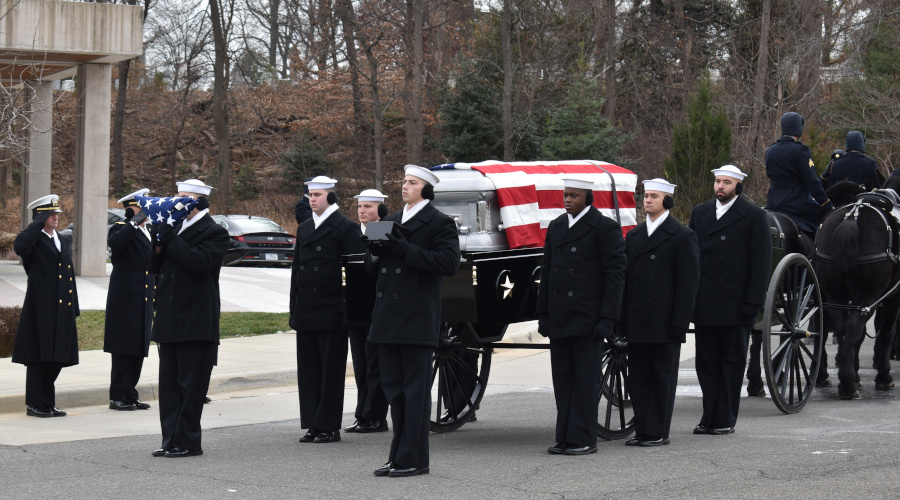
For our “In Case You Missed It” section, we offer a photo spread from The Hill of the interment at Arlington Cemetery of Rear Adm. Morton Egner “Jim” Toole, whose passing we reported over two years ago. His death on 11 November 2023 was noted on the front page of the Washington Post in recognition of his ownership of a bookstore near Capitol Hill, where he had had a reputation as a lovable curmudgeon. He also was involved in the Capital Commandery of the Naval Order of the United States, frequently stepping up to offer remarks at commemorative events. He is missed.
More books have arrived seeking reviewers, including Tom Duffy’s Tanker War in the Gulf: Operation Earnest Will, Diplomacy and Seapower in Practice. With a renewed American interest in shipyard infrastructure, this week’s review by Michael Lowrey about a British yard certainly is germane!
| | |
Tuesday Tidings is compiled by Dr. David F. Winkler and Jessie Henderson as a benefit for members of the National Maritime Historical Society and friends of naval history.
As always, comments and naval history news items are welcome at nmhs@seahistory.org.
| | |
International Journal of Naval History
November 2025: Volume 18, Issue 2
| | |
Editorial
Articles
Book Reviews
-
Mark Stille (Issues 1 & 8), Angus Konstam (issues 2, 5, & 10), Brian Lane Herder (issues 3 & 9), Edward Marolda (issue 4), Enrico Cernuschi (issue 6), Mark Lardas (issue 7), and Lawrence Paterson (issue 11). Illustrations by Jim Laurier (issues 1, 5, 8, & 11), Edouard A. Groult (issues 2, 6, 7, 9, & 10), Paul Wright (issue 3), and Adam Tooby (issue 4) Fleet (Series Review, Issues 1-11) by Chuck Steele
| | NAVAL HISTORY BOOK REVIEWS | | |
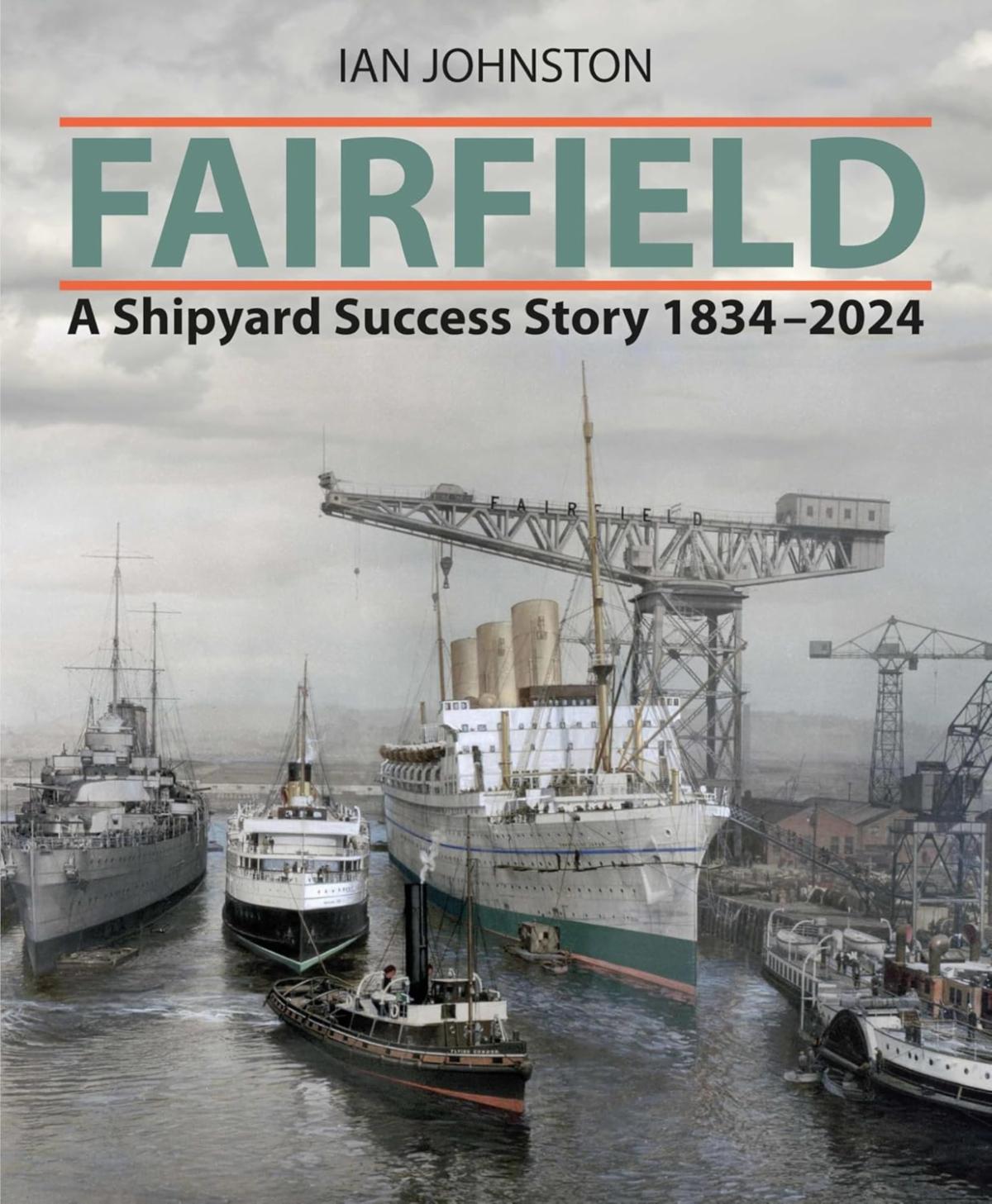
Fairfield: A Shipyard Success Story 1834–2024. By Ian Johnston. Seaforth Publishing (2024)
Reviewed by Michael Lowrey
| | |
The battleships Valiant and Howe. The battlecruisers Indomitable and Renown. The ill-fated armored cruisers Aboukir, Cressy, and Good Hope along with, years later, the aircraft carrier Implacable. Blue Riband holders like Oregon, Etruria, Campania and Lucania. These are among the many famous ships built at Govan on the upper Clyde River in what is now Glasgow by the Fairfield shipyard. Glasgow maritime historian Ian Johnston’s new book Fairfield: A Shipyard Success Story 1834–2024 offers up a well-written and absolutely well researched overview of the yard’s complex history, from its earliest days to the most recent redevelopment to support construction of the United Kingdom’s latest generation of surface warship.
A word about the title: Can Fairfield really be considered a successful shipyard though? In a sense certainly yes, as it has built many notable vessels and the site is still producing ships today, including the Royal Navy’s new Type 26 frigates. That’s something that can’t be said of many other once-great British shipyards, including John Brown (builder of the battlecruiser Hood and the liners Lusitania and Queen Elizabeth 2) and Swan Hunter (the battleship Anson and the fleet carrier Illustrious). On the other hand, the original Fairfield Shipbuilding and Engineering Company went bankrupt in 1965 and the yard hasn’t had “Fairfield” in its name for over half a century.
Johnston’s book is organized in four chapters, each reflecting ownership changes to the Fairfield shipyard site.
The first chapter, covering 1834 to 1884, is Fairfield’s origin story, which centers around a Glasgow engineering company eventually run by John Elder that develops an advantage in marine engines and then does the next logical thing by opening a shipyard at a site in Govan already known as Fairfield.
By the 1880s, the yard was under the control of William Pearce. Pearce was a keen manager with political ambitions—he served in the House of Commons—and keeping the shipyard under his personal ownership would complicate attempts to get Royal Navy contracts. As a result, the yard was renamed and incorporated in 1885 as the Fairfield Shipbuilding and Engineering Company, Ltd, covered by the second chapter.
Fairfield was at the time among the leading shipyards in the world, a position it retained for many years. Along the way though, there was a lot of drama: poorly-managed contracts, yard directors getting fired, strikes, a devastating fire, a questionable joint venture, a hostile takeover, a bailout, and the closure of a portion of the yard. And all this happened before World War II.
During the 1960s, market conditions deteriorated quickly for British shipyards. The Japanese became very efficient at building ships, while British yards suffered from out-of-date infrastructure, high labor costs, strained relations with unions, few major Royal Navy contracts, and a sharp decline in demand for the sort of ships—ocean liner—they were best suited to build. While Fairfield was far from the worst yard in the UK, it couldn’t escape, and declared bankruptcy in October 1965.
The third chapter focuses on the ensuing three and a half decades of efforts to keep the yard open. The Fairfield Shipbuilding and Engineering Company was no more; the yard at Govan on the Clyde instead became Fairfield (Glasgow) Ltd, then Upper Clyde Shipbuilders’ Govan Division, and when that failed, Govan Shipbuilders Ltd., which was nationalized for a time, before being sold on to Kvaerner as Kvaerner Govan Ltd. Despite all the name and ownership changes, the challenge was constant throughout: improving labor productivity and finding enough profitable orders to keep the yard open.
A short final chapter details changes made to the yard since its acquisition in 1999 by BAE.
As Johnston acknowledges in Fairfield: A Shipyard Success Story 1834–2024’s introduction, the history of Fairfield as a company and its Govan yard is a sprawling subject that can’t be covered in detail in just in 200 pages of text. Indeed, it’s not obvious that you could do that in 1,000 pages, with many topics hinted at in the book — British pub culture, labor relations, and industrial policy—being broader societal and economic concerns.
Johnston’s approach is thus episodic and amounts to a series of bullet points, each with a short—from one paragraph to a few pages—writeup. These points do form a cohesive narrative describing the company and site’s history. That said, a few of the items, including the tale of the round yacht Livadia built in 1880 for Imperial Russia or Fairfield’s charitable contributions in 1949, really don’t add much to the big picture story and might have been better handled as sidebars.
Fairfield: A Shipyard Success Story 1834–2024 is also a very well-illustrated book, featuring over 200 photos and draws, an average of over one per page. There’s another 30 pages of appendices, including a complete list of ships built at the yard.
The target audience of Johnston’s book is very much British in general and likely from Glasgow in particular. It presumes a base knowledge of British geography and notable shipyards. That shouldn’t stop readers interested in an accessible general history of a major shipyard which also presents insights into the challenges facing British shipbuilding more generally.
Michael Lowrey handles much of the World War I material for the uboat.net website and works with divers and others to locate and identify submarine wrecks in the North Sea and English Channel. An economist by training, he currently teaches at Wingate University in North Carolina.
| | NAVAL HISTORY BOOKS AVAILABLE FOR REVIEW | | Farewell to Rear Adm. Morton E. Toole | | Admiral Toole is moved to his final resting place. Courtesy The Hill. | | |
Last week, Rear Adm. Morton E. Toole was laid to rest at Arlington Cemetery. Images courtesy The Hill.
Read more here>>
| | Society for the History in the Federal Government Book Prize | | |
Book Prize
This prize is given for an outstanding major publication on the federal government’s history.
Eligibility
Entries may be narrative histories, edited collections of articles or essays, or any other published historical work of comparable scope. The prize is given to author(s) and/or editor(s). Entries are judged for value in furthering the understanding of the history of the federal government; quality and thoroughness of research; style and appropriateness of presentation; suitability and rigor of methodology; and use of original and primary materials.
Email shfg.award@gmail.com for more information.
Submission Process
1. Submit nomination through Google forms by 31 December 2025.
2. Include nominee(s)’s resume or curriculum vitae in nomination form.
3. Mail one copy of the publication, accompanied by a brief letter stating the qualifications and merits of the nominated work, to each member of the committee by 31 January 2025.
***Please note: The award is made solely on the basis of the materials submitted to the prize Committee Members. Addresses are detailed on the entry form.***
Committee Members
Shannon Granville
Senior Editor / Editorial Team Lead
US Army Center of Military History
Richard Hulver
Historian
Office of the Historian, US Department of State
Terrance Rucker
Senior Historical Publications Specialist
Office of the Historian, US House of Representatives
| | Brigadier General James L. Collins Jr. Book Prize in Military History | | |
The US Commission on Military History proudly announces the submission date for all books for consideration for the Brigadier General James L. Collins Book Prize in Military History. The prize entails a $2,000 award to the author, irrespective of nationality, of the best book written in English on any field of military history published during 2024. The Book Prize Committee, comprising USCMH members Dr. Edward J. Marolda, (Chair), Dr. Jeffrey Clark, and Dr. John Hosler, will review the submitted books and select the winner. Topics in all periods and all aspects of military history (including naval and air warfare) will be considered.
One copy of books for consideration by the Collins Prize Committee must be submitted to each of the following addresses:
Dr. Edward J. Marolda
15570 Golf Club Drive
Montclair, VA 22015
Dr. Jeffrey Clarke
1011 North Van Dorn Street
Alexandria, VA 22304
Dr. John Hosler
Command and General Staff College
Department of Military History
100 Stimson Avenue
Fort Leavenworth, KS 66027
Copies must be postmarked no later than 31 December 2025. Upon notification from the
selection committee, the Collins Prize will be presented at the USCMH Annual General Meeting
usually held in early November of the following year. For further information contact the Collins
Prize Committee Chair at: edwardmarolda@yahoo.com
| | |
The John Lyman Book Awards are given annually by the Society in the following eight categories:
- Maritime and Nautical Archaeology
- Maritime and Naval Biography and Memoir
- Maritime and Naval Reference Works and Edited Primary Sources
- Maritime and Naval Science, Technology, and the Environment
- North American Maritime History
- North American Naval History
- World Maritime History
- World Naval History
Books published during the previous year or bearing a copyright date of the previous year qualify for consideration. The closing date for submissions of books published in 2025 is 1 February 2026.
For further information, contact the Awards Committee chair, Dr. Abigail Mullen, abby@abbymullen.org.
| | |
13th Royal Canadian Navy History Conference In conjunction with the Canadian Nautical Research Society 25–27 June 2026 | CFB Esquimalt, British Columbia
Theme: Sea Power on the Pacific Rim: History, Heritage, and the Canadian Experience
The Royal Canadian Navy History Conference, convened in partnership with the Canadian Nautical Research Society, invites proposals for papers, panels, and roundtables for its 13th meeting, to be held at Canadian Forces Base Esquimalt, 25–27 June 2026.
This conference coincides with the RCN’s longstanding presence on the Pacific Coast and provides a timely opportunity to explore the multifaceted history of sea power on the Pacific Rim. From Indigenous maritime traditions to imperial rivalries, from the Pacific theatres of the world wars to Cold War operations, and from heritage preservation to contemporary strategic challenges, the Pacific has always been a dynamic space of maritime interaction.
We welcome proposals that engage with the broad theme of “Sea Power on the Pacific Rim: History, Heritage, and the Canadian Experience.” Topics may include, but are not limited to:
- The evolution of the Royal Canadian Navy’s Pacific presence, from Esquimalt’s 19th-century origins to the modern fleet
- Canada’s role in Pacific conflicts and operations, including the World Wars, Korea, the Cold War, and post–Cold War missions
- Indigenous maritime history and perspectives on Pacific seafaring and sovereignty
- Naval heritage, commemoration, and the preservation of material culture on the Pacific coast
- Comparative and transnational studies of sea power in the Pacific, including the Royal Navy, US Navy, Imperial Japanese Navy, and regional maritime forces
- The impact of geography, trade, migration, and technology on Pacific naval and maritime history
- Historiographical and methodological approaches to studying Pacific naval history
Proposals focused on other topics may also be submitted
Submission Guidelines
- Individual papers: Please submit an abstract of no more than 300 words, along with a brief (150-word) biographical note.
- Panels and roundtables: Submit a 500-word proposal outlining the panel theme, plus abstracts and bios for each participant.
- Proposals are welcome from academics, students, naval professionals, independent scholars, heritage practitioners, and those interested in maritime history.
Deadlines and Details
- Proposal submission deadline: 15 January 2026
- Notification of acceptance: 15 February 2026
- Submissions and inquiries should be sent to: rcncnrsconference@gmail.com
The 13th RCN History Conference promises to be a significant opportunity for dialogue between historians, naval personnel, and the wider community. We look forward to welcoming participants to Esquimalt, the historic heart of the Royal Canadian Navy on the Pacific Coast.
Submit proposals and inquiries to: rcncrnsconference@gmail.com
Join us in Esquimalt for an engaging exchange on Canada’s Pacific naval history!
| | Bringing Federal History to the Public During America’s 250th Anniversary | | |
Proposals Due January 15, 2026
Please submit proposals using this Google form.
May 14-15, 2026
Library of Congress
James Madison Memorial Building
Anniversaries offer an opportunity to reflect on the past and consider what the future might bring. With the semiquincentennial of the United States, federal historians and allied professionals are uniquely positioned to offer insights, reflections, analysis and understanding, as well as to consider the current context of its celebration, and what issues future federal historians may face.
Federal history practitioners will be celebrating the 250th anniversary through myriad projects and programs. The raised profile of this event brings with it an opportunity for a fresh framework on public history, to highlight the relevance and importance of federal history, and for outreach and deeper connection to a wide range of audiences. How are practitioners bringing federal history to the public now? What research and resources on federal history have risen to attention in light of the 250th anniversary?
SHFG invites federal history practitioners from all specialties, including but not limited to scholars, public historians, educators, museum professionals, archivists, and communications professionals, to submit presentations for the annual meeting. Suggested topics may include creatively and engagingly framed narratives and innovative public facing delivery, projects working toward transparency and availability of historical documentation and data, and development of creative and relevant connections between the 250th anniversary of the Declaration of Independence and the subsequent development of the federal government and its workforce throughout the history of the United States.
The Program Committee invites proposals for the following formats and encourages non-traditional panel formats:
ROUNDTABLE: Includes short presentations by panelists, followed by discussion and feedback from panelists and from the audience. 3-6 participants.
STRUCTURED CONVERSATION: Facilitated, participant-driven discussions designed to prioritize audience dialogue and contain little or no formal presentations. 3-6 participants.
LIGHTNING ROUNDS: Participants make short presentations–no more than 5 minutes each–to summarize their research or projects. Up to 15 participants.
WORKSHOP: A workshop provides concrete practical tools and lessons for a smaller group of attendees on a specific subject or skill. Organizers submit proposals, and after acceptance attendees can register for the workshop. 15-30 participants.
TRADITIONAL PANEL: At least three presenters, a chair, and a commentator. 3-6 participants.
INDIVIDUAL PAPERS: While individual proposals are welcome, individual presentations will be combined with similar proposals to make a full session. The Program Committee will consider proposals for entire sessions before reviewing individual papers.
OTHER: Proposals for additional formats not described above are welcome.
Submission Process:
All proposals should include a title and session abstract (200-300 words), brief abstracts of each participant (200-300 words), and biographical paragraphs and contact information for each participant. Individual paper proposals should include a brief abstract (200-300 words), a brief biographical paragraph for the presenter, and contact information.
All proposals should be submitted using this Google form.
Please direct any questions to the Program Committee at: shfg.primary@gmail.com
| | |
Maritime Margins: Missing Voices, Overlooked Places, and New Perspectives
New Haven, Connecticut, 27–29 May 2026
| | |
The North American Society for Oceanic History invites you to its annual conference at the Canal Dock Boathouse and Hotel Marcel in New Haven, Connecticut, 27–29 May 2026. From the Black engineer William Lanson, who once made New Haven’s Long Wharf the longest structure of its kind in North America, to the birth of industrialized oystering in the waters between river, harbor, and Long Island Sound, New Haven sits at multiple margins of human and natural histories. The city is also the “cultural capital of Connecticut,” boasting renowned museums, research libraries, and some of the best “apizza” outside Naples.
All scholars of the history or archaeology of fresh and saltwater, maritime cultural landscapes, navies, maritime security and strategy, and maritime actors (including the natural environment itself) are encouraged to submit proposals. We particularly seek presentations that highlight historically marginalized people, places, and subjects, including papers that consider race, class, gender and imperial, colonial, and environmental histories.
The program committee invites panel proposals of at least three and no more than four papers. We also welcome roundtable and individual paper proposals. The committee will consider a limited number of remote presentations from international participants only on a case-by-case basis. Participants from the United States must present in-person.
Proposal submissions should be in single document (.doc or .docx) and include: A) panel or paper title; B) 150-200 word abstract for the full panel and for each paper submitted; C) phone number, address, affiliation, and email of presenter(s); and E) any special requests to include remote participation by international presenters or any physical or technical accommodations required beyond a basic projector, laptop, and screen. Conference registration is required for all participants.
Proposals should be submitted electronically to nasoh.conference@gmail.com by
2 February 2026. Contact Dr. Jason W. Smith at smithj131@southernct.edu for general questions about the conference.
Student Grants and Awards
All students applying to present are automatically considered for NASOH’s Chad Smith Travel Grants. Students are also encouraged to submit their paper to be considered for the Clark G. Reynolds Student Paper Award. Additional information on award guidelines can be found on the NASOH website.
| | Call for Papers: International Journal of Naval History | | UPCOMING NAVAL & MARITIME HISTORY GATHERINGS | | |
10–12 February 2026: The US Naval Institute and AFCEA International 36th Annual WEST Conference. San Diego.
21–22 February 2026: Western Naval History Annual Symposium; USS Midway San Diego
26–29 March 2026: 92nd Annual Meeting of the Society for Military History, Arlington, VA
28 March 2026: Naval Dockyards Society Conference (hybrid), Greenwich, UK
22–25 April 2026: Council of American Maritime Museums Annual Conference Mystic Seaport, CT.
14–15 May 2026: Society for the History of the Federal Government Annual Meeting, Washington, DC
27–31 May 2026: NASOH Annual Meeting, New Haven, Connecticut
25–27 June 2026 13th: Royal Canadian Navy History Conference In conjunction with the Canadian Nautical Research Society | CFB Esquimalt, British Columbia
Submit proposals and inquiries to: rcncrnsconference@gmail.com
| PREBLE HALL NAVAL HISTORY PODCAST | |
A naval history podcast from Preble Hall—the United States Naval Academy Museum in Annapolis, Maryland—featuring interviews with historians, practitioners, military personnel, and other experts on a variety of naval history topics from ancient history to more current events.
Click here for the latest episode: 253 - Francis Ducoin - Monitor's Shield at Preble Hall>>
Click here for all Preble Hall Podcasts >>
|
DRACHINIFEL YOUTUBE CHANNEL
|
NAVY HISTORY MATTERS
Welcome to Navy History Matters, the Naval History and Heritage Command’s biweekly compilation of articles, commentaries, and blogs related to history and heritage. Every other week, they gather the top-interest items from a variety of media and social media sources that link to related content at NHHC’s website, your authoritative source for Navy history.
Click here for most recent article>>
| SUPPORTING US NAVAL HISTORY & HERITAGE | |
Tuesday Tidings is free to all—but it exists because NMHS members keep our work moving forward. Membership supports research, publications, seminars, educator resources, and the community that shares these stories. If you enjoy reading Tuesday Tidings, becoming a member is the best way to sustain it. Thank you!
Click here to become a member of NMHS today >>
| | | | |