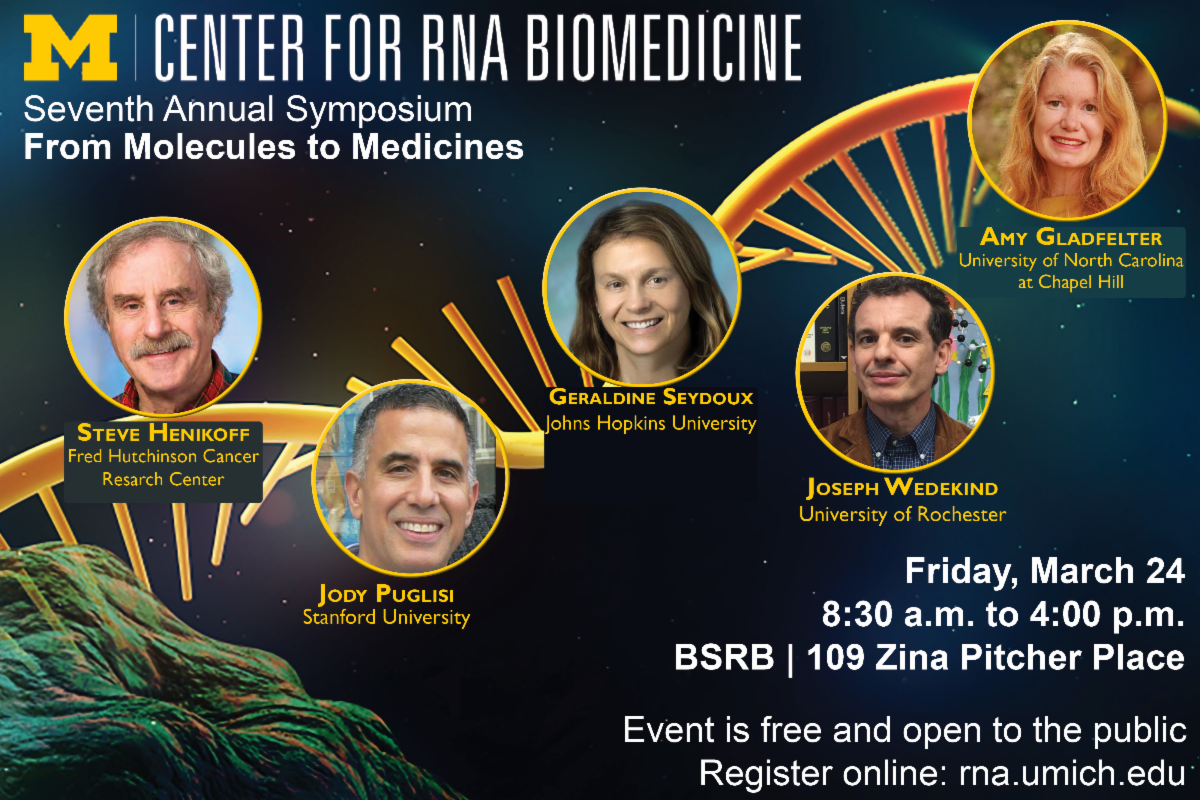
The RNA Transcript, February 27th 2023 | |
REGISTER AND SAVE THE DATE | |
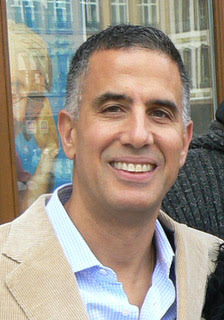
Keynote Speaker Highlights - Jody Puglisi Ph.D | | |
|
|
Jody Puglisi, Ph.D
The Choreography of Translation Initiation
Abstract: Translation initiation in eukaryotic organisms is the last step in gene expression and a point of regulation, control, and mis-function in disease. Translation initiation occurs on 5’ 7meG capped mRNAs whereby >10 factors prepare the mRNA and allow loading of a 40S ribosome with a preloaded initiator tRNA. These ribosomes are proposed to scan directionally from the 5’ to 3’ direction to find the first AUG start codon. How this process unfolds at a molecular level remains strikingly unclear. Here we merge single-molecule dynamics and structural approaches to illuminate the molecular choreography that underlies initiation.
| |
Innovation Partnerships - Great Lakes Discovery | | |
|
|
Congratulations to Dr. Seohee You, whose project has been the first Great Lakes Discovery project that has been selected for Deerfield Management funding.
The announcement link from Innovation Partnerships is here.
| |
U-M RNA Innovation Seminar | | |
|
|
A Complicated Family: Conserved and Distinct Functions of tRNA Methyltransferases from Yeast to Humans
Jane Jackman, Ph.D
Professor of Chemistry & Biochemistry
The Ohio State University
TODAY, February 27, 2023
4:00 - 5:00 PM
BSRB ABC Seminar, Zoom
| |
RNA Collaborative Seminar | | |
|
|
To What Extent Do mRNA Stern-loops Pause the Translating Ribosome?
Speaker: Dmitri Ermolenko, Ph.D
Professor of Biochemistry & Biophysics
The preQ1 riboswitch Family Uses Multiple Knotty Strategies to Control Translation
Speaker: Joseph Wedekind, Ph.D
Professor of Biochemistry & Biophysics
Moderator: Lynne Maquat, Ph.D
Wednesday, March 1, 2023.
4:00 PM
Zoom.
| |
U-M RNA Innovation Seminar | | |
|
|
Dancing to a Different Tune: TANGO Provides Hope for Dravet Syndrome
Lori Isom, Ph.D
Maurice H. Seevers Professor & Chair of Pharmacology
Professor of Molecular & Integrative Physiology
Professor of Neurology
Michigan Neuroscience Institute Affiliate
University of Michigan Medical School
Monday, March 6, 2023
4:00 PM
BSRB ABC Seminar, Zoom
| | |
|
|
Ribosome Collisions as a Signaling Hub to Impact Cell Fate
Speaker: Rachel Green, Ph.D
Bloomberg Distinguished Professor
Johns Hopkins University
Monday, March 13, 2023.
3:00 PM
Rackham Amphitheatre
| |
8th Annual RNA Symposium - Thursday, April 20th, 2023 | | |
|
|
8th Annual Non-coding RNA Symposium sponsored by the HMS Initiative for RNA Medicine and the Cancer Center at Beth Israel Deaconess Medical Center.
April 20, 2023
8:00 AM - 5:00 PM
Joseph B Martin Conference Center at HMS
77 Avenue Louis Pasteur
Boston MA 02115
Speakers & Registration here
Questions: Email Grace Lee at glee8@bidmc.havarad.edu
| |
Lighting Talks Workshop & Competition | | |
|
|
Are you passionate about your RNA research? Do you want to share your love of science with the world but need help with presentation skills? The RNA Society's RNA Collaborative will once again be offering the Lightning Talks Workshop and Competition. Prizes include a one-year membership to the RNA Society and features on our YouTube and social media channels.
Important dates:
March 21, 2023 - Applications due (apply here: https://forms.office.com/r/2ZmHmm9eSY)
April 1, 2023 - Participants notified
April 24, 2023 - Workshop
For more information contact Dr. Laura Keffer-Wilkes at kefferwilkesl@uleth.ca
| |
28th Annual Meeting of the RNA Society - Math 30th thru June 4th | |
RNA Society Research Presentation Fellowship | | |
|
|
The RNA Society is pleased to announce the RNA Society Research Presentation Fellowship program for 2023. This program aims to increase participation at our Annual Meeting and provides full meeting registration waivers for qualifying researchers who would otherwise be unable to attend RNA 2023 due to financial considerations.
RNA Society Research Presentation Fellowships are available to current RNA Society members presenting either an oral or poster presentation at RNA 2023 (as first or senior author). Applications will be assessed based on career stage, financial need, past meeting support, and expected total meeting costs. The Research Presentation Fellowship Selection Committee may prioritize awards according to geographical location to offset travel-associated expenses and/or to encourage participation of underrepresented scientists. Please note that submission of an application does not guarantee funding and only one Research Presentation Fellowship will be awarded per research group/lab.
Application guidelines:
- RNA Society Research Presentation Fellowships are restricted to current RNA Society members. To renew your membership, please visit the RNA Society membership page here.
- Applications require a brief Statement of Benefit, a Letter of Recommendation, an abbreviated CV, and a scientific abstract for oral or poster presentation.
- Applications for a 2023 RNA Society Research Presentation Fellowship must be submitted by February 18th, 2023 in order to be evaluated and awarded prior to the RNA 2023 oral abstract submission deadline of March 3rd, 2023. Additional applications will be accepted up until March 5th, 2023 and will be considered if allocated funds remain available; applicants will be notified by March 14th, 2023, ahead of the poster abstract submission deadlines of March 31st, 2023.
Upon notification, RNA Society Research Presentation Fellowship winners will receive complimentary registration for RNA 2023 in the form of a registration waiver code to be used at time of completing your meeting registration. We ask applicants to wait for the notification of award decisions before completing registration and paying registration fees (so as to prevent the need to refund payment).
Additional information on the RNA Society Research Presentation Fellowship program can be found on the RNA 2023 meeting website here. If you wish to apply for a fellowship, please complete the application here.
We look forward to seeing you in Singapore for RNA 2023 in May!
| |
Helmholtz Institute for RNA-based Infection Research (HIRI) - Postdoctoral Position | | |
|
|
Postdoctoral Positions to Investigate RNA Subcellular Localization at Baylor College of
Medicine
Two postdoctoral positions are available in Furqan Fazal’s lab in the Department of
Biochemistry and Molecular Biology at Baylor College of Medicine (BCM) to study the
organization of RNAs within cells. The Fazal lab focuses on systematically interrogating the
subcellular transcriptomes of mammalian cells and characterizing the scope, regulation, and
function of subcellular localization, particularly at the systems and organismal level.
Fazal’s lab interests span from computational to wet-lab work, though the ideal candidate
should have experience in molecular biology, RNA biology, cell biology, and/or informatics. We
use a variety of biochemical, biophysical, imaging, genomic and computational approaches to investigate the sequence-function relationship dictating RNA localization.
Email: furqan.fazal@bcm.edu for more information about the position.
Apply through Baylor College of Medicine website: https://jobs.bcm.edu. Requisitions ID's 8018 or 8019.
| |
Helmholtz Institute for RNA-based Infection Research (HIRI) - Assistant Professor Position | | |
|
|
HIRI is looking to identify candidates for an open group leader position in RNA biology to be filled at the Helmholtz Institute for RNA-based Infection Research (HIRI) in Würzburg, Germany. These are attractive positions that come with good start-up packages and stable core funding. They offer a long-term perspective and strong ties with the Medical Faculty of the University of Würzburg, one of Germany’s leading universities in the life sciences. The call closes on March 19.
They are looking for group leaders on the assistant professor level, who want to work at the interface of RNA research and infection biology, covering bacterial and viral pathogens, the immune response to infections, and RNA delivery to infected tissue. Moreover, they have been developing a single-cell RNA-seq programme to achieve a better resolution of infection processes. For more details, please see: www.helmholtz-hiri.de/en/ They currently have nine PIs and are expected to grow to about 10-12 laboratories in the next few years.
| |
OSU Nakanishi Lab - Postdoctoral Position | | |
|
|
Postdoctoral Position to Explore “Tiny RNAs” in Humans
An NIH-funded postdoctoral position is available in the laboratory of Dr. Kotaro Nakanishi at The Ohio State University. The Nakanishi group studies the roles of tiny RNAs, 10 - 18 nt non coding RNAs. We recently discovered that specific 3′→5′ exonucleases trim microRNAs to
tiny RNAs. While more than 200,000 papers about microRNAs have been reported, only about 10 articles have described tiny RNAs. The physiological functions of tiny RNAs remain to be studied. My group uses molecular biology, biochemistry, RNA-seq, cell biology (confocal microscope), and structural biology (cryo-EM and crystallography) to investigate tiny RNAs. We are looking for a postdoc who explores this new world together.
Qualifications
Strong candidates are highly motivated individuals with an excellent academic track record, including first-author publication(s). Candidates should have or be in the process of completing a Ph.D. in biochemistry, molecular biology, cell biology, or structural biology. Experience in large-scale protein purification and structure determination in cryo-EM and/or X ray crystallography will be advantageous.
To apply
For more information, please visit HERE.
Questions
If you have any questions, please email nakanishi.9@osu.edu.
Recent publications:
1. Sim GY, Kehling AC, Park MS, Secor J, Divoky C, Zhang H, Malhotra N, Bhagdikar D, Abd El Wahab EW, Nakanishi K. (2022). Proc. Natl. Acad. Sci. USA.
2. Park MS, Sim GY, Kehling AC, Nakanishi K (2020). Proc. Natl. Acad. Sci. USA. 3. Park MS, Araya-Secchi R, Brackbill JA, Phan HD, Kehling AC, Abd El-Wahab EW, Dayeh DM, Sotomayor M., Nakanishi K. (2019). Molecular Cell.
4. Dayeh DM., Cantara WA., Kitzrow J., Musier-Forsyth K., Nakanishi K. (2018). Nucleic Acids
| |
Institut Curie Research Center (Osray, France) - 6th Junior Group Leader Position | | |
|
|
The Research unit “Chemistry and Modelling for Biology of Cancer” (CNRS UMR9187 / Inserm U1196) at Institut Curie is recruiting a Junior Group Leader to develop chemical biology approaches related to the studies of fundamental mechanisms of cancer and/or applied to the development of novel diagnostic or therapeutic tools. The recruited group leader will benefit from the expertise of several teams present at the Orsay site of Institut Curie and working on RNA secondary structure targeting, post-transcriptional gene regulation and RNA-protein interactions.
The key criteria for the selection of candidates will be the documented quality of their scientific record, a cutting-edge innovative research project, as well as their capacity to interact with other teams at the Research Centre and Clinical Department of the Institute and beyond, and to drive developments in the field of biomedical research and treatment of cancer as the main mission of Institut Curie.
The Unit (https://institut-curie.org/unit/umr9187-u1196) is located at the Research Centre of Institut Curie in Orsay, south of Paris, and close to the Paris-Saclay research hub. The three current research groups of the Unit focus their activities on the development of small molecules to probe and control the biological activities of key nucleic acid and protein targets involved in cancer. The drug- and probe-discovery activity is sustained by molecular modelling approaches and imaging. The CMBC unit is hosting the proprietary Institut Curie–CNRS chemical library comprised of over 12,000 compounds.
The newly recruited group will benefit from the access to the local state-of-the-art research equipment and Institut Curie’s core facilities (https://institut-curie.org/network/curiecoretech). Appropriate laboratory space for 6–7 people and a start-up package will also be available.
The successful candidate should be committed to apply for third-party funding form national and international agencies, as well as for a permanent position at a French institution (CNRS, INSERM, or Paris Saclay University).
The Deadline for application is March 25, 2023.
For information & applications please contact: call.umr9187@curie.fr
| |
RNA Structure and Folding Prediction Guided by Innovative Technologies | | |
|
|
IN-PART Discover is running a Request for Proposals (RFP) on behalf of their client, AstraZeneca, as part of their biannual CoSolve Challenge.
Deadline to register: March 10th
Registration Link Here
| |
2023 Bay Area RNA Meeting - March 20th | | |
|
|
Hi RNA aficionado
We have identified a new date for the BARC: March 20, save the date and register! If you have already registered, no need to re-register.
Note that there is also an updated abstract submission deadline: March 01. You are free to update your submitted abstract or submit a new one. If you are registered and logged-in, you may submit or revise your speaker/poster presentation abstracts on your "My Account" profile page.
We’ve planned an engaging format with a variety of conference features:
- Back in person, on the UCSF campus
- Career development workshops
- Poster sessions organized by topic
- Option to share slides, posters, and preprints via the website
- Networking coffee and tea mingle
- Limited e-attendance seats via Zoom webinar
- Speaker and Poster Awards
If you'd like to volunteer to help chair sessions, workshops, or provide leadership opportunities, please email the organizers. Let's get the word out-- please circulate this announcement to your peers. We look forward to seeing you there.
| | |
|
|
Our members' publications are available through Altmetrics. Queries are currently available: CRISPR, microRNA, molecule, RNA, RNA therapeutics, transcriptome, and translation.
Below are recent highlights.
| |
|
Mandal, S., Khanna, K., Johnson-Buck, A., & Walter, N. G. (2022). A guide to accelerated direct digital counting of single nucleic acid molecules by FRET-based intramolecular kinetic fingerprinting. Methods (San Diego, Calif.), 197, 63–73. Highlighted in NCI's Epidemiology & Genomics Research Program (EGRP) https://doi.org/10.1016/j.ymeth.2021.06.014
| |
Wang, E. T., Freudenreich, C. H., Gromak, N., Jain, A., Todd, P. K., & Nagai, Y. (2023). What repeat expansion disorders can teach us about the Central Dogma. Molecular cell, 83(3), 324–329. https://doi.org/10.1016/j.molcel.2022.12.017 | |
Stephen V. Carney, Kaushik Banerjee, Anzar Mujeeb, Brandon Zhu, Santiago Haase, Maria Luisa Varela, Padma Kadiyala, Claire E. Tronrud, Ziwen Zhu, Devarshi Mukherji, Preethi Gorla, Yilun Sun, Rebecca Tagett, Felipe J. Núñez, Maowu Luo, Weibo Luo, Mats Ljungman, Yayuan Liu, Ziyun Xia, Anna Schwendeman, Tingting Qin, Maureen A. Sartor, Joseph F. Costello, Daniel P. Cahill, Pedro R. Lowenstein, Maria G. Castro; Zinc Finger MYND-Type Containing 8 (ZMYND8) is epigenetically regulated in mutant Isocitrate Dehydrogenase 1 (IDH1) glioma to promote radioresistance. Clin Cancer Res 2023; https://doi.org/10.1158/1078-0432.CCR-22-1896 | | | | |