Sasakawa USA Newsletter May 31, 2023 | |
|
Included in this issue of the newsletter:
- Message from Sasakawa USA's Chairman Satohiro Akimoto
May Activities
- U.S.-Japan Integrated Security Dialogue: Japanese Diet Delegation visits Washington
- US-Japan NEXT Alliance Initiative: Roundtable on Economic Security with Hon. Takayuki Kobayashi
-
US-Japan NEXT Alliance Initiative: U.S.-Japan Task Force on Command Relationships for New Challenges
- Sasakawa USA Women’s Advancement Network (SWAN): U.S.-Japan Dialogue on Women, Peace and Security
- Washington Kenkyu Group: Discussion with Prof. Nobukatsu Kanehara
- Presentations and Networking: Global Economic Challenges: Japan's Perspective on China, Emerging Asia and Beyond with Mr. Takehiko Nakao
- Presentations and Networking: Global Economy Looking Forward: Discussion with Mr. Takehiko Nakao
- Engaging with Members of Sasakawa USA's Advisory Committee on Projects
External Engagements
- Mr. James Schoff Speaks at the Korean Economic Institute of America's Event "US-ROK-Japan Trilateral Relations & Integrated Deterrence"
- Hon. Akira Amari Speaks on "The G7 Summit and a New Era of Japanese Leadership" at the Hudson Institute
- Prof. Nobukatsu Kanehara Speaks at SAIS
Recaps
- Policy Briefing: "Changing Dynamics in Japan's Refugee Policy" with Dr. Saburo Takizawa
Publications
- US-Japan NEXT Alliance Initiative: NEXT Alliance Conference Summary Published
- US-Japan NEXT Alliance Initiative: NEXT Alliance Conference Papers Published
- USJETAA: JETs on Japan Publication Series
-
Japan Political Pulse: Prime Minister Kishida’s Snap Election Balancing Act (Dr. Akimoto)
Announcements
- Sasakawa USA Women's Advancement Network (SWAN): SWAN Launches New Logo
| |
Message from Sasakawa USA's Chairman Satohiro Akimoto | |
|
A person who knows Prime Minister Kishida very well recently said, “Prime Minister Kishida has changed since he became prime minister.” According to this individual, while Prime Minister Kishida still seriously “listens to the voices of people," he has also become a decisive leader, well beyond the expectations people had of him early on in his administration. It is fair to say that many observers of Japanese politics had an impression that Prime Minister Kishida was not fully aligned with former Prime Minister Abe’s transformative national security stance and aggressive defense build-up policy when he served as foreign minister in the Abe administration. Those observers thought an anti-nuclear weapon stance and traditional sense of pacifism were central to his political philosophy, more so than U.S. extended nuclear deterrence and the harsh realism of geopolitics dominated by large military powers. But these observers have turned out to be wrong.
Indeed, Prime Minister Kishida seems to embrace his leadership role as prime minister. He does not look like a stereotypical leader in the “Kochikai” faction, which is traditionally regarded as “dovish” on foreign and national security policies. He made bold decisions to steadfastly join the U.S.-led coalition against Russia immediately after Russia’s invasion of Ukraine in February 2022, despite the fact that Japan has large investments in Russian energy. Additionally, Prime Minister Kishida spearheaded Japan’s efforts to combine economic factors into national security policy by enacting the Economic Security Promotion law in May 2022. Furthermore, he pushed forward with the National Security Strategy—which emphasizes strengthening Japan’s own defense capabilities beyond previously accepted levels—together with the National Defense Strategy and the Defense Buildup Program in December 2022. Moreover, following his visit with President Joe Biden at the White House in January 2023, he began improving Japan’s relationship with the Republic of Korea. When a question was posed to former Secretary-General of the LDP Akira Amari at a recent event co-hosted by Sasakawa USA and the Hudson Institute about an image of Prime Minister Kishida as a “dove” in juxtaposition to his aggressive national security accomplishments, Hon. Amari responded that though “it might not have been proven in zoology, doves seem to have some aggressiveness in their DNA.”
The Group of Seven (G7) summit in Hiroshima in May has firmly established Prime Minister Kishida as a leader on the global scene. He successfully held the G7 summit together with leaders of non-G7 member countries, which was not just customary high-cost networking, festivities, and photo opportunities, but was also meaningful. The G7 summit also held bold symbolism, with a wreath laying ceremony with G7 leaders that included President Biden and in-person attendance by Ukraine’s President Volodymyr Zelenskyy. Prime Minister Kishida sent a set of clear messages on the G7 platform that its members are united against unlawful and unilateral military aggression attempts to change the international status quo and order, the G7 is willing to work with Global South nations for peace and stability in the world, and G7 leaders pursue ideals of the international community such as a world without nuclear weapons and the center of gravity in international politics is shifting towards the Indo-Pacific.
When former Prime Minister Abe suddenly stepped down due to a chronic illness in September 2020, there were some concerns in Washington whether strong political leadership to strengthen national security policies and deepen international engagement would continue in Japan. Prime Minister Kishida has proven to be more than capable of continuing the path paved by former Prime Minister Abe. Furthermore, Prime Minister Kishida may be able to advance Japan’s national security and international engagement beyond what former Prime Minister Abe was capable of, as he does not carry political baggage that the former prime minister was weighed down by.
| |
U.S.-Japan Integrated Security Dialogue: Japanese Diet Delegation visits Washington | |
|
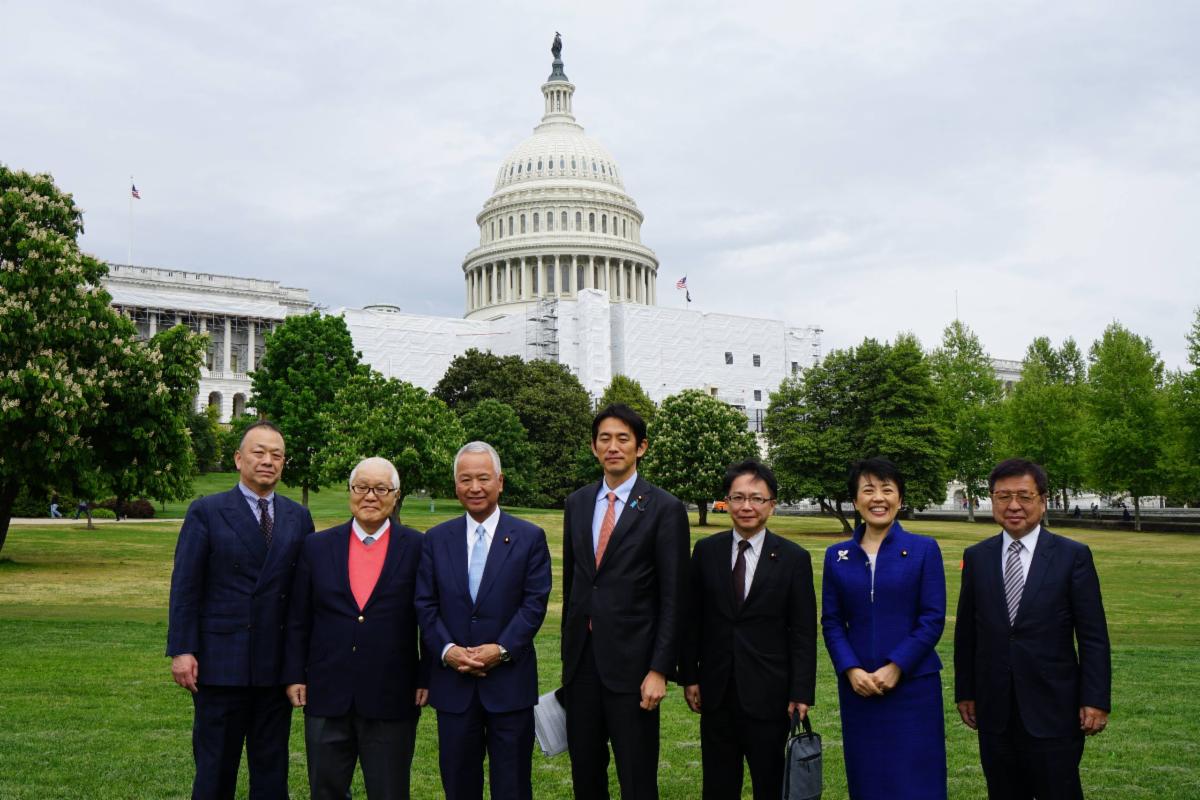
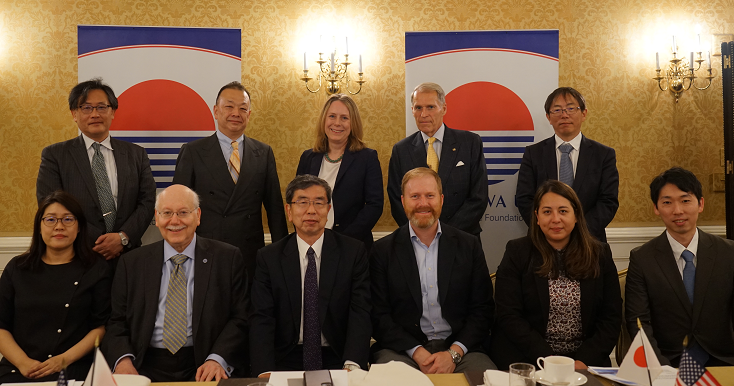
From May 1 to 5, Sasakawa USA welcomed the U.S.-Japan Integrated Security Dialogue delegation of seven, made up of Diet members and policy experts from Japan, led by the Hon. Akira Amari, Member of the House of Representatives and former Secretary-General of the Liberal Democratic Party, who spearheads Japan’s economic security strategy. The delegation accomplished (1) sharing updates on new security concerns in the Indo-Pacific, (2) informing political developments in Japan, and (3) discussing and exchanging ideas on how to strengthen integrated security coordination between the U.S. and Japan. The delegation met with U.S. lawmakers, policymakers, and experts through various closed-door meetings and a public event co-hosted with the Hudson Institute in Washington D.C.
Photo (L-R): Dr. Satohiro Akimoto, Hon. Keizo Takemi, Hon. Akira Amari, Hon. Takayuki Kobayashi, Hon. Keitaro Ohno, Hon. Haruko Arimura, and Prof. Nobukatsu Kanehara
| |
US-Japan NEXT Alliance Initiative: Roundtable on Economic Security with Hon.Takayuki Kobayashi | |
|
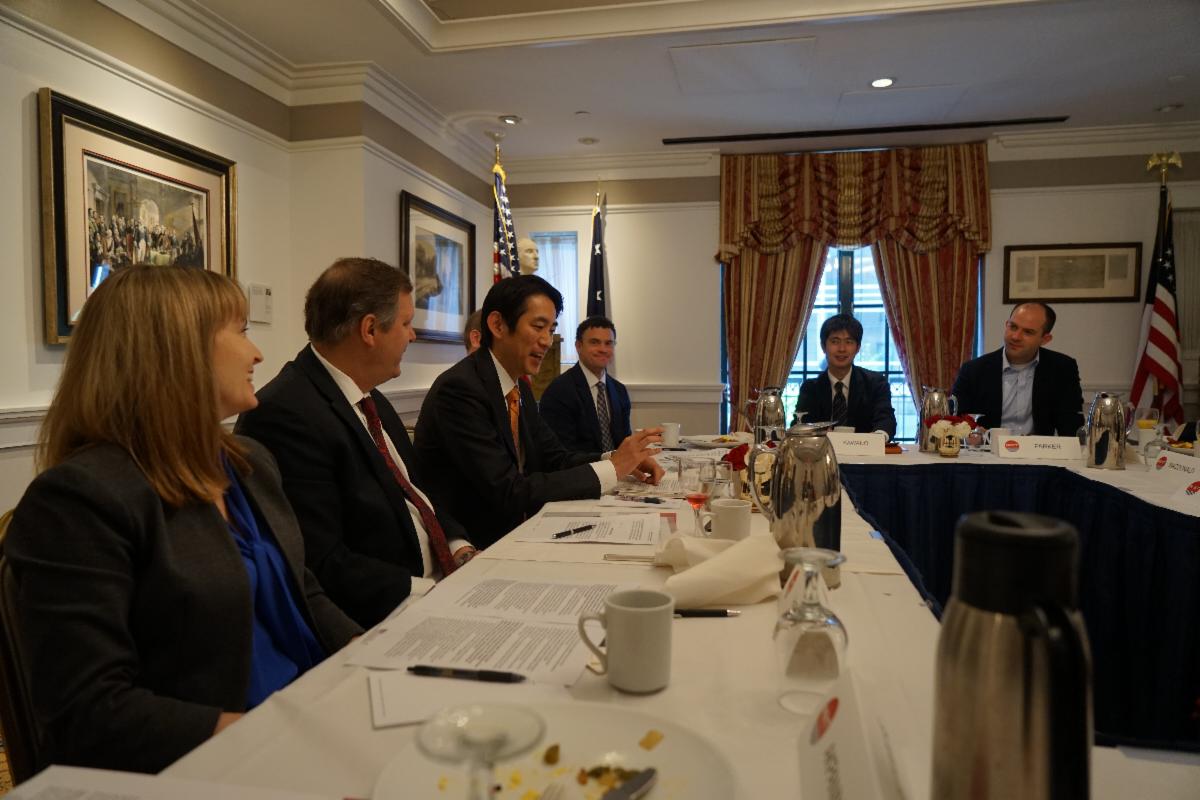
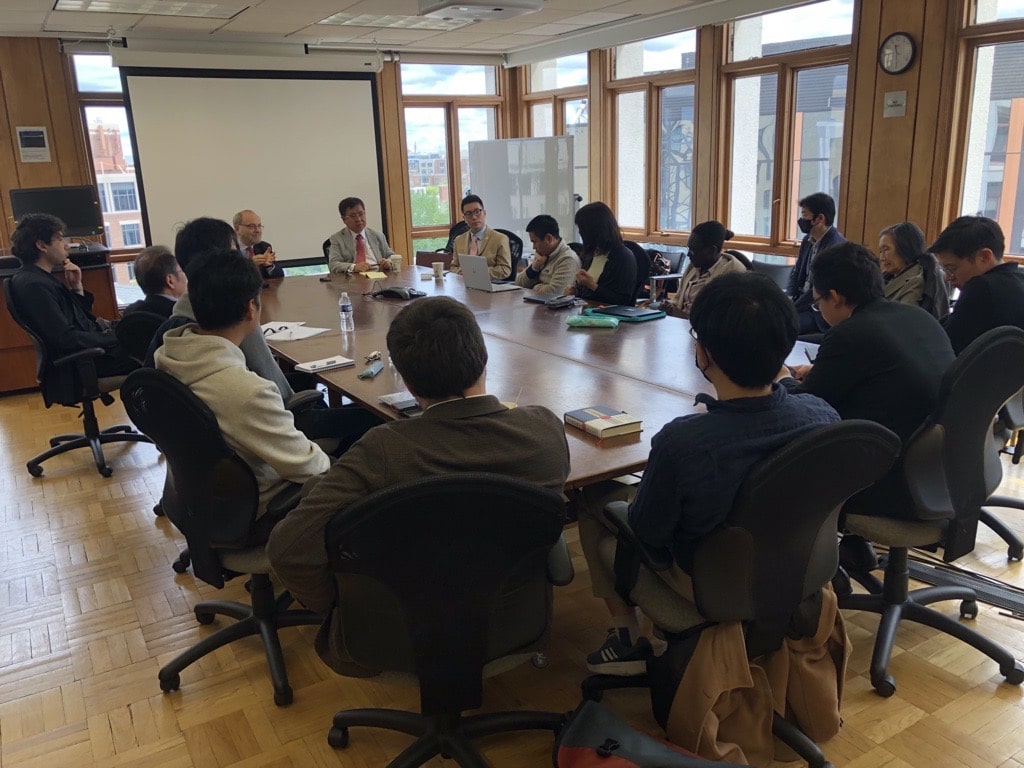
The US-Japan NEXT Alliance Initiative convened a bilateral dialogue on China’s apparent economic security retaliation against the allies. The in-person event took advantage of the Washington visit by Japan’s former Economic Security Minister Takayuki Kobayashi, who was participating in the U.S.-Japan Integrated Security Dialogue (ISD) organized by Sasakawa Peace Foundation USA. Sasakawa USA Senior Director Mr. James Schoff welcomed 18 American and Japanese participants from U.S. legislative staff, government officials from both countries, and the private sector to share information and perceptions of China’s economic behavior. The discussion encompassed a range of related topics, from U.S.-Japan economic security policy coordination, supply chain resiliency, and engagement with the Global South. A summary of the event was published on the Sasakawa USA website under the NEXT Alliance Initiative’s events page, click here.
Photo: Hon. Takayuki Kobayashi providing his remarks.
| |
US-Japan NEXT Alliance Initiative: U.S.-Japan Task Force on Command Relationships for New Challenges | |
|
The NEXT Alliance Initiative hosted a virtual roundtable dialogue on command relationships for new challenges facing the US-Japan alliance on May 18. This was the fifth in a series of C2 dialogues this year, including the NEXT Alliance Conference (NAC) held in Tokyo in early March. The event featured senior fellow at CSIS and NAC participant Mr. John Schaus, who authored a paper after the conference highlighting his thoughts on the urgent alliance venture and the U.S. approach to bilateral planning. The discussion delved into Mr. Schaus’ proposed concepts to guide the US and Japan towards closer C2 arrangements. The event was attended by 22 government officials, think tank representatives along with former U.S. and Japanese military personnel. The task force will continue deliberations in 2023, culminating in the NEXT Alliance Conference in October 2023 to be held in Annapolis, MD.
| |
Sasakawa USA Women's Advancement Network (SWAN): U.S.-Japan Dialogue on Women, Peace and Security | |
 | 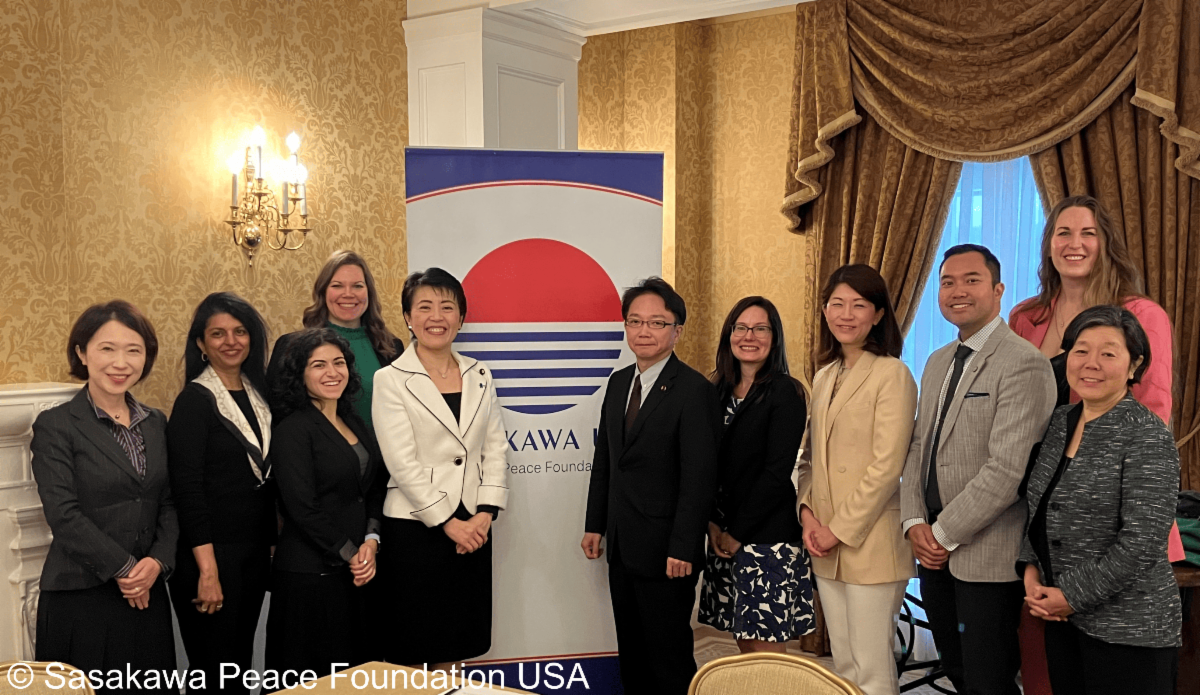 | On May 5, Sasakawa USA hosted the breakfast roundtable, “U.S.-Japan Dialogue on Women, Peace and Security (WPS).” WPS is a policy framework originating from the humanitarian sphere which applies a gendered perspective to peacebuilding and conflict prevention processes, and by extension calls for greater participation of women in high-level policymaking, military, and related leadership circles. While the U.S. and Japan have independently made progress on implementing the WPS agenda, it remains an area with great potential for deeper understanding and collaboration within the U.S.-Japan alliance. This event brought together visiting Japanese Diet Members Hon. Haruko Arimura, Member of the House of Councillors, and Hon. Keitaro Ohno, Member of the House of Representatives, with experts from the State Department’s Office of Global Women’s Issues, staff from the Hill, the Embassy of Japan, nonprofits, and the private sector to discuss the challenges and opportunities for implementing WPS initiatives in the U.S. and Japan. The conversation was moderated by Ms. Shanti Shoji, Director of Programs at Sasakawa USA.
Photo (L-R): Ms. Hiroko Tada, Ms. Sahana Dharmapuri, Ms. Shir Attias, Ms. Shanti Shoji, Hon. Haruko Arimura, Hon. Keitaro Ohno, Ms. Allison Dower, Ms. Ryoko Shinohara, Mr. Andre Agraviador, Ms. Kayla McGill, and Ms. Susan Morita.
| |
Washington Kenkyu Group: Discussion with Prof. Nobukatsu Kanehara | |
|
On May 5, Washington Kenkyu Group welcomed Prof. Nobukatsu Kanehara, former Assistant Chief Cabinet Secretary to Prime Minister Shinzo Abe, 2012–2019, and current Professor of Law at Doshisha University. Prof. Kanehara was visiting as part of Sasakawa USA’s U.S.-Japan Integrated Security Dialogue (ISD) delegation in Washington, D.C. from May 1 to May 5 to discuss and exchange ideas and key topics pertaining to developing the U.S.-Japan security alliance on integrated security. Prof. Kanehara presented remarks on his takeaways from the ISD meetings. The presentation was followed by a lively Q&A discussion with attending Japanese representatives from the private sector, media, and think tanks.
Photo: Mr. Nobukatsu Kanehara and Dr. Satohiro Akimoto
| |
Presentations and Networking: Global Economic Challenges: Japan's Perspective on China, Emerging Asia and Beyond with Mr. Takehiko Nakao | |
|
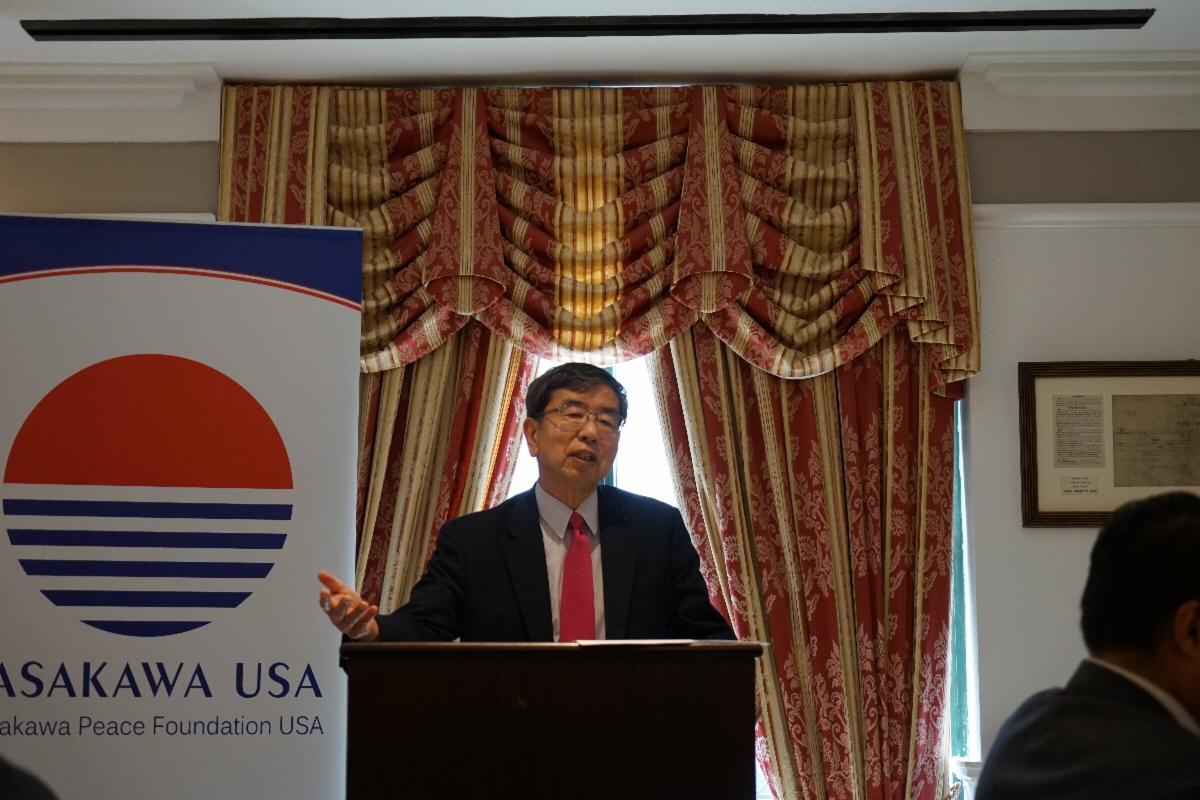
On May 23, Sasakawa USA hosted the luncheon event, “Global Economic Challenges: Japan’s Perspective on China, Emerging Asia and Beyond”, at the Army & Navy Club with Mr. Takehiko Nakao, Chairman of the Institute at Mizuho Research & Technologies, Ltd and former President of the Asian Development Bank. Mr. Nakao spoke on a vast array of geo-economic policy issues facing Japan and the greater Indo-Pacific region. Mr. Nakao's speech was followed by insightful remarks from the commentator for this event, Mr. Robert Dohner, Nonresident Senior Fellow in the Indo-Pacific Security Initiative at the Scowcroft Center for Strategy and Security at the Atlantic Council, and former Deputy Assistant Secretary for the US Department of the Treasury. The proceeding lively Q&A was moderated Dr. Satohiro Akimoto, Chairman and President of Sasakawa USA.
Attendees included experts from think tanks, the U.S. government, the private sector, and various representatives from ASEAN member embassies. Represented embasssies included Japan, Thailand, Brunei Darussalam, and Malaysia.
Photo: Mr. Takehiko Nakao giving his remarks.
| |
Presentations and Networking: Global Economy Looking Forward: Discussion with Mr. Takehiko Nakao | |
|
On May 24, Sasakawa USA hosted the breakfast discussion “Global Economy Looking Forward: Discussion with Mr. Takehiko Nakao” with attendees from the private sector, think tanks, the World Bank, and representatives from the embassies of Japan, Singapore, and Brunei Darussalam. Mr. Nakao is the Chairman of the Institute at Mizuho Research & Technologies, Ltd and was the former President of the Asian Development Bank. Dr. Satohiro Akimoto, Chairman and President of Sasakawa USA, moderated over a very productive discussion between Mr. Nakao and the participants on issues concerning changing geo-economic policies, the G7, and ASEAN.
Photo: Mr. Takehiko Nakao (center) and discussion participants
| |
Engaging with Members of Sasakawa USA's Advisory Committee on Projects | |
|
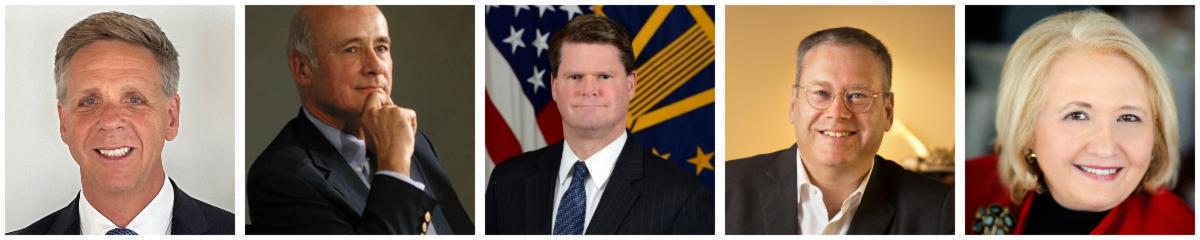
May brought about various engagements with Sasakawa USA’s Advisory Committee on Projects members, who support our work through sharing their expertise and guidance. In early May, Admiral Philip S. Davidson, 25th Commander of United States Indo-Pacific Command; Secretary Randall Schriver, Chairman of Project 2049 Institute; and Ambassador Kurt Tong, Managing Partner at the Asia Group, met with Sasakawa USA’s U.S.-Japan Integrated Security Dialogue delegation of five Diet members from Japan to exchange views on U.S.-Japan security alliance issues. In another engagement, Committee members Dr. Joseph S. Nye, Jr., Harvard University Distinguished Service Professor, Emeritus; and Ambassador Kurt Tong met with Dr. Satohiro Akimoto, Chairman and President of Sasakawa USA and Ms. Shanti Shoji, Director of Programs at Sasakawa USA to exchange ideas on furthering Sasakawa USA programming and impact. Lastly, Committee member Ambassador Melanne Verveer, Director of Georgetown Institute of Women, Peace and Security, along with Director of Programs, Ms. Shanti Shoji, spoke with Hon. Yoko Kamikawa, Chair of the newly created Japanese parliamentary Women, Peace and Security (WPS) Caucus, about advancing Sasakawa USA’s activities on WPS within the U.S.-Japan alliance.
Photo (L-R): Admiral Philip S. Davidson, Dr. Joseph S. Nye Jr., Secretary Randall Schriver, Ambassador Kurt Tong, Ambassador Melanne Verveer
| |
Mr. James Schoff Speaks at the Korean Economic Institute of America's Event "US-ROK-Japan Trilateral Relations & Integrated Deterrence" | |
|
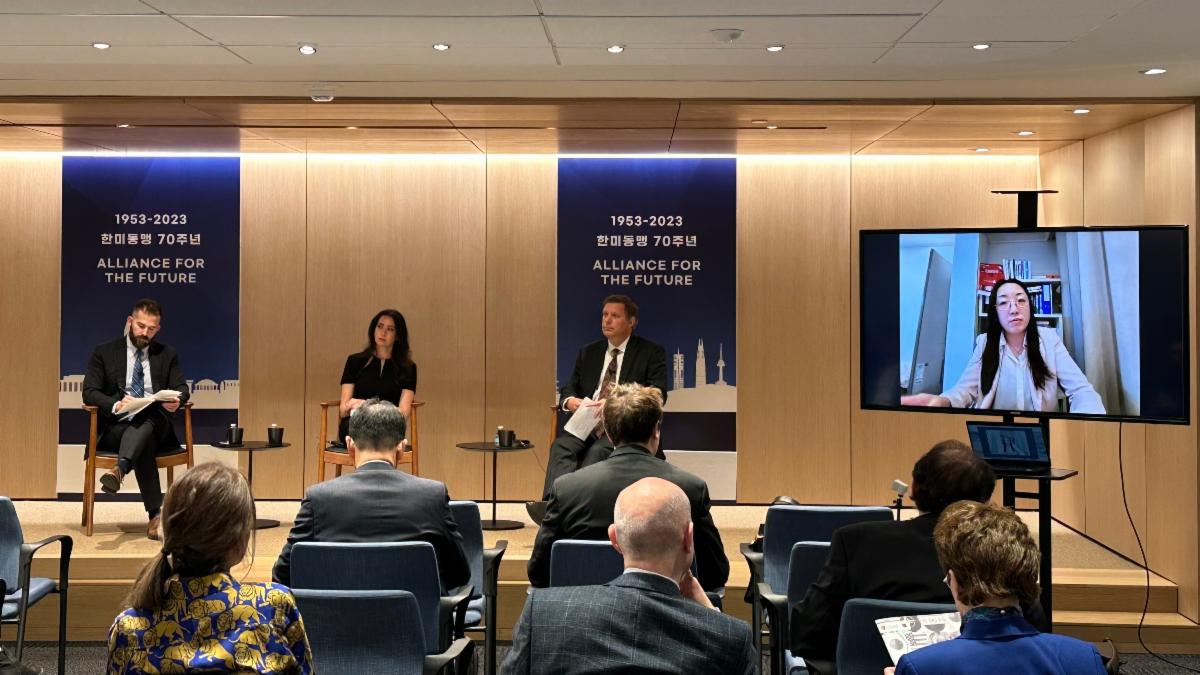
Sasakawa USA Senior Director Mr. James Schoff spoke at an event entitled “US-ROK-Japan Trilateral Relations & Integrated Deterrence” at the Korean Economic Institute of America (KEI) on May 17. Mr. Schoff was joined by Ms. Becca Wasser, Senior Fellow at CNAS; Dr. Bee Yun Jo, Associate Research Fellow at the Korea Institute for Defense Analyses, and the dialogue was moderated by Dr. Clint Work, Fellow and Director of Academic Affairs at KEI. Their discussion covered perspectives and implementation of integrated deterrence in a trilateral context to better understand the evolving concept. Mr. Schoff highlighted the need for greater interoperability and modernizing alliance C2, in addition to describing Tokyo’s perspective on integrated deterrence and citing some examples of trilateral integration. A video recording of the event is available here.
Photo (L-R): Dr. Clint Work, Ms. Becca Wasser, Mr. James Schoff, and Dr. Bee Yun Jo
| |
Hon. Akira Amari Speaks on "The G7 and a New Era of Japanese Leadership" at the Hudson Institute | |
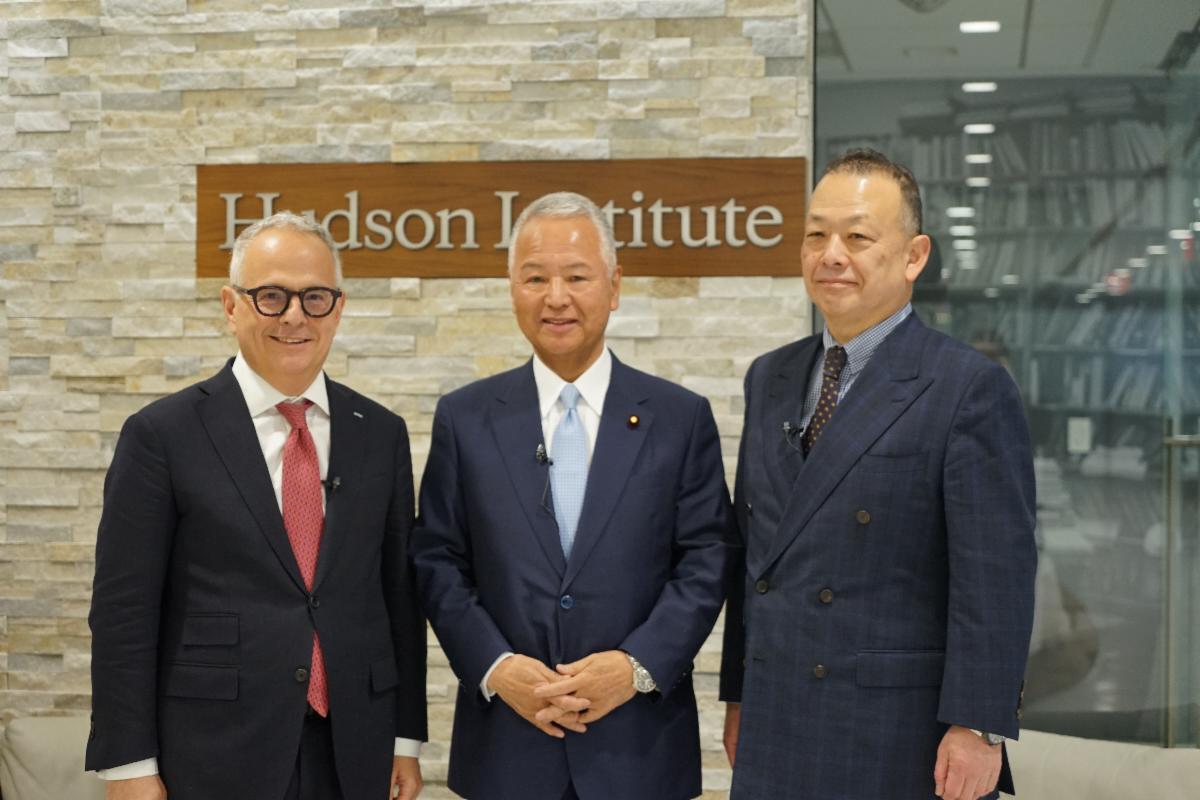 | | The Hon. Akira Amari, Member of Japan’s House of Representatives, Liberal Democratic Party, spoke at the Hudson Institute on May 2 on “The G7 Summit and a New Era of Japanese Leadership.” The event was co-hosted by Sasakawa USA and the Hudson Institute, and was moderated by Dr. Kenneth R. Weinstein, Distinguished Fellow at the Hudson Institute, and Dr. Satohiro Akimoto, Chairman and President of Sasakawa USA. Hon. Amari spoke about preserving the international order and universal values that have recently been under threat due to Russia’s invasion of Ukraine, in addition to actions by China and North Korea. In addition, Hon. Amari addressed Japan’s leadership role on the world stage, considering Japan’s role as the leader of the G7 this year, and called on other countries, especially Japan’s ally in the U.S., to lead with them in addressing international security challenges. As the main author of the Trans-Pacific Partnership and a leader in economic security, Hon. Amari again requested that the U.S. re-join the agreement, which he and his colleagues believe is the best solution to deter China and to maintain peace and stability in the Indo-Pacific region. Economic and military cooperation among allies will be especially pertinent as Japan re-enters the semiconductor manufacturing sector with EU and the U.S. as partners. To learn more about Hon. Amari’s visit to Washington, D.C., please visit Sasakawa USA’s webpage on the U.S.-Japan Integrated Security Dialogue.
Photo: Dr. Kenneth R. Weinstein, Hon. Akira Amari, and Dr. Satohiro Akimoto.
| |
Prof. Nobukatsu Kanehara Speaks at SAIS | |
|
On May 4, Sasakawa USA co-hosted an event, “G7 and Japan’s Leadership” with Edwin O. Reischauer Center for East Asian Studies, Johns Hopkins School of Advanced International Studies featuring Prof. Nobukatsu Kanehara, former Assistant Chief Cabinet Secretary to Prime Minister Shinzo Abe, 2012 – 2019, and current Professor of Law at Doshisha University. Prof. Kanehara’s remarks touched on challenges and opportunities the U.S. and Japan currently face: (1) gaining support of the Global South, (2) deterring China’s aggression on Taiwan, and (3) developing economic security. A lively Q&A discussion with SAIS researchers followed Prof. Kanehara’s remarks which was moderated by Dr. Kent E. Calder, Director of the Reischauer Center for East Asian Studies.
Photo: Prof. Nobukatsu Kanehara and Dr. Kent E. Calder discussing with SAIS students.
| |
Policy Briefing: "Changing Dynamics in Japan's Refugee Policy" with Dr. Saburo Takizawa | |
On April 13, Sasakawa USA hosted the virtual policy briefing and discussion, “Changing Dynamics in Japan‘s Refugee Policy,” featuring remarks by Dr. Saburo Takizawa, Professor Emeritus, Toyo Eiwa University; Former UNHCR Representative in Japan; and Vice President, CARE International Japan. Dr. Takizawa discussed Japan’s contributions to the international refugee system, developments in Japan’s refugee policy resulting from the war in Ukraine and the coup in Myanmar, new reforms currently being considered in the Diet, and changes in the international perception of Japan’s refugee policy. Dr. Takizawa’s remarks were followed by commentary from Dr. Peter Skerry, Professor of Political Science at Boston College and recipient of Sasakawa USA’s Journalism & Academia Fellowship. A written recap and video recording of this event are now available on Sasakawa USA's website. | |
US-Japan NEXT Alliance Initiative: NEXT Alliance Conference Summary Published | |
|
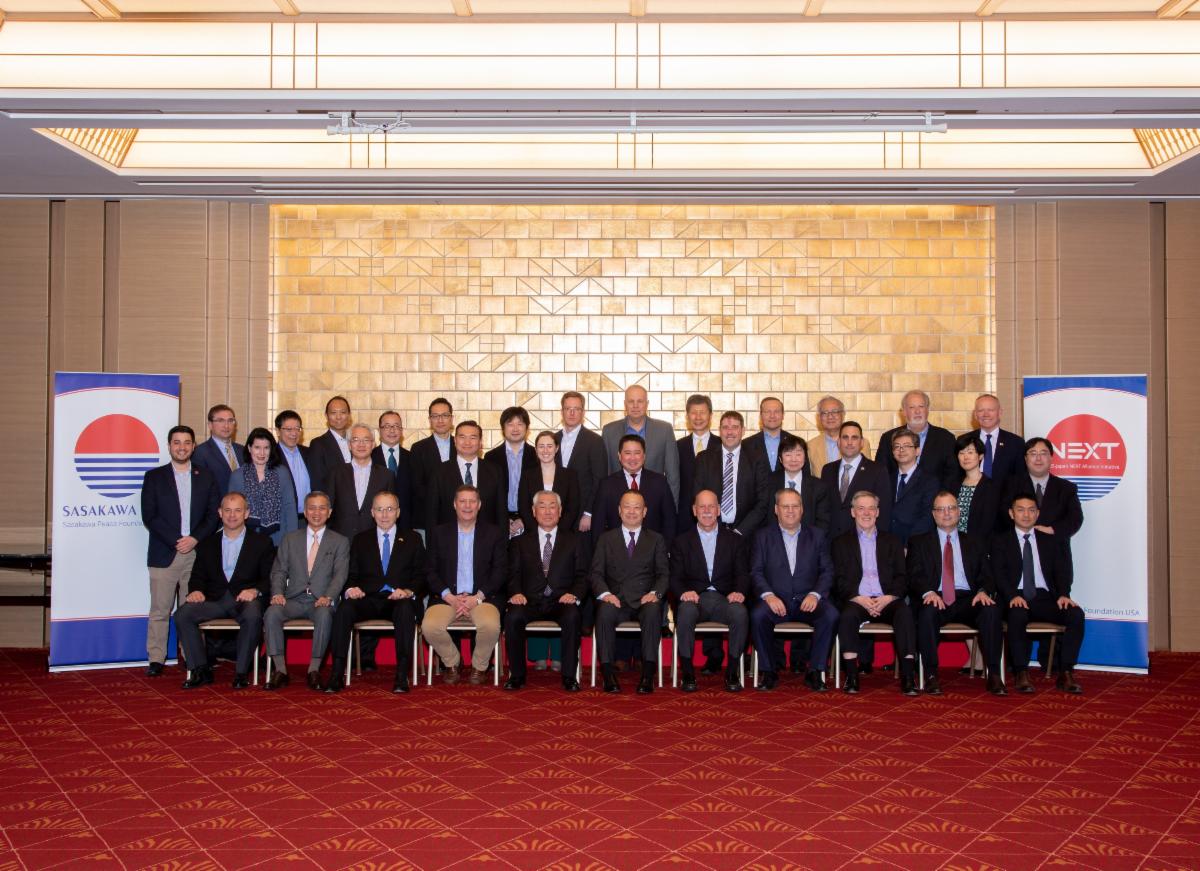
The NEXT Alliance Initiative published its summary of the NEXT Alliance Conference (NAC) Tokyo that took place from March 10-13, 2023. Senior Director Mr. James Schoff authored the summary entitled “Modernizing US-Japan Command & Control Relationships for New Challenges” to include major challenges and opportunities facing the alliance, key themes and considerations at the conference, and various approaches the allies could take to modernize their command and control (C2) arrangements. The NAC is one of two offsite “retreats” convened each year by Sasakawa USA focused on a priority issue area for the NEXT Alliance Initiative. To read the NEXT Alliance Conference Tokyo summary, click here. The summary is the seventh C2 related work published by the NEXT Alliance Initiative since the fall, to learn more, click here.
A Japanese language version will be available this summer.
Photo: NAC Tokyo group photo.
| |
US-Japan NEXT Alliance Initiative: NEXT Alliance Conference Papers Published | |
|
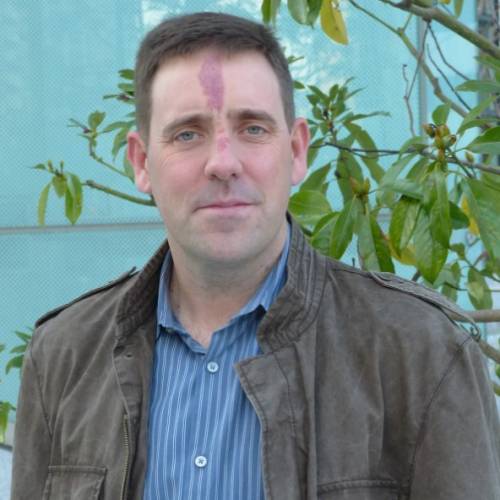
NEXT Alliance Conference participant and Executive Director at the Yokosuka Council on Asia-Pacific Studies (YCAPS) Mr. John Bradford, published a paper entitled “Political and Legal Considerations Regarding the Upgrade of US-Japan Alliance Command and Control Arrangements” on April 28. Sasakawa USA asked Mr. Bradford to prepare a paper on the topic for the first Japan-based NEXT Alliance Conference held at the beginning of March 2023. The paper highlights the political and legal considerations to establishing a more integrated command structure, concluding that a fully united command is almost impossible but there are opportunities to improve the unity of effort. The paper is published on the NEXT Defense Cooperation publications page, click here.
Photo: Mr. John Bradford
| |
USJETAA: JETs on Japan Publication Series | |
|
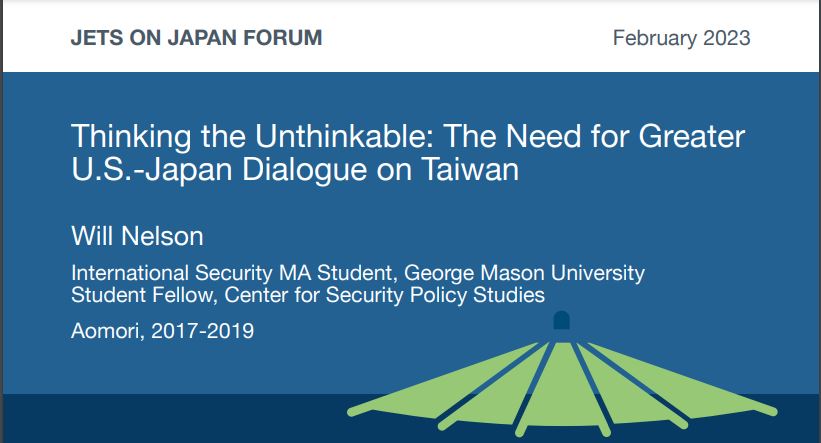
As part of our partnership in support of JET Program alumni, Sasakawa USA and USJETAA are pleased to share another addition to the JETs on Japan Forum publication series (originally published February 2023): “Thinking the Unthinkable: The Need for Greater U.S.-Japan Dialogue on Taiwan,” by Mr. Will Nelson, former International Security MA Student, George Mason University and Student Fellow, Center for Security Policy Studies. In his piece, Nelson posits that Japan would play a key role alongside the U.S. in a potential Taiwan conflict. He argues that while Diet members recognize the vital interests at stake in the event of a People’s Republic of China invasion of Taiwan, more should be done to inform the Japanese public on the importance of Taiwan to Japan’s national security and there should be increased U.S.-Japan collaboration to identify current gaps in alliance management with regard to a Taiwan contingency.
JETs on Japan Forum is a publication series that aims to elevate the awareness and visibility of JET alumni working across diverse sectors and provides a platform for experienced JET alumni to contribute to deeper understanding of U.S.-Japan relations from their area of expertise.
| |
Japan Political Pulse: Prime Minister Kishida's Snap Election Balancing Act (Dr. Akimoto) | |
| | 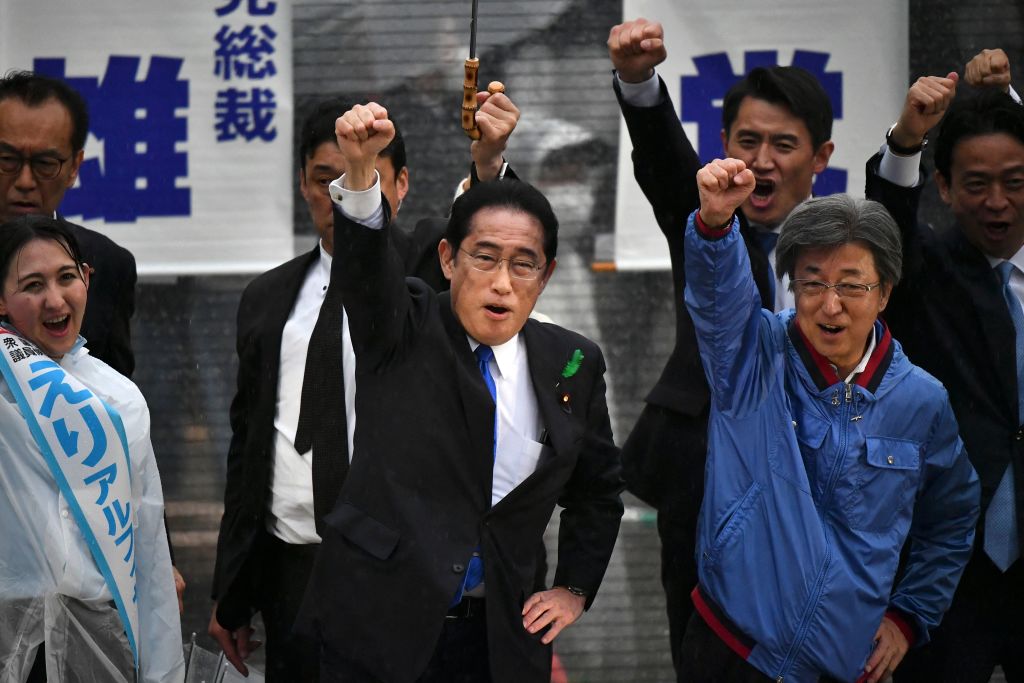 | In the latest Japan Political Pulse article, “Prime Minister Kishida’s Snap Election Balancing Act,” Sasakawa USA Chairman and President Dr. Satohiro Akimoto analyzes the factors that contribute to Prime Minister Fumio Kishida’s decision whether to call a general election or not, and when any election would take place. Prime Minister Kishida must balance considerations related to his high approval rating, electoral victories in April’s unified nationwide local elections, the successful G7 summit, and a political scandal involving his son. Dr. Akimoto also notes other factors like the ruling Liberal Democratic Party’s relations with its coalition partner Komeito, the lack of preparedness for an election by opposition parties, and factional politics within the LDP that are sure to influence Prime Minister Kishida’s decision. You can read more of Dr. Akimoto’s analysis here. Japan Political Pulse (JPP) is a resource for American media, policymakers, academics, and the public with regular and reliable insight and analysis of the trends and state of Japanese politics.
Photo: Japan's Prime Minister Fumio Kishida attended an election campaign in support of the Liberal Democratic Party candidate in Chiba prefecture on April 15, 2023. (Photo by Kazuhiro Nogi/AFP via Getty Images)
| |
Sasakawa USA Women's Advancement Network (SWAN) Launches New Logo | |
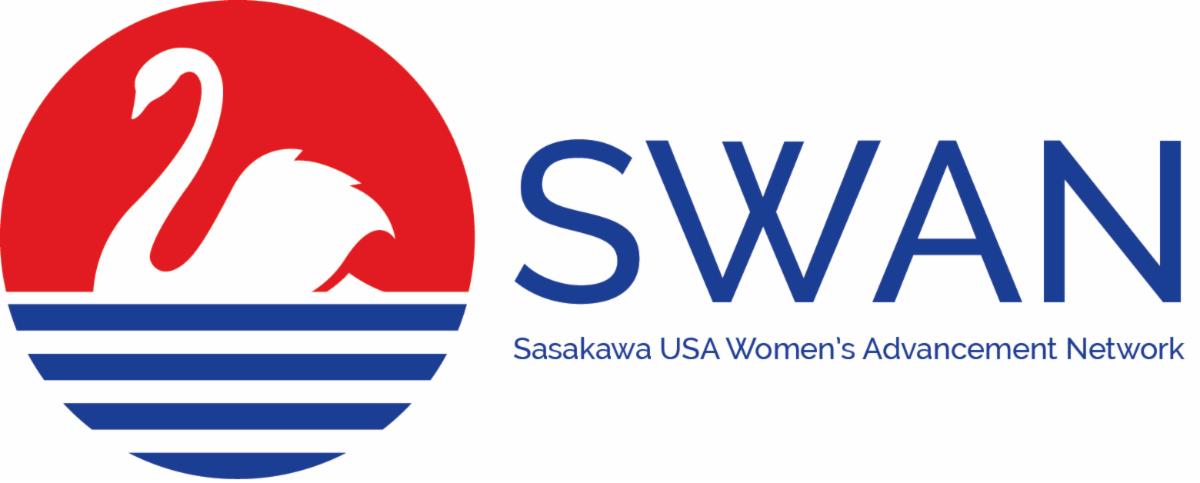 | Sasakawa USA is pleased to unveil the newly designed logo for our Sasakawa USA Women’s Advancement Network (SWAN), a program recently launched by Director of Programs Ms. Shanti Shoji. The logo captures the essence of the SWAN program, which aims to support, connect, and inform women leaders contributing to the U.S.-Japan alliance by hosting roundtable discussions, symposia, and exchanges. The swan, a timelessly elegant and powerfully built bird which famously exhibits a lifelong bond between mates, is featured centrally in the design to acknowledge the strength and dedication of women leaders who are working to maintain this critical alliance through their work as researchers, policymakers, writers, organizers, and advocates. Using classic shapes and bold colors evocative of the U.S. and Japanese flags, the design reinforces how our SWAN program activities are ultimately in the service of Sasakawa USA’s mission to deepen understanding and strengthen the relationship between the U.S. and Japan for the benefit of a free and open international community. | |
|
Sasakawa Peace Foundation USA
1819 L Street, NW
Suite 300
Washington DC 20036
202.296.6694
www.spfusa.org
| | | | |