Sasakawa USA Newsletter April Highlights | | |
Included in this issue of the newsletter:
- Message from Sasakawa USA's Chairman Satohiro Akimoto
April Activities
- U.S.-Japan Integrated Security Dialogue: 2025 Diet Delegation Visits Houston
- Congressional Study Group on Japan: Congressional Members Trip to Japan
- Japan US Military Program (JUMP): Sakura Matsuri Japanese Street Festival
- Washington Kenkyu Group: Discussion with Mr. James Schoff and Mr. Junya Kawai
- U.S.-Japan Research Exchange: Mr. Robert Tomkin Visits Japan
- Policy Briefing: Challenges to the Global Economy and Sustaining Development in Asia with Mr. Takehiko Nakao
External Engagements
- Mr. James Schoff Briefs Members of the Congressional Study Group on Japan
Publications
- Sasakawa USA Emerging Experts Delegation (SEED): 2024 SEED Publication on DRR and WPS (Ms. Angela Ling)
- US-Japan NEXT Alliance Initiative: Cybersecurity Summary
- US-Japan NEXT Alliance Initiative: Nuclear Deterrence Conference Summary
Upcoming Activities
- U.S.-Japan Research Exchange: Mr. Shawn Harding
| | Message from Sasakawa USA's Chairman Satohiro Akimoto | | Photo by Satohiro Akimoto | | |
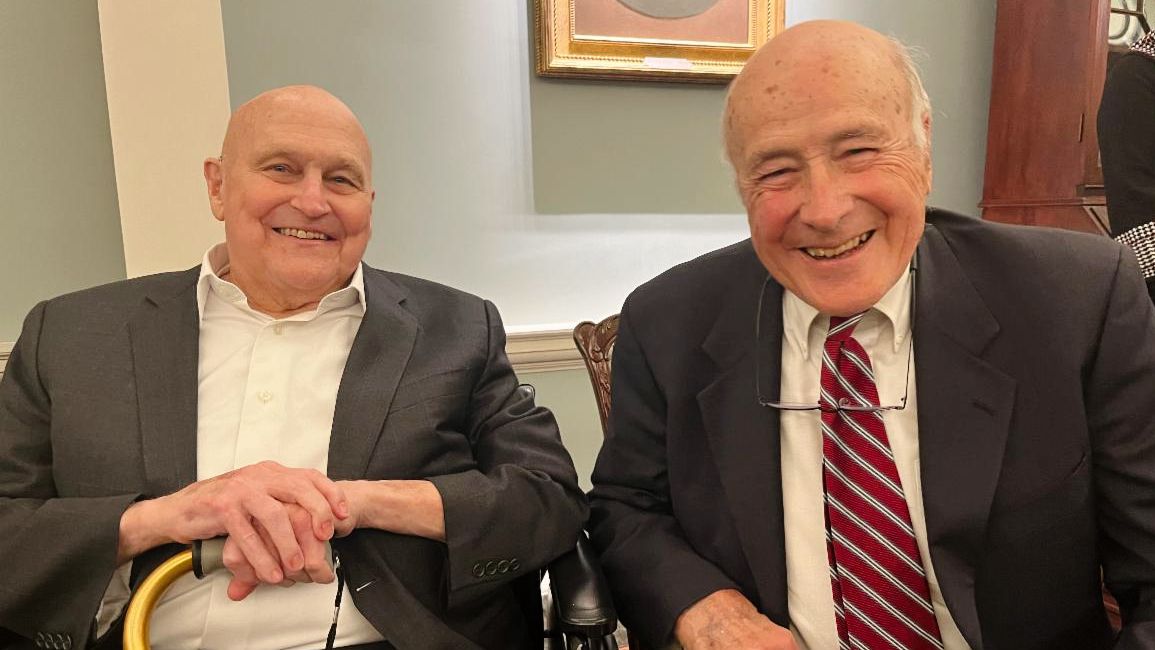
The U.S.-Japan community has lost two American giants in the field of U.S.-Japan relations, in succession – former Deputy Secretary of State, Richard Armitage, and former Dean of the John F. Kennedy School of Government at Harvard University, Joseph S. Nye, Jr. Both Secretary Armitage and Professor Nye have been visionary leaders of U.S.-Japan relations and warm mentors to many people in our bilateral relations across the Pacific. As numerous people eloquently described the tremendous achievements of the two rare individuals in their obituaries, please allow me to express my personal gratitude to them both.
I first met Secretary Armitage in the mid-90s, when I was working for Mr. Hironori Aihara, the dynamic long-time leader of Mitsubishi Corporation’s defense business, on a U.S.-Japan satellite broadcast project. Secretary Armitage and Mr. Aihara had a special relationship, to the extent that Secretary Armitage even had a photo of the two of them in his office at the State Department. I have been the beneficiary of the special friendship between the two of them, particularly after I came to Washington several years later. When I last visited Secretary Armitage at his office in April this year, he was kind enough to still display behind his desk the Japanese picture frame presented by Mitsubishi Corporation to him. He was a warm human being, whose guidance to me transcended professional areas and extended to my family.
I first met Professor Nye in the early 90s, when I was playing a modest liaison role at Harvard University between former Dean of the Faculty of Arts and Sciences, Henry Rosovsky, former Professor Ezra Vogel, and former President of Mitsubishi Corporation, Mr. Minoru “Ben” Makihara, for the establishment of the Asia Center at Harvard. Professor Nye greatly supported the idea of the Asia Center to bridge scholars and professionals between Asia and the University. Throughout my life, Professor Nye continuously supported and guided me at Harvard University, while I worked at Mitsubishi Corporation, and even at Sasakawa USA, where he became the first member of our Advisory Committee when I became president in January 2020.
While Secretary Armitage and Professor Nye achieved so much individually, the two are jointly remembered in the context of bilateral relations through their “Armitage Nye Reports”. Sasakawa USA has learned important lessons from those six published reports. Here is some of the learning that comes to mind.
First, U.S.-Japan relations are important. The U.S. and Japan are natural allies as the two nations share the belief in fundamental values, such as democracy, freedom, human rights, the rule of law, and free enterprises. Additionally, the U.S. and Japan not only share universal values, but also have significant military, economic, and technological capacities, and a shared will to exercise those capacities to defend and maintain these values.
Second, U.S.-Japan relations are not automatic. Both the U.S. and Japan have their own respective national interests and domestic political narratives amid rapidly changing geopolitical and geoeconomic threats. It is important for the leaders, practitioners, and scholars in politics, economy, and society in the U.S. and Japan to make conscious efforts to continuously work together to deepen the understanding of and strengthen the relationship between the two nations. Additionally, it is important to tackle difficult issues between the two allies to maximize deterrence and be ready to take action, if necessary.
Third, U.S.-Japan relations should be considered in an international context. While it is nearly customary for Japanese media to describe both Secretary Armitage and Professor Nye as “Japan experts” (chinichi-ka) or “Pro Japan” (shinnichi-ka), particularly in the context of the “Armitage Nye Reports”, both of them had a much grander strategic global perspective, of which U.S.-Japan relations are a part. As a matter of fact, Secretary Armitage and Professor Nye always hoped for and expected Japan to “take her place with the major nations of the world and play a positive role for security,” in Secretary Armitage’s words.
Fourth, it is critically important to nurture next-generation leaders and thinkers in both the U.S. and Japan, who appreciate the critical importance of the bilateral alliance not only for the two allies but also for international peace and stability. Secretary Armitage and Professor Nye have been incredibly busy but always made efforts and took pleasure in guiding and encouraging younger scholars, practitioners, and the general populace in the U.S. and Japan. I owe so much to Secretary Armitage and Professor Nye. I would hope to be able to repay their guidance and encouragement through our work at Sasakawa USA.
| | |
U.S.-Japan Integrated Security Dialogue:
2025 Diet Delegation Visits Houston
| | |
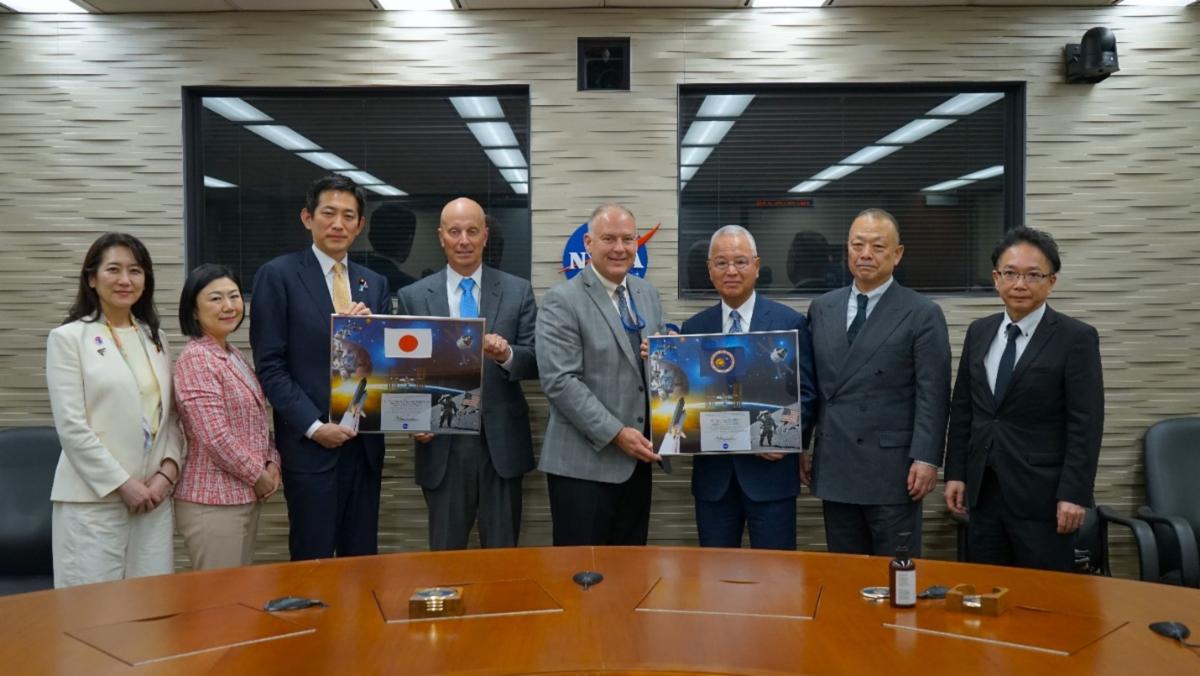
From April 27 to April 29, Sasakawa USA’s U.S.-Japan Integrated Security Dialogue program hosted a delegation of one former and five active Diet members to Houston, TX. Led by Hon. Takayuki Kobayashi, current member of the House of Representatives and the first minister of state for economic security (2022), and delegation advisor Hon. Akira Amari, former secretary-general of the Liberal Democratic Party, the group engaged with U.S. experts to deepen their understanding of key strategic issues facing the U.S.-Japan alliance and the Indo-Pacific. In Houston, the delegation focused on space and energy policy discussions within the framework of economic and defense cooperation between the two allies.
Photo (left to right): Hon. Rui Matsukawa; Hon. Karen Makishima, PhD; Hon. Takayuki Kobayashi; Mr. Stephen A. Koerner; Mr. Norman D. Knight; Hon. Akira Amari; Dr. Satohiro Akimoto; and Hon. Keitaro Ohno, PhD; at NASA’s Lyndon B. Johnson Space Center in Houston, TX
| | |
Congressional Study Group on Japan:
Congressional Members Trip to Japan
| | |
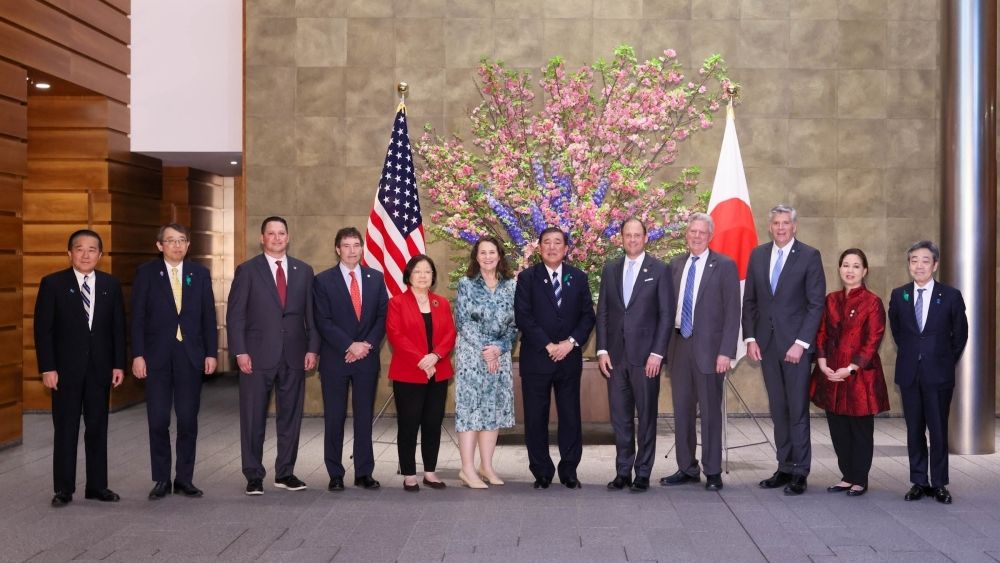
The Congressional Study Group on Japan (CSGJ), a non-partisan, non-advocacy legislative exchange program of FMC (Former Members of Congress) and sponsored by Sasakawa USA, visited Tokyo and Sapporo from April 12 to April 19, 2025. The bipartisan, bicameral delegation, was led by CSGJ Co-Chairs Rep. Diana DeGette (D-CO) and Rep. Andy Barr (R-KY), with Senate Co-Chair Hon. Mazie Hirono (D-HI) accompanying the group.
During the visit, the delegation discussed issues critical to the U.S.-Japan alliance such as Japan’s political landscape, a Free and Open Indo-Pacific, and the outlook on the bilateral trade relationship with key government leaders. Prime Minister Shigeru Ishiba welcomed the Members for an in-depth exchange of views. The delegation also met with Minister of Finance Katsunobu Kato; Minister of Economy, Trade and Industry Yoji Muto; and Chief of Staff, Joint Staff of the Japan Self Defense Forces GEN Yoshihide Yoshida, among other policy makers. Following their engagements in Tokyo, the Members traveled to Sapporo to explore Hokkaido’s emerging semiconductor industry and the prefecture’s contributions to the U.S.-Japan relationship. This trip provided an opportunity for the delegation to deepen their understanding of the political, economic, historical, and cultural context in Japan.
Photo: On April 16, 2025, Prime Minister Shigeru Ishiba welcomed the U.S. Congressional delegation on their visit to Japan. (Courtesy of the Cabinet Public Affairs Office, Ministry of Foreign Affairs of Japan)
| | |
Japan US Military Program (JUMP):
Sakura Matsuri Japanese Street Festival
| | |
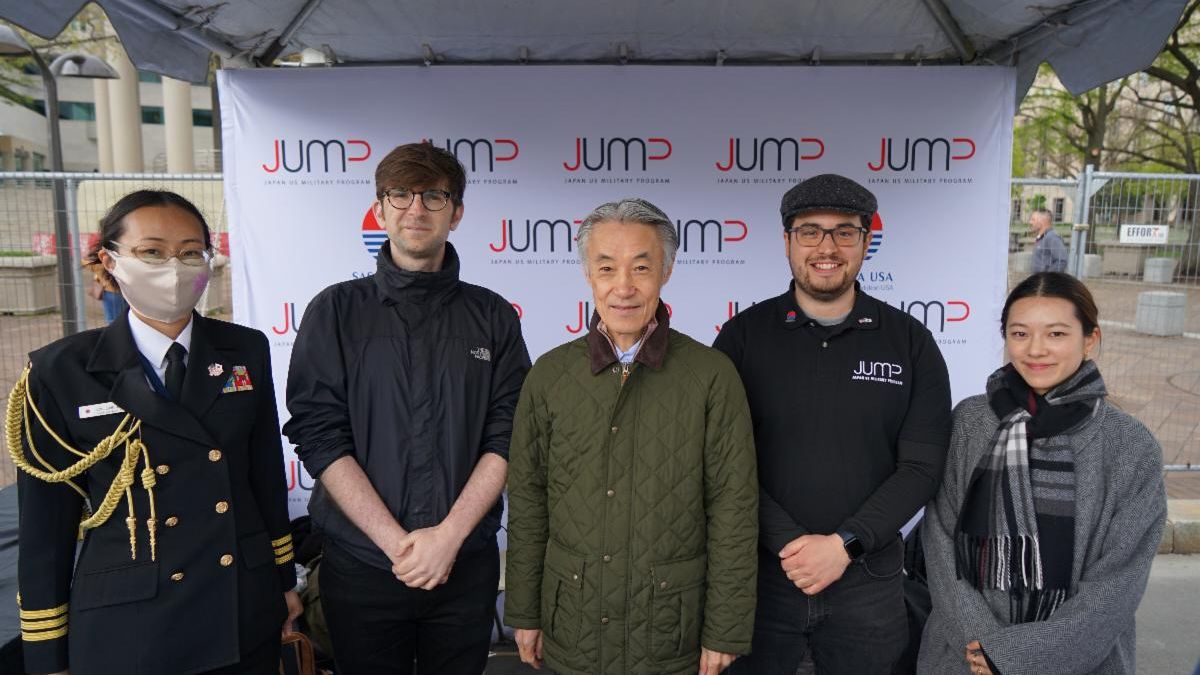
On April 12 to April 13, Sasakawa USA participated in the Japan-America Society of Washington, DC's Sakura Matsuri Japanese Street Festival. At its booth, Sasakawa USA presented its programs related to the U.S.-Japan alliance with a special focus on the Japan US Military Program (JUMP) in order to highlight the importance of the alliance with festival attendees and connect with U.S. military personnel and veterans who have served in Japan. In addition, Sasakawa USA was joined by Japan Self-Defense Forces officers from the Embassy of Japan to discuss the bilateral relationship and give attendees the chance to meet with Japanese officers. Approximately 200 visitors, including U.S. military personnel, veterans, military families, and members of the public visited the booth to learn more about the U.S.-Japan alliance, JUMP, and Sasakawa USA’s activities throughout the United States. Amb. Shigeo Yamada of Japan also visited Sasakawa USA’s booth to greet participants.
JUMP is made possible by financial support from the Embassy of Japan.
Photo (left to right): CDR Machiko Shigemi (JMSDF), Mr. John Seymour, Amb. Shigeo Yamada, Mr. Erim Gulum, and Ms. Kaede Ishidate
| | |
Washington Kenkyu Group: Discussion with
Mr. James Schoff and Mr. Junya Kawai
| | |
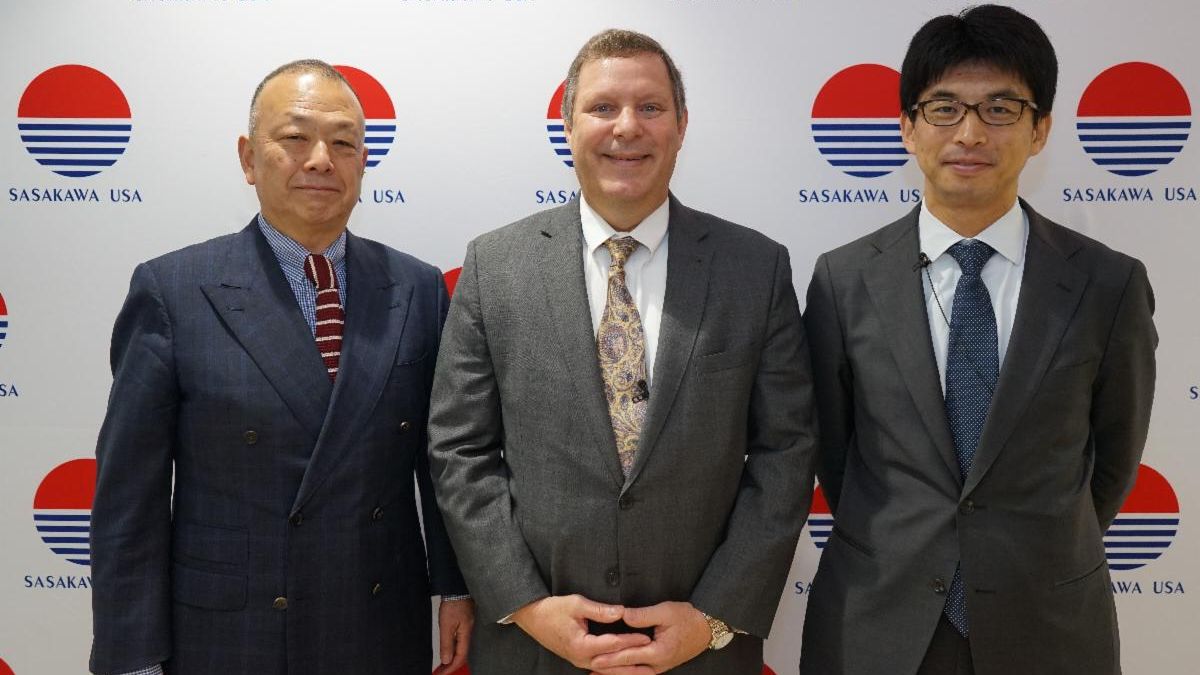
On April 22, Sasakawa USA’s Senior Director James Schoff joined Mr. Junya Kawai, counselor at the Embassy of Japan, for a Washington Kenkyu Group discussion on recent U.S.-Japan command and control (C2) modernization developments. Mr. Schoff outlined the rationale behind the allies’ pursuit of C2 upgrades and what to expect, such as U.S. efforts to form a Joint Force Headquarters in Japan. Mr. Kawai’s comments provided a Japanese government perspective on its own moves to establish a Japan Joint Operations Command (JJOC) for the Self-Defense Forces and how the allies can maximize effective coordination and collaboration between these two initiatives.
The Washington Kenkyu Group provides opportunities for Japanese public and private sector professionals to deepen their understanding of U.S. policy and U.S.-Japan alliance dynamics so that they can more effectively contribute to their respective fields while in Washington, DC.
Photo (left to right): Dr. Satohiro Akimoto, Mr. James Schoff, and Mr. Junya Kawai
| | |
U.S.-Japan Research Exchange:
Mr. Robert Tomkin Visits Japan
| | |
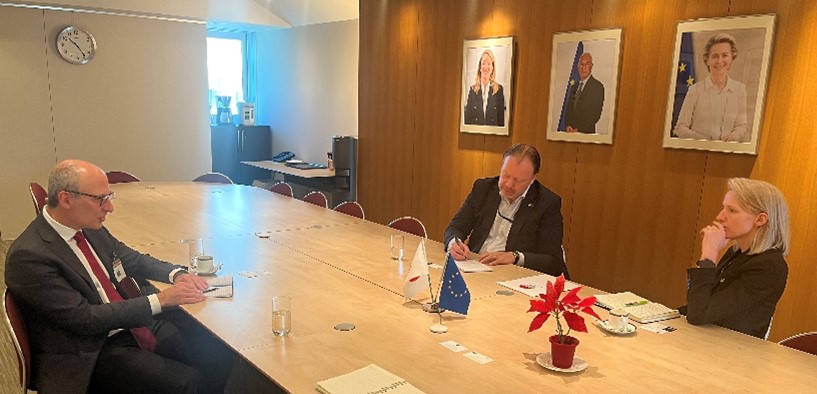
Mr. Robert Tomkin, writer and editor with Congressional Quarterly, traveled to Tokyo, Japan, from April 12 to April 21 as part of a week-long U.S.-Japan Research Exchange.
During his visit, Mr. Tomkin met with EU Delegation members, Japanese government officials, Japanese media, and academic experts to discuss the strategic relationship between Japan, Europe, and the United States. His research focused on growing security ties and technological co-development between Japan and Europe, as well as Europe’s expanding efforts in the Indo-Pacific amidst rising tensions with China and shifting U.S. priorities.
Drawing on newly gained insights from this trip, Mr. Tomkin will write a paper on his findings, which will be presented at an upcoming Sasakawa USA Policy Briefing event. Once completed, the paper will be published on Sasakawa USA's website following the event.
Photo: Mr. Robert Tomkin meeting with Min. Thomas Gnocchi, deputy head of the EU Delegation to Japan; and Ms. Aire Kork, head of the Political, Press and Information Section, EU Delegation to Japan.
| Policy Briefing: Challenges to the Global Economy and Sustaining Development in Asia with Mr. Takehiko Nakao | |
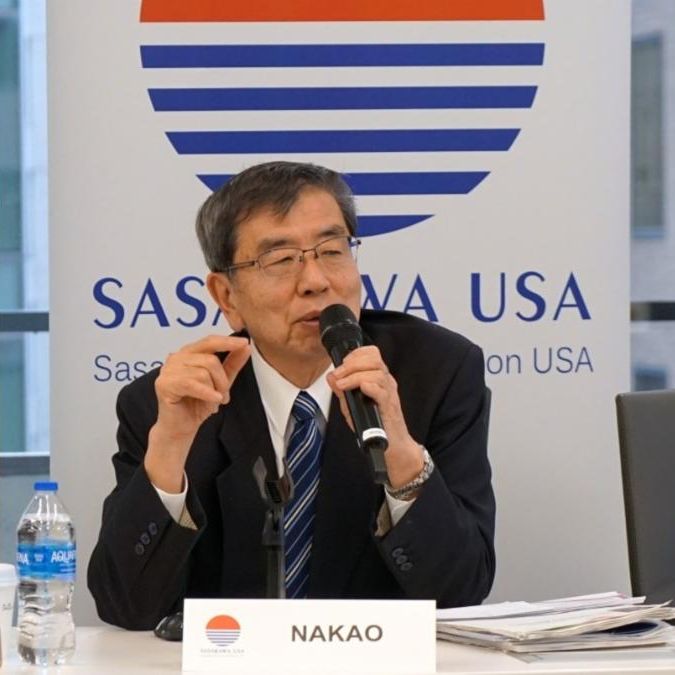
On April 7, Sasakawa USA hosted a Policy Briefing event featuring Mr. Takehiko Nakao, chairman of the Center for International Economy and Strategy and the 9th president of the Asian Development Bank (2013-2020).
Drawing from over 40 years of experience in international finance and policy, Mr. Nakao provided insights into key economic and geopolitical challenges shaping the global landscape, including the impacts of international conflicts, shifting trade policies, and demographic trends. Mr. Nakao also examined Asia’s economic transformation over the past five decades and the region’s ongoing challenges.
Photo: Mr. Takehiko Nakao
| | |
Mr. James Schoff Briefs Members of the
Congressional Study Group on Japan
| |
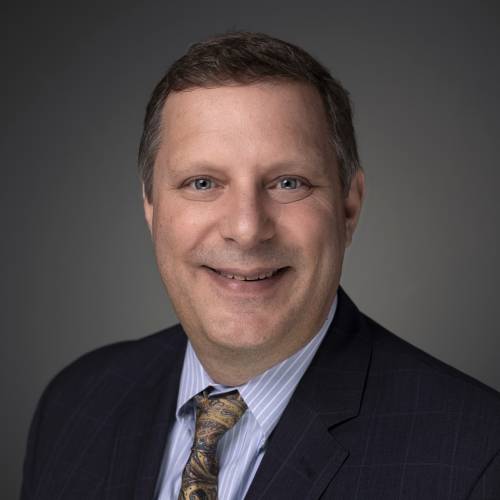
 | | US-Japan NEXT Alliance Initiative Senior Director James Schoff, together with a State Department official, provided a pre-trip briefing on April 8 to several members of Congress participating in the Congressional Study Group on Japan. The briefing updated the delegation on current alliance dynamics related to pressing trade and security cooperation issues. The bipartisan delegation included a group of House members and one U.S. Senator, all who completed their week-long study tour in Japan in late April. The study tour, sponsored by Sasakawa USA and organized by FMC (Former Members of Congress), offered opportunities to engage with Japanese government leaders such as Prime Minister Shigeru Ishiba; Minister of Finance Katsunobu Kato; Minister of Economy, Trade and Industry Yoji Muto; and Chief of Staff, Joint Staff of the Japan Self Defense Forces GEN Yoshihide Yoshida in Tokyo. The Congressional Members also met with semiconductor industry experts in Sapporo and U.S. defense officials in Yokosuka.
Photo: Mr. James Schoff
| | Sasakawa USA Emerging Experts Delegation (SEED): 2024 SEED Publication on DRR and WPS (Ms. Angela Ling) | | |
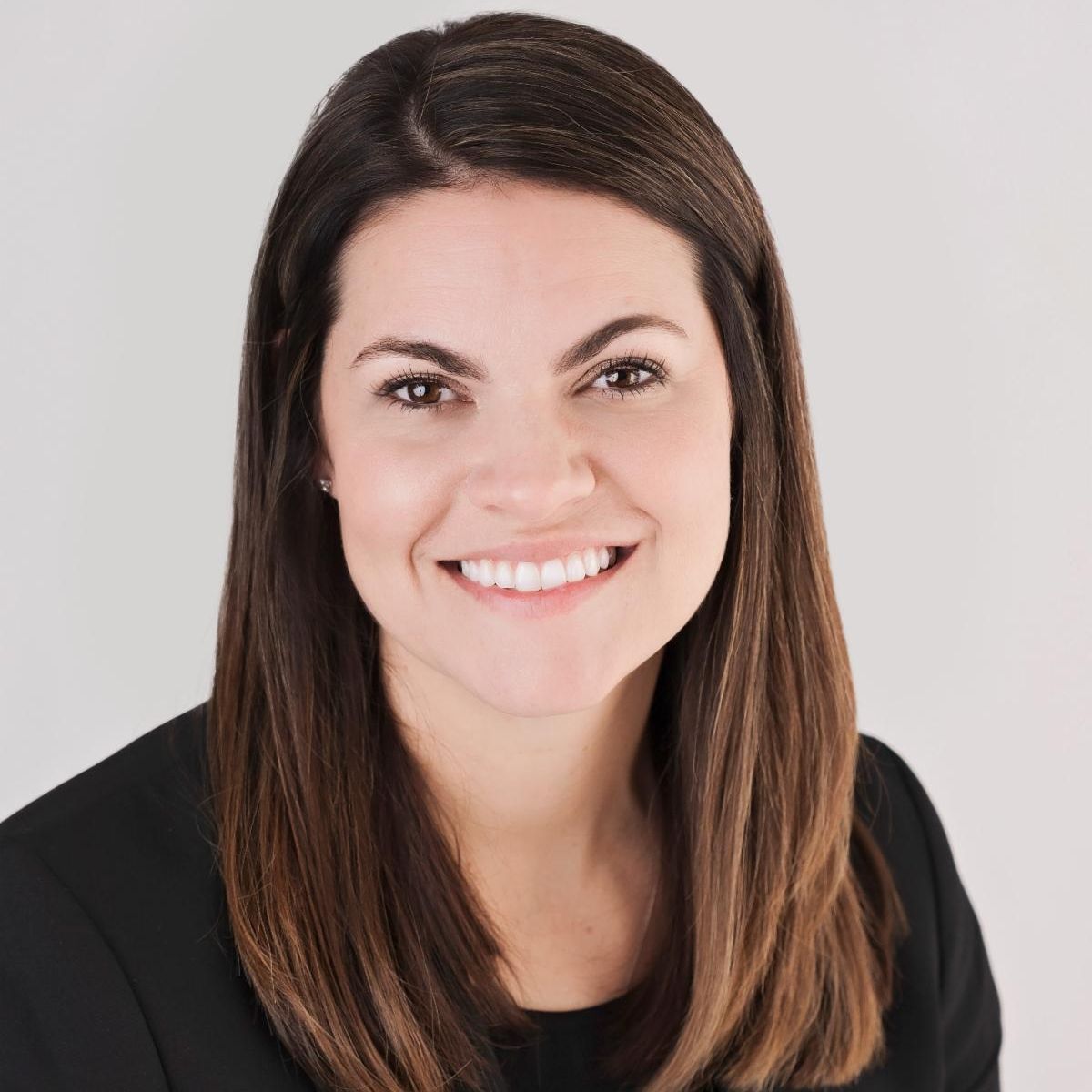
Ms. Angela Ling, regional director at the University of Nebraska Medical Center’s Global Center for Health Security, has published a paper on “Closing the Gaps in Disaster Risk Reduction and Women, Peace and Security in Japan.” This publication is part of her participation in the 2024 Sasakawa USA Emerging Experts Delegation (SEED), which focused on the integration of Women, Peace and Security (WPS) within disaster risk reduction (DRR). Drawing on insights from the delegation’s one-week research trip to Japan in July 2024, Ms. Ling offers lessons learned and discusses policy recommendations for both Japan and the U.S. to further expand their work at the intersections between DRR and WPS.
Photo: Ms. Angela Ling
| | |
US-Japan NEXT Alliance Initiative:
Cybersecurity Summary
| | |
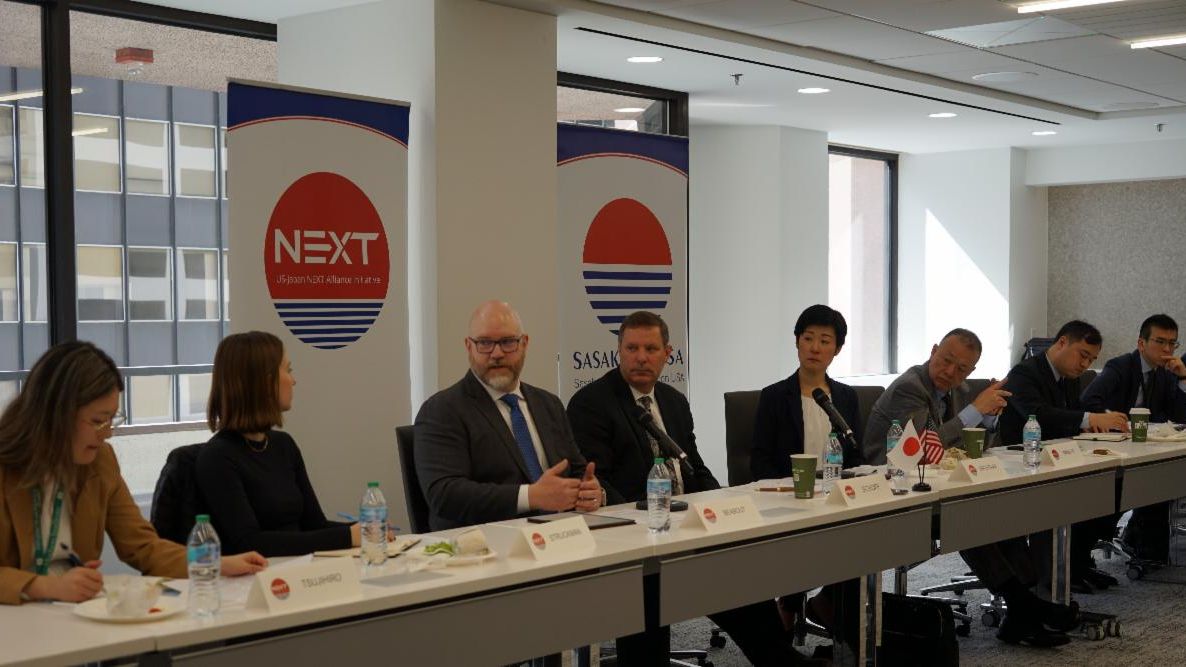
The US-Japan NEXT Alliance Initiative published a summary of its seventh bilateral cybersecurity dialogue, held on March 10 under the theme “Mapping the Future of U.S.-Japan Cybersecurity Cooperation: Adapting Collaboration Under New Administrations.” The event brought together approximately 19 American and Japanese specialists from government, think tanks, and the private sector. The summary recaps opening remarks by Ms. Mihoko Matsubara, chief cybersecurity strategist of NTT Corporation and Sasakawa USA non-resident scholar, and Mr. Dave Beabout, CISO at NTT Security Holdings. The participant discussion, moderated by Sasakawa USA Senior Director James Schoff, covered key points in advancing cybersecurity collaboration in an evolving security environment.
Photo: NEXT Alliance Initiative guests discuss the future of U.S.-Japan cybersecurity cooperation at Sasakawa USA in March 2025.
| | |
US-Japan NEXT Alliance Initiative:
Nuclear Deterrence Conference Summary
| |
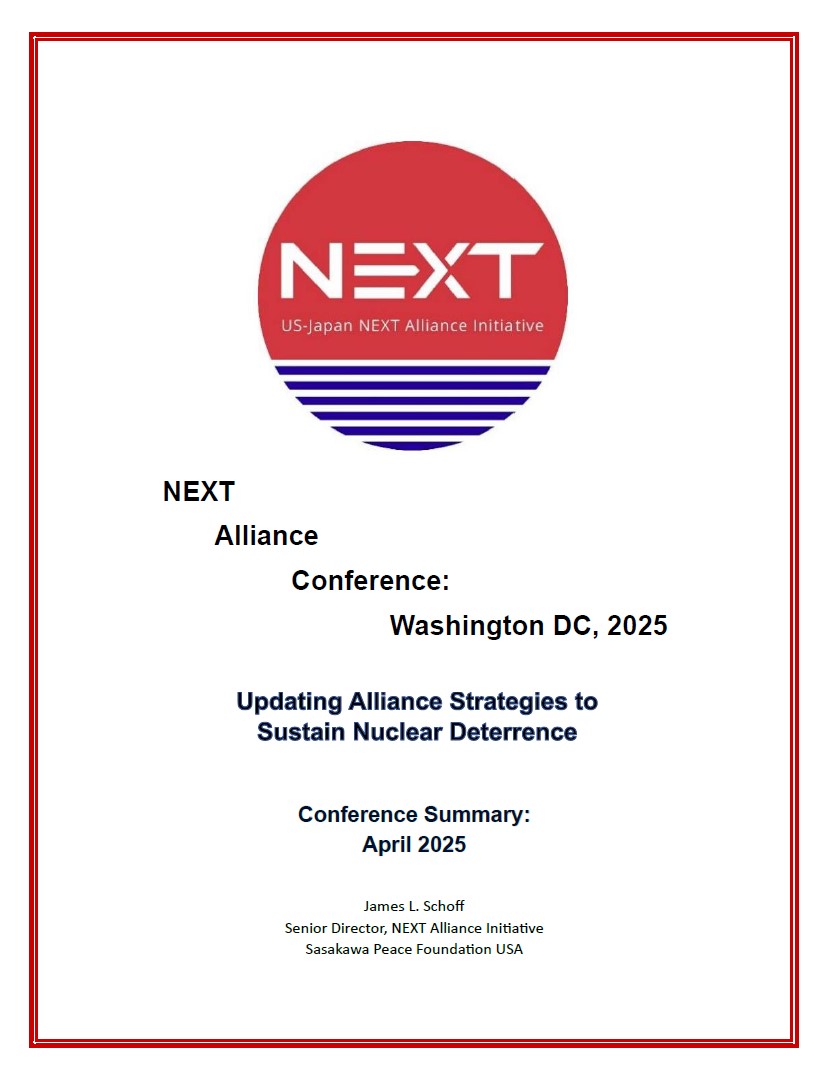
| | | The US-Japan NEXT Alliance Initiative published its summary of the most recent NEXT Alliance Conference (NAC) that took place in Washington from February 19 to February 21. Sasakawa USA Senior Director James Schoff authored the summary entitled “Updating Alliance Strategies to Sustain Nuclear Deterrence” that covered briefings by former government officials, speaker presentations, key discussion points, and a public event. It was the first trilateral NAC featuring experts and officials from the U.S., Japan, and the Republic of Korea (ROK). Participants addressed key drivers of change regarding nuclear threats and nuclear deterrence that the U.S., Japan, and the ROK need in order to respond both bilaterally and trilaterally to new challenges. The goal of the track 1.5 conference and not-for-attribution summary is to provide background information and ideas that can be useful to the ongoing official bilateral and trilateral discussions on these policy issues. Convened annually by Sasakawa USA, the NAC addresses a priority issue area for the NEXT Alliance Initiative and fosters expert dialogue on the future of the U.S.-Japan alliance.
| | U.S.-Japan Research Exchange: Mr. Shawn Harding | |
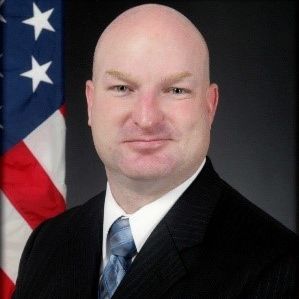
On May 17, Mr. Shawn Harding, program manager at Joint Program Office (JPO) and doctoral in international affairs (DIA) candidate with the School of Advanced International Studies (SAIS) at John Hopkins University, will embark on a week-long U.S.-Japan Research Exchange.
Mr. Harding will travel to Japan to explore the diversification of Japan’s security cooperation in defense procurement with strategic partners beyond the bilateral U.S.-Japan relationship and examine its effects on the alliance. Following these meetings in Tokyo, Mr. Harding will attend the biannual Defence and Security Equipment International (DSEI) Japan 2025 conference and exhibition in Chiba, which is Japan’s only large-scale, fully integrated defense event.
Upon his return, Mr. Harding will produce a paper on his findings and later present his research at a Sasakawa USA Policy Briefing event. The paper will be published on Sasakawa USA's website.
Photo: Mr. Shawn Harding
| | |
Sasakawa Peace Foundation USA
1819 L Street, NW, Suite 300
Washington, DC 20036
+1.202.296.6694
| | | | |