Sasakawa USA Newsletter October Highlights | | |
Included in this issue of the newsletter:
- Message from Sasakawa USA's Chairman Satohiro Akimoto
October Activities
-
JET Alumni Engagement: From People to Policy: How Grassroots Ties Strengthen the U.S.-Japan Alliance
- U.S.-Japan Research Exchange: Mr. Masafumi Iida
- Rising Indo-Pacific Security Experts (RISE): Discussion with Mr. Masafumi Iida
- Soft Power Series: Resilience Rooted in Culture: Field Insights from Japan
- Policy Briefing: Growing Uncertainty in Japan’s Politics with Mr. Koji Sonoda
- The Next Chapter of Women, Peace and Security: Practical Action Through Prevention and Partnerships
- Policy Briefing: The Road Not Taken: Franklin Roosevelt and the Decision to Drop the Atomic Bomb with Dr. David Woolner
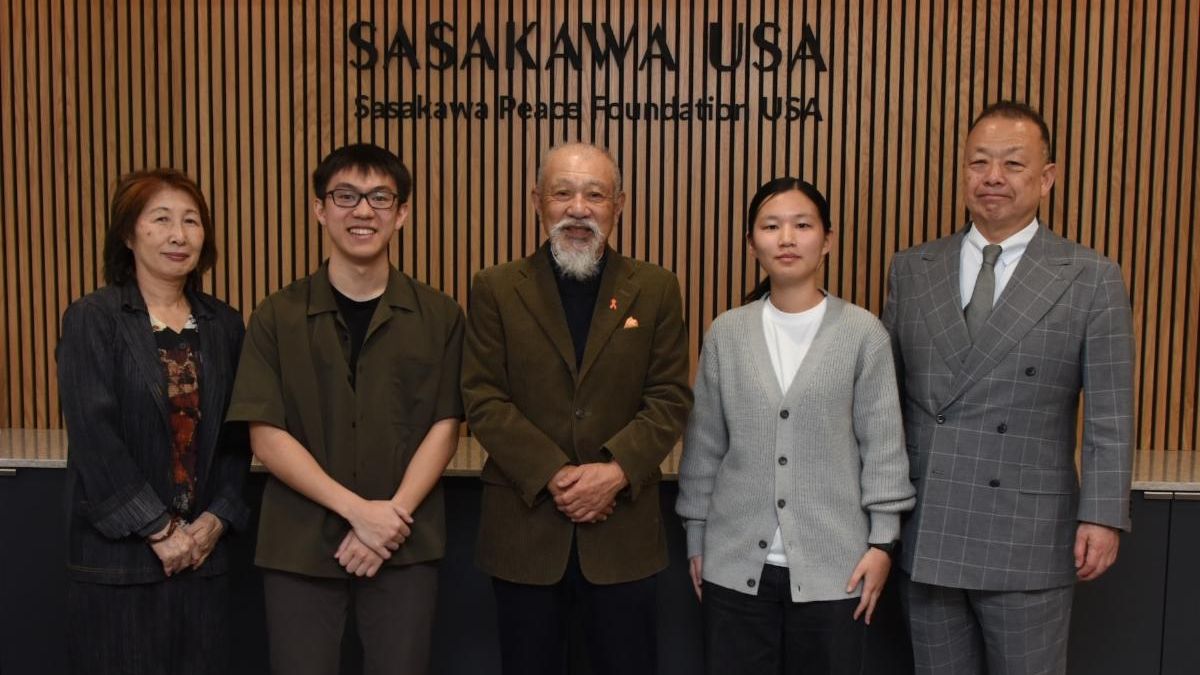
- Sasakawa Peace Foundation Scholarship Students Meet with Honorary Chairman Yohei Sasakawa
External Engagements
- Shanti Shoji Speaks on Japan's Implementation of Women, Peace and Security on Panel Hosted by Women of Color Advancing Peace, Security and Conflict Transformation
| | Message from Sasakawa USA's Chairman Satohiro Akimoto | |
Japan elected its 104th Prime Minister during the parliamentary session on October 21, 2025. Sanae Takaichi made history as Japan’s first woman prime minister in the 70th anniversary year of the Liberal Democratic Party (LDP). She also became the fifth woman national leader among the G7 countries, ahead of the United States and France.
Prime Minister Takaichi has made an impressive start, particularly in her diplomatic engagements. Just five days after taking office, she made her international debut by attending the ASEAN–Japan Summit in Kuala Lumpur, Malaysia, on October 26. In contrast to some of her predecessors, she was seen proactively approaching ASEAN leaders with a big smile, who in return warmly received her.
Two days after her successful diplomatic debut in Malaysia, Prime Minister Takaichi hosted President Donald Trump for a bilateral meeting in Tokyo, accompanied by Ambassador George Glass, Treasury Secretary Scott Bessent, and Secretary of State Marco Rubio. Their discussions were followed by a working lunch, and later, she joined President Trump aboard Marine One for a visit to the U.S. Naval Base in Yokosuka to jointly boost morale of the servicemen and women of the Japan Self Defense Forces and the United States Forces Japan aboard the aircraft carrier USS George Washington.
Takaichi concluded her hectic but fruitful first round of diplomacy by attending the APEC Economic Leaders’ Meeting in Gyeongju, South Korea, from October 30 to November 1. Furthermore, on the sidelines of the event, she also held meetings with Chinese President Xi Jinping and South Korean President Lee Jae-Myung, marking a productive first month on the international stage.
Prime Minister Takaichi has also made a strong start on the domestic front, particularly in terms of kickstarting the nation’s economy. Widely known as a proponent of fiscal expansion, she plans to introduce an economic stimulus package aimed at addressing inflation and spurring growth, with an ambitious goal of doubling Japan’s economy within the next decade. As part of this package, Prime Minister Takaichi proposes to abolish the additional gasoline tax and issue rice coupons to help citizens, who are facing economic difficulties, cope with the rising cost of living. While her two predecessors, Fumio Kishida and Shigeru Ishiba, also introduced measures to fight inflation, recent polls suggest stronger public approval of Takaichi’s approach.
Prime Minister Takaichi has been successful in generating an image of a political leader who prefers to communicate in a direct, honest, and open manner without always consulting or relying on prepared scripts like some of her predecessors. As a matter of fact, her handling of questions during budget committee sessions of the two chambers in her Kansai dialect and down-to-earth candor have generally been praised as genuine and relatable. She noted that most of her responses were her “own words” and she did not “look at paper in policy areas, which she knows well.” Many citizens are encountering a new side of her character both as a person and a politician, beyond her longstanding media portrayal as an “ultra-conservative” or “right-wing” figure.
Interestingly, even her pragmatic fashion choices have drawn attention. During an Upper House Budget committee session, Sanseito Secretary General Yutaka Ando criticized her attire as being too modest, and that she would be looked down upon by foreign leaders. However, this has not diminished her growing appeal. Her favorite domestically made leather tote bag, for example, quickly sold out nationwide, with the manufacturer apologizing that “the bag used by the 104th prime minister would not be available until next year due to the unusually high demand.”
Prime Minister Takaichi has been riding a very high approval rating since she took office. The latest Asahi Shimbun polls conducted nationwide on November 15 and 16 indicate that 69 percent of respondents approved of her cabinet. On diplomatic engagement, 67 percent of respondents approved her handling of her meeting with President Donald Trump, far exceeding the 21 percent who disapproved, and significantly better than former Prime Minister Ishiba’s 50 percent approval rating and 35 percent disapproval rating following his meeting with President Trump in February. On economic measures, 44 percent of respondents approved of her policies to tackle rising prices as opposed to 35 percent of respondents who disapproved. According to the Asahi Shimbun, her predecessors, Fumio Kishida and Shigeru Ishiba, who also introduced measures to combat inflation garnered only between 10 to 20 percent approval ratings on their efforts.
However, challenges lie ahead. First, her political base remains fragile following the LDP’s split with its long-time coalition partner, the Komeito Party, following her victory in the LDP presidential election. The LDP’s new alliance with Nihon Ishin no Kai (Japan Innovation Party, or JIP) generally aligns in terms of political philosophy, but lacks equivalent electoral strength as the Komeito Party has more vote gathering power compared to the JIP. There are also some sticky issues between the LDP and the JIP, such as the latter’s call to reduce the number of seats in the House of Representatives by 10 percent. The fact remains that Takaichi still leads a minority government in the two chambers, even with the JIP coalition.
Secondly, Prime Minister Takaichi needs to quickly learn the ropes of prime ministerial messaging, as her words now carry tremendous weight in her new role. Her response to persistent questions by former Foreign Minister Katsuya Okada of the Constitutional Democratic Party (CDPJ) in the Lower House Budget Committee session on November 7 regarding a potential Taiwan contingency has stirred diplomatic tension with China. Takaichi made sure to refrain from making comments on a possible Taiwan contingency when she was later asked by Lower House CDPJ member Hiroshi Ogushi in the Lower House Budget Committee session on November 10 whether she would withdraw her earlier remarks about a “survival-threatening situation for Japan in connection with a Taiwan contingency.” While her communication style is part of her strong appeal to the public, she will need to quickly master the art of communication as Japan’s chief representative on the world stage.
Thirdly, Prime Minister Takaichi must deliver on the economic front. As mentioned, she plans to release measures to fight inflation and promote growth later this month. She must pass a supplementary budget bill to fund her stimulus measures during the current extraordinary Diet session. Prime Minister Takaichi is likely to introduce a spending plan that exceeds last year’s 13.9 trillion yen (USD 89.8 billion). Finance Minister Satsuki Katayama, who advocates for “responsible, proactive fiscal policy,” has suggested expanding the plan to over 17.0 trillion yen (USD 109.8 billion) including tax reductions. There are even voices within the LDP to further expand the package, but the foreign exchange market has already begun to push the yen further. Delivering early and tangible success on this front will be key to sustaining public confidence amid challenging conditions.
Lastly, Takaichi needs to build a strong team around her to push forward her policy agenda. She is, in fact, trying to form a team in the image of that of former Prime Minister Abe, bringing together her allies, rivals, and capable bureaucrats from powerful ministries such as the Ministry of Economy, Trade and Industry (METI) and the Ministry of Finance. Abe successfully utilized such a team to implement his foreign and domestic policies and, in turn, to win numerous general elections by solidifying public support. These electoral victories ultimately formed the foundation of his administration’s strength. A high level of support among conservatives and younger voters suggests that Takaichi’s political base may overlap with that of Abe. Prime Minister Takaichi appears eager to follow Abe’s playbook in hopes of having a similarly successful run as Prime Minister.
Prime Minister Takaichi’s historic rise might reflect a moment of significant change in Japan’s political landscape. Her early months have been marked by vigor, sincerity, and a clear desire to engage. Yet leadership longevity will depend on her ability to navigate political complexities, maintain public trust, and achieve measurable progress on economic revival and national security stability. She will be tested in the coming weeks whether she is equipped to manage the wide-ranging set of difficult and complex challenges facing Japan.
| | |
JET Alumni Engagement: From People to Policy:
How Grassroots Ties Strengthen the U.S.-Japan Alliance
| | |
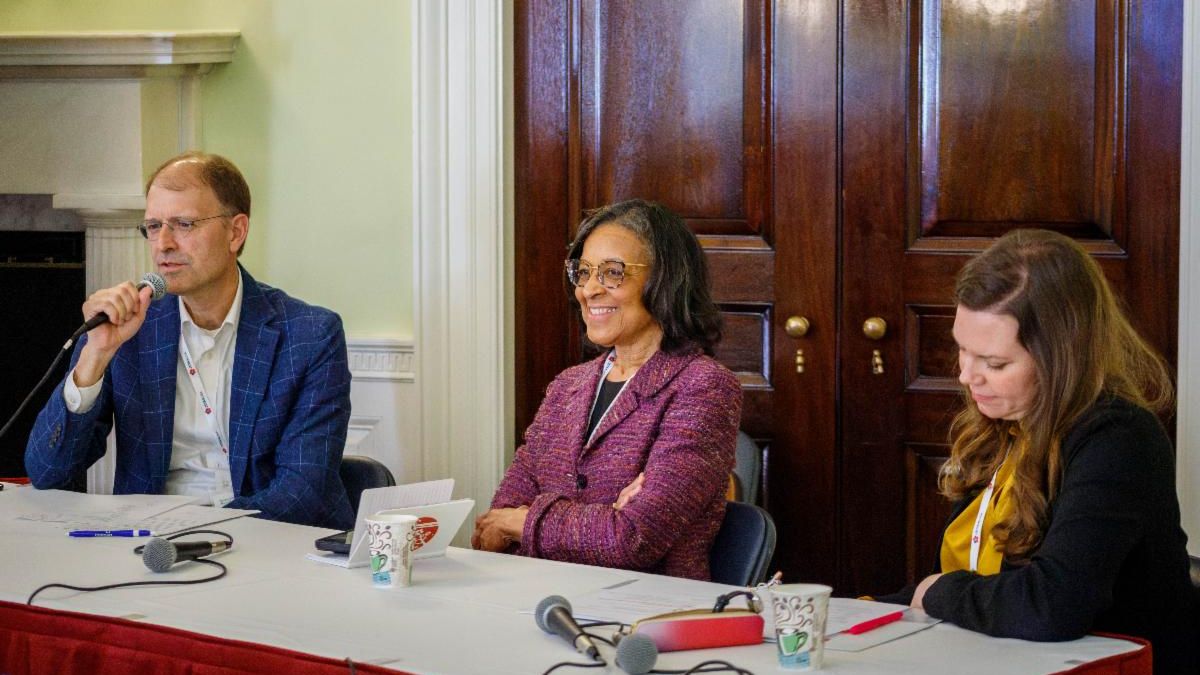
On October 3, Sasakawa USA supported the Keynote Fireside Chat at the 2025 Japan Exchange and Teaching Alumni Association (JETAA) National Conference (NatCon) in Washington, DC. The conference is an annual program designed for JETAA USA chapters to exchange ideas and challenges to better develop their activities and strengthen the JETAA USA network. This year, NatCon was hosted by JETAADC, which was supported by numerous partners, such as: Sasakawa USA; USJETAA; CLAIR; Embassy of Japan in Washington, DC; and the Japan Ministry of Foreign Affairs.
The Keynote Fireside Chat, "From People to Policy: How Grassroots Ties Strengthen the U.S.-Japan Alliance" was moderated by Sasakawa USA’s director of programs, Ms. Shanti Shoji with panelists Ms. Paige Cottingham-Streater, Executive Director of the Japan-US Friendship Commission, and Board Chair of USJETAA; and Mr. David Boling, Director of Japan and Asia Trade at Eurasia Group. All three are also alumni of the JET program. This discussion explored the current U.S.-Japan relationship in both national and international contexts and highlighted the importance of grassroots ties as the foundation of cross-border relationships.
Photo (left to right): Mr. Boling, Ms. Cottingham-Streater, Ms. Shoji (photo courtesy of Marley Taylor, Embassy of Japan)
| | U.S.-Japan Research Exchange: Mr. Masafumi Iida | | |
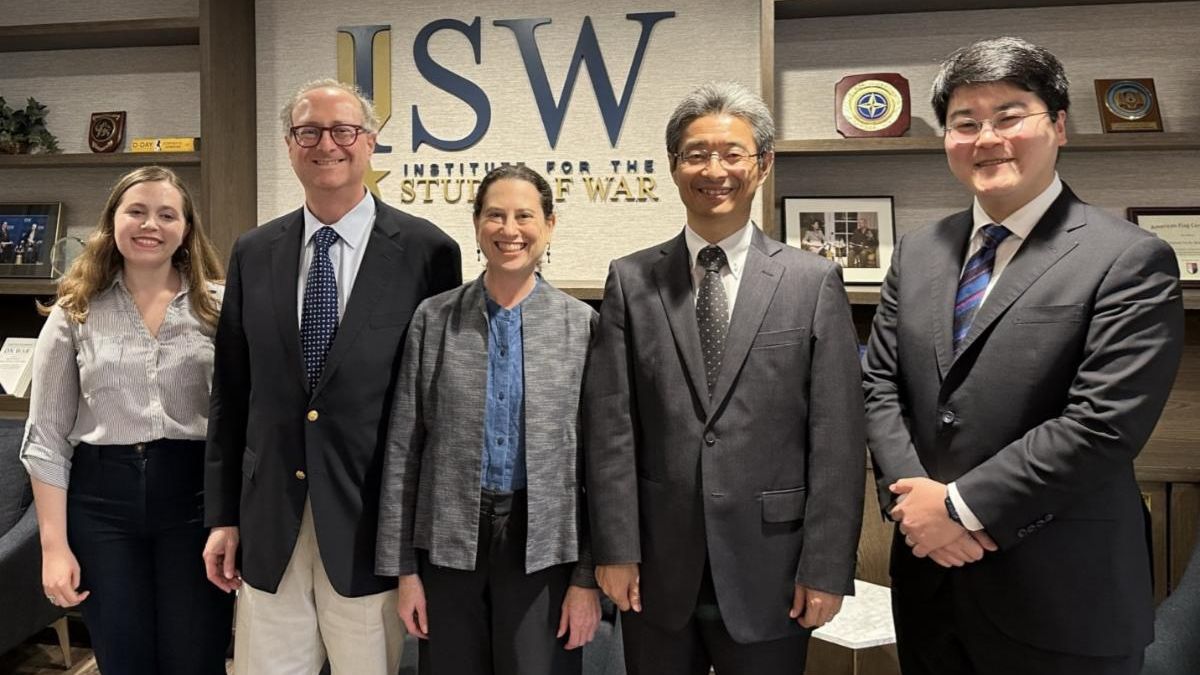
From October 6 to 10, Mr. Masafumi Iida, director of the Security Studies Department at the National Institute for Defense Studies, an in-house think tank of Japan’s Ministry of Defense, conducted a one-week research trip to Washington, DC through Sasakawa USA’s U.S.-Japan Research Exchange program. During his trip to Washington, Mr. Iida held over 20 interviews with policy experts and practitioners in think tanks, government, and the private sector to gauge how different groups in the policy community assess the current state and the future of the U.S.-China strategic competition. His research trip also focused on identifying areas of convergence and divergence between U.S. and Japanese strategies toward China and considers how Japan can refine its policy promoting the Free and Open Indo-Pacific. Mr. Iida’s findings will be published by Sasakawa USA, which will be available on our website in the coming months.
Photo: Mr. Iida at the Institute for the Study of War (ISW) with Dr. Kimberly Kagan and Dr. Frederick Kagan, former U.S.-Japan Research Exchange participants, as well as Ms. Alexis Turek of the American Enterprise Institute.
| | |
Rising Indo-Pacific Security Experts (RISE):
Discussion with Mr. Masafumi Iida
| | |
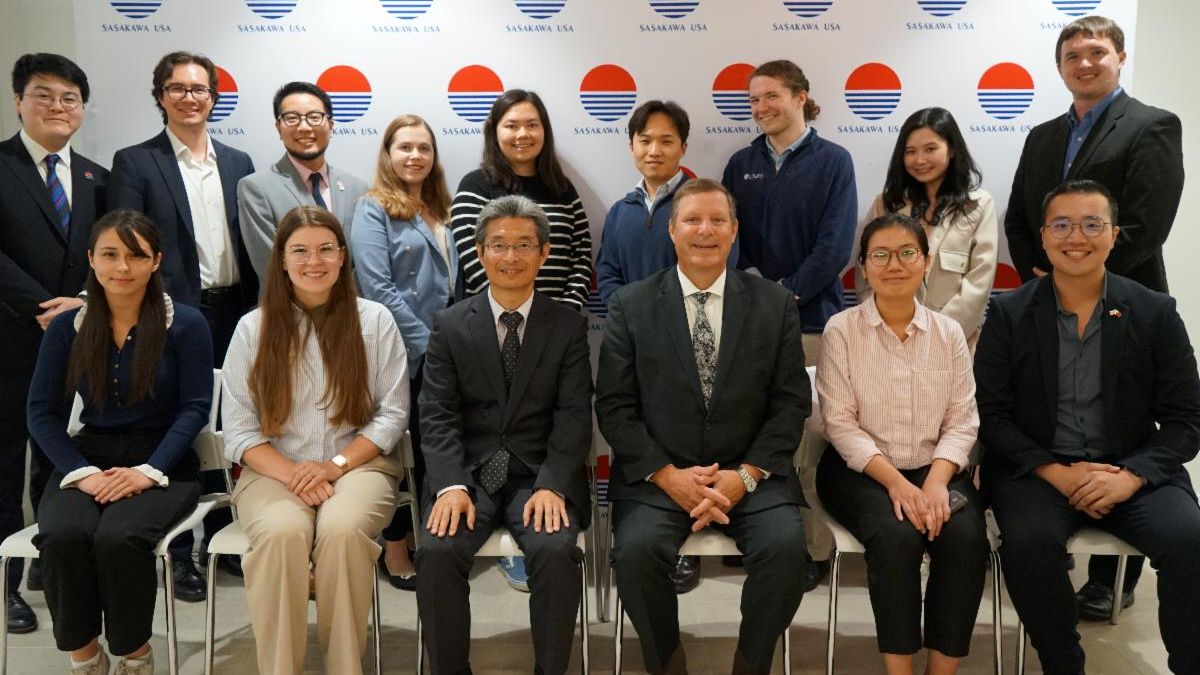
On October 9, Sasakawa USA welcomed Mr. Masafumi Iida, director of the Security Studies Department at Japan’s National Institute for Defense Studies, for a Rising Indo-Pacific Security Experts (RISE) discussion on China’s strategy for a new international order and the future of the U.S.-China strategic competition. Mr. Iida, who was on a week-long research trip in Washington, DC through Sasakawa USA’s U.S.-Japan Research Exchange program, built on his findings and provided his insights into China’s efforts to transform the international order in its favor under the leadership of Xi Jinping. He also explored the turbulence of U.S.-China strategic competition, as well as its implications for Japan and the Indo-Pacific. Following his remarks, a lively discussion ensued among the attendees, moderated by Mr. James Schoff, senior director of the US-Japan NEXT Alliance Initiative at Sasakawa USA.
Photos: Mr. Masafumi Iida and Mr. Jim Schoff (front, center) with RISE participants
| | |
Soft Power Series:
Resilience Rooted in Culture: Field Insights from Japan
| | |
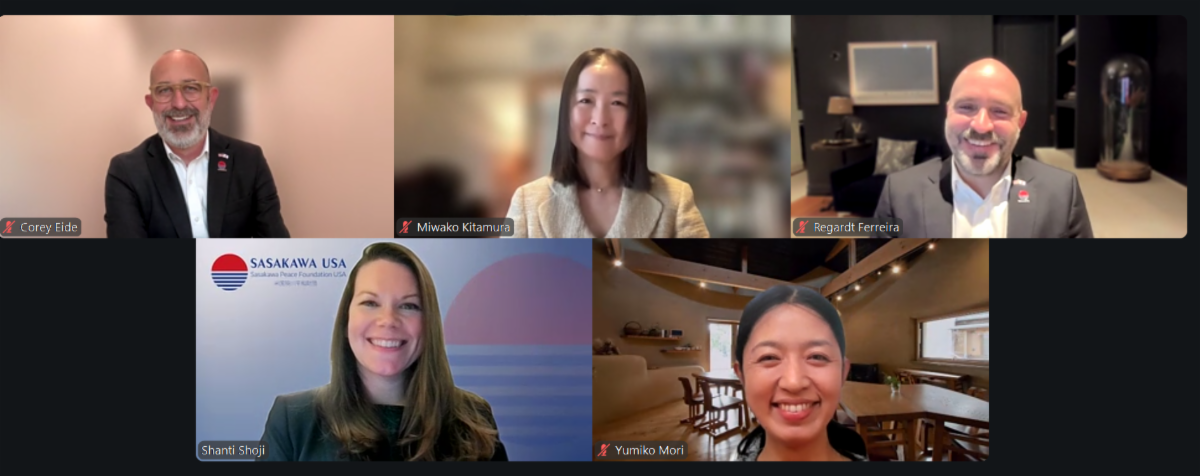
On October 15, Sasakawa USA hosted the virtual Soft Power Series event, “Resilience Rooted in Culture: Field Insights from Japan,” featuring participants of Sasakawa USA’s U.S.-Japan Research Exchange to Tokyo and Noto, Japan in June. The delegation focused on whole community resilience and its ability to strengthen disaster risk reduction (DRR). Speakers included Mr. Corey Eide, Practice Leader, State and Local Government and Nonprofit Advisory, BDO USA; Dr. Regardt “Reggie” Ferreira, Executive Director, Consortium for Emergent Disaster Resilience; Dr. Miwako Kitamura, Specially Appointed Associate Professor, Startup Incubation Center, Tohoku University; and Ms. Yumiko Mori, Founder and Chairwoman, Comachiplus. Sasakawa USA Director of Programs Ms. Shanti Shoji, who led the delegation to Japan, moderated the discussion.
As one of the key takeaways from the field study, the research fellows shared stories from their time in Japan to illuminate how attention to culture, traditions, and ikigai, one’s purpose and what makes life worth living, can inform a more human-centered and holistic approach to disaster recovery and significantly improve resilience outcomes. The event concluded with a Q&A session with the audience, which included meeting partners from government agencies, civil society organizations, and grassroots leaders that the delegation met with in Tokyo and Noto, as well as members of the U.S. think tank, government, business, and academia communities. The research fellows are currently writing a joint paper on their insights and recommendations that will be published on Sasakawa USA’s website in the coming months.
Photo (top row, left to right): Mr. Corey Eide, Dr. Miwako Kitamura, and Dr. Regardt “Reggie” Ferreira, (bottom row, left to right): Ms. Shanti Shoji and Ms. Yumiko Mori.
| | Policy Briefing: Growing Uncertainty in Japan’s Politics with Mr. Koji Sonoda | | |
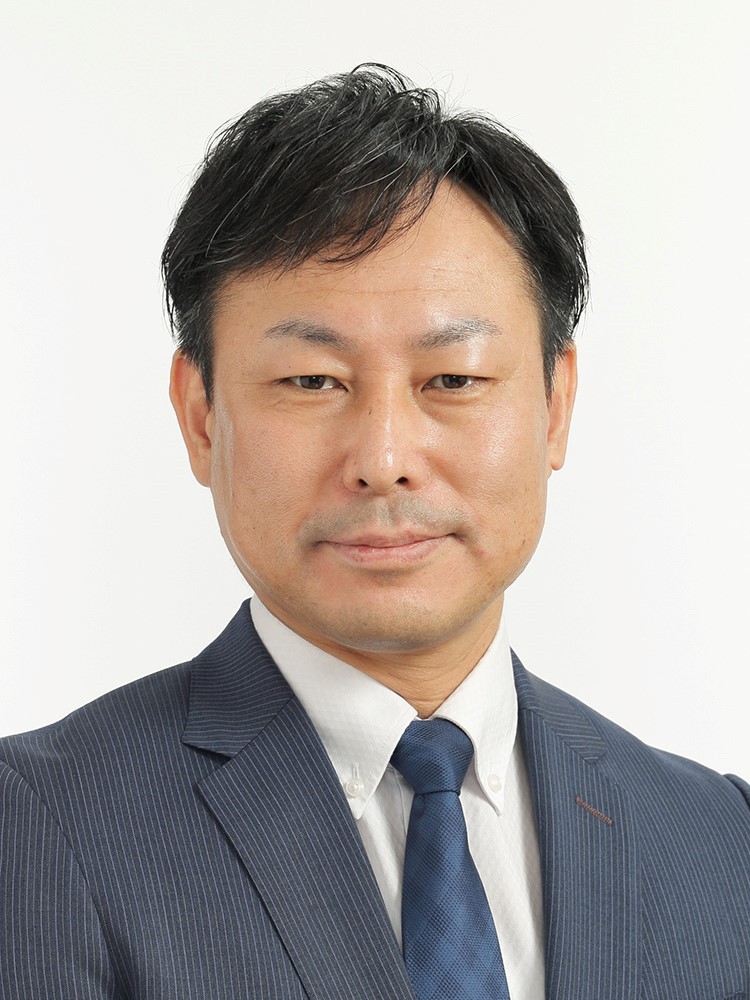
On October 24, Sasakawa USA hosted a Policy Briefing webinar featuring Mr. Koji Sonoda, deputy editor-in-chief of The Asahi Shimbun’s Political News Section, for a timely discussion on the recent selection of Sanae Takaichi as Japan’s first female prime minister and its implications for Japan’s political landscape.
Mr. Sonoda analyzed the shifts in power structure within the ruling Liberal Democratic Party (LDP) that led to the selection of Takaichi as its party president. He also discussed the impact of the departure from the coalition by Komeito, the LDP’s junior coalition partner of over 25 years, which had often acted as a brake on the LDP’s more hawkish policies. Mr. Sonoda also covered the Japan Innovation Party (Ishin), LDP’s new partner, with which a confidence and supply agreement was signed. His remarks were followed by a lively discussion with online attendees from both the United States and Japan on the revival of old guard politicians, such as former prime minister Taro Aso, as well as on Ishin’s political agendas.
Photo: Mr. Koji Sonoda, deputy editor-in-chief, Political News Section, The Asahi Shimbun
| | |
The Next Chapter of Women, Peace and Security:
Practical Action Through Prevention and Partnerships
| |
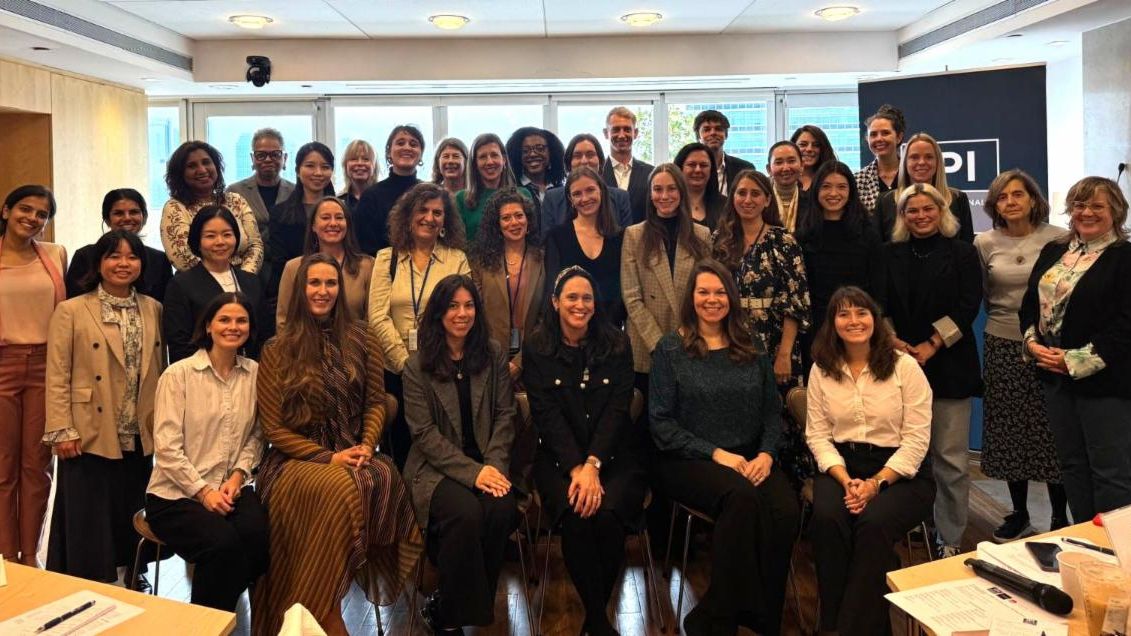
On October 29, Sasakawa USA, in partnership with the International Peace Institute (IPI) and New Lines Institute, hosted the in-person, closed-door workshop “The Next Chapter of Women, Peace and Security: Practical Action Through Prevention and Partnerships” in New York. This event was held to coincide with the 25th anniversary of the United Nations Security Council’s adoption of Resolution 1325. Given one of the greatest challenges over the past 25 years being the persistent lack of meaningful progress in implementation, the workshop convened leading voices from civil society and non-government sectors, including technology, business, and security, alongside government representatives to explore innovative partnerships and pathways for advancing WPS. The gathering encouraged participants to engage in joint problem-solving across sectors and identify what can be done differently moving forward to address opportunities that have long been overlooked within the WPS framework.
As part of the discussions, Japan’s work to integrate WPS principles within their domestic disaster preparedness and response was highlighted as an example of how the agenda can be applied universally to strengthen resilience in societies. Ms. Tomoko Matsuzawa, Director for International Cooperation on WPS at Japan’s Ministry of Defense (JMOD), participated and provided introductory remarks for a breakout session on cross-sector engagement and partnerships, sharing the practical and partnership-driven initiatives through which JMOD has operationalized WPS principles. Dr. Remi Kodamaya, a Specially Assigned Lecturer at Hitotsubashi University, also attended in her capacity as the first researcher sponsored by Japan’s Ministry of Foreign Affairs (MOFA) to conduct research at the Georgetown Institute for Women, Peace and Security (GIWPS). Two representatives from the Permanent Mission of Japan to the United Nations also joined the workshop.
Photo: Participants of the WPS workshop
| |
Policy Briefing: The Road Not Taken: Franklin Roosevelt and the Decision to Drop the Atomic Bomb
with Dr. David Woolner
| |
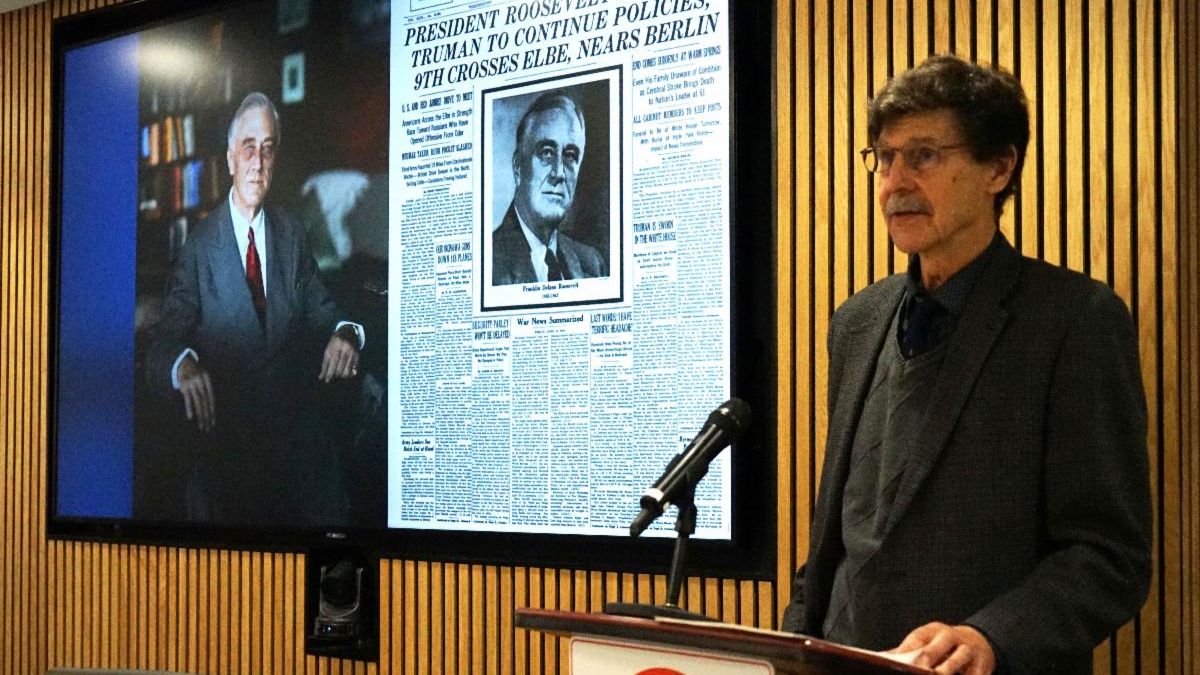
On October 29, Sasakawa USA hosted the Policy Briefing, “The Road Not Taken: Franklin Roosevelt and the Decision to Drop the Atomic Bomb,” featuring Dr. David Woolner, Professor of History and Judy and Peter Blum Kovler Foundation Fellow in Roosevelt Studies, Marist University, and Senior Fellow & Resident Historian, Roosevelt Institute. Dr. Woolner presented his research and findings on the question of whether President Franklin D. Roosevelt, who died just a few short months before the world’s first successful test of an atomic weapon, would have followed the same course of action as President Harry S. Truman and ordered the dropping of the atomic bomb on Hiroshima and Nagasaki in August 1945. His remarks were followed by an engaging Q&A session with members of the policy, business, and civil society community moderated by Mr. Jim Schoff, Senior Director of Sasakawa USA’s US-Japan NEXT Alliance Initiative.
Photo: Dr. David Woolner
| |
Sasakawa Peace Foundation Scholarship Students
Meet with Honorary Chairman Yohei Sasakawa
| |
On October 18, Mr. Yohei Sasakawa, Honorary Chairman of Sasakawa Peace Foundation (SPF), met with Ms. Rina Akiyama and Mr. Jin Inokuchi, two Sasakawa Scholarship students currently studying abroad in universities in the area. Ms. Akiyama is a sophomore majoring in behavioral biology at Johns Hopkins University, and Mr. Inokuchi is a freshman at Georgetown University planning to major in science, technology and international affairs. The meeting was joined by Ms. Junko Chano, who serves as Executive Director at SPF and oversees the Sasakawa Scholarship Program, and Dr. Satohiro Akimoto, Chairman and President of Sasakawa USA.
The Sasakawa Scholarship Program was launched in 2022 to provide scholarships to forward-thinking Japanese students to pursue undergraduate education at reputable universities in the United States and the United Kingdom for up to four years, building a strong foundation to develop into next generation leaders in Japan.
Photo: Ms. Junko Chano, Mr. Jin Inokuchi, Mr. Yohei Sasakawa, Ms. Rina Akiyama, and Dr. Satohiro Akimoto.
| | |
Shanti Shoji Speaks on Japan's Implementation of Women, Peace and Security on Panel Hosted by
Women of Color Advancing Peace, Security and
Conflict Transformation
| | |
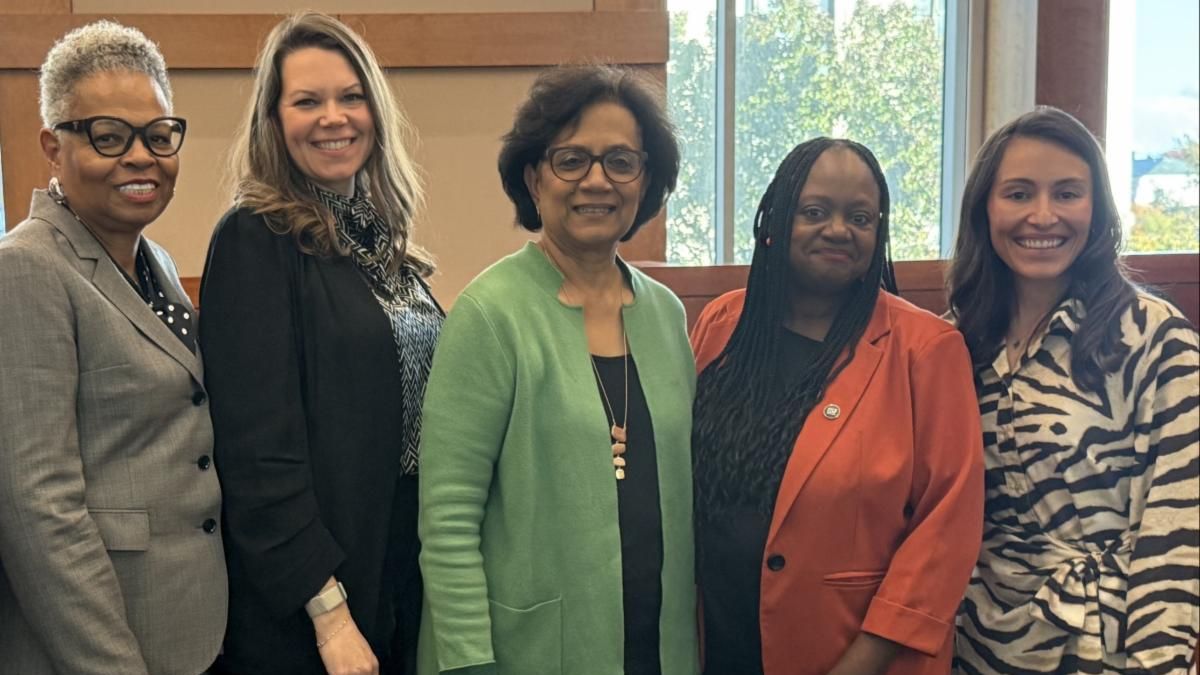
On October 30, director of programs Shanti Shoji joined the panel, “Unfinished Business – Challenges & Opportunities for The Next 25 Years” hosted by Women of Color Advancing Peace, Security, and Conflict Transformation (WCAPS) to commemorate the 25th anniversary of UN Security Council Resolution 1325 and the global Women, Peace and Security (WPS) agenda. The event featured keynote remarks from Ambassador Geeta Rao Gupta, former Ambassador-at-Large for the Secretary’s Office of Global Women’s Issues at the Department of State, and was moderated by Ambassador Bonnie Jenkins, former Under Secretary of State for Arms Control and International Security. Other panelists included Dr. Carolyn Washington, former WPS Manager at the Department of Homeland Security and participant in Sasakawa USA’s Emerging Experts Delegation to Japan on WPS, and Dr. Tahina Montoya, Adjunct Professor at RAND and George Washington University. The discussion examined remaining challenges and emerging opportunities to advance the WPS agenda, including the impact that technology and artificial intelligence are having. Ms. Shoji shared Japan’s initiatives to apply WPS principles both domestically and internationally, highlighting both successes and ongoing challenges. The panelists engaged in a Q&A with the audience following their remarks.
Photo (left to right): Dr. Carolyn Washington, Ms. Shanti Shoji, Amb. Geeta Rao Gupta, Amb. Bonnie Jenkins, and Dr. Tahina Montoya
| | |
Sasakawa Peace Foundation USA
1819 L Street, NW, Suite 300
Washington, DC 20036
+1.202.296.6694
| | | | |