|
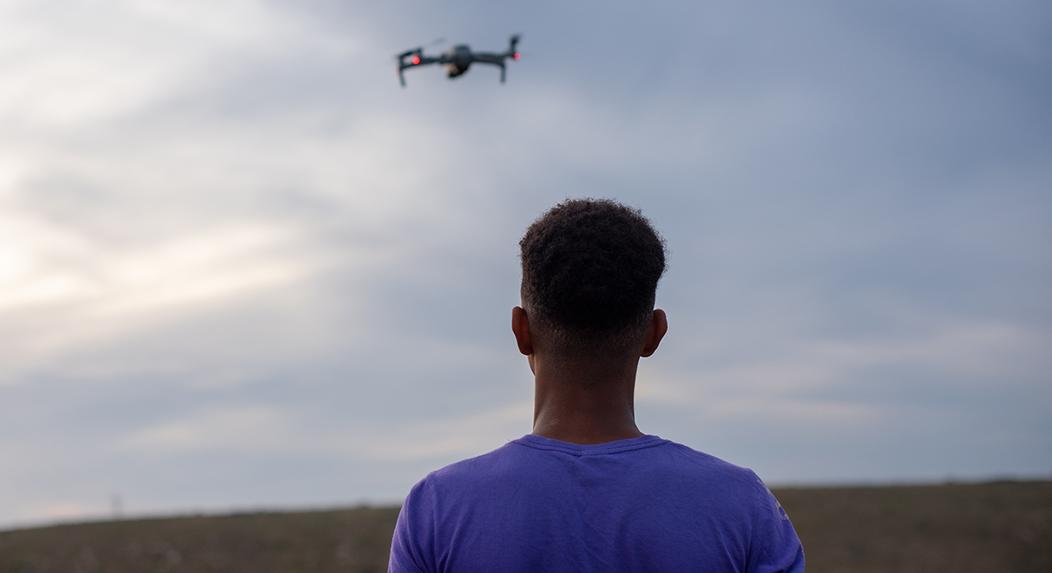
This incident happened on Day 0, XA:15. It was a cloudy day with a very low 300ft ceiling. I arrived at my friend's house at around XA:10, and I decided to take my drone out while I was waiting. There is an open field in front of his house, and it is a clear-to-fly airspace for drones under 400ft, but a little close to the nearby airport's controlled airspace. After I got my Potensic Atom 2 drone out, a teenager approached me and asked to fly my drone, and stated he owned a DJI Mini series before. As I just got two newer model DJI drones, I feel I no longer value this drone that much. I have altered the maximum distance to around 500m (1640ft) horizontally, and did not change the maximum altitude at 120m (400ft) before handing it to him. I saw he started the motor without any problem, and started climbing, clearing nearby objects. I turned around and went inside my friend's house to use his restroom.
After 5 or 6 minutes, when I went out, I saw the drone was descending below the cloud. After he returned the drone to me, I found it was slightly wet on the hull. I checked the drone, and I found the altitude limit was lifted to the max at 800m (2625 ft), and the flight log indicated a 798m (2618 ft) maximum flight altitude and probably busted B airspace at my location, which was where I realized it is a clear violation for both losing VLOS and busting altitude.
I do understand the risks of flying UAS above 400 ft, especially into B airspace, and now I also know the risk of putting drones into the hands of someone you do not know. I truly regret letting an unfamiliar person operate my drone, and the lack of continuous supervision. In the future, I will not allow others to operate the aircraft without direct supervision and will never let incidents like this happen again.
|