|
UCC PIN AUGUST E-NEWS
In this issue:
-
Amidst Israel's Destruction of Gaza, Creating to "Make Life Bearable," Working to Make Life Just
- UCC PIN Launches 'Solidarity Circles' and Invites Interested Participants
- “What I’ve Learned in 50 Years of Palestinian Solidarity”: A Conversation with the Rev. Dr. Donald Wagner
- Voices from the Holy Land features film "Skies Above Hebron," with discussion by panelists, Sept. 11
- Video of July 20th Defund Racism Campaign Webinar
- Breaking the Stories, curated by the Rev. Loren McGrail
| |
Follow UCC Palestine Israel Network | |
Amidst Israel's Destruction of Gaza, Creating to "Make Life Bearable," Working to Make Life Just | |
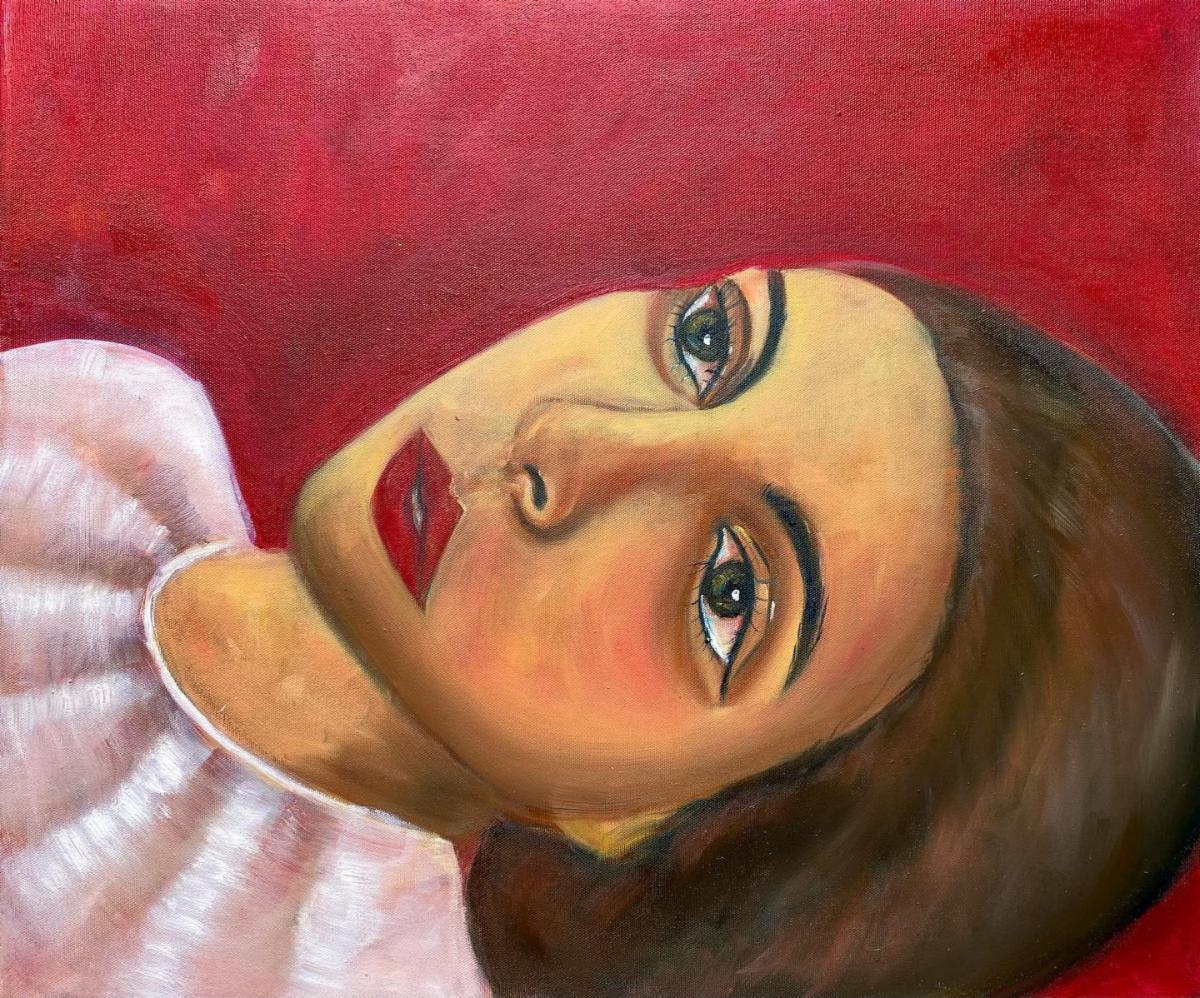
Palestinian painter Malak Mattar's tribute to 22 year old painter Duniyana Al-Amoor who was killed in Israel's most recent attacks on Gaza. | |
|
Duniyana Al-Amoor, a 22-year-old painter from Gaza, was one of 49 Palestinians killed during Israel’s recent searing 48-hours of air strikes and rocket attacks on Gaza’s residential neighborhoods. Among those killed were 17 children, including three siblings and two children just 4 years old. How does one begin to absorb the cost of such human loss and suffering?
Israel has acknowledged that its assault was 'pre-emptive,’ as if that slippery slope rationale were a justification for Israel’s calculated brutality, what David Hearst in a Middle East Eye article called “an orgy of violence.” Over 450 Palestinians were wounded. How does one begin to count in addition the thousands upon thousands traumatized?
Fellow young Gazan painter Malek Mattar channeled her grief and outrage into the creation of the portrait above, to memorialize her colleague Duniyana. In tribute, Malek posted the following on her Facebook page, giving voice to the reality of life in Gaza under Israel's unrelenting siege:
To be a painter in Gaza is to expect death at any moment while knowing that your paintings will live forever; to seek the safety of your paintings before that of your own self.
It is to carry the pain of those around you from the moment you awake till the moment you sleep; to escape through paper and paint that the Occupation barely allows entry.
It is to paint the anxiety, isolation and joy on the faces of the people around you, exhausted by siege and war.
Despite the horror of Israel's assault, US media was predictably slow to cover yet another attack on Gaza. NPR’s first mention, for example, was on August 8th, three days after the assault began. While we can be relieved that a cease-fire followed in short order, it is clear, as Khaled Al-Hroub writes in his article “Elections, Hamas and Ceasefire” (see Breaking the Stories), “this will not be the last war on Gaza and the Palestinians.” Israel’s apartheid regime and atrocities are co-joined. Violence against Palestinians is the modus operandi, the consequence, and perhaps even the intention of occupation and will continue as long as Israel’s occupation is tolerated by the international community and funded with U.S. military aid.
This most recent attack provides yet another example confirming the importance and imperative of the UCC’s decision to name Israel’s occupation as a sin and its regime as apartheid. With the 2021 General Synod resolution, Declaration for a Just Peace in Palestine and Israel, the UCC has taken a prophetic stand against violence and in support of human rights and justice. The challenge before UCC PIN continues to be one of helping our UCC conferences and congregations to translate the commitments of this resolution into action and become engaged in robust, sustained, and faithful witness.
One of UCC PIN’s next steps and new strategies for addressing this challenge? The creation of 'Solidarity Circles.' See the next article to learn about this initiative and the opportunity to participate.
| |
|
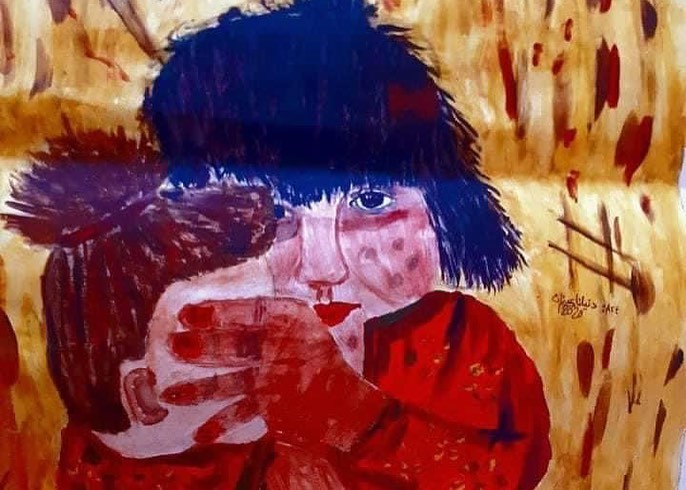
Painting by Duniyana Al-Amoor
About herself and her work, Duniyana said, “For my part, I’m not doing anything astonishing, I’m merely trying, amidst this isolation to make life bearable.” May her " painting. . . live forever" and may our work and witness help to make life just.
| |
|
UCC PIN Launches 'Solidarity Circles'
and Invites Interested Participants
| |
|
This fall UCC PIN is launching a new initiative, Solidarity Circles, designed for pastors and church leaders, to provide them support and equip them with resources for engaging their congregations to act on the bold and prophetic calls in the 2021 General Synod resolution Declaration for a Just Peace Between Palestine and Israel. The resolution is very specific. It urges congregations, conferences and associations to study and act on the resolution's findings, by resisting racism, confronting Israel’s apartheid practices, promoting human rights, and embracing solidarity with Palestinian and Israeli justice-seeking partners. But where to begin and how to do that?
Through our recent strategic planning, UCC PIN has landed on the idea of Solidarity Circles. What will that look like? A group of 10-15 pastors and church leaders who commit to monthly meetings, by Zoom, over six months. The circle will function like an affinity group. The goal is to provide space for study, for sharing of strategies and initiatives to engage one’s congregation, and for support of one another, especially important given how this issue can provoke ‘difficult conversations.’ One specific thematic focus for the Solidarity Circle conversations will be a campaign currently emerging among a variety of denominations for congregations to declare themselves “apartheid free.” The Solidarity Circle will be co-facilitated by two UCC leaders, who bring congregational experience, a history of Palestine-Israel activism, and engagement with UCC PIN. We will be announcing the leaders in September.
UCC PIN has decided to begin modestly, organizing one Solidarity Circle this fall as a pilot project, with late October or early November 2022 as a proposed start time. Our hope and expectation is to glean insights from the pilot experience and on the strength of those to expand the number of Solidarity Circles going forward.
By design, UCC PIN is hoping that Solidarity Circles will be of help and interest especially for those who care about human rights, justice, and peace in Palestine and Israel, but have been hesitant or unsure how to take next steps to engage their congregations.
Interested in participating in this exciting and prophetic pilot? To let us know, please USE THIS ONLINE FORM and/or if you have questions, be in touch with Rev. Dave Grishaw-Jones at davidgj@ccdurham.org.
| |
|
“What I’ve Learned in 50 Years of Palestinian Solidarity”: A Conversation with the Rev. Dr. Donald Wagner
Webinar
Wednesday, August 24 12 noon ET
| |
|
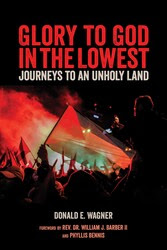
Don Wagner, recently retired as national program director of Friends of Sabeel North America, professor of Middle East studies, ordained Presbyterian minister who served churches in New Jersey and Illinois, and author of several books including on the topic of Christian Zionism, has authored yet another. With the provocative title, Glory to God in the Lowest! Journeys to an Unholy Land, Rev. Wagner provides an autobiographical account of his journey from being an evangelical Christian to becoming a committed activist for Palestinian rights. UCC PIN friend and colleague, Michael Spath will be interviewing Don Wagner about his book and the insights and learnings he has gleaned during his years of personal, political and religious transformation and subsequent advocacy.
The Indiana Center for Middle East Peace is hosting this webinar; UCC PIN is a co-sponsor.
To register, go here
| |
|
Voices from the Holy Land features
film "Skies Above Hebron,"
with discussion by panelists
Sunday, September 11, 3 pm ET
| |
|
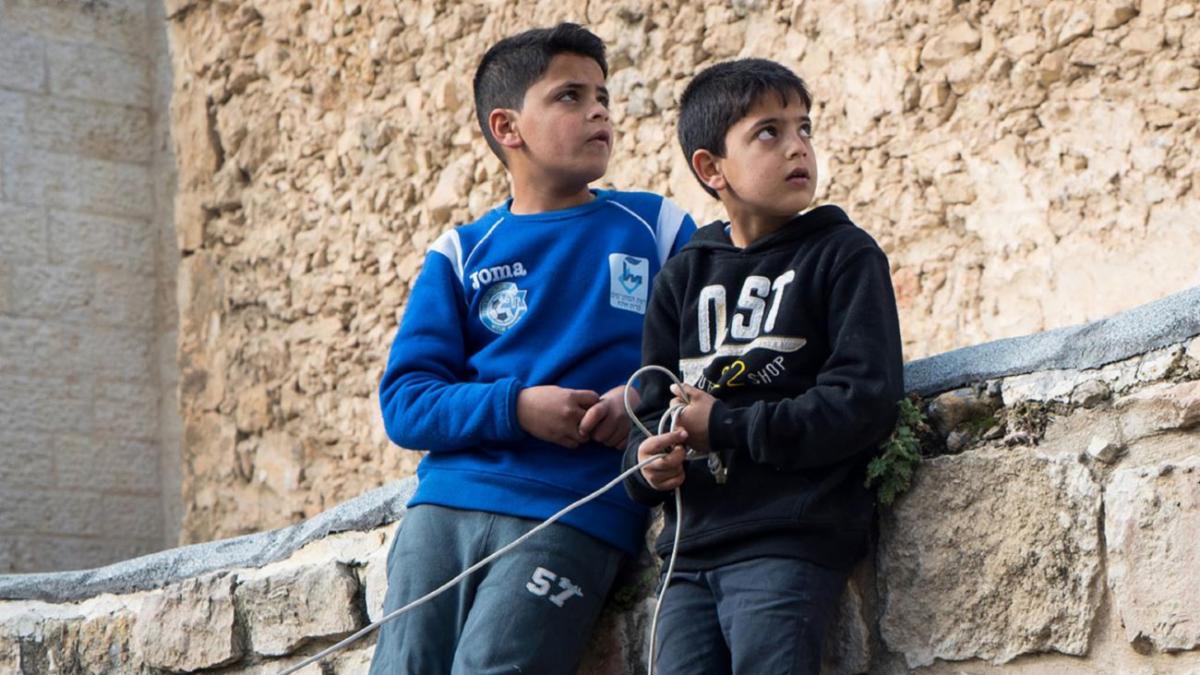
Voices from the Holy Land, an online film salon, will be featuring the documentary film, “Skies Above Hebron,” available to view at the convenience of those who register and receive the link. On Sunday, September 11, 3 pm ET, a group of panelists will then discuss the film. The panelists are: Esther Hertog, anthropological documentary filmmaker; Liat Berdugo, Associate Professor of Art, Architecture & Art History, University of San Francisco; Lubna Alzaroo, instructor specializing in settler colonialism, University of Washington. Abin Dobkin, reporter, essayist, book author and co-host of ‘War Stories’ podcast, will moderate the conversation and Q&A. The registration link will be posted on VFHL’s website, here. Check there to register as soon as the link is posted.
"Skies Above Hebron" follows three Palestinian boys, Amer, Amas, and Marwaan, over five years of their growing up there with IDF soldiers constantly surveilling their homes and Israeli settlers harassing them. Those who has been in Hebron, described by some as Israel’s occupation on steroids, will especially recognize and resonate with the questions this film probes about the nature of a childhood where gunfire and death are the norm and restrictions in movement are severe. To quote from the VFHL website's blurb about the film, "In the heart of Hebron, the only ones with complete freedom are the pigeons who can soar about the fences and military checkpoints."
UCC PIN is a co-sponsor of this webinar.
The VFHL website offers an extensive archive of films and panel discussions from previous events they have hosted. To access the VFHL trove of videos, go here.
| |
Video of "Defund Racism Campaign" Webinar | |
|
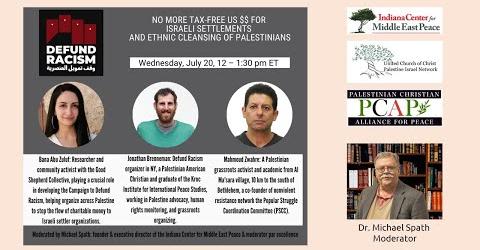
Panelists Bana Abu Zuluf, Mahmoud Zwahre, and Jonathan Brenneman provided compelling explanations of and reasons for the Defund Racism Campaign during a July 20th UCC PIN co-sponsored webinar, moderated by Michael Spath of the Indiana Center for Middle East Peace.
Israeli settlements and settlers are the frontline of the Israel’s colonial project. How are these settlers funded? At least in part, by Israeli settler organizations such as Ateret Cohanim, Elad, Israel Land Fund, and Regavim, that in turn receive funding from various ‘friends of’ organizations that are registered as charities in the U.S. With a 501C3 status, these so-called charities then solicit tax-deductible donations and funnel them to the settler organizations in Israel.
Webinar panelists expressed no hope that the U.S. government would address this illegal ‘sleight of hand,’ but are promoting the Defund Racism Campaign as an effective strategy for U.S. grassroots organizations to get leverage and provide pressure. The goal of the campaign is to focus on states, like New York for example, where such ‘friends of’ settler organizations are registered, and to work to establish as a legal precedent that financial support for “the oppression, displacement, and colonization of Palestinian lands is illegal under U.S. charitable law.”
To learn more about the Defund Racism Campaign, view the video of the July 20th webinar here and to get involved in the campaign go to the website here. UCC PIN is an organizational endorser of the Defund Racism Campaign.
| |
|
Breaking The Stories: August 2022
curated by the Rev. Loren McGrail,
UCC PIN Steering Committee
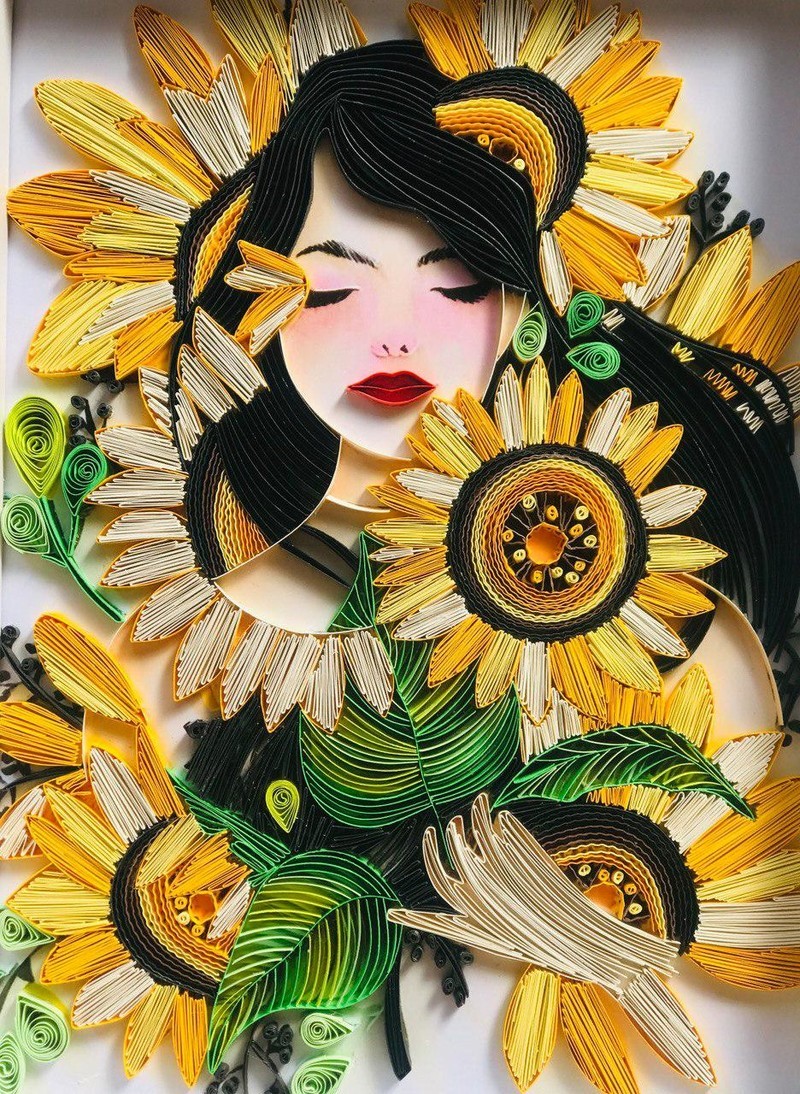
| Quilling by Gazan artist Eman al-Tayeb whose art work is inspired by nature. | Gaza: Cruelty Without Consequences | Israel is currently gloating over its recent operation in Gaza. It succeeded by all measures: Israel initiated the conflict, first by arresting an Islamic Jihad leader in the West Bank city of Jenin and dragging him out in humiliation, as he was bitten by a dog; then, anticipating a reaction by his organization, Israel proceeded to bombard Gaza “preemptively.” In three short days, the Israeli military managed to rain death and destruction on Gaza, assassinating another Islamic Jihad leader, killing 46 Palestinians (including 16 children), and wounding 460 others. Meanwhile, it suffered no casualties itself aside from a few lightly wounded by shrapnel. Here | “Neutrality is not a faithful response”: churches call Israeli apartheid by its name | |
|
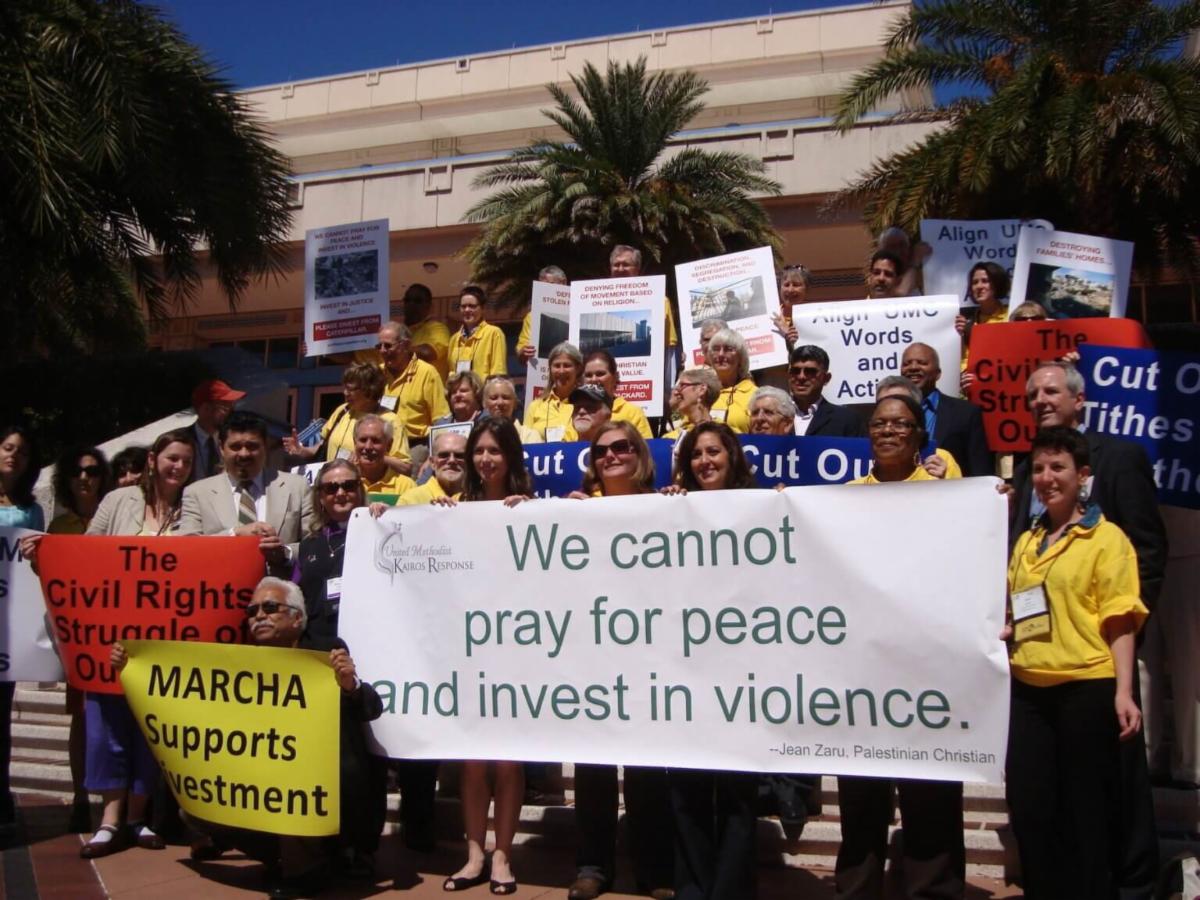
United Methodists for Kairos Response activists demonstrate in support of divestment at the United Methodist General Conference in 2012.
| |
Today we are witness to what can only be described as the unstoppable momentum of church opposition to Israel’s program of discrimination, dispossession, and ethnic cleansing. Together with the BDS call, the Kairos call from Palestinian churches has awakened the global church to the urgency of the Palestinian plight and to the theological imperative to act. Here | |
Israel can now strip away 48 Palestinians' citizenship | |
|
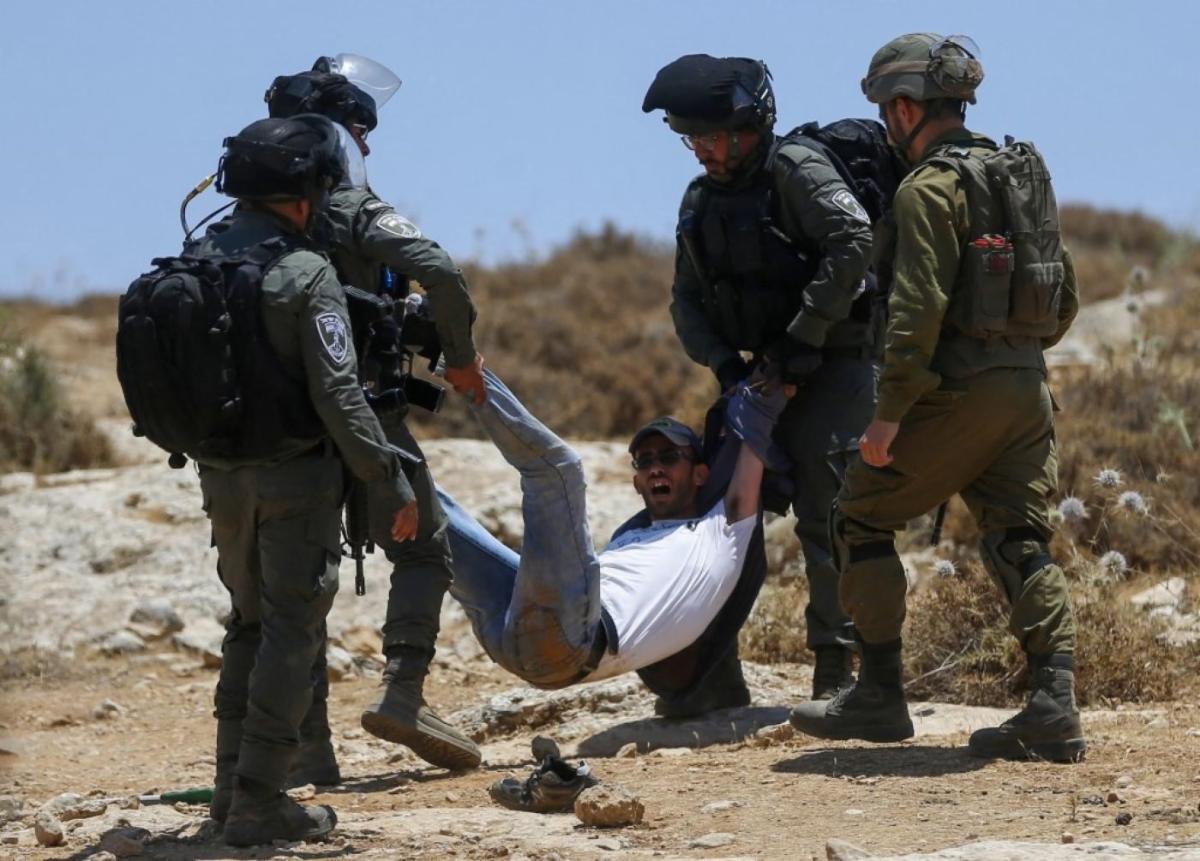
Israeli forces remove a protester during a demonstration by Palestinians
in Masafer Yatta, in the Israeli-occupied West Bank, 1 July 2022 (AFP)
| |
Last week, in a precedential decision, Israel’s Supreme Court ruled that the state had the power to revoke the citizenship of a person convicted of offences that amounted to "breach of loyalty", even if the person would become stateless as a result and in violation of international law. Here | |
|
More Resources
When Will the West Publicly Endorse the Right of the Palestinians to Defend Themselves? Here
Israeli-Palestinian Conflict: No Solutions, No Illusions Here
Twitter Locks Account of Palestine Chronicle’s Editor, Dr. Ramzy Baroud Here
Gaza death toll rises to 49, including 17 children Here
Elections, Hamas and ceasefire: Why this will not be Israel's last war on Gaza Here
Nadler says he ‘stopped BDS dead’ with progressives in Congress Here
Biased, dishonest coverage of Israel’s attack on Gaza continues in NPR, ‘NYTimes’ Here
Media Resources
Boycott
When a news publisher in Arkansas, an attorney in Arizona, and a speech therapist in Texas are told they must choose between their jobs and their political beliefs, they launch legal battles that expose an attack on freedom of speech across 33 states in America.
Boycott traces the impact of state legislation designed to penalize individuals and companies that choose to boycott Israel due to its human rights record. A legal thriller with “accidental plaintiffs” at the center of the story, Boycott is a bracing look at the far-reaching implications of anti-boycott legislation and an inspiring tale of everyday Americans standing up to protect our rights in an age of shifting politics and threats to freedom of speech. Here
Erasing the Nabka, Upholding Apartheid: Atrocity Denial in the U.S. Media
In this installment of the Institute for Palestine Studies' Current Issues in Depth series, Greg Shupak brings to light a fundamental problem in the misrepresentation of Palestine in U.S. media; the systemic denial of a seminal event: the Nakba. Download a PDF of this issue here.
Mo Amer: “There’s never been a Palestinian Family like this on TV Before” Here
| | | | | |