|
UCC PIN SEPTEMBER E-NEWS
In this issue:
- "Mainstream the Language of Apartheid"
- Introducing the Co-Facilitators for UCC PIN's 'Solidarity Circles'
- Voices from the Holy Land features film "Boycott," with discussion by panelists, October 9
- Breaking the Stories, curated by the Rev. Loren McGrail
| |
Follow UCC Palestine Israel Network | |
"Mainstream the Language of Apartheid" | |
|
During a recent UCC PIN Steering Committee meeting, Peter Makari, Global Ministries Area Executive for the Middle East and Europe, reported on meetings with mission partners during his June trip to these regions, in company with Global Ministries Co-Executives the Rev. Dr. Karen Georgia Thompson (UCC) and the Rev. Marco Cable (Disciples). From Palestinian partners and others, Peter shared distressing concerns, examples of hope amidst the struggle, and the imperative to “mainstream the language of apartheid,” in describing Israel’s human rights abuses.
Partners at the East Jerusalem YMCA described how the unrelenting violence of Israel’s occupation, night raids and detention of children for two examples, has created a reality of “un-childing [Palestinian] children,” preventing young people from living their actual age and forcing them into a kind of adulthood. The mental occupation is worse than the military occupation; the mental wall worse than the physical wall. The cumulative effect of grinding injustice is exhausting.
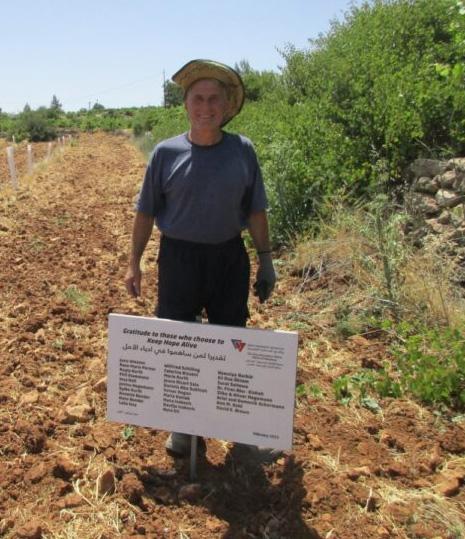
And still Palestinians persist. The delegation visited the West Bank farm of Imad Sarras who receives assistance from the Keep Hope Alive olive tree campaign of YMCA’s and YWCA’s Joint Advocacy Initiative (JAI).
| |
|
In his newly planted olive fields, Imad Sarras displays a sign of thanks to JAI Keep Hope Alive contributors
Describing that visit, Peter said, “Imad shared a great deal about his work, including the care for the trees and the challenges he faces with settler communities surrounding his farm.” Peter continued, ““In addition to the affirmation of the rights of Palestinians to their lands and fields, an additional benefit of the campaign is the simple act of planting trees, the climate benefits of which are multiple, among a population often denied access to natural resources and associated rights.”
Through its support for farmers like Imad, this JAI program is helping to keep hope alive.
Omar Shakir, lead researcher and author of the Human Rights Watch report, A Threshold Crossed, observed that even as the situation in Palestine continues to get worse, the global consensus that Israel is an apartheid state is growing. He emphasized as an imperative that we work to “mainstream the language of apartheid.”
Among USA Protestant denominations, the UCC has led the way with our 2021 General Synod resolution adopting the language of apartheid. But within the UCC and among faith communities globally, there is work yet to do to get to the mainstream. The apartheid debate at the recent General Assembly of the World Council of Churches held in Karlsruhe, Germany exemplifies this.
The initial version of a Public Issues Statement 01.4 brought before the General Assembly delegates acknowledged reports by numerous human rights organization “describing the policies and actions of Israel as amounting to ‘apartheid’ under international law,” and then included many examples. The UCC delegation spoke in strong support of this version. UCC PIN steering committee member and Minnesota Conference Minister, Shari Prestemon who was in attendance, observed that during the Assembly, “the UCC’s position on Israel-Palestine was held up by staunch advocates as an example they appreciated of a bold, prophetic, and appropriate stance.”
But the edited and then adopted version of the Statement, as Jeff Wright explains in his very helpful Mondoweiss reporting (see lead story in Breaking the Stories below), shifted the focus from the plight and suffering of Palestinians to divisions among the churches. “We are not of one mind on this matter.” About this concession, Rifat Kassis, Director of Kairos Palestine, observed, “The ecumenical movement has to understand that the unity of the movement should not be at the expense of justice and freedom.” Clearly, there is work yet to do to get the language of apartheid into the mainstream.
In our effort to “mainstream the language of apartheid,”, this year UCC PIN will be prioritizing our soon-to-be launched program of Solidarity Circles, as a strategy for growing grassroots support, throughout our UCC congregations and conferences, for the human rights of Palestinians and for justice and freedom for all.
| |
|
Introducing the Co-Facilitators for
UCC PIN's first Solidarity Circle
| |
|
As described in the August E-News, UCC PIN is launching our Solidarity Circles program, with an initial group scheduled to start later this fall. We promised to announce in September the co-facilitators for our first Solidarity Circle and here they are:
|
|
|
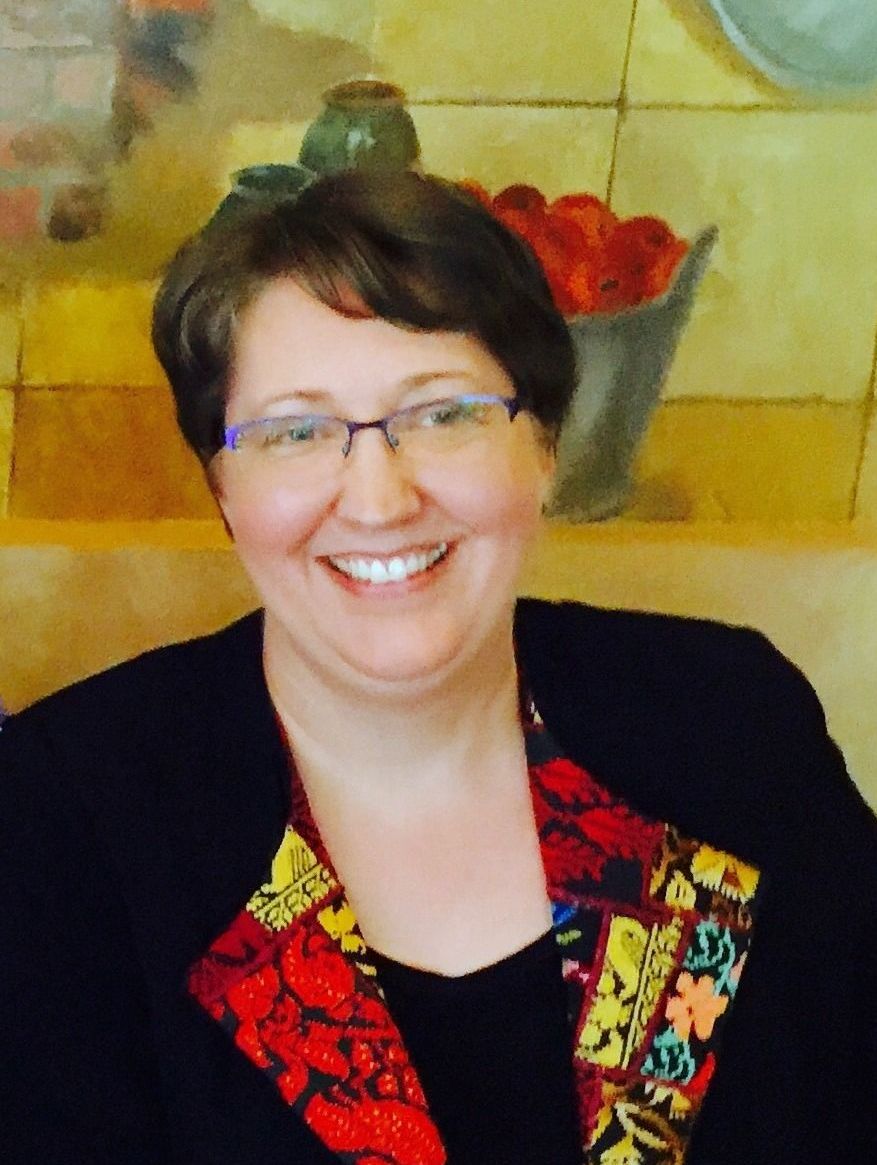
Marla Schrader
Marla Schrader is an experienced advocate for justice and equality in Palestine. Her engagement began in 1988 with a three month immersion study program in the West Bank, Gaza Strip, Israel, and Jordan. She then served with Global Ministries as mission personnel for 16 years with our Palestinian mission partners. Marla has organized and led educational experiences for numerous delegations to Palestine and served on the boards of advocacy organizations, including UCC PIN and Disciples PIN. She has worked as Senior Director of Development and Communications for United Palestinian Appeal in Washington, DC and for several years worked remotely with the Ramallah Friends Meeting as a Development and Communications consultant. Conversant in Arabic, Marla lives in Silver Spring, Maryland.
|
|
|
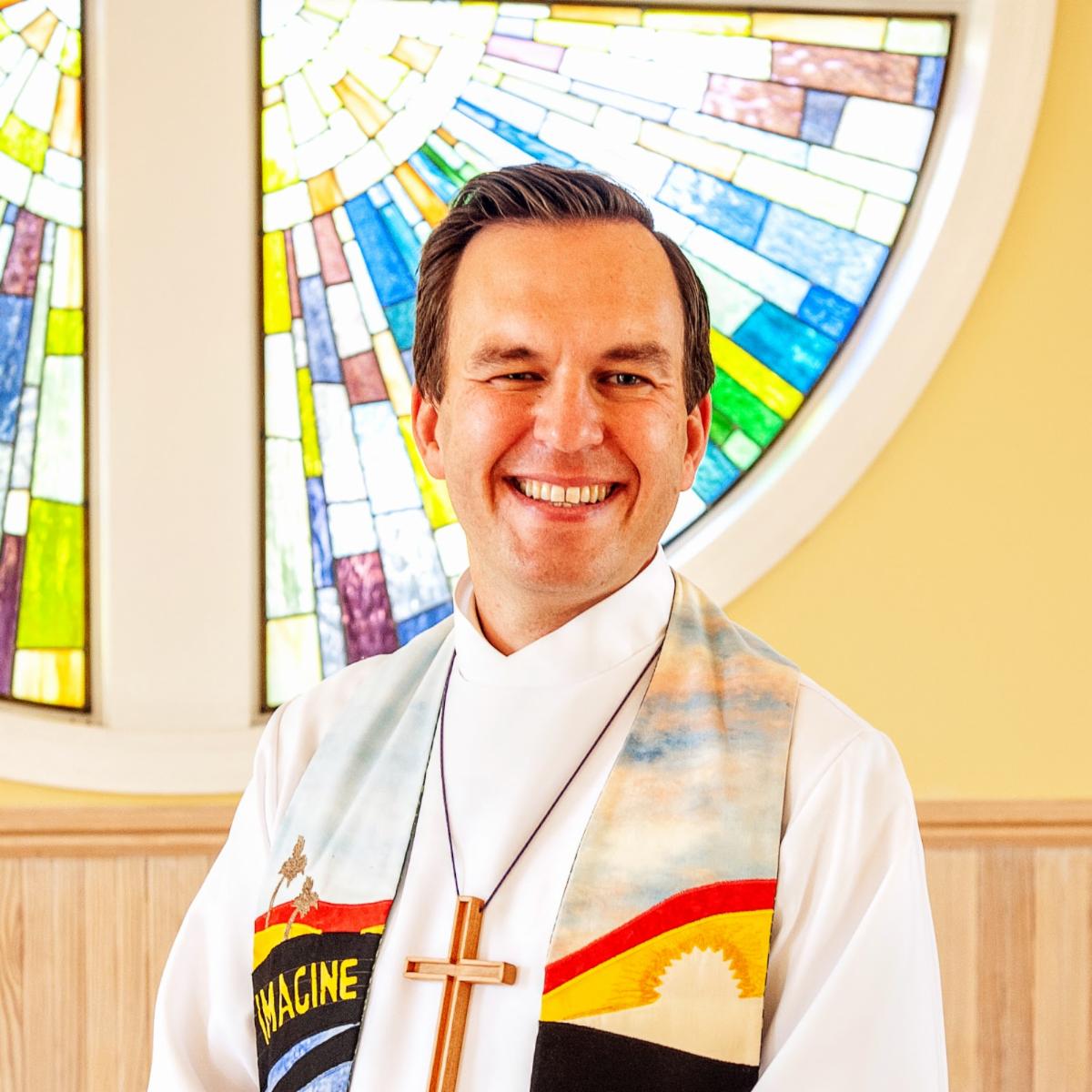
Eric Fistler
The Rev. Eric C. Fistler is the senior pastor of First Congregational Church of Crystal Lake, Illinois, having previously served UCC congregations in Florissant, MO, Northampton, MA, and West Suffield, CT. Passionate about parish ministry, Eric is also passionate about peacemaking in Israel and Palestine and has been actively involved since 2004. He has participated in several International Conferences with the Sabeel Ecumenical Liberation Theology including serving as chaplain for the 2007 Young Adult Conference. In 2006, he served as an accompanier through the World Council of Churches Ecumenical Accompaniment Program in Palestine- Israel, and from 2007-2008 served as the US coordinator of that program. Eric currently serves on the UCC PIN steering committee.
Solidarity Circles
UCC PIN has designed the Solidarity Circles for congregational leaders, both lay and ordained, who care about human rights and recognize the need for justice in Palestine an Israel. The goal is to provide participants with support and equip them with resources for engaging their congregations to act on the bold and prophetic calls in the 2021 General Synod resolution Declaration for a Just Peace Between Palestine and Israel. Our hope is that the circle will function like an affinity group, creating space not only for education, but also for sharing of strategies and initiatives to engage one’s congregation, and for mutual support for participants.
UCC PIN is currently engaged in recruiting participants for our initial circle and we still have openings. Participants are asked to commit to meeting once monthly for six months. If you are interested in participating in this exciting and prophetic pilot, please let us know by using this online form. Questions? Contact Rev. Dave Grishaw-Jones at davidgj@ccdurham.org.
| |
|
Voices from the Holy Land features
film "Boycott,"
with discussion by panelists
Sunday, October 9, 4 pm ET
| |
|
Currently 35 states in the U.S. have enacted anti-BDS laws and resolutions that not only oppose boycotts against Israel, they criminalize them and effectively elevate ‘protection’ of Israel above our constitutional right to freedom of speech. How, since 2015, has a campaign that cuts to the quick of our fundamental, democratically inspired and required, right gained such traction?
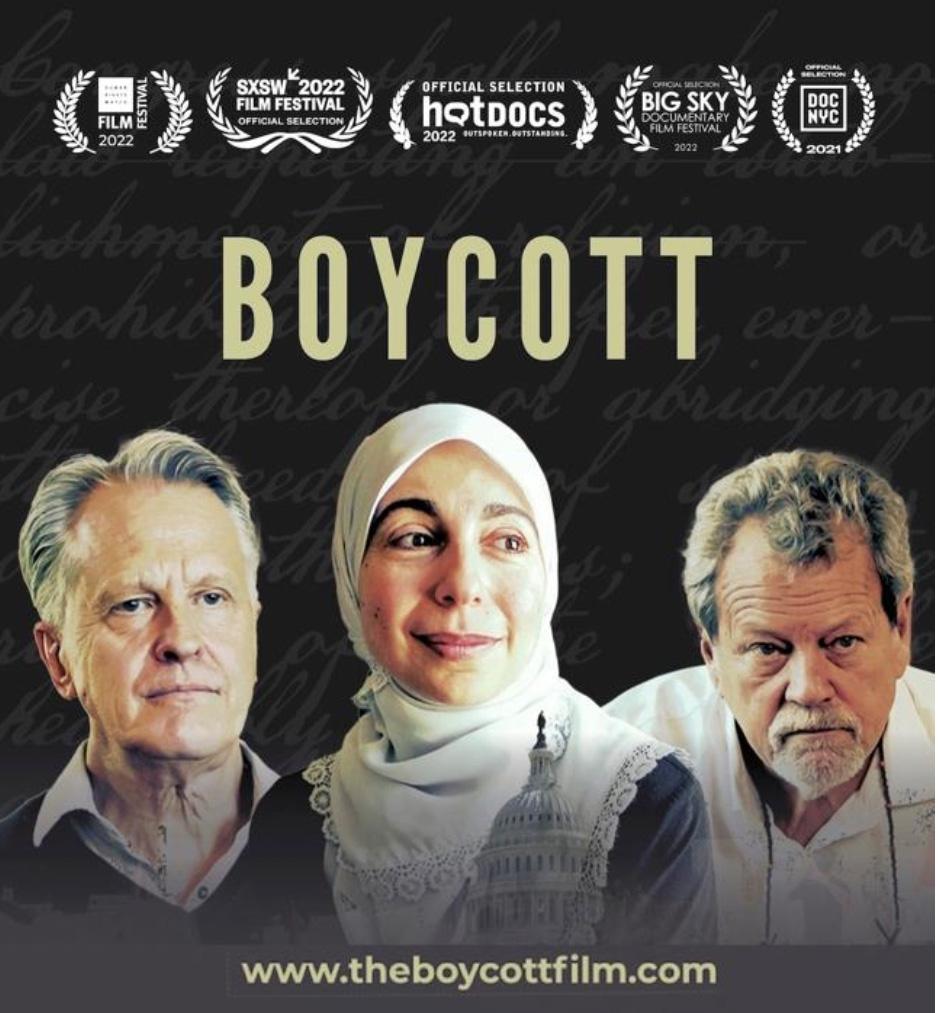
Boycott, a recent film produced by Just Vision, explores this question, tracing the origin of the anti-BDS bills to, as Alice Speri writes in her Intercept article about the film, “the American Legislative Exchange Council (ALEC), a group that spearheads many conservative state legislative efforts.” Designed to suppress criticism of Israel, anti-BDS legislation has been passed with little to no public scrutiny, and even little attention from some legislators who voted for it. As one Republican state senator from Arkansas said with apparent delight, “It just flew through,” as if it were of no consequence.
But the attack of such laws on freedom of speech is indeed consequential and cause for grave concern. Boycott highlights the consequences, focusing on three individuals who have challenged the laws, and exposes the streams of funding for groups like Christians United For Israel who lobbied for the laws.
On Sunday, October 9th, the online film salon, Voices from the Holy Land is hosting a webinar about Boycott. Mnar Adley, Editor-in-chief, MintPress News, will be moderating a panel that includes:
Peter Beinart: Editor-at-Large, Jewish Currents; Professor of Journalism and Political Science, Newmark School of Journalism, CUNY; Publisher, The Beinart Newsletter
Jen Marlowe: author, filmmaker, playwright, journalist, and human rights activist
Bahia Amawi: speech pathologist, free-speech plaintiff vs. Texas Attorney General Ken Paxton and Pflugerville ISD
To register for the webinar and have access to viewing the documentary, go here. UCC PIN, along with several other PIN's, is a supporter of this webinar and encourages people to seize this opportunity to view the documentary, currently being shown only at film festivals.
| |
|
Breaking The Stories: September 2022
curated by the Rev. Loren McGrail,
UCC PIN Steering Committee
| |
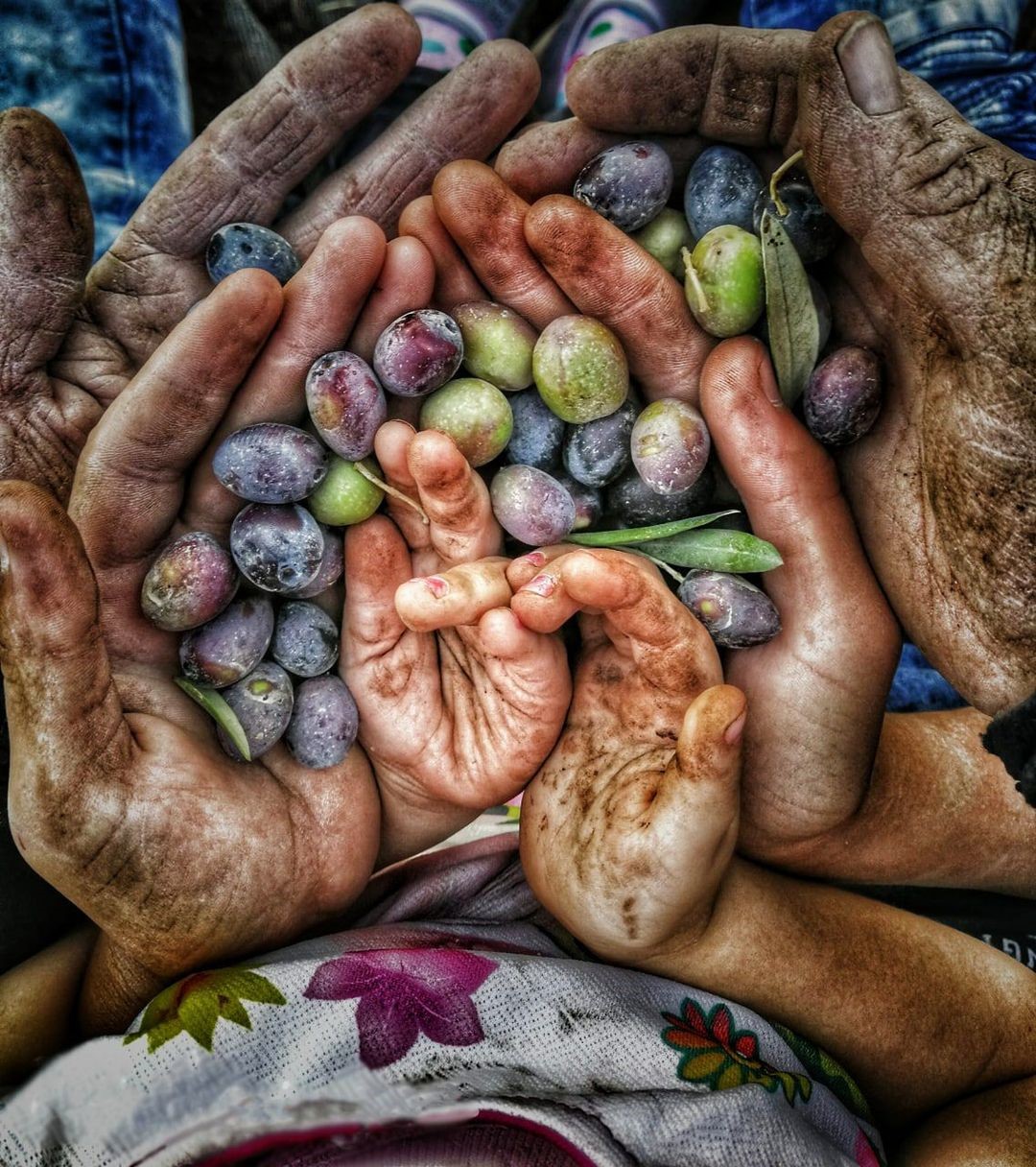
The hands of the Palestinian olive harvest. A picture taken by Palestinian
photographer Omar Dawabsheh as a symbol of the olive season in which
all members of the Palestinian family participate. "From the grandfather
to the son to the grandson; we inherit the love of the land."
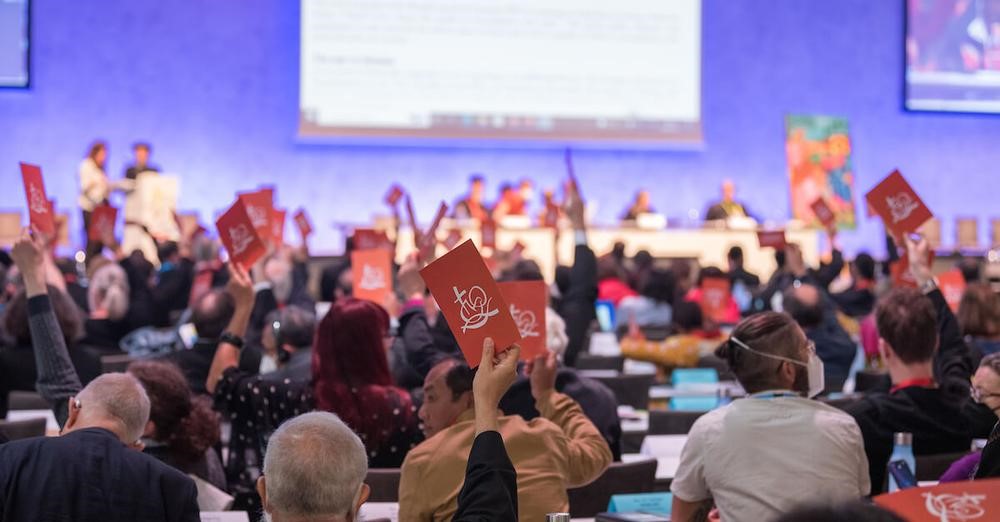
| World Council of Churches General Assembly puts Israeli apartheid on the global church’s table | |
Assembly participants raise orange consensus cards in affirmation of what is said during a closing business plenary at the 11th Assembly of the World Council of Churches, held in Karlsruhe, Germany.
(PHOTO: ALBIN HILLERT/WCC)
| |
Thursday morning, the World Council of Churches (WCC) wrapped up its nine-day General Assembly in Karlsruhe, Germany. One of the last pieces of business was to consider a controversial statement put forward by the WCC’s Public Issues Committee, Seeking Justice and Peace for All in the Middle East.
The WCC Assembly is the highest governing body of the World Council of Churches. Well over 3,000 participants from 352 member churches in 120 countries gathered for the COVID-delayed assembly that normally meets every eight years. Member churches and ecumenical partners come together for prayer, celebration and deliberation.
WCC Public Issues Statements often have a far-reaching impact, giving instruction and guidance on critical issues, speaking to the church and speaking for the church to governments and other secular and religious institutions.
This year, one such statement dealt with Israeli apartheid.
Here
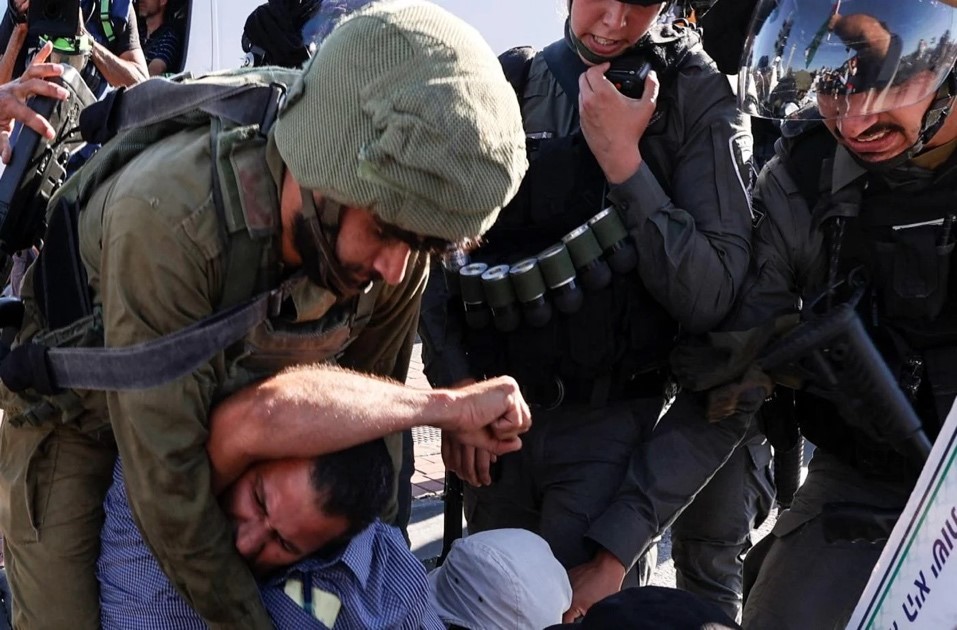
| Israelis take note: Armed resistance to occupation is legal, not terrorism | |
Israeli security forces detain a protester during a demonstration against settlement expansion, in the occupied West Bank town of Salfit,
on 27 July, 2022 (AFP)
| |
It is doubtful if more than a handful of Jews in Israel could tell you accurately how many raids the Israeli army conducted last week in Palestinian cities in the West Bank, the number of arrests they made, or the number of people they killed.
At the same time, it is doubtful if there were more than a handful of Israelis who had not heard of the shooting incident on a soldiers' bus in the Jordan Valley, on Sunday 4 September.
A Palestinian shooting at Israeli soldiers - as opposed to Israelis shooting at Palestinians - is not just an alarming “man bites dog” story that reverses the usual order, demanding extensive reports; in all of those reports, the event was defined as a terror attack and the Palestinian shooters as terrorists. Here
| |
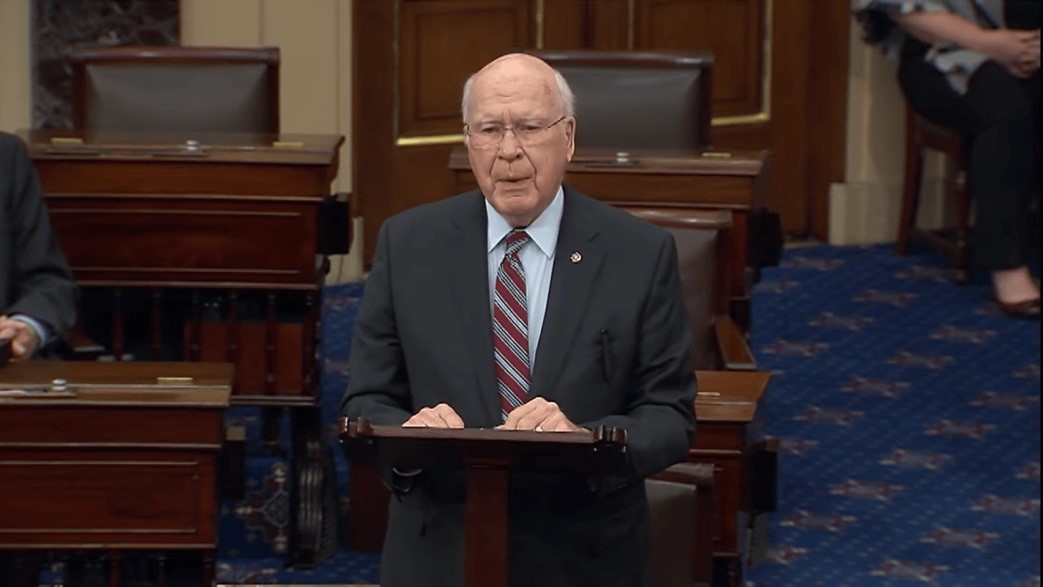
Israel’s denial of accountability for Abu Akleh killing may require cutoff of aid — Leahy | |
Sen. Patrick Leahy on Senate floor, Nov. 2021. screenshot from CSPAN. | |
|
Last week the United States government accepted Israel’s claim that the soldier who shot Palestinian-American journalist Shireen Abu Akleh in occupied Jenin on May 11 did not mean to kill her. But Israel has given no evidence for the claim.
And yesterday outgoing Vermont Senator Patrick Leahy gave a strong speech on the Senate floor challenging the U.S. stance and warning that the case could require a cutoff of American military aid. Here
| |
|
More Resources
Gaza farmer unearths Byzantine-era mosaic
Here
Israel watches closely as West Bank seethes Here
Hamas claims Palestinian right to offshore Mediterranean gas Here
Israel revised its West Bank travel restrictions in hopes of obtaining a US visa waiver, but they still discriminate against Palestinians Here
Sumud Story: A beloved activist lives and tells Palestine’s truth Here
#NoTechForApartheid: Amazon and Google Workers Protest $1.2 Billion Deal With Israel Here
Action
Urge US Administration to Hold Israel Accountable for Violations of International Law: Global Ministries, 3rd Thursday Here
Media Resources
Cry for Hope by Garth Hewitt, Palestine is Calling Album
From the heart of Palestinian suffering, Garth's latest song 'Cry For Hope' is in support of the Cry For Hope call from Kairos Palestine and Global Kairos for Justice, and all the churches of Palestine - their pleas for the worldwide church to support the people of Palestine so that there is justice and equality for all the people of the Holy Land, both Palestinian and Jew. All words and music by Garth Hewitt, © The Garth Hewitt Foundation. To listen to 'Cry for Hope,' go here. To support Garth's work, please buy this song on MP3 from his website here.
Jerusalem dancers from Haifa (music video) Here
| | | | | |