|
Upper Clark Fork Working Group
Fall 2022 Newsletter
| The goal of the Upper Clark Fork Working Group (UCFWG) newsletter is to help members learn more about the group, its meetings and activities, and relevant stories and opportunities. Have ideas and stories for upcoming newsletters? Please contact Madison Boone at madison.boone@montana.edu with your newsletter ideas, feedback, and questions. | | |
Meet members of the UCFWG and learn more about their roles and work. | Topic Discussions - Spring and Summer 2022 | Did you miss a recent UCFWG Topic Discussion? Want to revisit a specific topic or presentation? Find summaries of previous 2022 Topic Discussions and recording links below! | Upcoming Events and Opportunities |
Learn more about upcoming UCFWG events, workshops, and other opportunities of interest |
| |
|
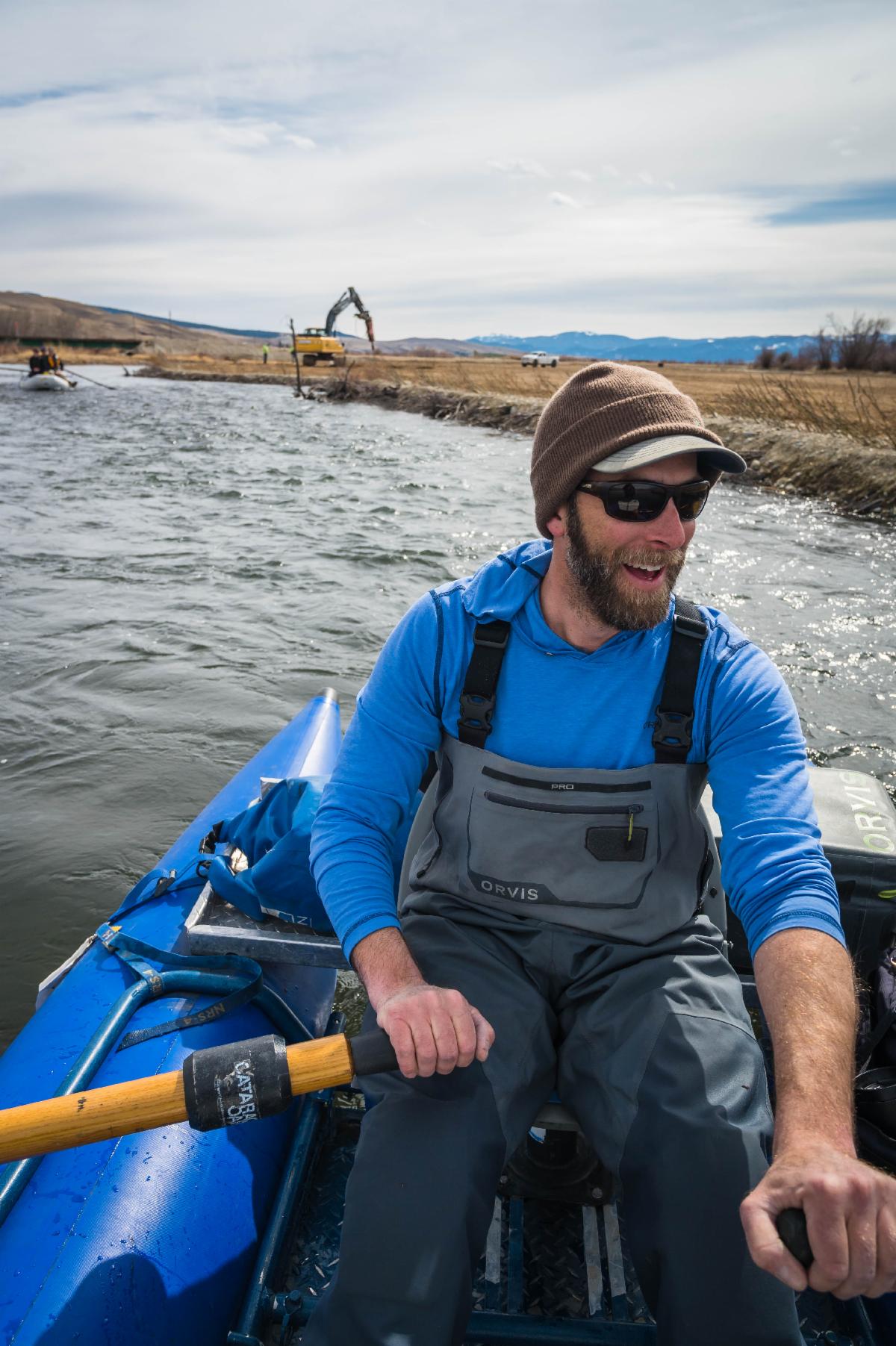
Alex Leone
Alex is a stream restoration scientist and policy analyst for the Clark Fork Coalition based out of Anaconda, MT. He currently works with public resource managers, universities, and the general public to design and implement restoration projects and studies in western Montana. His recent work in the upper Clark Fork has been focused on understanding how the influences of legacy mining contamination, natural stream processes, and the clean-up activities themselves impact aquatic habitats. Alex attended both the University of Montana (B.S. in Forest Management) and Montana State University (M.S. in Earth Sciences) and spends the majority of his free time in the summer chasing fish throughout Montana.
| |
2022 UCFWG Topic Discussions | | |
February 2022 - "Open Mic Research Discussion" | | |
|
The UCFWG held an informal “open mic” style discussion for the February topic discussion on February 10. This format allowed several researchers and other people involved in Upper Clark Fork River (UCFR) restoration and rehabilitation activities to present to the group. Presenters discussed the status of current working projects, networking for future meeting topics, and what the group should be focused on for the remainder of the spring.
The first presenter was Brian Bartkowiak, an environmental specialist at The Natural Resource Damage Program (NRDP). As a co-founder of the UCFR Stream Flow Group, he discussed progress with the group. The group’s mission statement is to pursue solutions that support and balance the water needs of communities in the UCFR watershed, build a clear, collective understanding of water use and stream flow, share information, and determine actions that could help get more water into the river. There are also several nonprofits and other partners involved, including tribes, the Montana Department of Natural Resources and Conservation, Fish, Wildlife & Parks, and watershed restoration coalitions.
The next presenter was Clarie Utzman, a Master's student studying systems ecology at the University of Montana (UM) with Dr. Maury Valett. Utzman works in the Aquatic Ecosystem Ecology lab at UM and focuses on a surface water quality monitoring program that includes 13 sites on the Clark Fork River and three of the river’s major tributaries. The Clark Fork has a long history of metal contamination and nutrient enrichment but little is known about the influence of wastewater treatment plant effluent on this water basin. There are six permitted discharge wastewater treatment plants closely associated with the river and Claire’s research will focus on the influence of wastewater treatment plant effluent on nutrient dynamics and microbial communities within the UFCR. She will conduct this research over the 2022-2023 growing season and will collaborate with Dr. Mark Matthew Church at Flathead Lake Biological Station and Dr. Mark Payhawk at the Stroud Water Research Center.
Following Claire, Marisa Sowles from Geum talked about the Lost Creek/Dutchman Complex. She updated the group on a project that is designed to assess how nutrient contribution from the Clark Fork is impacting water quality and possibly the fishery. The current focus of the project is addressing metals contamination from aerial deposition and historical gold work smelting in Anaconda, which also has nutrient water quality problems. Sowles explained that the program has developed a master plan for the site that includes strategies correlated to specific actions and prioritizes those based on criteria like costs, limiting factors, and feedback from individuals. The plan also discusses possible partners and their roles in the water quality improvement effort as well as a section that outlines a guiding framework for monitoring adaptive management once some of these actions are implemented. The project’s next steps involve going back to primary stakeholders and collecting feedback on the master plan and some of the higher prioritized actions that are being considered.
| | |
|
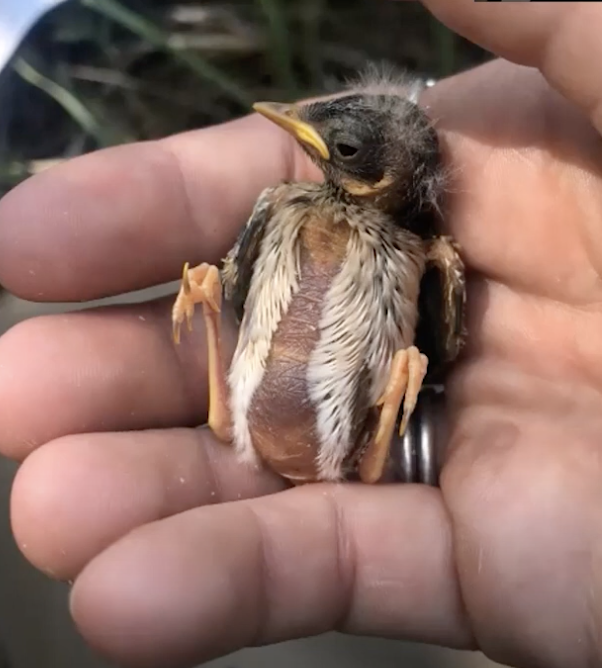
Bridger Creel then presented on bioamplification of mine waste in riparian food webs. Creel is a first-year Ph.D. student working in the Colman and Breuner labs as part of the Ecology and Evolution program at UM. Creel’sresearch is focused on assessing bioamplification of mine waste in the terrestrial portion of riparian food web using songbirds as a model system. His recent work includes searching the Upper Clark Fork for riparian songbird nests located in the floodplain and taking blood samples from songbirds to be analyzed for mine waste contaminant concentrations. Creel and others have successfully collected preliminary data for selenium concentration in songbird blood, which showed much higher levels of selenium concentrations than they expected. They are also seeing differences in concentration levels between sites and species. This indicates that mine wastes are amplifying toxic levels in the terrestrial riparian food web and that the main drivers of contaminant bioamplification are diet, morphology, and physiology. In the future, they will explore how contaminant loading in songbirds causes physiological stress and specifically how metals move through the riparian food web.
Mark Mariano from Rampart Solutions is working on developing a waterfowl production enhancement project. Swales, ponds, and wetlands adjacent to the UCFR have created diverse ecosystems and cover expansive areas from Butte to Missoula. Waterfowl are a relatively overlooked resource in Montana and there is a missed opportunity to highlight early remediation and restoration. Waterfowl are native to Montana and federally managed, and the state is unique in that it is a waterfowl production, migration, and wintering state. It is also third in the U.S. in terms of waterfowl production. Remediation and restoration work has already increased birding and waterfowl opportunities, but limitations to waterfowl recovery on the UCFR include lack of mature nesting habitat created by remediation and restoration activities and natural factors like predation that affect nest success.
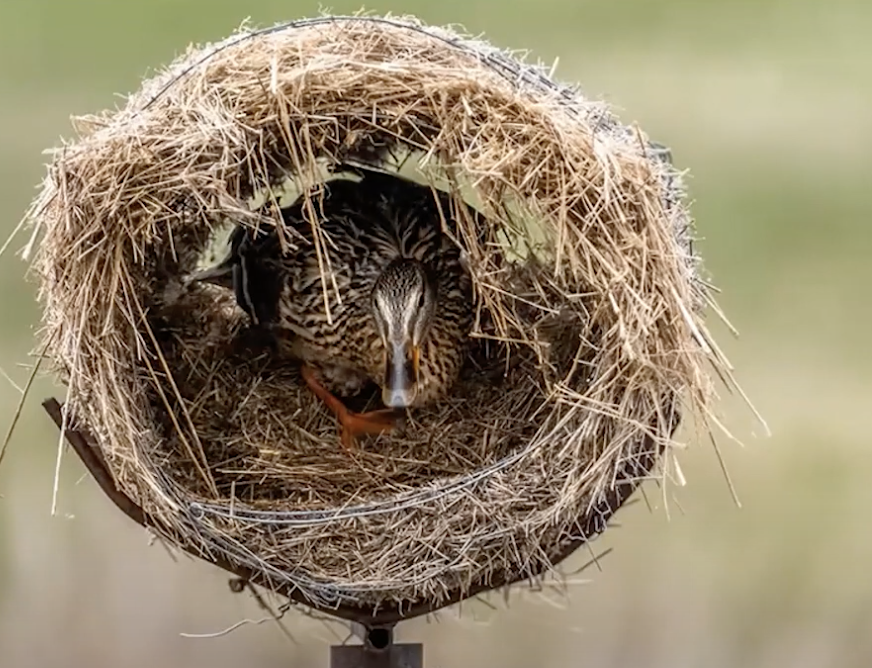
In order to address this lack of mature nesting habitats, Mariano has implemented the installation of waterfowl hen houses, which provide nesting habitat and increase nesting success by protecting vulnerable hens and eggs from predation. The hen houses are built out over the water which protects the eggs during incubation much better than nesting on the ground. The hen houses are specifically designed to help several species of duck like mallards, lesser scaups, Redheads, and goldeneyes. Canada geese don’t fit in the houses because their population does not need the help that the other species need. There are currently five hen house structures built. Mark and partners will monitor hen house use, brood size, and other factors during the coming nesting season, and will report their findings and continue to network for support and funding moving forward.
The next presenter was Matthew Nichols, who has been working for the Vallett lab since last April and is studying the influence of nutrient limitation on autotrophic activity along the enrichment gradient of the UCFR. Current data suggests that chlorophyll-a levels are orders of magnitude greater than in surrounding river systems and above target values. Nichols is conducting spatial assessments of nutrient limitation and their upcoming summer experiment design is meant to understand the more practical temporal progression of nutrient limitation.
Lou Volcku with the Montana Department of Environmental Quality (DEQ) then presented on a recent stream channel restoration project with Trout Unlimited (TU). He also talked about aspects of reestablishing floodplains in connection with streams, moving streams in a few locations, and repairing vegetation. All of the extreme channel work was conducted over this past summer 2021 and in the future, they want to see if the new vegetation will make it through the spring.
| | |
|
Dr. Chris Gammons, who teaches at Montana Tech in the Geological Engineering Department, spoke after Lou Volcku. Gammons studies sulfate isotopes and tracks possible biogeochemical cycling of sulfate in the UCFR. They are focused on sulfate because mine water released from Butte into Silver Bow Creek has increased sulfate concentration. This release could cause possible downstream cycling of sulfate that changes the sulfate stable isotopes. Their research tracks sulfate isotopes in minerals, mine water, rivers, and groundwater. Gammons is examining if there are any trends in sulfate isotopes going down the river. The goal of their work is to determine if either sulfur or oxygen isotopic composition changes along the river and what this means for the ecosystem.
Kara Cromwell, an aquatic ecologist and affiliate faculty member at UM, presented next as part of the topic discussion lineup. One of Cromwell's main research interests is parasite ecology. Cromwell Presented her research, in which she examines osprey carcasses for necropsy and analyzes their parasites. Ospreys have complex life cycles and parasites can be transmitted to the raptors via their prey, such as fish. Cromwell is working on a top-down research approach with an interest in understanding the ecology and life cycles of parasites in ospreys and tracking them down into aquatic food webs. This approach also maximizes the scientific contribution of fish that are already deceased.
Parasites affect bioaccumulation potential because parasites accumulate metals at many times the rate of the host. Fish with more parasitic tissue affects osprey that eat the fish because they consume more metal contaminants. Cromwell hopes to understand aquatic terrestrial linkages in the food web, which is one piece of a puzzle with multiple stressors. Cromwell has found two new species of parasites, each with a complete biology and ecology to investigate, which creates opportunities for further research. The big question she and others are currently pursuing is whether there are differences in fish parasites across sites, host taxa, or across trophic levels.
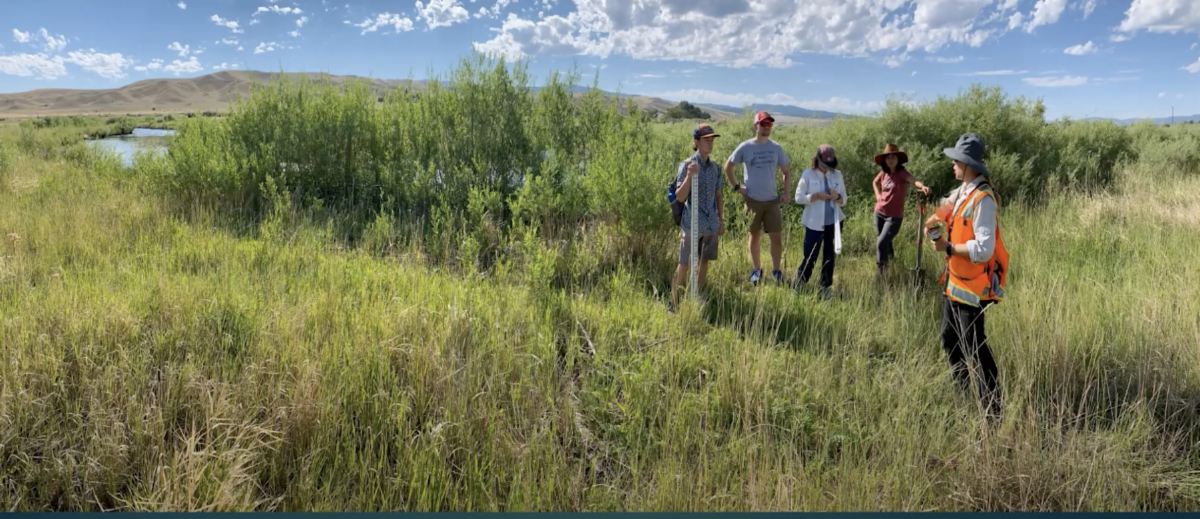
Following Cromwell’s presentation was Dr. Robert Pal, who works at Montana Tech and leads a restoration program to monitor floodplains. The project aims to set up long-term floodplain and riparian habitat monitoring along the UCFR following clean-up activities. Pal emphasized that it is essential that future restoration designs integrate, adapt, and learn from successes and failures from past phases. The two main components in the adaptive strategic plan are streambank monitoring and flood plain monitoring, and in his example, the team surveyed vegetation and soil at all phases of the example restoration. Pal and others also hope to establish a relationship between how soil is evolving and the impact it has on the vegetation. Pal is currently working on preparing a final report on his project for the NRDP.
| | | |
|
One of the final speakers was Dr. Vicki Watson, a Professor of Environmental Studies at UM. She is working with the DEQ and a nutrient working group to address recent legislation that has repealed numeric nutrient standards. While the numeric standards on the UCFR are still in place on the main stem, if the ruling stands, then the tributaries to the UCFR will lose numeric nutrient standards.
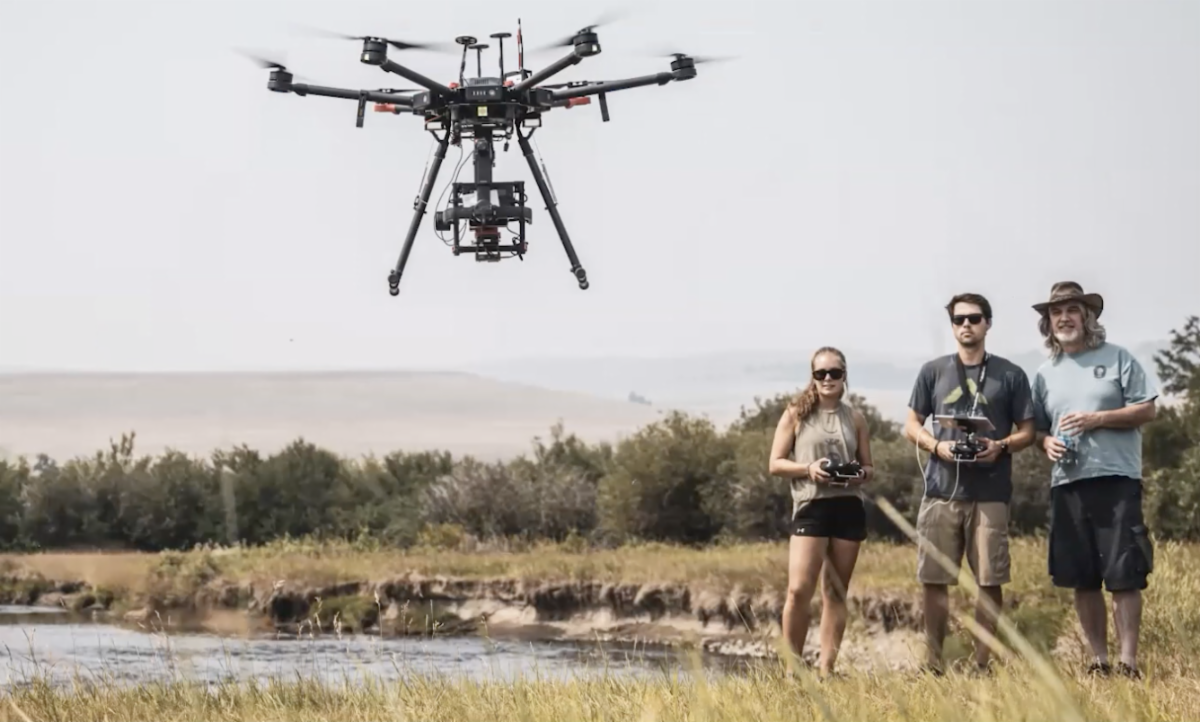
The final February topic discussion presenter was Riley Logan, a graduate research assistant at Montana State University (MSU). His research uses drone-based hyperspectral imaging to estimate algal pigmentation. Logan has flown the drone system over the UCFR to estimate things like chlorophyll-a. The broad objective of Logan’s current research path is to relate measurements of chlorophyll-a and phycocyanin concentrations to georeferenced airborne hyperspectral imagery along the UCFR. Logan has captured high spatial resolution data via his drone-based hyperspectral imaging system with a focus on two field sites along the UCFR during the summer of 2021. The end result of his work involved using brute-force methods to find preliminary spectral band combinations that give best predictions for chlorophyll-a and phycocyanin (algal pigments) from hyperspectral imagery.
The goal of this research is to determine a linear relationship between hyperspectral image data and the in-situ pigmentations that were measured. Logan wants to continue using current methods to collect more in-situ data over the coming summer. The research team is looking forward to adding more data points, expanding the analysis, and developing remote sensing methods that can complement water quality standards and how they are changing.
| | |
April 2022 - "USGS's Long-Term Monitoring Efforts on the Clark Fork and Opportunities for Collaboration" | |
|
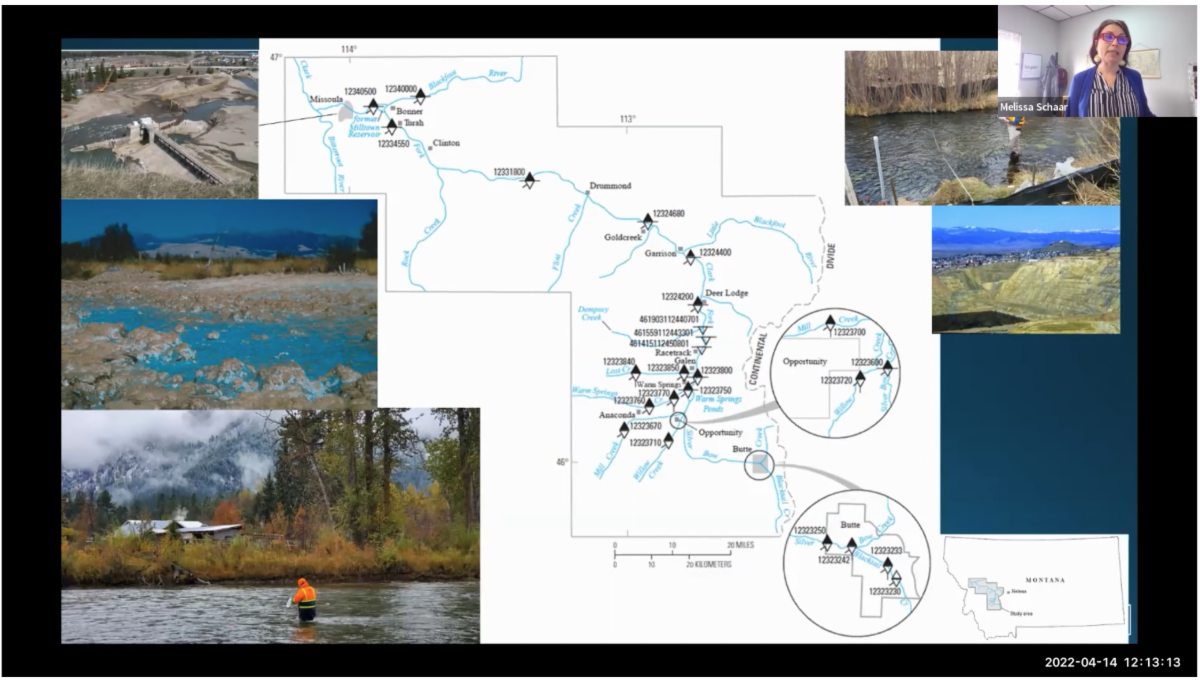
The UCFWG discussion topic for April 2022 focused on U.S. Geological Survey (USGS) long-term monitoring efforts on the Clark Fork River. Melissa Sharp, a hydrogeologist from USGS in Helena, was the main speaker at the April discussion. She is also the project chief for long-term monitoring in the Clark Fork Basin and looks forward to collaborating with CREWS to tackle groundwater issues in the Clark Fork. Melissa stated that there is currently a lot of work happening on the Clark Fork, but it is not well known. One of Melissa’s goals is to work on publicizing more of the work being done here, as well as to bring CREWS in to help do groundwater data synthesis and determine the extent of groundwater resources in the Clark Fork Basin.
In her presentation, Melissa outlined each USGS site on the Clark Fork River where they are currently sampling and monitoring water quality. The USGS began collecting surface water data on the river in 1985 to establish baseline metal concentrations, shortly after the basin was designated as a Superfund site. There are now stream gauges throughout the whole area, most of them collecting data on temperature, suspended sediment, specific conductivity, and continuous turbidity. A few monitoring sites also collect trace element data for biota and bed sediments. There are 24 total monitoring sites, 14 of which collect bed and biota data. Of the 21 stream gauges, 9 sites monitor continuous temperature, 10 sites monitor continuous turbidity, and 4 sites monitor continuous specific conductivity. A majority of these sites are heavily supported by the Environmental Protection Agency (EPA).
The USGS has reliable data on the Clark Fork River that dates back to 1929, which helps to establish baselines for the river and see how conditions have changed over time. Discrete water quality sampling occurs anywhere from 6 to 8 times a year, depending on seasonality and whether or not people can make it to the designated sites. Those working at sites on the upper part of the river sample for practically every constituent on the list, including streamflow, pH, specific conductance, temperature, and turbidity. Sampling for bed sediment and biota occurs once a year at the respective sites designated for those factors. The various Clark Fork River monitoring sites also have several turbidity monitors. Monitoring turbidity provides valuable information on the concentration of contaminants in the water and sediments in the basin. It also limits the inference on the transport of contamination during short and intense transport events such as late summer convective storms. In Deer Lodge, the turbidity monitors helped to capture periods of heightened risk between discrete sampling events. The turbidity monitors will be continuously run from March to September for the next three years, at least.
The current USGS discrete sampling schedule targets high flow conditions in the spring and early summer that follow snow melts. These samples will be tested for suspended sediment and associated trace metal contaminant metal transport. The goal of this work is to create a continuous record observing the full range and magnitude of sediment and contaminants due to various runoff processes, as well as aiding in isolating processes controlling trace metal concentrations originating from mine tailings and waste rock in the Upper Clark Fork Basin. The USGS currently has a study in review, “The Application of Surrogate Technology to Predict Real-Time Metal Concentrations in the Clark Fork during Superfund Remediation Activities in the Grant-Kohrs Ranch National Historic Site near Deer Lodge, MT.” This pilot study is meant to develop relationships among surrogates with metal concentrations and suspended sediment concentrations. Here, turbidity is a surrogate for metal concentrations. This work provides high-resolution monitoring tools for the Grant-Kohrs Ranch unit to estimate metallic contaminants to provide a scope for remediation activities as well as the effects of remediation, and was presented at the last USGS annual meeting.
All of the data collected by the USGS on the Clark Fork River can be accessed on the project webpage here. Melissa outlined that the next USGS annual meeting for the Clark Fork Basin will occur on October 19th and 20th, 2022, and will likely be held in Helena, MT. She hopes that people from the UCFWG come to the annual meeting and share some of their research because there is so much overlap and duplication in the data collection being done along the river. During the discussion, a member of the UCFWG highlighted an experience they had with their data and compared that to data collected by the USGS at a sampling site near their own. The final topic discussed at the April meeting was the creation of a subgroup or committee to tackle groundwater data in the Clark Fork Basin, as there is high interest within the working group to get the ball rolling on this. The Montana Bureau of Mines and Geology (MBMG) has a lot of interest in groundwater data, and there is also a big push from landowners in the area to establish this research to know more about the groundwater supply in their area. Further information will be sent out to interested parties about groundwater research and data collection in the Clark Fork Basin.
| | |
May 2022 - "Biogeochemical studies of rivers using autonomous sensors: Work in the UCFR" | |
|
For the May Topic Discussion meeting, Dr. Mike DeGrandpre, a Professor of Chemistry and Biochemistry at the University of Montana, shared information about the biogeochemical studies he is conducting using autonomous sensors in the Clark Fork River. DeGrandpre is an environmental chemist but has a diverse set of skills, like the ability to miniaturize some of the optical chemistry technology into sensors, which give him and his colleagues information about the environment. DeGrandpre is the cofounder of Sunburst Sensors, a company that designs and manufactures autonomous instruments that measure marine and freshwater inorganic carbon parameters like pCO2 (partial pressure of carbon dioxide) and pH. The company generates sensors and distribute them among the world's oceans to address the acidification of the oceans and use the signals in the water to learn about the ecosystem.
Researchers use these in-situ sensors because they are inexpensive and allow one to measure long-term seasonal or interannual variability, rather than the researcher having to go out and manually sample regularly, which is not always achievable because of the expense associated with sensor maintenance. Another application for autonomous sensors is in industrial monitoring following industrial output. Furthermore, the sensors can help detect short-term episodic events that might have toxicological consequences. Overall, the sensors can capture rapid events in order to collect relevant data.
The autonomous sensors provide ample data for estimating Gross Primary Production (GPP), which is calculated through Ecosystem Respiration (ER) along with Net Ecosystem Production (NEP). Using this technology, scientists can also look at factors like pH and how it can be used to estimate geochemical properties like solubility. Furthermore, DeGrandpre is interested in using sensor data for spatial visualization in educational settings.
The sensors focus on inorganic systems in water, specifically the partial pressure of CO2, pH, and alkalinity. Instead of using a probe, a larger instrument is employed in in-situ analyzers. Other in-situ sensors measure dissolved CO2, nitrate, and conductivity. The team conducts a lot of quality control to ensure the retrieval of good data. This work is done to ensure that there is a high level of accuracy since systematic errors add up to larger errors in the computation of GPP and respiration. Global examples of this technology include the long-term monitoring and recovery of the Oria River in Spain with improved waste treatment strategies. Many rivers in Europe have little sewage treatment. In 2003, a sewage treatment plant was installed on this river, and oxygen sensor data was collected. Before the treatment plant, the river consumed more organic carbon than it produced. After about 20 years following the installation of the treatment plant, the river had reached a neutral baseline, in which it was neither producing nor consuming more organic carbon.
In terms of this technology being used on the Upper Clark Fork River (UCFR), several sensors were installed along various stretches of the river. For example, CO2 sensors were deployed in the UCFR to compile data on the cycle of CO2 to decipher its controls and understand how it contributes to the atmosphere. Challenges do arise when implementing sensor systems on a river that has many features like the Clark Fork, features that include irrigation inputs, tributaries, pools, and trenches. This can mean that signals in these places do not match the data for the rest of the river and do not represent what is going on in the river.
DeGrandpre finished his presentation by providing an example of where sensor data did and did not match in the UCFR. He described an instance where three sensors were installed between Cattle Road and Garrison. The signals that were collected by these two sensors nicely overlapped with one another due to the uniformity of this stretch of the river. On the other hand, sensors placed in between Galen and Racetrack collected data from areas of the river that meander more and have more interaction with the environment, so very different signals were collected that do not match the data for the rest of the river. They found that Galen had higher pH levels and there was an offset in conductivity among the signals, indicating that there are a lot of solutes coming into the stream between the Galen and Racetrack locations.
| | |
|
Upcoming Topic Discussion Meetings
Thursday, November 10
at 12 p.m.
Topic Discussions are regular meetings that occur on the second Thursday of each month and feature a speaker or set of speakers presenting on a topic related to the UCFR.
Zoom link for all meetings:
https://umontana.zoom.us/j/97494359807
| |  |
|
Other Events
2022 Montana AWRA Section Meeting
"Historic Opportunity on a Historic Landscape"
October 12-14, Copper King Hotel & Convention, Butte
More information and registration
USGS Clark Fork Annual Meeting - postponed to Spring 2023
| | |
|
Have a Workshop Idea?
Please take the UCFWG Communication Poll and let us know what you are interested in. We would love to hear from you.
UCFWG Communication Poll
Have an Event you want Advertised to the UCFWG Community?
Send an email to either Madison Boone, madison.boone@montana.edu, or Andrew Hauer, andrew.hauer@umontana.edu, and we will work with you to post your event on our website, newsletter, and send emails to our community.
| | |
|
NSF Support Acknowledgement
This material is based upon work supported by the National Science Foundation under Grant No. OIA- 1757351. Any opinions, findings and conclusions or recommendations expressed in this material are those of the author(s) and do not necessarily reflect the views of the National Science Foundation.
| | | | |