|
Fall 2024
Multitudes Quarterly
| |
|
Dear Friends of UCSF Multitudes,
With the 2024-2025 school year in full swing, we're happy to share project updates from the field.
Please join us in celebrating the launch of Multitudes Version Two (MV2) at new school sites around the state, from Chula Vista to Klamath! This newsletter spotlights one of our early school partners, the Compton Unified School District, where MV2 training began last month.
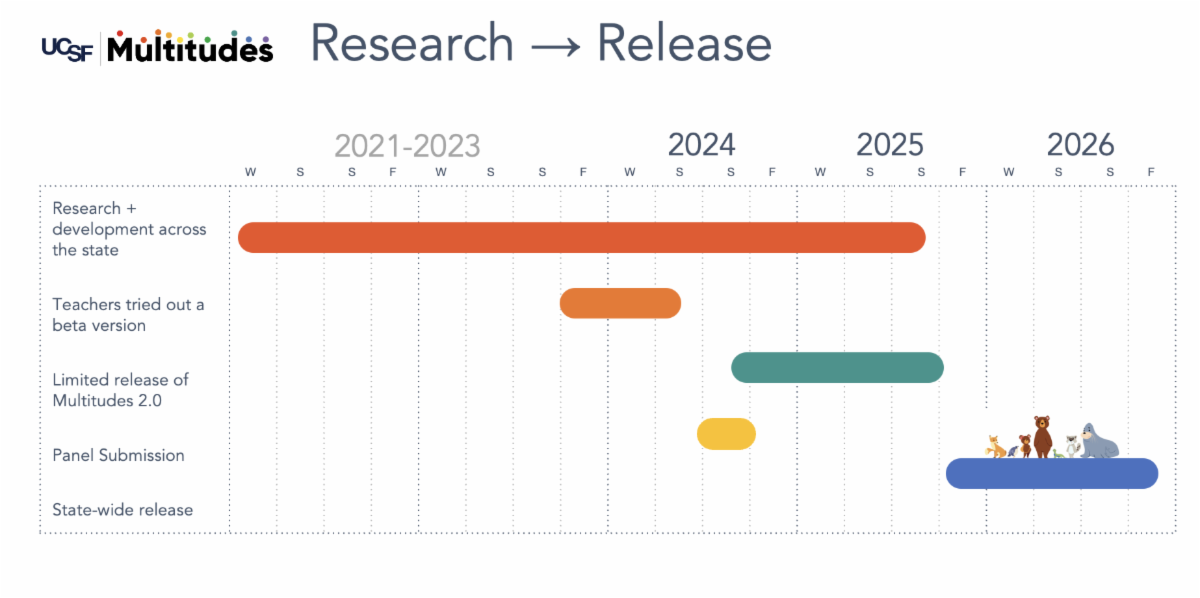
Over the summer we submitted the UCSF Multitudes universal screener to the state-appointed panel charged with selecting and approving these tools for California public schools. This application represents the culmination of three years of longitudinal research and assessment development. You can find out more about the panel’s mandate and timeline below, and we will be sure to update you with its decision this winter.
Finally, we share a reminder about the passage of Senate Bill 114 last year. This new section to the California Education Code has an impact on California public schools, and Multitudes is ready to help. Thank you for your support in this transformational research! We hope you have a wonderful fall season.
Yours,
Phaedra Bell
Director of Education Outreach
UCSF Dyslexia Center
| |
UCSF Multitudes 2.0 is LIVE... | |
 | 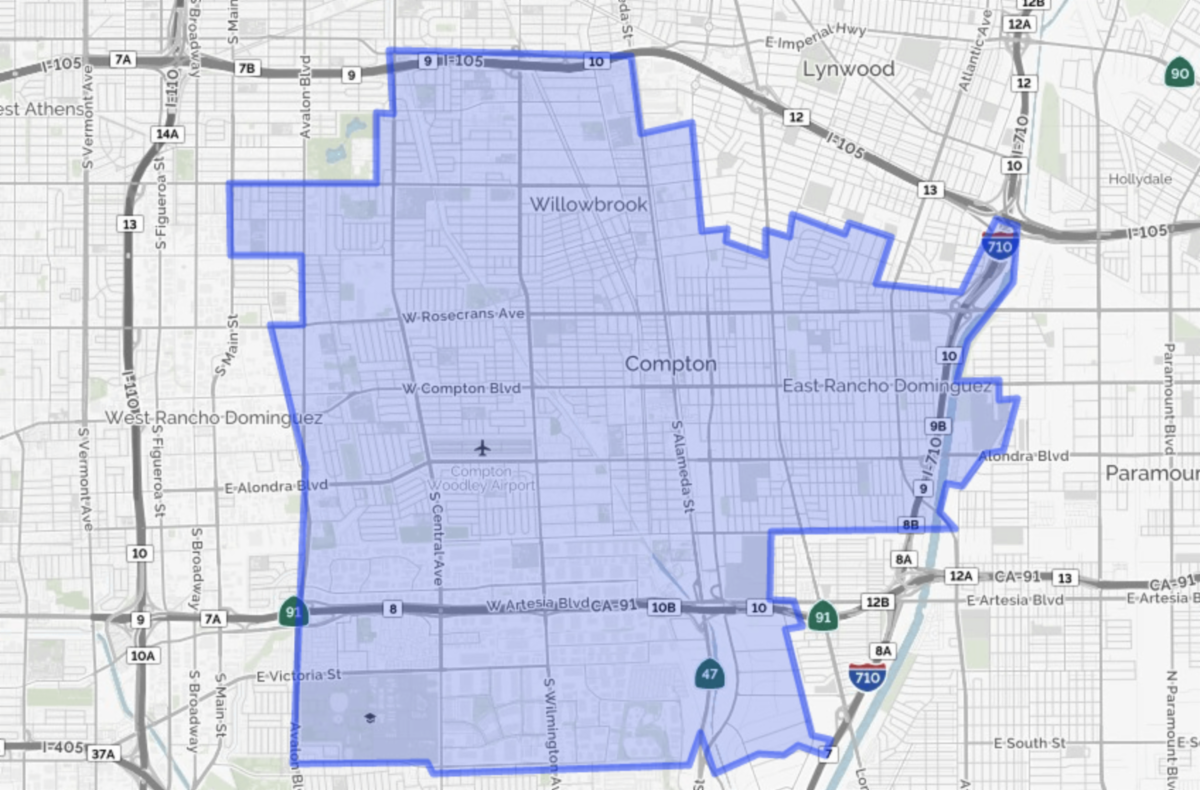 | |
This week, Compton Unified School District educators began using the Multitudes universal screener with some of their youngest "Compton Scholars". The twenty-one elementary schools of CUSD join up to two hundred schools across the state in a soft launch of the platform this fall, anticipating the statewide release in 2025.
This sunny, vibrant, suburban district spans the major neighborhoods of Compton City, sometimes called "Hub City" for its central location in Los Angeles County. Multitudes approached Compton Unified to be part of the Multitudes sample three years ago, and the relationship has blossomed through the efforts and persistence of local champions and the generosity of our initial research sites: Ralph Bunche, Charles Bursch, Clarence A. Dickison, Ralph Waldo Emerson, Martin Luther King Jr, and Ronald E. McNair elementary schools.
The faces of our L.A. based team are familiar on Compton campuses. Multitudes research assistant Eli Phipps says staff are cheerful and welcoming, and kids can't wait to play the "reading games": “When I come to classrooms, eyes grow wide, and all hands go up!" This year the team stands ready to assist CUSD staff as they learn the platform and participate in a post-screening survey of user experience.
Multitudes recommends screening after classroom instruction has begun. For kindergarteners, the window opens after eight weeks. "We want to level the playing field," explains Multitudes assessment developer Mónica Zegers, "as children arrive at school with varying language exposure and preschool experience."
First and second-graders can begin screening earlier, after a few weeks of settling in.
| 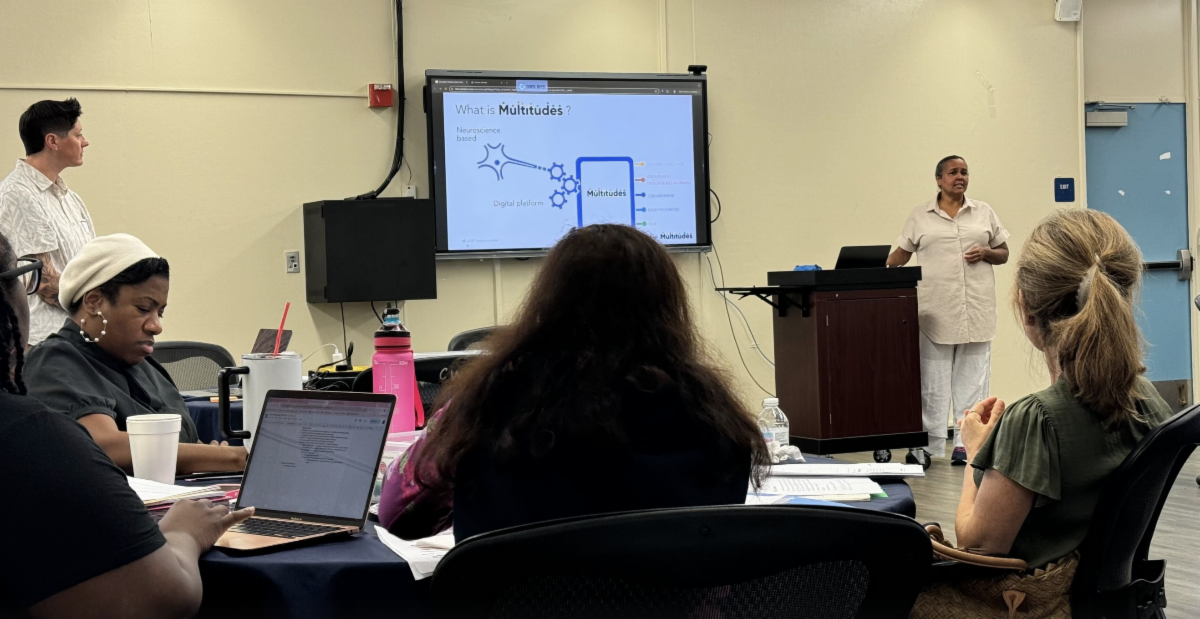 | |
Last month, in preparation for the fall screening window, Multitudes staff led an enthusiastic group of reading specialists from CUSD through an orientation to the platform. They learned to administer the screener, interpret results, and navigate the resource pages that provide intervention tips and toolkits.
Compton educators bring a wealth of community experience to their work in the district. Mariah Pospisil, a Learning Interventions Applied Research Manager for the UCSF Dyslexia Center and a Multitudes training facilitator, left inspired, “I am truly humbled to work alongside teachers with such dedication, who have devoted their careers to uplifting students.”
| "I'm excited! I do everything to get the kids excited about reading. My room, my earrings. I'm all about it!," — Kendra Hatchett, McKinley Elementary, Compton Unified School District | |
The Compton group previewed administration procedures for multilingual learners, parent-facing communications, and professional development resources that are built into the platform.
Kim Remyn, a third-grade teacher at Clarence A. Dickison Elementary, had heard about Multitudes but had not had contact with the team. Now she is a reading coach, and looking forward to the chance to use new tools.
“Now that I'm seeing kids in small groups, I'm seeing a lot of issues with reading. I’m hopeful that this can give some help, and strategies for next steps,” Ms. Remyn said.
Multitudes Version Two users across the state will provide valuable feedback to improve the platform for all learners. If your school is interested in using Multitudes this fall and taking part in this research, there is still time to sign up. Please click the link below to register! New user resources and FAQ can be found on our website. If your site has completed registration for MV2 and you are looking for immediate assistance, please visit our support page to submit a ticket.
| | |
California Education Code Section 53008 "What is it?" | |
|
When California Senate Bill 114 was signed into law by Governor Gavin Newsom last year, it included a provision, now established as California Education Code 53008, titled "Screening for Reading Difficulties."
The new law mandates universal screening for reading difficulties including dyslexia in kindergarten, first, and second grade, beginning in the school year 2025-2026. The goal of this legislation is to identify students who may struggle with pre-reading development, allowing timely interventions to prevent long-term challenges. Beginning next year, schools must screen all eligible children, communicate results with parents, and provide support and services "appropriate to the specific challenges identified by the screening instrument." For the full text scroll to Section No. 83 of the new code here.
The statute also directs the State Board of Education to appoint an independent panel to approve a list of screening tools that are culturally, linguistically, and developmentally appropriate for California's diverse student population. Schools will have until June 30, 2025, to make their selections.
Where does UCSF Multitudes fit in?
The Multitudes digital universal screener, developed by the UCSF Dyslexia Center, is uniquely suited to help California schools meet the requirements of the new law. Our English and Spanish language screeners have been validated with a representative sample of California school children from a variety of classroom instructional models to provide educators with the most accurate screening option available for our diverse and dynamic population. Our research-driven system translates the latest neuroscience into practice and ensures a continually updated, effective, and responsive platform that will integrate with emerging tools and technologies.
Where are we now?
The state-appointed Reading Difficulties Risk Screener Selection Panel (RDRSSP), convened this spring and is currently reviewing thirteen applications from various institutions and publishers, including UCSF Multitudes.
Monthly panel meetings are public. The agenda and information about how to attend the next meeting, on October 18th, can be found here.
The panel is expected to release a list of approved screeners by the end of December.
| |
|
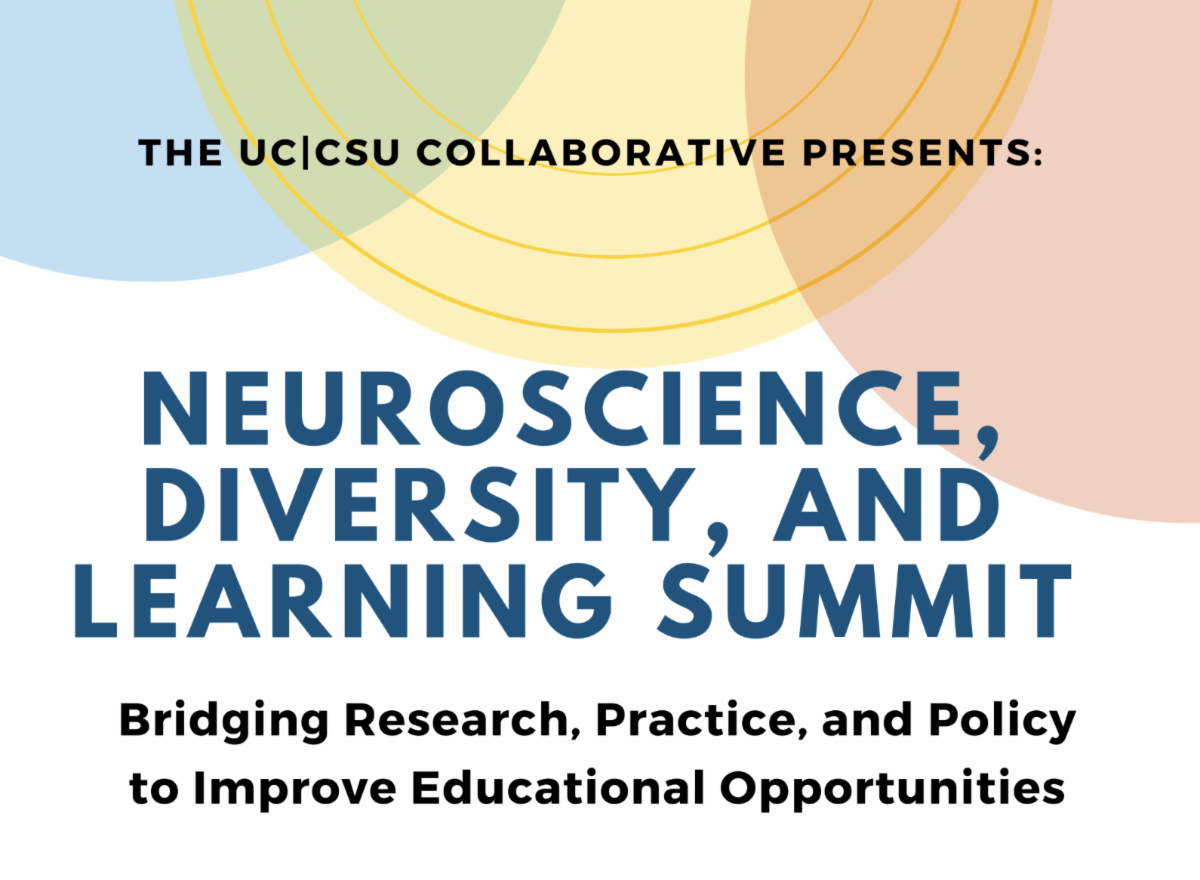
The UC|CSU Collaborative for Neuroscience, Diversity, and Learning is hosting its annual summit on Monday, November 18, 2024, in Carson, California.
Are you an educator or administrator in the K-12 space? Learn about connections between research and practice related to new education initiatives and policies in California. Network with educational leaders, practitioners, interdisciplinary researchers, policymakers, and community members to highlight the connections between neuroscience research, practice, and policy across the following four thematic strands:
- Supporting Neurodiverse Children as They Transition to School
- Language & Literacy Development Among Multilingual Children
- Executive Function and Self-Regulation in Adolescence
- Behavioral & Mental Health in Childhood
| |
|
Email multitudesinfo@ucsf.edu
| |
| | | |