September 2023

Join us at the SOEST Open House, October 21!

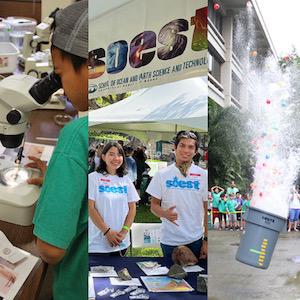
The 2023 SOEST Open House will be held on Saturday, October 21 from 10 am–2 pm!

This one-day event will showcase research, education, and service programs conducted by SOEST faculty, students, and staff. We’ll have a diverse array of entertaining and educational hands-on activities, demonstrations, lab tours, and just-for-fun activities. In conjunction with Discover UH Mānoa Open House, students, families, and community members of all ages are welcome to come and learn about volcanoes, tsunamis, El Niño, planetary exploration, hurricanes, coastal erosion, marine ecosystems, and so much more. 

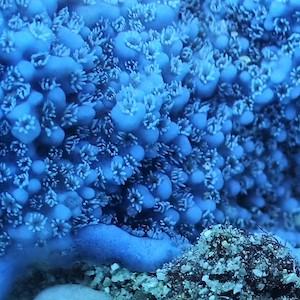
Polyps as pixels: innovative technique maps biochemistry of coral reefs

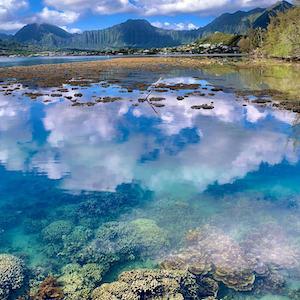
Using an innovative new approach for sampling corals, researchers at the Hawai‘i Institute of Marine Biology are now able to create maps of coral biochemistry that reveal with unprecedented detail the distribution of compounds that are integral to the healthy functioning of reefs. Biochemicals, such as amino acids and compounds that have antibacterial or antioxidant properties, have a direct relation to how resilient coral will be in the face of warmer ocean temperatures and ocean acidification. This new understanding is critical for effective reef restoration and management.

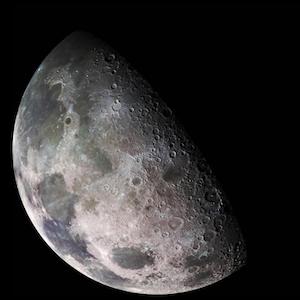
Earth’s electrons may be forming water on the Moon

Researchers at the Hawai‘i Institute of Geophysics and Planetology discovered that high energy electrons in Earth’s plasma sheet are contributing to weathering processes on the Moon’s surface and, importantly, the electrons may have aided the formation of water on the lunar surface. Knowing the concentrations and distribution of water on the Moon is critical to understanding its formation and evolution, and may provide water resources for future human exploration. Published in Nature Astronomy, the discovery may also help explain the origin of the water ice found in the lunar permanently shaded regions.

Long-lasting La Niña events more common over past century

Multiyear La Niña events have become more common over the last 100 years, according to a new study published in Nature Climate Change and led by SOEST atmospheric scientist Bin Wang. Five out of six La Niña events since 1998 lasted more than one year, including an unprecedented triple-year event. “The clustering of multiyear La Niña events is phenomenal given that only ten such events have occurred since 1920,” said Wang. They discovered these events are fueled by warming in the western Pacific Ocean. The findings shed light on the factors conducive to escalating extreme La Niña in a future warming world.

Human fingerprints on rainfall patterns revealed with machine learning

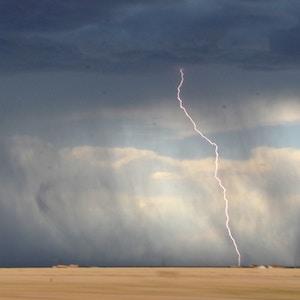
Using machine learning, an international team of researchers revealed that human-produced carbon dioxide emissions and climate change have already caused an increase in day-to-day rainfall fluctuations over the tropical eastern Pacific and the mid-latitudes. They devised a deep learning model to quantify the relationship between the intensity of global warming and global daily rainfall patterns from a state-of-the-art climate model. Their study, published in Nature, demonstrates for the first time that the human fingerprint is already visible in daily rainfall variability.

User-friendly aquaculture permitting website launched

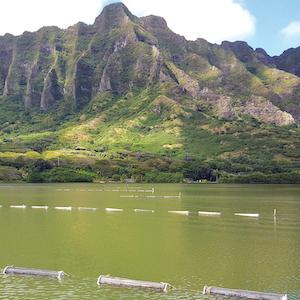
Anyone interested in operating an aquaculture business in Hawai‘i now has a user-friendly, easy-to-use website outlining the federal, state, and county permits and major requirements. The website, available on the University of Hawai‘i Sea Grant College Program Pacific Region Aquaculture and Coastal Resources Hub, outlines the permits and environmental requirements to site, build, and operate a business in the state, and assist companies in understanding the regulatory process. This continues Hawai‘i’s long history of supporting aquaculture development and enhancing food self-sufficiency and sustainability on all the islands.

Faculty Award

Earth scientists honored with Climate Adaptation Leadership Award

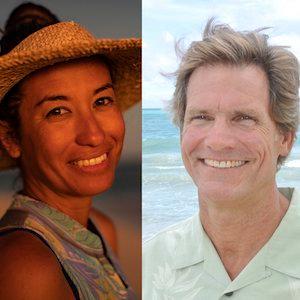
Haunani Kane, Earth Sciences assistant professor, and Chip Fletcher, professor and SOEST interim dean, were selected to receive a 2023 Climate Adaptation Leadership Award for Natural Resources. They were recognized for their exemplary leadership in reducing climate-related threats and promoting adaptation of the nation’s natural resources. “It has been an amazing opportunity to work and learn alongside U.S. Fish and Wildlife Society,” said Kane. “They are doing the most important work managing critical resources across the main Hawaiian islands and Papahānaumokuākea.”

New Funding

$4M for marine carbon removal projects could revolutionize climate mitigation, conservation

At the nexus of ecosystem conservation and climate mitigation, two groundbreaking research projects led by SOEST oceanographers received funding totaling nearly $4 million from the National Oceanographic Partnership Program (NOPP). The pioneering research is poised to transform the understanding of ocean alkalinity enhancement, a potential ocean-based tool to remove carbon dioxide from the atmosphere. The projects are among 17 funded through the recent NOPP investment to better understand marine carbon dioxide removal for mitigating climate change and ocean acidification.

$5M grant supports Hawaiian, Pacific Island students in marine, environmental sciences

Researchers from the Kewalo Marine Laboratory in SOEST and UH Mānoa Hawaiʻinuiākea School of Hawaiian Knowledge are leading a team of higher-education institutions across the Pacific with a $5-million grant that aims to support Native Hawaiians and Pacific Islanders pursue degrees in marine and environmental sciences. Over the five-year grant period, institutions expect to assist approximately 250 scholars and culturally connected students, allowing them to serve their local communities. The grant was awarded from the U.S. National Science Foundation to a consortium of Pacific Island institutions of higher education. 

Support SOEST
To show your support for SOEST, consider donating to the SOEST Enrichment
Fund. Your contribution helps maintain and improve the quality of the educational and research capabilities at SOEST so as to serve better all of its constituent communities.
Give
Stay Informed

Find upcoming events on the SOEST Calendar of Events and follow us on social media.

Facebook  Youtube  Instagram  

Know others interested in receiving news from SOEST? 

Share this newsletter sign-up form