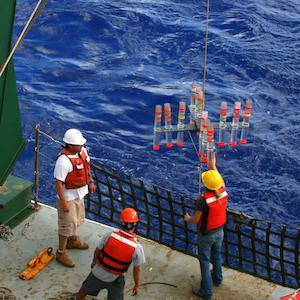
The University of Hawaiʻi at Mānoa is No. 12 in the world in oceanography, No. 15 in atmospheric sciences, and No. 51–75 in the category of earth sciences, according to the 2022 Global Ranking of Academic Subjects, which is considered one of the most comprehensive and objective rankings of world universities by subjects. UH Mānoa was one of approximately 1,800 universities in 96 countries and regions selected for the rankings, out of more than 26,000 total colleges and universities around the world. The criteria include research output, research influence, international collaboration, research quality and international academic awards.
|
|
|
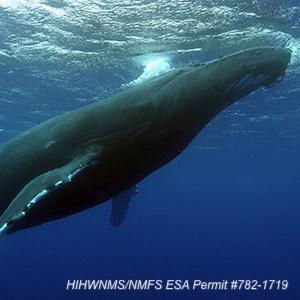
Humpback whales may one day avoid Hawaiian waters due to climate change and rising ocean temperatures, according to the new study published by a team of graduate student researchers, including Martin van Aswegen from the Marine Mammal Research Program in the Hawaiʻi Institute for Marine Biology. Humpback whales migrate toward tropical coastal waters, such as Hawaiʻi’s—with sea surface temperatures ranging between 70–82 degrees Fahrenheit—where they give birth to their calves. According to the new research, it is likely that some of these breeding grounds will heat up past the preferred temperature over the next century.
|
|
|
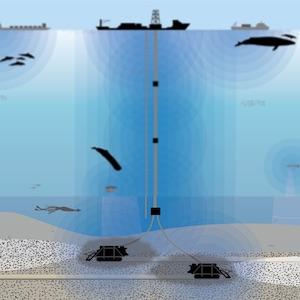
A study published in Science on underwater noise pollution from seabed mining operations found that noise from one mine alone could travel over 300 miles. This could affect the understudied species that live in the deep sea—many of whom likely use sound to communicate, find partners, locate food, and detect predators and other dangers. “Our modeling suggests that mining noise could impact areas far beyond the actual mining sites, including preservation reference zones, which are required under draft mining regulations to be unaffected by mining,” said Craig R. Smith, study co-author and SOEST professor emeritus of oceanography.
|
|
|
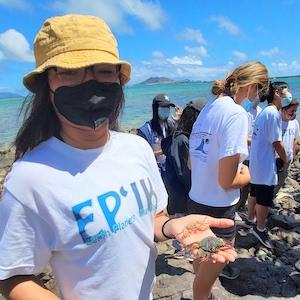
To help recruit and prepare an emerging generation of geoscientists in Hawai‘i, SOEST hosted 13 high school students and two teachers from across O‘ahu during an engaging two-week summer program that included lectures, laboratory experiments and field activities. Led by Bridget Smith-Konter, program coordinator and professor of earth sciences, the aim of the Earth, Planets, ‘Ike, and Kuleana (EP‘IK) Summer Program is to develop a meaningful and sustainable educational pathway for local students that provides Earth and planetary science learning opportunities while emphasizing ‘ike Hawai‘i (Hawaiian knowledge) and kuleana (responsibility).
|
|
|
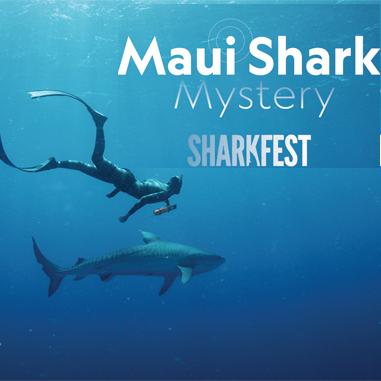
The majority of shark research content is narrated and led by male scientists, and enthusiasts. The focus of a new National Geographic docuseries titled “Maui Shark Mystery”, follows the stories of three female marine biology graduate students at the Hawaiʻi Institute of Marine Biology (HIMB) Shark Research Lab. The series aims to gain a better understanding of how and why tiger sharks utilize marine habitats around Oʻahu and Maui Nui. The three women featured are Paige Wernli, a PhD candidate; Chloé A. Blandino, a shark husbandry research specialist; and Julia Hartl, a PhD student and research assistant.
|
|
|
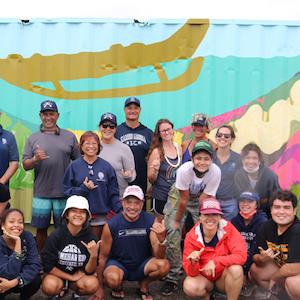
2022 is the Year of the Limu (seaweed). Recently, the Keahiakahoe Canoe Club, with support from the University of Hawaiʻi Sea Grant College Program and Kuaʻāina Ulu ʻAuamo came together to support the creation of a native limu mural on Sand Island. Kamehameha Schools’ Kapālama mural club students, led by seniors Annamarie Ellazar and Mailelauhulali Hoe, designed and painted the mural with themes of “togetherness” and “place” in mind, with an inherent Native Hawaiian perspective. These young artists and their kumu, Boz Schurr, dedicated four days of their spring break to complete the project. See a time lapse of the mural here.
|
|
|
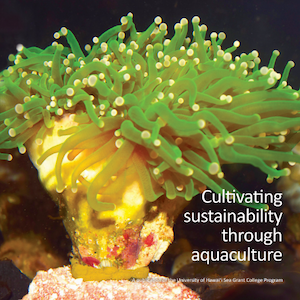
Twice per year, Hawai‘i Sea Grant produces a free magazine titled Ka Pili Kai that celebrates the people and places across the state of Hawai‘i and the Pacific region through vivid photographs and inspiring stories. The Kau 2022 issue, just released this month, explores current efforts in loko i‘a restoration and other aquaculture projects that are intended to lead us toward a more food sustainable Hawai‘i. We hope that you enjoy these updates from various aquaculture perspectives and that they inspire your own exploration of loko i‘a. Subscribe to receive your copy of Ka Pili Kai.
|
|
|
Jasper Konter, professor of earth sciences at the University of Hawai‘i at Mānoa and beloved colleague and friend, died unexpectedly on July 3. “Jasper was an exceptional and curious scientist, an inspiring teacher and mentor, and a compassionate and caring person who was deeply devoted to his family,” said Chip Fletcher, School of Ocean and Earth Sciences and Technology (SOEST) interim Dean. “He will be greatly missed.” Jasper is survived by his wife Bridget Smith-Konter, his two children, his father Gerard, and his sister Linda. A GoFundMe page has been created to support the family with the immediate needs surrounding the circumstances.
|
|
|
To show your support for SOEST, consider donating to the SOEST Enrichment
Fund. Your contribution helps maintain and improve the quality of the educational and research capabilities at SOEST so as to serve better all of its constituent communities.
|
|
Find upcoming events on the SOEST Events page and follow us on social media.
|
|
Know others interested in news from SOEST?
|
|
|
|
|
|
|