|
HCC Coding
For patients with high-risk chronic conditions, Hierarchical Condition Category (HCC) codes exist and allow teams to capture the complexity of the patients they care for and inform reimbursement rates for delivery of care to patients in risk-based care models.
For UMass practices on EPIC, there are several efforts underway to support improved capture of these codes to more accurately capture patient complexity.
Patients who appear to have eligible HCC codes that have not been billed in the past calendar year will have a flag showing in the patient's storyboard to prompt consideration of billing.
Clinicians may also receive outreach from coders for clarification if a missed opportunity is identified - prompt response to these queries will allow for updating of the codes.
When documenting HCC codes at least one of the following is required (think M.E.A.T):
Monitor - disease state/progression/tracking
Evaluate - reviewing of results or medications
Assess/Address - clinical thinking, record review, counseling
Treat - medication prescribing, management, referrals
New Safety Event Reporting LIVE!
The best way for us to identify ways to improve is to capture examples of when things do not go as expected. This provides the opportunity to identify trends, priorities, and places where quality and process improvement can impact our patient care outcomes and performance. The more we capture, the more we can grow.
UMass has rolled out a new process for reporting opportunities in our daily care of patients. We will highlight how to utilize the new tool at the next Department of Family Medicine and Community Health Quality Equity and Assurance Rounds, Tuesday October 27th, 2026, 12-1pm.
https://www.umassmemorialhub.org/departments/risk-management-safety-event-reporting-risk-and-safety
From the desk of John Greenwood/President of the UMass Memorial Accountable Care Organization (UMMACO)
The Screening for Depression and Follow-Up Plan measure is one of only a handful of electronic clinical quality measures (eCQMs) required by CMS for practice-level reporting which is indicative of both the prevalence and impact of depression on health and wellbeing. Specifically, the measure requires the use of a standardized screening tool such as the PHQ-9 to assess the presence and severity of depression in patients aged 12+. When documenting a positive PHQ-9, remember that the measure requires both an interpretation of the screening result and a follow-up plan.
Helpful reminder: A documented follow-up plan may include:
- Referral for behavioral health evaluation or treatment
- Medication management
- Patient education
- Safety planning
- Community resource referral
- Other clinically appropriate next steps based on patient's needs.
Epic User Tip: To streamline documentation and support eCQM reporting requirements, Epic users can leverage Standard Note templates that incorporate depression screening elements as well as other tools that support streamlined documentation - Job Aid or PPTX to learn more. Alternatively, the AMB DEPRESSION SCREEN SmartText can guide providers through the required documentation elements.
The clinical pharmacy team has produced another newsletter that pairs with the previous regarding GLP1 coverage. This newsletter includes information for SmartPhrases we have developed to provide information for MassHealth GLP1 coverage, the Medicare Bridge Program, and patient messaging for weight management GLP1 denials.
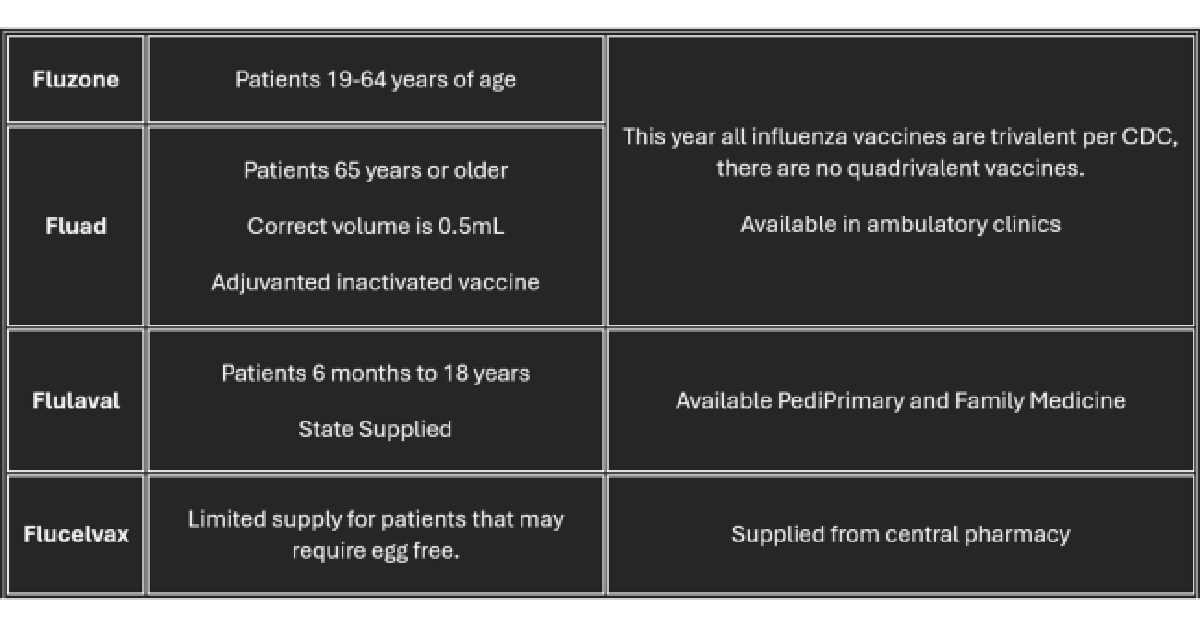
Reminder that all Umass Memorial caregivers must receive or decline the influenza and COVID vaccines by December 15th, 2026.
|