“Ending Mental Health Stigma in the Workplace”
|
|
Welcome to the UNDP Well-Being Bulletin - February 2025! This edition explores stigma and mental health at work, a challenge that affects both individual well-being and organizational success. Tackling stigma is not just the right thing to do, but a smart investment too. According to the World Health Organization (2021), globally, poor mental health costs economies $1 trillion annually in lost productivity and absenteeism, but every $1 invested in mental health programs yields a $4 return through reduced costs and better performance. In this edition, we examine why stigma persists, how to break it, and what we can all do to create a workplace where everyone feels safe, valued, and empowered. | |
Introduction
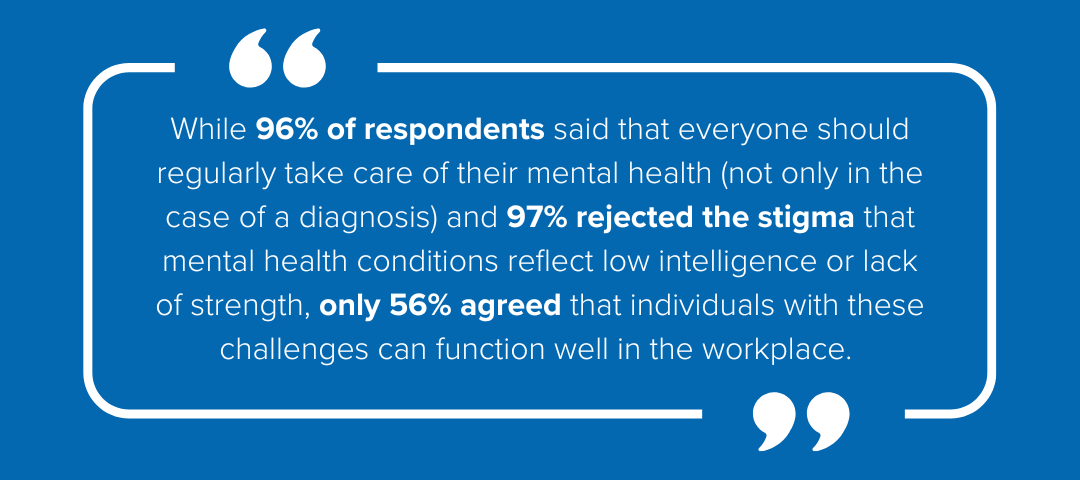
Mental health stigma in the workplace refers to negative attitudes, beliefs, or discrimination against colleagues who experience mental health challenges. This often discourages individuals from seeking help, opening up about their struggles, or accessing available support systems. Common myths, such as equating mental health conditions with weakness or incompetence, are deeply harmful. The recent quiz conducted among personnel as part of the 2024 October mental health awareness campaign highlights this challenge:
| |
While poor mental health can impact productivity, the right support—such as access to resources, workplace accommodations, and a stigma-free environment—enables individuals to manage challenges and excel. Stigma often hides in assumptions that someone struggling is “less reliable,” “unpredictable,” or “unable to handle pressure,” reinforcing barriers to inclusion. Beyond the numbers, stigma fuels isolation, stifles collaboration, and weakens retention. By dispelling these myths, we can start breaking the cycle of misinformation. | |
The Workplace as a Space for Change
The workplace has immense potential to challenge stereotypes and foster environments where mental well-being is a priority. External surveys show that while employers recognize mental health as a significant workplace issue, the stigma associated with mental illness prevents many employees from seeking help. By understanding these barriers, workplaces can promote a culture of inclusion and support.
Leaders can address stigma and normalize mental health conversations by creating a safe and supportive environment for employees. They could lead by example by sharing personal experiences or challenges regarding mental health to foster trust and openness across teams. Doing this sets the tone for employees to feel safe, valued, and encouraged to prioritize their mental health without fear of judgment.
| |
|
Breaking the Cycle of Misinformation
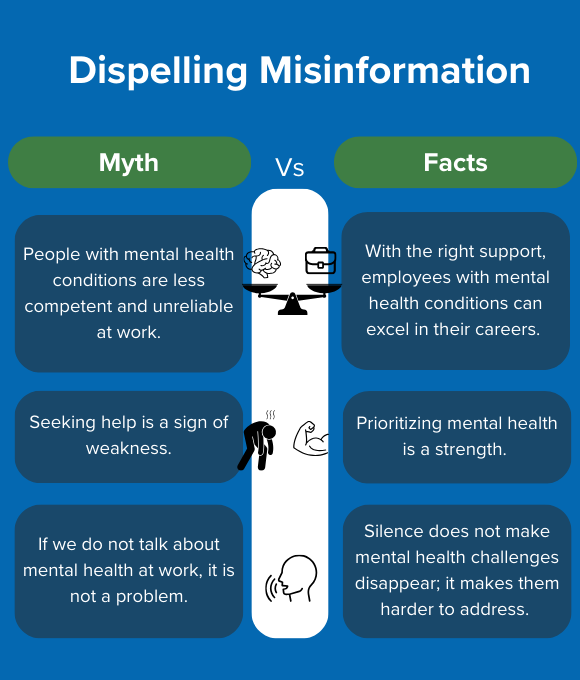
One of the biggest contributors to mental health stigma is misinformation. Misconceptions about mental illness often lead to harmful stereotypes, such as the belief that people with mental health challenges are less competent or unreliable. These myths perpetuate fear, discrimination, and silence, creating a cycle that is hard to break.
As the quiz showed, a significant percentage of people still underestimate the capacity of individuals with mental health challenges to grow professionally.
Here are common myths that reveal misinformation:
| |
|
The Financial Cost of Stigma and Why Investing in Mental Health Pays Off
Beyond personal well-being, mental health has a direct financial impact on organizations. When stigma prevents employees from seeking support, businesses face increased absenteeism, disengagement, and turnover—ultimately affecting performance and productivity.
Facts about the cost and benefit of investing in mental health:
-
Poor mental health costs the global economy $1 trillion annually due to lost productivity, absenteeism, and presenteeism (WHO, 2021).
-
Within the UN system, almost 30% of sick leave cases are linked to mental health concerns (UN, 2018).
-
Every $1 invested in mental health programs yields a $4 return through reduced healthcare costs, improved engagement, and higher productivity (Chisholm et al., 2016).
-
Employees with good mental health are 23% more productive (WHO, 2022).
-
Addressing stigma reduces absenteeism and strengthens overall team morale.
-
Psychological safety fosters innovation and problem-solving, leading to stronger organizational outcomes.
| |
|
UNDP’s Commitment to Mental Health
In alignment with the UN System Workplace Mental Health and Well-Being Strategy, UNDP continues to lead efforts to create healthier workplaces. We are dedicated to embedding well-being into our organizational culture through initiatives like People for 2030.
By integrating mental health into broader diversity, equity, and inclusion efforts, the UNDP sets an example for how organizations can tackle stigma head-on. Furthermore, UNDP’s continued support of mental health is reinforced through partnerships with other professionals/organizations and the integration of wellness policies into ongoing training and awareness sessions.
Now that 2025 is here, let us make it a year of action against stigma. Start by:
-
Exploring the Learner’s Corner – Deepen your understanding of mental health and workplace well-being while challenging your own biases and learning how to foster a more inclusive environment.
-
Watching Webinars – Hear from experts on how to build a stigma-free workplace and gain practical insights on supporting a colleague who may be struggling.
-
Using the Well-being App – Visit the Practical Advice and Self-Assessment sections to reflect on your own mental well-being and discover ways to promote wellness practices in your team.
Additionally, consider leading an open conversation about mental health within your team or department to encourage transparency and build empathy. A simple, ‘How is everyone doing today?’ can be a powerful way to start.
Together, we can create a workplace where everyone feels safe, supported, and empowered to deliver their best. Get familiar with the available services and learn how the UNDP Well-being team can support you here.
| |
And remember, your contribution is vital in creating a healthy working environment! | | | | |