ADAPTATION FINANCE BULLETIN |
UNFCCC Adaptation Committee | |
Spotlight on decisions adopted at COP 29 | |
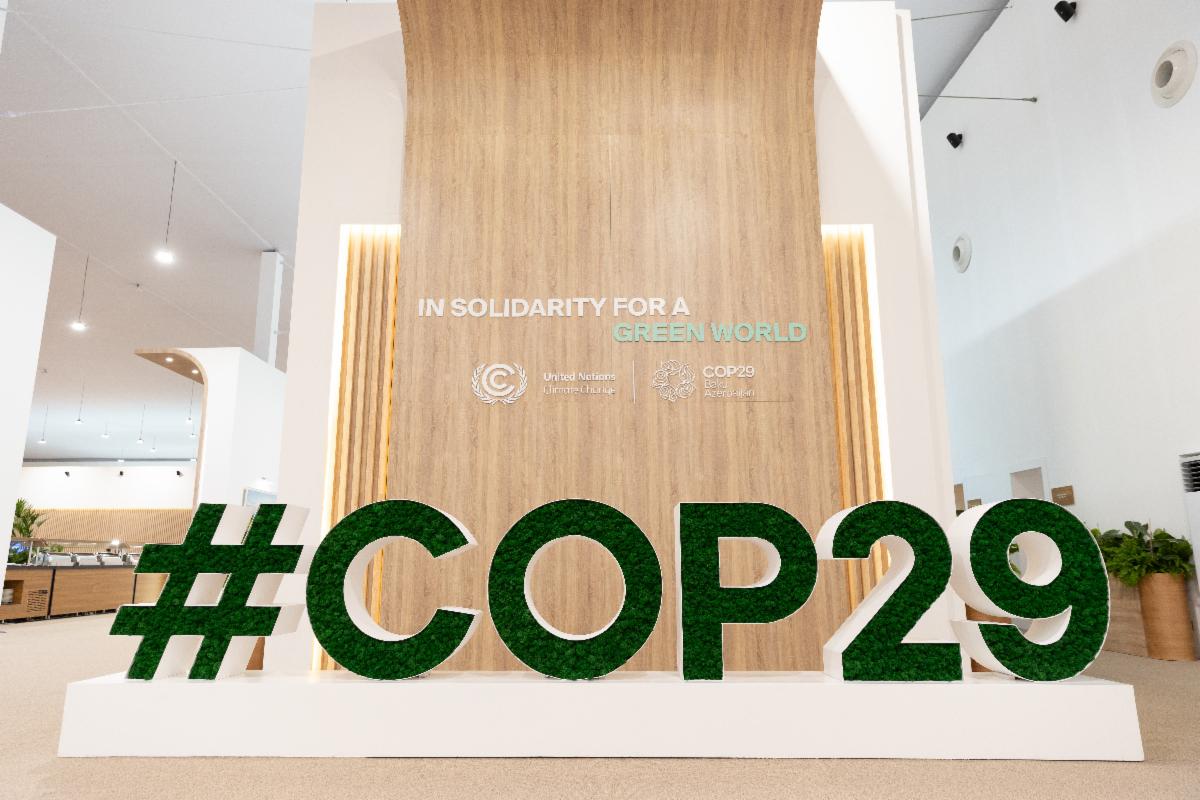
Photo credit: Habib Samadov/ UNFCCC | |
|
The twenty-ninth session of the Conference of the Parties to the UNFCCC (COP 29), the nineteenth session of the Conference of the Parties serving as the meeting of the Parties to the Kyoto Protocol (CMP 19), and the sixth session of the Conference of the Parties serving as the meeting of the Parties to Paris Agreement (CMA 6) yielded a wide range of decisions relevant to adaptation finance as follows below.
-
In relation to the new collective quantified goal on climate finance, the CMA decided to set a goal of at least USD 300 billion per year by 2035 for developing country Parties for climate action. Among other things, the decision recognizes the need to dramatically scale up adaptation finance, including taking into account the global goal on adaptation and the targets of the UAE Framework for Global Climate Resilience.
-
Decisions taken by the CMP and the CMA on matters relating to the Adaptation Fund welcomed the 2024 annual report of the Adaptation Fund Board, as well as progress and decisions of the Board in areas such as outlining an enhanced readiness programme, implementing the updated gender policy and action plan, updating and strengthening the strategic results framework, and work on complementarity and coherence with other multilateral climate funds. Furthermore, the CMA requested the Adaptation Fund to provide updates on its activities and scope of support in relation to assisting developing country Parties in their efforts towards implementing the UAE Framework for Global Climate Resilience.
-
The Guidance to the Green Climate Fund from the COP and the CMA encourages the Board to support the increased use of alternative financial instruments and structures with a view to increasing public and private finance for mitigation and adaptation projects in developing countries. The COP and the CMA also requested the Board to continue to streamline and simplify access to funding.
-
The COP invited the Global Environment Facility, in the context of programming for the climate change focal area under its ninth replenishment, to consider ways of increasing the contribution of the GEF project portfolio to adaptation, as appropriate, in line with its mandate. It also noted with concern the absence of a pledging session for the Least Developed Countries Fund and the Special Climate Change Fund at the session owing to the small number of pledges, and requested the GEF to further streamline the processes of these funds to simplify access for eligible countries, as appropriate.
-
On matters relating to the least developed countries (LDCs), the COP underscored the importance of prompt approval and disbursement of funding for readiness projects by the GCF for the formulation of national adaptation plans (NAPs) and welcomed the new strategy and modalities of the GCF’s revised Readiness and Preparatory Support Programme. It also requested that the LDC Expert Group (LEG), in collaboration with the GCF, continue to raise awareness among LDCs of the accreditation process for direct access entities, and encouraged the LEG to regularly invite GCF direct access entities of LDCs to participate in its NAP writing workshops.
-
On the global goal on adaptation, the CMA decided that the final outcome of the United Arab Emirates–Belém work programme should include, where applicable, quantitative and qualitative indicators for enabling factors for the implementation of adaptation action, including means of implementation.
-
The COP and the CMA welcomed the first report of the Board of the Fund for responding to Loss and Damage and issued the first-ever guidance to the Fund. In addition, both the COP and the CMA approved the arrangements between the COP, the CMA, and the Board of the Fund, thereby bringing the arrangements into force.
-
The COP and the CMA took note of the 2025 focus area of the Paris Committee on Capacity-building, namely capacity-building for designing holistic investment strategies, bankable projects and stakeholder engagement aimed at strengthening the implementation of nationally determined contributions and national adaptation plans in developing countries.
Other related decisions taken at the Conference include:
| |
News from the multilateral climate funds at COP 29 | |
|
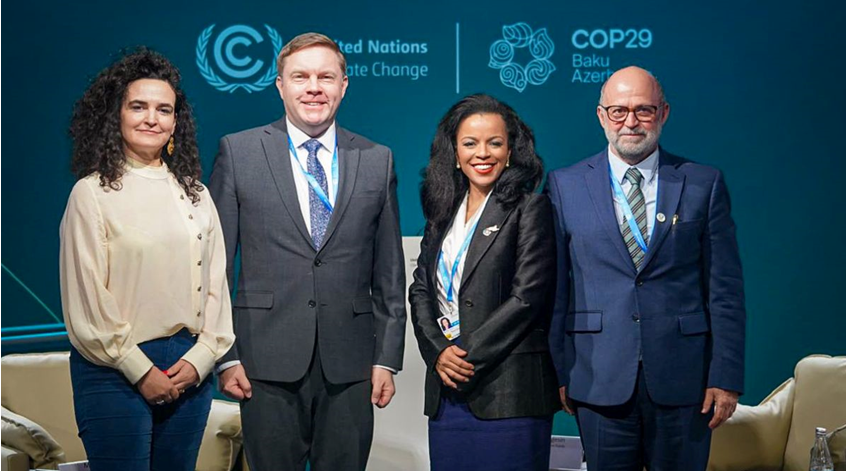
Mafalda Duarte, Executive Director of the Green Climate Fund; Mikko Ollikainen, Head of the Adaptation Fund; Tariye Gbadegesin, CEO of Investment Funds; Carlos Manuel Rodriguez, CEO and Chairperson of the Global Environment Facility at COP 29
Photo credit: Green Climate Fund
| |
Multilateral climate funds undertake a range of
joint activities at COP 29 | |
At COP 29, the multilateral climate funds (the Adaptation Fund, the Climate Investment Funds, the Global Environment Facility, and the Green Climate Fund) jointly hosted the Climate Funds Pavilion. The Pavilion featured a varied programme of events, announcements, and launches. Much of its programming focused directly on adaptation, such as events on investing in adaptation and resilience, the role of the climate funds in the global goal on adaptation, and a book launch on local adaptation in practice.
COP 29 also saw the launch of the Climate Project Explorer, an AI-powered tool designed to allow users to explore climate projects funded by all four multilateral climate funds. Through the platform, users can search projects by country and theme.
Moreover, the heads of the four funds issued a joint press release underscoring the importance of multilateralism in responding to climate change. They highlighted the nearly USD 50 billion in funds they have jointly channeled towards climate action, and the USD 250 billion they have mobilized through co-financing with private and public sector partners. At the same time, they noted that funding channeled through them has amounted to under three per cent of international public climate finance provided to developing countries, and that they stand ready to channel a larger proportion of climate finance to where it can have the greatest impact.
Finally, at a side event jointly hosted by the COP 29 Presidency and the Multilateral Climate Funds, titled “Catalyzing Climate Impact,” the four funds committed to accelerate efforts to align with each other and enable climate action from a broader range of financiers, including the private sector and Multilateral Development Banks.
| |
News from the Adaptation Fund | |
Photo credit: Kamran Guliyev/ UNFCCC | |
Over USD 130 million in new pledges for Adaptation Fund
made at COP 29 | |
At COP 29, contributors announced USD 133 million in new pledges to the Adaptation Fund. Contributing states included Belgium, Denmark, Germany, Iceland, Ireland, Norway, South Korea, Spain, Sweden, and Switzerland. The pledged amount, however, falls short of the USD 300 million resource mobilization goal for 2024. | |
News from the Global Environment Facility | Photo credit:Habib Samadov /UNFCCC | |
Global Environment Facility announces USD 20 million in grants for adaptation innovators
At COP 29, the Global Environment Facility (GEF) announced the latest winners of its Challenge Program for Adaptation Innovation. This program seeks to pilot and de-risk new approaches to adaptation funding. USD 20 million in grants were awarded to the winners, who were selected from over 100 proponents worldwide.
The winning project concepts represent a wide range of targeted stakeholders, regions, and objectives. For example, the Women Adapt project seeks to catalyze women-led climate-smart investments in West Africa, while the Pull Finance Initiative for Climate Adaptation aims to incentivize innovation and deployment of adaptation technologies in the Caribbean.
| |
News from the Green Climate Fund | Green Climate Fund Board approves support for Early Warnings for All initiative and decides to establish regional presence at 41st meeting | |
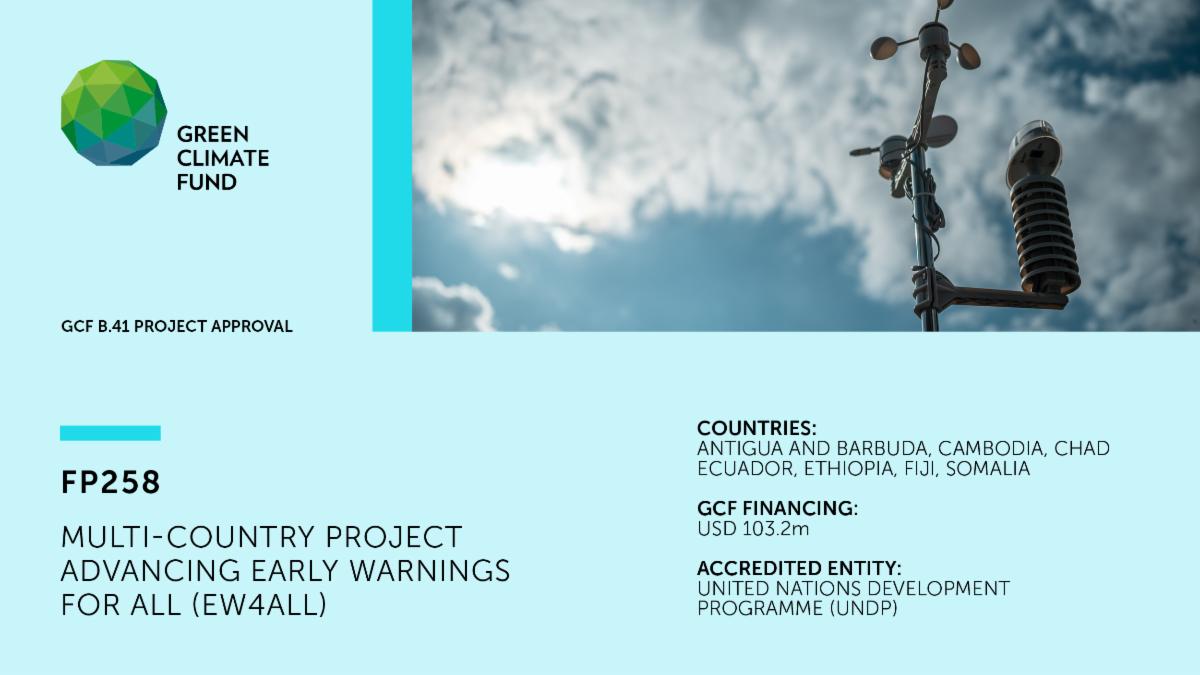
The Green Climate Fund (GCF) Board approved USD 686.8 million for 11 projects in 42 countries at its 41st meeting. Of these, 6 projects focus on adaptation, while the remaining 5 are cross-cutting. Support for adaptation approved by the Board includes a USD 103.2 million grant in support of a multi-country project to advance the United Nations Early Warnings for All initiative in seven countries (Antigua and Barbuda, Chad, Cambodia, Ecuador, Ethiopia, Fiji, and Somalia).
Other projects approved by the Board include first-time single-country investments in Serbia to enhance forest resilience and in Togo to strengthen the resilience of vulnerable countries in high climatic and disaster risk areas.
Additionally, the Board approved six new accredited entities, five of which are national and regional entities, and decided to establish a regional presence to bring it closer to the countries it serves, enhance access to the Fund, and increase the climate impact of its projects.
| Photo credit: Kiara Worth/ UNFCCC | Green Climate Fund engagements at COP 29 | |
The GCF counted over 350 engagements during COP 29, including events, meetings, negotiations, and more. Four GCF Project Preparation Facility grants were announced during the conference, which includes support for the ‘Building a Water-Resilient Bogotá-Region Landscape’ project. This project aims to reduce climate risk for half a million people from highly vulnerable rural communities and a quarter million urban residents in Colombia.
At a high-level roundtable hosted by the COP 29 Presidency on scaling up adaptation finance for achieving the Paris Agreement’s global goal on adaptation, the GCF outlined how it is supporting some of the Presidency’s adaptation initiatives, including the COP 29 Declaration on Water for Climate Action and the Baku Initiative on Human Development for Climate Resilience. The GCF has invested USD 7.3 billion in adaptation, with 64 per cent of this portfolio currently allocated to SIDS and LDCs.
In addition, the Government of Sweden pledged USD 763 million to the GCF. This pledge increased the total amount of funds for the 2024-2027 programming cycle up to USD 13.6 billion from 34 countries and one region.
Other notable developments and announcements that took place during the conference included:
- GCF reaffirmed its commitment to access for Indigenous Peoples, closing the climate finance gap for children and youth, supporting locally led adaptation projects, and strengthening climate information and early warning systems.
- GCF and other partners launched GAIA, a USD 1.48 billion blended finance platform that will support high-impact adaptation and mitigation projects in up to 25 developing countries, with GCF as a first loss investor.
- GCF launched Annex III of its “Sector guide: Water security” providing guidelines on designing climate-resilient sanitation projects.
- GCF and UNHCR signed an MOU to enhance climate finance for displaced communities.
- GCF and SPREP announced the launch of the Pacific Youth Academy, which will support Pacific youth in developing grassroots climate action campaigns.
| |
|
News from the Fund for responding to Loss and Damage
| |
Photo credit: Kiara Worth/ UNFCCC | |
Launch of high-level dialogue on coordination and complementarity | |
|
COP 29 saw the launch of the annual high-level dialogue on coordination and complementarity, which was co-convened by the Fund for responding to Loss and Damage and the United Nations Secretary-General. Held on the margins of the World Leaders Climate Action Summit in Baku, the launch event included representatives of States, international organizations, multilateral banks and funding arrangements.
During the dialogue, participants recognized the urgent need to assist developing countries in responding to loss and damage and recognized the need for strengthened collaboration, underscoring the importance of addressing gaps in coordination and knowledge-sharing within existing funding mechanisms.
| News from the Adaptation Committee | Photo credit: Kiara Worth/ UNFCCC | 30 years of adaptation: building on the past to get ready for the future | |
At COP 29, the Adaptation Committee (AC) hosted an event on 30 years of adaptation – building on the past to get ready for the future. The event marked 30 years since the entry into force of the Convention, and featured the launch of two new products.
The first, a report, was prepared to commemorate the 30-year anniversary and provides readers with an overview of the history and evolution of adaptation over the past three decades. This includes an overview of the various funds established through the multilateral climate process to support adaptation.
Second, the AC launched its new interactive portal on the State of Adaptation Action by Parties. This portal contains profiles of each country that is a Party to the Convention. The country profiles provide information on adaptation action undertaken along the adaptation cycle and are based on the latest information available in national reports and communications submitted to the UNFCCC. It includes information, for example, on whether countries have climate (adaptation) finance strategies, national accredited or implementing entities for the GCF or Adaptation Fund, respectively, and much more.
| |
News from the Least Developed Countries Expert Group | |
Photo credit: Least Developed Countries Expert Group | |
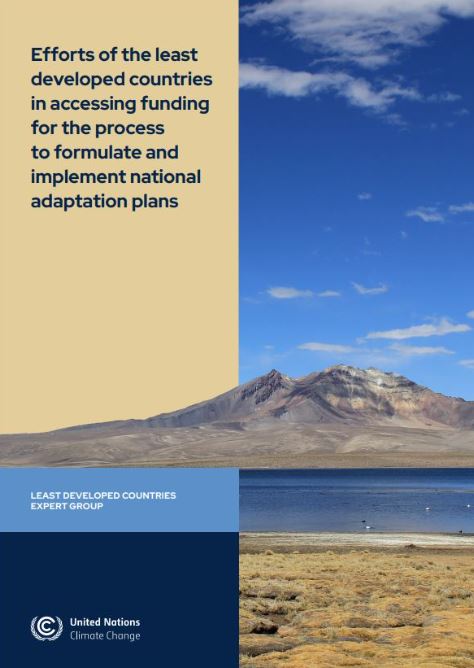
Least Developed Countries Expert Group publishes report on efforts of the LDCs in accessing funding for the process to formulate and implement NAPs | |
This synthesis report, the third in the series, focuses on the efforts of the LDCs to access funding for the process to formulate and implement NAPs, considering those LDCs that have completed and submitted a NAP. It looks at the efforts made by these countries to access funding from the Green Climate Fund, the Least Developed Countries Fund, the Adaptation Fund and other sources to update their NAPs and implement the policies, projects and programmes identified therein.
It reflects on the LDCs’ experience, best practices, challenges, gaps and needs in relation to accessing funding and sets out possible recommendations for further supporting the LDCs.
| |
Least Developed Countries Expert Group holds 47th meeting in Angola | |
The LEG held its 47th meeting in Luanda, Angola, from 18-21 February 2025. Discussions at the meeting touched on a variety of topics, ranging from an update on the NAP 3.0 initiative to priorities and needs for support for the LDCs in 2025.
The meeting also included discussions regarding support to the LDCs with representatives of the LDCs and organizations including the Adaptation Fund Board secretariat, the Green Climate Fund secretariat, the Global Environment Facility and its agencies, and regional centres and networks.
The report of the meeting will be made available in due course.
| |
News from the Standing Committee on Finance | |
Photo credit: Habib Samadov/ UNFCCC | |
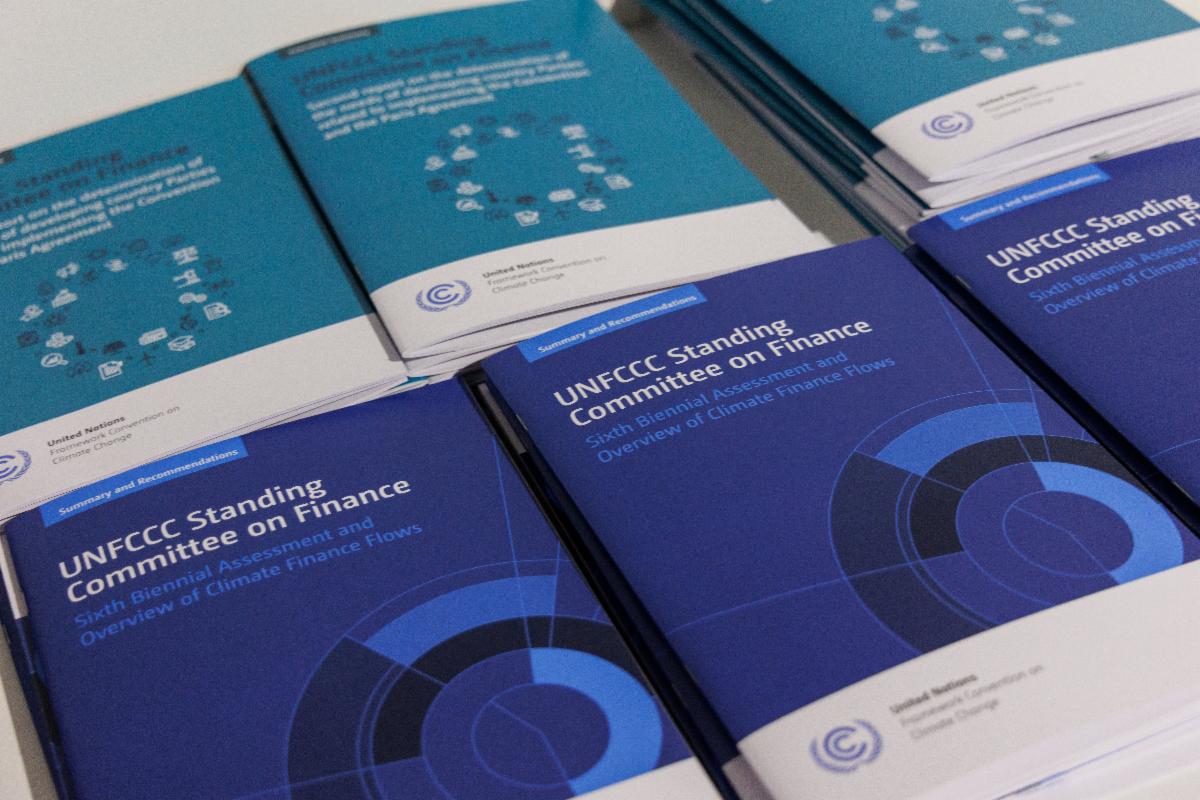
Standing Committee on Finance presents flagship reports
at COP 29 | |
At COP 29, the Standing Committee on Finance (SCF) held an event to present its flagship products developed in 2024. These products include the Biennial Assessment and Overview of Climate Finance Flows, the Needs Determination Report, the USD 100 progress report, the Common Practices Report on Definitions of Climate Finance and the 2024 Forum on Gender-responsive Financing.
The SCF presented key findings from these reports, and invited participants to dive deeper by exploring “galleries” of each report set up around the room.
| |
|
Outcomes of 36th meeting of the Standing Committee on Finance
| |
The SCF held its 36th meeting from 18-19 February in Bonn Germany. At the meeting, the SCF discussed a variety of matters, including mandates that emerged from COP 29 and CMA 6 and the updated workplan of the Committee; the 2025 Forum of the Committee; its approach to preparing draft guidance to the operating entities of the Financial Mechanism; the seventh Biennial Assessment and Overview of Climate Finance Flows; and the third Report on progress towards achieving the USD 100 billion goal.
The SCF considered a synthesis of submissions made by Parties and observers on the 2025 SCF Forum, which will focus on accelerating climate action and resilience through financing for sustainable food systems and agriculture. Among other things, the submissions underscored the intertwined roles of adaptation and mitigation in sustainable food systems and agriculture. This synthesis will be updated.
| |
News from the Paris Committee on Capacity-building | |
Photo Credit: Kamran Guliyev/ UNFCCC | |
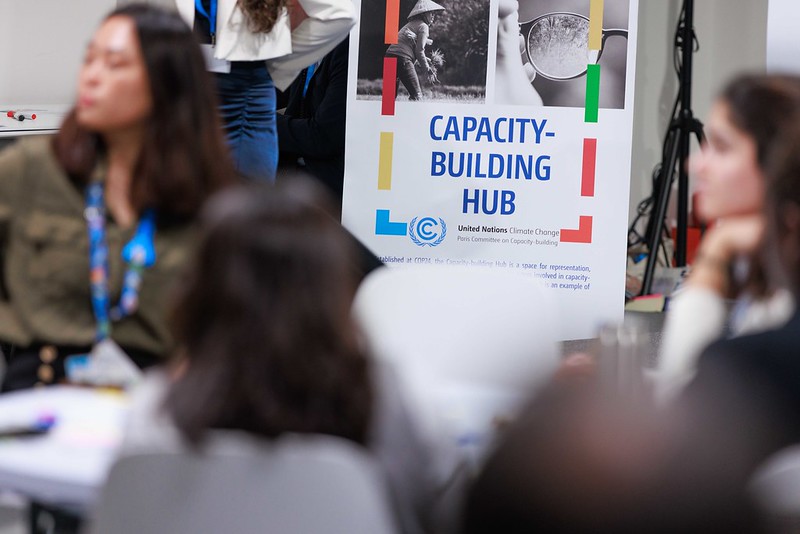
Adaptation finance at the 6th Capacity-building Hub | |
|
The Paris Committee on Capacity-building hosted the 6th Capacity-building Hub at COP 29. The Hub included a thematic day on finance for NAPs, which featured eight sessions and 35 experts that highlighted a wide range of capacity gaps and needs, as well as proposed actions. For example, enhancing private sector involvement through tax incentives, subsidies and blended finance was identified as a proposed action to help address the current shortfall in adaptation funding.
Relevant insights were also identified during the Hub’s other thematic days, such as the private sector capacities day and the capacity-building tools and methodologies marketplace day.
| |
Photo Credit: Kamran Guliyev/ UNFCCC | |
Dialogue mandated by the first global stocktake takes place at COP 29 | |
|
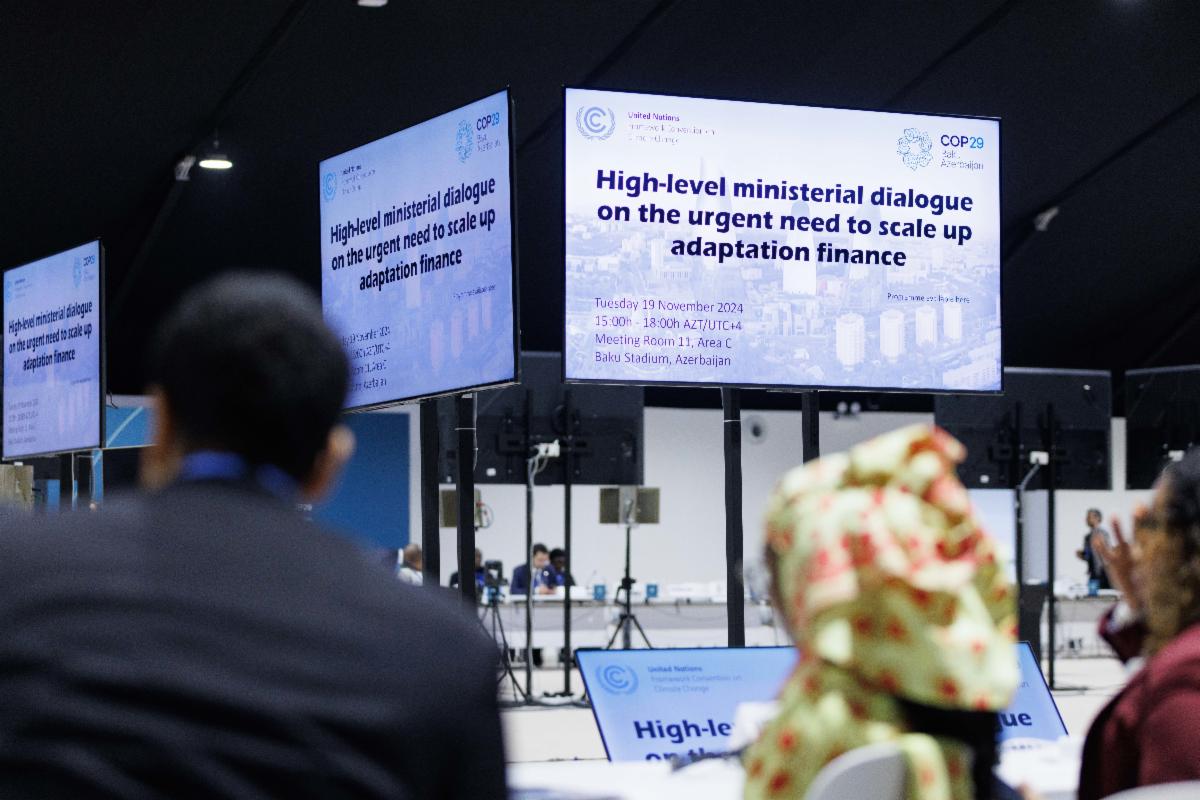
On 19 November 2024, the COP 29 Presidency convened the mandated high-level ministerial on the urgent need to scale up adaptation finance, taking into account the adaptation-related outcomes of the global stocktake, and to ensure the mobilization by developed country Parties of the adaptation support pledged.
The dialogue was co-moderated by H.E. Jiwoh Emmanuel Abdulai, Minister of Environment and Climate Change of Sierra Leone and H.E. Ed Miliband, Secretary of State for Energy Security and Net Zero of the United Kingdom.
Participants reflected on what actions are needed to close the widening adaptation finance gap and what can be done to provide the necessary predictability and clarity in the provision of adaptation finance; what is needed to ensure national adaptation plans can be financed; how finance can be scaled up to accelerate adaptation action, including through implementation of national adaptation plans; how access to adaptation finance can be simplified and fast-tracked; and how to ensure adaptation finance is delivered to developing countries, especially those that are particularly vulnerable.
| |
Photo Credit: Kiara Worth/ UNFCCC | |
Multilateral development banks issue joint statement at COP 29 | |
|
A joint statement was issued by multilateral development banks (MDBs) at COP 29, stating their firm commitment to support ambitious climate action. The statement included an estimate that their annual collective climate financing for low- and middle-income countries will reach USD 120 billion by 2030, including USD 42 billion for adaptation. In addition, the statement highlighted support provided by MDBs for developing NAPs, NDCs, and other related plans and strategies.
| | | | |