HOT FLASH!
The Newsletter, IX
| |
Connecting and empowering you with the latest lifestyle research regarding menopause and menopause-related topics
Building a menopause empowered community one study at a time
| |
Menopause Stage Awareness | |
As we leave Perimenopause Awareness Month (September) and kickoff Menopause Awareness Month (October), in this Vol IX of HOT FLASH! The Newsletter, we are excited to do a quick review of the essential menopause stages that are often referred to in menopause-related research. While every person born female that goes through menopause will experience the duration of each stage differently, we can get a sense of the general timeline of menopause and how long some of the various signs of menopause may last.
The concept of "second puberty," as we refer to the entire menopausal transition in our program Changing with the Change, brings forth a unique set of challenges that echo those experienced during the first puberty, particularly in terms of body and mind acceptance. Join the next Changing with the Change group series as we turn these challenges into stepping stones to our best selves in this stage.
|
Four Menopause Stages
The stages of menopause are primarily defined within the medical context by what is happening with your menstrual cycle (hormones fluctuations make them difficult to track, especially in the early stages). Actively tracking your periods using a period tracker or journal can give you valuable awareness and insights into your body’s rhythms and fluctuations as well as your menopause stage. Keeping a record can also enable you to identify changes and, ultimately, engage in meaningful discussions with your healthcare provider. (If you are concerned about data privacy, especially in the post Roe v Wade environment, check out this Consumer Reports privacy guide to period trackers and this app-alternative guide.)
"PREmenopause"
-
People born female enter puberty and their reproductive stage after Menarche, or, their first menstrual period.
- EARLY: period cycle gradually becomes regular
- PEAK: periods are regular
- LATE: subtle changes in period/cycle flow/length
"PERImenopause"
-
When changes in the reproductive and menstrual cycle and period are persistent and consistent.
- EARLY: period/cycle flow/length fluctuates
- LATE: entire periods are skipped (known as amenorrhea - no periods)
NOTE: Other signs and changes of menopause such as hot flashes, joint pain and/or hair and skin changes will likely occur during perimenopause. Taking action to optimize your overall menopause journey can make a big difference at this time. Becoming intentional about the "big 4" of wellness - i.e. getting better sleep, making dietary changes, focusing on stress management, and moving, stretching and training your body - can improve your quality of life into the next stages.
"Menopause"
-
The single day that signifies the absence of a menstrual period for one full year. (This transition is officially recognized as a final "pause" due to the fact that the last menstrual period is retroactively identified based on the absence of menstruation for 12 consecutive months.)
"POSTmenopause"
-
The rest of life following the menopause for people born female, or the (1+) years following the last menstrual period.
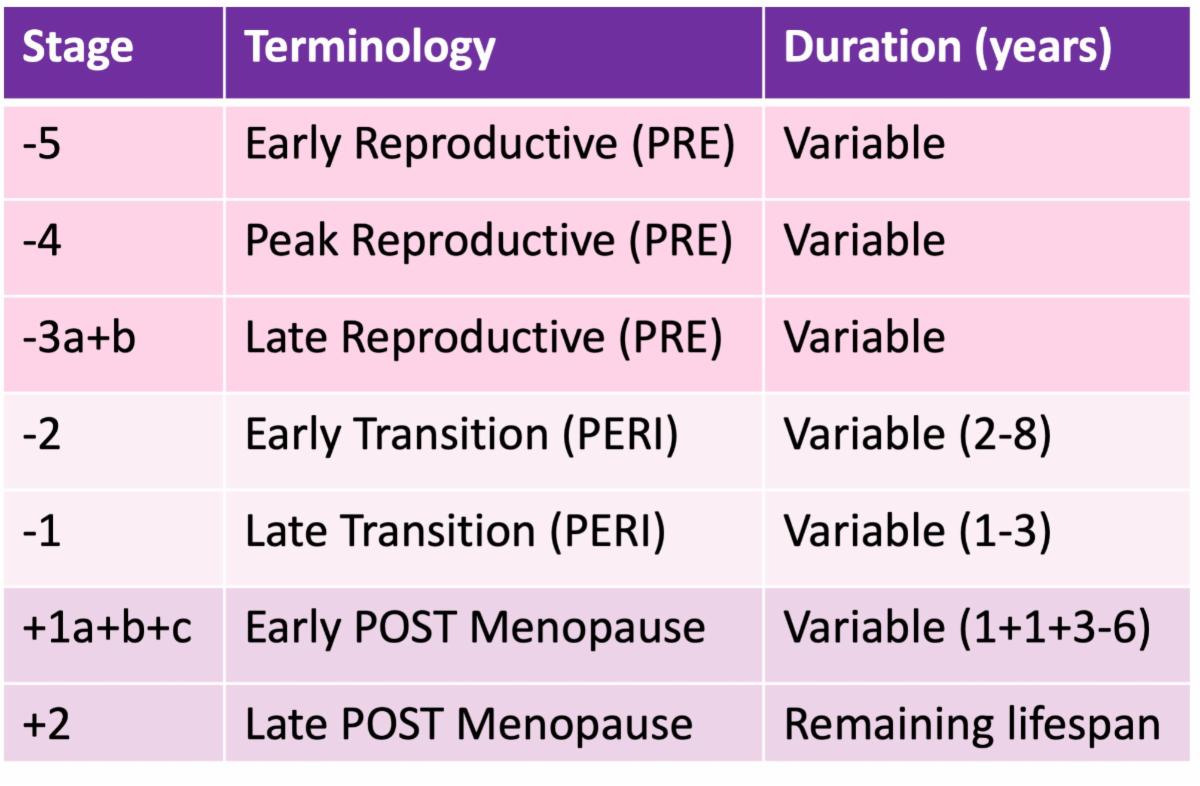
| The following table summarizes common ranges for each stage's duration based on The Menopause Society's Stages of Reproductive Aging + 10 Staging System. NOTE: The stage numbers listed in the first column reflect the Menopause Society's 10-Stage System Numbering for your information. | Perimenopause can last anywhere from 3-11 years (early - 2-8 years, late - 1-3 years), usually starting in the 40s, but possibly earlier or later. Perimenopause ends with the final menstrual period which, according to the WHO, generally occurs between 45 and 55 years of age. (Menopause can also be triggered at any time by surgical procedures and medical therapies (e.g. radiation, chemotherapy)). Remember, while you may observe changes related to fluctuating hormone levels, you can still get pregnant during perimenopause! |  | |
Early postmenopause lasts from 5-7 years broken down as follows:
- Early postmenopause overlaps with perimenopause in the year following the final menstrual period because it is not until the end of that period that you are officially declared in menopause.
- Following the "menopause" day, your reproductive hormones continue to be somewhat variable for another year.
- Reproductive hormones then stabilize over the next estimated 3-6 years.
NOTE: Until your hormones stabilize, you may continue to see outward signs throughout post menopause. In addition, the estimated 5-7 years of early postmenopause is also the current recommended "ideal" time to start hormone replacement therapy (HRT); "ideal" because evidence has shown benefits optimally outweigh risks in this timeframe.
|  | Late postmenopause lasts for your remaining lifespan and is considered to start when your hormones stabilize. Stable hormone levels typically result in improvements in signs experienced during peri and early postmenopause. A key exception to this are signs of genitourinary syndrome of menopause (GSM), i.e. vaginal dryness and/or itching, painful intercourse and/or light bleeding afterwards, frequent urination and/or urinary tract infections (UTIs), urinary incontinence, which will likely worsen, without intervention (see previous HOT FLASH! Vol V), with the effects of continued aging. |
Got questions? Ready to learn and explore more?
| | |
|
READY TO OPTIMIZE YOUR MENOPAUSE JOURNEY?
Reserve your slot to join our menopause tribe
and the next Changing with the Change group session!
Use code CWC25 for 25% off!
| | |
If you found this email valuable, please share it with a friend and spread the knowledge! | |
|
WANT HELP APPLYING THIS RESEARCH TO YOUR LIFESTYLE?
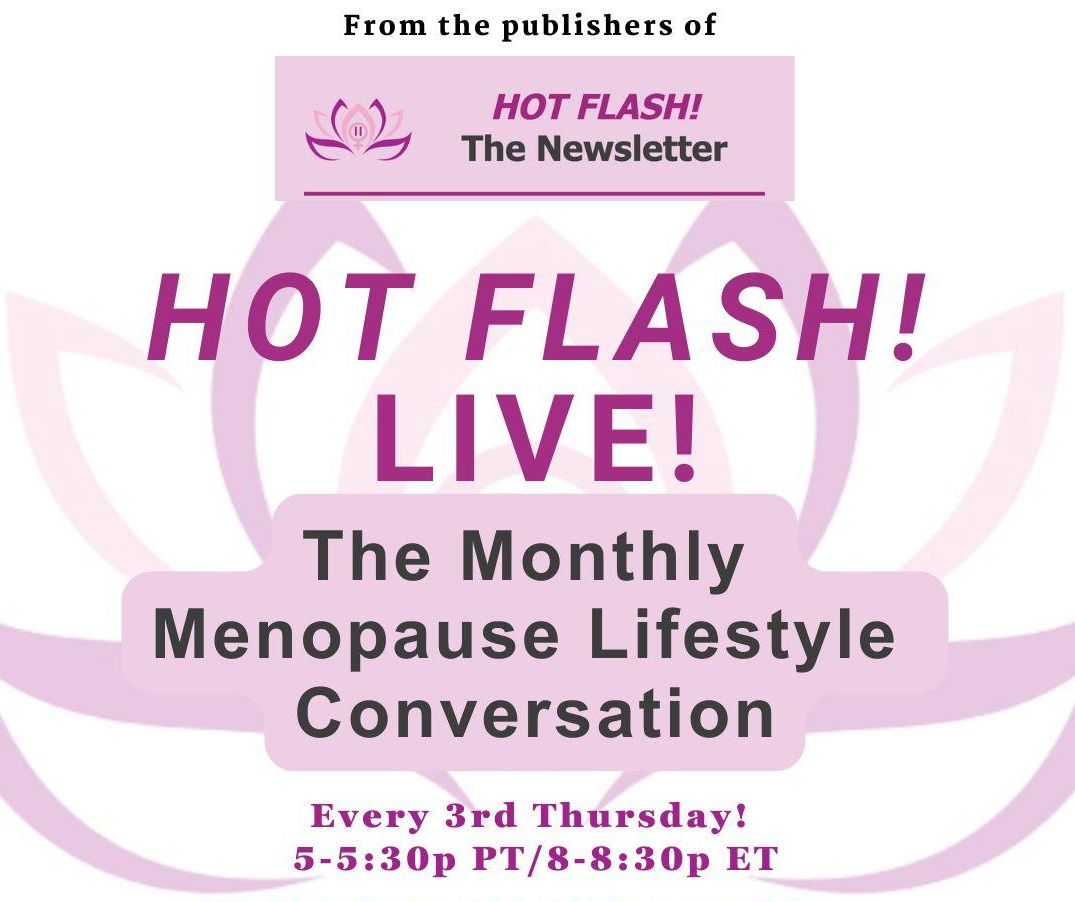
Join the next monthly HOT FLASH! LIVE! conversation to discuss the featured research. Every 3rd Thursday. Register to join!
| |
-
Interested in starting your own menopause empowerment and lifestyle group? Send an email to admin@embodywell.com to learn your options, including the presale list for the Changing with the Change Peer Group Guide.
| |
|
HOT FLASH! DISCLAIMER
This newsletter is intended for informational and educational purposes only, aimed at supporting but not substituting professional medical advice, diagnosis, or treatment. It is highly recommended that you discuss any information provided herein with your healthcare provider to assess its relevance and potential application to your specific health conditions and medical history. The content shared by HOT FLASH does not replace consultation with qualified healthcare professionals.
HOT FLASH and its contributors are not liable for any decisions made based on the information provided, nor for any adverse effects, damages, or consequences that may arise from the use of the information presented in this newsletter. Always seek the advice of your physician or other qualified health providers with any questions you may have regarding a medical condition.
| |
*GYNPeople - GYNConnect's inclusive term for people born female that have not experienced gender-affirming care. | |
|
Did you know that the estimated average time between (conclusive) medical research and (widespread) medical practice is 16 years?
As a partnership with GYNConnect, HOT FLASH! aims to close the gap by providing information and education regarding research that can support improved conversations with your healthcare providers about this important topic.
Each HOT FLASH! newsletter summarizes one recent research study related to the signs, risks and options for menopause. Remember, research is only one of several inputs you can use to support shared decision-making in your healthcare partnership with your provider team.
(If you are new to research and the terms used in this newsletter, we recommend reviewing the NIH's guide to "How to Make Sense of a Scientific Article" available here.)
| | | | |