|
So the next body system to go over is one that is also very important and extremely high on the (my) priority list. My number two on the hierarchy of body systems is the cardiovascular system. This consists of the heart (or the “pump” as I sometimes call the heart for simplicity) as well as the blood vessels (or “pipes''). I also like to include in this the blood as this is what is being pumped throughout the body. We will definitely go over blood in more detail later when we go over hematopoiesis or the formation of blood. But for now the main point is that blood consists of red cells which contain hemoglobin which is the oxygen carrying molecule.
The main purpose of the cardiovascular system is to transport oxygen to all the cells in the body. This is a vital or absolutely necessary function. Again bodies work because of oxygen. If for any reason the pump is not doing its job, the body will struggle or succumb.
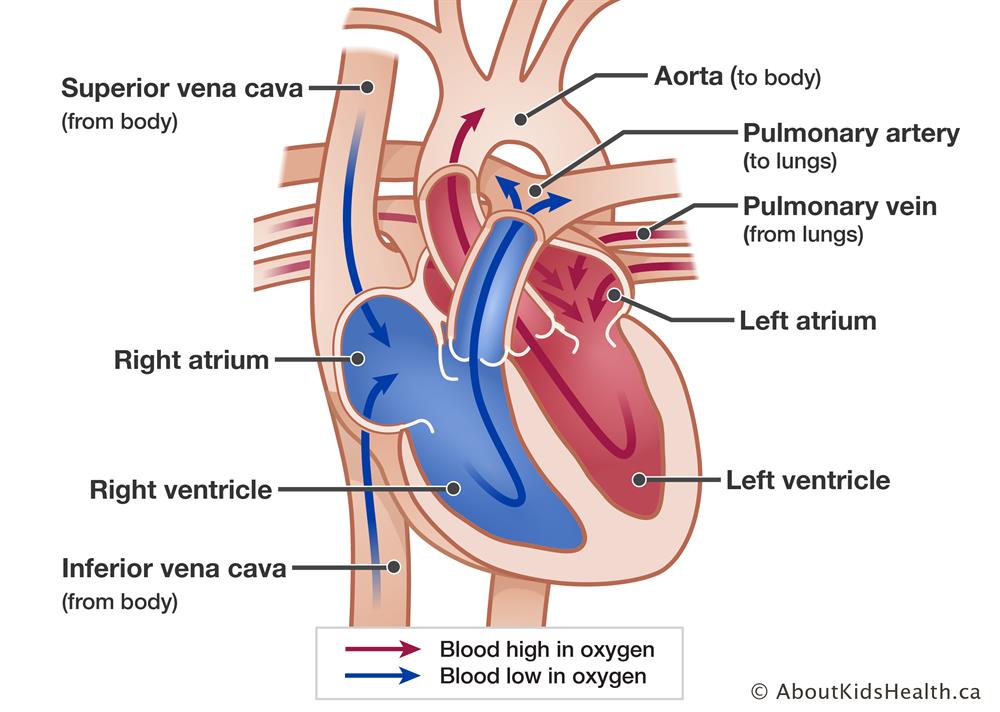
The heart has four chambers (a chamber is a cavity or space), the two atria and two ventricles. The two atria which make the upper portion of the heart, receive blood from the veins and pump the blood to the two ventricles. The ventricles make up the bottom half of the heart. They receive the blood from the atria and then pump the blood out to the body.
Now, there is the right side of the heart which receives the blood from the body that has been used or deoxygenated. Specifically the veins bring this deoxygenated blood to the right atrium (singular of atria) which then pumps the blood into the right ventricle. From the right ventricle this deoxygenated blood is pumped to the lungs where it receives oxygen. While in the lungs, blood or specifically the hemoglobin is loaded with oxygen. This freshly oxygenated blood is carried back to the left atrium. It is then pumped into the left ventricle. And from the left ventricle this oxygenated blood is pumped throughout the body through arteries.
|