Welcome to the April Issue of Advanced Ceramics Insights

It’s a busy spring for USACA.


Our leadership played a prominent role at the leading defense manufacturing conference and we have been analyzing and disseminating the newly released Trump Administration budget plan to identify new opportunities for our membership.


Meanwhile, we are working diligently with member companies to draft recommendations to shape the Department of Energy’s plans for materials designed for harsh environments, including for aerospace engines and spacecraft, nuclear reactors, and deep-sea exploration vehicles. 


Let’s get to the big budget news first.

BUDGET

AIMING HIGH: President Trump released his proposed $2.2 trillion budget plan for Fiscal Year 2027. As expected, it doubles down on defense spending and the development of critical minerals, while further gutting what it calls the “Green Energy Scam” and slashing numerous federal agencies and social programs. 


Golden opportunities: One big pot of money will go to the Industrial Base Analysis and Sustainment (IBAS) and Defense Production Act (DPA) programs – more than $40 billion and $30 billion, respectively – marking the single largest proposed increases in overall spending and demonstrating a continued priority for the U.S. industrial base and domestic production capabilities. 


The current administration has heavily prioritized critical mineral production and related supply chains, and it is likely that there will be more large government investments in public companies for critical minerals, munitions production, and shipbuilding capabilities. 


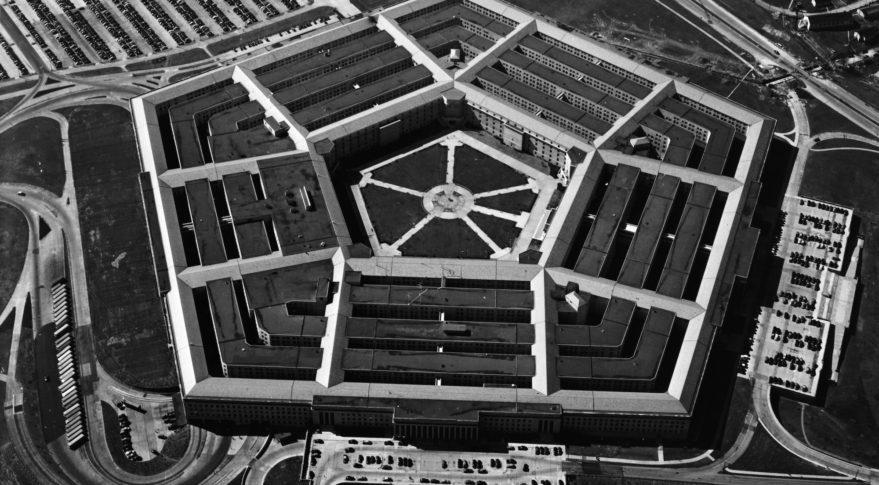
The proposal supersizes the Pentagon budget to $1.5 trillion, marking a nearly 50 percent spike. That would include a major expansion of the Missile Defense Agency’s budget to $18 billion, nearly double what it projected for next year. And the plan sets aside $17.5 billion to pursue the Golden Dome missile defense system.


Another major beneficiary in the Pentagon spending plans would be the Air Force's Next Generation Air Dominance aircraft, or F-47, which would get $5 billion, up from $3.5 billion this year. 


Criticality: For the Department of Energy, the White House is seeking a 10 percent increase to $53.9 billion, mostly for the National Nuclear Security Administration (NNSA), which develops nuclear weapons. But the Advanced Mining and Mineral Production Technologies Office is also slated to receive a 339 percent budget increase, according to the Federation of American Scientists.


That would be on top of more than $18 billion included in the Pentagon budget to stockpile minerals like cobalt, graphite, and other raw materials.


Other DOE programs of interest to USACA would be reduced. For example, the Manufacturing Deployment Office and the Advanced Materials and Manufacturing Technologies Offices would see cuts of 18 percent and 19 percent, respectively.


What’s next: The White House spending plan for Congress will likely come in a combination of three forms – the annual budget, a supplemental spending package to replenish munitions used in the Iran War, and a reconciliation package, the expedited legislative process allowing bills to pass the Senate with a simple majority, and thus along party lines if needed. 


But we expect it to face many hurdles, including pushback from fiscal hawks in the GOP who are resistant to such historic defense increases, and opposition from Democrats, who immediately blasted the blueprint for its steep cuts in non-defense spending.


Oversight hearings are in full swing.


Related: President Trump Releases FY27 Budget Request


Go Deeper: President’s Budget


And: White House seeks $17.5 billion for Golden Dome, but most funding hinges on reconciliation


Plus: DOE’s FY27 Budget Request: The Good, the Bad, and the Ugly

DEFENSE

‘SHARED RESOLVE’: USACA leaders were on hand for the annual Defense Manufacturing Conference (DMC) in Orlando, the Department of War’s premier forum for aligning government, industry, and academia on manufacturing priorities and industrial base resilience.


Executive Director Ken Wetzel chaired a technical session on metals that included presentations on breakthrough advancements in additive manufacturing, ways to leverage Integrated Computational Materials Engineering (ICME) to accelerate materials development, and new approaches to qualifying additive manufacturing solutions.


“It was a privilege to once again engage with leaders across the defense manufacturing community,” Wetzel said. “The sustained focus, commitment, and dedication demonstrated year after year underscore a shared resolve to address the most pressing challenges confronting the defense industrial base.”


‘A key venue’: USACA Technical Director Dr. Aisha Haynes said DMC “serves as a key venue to connect members with Department of War stakeholders and identify alignment between industry capabilities and defense needs.”


“Discussions highlighted the growing importance of artificial intelligence in manufacturing, resilient and adaptable materials, and strengthening domestic supply chains, particularly around feedstock production and critical minerals,” she added. 


Other major topics were workforce retention, scaling technologies through the “valley of death,” and overcoming barriers related to IP and standardization. “There was strong interest in improving coordination across agencies, enhancing dual-use commercialization pathways, and ensuring that federal investments translate more effectively into industrial-scale manufacturing and national security outcomes,” Dr. Haynes said.

WORKING GROUPS

HARSH ADVICE: USACA has been invited by DOE’s Advanced Materials and Manufacturing Technologies Office to submit a report on the workshop we co-hosted last month with Oak Ridge National Laboratory on “Next Generation Harsh Environment Materials & Manufacturing” in order to help inform federal policy and investments on advanced ceramics. 


We are still finalizing our recommendations, but so far, USACA plans to call for: 


·      sustained government funding mechanisms, incentives, and procurement signals for domestic fiber, powder, and coating production and stockpiling;


·      expansion of test capacity and complementary digital frameworks and tools to accelerate screening, qualification, and certification of materials and components;


·      stronger use of modular, automated manufacturing concepts, and Low Rate Initial Production‑style models to bridge the “valley of death”;


·      a federal workforce study and public-private initiatives for students to bolster the manufacturing pipeline for advanced ceramics.   


The effort will also inform USACA’s strategy going forward. Said Dr. Haynes: “Collectively, the workshop produced a clear industry‑driven strategy for enabling harsh‑environment advanced ceramics at scale and will inform a USACA priorities paper for federal program managers.”

MEMBER SPOTLIGHT

POWERING UP: USACA member GE Aerospace recently announced it is investing an additional $1 billion in its U.S. operations this year, including to upgrade defense and commercial engine production facilities in Massachusetts, Kentucky, North Carolina, and Indiana., and bolstering its external supplier base.


Overall, the investment "will benefit sites across more than 30 communities in 17 states," the company said. "GE Aerospace also plans to hire 5,000 U.S. workers, including both manufacturing and engineering roles, in addition to the 5,000 people it hired last year."

Read more: GE Aerospace to Invest Another $1B in U.S. Manufacturing

EVENTS

Dr. Haynes also delivered a presentation at Purdue University on materials for harsh environments as part of their Materials Science Seminar Series on April 13.


Reminder that the annual Ceramics Expo is set for May 4-6 in Cleveland. The industry gathering will focus on “Innovation, Performance & Manufacturing Breakthroughs” and “Strategy, Scale‑Up & Future Readiness.”


Check out the full Ceramics Expo agenda. 

READING ROOM

China creates 3272°F heat-resistant ceramics for hypersonic jets and nuclear reactors

Have news to share with the USACA membership? We want to hear from you! Email Bryan Bender at bender@strategicmi.com or LB Fullerton at LB@strategicmi.com. And follow USACA on LinkedIn

LinkedIn  Web

Please Contact Us With Any Questions:


Ken Wetzel, ken@strategicmi.com

Aisha Haynes, aisha@strategicmi.com

LB Fullerton, lb@strategicmi.com