Welcome to the May Issue of Advanced Ceramics Insights

The Golden Dome for America program, the Trump administration’s signature initiative to develop a national missile shield, is coming into clearer view, along with new opportunities for USACA members. 


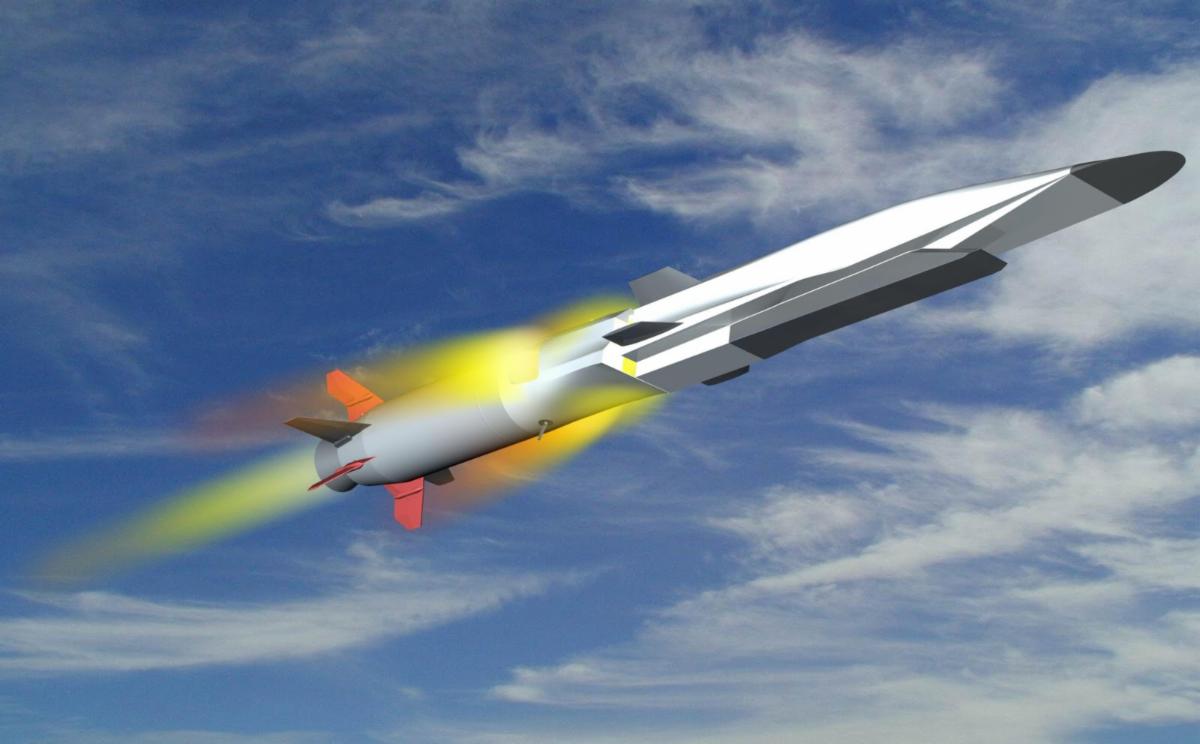
The Department of War met with industry officials in late April to provide a program update. Officials outlined a “layered defense architecture” to include a mix of ballistic, hypersonic, and cruise missiles, and “an integrated command and control system to manage threats at machine speed.”


The Space Force also recently named a dozen companies, including both traditional defense firms and new entrants, that will be considered for as much as $3.2 billion in contracts to build the shield’s proposed space-based interceptors. The goal is to field an initial capability by 2028.


The Golden Dome is also putting a premium on nontraditional approaches to contracting. “Rapid and flexible contracting will accelerate the adoption of critical technologies, unconstrained by legacy policy and regulatory limitations,” according to a recent Pentagon call for commercial solutions.


Sticker shock: However, a new independent cost assessment from the nonpartisan Congressional Budget Office estimated that the initiative will cost $1.2 trillion overall if the Pentagon pursues the full architecture laid out in President Trump’s 2025 executive order that established the effort. 


The deployment of space-based interceptors is considered high risk and potentially cost-prohibitive. “I do believe that the technology exists to get after that threat today, and we believe we can solve it,” Space Force Gen. Michael Guetlein, the Golden Dome’s program, recently told Congress. “What we do not know today is can we do it at scale and can we do it affordably.”


Some observers have raised the prospect that the Navy could play a bigger role in the missile shield with its Aegis Weapon System, at least as a near-term option.


Read up: Space Force names 12 companies to develop Golden Dome’s space-based interceptors 


Related: This is who’s developing Golden Dome’s orbital interceptors—if they’re ever built


And: Anduril announces team for its Golden Dome space-based missile interceptor effort


Plus: Golden Dome dreams face harsh budget reality


Go deeper: Strategy is easy, but logistics is hard. Golden Dome proves it

USACA SPOTLIGHT

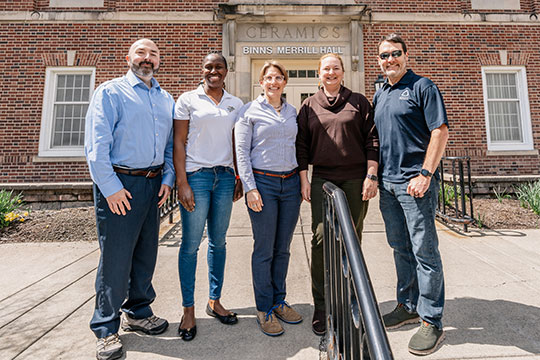
‘REBUILDING THE PIPELINE’: Undergraduate students at USACA members Alfred University, Colorado School of Mines, and Missouri University of Science and Technology who are studying ceramic engineering or glass engineering will receive scholarships from the National Science Foundation’s Scholarships in Science, Technology, Engineering and Mathematics (S-STEM) program.


What’s in store: “Each of the three schools will receive approximately $1 million in NSF funding over five years to fund scholarships,” according to an announcement from Alfred University, which is leading the effort. 


“Need-based scholarships will be awarded to between 12 and 15 U.S. students total at the three schools each year, with students eligible to receive support for their sophomore, junior, and senior years of study,” it added. “Students will also receive a variety of professional development opportunities, including mentors, industry field trips, networking, and internship opportunities.”


Addressing the shortage of ceramic engineers is critical for a host of manufacturing sectors, including aerospace, semiconductors, energy systems, and healthcare – and is a defining element of USACA’s policy agenda. 


“Programs like this are essential to rebuilding the pipeline of ceramic engineers,” said USACA Executive Director Ken Wetzel. “These skills sit at the heart of some of our most important manufacturing sectors, and sustained investment in students is how we close our workforce gap.”


Read more about the scholarship recipients.


AND THE WINNER IS: USACA member Bullen Ultrasonics was named a Gold winner and "Best of Category" honoree in the 11th Annual Globee Awards for Achievement, a global program recognizing excellence across industries, organizations, and professional roles. 


Bullen is a leader in precision machining of advanced ceramics, glass, and specialty materials using proprietary ultrasonic and laser-based technologies. The judges cited the company’s “transformations in advanced manufacturing.”


Read the announcement: Bullen Ultrasonics Earns Gold Globee Award and "Best of Category" in Manufacturing & Industrial Excellence

ENERGY

CLOSING IN: USACA is finalizing its recommendation for the Department of Energy’s Advanced Materials and Manufacturing Technologies Office following the “Next Generation Harsh Environment Materials & Manufacturing” workshop that we hosted with Oak Ridge National Laboratory.


What we’d like to see: USACA will be advocating for sustained government funding mechanisms, incentives, and procurement signals for domestic fiber, powder, and coating production and stockpiling; expanding test capacity and digital tools to accelerate screening, qualification, and certification of materials and components; strengthening the use of modular, automated manufacturing concepts and early production models to bridge the “valley of death”; and for a federal workforce study and public-private initiatives to bolster the manufacturing pipeline for advanced ceramics.  

DEFENSE

‘CRITICAL MATERIALS NEXT’: Last week, SMI was pleased to convene leaders from industry, government, and academia, including USACA members, for the annual Advanced Materials Summit, in partnership with the Department of War.


Themed, “Critical Materials Next,” the discussions centered on the critical role materials play across defense, energy, semiconductors, and advanced manufacturing, and the growing urgency of addressing supply chain vulnerabilities and workforce gaps.


Participants highlighted key policy priorities, emerging investment opportunities, and the need for stronger collaboration to scale domestic capabilities. Consistent with USACA’s agenda, the conversation underscored that strengthening the materials ecosystem, including talent development and sustained R&D, is essential to U.S. competitiveness and national security.


We appreciate the strong engagement from across the community and look forward to continuing the conversation in the months ahead.


A NEW MODEL: With an acute shortage of munitions following the hostilities in Iran, the Department of War has launched the Low-Cost Containerized Missiles program to leverage commercial vendors “to aggressively expand the United States military's strike capabilities,” including with “low-cost hypersonic solutions.”


The department envisions “a fast-paced experimentation and assessment campaign” in order to “rapidly field effective and affordable kinetic mass for the Joint Force at scale.”

It has set a procurement goal of more than 10,000 low-cost cruise missiles over three years beginning in 2027. 


“Several of the new vendors will reach production scale without direct Department investment,” the Pentagon said, “reflecting a new model of commercial partnership that rewards speed, innovation, and private sector capital investment.”


Read up: Department of War Enhances Lethal Strike Capacity Through Partnership With New Entrants


Plus: 10,000 Low-Cost Cruise Missiles In Three Years Procurement Plan Laid Out By Pentagon


USS CERAMICS: The Naval Research Lab held an Innovation Day this month led by Dr. Peter Matic, Ph.D., associate director of research of the Materials Science and Component Technology Directorate.

The breakout sessions “explored opportunities for collaboration in advanced ceramics, robotics, sensing technologies, and more.”


Read more: NRL Innovation Day for Industry Connects Researchers and Industry to Accelerate Naval Technology Transition

EVENTS

ANNUAL MEETING: USACA will hold its virtual annual general meeting on May 28. Leadership will provide updates on membership, association priorities, finances, and the latest developments from the nation’s capital.


For more information, contact LB Fullerton at lb@strategicmi.com.


ACerS UP NEXT: Also coming up is The American Ceramic Society’s International Conference on High Temperature Ceramic Matrix Composites and the companion Global Forum on Advanced Materials and Technologies for Sustainable Development, to be held May 31 to June 5 in San Diego.


To kick off the week, USACA will co-host a short course on “Hypersonic Temperature Testing of Hypersonic Materials” led by Dr. Carmen Carney of the Air Force Research Laboratory Materials and Manufacturing Directorate, and Dr. Erica Corral, a professor of materials science and engineering at the University of Arizona.  


The course will cover materials for extreme environments, mechanical and thermal behavior testing, and showcase a series of case studies.


FALL MEETING: USACA’s Fall Technical Meeting is scheduled for October 6 and 7, 2026, in South Carolina, in partnership with Lucideon.


For more information, contact Carolyn Grimley at carolyn.grimley@us.lucideon.com or Dan Cunningham at dan.cunningham@us.lucideon.com.


CMS TO TURN 50: Finally, for your longer term radar, the 50th annual Conference on Composites, Materials and Structures (CMS) will return to New Orleans from March 29 to April 2, 2027. 

READING ROOM

Kratos to develop hypersonic test facility at Odon, Indiana


GE Aerospace CEO Larry Culp to join Trump on trip to China 


University of Dayton announces strategic restructuring of Research Institute to accelerate growth, innovation and national impact


SBIR/STTR Programs Reauthorized After Six-Month Lapse


Trump’s DPA Play: Turning Energy Infrastructure Into a National Defense Priority

Have news to share with the USACA membership? We want to hear from you! Email Bryan Bender at bender@strategicmi.com or LB Fullerton at LB@strategicmi.com. And follow USACA on LinkedIn

LinkedIn  Web

Please Contact Us With Any Questions:


Ken Wetzel, ken@strategicmi.com

Aisha Haynes, aisha@strategicmi.com

LB Fullerton, lb@strategicmi.com