|
If you are unable to see the image, click on Show Content or Trust Sender at the top. | This newsletter is intended for educators and other stakeholders who have a role in providing school-based prevention activities. Any information contained is to provide updates to the field on prevention matters. This newsletter should not be forwarded. | The Utah State Board of Education (USBE) Prevention Team upholds the Board’s Mission to open doors of opportunity for all students by working to identify and decrease risk factors, increase protective factors, and provide students with access to resources in a safe environment that will help them thrive. In collaboration with families, educators, and communities, the USBE Prevention Team aims to foster students' well-being and success across all stages of life. |
Message from the
Prevention Coordinator
| |
Follow up and Thank You for Supporting the Behavior Support and Prevention Summit | |
We would like to extend our sincere thanks to everyone who attended the Behavior Support and Prevention Summit on September 24-25. We were thrilled by the strong turnout and inspired by the active engagement of participants as they worked to strengthen their Multi-Tiered System of Supports (MTSS). We would also like to express our gratitude to Dr. John Hannigan for sharing his time, expertise, and insights with Utah educators.
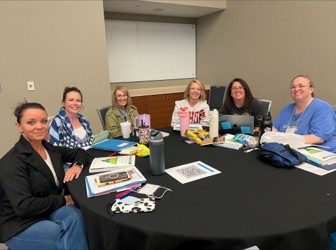
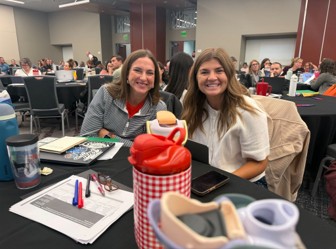
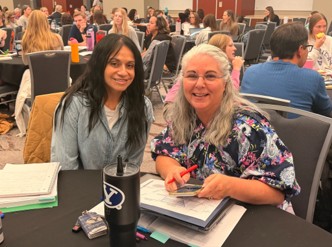
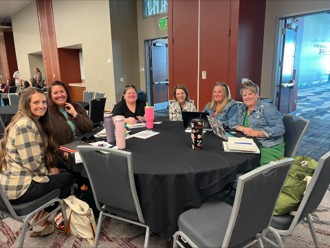
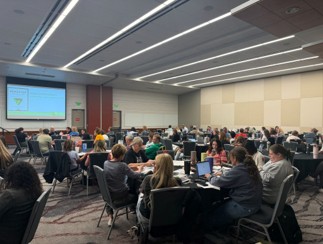
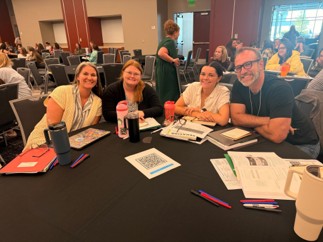
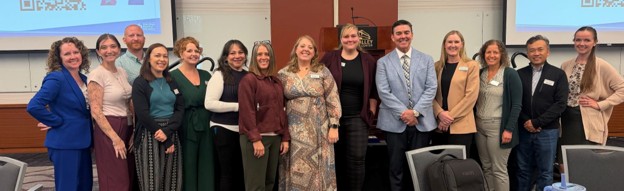
Earlier this summer, Utah State Board of Education (USBE) staff had the opportunity to preview the Summit content in preparation for this event. During the Summit, staff members joined participants at their tables, listened to stories of both challenges and successes, witnessed your dedication to serving Utah's students, and provided support as teams assessed and planned improvements to their behavior support systems. We are grateful for your willingness to share your experiences and perspectives. These conversations helped us better understand the realities, opportunities, and needs of schools across Utah. We have included a few photos from the event below.
As a follow-up to the Summit, the USBE Behavior Support and Prevention teams are excited to offer several opportunities for continued learning and collaboration. Please see the articles below for information about our new Communities of Practice and upcoming spring training opportunities. We hope that these opportunities will be valuable for everyone concerned with strengthening their behavior support systems.
Additional Support
In addition, USBE is exploring the possibility of providing targeted coaching, mentoring, and implementation support for schools and districts that are working to strengthen their tiered systems of support and apply the concepts shared at the Summit. This opportunity would be available to schools and districts that attended the Summit and are not currently contracted with or receiving support from Solution Tree. We would value your input, please take a few moments to complete this short Behavior Support Mentoring Interest Qualtrics survey to help us determine whether this type of support would be beneficial for Utah schools.
Thank you for your ongoing commitment to creating safe, supportive, and successful learning environments for Utah students.
Warm regards,
Tanya Albornoz
USBE Prevention Coordinator
Please reach out to prevention@schools.utah.gov with questions or for help.
| |
Photos from the Behavior Support and Prevention Summit
Want to see more photos from the event? View the complete Summit photo gallery.
| Protective Factor Feature | |
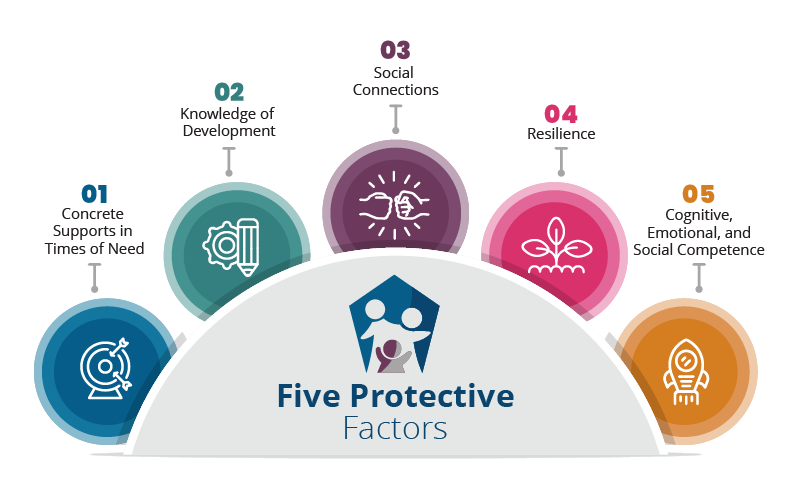
The Protective Factor Framework is a research-based approach that strengthens and improves child and family well-being by reducing risks and promoting positive outcomes, even amid adversity. It guides education staff to focus on five key attributes that help reduce student risk, enhance well-being, and support student success. | | |
The Protective Factor Framework is a research-based approach that strengthens and improves child and family well-being by reducing risks and promoting positive outcomes, even amid adversity. It guides education staff to focus on five key attributes that help reduce student risk, enhance well-being, and support student success.
Small Moves, Big Impact
Lasting prevention is built through everyday interactions, consistent practices, and small actions that help students feel safe, supported, and capable. Every month we are highlighting each protective factor and sharing practical strategies educators can use to put them into action in schools and classrooms. Protective factors come to life through simple actions that can make a meaningful difference for students every day. While these strategies may appear simple, they are anything but insignificant. The small, intentional actions educators take each day form the foundation of a safe, supportive, and connected school environment where students can thrive.
Focus: Knowledge of Development
| |
This month, our focus is on Knowledge of Development. A strong understanding of how children and adolescents grow, learn, and develop helps educators create learning environments that are supportive, realistic, and responsive to student needs. Knowledge of Development benefits both students and the adults who support them by helping everyone understand that growth is a process and that learning, behavior, and skill development occur over time.
Research and practice consistently demonstrate that students are more likely to succeed when adults understand developmental science, maintain age-appropriate expectations, and recognize that intelligence and abilities are not fixed. Students also benefit when they learn that their brains can grow, adapt, and strengthen through effort, practice, and persistence. This understanding can increase confidence, motivation, and perseverance when learning becomes challenging.
Knowledge of Development also reminds us that experiences matter. Stress, adversity, and trauma can influence learning, behavior, and relationships. At the same time, positive experiences, supportive relationships, and nurturing environments can help buffer these challenges and promote healthy development. When educators view behavior through a developmental lens, they are better equipped to respond with understanding, support, and effective instruction.
Students may be asking:
- Why is learning harder for me than it seems to be for others?
- Can I really get better at this?
- Is it normal to make mistakes while I'm learning?
- Why do people behave differently in different situations?
- Does this school believe I can grow and improve?
The answers students receive through the messages, expectations, and experiences we provide can shape how they view themselves as learners and individuals.
Small Moves to Try This Month
- Teach students about brain development and neuroplasticity, emphasizing that learning and growth happen through effort, practice, and persistence.
- Use growth mindset language that focuses on progress, effort, and improvement rather than fixed abilities.
- Maintain developmentally appropriate expectations and recognize that students develop skills at different rates.
- Create predictable routines and clear classroom expectations that help students feel safe and successful.
- Respond to mistakes as opportunities for learning rather than evidence of failure.
- Seek to understand the developmental, emotional, or environmental factors that may be influencing a student's behavior before determining consequences or interventions.
- Share age-appropriate information with students and families about child and adolescent development.
- Foster trauma-informed learning environments that provide consistency, support, and belonging.
Why It Matters
Knowledge of Development is not simply about understanding child development theory. It is about using that understanding to create learning environments where students feel capable, supported, and understood. When educators recognize that growth occurs over time and that experiences influence learning, they are more likely to respond with patience, compassion, and effective support.
At first glance, many of these actions may seem straightforward. Explaining how the brain grows, allowing students to learn from mistakes, or maintaining realistic expectations may feel like everyday teaching practices. Yet these simple actions can have a profound impact.
A growth mindset conversation, a developmentally appropriate response to behavior, or a reminder that learning takes time can help students see challenges differently. These moments communicate an important message: "You are still learning. Growth is possible. We believe in your ability to succeed."
When schools intentionally strengthen Knowledge of Development, they help students better understand themselves, develop confidence in their ability to learn, and navigate challenges with realistic expectations and hope. By helping students understand that growth is a lifelong process, educators create conditions where resilience, learning, and well-being can flourish.
Reflection
How did you help a student view a challenge, mistake, or setback as an opportunity for growth this week?
|
| Prevention Updates & Information | |
|
What Should We Focus on Next?
Help Shape Future Prevention Learning
| |
What prevention topics would be most helpful for your school or LEA? The Utah State Board of Education (USBE) Prevention Team wants your input! Complete the USBE Prevention Team Professional Learning Qualtrics Survey to help shape future trainings, webinars, resources, and communications.
📋 Anonymous
⏱ Less than 5 minutes
Please note: This survey collects general feedback and topic suggestions. Requests for school- or district-specific training should be submitted through the USBE Learning Portal.
| | |
No Tricks, Just Tools: Helping Students
Through the Scary Stuff
| | |
October is full of things that are supposed to be scary - haunted houses, horror movies, costumes, and things that go bump in the night. But for some students, the things weighing on them aren’t pretend. Stress, isolation, bullying, grief, family challenges, or concerns about their own or a friend’s well-being can feel overwhelming. Noticing changes, creating opportunities for connection, taking concerns seriously, and following your school or Local Education Agencies (LEAs) established procedures can help connect a student with appropriate support.
Utah law specifically allows a school employee, agent, or school resource officer who believes a student may be at risk of attempting suicide, self-harm, or harming others to ask the student questions about those concerns for the purposes of connecting the student with appropriate prevention services and informing the student’s parent. Utah law and Board rule also establish requirements related to suicide prevention, youth protection policies, employee training, parent notification, and confidentiality.
This October, consider a few simple ways to make mental health and connection part of your school culture:
-
Notice changes. A significant shift in behavior, attendance, relationships, mood, or engagement may be an opportunity to check in.
-
Ask and listen. A simple, caring question like, “I’ve noticed you haven’t seemed like yourself lately. How are you doing?” can open the door to a conversation.
-
Take concerns seriously. If a student shares thoughts of suicide, self-harm, or another safety concern, follow your school or LEA protocol and connect the student with appropriate support.
-
Remind students where help is available. SafeUT provides Utah students, parents/guardians, and educators access to licensed counselors 24/7, and its confidential tip feature can be used to share concerns about another person or school safety.
-
Remember that educators need support, too. SafeUT isn't only for students. Utah educators can also connect with a licensed counselor through SafeUT when they are experiencing stress, feeling overwhelmed, or simply need someone to talk to.
Halloween gives us permission to talk about scary things. It can also remind us that difficult conversations become a little less frightening when we know we don't have to face them alone. This month, keep building classrooms and schools where students know there is an adult who will listen, concerns will be taken seriously, and asking for help is always welcome.
SafeUT: Any crisis, any time. Students and educators can access confidential support from licensed counselors 24 hours a day, 365 days a year through the SafeUT app or SafeUT.org.
| | October is Bullying Prevention Month | | |
October is National Bullying Prevention Month! This is a nationwide initiative dedicated to fostering kindness while raising awareness. Throughout the month, we encourage educators, families, and students to take an active role in building a culture where everyone feels safe to learn and grow.
World Day of Bullying Prevention (October 5): Wear blue to kick off bullying prevention initiatives.
Unity Day (October 21): Wear orange to stand united against bullying and send a clear message that kindness matters.
What You Can Do to Help?
- Understand Conflict vs. Bullying
-
Peer Conflict: A mutual disagreement where children self-monitor, read social cues, and adjust their behavior when they realize someone is hurt.
- Adults should guide problem-solving and peer mediation.
-
Bullying: Involves an imbalance of Power, Intentional harm, and Repeated incidents (though a single egregious act may qualify under Utah code).
- Adults must immediately stop the behavior-without forcing the targeted student to mediate.
-
Intervene Consistently: Prompt adult intervention signals that harmful behavior will not be tolerated. Silence or inaction can inadvertently be perceived by students as agreement.
-
Promote Support: Ensure students know where to turn for help, including 24/7 crisis resources like SafeUT.
New Bullying Prevention Resources!
We are excited to release a suite of fresh tools on the Utah State Board of Education (USBE) Bullying Prevention webpage! Whether you are hosting parent nights or classroom workshops, we've got you covered with newly released materials designed to make your life easier and your programs more impactful. These resources can be adopted and modified to address your LEA’s needs while completing training requirements. Look out for additional resources such as Utah’s Bullying Toolkit to be released soon!
-
Parent Seminar Training Modules: Ready-to-go presentations complete with detailed instructor notes so you can lead engaging family sessions with confidence.
-
Student Training Resources: Student materials designed specifically for elementary and secondary students, paired with instructor notes.
| | Join the 2026-2027 Do the Write Thing Initiative! | | |
What: We are excited to announce the 2026-2027 Do the Write Thing (DtWT) Initiative, an initiative aimed at empowering middle school students to discuss and address youth violence through writing. The Initiative is open to all middle school students and offers the opportunity to examine the impact of youth violence on their lives and communicate in writing what they think should be done to change the culture of violence. The Initiative is managed by the Utah State Board of Education (USBE) Prevention Team in association with the Utah DtWT Committee, which includes USBE staff and educators.
Governor Cox has been vocal about his support of the DtWT Initiative, stating that “the DtWT Initiative ultimately strives to help them (students) break the cycle of violence in their homes, school and neighborhoods. In today’s social media climate, the DtWT Initiative offers the opportunity for students to express their view in a non-threatening manner. Teachers should encourage students to participate.”
Who:
- Public and charter schools with 7th and 8th grade classrooms
- Junior High/Middle School teachers and school principals
- English, Health, Civics, and History teachers are highly encouraged to participate
When:
-
The DtWT Initiative is open from mid-September to January 8, 2027
- Deadline to submit writings: January 8, 2027.
Where:
Action: Forward this message to junior/middle high school principals and 7th and 8th grade teachers. Please complete the teacher registration Qualtrics form to participate.
Teachers can visit the Utah Do the Write Thing Initiative webpage or contact Cuong Nguyen (cuong.nguyen@schools.utah.gov) for more information.
| | CSA/HT Alternative Provider Choice Grant | | |
The Child Sexual Abuse and Human Trafficking Prevention (CSA/HT) Alternative Provider Choice Grant is available for the 2026-2027 school year! To give your school maximum flexibility, applications will remain open through May 28, 2027. We want every eligible school to have the chance to secure this vital funding and make a real difference in student safety.
Please note: Prevent Child Abuse Utah (PCAU) remains our state's preferred provider and continues to offer their expert instruction to LEAs free of charge. Because PCAU is already fully funded, this grant is your opportunity to explore and implement alternative approved programs.
Awarded funds may be used for the following:
- Paying for instructional materials for students for grades K-6.
- Paying stipends for educators to become trainers or to provide approved instructional materials to students.
- Paying an organization to provide approved materials to students.
- Costs for printing or other materials needed to provide the instruction.
- Travel costs for staff to provide the instruction to students.
- Costs for online training materials (if the materials are approved by USBE).
To keep the focus on direct impact, please remember that funds cannot be used for:
- Food, snacks, or student participation incentives.
- School-wide assemblies.
- General computer hardware or equipment.
- FTE positions or employee benefits.
Take the next step in protecting our students by applying through the Utah Grants Management System today!
We are here to help you succeed! If you have any questions about the application process or need guidance on selecting the best materials for your school, please reach out to us:
Mindy Elliott (mindy.elliott@schools.utah.gov), Prevention Specialist
Tina Morandy (tina.morandy@schools.utah.gov), Executive Secretary
| | Prevention Block Grant Application Opens October 2026 | | |
We are pleased to announce that the application has been released in Utah Grants and is now accepting submissions. Authorized under Utah Code Section 53F-2-525, this grant provides funding for Tier 1 and Tier 2 prevention activities that support student well-being and academic success. Awarded funds may be used to implement a Local Education Agencies (LEAs) comprehensive prevention plan, provide prevention-focused parent seminars, address local prevention needs identified through data, implement evidence-based prevention practices authorized by Utah State Board of Education (USBE), support prevention science professional learning, and purchase supplies and materials related to prevention programming.
Please share this information with any staff who may be involved in completing the application.
Timeline:
| | |
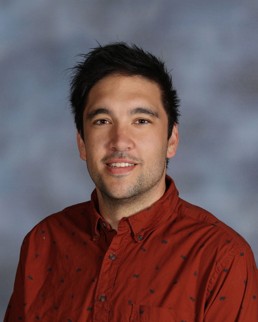
We are pleased to recognize Keith Debono as the Prevention Star for October 2026.
Keith Debono is an Assistant Principal at Beehive Science & Technology Academy and has more than 12 years of experience in education across teaching, instructional coaching, academic support, and school leadership. His work has focused on building systems that help students and educators succeed. Keith has served in other administrative roles and has also been an instructional coach, English department lead, and teacher. Across his leadership roles, he has remained particularly passionate about creating school cultures where students and educators feel known, supported, and able to ask for help when they need it.
Keith was nominated by Michelle Knight, Utah State Board of Education (USBE) Suicide Prevention Specialist. Michelle stated: “Keith demonstrated exceptional leadership, compassion, and dedication to his school community during a recent crisis. Throughout the response, he remained calm, approachable, and deeply committed to supporting students, faculty, staff, and families. What stood out most was his willingness to seek feedback, accept support, and collaborate with partners to ensure the school's response was thoughtful, coordinated, and student-centered.
Being on-site and working alongside Keith provided a powerful glimpse into the level of trust he has built within the Beehive Science and Technology Academy community. It was evident how much students, faculty, and staff respect and rely on him. The care he has invested in his relationships over time was reflected in the way others looked to him for guidance and reassurance during an incredibly difficult situation.
Keith led faculty meetings with grace, professionalism, and poise, creating space for staff to process information and ask questions. He answered questions as openly and honestly as possible given the circumstances, helping provide clarity while acknowledging uncertainty. His communication helped foster stability and confidence when it was needed most.
In addition to supporting staff, Keith worked tirelessly behind the scenes to organize community response efforts and coordinate resources. He collaborated closely with the Public Information Officer to ensure communications were accurate, compassionate, and carefully crafted. His thoughtful approach helped protect the integrity of the response while keeping the needs of students and staff at the forefront.
Keith's actions exemplify prevention work at its best. Prevention is not only about programs and initiatives; it is about creating a culture of trust, connection, and care before a crisis occurs. The relationships he has built, the confidence he inspires, and the leadership he displayed during this challenging time had a meaningful impact on his entire school community. Keith's dedication to supporting others and leading with empathy makes him highly deserving of recognition and celebration.”
Congratulations, Keith! We are grateful for the excellent work and support you provide for your school and students. Thank you for your dedication, and keep up the outstanding work!
| | Nominate a Prevention Star | | |
The USBE Prevention Team wants to highlight outstanding prevention efforts across Utah. Share your success stories, best practices, or exemplary work from your LEA (district or charter school). These will be featured in newsletters, statewide webinars, and professional learning opportunities.
You can nominate a district, charter, program, school, or individual. We may follow up for details.
Please fill out this Qualtrics form to nominate a Prevention Star.
| | |
The USBE Prevention Team offers many professional learning opportunities. You can find the details in the Professional Learning sidebar menu on the Prevention webpage.
For customized professional learning or training requests please use the Utah State Board of Education (USBE) Learning Portal.
Remember to put the following dates on your calendars.
| |
Prevention and Student Services Lunch and Learn
Webinar Series for School Year 2026-2027
| | |
WHAT: Join the Prevention and Student Services teams at the Utah State Board of Education (USBE) for a monthly Lunch and Learn webinar series, focused on helping educators create the conditions that support student success. For detailed descriptions or to access content from past webinars, please visit the USBE Prevention Professional Learning webpage. USBE relicensure points will be provided to all participants who remain on the webinar for at least 45 minutes.
WHO: The webinars are for school administrators, prevention staff, behavior specialists, school counselors, social workers, teachers, school mentors, and staff who work directly with students.
WHEN: Sessions are held from 12:00 to 1:00 p.m. on the third Thursday of each month, except in October, when the webinar will occur on the last Thursday of the month.
WHERE: Webinars will be held virtually.
ACTION: You only need to register once for the entire webinar series. Please register via the Prevention and Student Services Webinar Series SY 26-27 Registration Zoom Link. Please feel free to share the registration link with anyone who may be interested.
September Recap and Upcoming Webinars
September’s webinar “Connection Saves Lives: A School-Based Approach to Suicide Prevention” was amazing! As always, if you missed the webinar, you can access the recording on the USBE Prevention Professional Learning webpage.
October’s webinar will be held on October 29, 2026.
The Verbal De-Escalation Cycle: Another Key to Prevention
How do you prevent behaviors from escalating beyond verbal demonstration? The goal of prevention and behavior support is to help students recognize their actions and learn skills for future success. Adults can support students, even in the most stressful of situations before behaviors become physical. Join us in exploring how to guide students to de-escalation when they enter the verbal de-escalation cycle.
Presenter: Stefie Munk, Paraprofessional Behavior Training Specialist
November’s webinar will be held on November 19, 2026.
The January Plan: Re-Setting Behavior Expectations
Once the school year nears the halfway point, educators begin to think about the return from winter break and how to best guide students with Tier 1 classroom support. Whether it is re-establishing expectations, adjusting the environment, or exploring higher-level supports, November is the perfect time to draft out your January return to school plan.
INFORMATION: For more information, please contact us at prevention@schools.utah.gov
or Tanya Albornoz (tanya.albornoz@schools.utah.gov) or
Krisanne Lewis (krisanne.lewis@schools.utah.gov).
| |
Protective Factors Framework Training Opportunities
for the 2026-2027 School Year
| | |
WHAT: The Utah State Board of Education (USBE) Prevention Team is pleased to offer in-person Protective Factors Framework learning opportunities for Local Education Agencies (LEAs) during the 2026–2027 school year. This engaging one-day, six-hour workshop explores the Protective Factors Framework, a research-based, evidence-informed approach to promoting student, family, and community well-being.
Participants will gain a deeper understanding of the five protective factors and discover practical strategies for strengthening them within schools and communities. Through interactive activities and real-world examples, attendees will learn how protective factors can enhance student engagement, attendance, behavior, academic achievement, and overall well-being. The workshop is designed to support schools in creating safe, supportive environments where all students can thrive.
Participants will earn 5.5 relicensure points upon completion.
WHO: School administrators, prevention staff, counselors, social workers, school-based mental health staff, behavior specialists, teachers. Anyone will benefit from the information shared.
WHEN/WHERE:
- Monday, November 30, 2026 | 9:00 a.m. - 3:30 p.m.
Canyons School District - Peaks Center
9361 South 300 East, Sandy, UT 84070
- Friday, January 29, 2027 | 9:00 a.m. - 3:30 p.m.
Salt Lake County Area - Location TBD
- Tuesday, February 9, 2027 | 9:00 a.m. - 3:30 p.m.
USU Brigham City - Room D217
989 South Main Street, Brigham City, UT 84302
- Tuesday, March 23, 2027 | 9:00 a.m. - 3:30 p.m.
Washington School District - CCPLC Room #1
2060 North 2100 West, St. George, UT 84770
- Monday, April 12, 2027 | 9:00 a.m. - 3:30 p.m.
Utah County Area - Location TBD
ACTION: Protective Factors Framework Workshop Registration link
| | 2026-2027 Early Warning System Webinar Series | | |
WHAT: In partnership with Panorama, the Utah State Board of Education (USBE) will continue to host a monthly webinar series. The series is designed to help LEAs strengthen their Early Warning System (EWS) as part of a coordinated Multi-Tiered System of Support (MTSS). The series will support Local Education Agencies (LEAs) in using timely, data-informed practices to identify student needs early, implement evidence-based interventions, and monitor progress so teams can respond effectively. Across the full series, participants will build practical skills, shared workflows, and sustainable systems that will strengthen student support and improve outcomes.
WHO: Each webinar is designed specifically for LEA leadership, school principals, IT staff, and LEAs’ designated points of contact. Specific target audiences are listed in the attached flyer. Other LEAs are welcome to listen in and learn more.
WHEN: Webinars will be from Noon to 1:00 p.m., except as noted.
-
November 12, 2026 (Thursday) | Using Panorama to Track Interventions and Monitor Progress | Registration Link
-
December 9, 2026 | Strengthening Attendance Systems - Tackling Chronic Absenteeism | Registration Link
- January 13, 2027 | Supporting Behavior Needs Through an EWS |
Registration Link
- February 17, 2027 | (In-Person, 9:00 a.m. to 3:00 p.m.) | Registration link coming soon
- February 23, 2027 | (Virtual, 9:00 a.m. to 11:00 a.m. for those who cannot attend the in-person meeting on February 17, 2027) | Registration link coming soon
-
March 10, 2027 | Partnering with Families: Communication That Drives Action | Registration Link
WHERE: Webinars are conducted virtually. Registration is required for each webinar session. See relevant dates and registration links above.
ACTION: Register for the webinars via the links listed above, on the flyer, or on the Prevention Early Warning Systems Resources and Compliance webpage.
INFORMATION: For more information, please visit the EWS Webpage. Webinar dates and registration links will be shared through LEAs’ designated EWS points of contact, posted on the EWS webpage, and distributed through other communication channels.
For questions, please contact Cuong Nguyen (cuong.nguyen@schools.utah.gov).
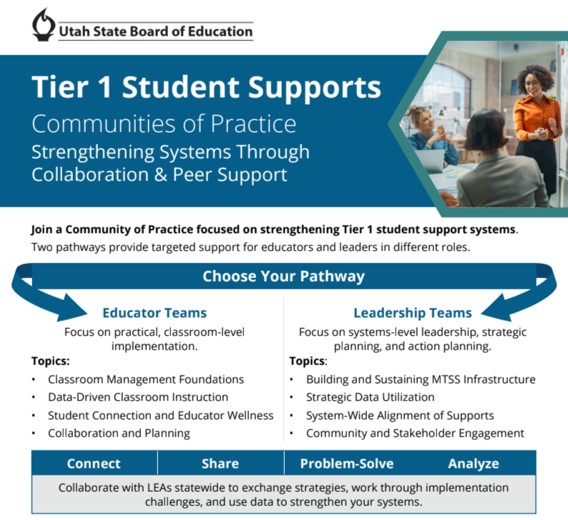
| | Join the Tier 1 Student Support Communities of Practice! | | |
The Prevention and Student Service Teams are thrilled to invite you to a statewide initiative designed to strengthen tier 1 student support frameworks. This is your opportunity to connect with peers, tackle implementation barriers, and earn relicensure points for your professional growth.
Whether you are focusing on classroom level implementation or high level systems and strategic leadership, we have two targeted pathways designed for you.
| |
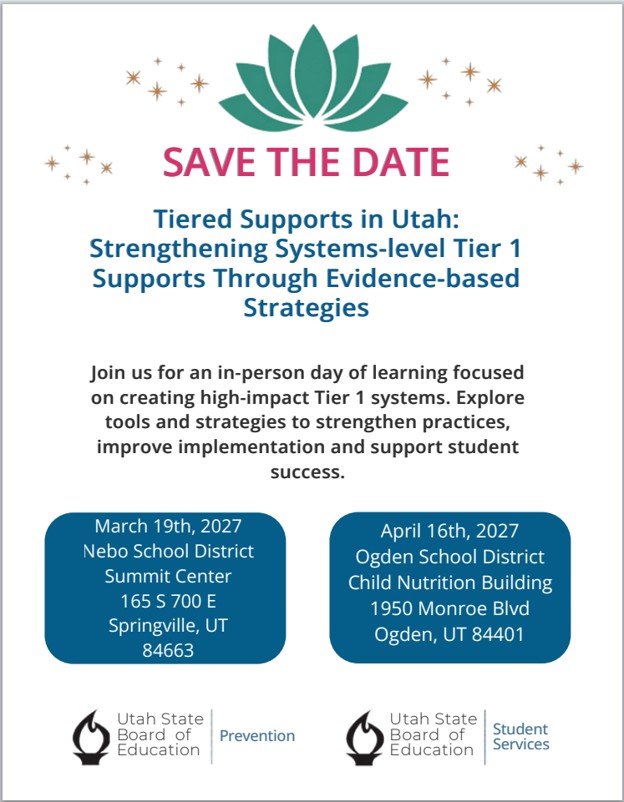
SAVE THE DATE! Tiered Supports in Utah: Strengthening Systems-level Tier 1 Supports Through
Evidence-based Strategies Workshop
| | Youth Mental Health First Aid (YMHFA) Trainings | |
WHAT: The Utah State Board of Education (USBE) will be hosting multiple Youth Mental Health First Aid (YMHFA) training sessions throughout the 2026-2027 school year. 7.5 USBE relicensure hours are available to those who attend and complete the training, including 2 hours of pre-work which is required to be completed before the live training session. YMHFA establishes a foundational understanding of mental health for those without a clinical background, and it is important to note that school-based mental health specialists may possess advanced training that extends beyond the scope of this particular program.
WHO: School personnel supporting students from ages 12-18
WHEN:
- October 29, 2026 | 8:00 a.m. - 3:00 p.m.
- January 15, 2026 | 8:00 a.m. - 3:00 p.m.
- Friday, February 12, 2027 | 8:00 a.m. - 3:00 p.m.
- March 18, 2027 | 8:00 a.m. - 3:00 p.m.
- Thursday, April 15, 2027 | 8:00 a.m. - 3:00 p.m.
WHERE: Virtually via Zoom
ACTION: Register via Altitude
INFORMATION: YMHFA is a curriculum that focuses on how to help an adolescent (age 12-18) who is experiencing a mental health or substance use challenge or is in crisis. YMHFA is primarily designed for adults who regularly interact with young people. The course introduces common mental health challenges for youth, reviews typical adolescent development, and teaches a 5-step action plan for how to help young people in both crisis and non-crisis situations. To learn more, download the Mental Health First Aid for Youth flyer
| |
Paraprofessional Behavior Training Course -
Enrollment Open!
| |
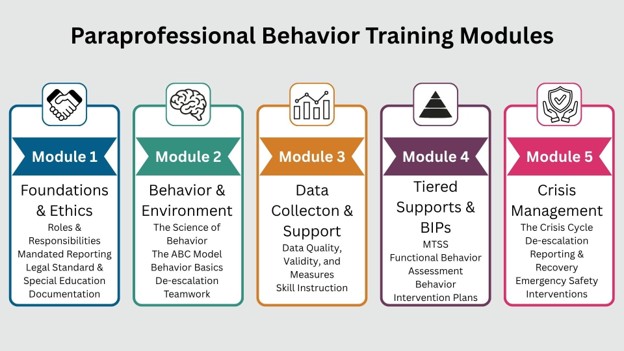
The Utah State Board of Education (USBE) Student Services section is proud to announce open enrollment for the Paraprofessional Behavior Training Course. This 40-hour course offers paraprofessionals a comprehensive exploration of topics and strategies to prepare them to support students across a range of classes and instructional settings. The topics covered include:
Module 1: Foundations and Ethics
Module 2: Behavior and the Environment
Module 3: Data Collection and Support
Module 4: Tiered Supports and Behavior Intervention Plans
Module 5: Crisis Management
Participants will receive a stipend of up to $800 for completing the course outside of contract hours. This includes attending one required 8-hour in-person session.
School districts and charter schools have one enrollment spot for every school within their local education agency (LEA). Enrollment information was shared with LEA superintendents and directors on September 21st. School administrators may reach out to their LEA leadership for enrollment information.
Please contact Christina Guevara (christina.guevara@schools.utah.gov) and Stefie Munk (stefie.munk@schools.utah.gov) with any questions.
| | Below is a summary of items from the September 2026 USBE Board meeting that pertain to Prevention. For other items discussed by the Board, please see the full September Board Meeting Summary. | | |
The Utah State Board of Education:
- Prioritized funding requests for the upcoming legislative session.
- Adopted the revised PK-2 Mathematics Standards.
- Approved a new Educator Preparation Program.
The Utah State Board of Education approved, amended, or repealed the following administrative rules:
See the full agenda or visit the Board Meeting webpage (Meeting Summary tab) for more information.
| | |
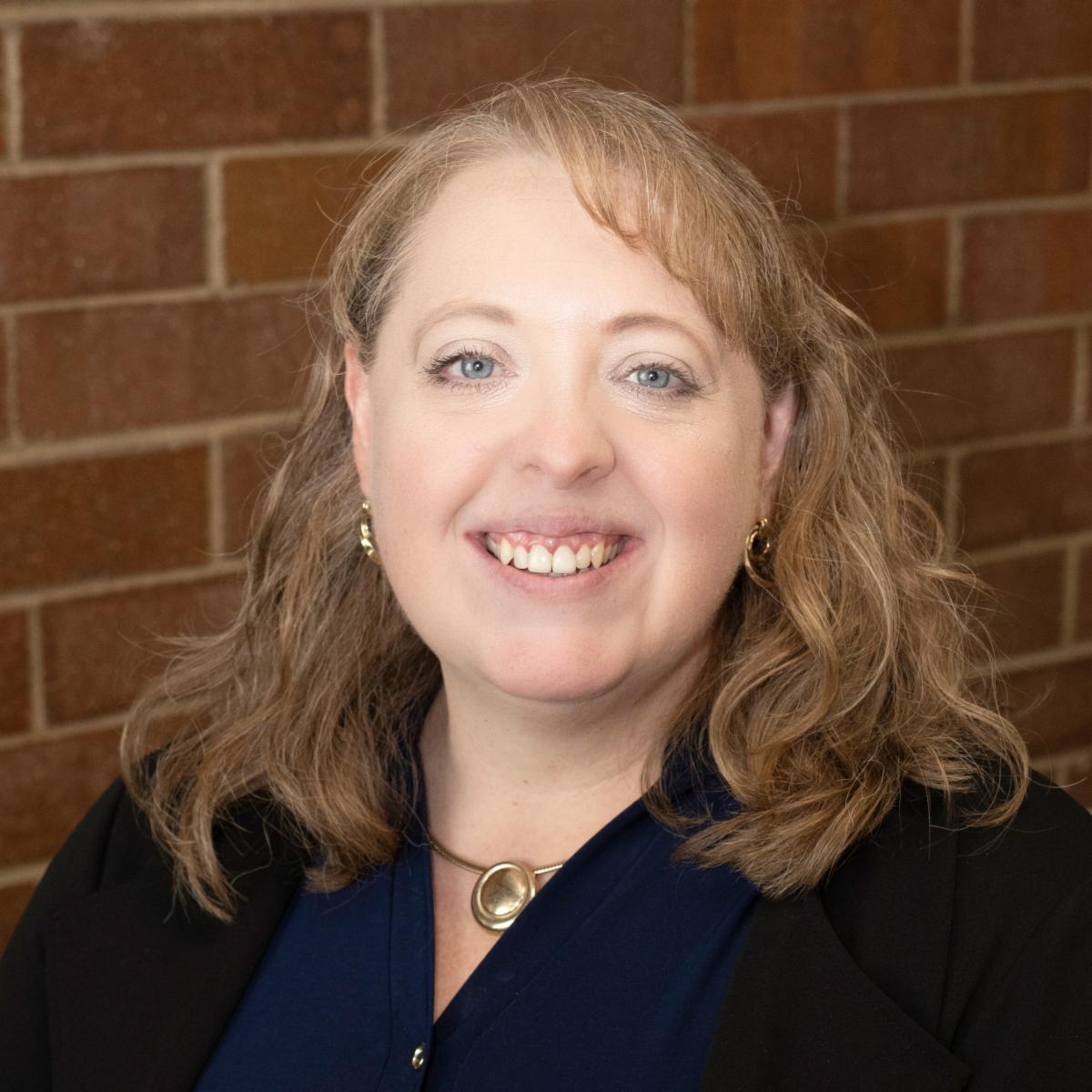
Tanya Albornoz is the Prevention Coordinator at the USBE.
In this role she oversees the implementation of prevention programs such as suicide prevention, substance use prevention, gang prevention, bullying prevention, child sexual abuse and human trafficking prevention, trauma-informed practices in education,
and more.
Contact:
tanya.albornoz@schools.utah.gov
(801) 538-7812
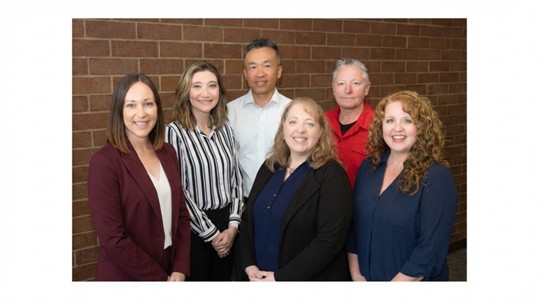
| | Prevention Team, pictured from left to right: Clarissa Stebbing, Michelle Knight, Cuong Nguyen, Tanya Albornoz, Tina Morandy, and Mindy Elliott. | | | | |