Center for Dispute Resolution
ADR Quarterly - Fall 2021
|
|
Having returned to our beautiful Los Angeles campus, we were thrilled to welcome our students, both new and continuing, to the USC Gould Center for Dispute Resolution.
With resources available both virtually and in-person for students in our LLM in ADR, MDR, and ADR certificate programs, including in experiential learning, mediation clinic work, student leadership opportunities, and career advising, we have embarked on a new on-campus semester with renewed dedication to the education and practice of alternative dispute resolution.
The Center looks forward to a productive academic year of engaging ADR education and meaningful advancement for students, clients, and colleagues in the field.
|
|
Mediation's Future as a Profession
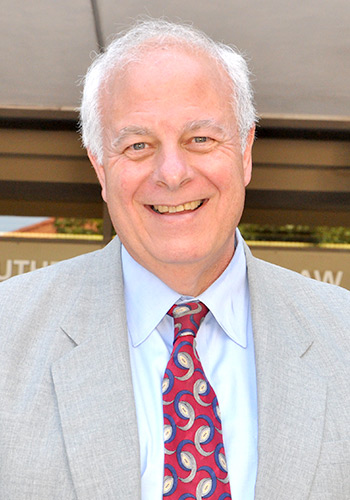
Q&A with USC Gould Lecturer Jack R. Goetz, president of nonprofit MC3 Mediation Certification
USC Gould School of Law Lecturer in Law Jack R. Goetz is the president of MC3, a multi-state nonprofit that certifies mediators for public quality assurance. With extensive experience which includes serving as the academic lead for mediation training programs at universities, the Los Angeles County Bar Association and the Los Angeles Police Department, Office of the Ombuds, as well as serving as the 2018 president of the Southern California Mediation Association, Goetz discusses the work of MC3 – and USC Gould’s contributions – to setting professional standards in the field.
What is the overarching goal of MC3?
MC3 is organized to ensure user and public confidence in the mediation process by setting standards for mediator training, education and ethics, and by maintaining those standards through its certification program. MC3 launched in 2019 with the goal of helping transform mediation from a field to a profession. MC3’s volunteer board and officers include several USC Gould faculty and graduates, including Jason Harper, who teaches Cross-Cultural Dispute Resolution (LAW 829) and me, teaching Mediation Theory and Practice (LAW 680). USC Gould alumni contributors include Adam Ravitch (JD 2007), Henry Alfano (MDR 2020) and Mariam Vartkis (MDR 2019).
For mediation as a field, what challenges do you see, and how are you working to address them?
There is no agreed upon, step-by-step approach that changes a field to a profession. Dr. Jennifer Kalfsbeek and I co-authored a 2014 paper that noted the distinguishing characteristics of a formal profession, including self-governance based upon a binding ethics code, as well as education and continuing education requirements at a meaningful level in the field (often attached to a degree).
|
|
Largely anchored to a 2012 ABA Task Force report and influenced heavily by an Association for Conflict Resolution (ACR) task force report years earlier, MC3 differentiates itself from other certifications as it does not certify based upon its own educational programs but instead remains “neutral” and relies on quality programs provided by others to provide the education. For example, within the USC Gould curriculum, both the Mediation Clinic (LAW 630) as well as Mediation Theory and Practice (LAW 680) satisfy the educational standards set by MC3.
What are the main reasons supporting the mediation field’s move in this direction?
There are factors that suggest the field needs to professionalize. First, there is a lack of recognition by the public of how to find a quality mediator. Second, and related to that, an assumed substantial number of disputes go unresolved or otherwise clog our court systems. Third, despite the obvious benefit to the courts and the public of the service provided by high-quality mediators, there is a presumption that these services should be provided on a pro bono basis. Certification implies both competence and accountability which we hope, in time, will be reflected in valuing, and compensating, capable, certified mediators. Finally, a multitude of practitioners choose to leave the field because they cannot make a livable wage in conflict resolution. The field’s inability to address these factors through other mechanisms has forced courts and other venues that seek to set standards for their mediator panels to often impose standards that are not correlated with successful mediation education, experience or quality assurance (such as whether one holds a license to practice law, etc.)
Do you observe any parallels between professionalization in mediation and in other fields?
Professionalism and neutral third-party certification without state involvement, such as licensure, has proven beneficial to a myriad of other fields. As an example, many have cited Certified Financial Planners (CFP) as another field with similar environmental factors that has evolved into a profession over the years. In 2021, someone seeking competent financial advice or guidance would be unlikely to engage the services of someone who was not a CFP. We believe that, in time, that same understanding and appreciation will exist for MC3-Certified Mediators.
What impact do you hope to make among different mediation practitioners and stakeholders?
MC3 provides services to three different constituencies in the mediation field. One constituency includes existing mediation panels who want their mediators to adhere to the highest standards in the field. Another group includes mediators who seek to distinguish their background and training from their peers. Finally, MC3 provides a neutral directory from which the public can choose mediators who have sought to go through MC3’s rigorous certification process.
|
|
Continued Leadership of the Center's Mediation Clinic
During a challenging year, the students participating in USC Gould's Mediation Clinic continued to hone their skills through experiential practice - even while remote.
No Dispute: Mediation Clinic Succeeds Online During COVID
The mother had visitation rights 60% of the time, but the father wanted equal time with their 3-year-old daughter.
During an all-day mediation session, [USC Gould] 3L Gabriela Rodriguez eventually got both parties in the emotionally charged case to reach an agreement: two days with mom, two days with dad, and alternating each week for the other three days.
Because of COVID-19 restrictions, the successful mediation — an increasingly popular tool to avoid the expense, unpredictability and emotional drama of a courtroom trial — played out entirely on Zoom. As mediation clinics at some other universities shuttered because of courtroom closures caused by the pandemic, USC Gould’s Mediation Clinic continued to thrive, says Director Lisa Klerman, a clinical professor of law who designed and launched the mediation program in 2007.
That’s because pre-pandemic, Klerman says, the 30-some students who participated in the two-semester clinic already had experience mediating over email, the telephone and other avenues not requiring in-person meetings at the local courthouses.
“Having a program that offers a diversity of experiences for our student mediators has been crucial for them to be able to continue their work during the [pandemic],” Klerman says.
Read the full article as part of our Spring 2021 Clinical Perspectives issue here.
|
|
Featured as an ABA University-Based Program
Listed among university-based programs under the Section on Alternative Dispute resolution under the American Bar Association (ABA) website.
|
|
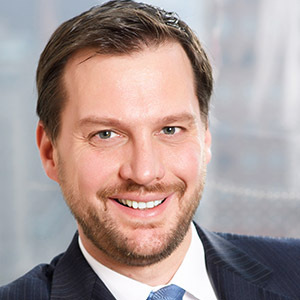
Nathan O'Malley | Recognized as Legal Visionary by L.A. Times
Lecturer Nathan O'Malley has been recognized as a visionary in Business of Law: Trends, Updates & Visionaries, a special feature published recently by L.A. Times B2B Publishing.
The feature reports that attorneys were recognized for their contributions and leadership within their firm, the legal profession and the community at large. Read the full press release here.
|
|
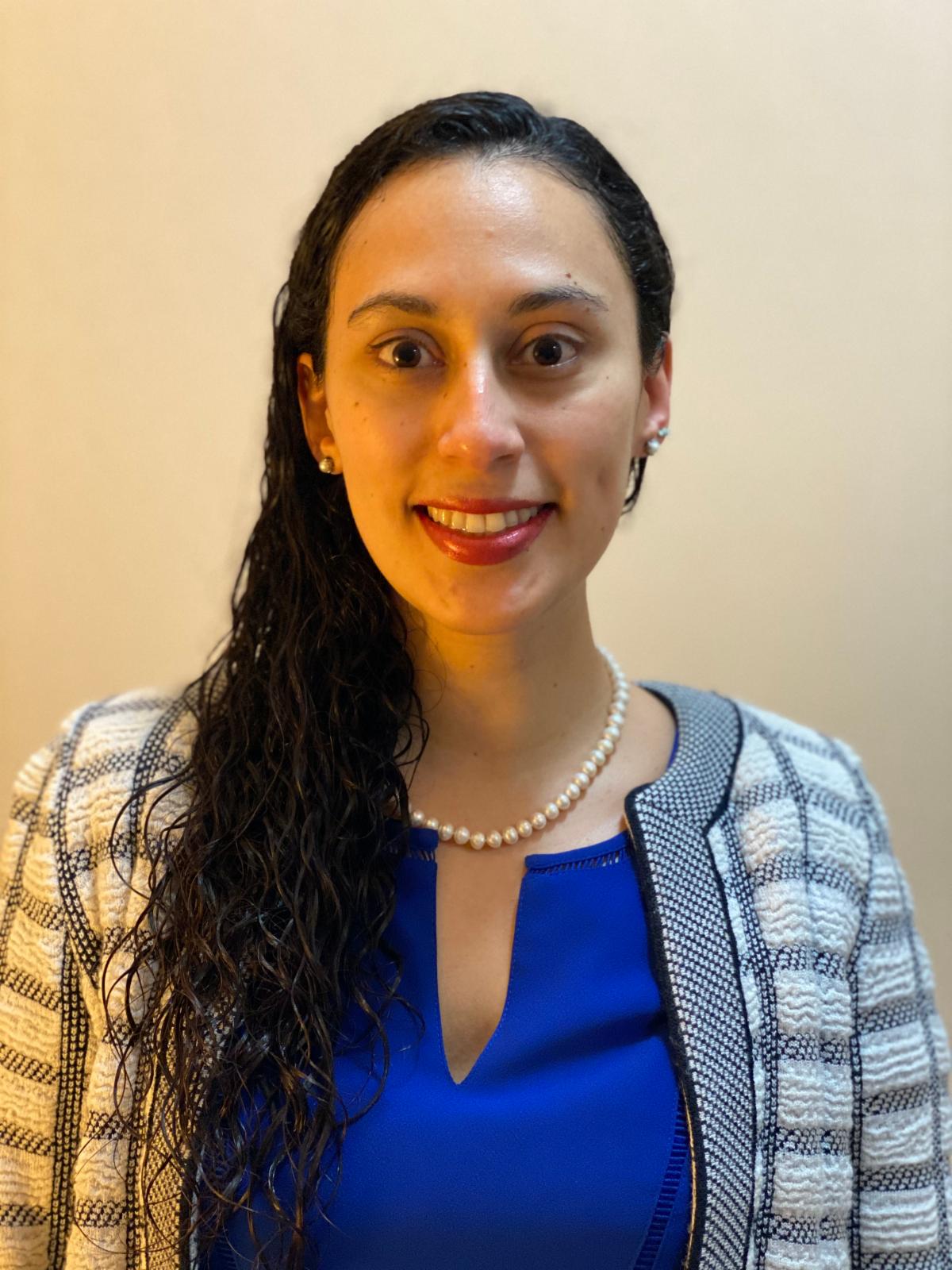
Pamela Silva (LLM in ADR, Class of 2022)
Meet Pamela Silva (LLM in ADR Class of 2022). In the Q&A below, she shares what drove her to pursue a legal education in dispute resolution and how she hopes that her studies shape her future work in Chile.
What sparked your interest in learning about law?
My first introduction to law was when I was completing my bachelor’s in history. I had the privilege of assisting a professor in one of her research pieces on indigenous law when I realized that the legal system chosen by society and is intimately linked to its historical development as it modifies behaviors and allows the evolution of its members, contributing to improving their quality of life. Thus, understanding the rules in force in each historical era allows us not only to understand the reasons for various conflicts that were manifested and to learn from previous mistakes, but also to have an impact on our society’s future by modifying and creating new regulations in-line with the society’s state of development and aspirations.
What made you pursue your LLM in ADR degree in particular, and why at USC Gould?
The large number of judicialized conflicts, even when an alternative solution to the judicial system could have been found, has resulted in a slow and cumbersome resolution of disputes, diminishing our society’s confidence in the court system.
To earn an LLM at one of the most prestigious law schools, like USC Gould, in a multicultural environment that allows for combining different, diverse cultures, will allow me not only to learn about other legal traditions different from those of my home country, but also to integrate them into the Chilean judicial system in such a way that they converge in a successful outcome for the people I will advise in the future. In this sense, I believe that this program will also allow me to be at the forefront in new areas of law that have emerged in recent years, such as cross-cultural dispute resolution or international arbitration. In addition, USC Gould offers theoretical knowledge and practical tools through its multiple clinics, which allows you to apply not only what you have learned in classrooms but, also, generate a tangible impact on the community.
What is the most memorable experience or learning from your USC studies so far?
In my six weeks of classes, what has reinforced my decision to choose USC Gould to deepen my studies is the constant encouragement professors give students to enhance their professional development. For me, it is essential to have the support and guidance of highly trained professors, who are constantly exploring new solutions to conflicts and sharing their knowledge while always being available to answer any questions. That is what I have found at USC Gould, and it is what makes me very happy to have chosen this university.
What do you want to do next with your degree?
After graduating from this program, I look forward to returning to Chile and working in the strategic resolution of judicial and extrajudicial disputes, developing professionally in a private company or the public system. In addition, I want to generate a change in legislation in my country, creating better alternatives methods of conflict resolution, more efficient and more accessible for people.
The LLM in ADR will allow me to learn more about the common law legal system in the U.S.. In fact, in Chile, there is an increasing number of unresolved disputes, whereas in the United States—with its long arbitral tradition—they would have been settled long ago. I want to have first-hand international experience and put my learnings into practice in Chile in my work as an attorney. I’m looking forward to positively impacting my country.
What advice do you have for students who may be interested in following a similar path to yours?
I would encourage them to explore paths offered by the legal profession that are far from the traditional role of the lawyer as litigant or council. I would also advise them to learn how to integrate alternative dispute resolution methods into their professional practice as an option to settle legal problems outside the courts, saving time and the high economic and emotional costs that the judicialization of conflicts entails.
|
|
Furthering Career Development |
|
Gould Dispute Resolution Society (GDRS) Invites Student Leadership and Involvement
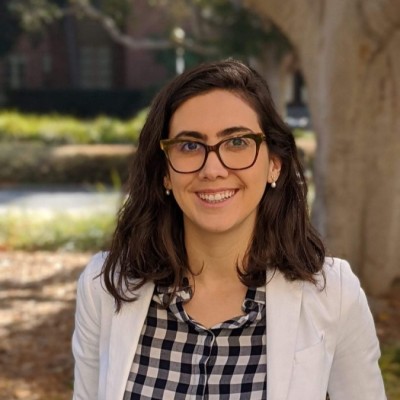
By Kaitlyn Sever (Class of 2023)
Seemingly the legal profession is defined by a binary division of litigation versus transactional work. As a law student, a frequent point of conversation is where one falls in this divide. Often, students and professionals alike will say that they have always wanted to be litigators, or that they could never imagine anything besides transactional work.
However, both life and the law is more complicated than that, and Gould Dispute Resolution Society (GDRS) is here to fill in that gap. Despite how litigation heavy the first-year law school curriculum is, there is little mention that the vast majority of cases settle out of court. Transactional attorneys are increasingly including arbitration clauses in contracts. Mediation is a burgeoning field that extends past family law. Alternative dispute resolution is popular because of the heavy caseload of courts, the potentially lower costs of settling, and a less adversarial process than litigation.
My path to becoming the President of GDRS has been rather unconventional. I originally was drawn to the public interest focus of Native American Law. Through both professional and academic experiences, I learned about restorative justice as an alternative to traditional criminal proceedings. Although I have pivoted my interests to business disputes, I have carried my passion for both traditional and alternative avenues with me. This past summer I was an International Arbitration intern, and I am excited to continue on in litigation and global disputes at King & Spalding this summer.
Our GDRS board is so excited to connect both law and graduate students to this exciting world. There are opportunities with this organization whether you are transactional versus litigation, public interest versus big law, or you just don’t know. Please reach out to kaitlyn.sever.2023@lawmail.usc.edu or gdrs@lawmail.usc.edu if you would like to be a representative, come to our events, or learn more.
|
|
Career Advising Recommends Diverse Careers for Center’s Students and Alumni
The Center’s career advising team publishes a biweekly job newsletter, highlighting opportunities for its students and alumni to consider. One career path that is covered in the newsletter and the one-on-one advising they offer is in the field of organizational ombuds.
An organizational ombuds is defined as a “designated neutral who is appointed or employed by an organization to facilitate the informal resolution of concerns of employees, managers, students and, sometimes, external clients of the organization” (Morson, 2016). They essentially serve as the in-house dispute resolution professional within an organization and provides conflict resolution and problem-solving services to members or clients of that organization. There are organizational ombuds in all sectors (corporate, academic, governmental, non-governmental, non-profit, etc.).
Here’s a quick summary of the essential elements of organizational ombuds (International Ombudsman Association, 2009):
-
Independent – Ideally, ombuds should report to the chief executive of the organization. The ombuds exercises sole discretion over whether or how to act regarding a visitor’s concerns, a trend, or concerns of multiple visitiors over time. The ombuds has access to all information and all individuals in the organization. Organizational ombuds do not report on identities of individual visitors nor on the information visitors may provide, but submit annual reports on activities and trends.
-
Neutral – Ombuds advocate for the principles of fairness and equity, rather than for the organization, individuals, or groups. They apply conflict resolution and problem solving techniques including mediation, facilitation and coaching to help all parties define the problem, understand each other's concerns and explore options that may resolve or manage the dispute.
-
Confidential - Visitors to the organizational ombuds can explore options without going on the record or committing themselves to any particular course of action. No written records of the exchange are kept. Furthermore, except in cases of imminent harm, the ombuds may only share trends and patterns in reports to leadership.
-
Informal - An ombuds' function is to provide informal assistance in surfacing and resolving issues. While they can recommend that an organization consider establishing or revising policy, the ombuds plays no formal role in investigating, enforcing or deciding to implement policy. Visitors to the ombuds remain in control of the process and the decision to escalate the matter or make a formal report to another office within the organization.
The ombuds field is growing.
Practitioners see slow but steady growth in the number of organizational ombuds positions in the near future (Morson, 2016). Several factors support this outlook, including federal legislation in the US promoting ADR processes, legal settlements in the private sector that required the creation of ombuds offices; and a growing recognition of the effectiveness of alternative channels for communication and the value in terms of dollars saved within organizations.
Read the full article here.
|
|
ADR Alumni - News & Notes |
|
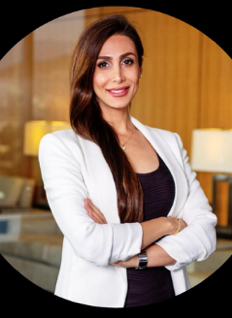
Sepideh Doust | Mediation Panelist and Civil Lawyer with ADR Perspective
SCMA Making Money as a Mediator Professional Development Group was held on Monday October 4, 2021, at 6:00 p.m. The discussion was hosted by PDG Leader Lucia Galante Johnson and focused on advanced degrees in mediation and alternative dispute resolution. The panelists included the current president of SCMA Mark Lemke, the previous president of SCMA Andy Shelby, and the USC Gould School of Law alumnus Sepideh Doust, who explored the question: “Is investing in an advanced degree in Mediation worth it?”
Ms. Doust is an attorney and obtained her LLM in ADR from Gould School of Law in 2020. While she was a student, she joined SCMA and Southern California Family Mediation, participated in JAMS educational meetings and observed arbitrations at JAMS.
After graduation, Ms. Doust continued her connection and engagement with SCMA, SCFM, and JAMS. She actively participated in SCMA PDGs and JAMS’ ADR webinars. She continued her cooperation with SCFM and mediated several litigated cases by Edelman Children's Courthouse and received a certification of appreciation from the Superior Court of California for rendering services during the pandemic. Furthermore, she mediated Americans with Disabilities Act cases through Trusted Mediators International. After passing the California Bar Exam in 2021, Ms. Doust joined a distinguished law firm and since then she has been practicing civil litigation in Los Angeles.
Ms. Doust’s ability to see multiple perspective as an attorney is a benefit of her degree in ADR from USC Gould, allowing her to find balance and serve her clients with a better understanding of the nature of disputes and the ways they can be resolved. Her ADR education has further helped her to become a better negotiator which is the key in settling legal cases.
She believes that it is definitely worth it to invest in an advanced degree in ADR, and recommends USC Gould where students not only receive a high-quality education, but also benefit from an exceptionally supportive environment, knowledgeable academic and administrative staff, and a strong alumni network.
|
|
Fernanda da Silva Flores | Brazilian Attorney and Trilingual Mediator
ADR graduate Fernanda da Silva Flores (LLM in ADR 2020) has been actively using her mediation skills from the Center for her ongoing work in the field.
In March, she served as a competition judge and coach for the 2021 Mediation Competition at Caruso School of Law’s Straus Institute for Dispute Resolution. Additionally, she recently presided over online mock negotiations as a judge at Negotiation Competition in Brazil and Business Mediation and Arbitration Chamber (CAMARB) - Brazil.
She is a trilingual volunteer mediator for Southern California Family Mediation and Trusted Mediators International. Building on her internship at the Asian Pacific American Dispute Resolution Center, she handled mediations through the Center for Conflict Resolution in Small Claims and Civil Harassment cases in various branches of the Los Angeles Superior Court.
Ms. Flores has also completed the following ADR training since graduating from Gould:
- Foundation Course at International Ombuds Association (2021)
- Central District (CACD) Advanced Training (2020)
- Southern California Family Mediation Training (2020)
- Erasmus - Virtual Exchange Facilitation Training (2020)
- Western Justice Center Training (2020)
- Facilitator Certification Workshop - With Kenneth Cloke and Joan Goldsmith (2020)
|
|
Are you a USC Gould LLM in ADR, MDR, or ADR certificate alum?
Please share what you have been up to recently by submitting at update at https://bit.ly/ADRAlumniNews and we’ll include it in our next issue!
|
|
Why Study Dispute Resolution?
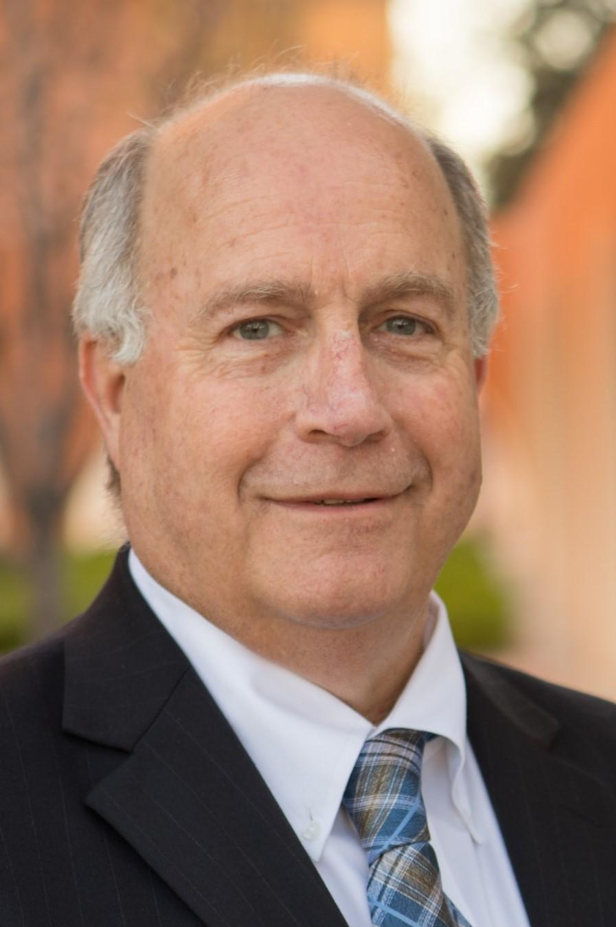
Richard Peterson, Director of the USC Gould School of Law Center for Dispute Resolution
|
|
In my work as director of the USC Gould School of Law Center for Dispute Resolution, I often have prospective students ask me, “Why study dispute resolution?” This question frequently comes from people with diverse life and professional/career experience, including for example, judges with many years of experience on the bench, highly skilled and experienced lawyers, successful or aspiring business owners and entrepreneurs, JD law students, undergraduate students recently completing their studies, as well as people from various areas of career focus such as human resources, education, entertainment, medical/health, insurance, real estate, banking, investment, information technology (IT) and many others. Some have had many years of professional and personal experience and have distinguished themselves in long careers. Others have relatively little or no experience, in contrast.
In addition to the why question, I am often asked, “Do I really need dispute resolution education? Whether someone needs dispute resolution education is a more difficult and personal question and one I am reluctant to answer because there are so many subjective components to the analysis and response. Yet, while I am hesitant to answer the need question, I am eager to answer what I believe to be a more salient question, “Will I benefit from dispute resolution education?” To that question, I enthusiastically assert that the answer is universally affirmative. Why universally affirmative? Because, unless you live totally isolated off the grid and do not interact with any other human, you will encounter conflict. Everyone will. It is a universal fact of life. Conflict is a natural part of the human experience and has an impact on us in every aspect of our lives. My students often hear me say that conflict in and of itself is neither positive nor negative, it is how we respond to it that makes it one or the other. The why and benefit questions lead to a third question that I will consider in this article, “How will I benefit from dispute resolution education?” The information provided below will answer all three questions.
Fundamentally, people benefit from dispute resolution education by gaining a deeper understanding of issues underlying conflict and the processes available to resolve them. Students develop and practice skills needed to improve the quality of dispute resolution processes and increase the satisfaction of parties with the outcomes of those processes.
We like to think that we and most reasonable people are rational and objective in problem solving and decision making. Law students are taught to “think like a lawyer.” The idea is to be objective, rational and emotionally calm in objectively applying law to facts, and then reaching conclusions consistent with that analysis. Indeed, this is an important skill for law students and other dispute resolution professionals to develop. Yet when pursued in the real world, this frequently does not happen and diverse opinions often emerge as to what the correct conclusions should be.
Research studies have found over many years that people are frequently not rational when in the midst of conflict, and worse, are rarely aware they are not thinking or acting rationally. Several factors contribute to this condition.
|
|
|
|
|
|
|