|
In This Issue:
- USRPA Statement on Rail Agreement
- Washington Update
- Market Update - U.S. Rice Farmers Need Improved Export Market
- Ray Stoesser Memorial Scholarship
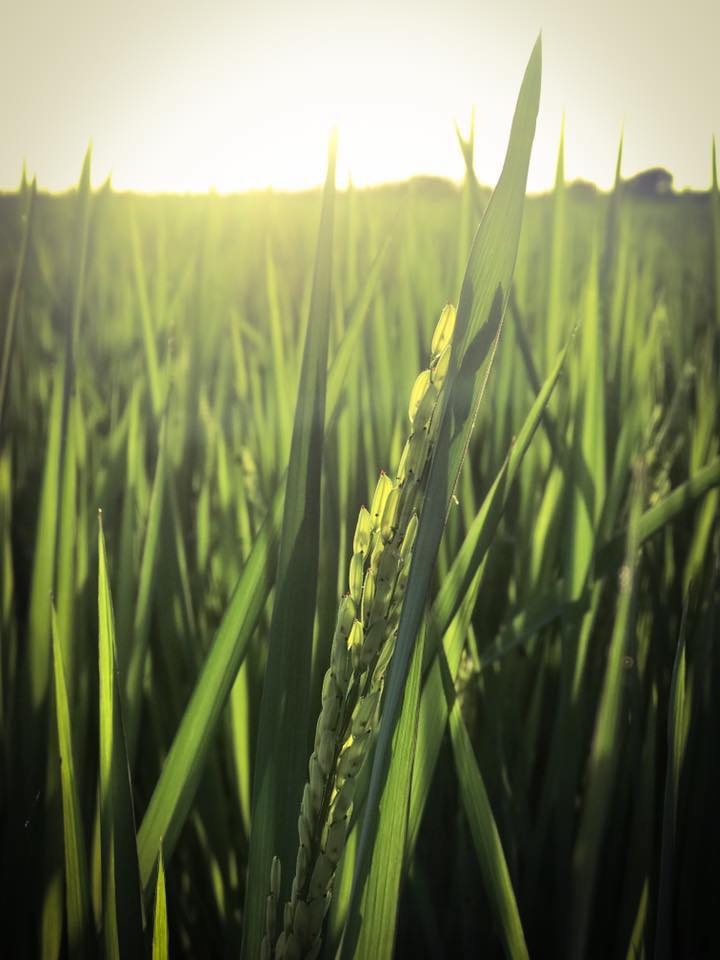
- Photos from Rice Country
| |
USRPA Statement on Rail Agreement | The US Rice Producers Association applauds Congress for acting to prevent the threatened rail strike and appreciates the Administration’s support of this legislation. The threat of a rail strike is already impacting the rice industry. The reality of a rail strike would have serious and detrimental immediate and long-term effects. We respectfully urge the Senate to now act as quickly as possible to enact the bill to eliminate any further disruptions and ensure this crucial piece of our supply chain remains intact. | |
|
Congress Acts to Attempt to Avoid Rail Strike
On Wednesday, the House of Representatives approved a bill to avert a freight rail strike on a bipartisan 290-137 vote. The bill would impose the Tentative Agreement introduced by the President’s Emergency Board in September which would increase rail worker pay by 24% and provide workers an additional paid day off. The House bill also included seven days of paid sick leave for rail workers, something not in the original agreement. The bill’s passage follows a call from the White House to Congress to act to avoid a strike on Monday. On Thursday, the Senate passed the Tentative Agreement on an overwhelmingly bipartisan 80-15 vote. A measure to provide paid workers with paid sick leave did not pass. The bill now goes to the President to be signed into law.
EPA Proposes new RFS
On Thursday, the Environmental Protection Agency (EPA) released a proposal to change the Renewable Fuel Standard (RFS). The proposal would raise the minimum required amount of biofuel which must be mixed into gasoline and diesel to 22.68 billion gallons in 2025. For 2022, the required minimum quantity is 20.87 billion gallons. In addition, the EPA proposal would create a credit to incentivize certain biomass production, including natural gas generated from landfills and at farms.
House Agriculture Committee Members Lead Delegation Trip to Cuba
On November 23, Reps. Salud Carbajal (D-CA), Jim Baird (R-IN), and Jahana Hayes (D-CT) concluded their congressional delegation trip to Cuba. The four-day trip consisted of meetings with Cuban farmers, agricultural business operators, and local officials to discuss the current state of agriculture in Cuba. In addition to agriculture, the delegation also raised concerns surrounding human rights, migration, and consular issues. The Committee members also met with the Vice President of Cuba Salvador Valdés Mesa, officials from the Cuban Ministry of Foreign Affairs, and Representatives of the National Assembly.
| |
Market Update - U.S. Rice Farmers Need Improved Export Market | |
The market has remained consistent since Thanksgiving. This is typical for this time of year though, as historically there have not been large chunks of business conducted during the holiday season. This year, however, it is a bit more noticeable because there haven’t been any large chunks of business since the Iraq tenders have completed. The stark lack of offshore sales is crossing into the worrisome category, and even the strong domestic market will likely not be able to continue keeping prices elevated to the same degree moving forward.
The price of U.S. long grain compared to the competition continues to maintain a spread not seen in recent history. While U.S. long grain 5% has dropped from $740pmt down to $730pmt, it is still nearly $200pmt higher than its Western Hemisphere counterparts. Uruguay at $560pmt, Brazil at $565pmt, and Argentina at $505pmt.
Just after the Thanksgiving break on November 28, a GAIN report on Brazil was published highlighting the competition that the U.S. now faces from this Western Hemisphere juggernaut vying for our core export market in Central America, namely Mexico. First things first, is that Post reduced the forecast for planted rice in Brazil in the coming year to a historical low of 3.9 million acres because crops like soybeans and corn are much more profitable and require less maintenance. This 3.9 million acre is 2.5% lower than last year, and 6% lower than the year before.
| | |
|
Despite the downturn in U.S. rice exports, the South Louisiana Rail Facility continues to market rice in nearby markets. Their newest development is a barge terminal located at the Port of Lake Charles (pictured) with loading activity underway this week. In just 10 short years, rail, barge, vessel, and now the Agreeta Rice Mill Partnership that will kick off next month has given some 200 rice farmers in SW Louisiana and SE Texas access to markets not previously available. | | |
|
As a threat to the U.S. rice industry, the Brazilian rice grower industry organization FEDERARROZ is combatting higher input costs by advocating for a more ambitious commercial agreement with the Mexican government. Right now, Brazil has a quota of seventy-five thousand tons per year of rice that can be exported tariff-free. They are pushing to grow this agreement, further putting pressure on the U.S. long-grain industry.
In light of this, Post has increased the export forecast for Brazil from 700,000 MT up to 900,000 MT, an ominous foreboding for the U.S. Exports to Mexico from Brazil have exceeded 305,000 metric tons as of September this year, exponentially higher than in previous years. The reason is two-fold; the first is the high prices from the U.S., and the second is the tax exemption that Mexico placed on imported rice to discourage food inflation. Mexico now accounts for 60% of Brazil’s paddy exports, a statistic that was unfathomable only a few years ago. For example, in 2021, the U.S. exported 765,000 MT to Mexico, then in 2022 it was 625,000, and down to 373,000 through September of this year; barely more than Brazil. Mexico is still procuring the same amount of rice, the U.S. is just getting much less of the business.
In Asia, things look very similar to pre-Thanksgiving numbers. Thai prices are at $430pmt, Viet prices at $435pmt, and Indian prices are now closer to $395pmt with their tariff. Prices remain firm that this level in the middle and far east, and there is little expectation for significant price shifts outside of some unforeseen weather or geopolitical event.
The weekly USDA Export Sales report net sales of 25,300 MT this week primarily for Japan (13,000 MT), Haiti (7,100 MT), Honduras (3,900 MT), Belgium (300 MT), and Canada (200 MT). Exports of 23,500 MT were primarily to Colombia (11,400 MT), Haiti (7,100 MT), Canada (1,900 MT), Mexico (1,700 MT), and Saudi Arabia (500 MT).
| |
Second Annual Ray Stoesser Memorial Scholarship | | |
|  |
Food and Ag Regulatory and Policy Roundup | | |
World Agricultural Production | | |
Grain: World Markets and Trade | | | |
| |
Osiriz / InterRice
Monthly Report No. 224
| | |
|
January 31 - February 1, 2023
26th Annual National Conservation Systems Cotton & Rice Conference
Baton Rouge, Louisiana
More Information
| |
|
May 30 - June 1, 2023
2023 Rice Market & Technology Convention
Puerto Vallarta, Mexico
More Information
| | |
USRPA does not discriminate in its programs on the basis of race, color, national origin, gender identity, sexual orientation, religion, age, disability, political beliefs, or marital/family status. Persons who require alternative means for communication of information (such as Braille, large print, sign language interpreter or translation) should contact USRPA at 713-974-7423. |
| | | |