|
UT Energy Bulletin | April 2026 |
| | | |
2026 Strategic Energy Seed Grant Project Selections Announced
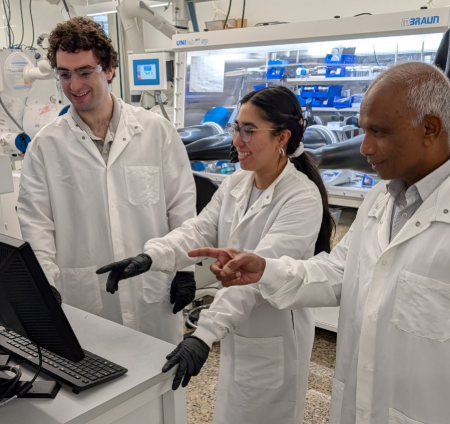
Nineteen research projects that accelerate innovation in the global energy landscape have been selected to receive a 2026 Strategic Energy Seed Grant from the UT Energy Institute. The interdisciplinary research projects span power and infrastructure for data centers, global energy security, water resources, carbon management, catalysis, hydrogen, geothermal systems, critical minerals, and advanced energy technologies.
Explore the Projects
| | | |
UT Energy Week 2026
The UT Energy Institute and the Kay Bailey Hutchison Energy Center for Business, Law, and Policy hosted UT Energy Week 2026 from April 6 to 10, bringing together students, researchers, faculty, energy professionals, and industry leaders for five days of panels, keynotes, startup pitches, research showcases, and networking events spanning the full spectrum of energy challenges and innovation.
Read More
| | | |
Powering Texas at the Speed of Business
Proceedings from Phase 3 of the Large Load Symposium at The University of Texas at Austin have now been published. Phase 3 moves from conceptual design to implementation: with active rulemakings and protocol revisions now underway, the focus is no longer on what an ideal framework could look like, but rather on how the current proposals perform in practice and what adjustments are needed to ensure they are workable at scale.
Read a Summary or Download the Report
| | | |
Five Faculty Members Honored for Transformative Contributions
President Jim Davis recently hosted UT’s annual Celebration of Research, honoring five faculty members with the President’s Research Impact and University Research Excellence Awards. EI Director Brian Korgel was among the honorees recognized for transformative breakthroughs in next-generation battery materials, computational oncology, ultrafast electronics, and the humanities.
Read More and Watch the Video
| | | |
ERCOT and UT Partner to Research Next-Generation Energy Technologies
ERCOT announced a collaboration with UT Austin to study how rapidly expanding inverter-based resources including solar, wind, and battery storage affect grid reliability, with UT researchers building computer simulations to test real-world scenarios and help ERCOT anticipate control, power quality, and reliability challenges before they arise.
Read More
| | | |
Breaking Down the Battery Problem
A UT Austin research team led by Arumugam Manthiram of the Walker Department of Mechanical Engineering published a framework in Nature Energy that combines fundamental chemistry with machine learning to advance the development of cheaper, more efficient oxide cathodes for lithium-ion batteries, tackling one of the most critical bottlenecks in battery cost and supply chain resilience.
Read More
| | | |
Water Use Requirements for Data Centers in Texas
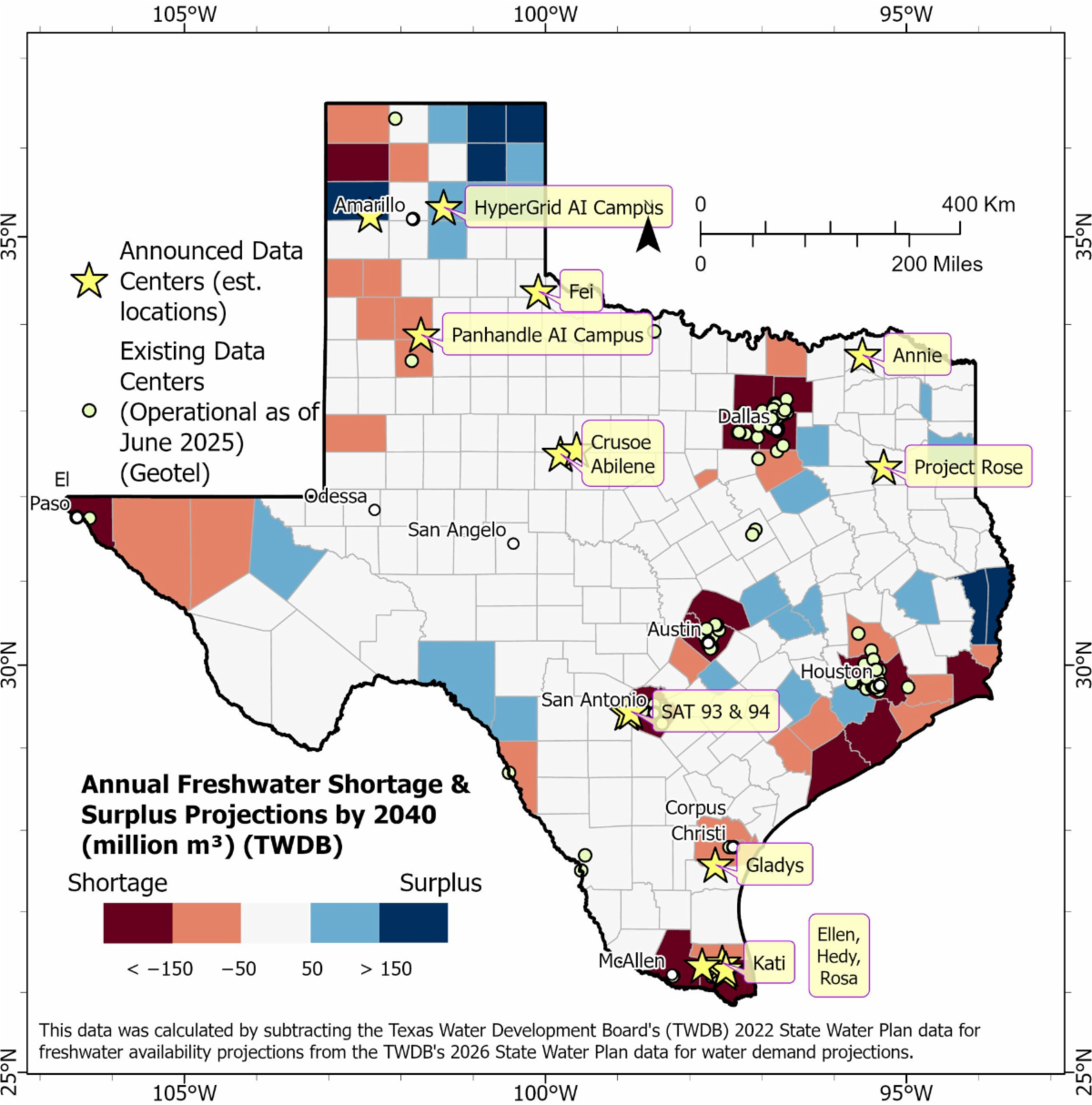
A recent Cockrell School of Engineering and Bureau of Economic Geology white paper quantifies the challenge water and power requirements pose for Texas data centers, projecting that one 2028 AI hardware rack will use the power of 1,000 homes. It recommends a system-level model of energy, water, and infrastructure to ensure sustainable digital growth.
Read More
| | | |
Science to Startups: Professor Brian Korgel's International Vision
Brian Korgel, director of the UT Energy Institute and professor in the McKetta Department of Chemical Engineering, is spotlighted for his global approach to translating nanotechnology and clean energy research into commercial innovation, spanning nearly 20 countries through research collaborations, the UT Austin Portugal Program's new Clean Energies area, and a study abroad course that guides students from nanotechnology concepts to startup pitches.
Read More
| | | |
New Leadership at UT’s Oldest Research Facility
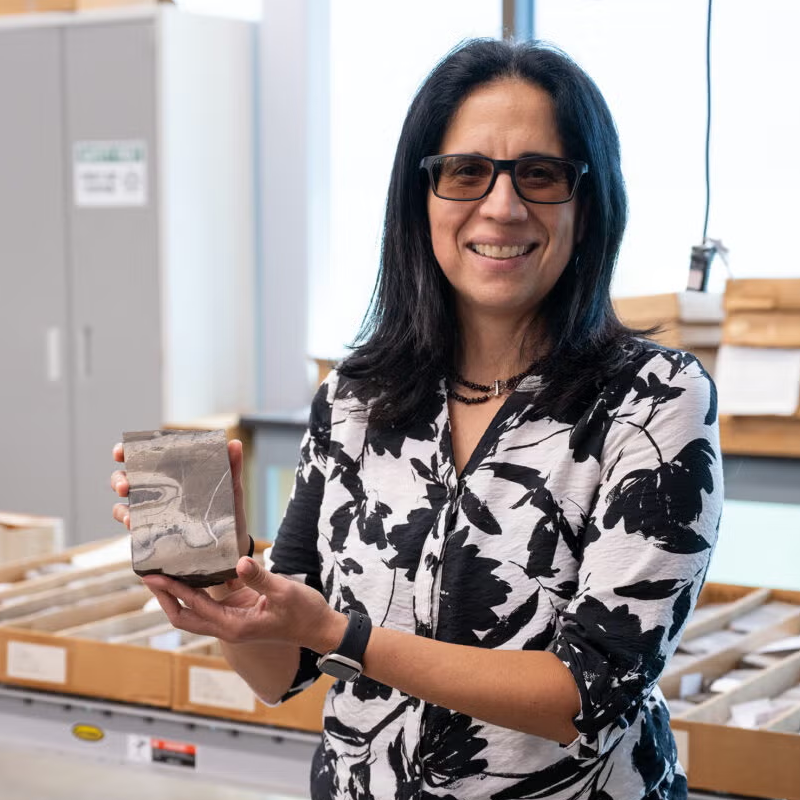
The Bureau of Economic Geology's incoming director, Lorena Moscardelli, has a deep history at the Jackson School of Geosciences. As the state geological survey for Texas, the Bureau plays a critical role in Texas energy, overseeing vital research in hydrogen storage, carbon sequestration, and sustainable resource management.
Read More
| | | |
Fernanda Leite Receives Prestigious Construction Research Award
Professor Fernanda Leite has been honored with the ASCE Peurifoy Construction Research Award for her work in Building Information Modeling. Her research explores the integration of 3D modeling and artificial intelligence (AI) to create sustainable and adaptable infrastructure.
Read More
| | | |
Methane Intensity Study Finds Lowest Levels in Appalachian Basin
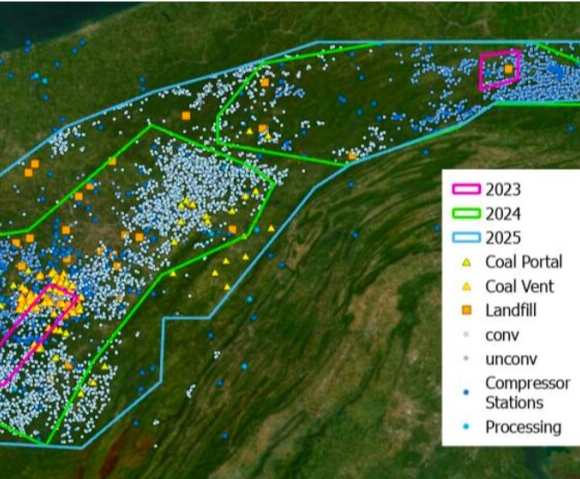
The Energy Emissions Modeling and Data Lab (EEMDL) at UT Austin partnered with Colorado State University and the Appalachian Methane Initiative to confirm for the second consecutive year that the Appalachian Basin has the lowest methane intensity of any major US oil and gas basin, with a loss rate of just 0.52% across nearly 17,000 surveyed sites.
Read More
| | | |
UT Faculty Members Elected Fellows of the American Association for the Advancement of Science
Two UT Austin professors have been honored with election as 2025 Fellows of the American Association for the Advancement of Science. Radu Marculescu was recognized for seminal contributions to intelligent computing systems, and Dev Niyogi for groundbreaking work advancing our understanding of extreme weather, urban heat, and the science of climate resilient cities.
Read More
| | |
|
Performance of Dispersion Models in Predicting Ambient Ethane Concentrations at a Regional Air Quality Monitor in an Oil and Gas Producing Region
This study evaluates the performance of four widely used dispersion models in predicting ambient hydrocarbon concentrations in the Eagle Ford Shale oil and gas production region. Model performance varied considerably based on meteorological conditions, temporal resolution, and modeling objective, with puff-based models generally outperforming plume-based approaches, particularly under calm wind conditions.
Read More
|
| |
Carbon Capture & Storage (CCS)
Developed by the Gulf Coast Carbon Center, this self-paced online program is designed
for geoscientists and engineers transitioning their expertise to the emerging CCS industry.
-
Format: 100% Online & Self-Paced.
-
Curriculum: 9 modules covering the full lifecycle, from site screening to leakage detection and regulatory permitting.
-
Skills: Master hands-on tools like EASiTool for storage capacity and economic assessments.
-
Ideal for: Subsurface professionals, reservoir engineers, and energy managers.
Learn More & Register
| | |
Energy Institute
Jorge Piñon was cited in BBC News🔒 noting that diesel is needed in Cuba more urgently than oil and gas, for use in backup power generators and transportation systems.
Piñon was also featured on BBC Business Daily, explaining that Cuba faces a two-part energy challenge: restoring electric power generation capacity and rebalancing oil supply and demand.
Piñon was quoted in AP News, Maritime Executive, and NPR tracking two Russian tankers heading to Cuba, noting that the anticipated crude shipment could produce roughly 180,000 barrels of diesel, enough to cover nine to ten days of Cuba's daily demand.
Piñon was also cited in Bloomberg🔒 and MSN, noting that while the Russian oil delivery temporarily staves off a full humanitarian crisis, any relief would be short-lived, since it could take Cuba up to 45 days to refine and distribute the crude. Once used, the supply would last only days or weeks
.
Piñon was quoted in the Miami Herald, AFP via Barron's, RFI, and Latin Times tracking the Anatoly Kolodkin's approach to Cuba and assessing the urgency of the island's diesel shortage, noting the government would face a difficult choice between using refined fuel for power generation or transportation.
Piñon was quoted in the Wall Street Journal🔒explaining that replacing Cuba's obsolete power grid would require an investment of $8 billion to $10 billion over three to five years.
He was also cited in RFI, noting that major oil companies are sending small teams to Venezuela to assess the state of the country's pipeline infrastructure and determine how much investment would be needed to restore production capacity.
| |
Cockrell School of Engineering | Hildebrand Department of Petroleum and Geosystems Engineering
Hugh Daigle was quoted by Marketplace, noting that oil markets are pricing in a prolonged conflict and that damage to oil and gas infrastructure around the Persian Gulf is likely to keep prices elevated for an extended period.
Daigle was also interviewed on NPR's Weekend Edition, explaining why the U.S. continues to import most of the oil it consumes despite being a leading exporter, citing mismatches between domestic crude types and refinery infrastructure as well as insufficient pipeline capacity.
| |
Cockrell School of Engineering | Center for Energy and Environmental Systems Analysis
Ben Cahill was quoted in Fortune warning that short-term emergency measures to offset oil supply disruptions have been exhausted and that, as long as Strait of Hormuz transit remains disrupted, energy shortages across Asia will worsen quickly.
| |
Cockrell School of Engineering | Walker Department of Mechanical Engineering
Michael Webber was quoted in Forbes noting that, while California's aggressive efficiency standards have reduced per-capita electricity consumption, this creates a compounding effect where lower consumption drives up per-unit prices.
Webber also wrote an op-ed in the Houston Chronicle🔒arguing that the U.S.-Iran conflict has caused an unprecedented global energy supply shock, but that the resulting price spikes may ultimately accelerate the transition to alternative energy.
| |
LBJ School of Public Affairs
Joshua Busby was quoted in Bloomberg🔒cautioning that overly aggressive efforts to eliminate U.S. reliance on Chinese electrical equipment could impose excessive costs on American companies, as the data center industry faces widespread delays from equipment shortages.
| |
Webber Energy Group
Joshua Rhodes was quoted in Politico Power Switch and E&E News noting that the entire electricity system is trying to grow simultaneously on both supply and demand sides with a limited number of transformers available.
Rhodes was also quoted in Grist noting that while clean energy development in Texas is expected to continue following federal incentive rollbacks, it will proceed more slowly and at greater cost, likely resulting in higher electricity prices and reduced returns for rural counties.
Rhodes was quoted in Houston Public Media about the significant uncertainty about how much generation capacity and transmission infrastructure needs to be built to support rapid data center growth in Texas.
| | | |
Net-Zero Transition in the Context of Geopolitical Fragmentation: How Can Macroeconomic Modelling Help?
April 22, 2026, Paris, France
More Info and Registration
| | | | |
2027 Marine Energy Collegiate Competition
Apply by May 2, 2026, 12:59 a.m. CDT
More Info
| | | | | |
Save The Date: EEMDL 2026 Annual Event
October 13-15, 2026
The University of Texas at Austin
| | | Thank you to our partners and sponsors for supporting the UT Energy Institute | |
| | | |