| |
Hello!
It is Spring in Seattle, where the city is preparing to host World Cup Soccer matches this June. With six matches here, there are sure to be plenty of goals! On that theme, the SMART Center is celebrating the goals we’ve achieved thus far this academic year.
-
In a pivot to incorporate more state and local projects to SMART’s portfolio, our Data & Evaluation Team was recently selected by the City of Seattle’s Department of Education and Early Learning (DEEL) to evaluate its Youth Mental Health Initiatives, which span community-based outreach and prevention programming, school-based screening and clinical services, and telehealth.
-
With passage of legislation to adopt the Washington Thriving strategic plan for youth behavioral health, UW SMART saw its highest priority policy recommendation for 2026 achieved. With hope, resources will now be found to implement the Washington Thriving Plan’s key priorities to bolster the well-being of Washington’s children, youth and young adults.
-
Our USABILITY project successfully recruited over 200 students and teachers from across the country to conduct user testing of the most effective and widely-implemented social emotional learning programs. The research team is now reviewing and synthesizing data, which will be used to inform the design of such school-based programs to effectively promote students’ mental wellness and readiness to learn.
As you can tell from this sampling of our efforts in the last year, SMART Center continues to create, train, advocate and study for the benefit of our partners and colleagues to support youth well-being. We are excited to see what comes next.
Wishing you a wonderful rest of the school year and an enjoyable summer.
In partnership,
The SMART Center Leadership Team
Eric Bruns, PhD, Larissa Gaias, PhD, Aaron Lyon, PhD, Kelcey Schmitz, MSEd, Jennifer Stuber, PhD
| | | |
SMART Talks | Episode 3
Behavioral Health Student Assistance Program: Leveraging Non-Traditional Mental Health Providers to Address Workforce Shortages and Mitigate the Youth Mental Health Crisis
Watch Dr. Eric Bruns discuss the multiple benefits of Behavioral Health Student Assistance Professionals (BH-SAP) in meeting the mental health needs of K-12 students. Interested in launching such a program in your district? Contact Erin Wick, AESD Behavioral Health Student Assistance Program State Lead, ewick[at]esd113.org | 360.464.6849.
| | |
WSW Funding Extended
Finally, we have concrete news to share about the future of our Workforce for Student Well-being Initiative (WSW) to place highly skilled social workers into high needs schools. Legal action against the U.S. Department of Education has resulted in our funding being reinstated. This means we can recruit a fourth cohort of highly-motivated masters level school social work students for the 2026-2027 school year to work in Washington’s high-needs K-12 school districts.
| |
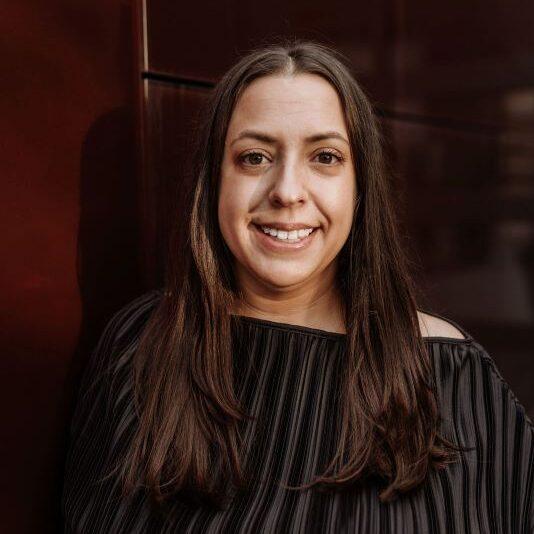
Congratulations to Dr. Kat Bruzios,
Postdoctoral Fellow
Dr. Kat Bruzios has been accepted to the 2026 CHIPS (Child Intervention, Prevention, and Services) Research Training Institute. CHIPS is a one-year interdisciplinary training institute for early career researchers who are preparing for an NIMH grant that’s focused on child mental health interventions or service delivery. She applied because she is preparing her K award, which will apply a leadership adaptation of BASIS (Beliefs and Attitudes for Successful Implementation in Schools) to the implementation of a depression prevention program. She is hoping to learn how to better blend mental health and implementation science as priorities in the K award as well as expand her network and learn from others who are in the process of or have been awarded a K.
| | |
RIISE Fellows Visit SMART Center
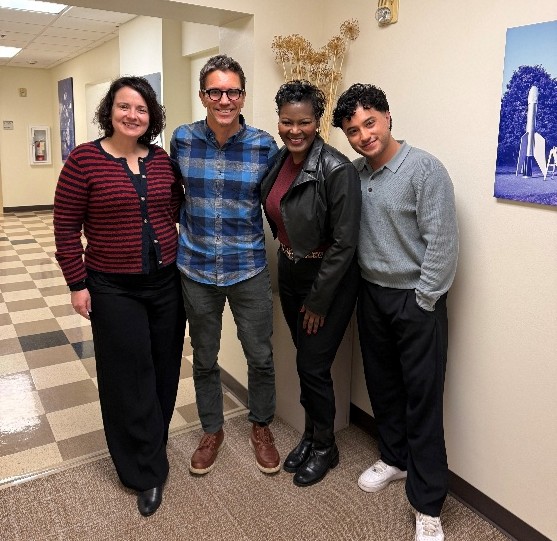
Three Implementation Research Institute (IRI) Fellows recently visited the SMART Center. Pictured with SMART Center Associate Director Dr. Aaron Lyon, Dr. Esti Iturralde (Kaiser Permanente), Dr. Bernadine Waller (Columbia University), and Dr. Juan Pablo Zapata (Northwestern University) spent two days collaborating with SMART Center faculty and staff on a variety of school mental health implementation topics.
| | |
Former SMARTie Kristine Lee Earns PhD
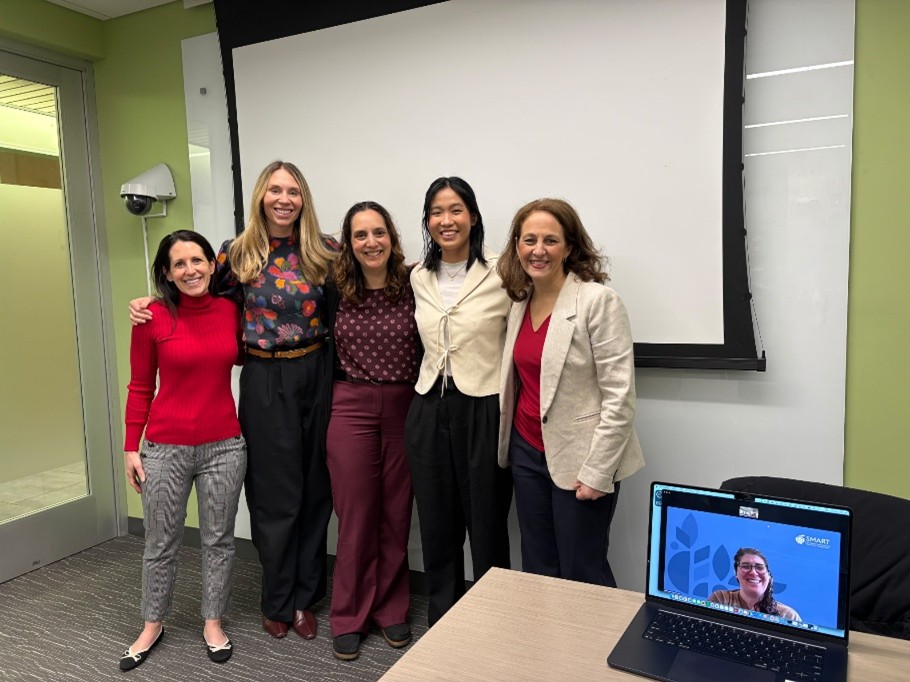
Former SMART Center staff member, Kristine Lee (second from right), defended her doctorate dissertation, entitled Expanding Early Childhood Educators' Toolkits: Development and Evaluation of an Online Training for Identifying and Addressing Anxiety, Stress, and Trauma Symptoms in Young Children, with SMART Center Associate Director Larissa Gaias
(on the laptop!) serving on her committee. Kristine completed her PhD in Clinical Psychology at Boston University. Congratulations Dr. Lee!
| | |
Empowering Educators, Supporting Students
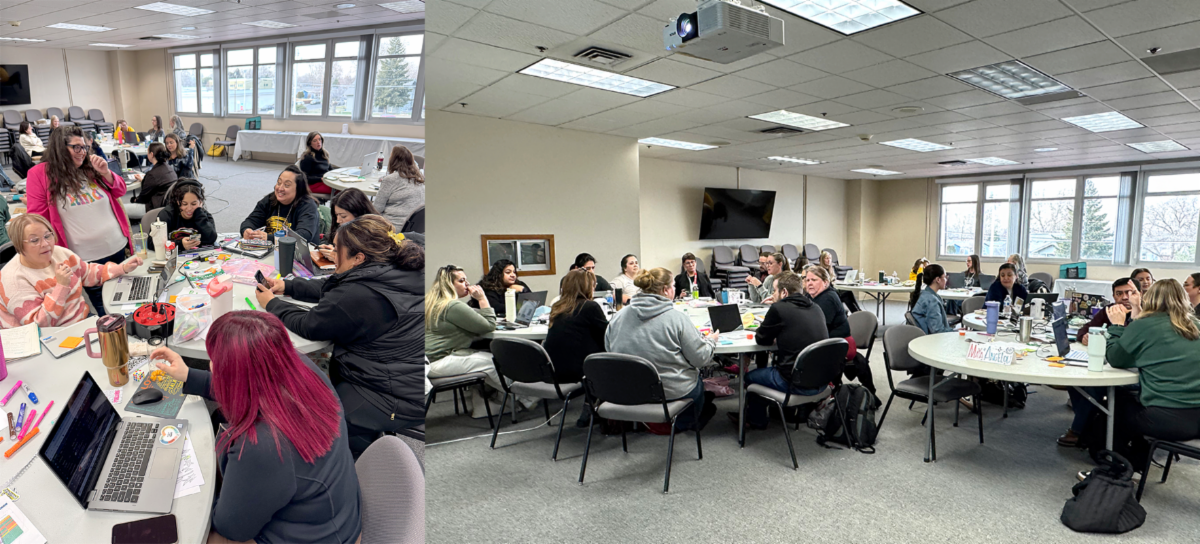
We're proud to spotlight the incredible work happening with the Pasco School District and our SMART Training and Technical Assistance Team! After a strong start to the year, PSD teams recently completed an intensive 4-day training series centered on Universal Screening, a critical step toward building a more proactive support system for every student.
This 3rd cohort brought remarkable energy and a collaborative spirit to the room, working through everything from mastering the screening process to preparing for real-world implementation. Systemic change takes time, but Pasco is proving it's possible with the right tools and the right people.
We can't wait to see this work take flight. Way to go, Pasco!
| | |
Presenting at CASEL on SEL Implementation Research
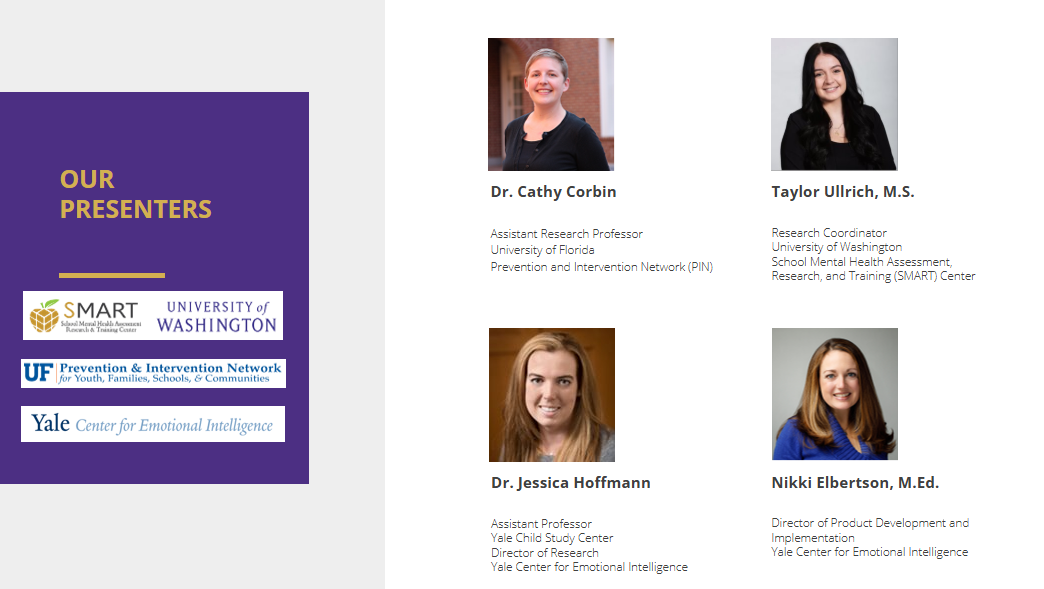
We're proud to share that our own Taylor Ullrich, M.S. (Research Coordinator) and core faculty member Dr. Cathy Corbin (Assistant Research Professor, University of Florida Prevention and Intervention Network) recently presented at a CASEL webinar.
Their presentation, "The SEL-dom Seen: Measuring SEL Implementation Across System Levels," drew on findings from a federally funded research study to explore practical strategies for measuring how Social Emotional Learning (SEL) is actually being put into practice, at the classroom, school, and district levels.
Attendees heard real-world examples from multiple districts, examining key dimensions of SEL implementation such as the strategies used, the completeness of delivery, and the duration of implementation efforts. The session also featured a discussion with a SEL program purveyor on how implementation data can be used to drive and sustain systemic SEL in schools and districts.
This work speaks directly to a growing need in the field: understanding not just whether SEL programs are in place, but how well they are being implemented across an entire system.
| | |
Universal Mental Health Screening in Schools: From Policy to Practice
This two-part virtual webinar series, co-sponsored by the SMART Center, focuses on implementing universal screening for mental health in schools. Participants will gain best practice screening protocols, resources, and policy strategies to support students.
2 sessions: May 7 & 14 | 12-1:30pm
| | |
Brief Intervention for School Clinicians (BRISC)
BRISC is a research-based, engagement, assessment, brief intervention and triage strategy for mental health practitioners working in middle and high schools.
To meet the overwhelming demand for BRISC training and support, a
web-based self-paced BRISC e-learning with implementation supports
is now available to license by districts, communities or individual practitioners.
For more information contact us at brisc@uw.edu.
| | |
FAST Program Offers Free Training to WA School-Based Mental Health Clinicians
The First Approach Skills Training (FAST) Program is a WA State-funded initiative operated by Seattle Children's Hospital focused on evidence-based child and teen mental health treatment.
FAST has partnered with the SMART Center on a number of training events for school-based mental health clinicians. This year, Seattle Children’s is offering even more free training opportunities. The following 2-3 hour workshops teach you how to use FAST workbooks for anxiety, disruptive behavior, depression, trauma & more:
Register here for upcoming FAST live trainings!
FAST-Anxiety | April 21st
FAST-Behavior | May 6th
FAST-Trauma | May 14th
FAST-Parenting Teens | May 26th
FAST-Early Childhood | May 28th
FAST-Anxiety | June 2nd
FAST-Behavior | June 10th
FAST-Trauma | June 16th
Reserve > your spot before they fill up!
For clinicians outside of WA, you can access > FAST training workshops through the UW AIMS Center.
| | UPCOMING EVENTS FEATURING SMART | | |
The SMART Center is pleased that the Washington State Legislature formally adopted the Washington Thriving strategic plan, which provides a roadmap to well-being for every child, youth and young adult, during the 2026 session. In partnership with Washington Thriving, CoLab, a UW Center, will work on two key components of establishing a system of care, including the development of a statewide technical assistance framework to support schools’ behavioral health efforts with students.
| | |
The UW SMART Center specializes in promoting high-quality, culturally-responsive programs to meet the social, emotional, and behavioral needs of all students. Stay informed and inspired by subscribing to our quarterly newsletter.
| | | | |