| |
Happy New Year!
As we step into 2026, we invoke feelings of renewal both in energy and commitment. The SMART Center faculty and staff are excited to continue our work in supporting the well-being of youth in Washington state and throughout the country.
Released in November 2025, Washington Thriving Strategic Plan: A Roadmap to Well-Being for Every Child, Youth and Young Adult, developed by a diverse group of legislators, state and regional agency representatives, students and family members, is a comprehensive and ambitious plan for doing just that.
As a reminder, Washington ranks 48th in the nation for youth mental health access. By creating a coordinated effort to support the behavioral health of youth in our state, this plan provides clear direction for tackling Washington’s barriers through evidence-based strategies, including creating a system of care infrastructure; providing K-12 schools with tools, resources and guidance to support student wellness; and expanding treatment options to serve Washingtonians equitably.
The key to the plan’s effectiveness lies with the state legislature; whether they choose to adopt and resource the plan during another expected budget shortfall.
You’ll find the SMART Center referenced in the plan:
SMART Center is encouraged by the State’s investment in creating this strategic plan and is eager to contribute to realizing its vision.
While we await the adoption of this plan, we are pleased to share the many other ways we have been contributing to youth well-being since our last newsletter.
In partnership,
The SMART Center Leadership Team
Eric Bruns, PhD, Larissa Gaias, PhD, Aaron Lyon, PhD, Kelcey Schmitz, MSEd, Jennifer Stuber, PhD
| | | |
SMART Talks
Introducing SMART Talks, a new series that features SMART Center faculty presenting their research in short, accessible videos. We get it! There are times you just need the essential findings from an academic publication to apply to your work. Here you go. Research. Practice. Simplified.
View video (with publication link in the description)>
| | |
Congratulations to Dr. Aaron Lyon!
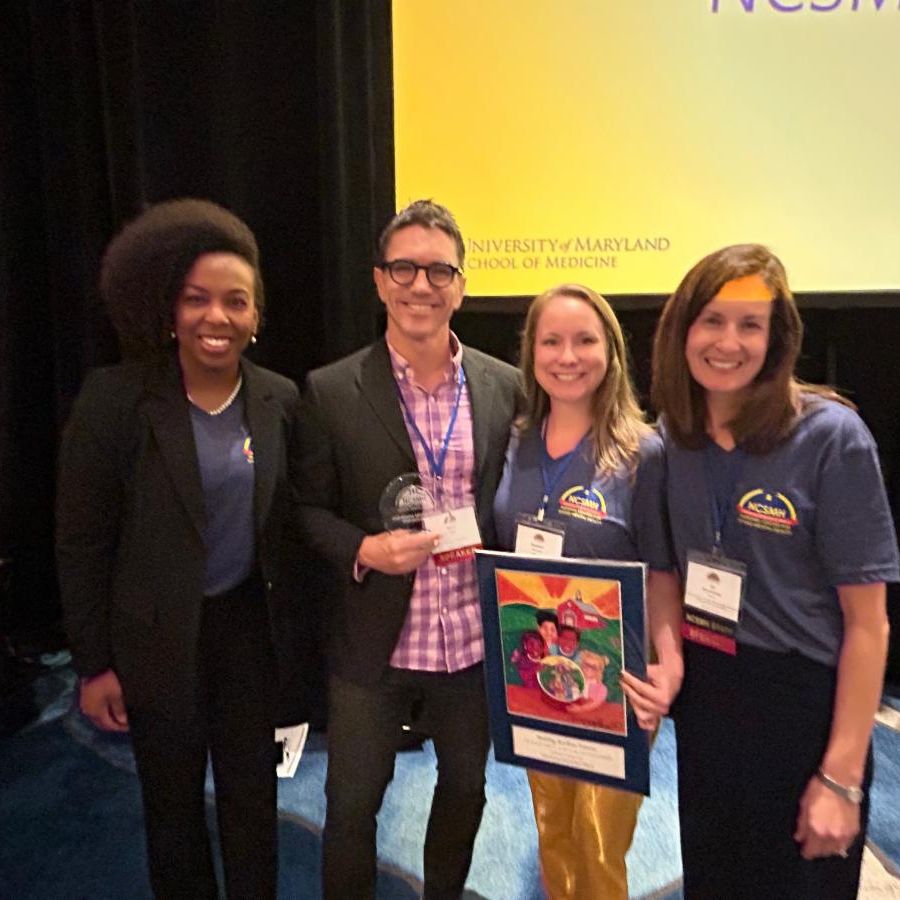
The National Center for School Mental Health (NCSMH) and the School Mental Health Research Summit Planning Committee selected Aaron Lyon, PhD as the recipient of the 2025 School Mental Health Research Award.
This award was started in 2018 to recognize leaders in school mental health whose scholarly work has made a significant contribution to advancing research and practice in school mental health.
Dr. Lyon was nominated for the 2025 award and selected as the winner by the School Mental Health Research Summit planning committee, previous winners of the award, and previous planning committee members.
The award was presented during the 2025 Annual Conference on Advancing School Mental Health, held December 2nd-4th in Orlando, Florida.
| |
Dr. Aaron Lyon Named Among the World’s Most Influential Researchers
We are proud to announce that Dr. Aaron Lyon has been recognized by Clarivate as one of the Global Highly Cited Researchers of 2025.
What This Recognition Means
This annual list identifies the "who’s who" of the scientific community—researchers who have demonstrated significant and broad influence in their fields.
-
The Top 1%: Honorees are selected from those whose work ranks in the top 1% of citations globally for their field and publication year.
-
A Decade of Impact: The distinction is based on the publication of multiple highly cited papers over the last ten years.
-
Global Reach: Out of millions of researchers worldwide, only 7,131 individuals from 60 countries received this award in 2025.
Methodology Note: The list is determined by rigorous bibliometric analysis performed by data scientists at the Institute for Scientific Information (ISI) at Clarivate, using data from the Web of Science citation index.
View full list >
| | |
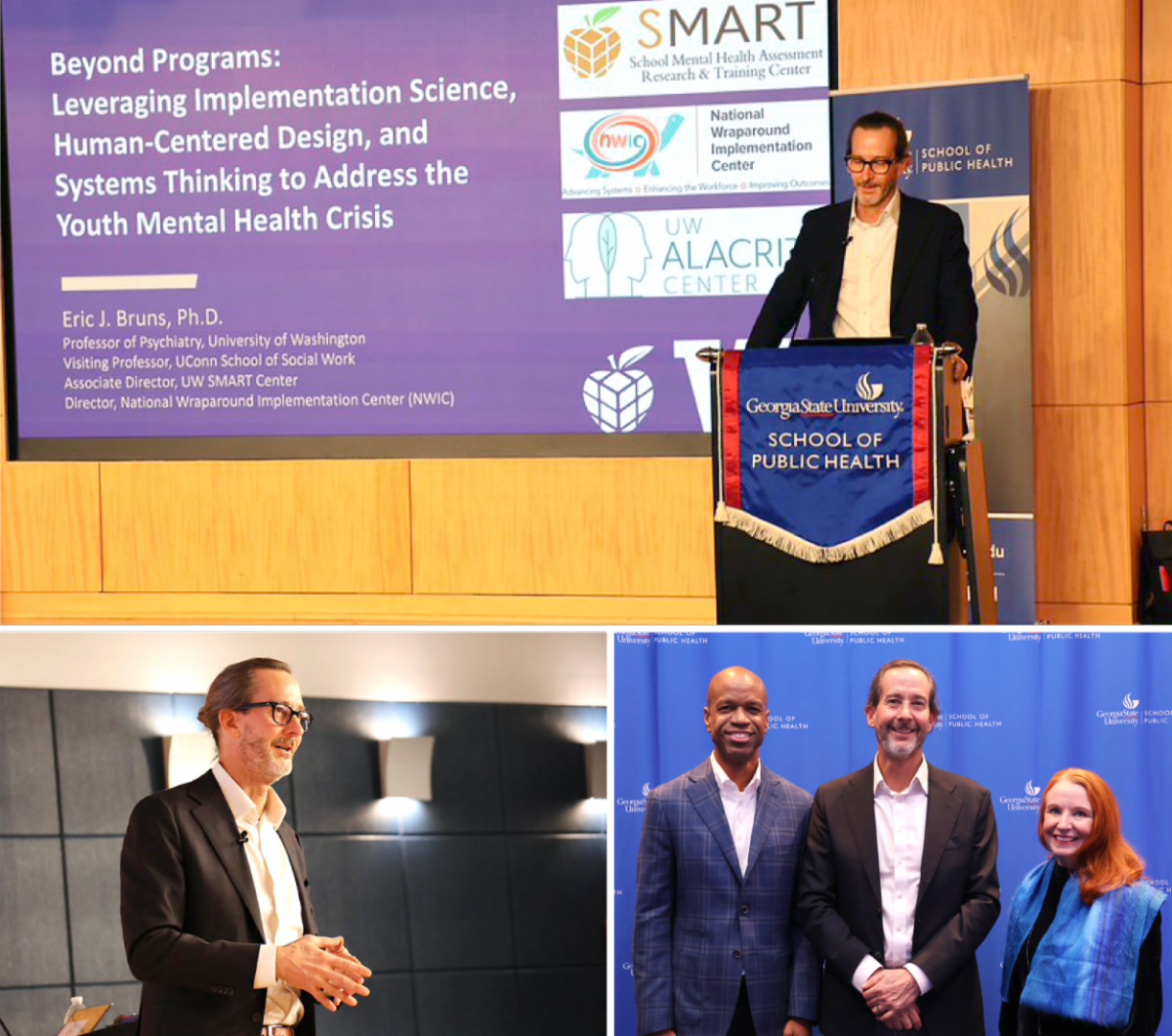
Georgia State University Hosts Dr. Eric Bruns
SMART Associate Director Eric Bruns, PhD, presented the 2025 Lutzker Lecture at Georgia State University, Beyond Programs: Leveraging Implementation Science, Human-Centered Design, and Systems Thinking to Address the Youth Mental Health Crisis.
Watch the full lecture >
| | |
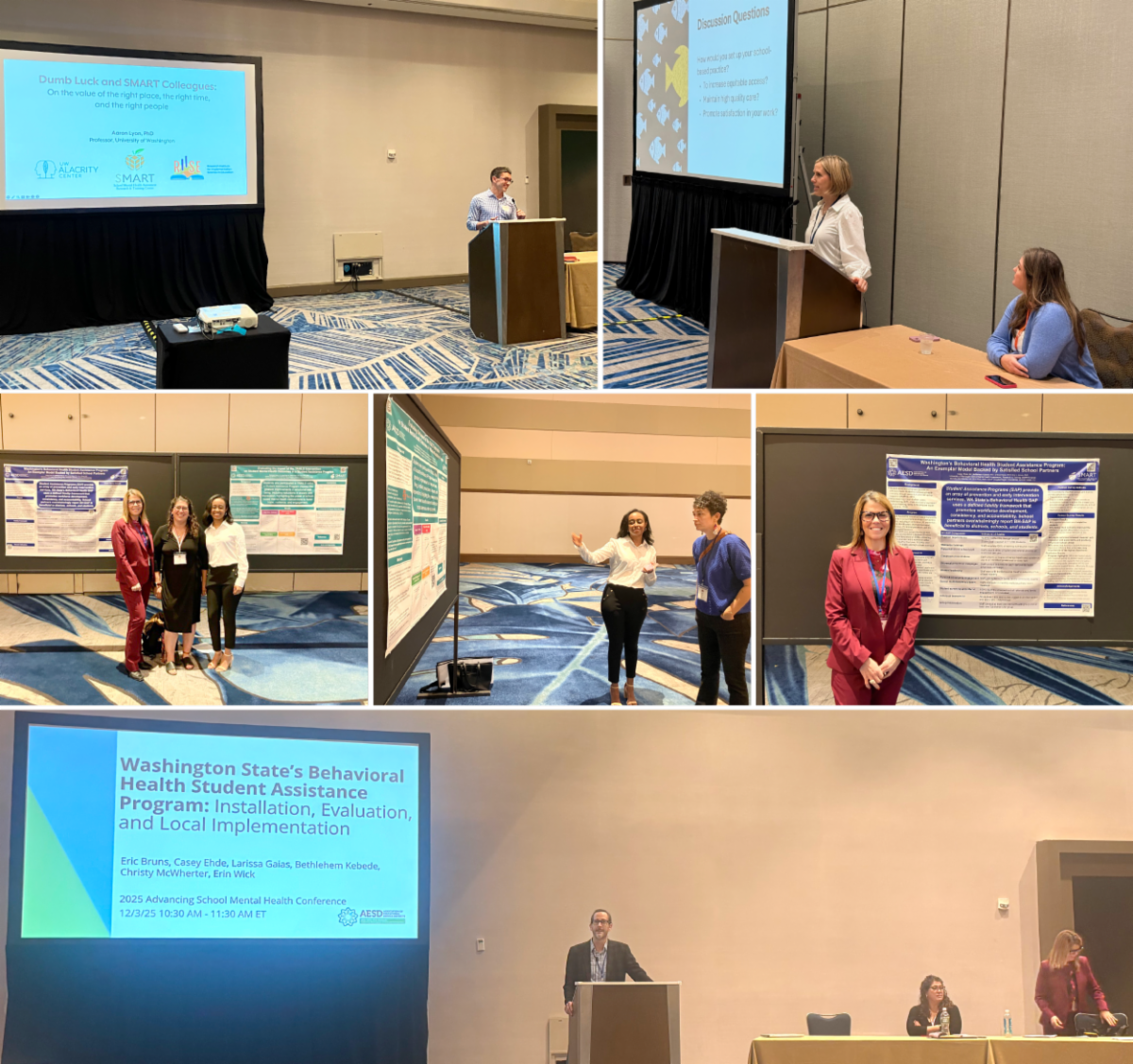
2025 Advancing School Mental Health (ASMH) Conference Wrap Up | Dec 2-4 | Orlando, FL.
SMART faculty and staff attended the annual ASMH conference in December to share research, connect with colleagues and accept an award (see Dr. Aaron Lyon's award above!).
In particular, a collaboration featuring Washington state ESD Capital Region 113: Erin Wick, Executive Director of Integrated Student Supports, BH-SAP Lead, Christina McWherter, Data Systems Specialist and UW SMART Center Data & Evaluation Team: Eric Bruns, Professor and Associate Director, Larissa Gaias, Acting Assistant Professor and Associate Director, Casey Ehde, Research Coordinator,
and Bethlehem Kebede, Research Analyst, presented a talk on:
Washington State’s Behavioral Health Student Assistance Program: Installation, Evaluation, and Local Implementation and two posters that detailed:
1) Evaluating the Impact of the TRAILS Intervention on Student Mental Health Outcomes in a Student Assistance Program; and
2) Washington’s Behavioral Health Student Assistance Program: An Exemplar Model Backed by Satisfied School Partners.
Additionally, our team working with Public Health—Seattle & King County offered two presentations:
When the Rubber Hits the Road: Implementation Strategies for Behavioral Health Care Coordination and Systems Integration in School Mental Health, presented by Megan Frye and Kristy Ludwig (other contributing authors: Freda Liu, Elizabeth McCauley, Jodie Buntain-Ricklefs, Sofia Redondo)
Adaptation and Implementation of Clinical Practices: Training and Consultation Considerations for School Settings, presented by Megan Frye and Kristy Ludwig (other contributing authors: Freda Liu and Elizabeth McCauley)
| | |
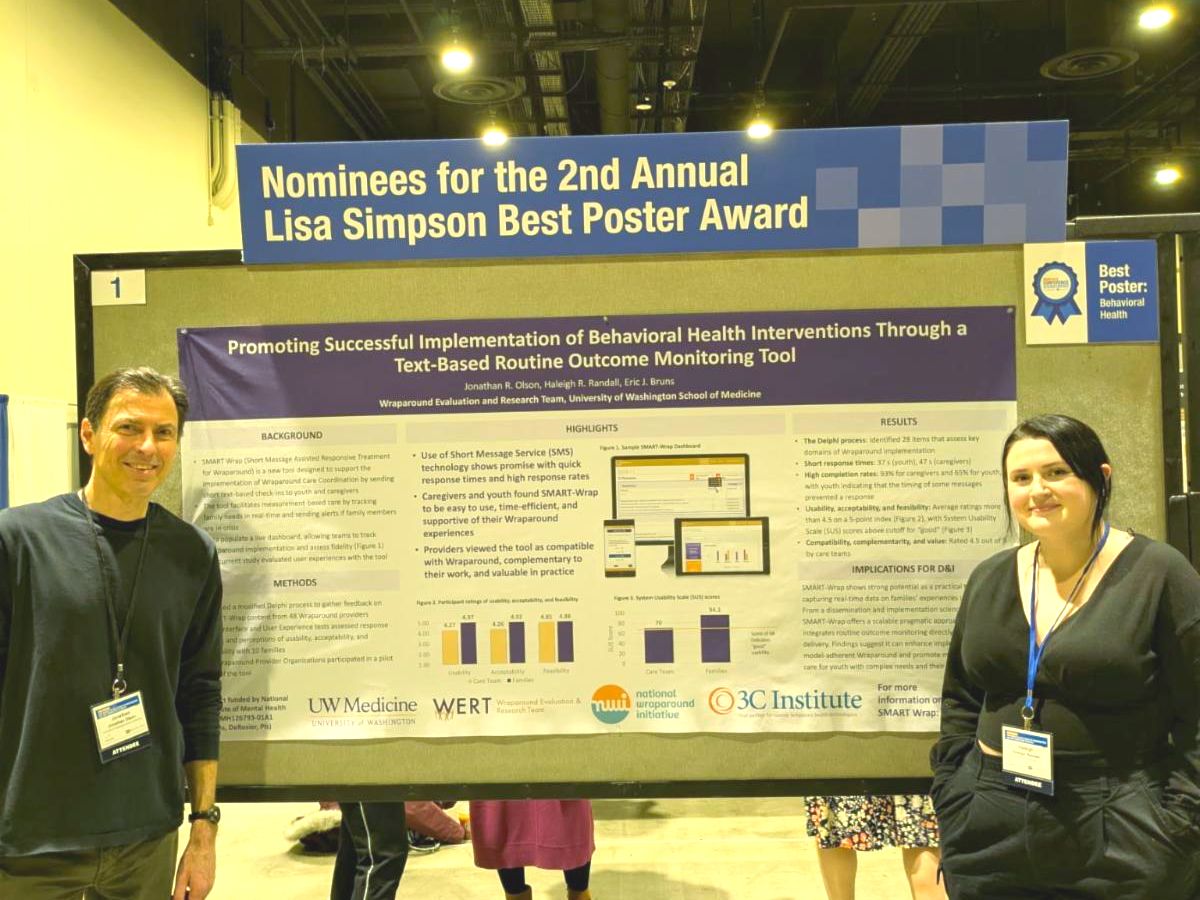
18th Annual Conference on the Science of Dissemination and Implementation in Health Wrap Up | Dec 14-17 | WA D.C.
SMARTies Haleigh Randall and John Olson, PhD represented our Wraparound Evaluation & Research (WERT) Team at the conference. Their "SMART Wrap" tool uses text-based check-ins for real-time, heart-centered family support.
They were awarded Best Poster for Behavioral Health!
| | |
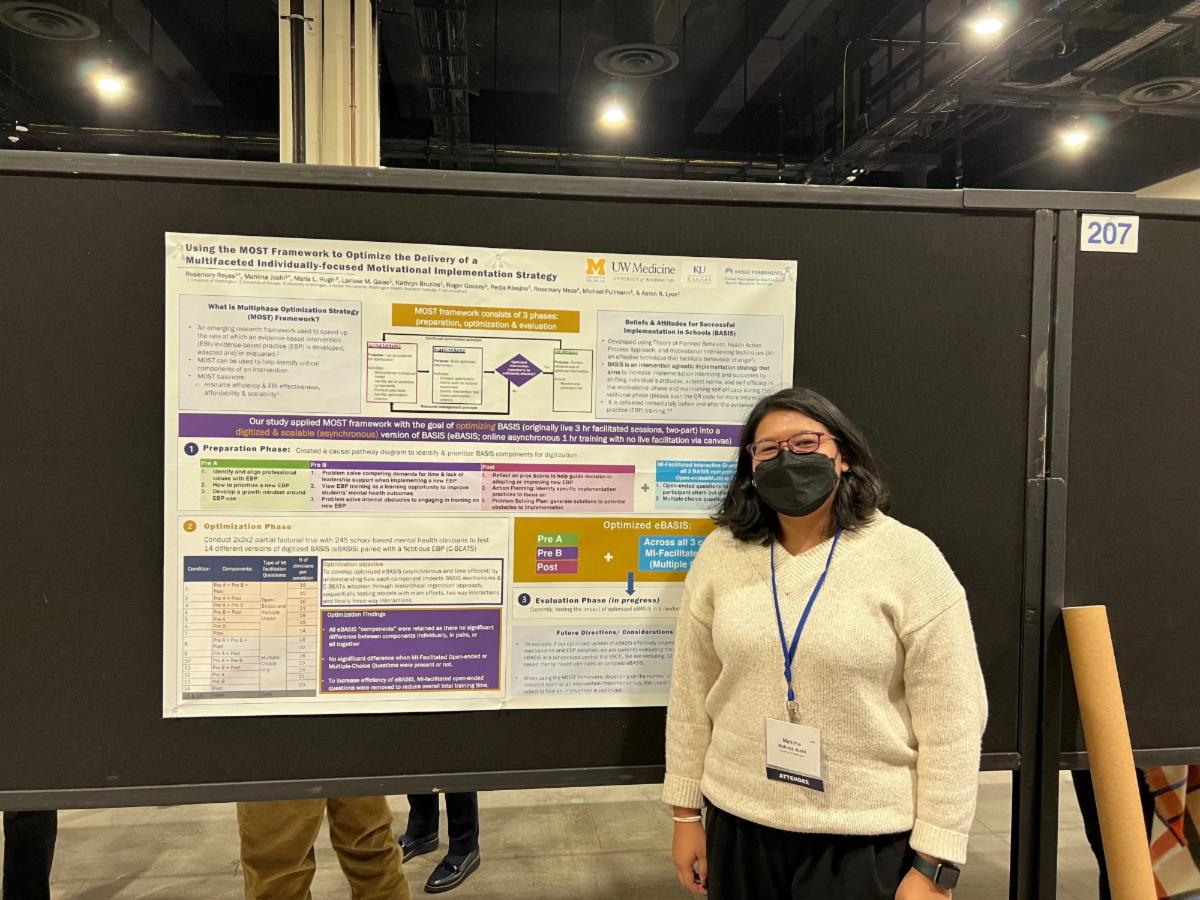
Mahima Joshi presented a poster on Using the MOST Framework to Optimize the Delivery of Multifaceted Individually-focused Motivational Implementation Strategy.
Aaron Lyon, PhD discussed Human-centered Redesign of Evidence-based Interventions and Implementation Strategies to Enhance Usability.
| | |
Trauma Intervention Redesign and Implementation Project (TRIP)
The UW ALACRITY Center seeks school counselors and school social workers (K-12, any state) interested in (1) receiving training and post-training coaching in Trauma-Focused Cognitive Behavioral Therapy (TF-CBT) and (2) implementing TF-CBT with 1-3 students on their caseload.
TF-CBT has the best evidence of any intervention for youth trauma and the Trauma Intervention Redesign and Implementation Project (TRIP) aims to compare the version of Original TF-CBT with a version of TF-CBT recently redesigned for schools to determine whether the redesigned version is easier to use in schools while maintaining effectiveness.
Participation would begin in January 2026 and continue through the end of the 2025 - 2026 school year. Participants would:
- Attend a 2-day online training and post-training coaching (brief calls 2x per month).
- Identify and recruit 1-3 students in need of services or within your own caseload to participate in the study (receive up to $80).
- Implement assigned version of TF-CBT with participating students, once consented.
- Audio record sessions with participating students, once consented.
-
Complete brief surveys (~20 minutes) at up to 3 timepoints over the study timeline (receive up to $150).
Please see the recruitment flyer > for more information.
If interested in participating, please complete this survey by January 16th
Feel free to contact the study team with any questions at uwtrip@uw.edu.
| | |
SMART/Seattle Children’s Study on Student Organization, Time Management
Researchers from the SMART Center and Seattle Children's are recruiting 6-12th grade students in the Pacific Northwest region and their parents to help us design a new questionnaire about student organization and time management skills.
Parent-youth dyads will be paid $70 for completing a ten-minute online questionnaire about what strategies the student uses (or chooses not to use) to stay organized in school.
Interested families can sign up through this survey.
Participating in this study will help schools better identify students in need of organization skills support in the future!
Read the Flyer
| | |
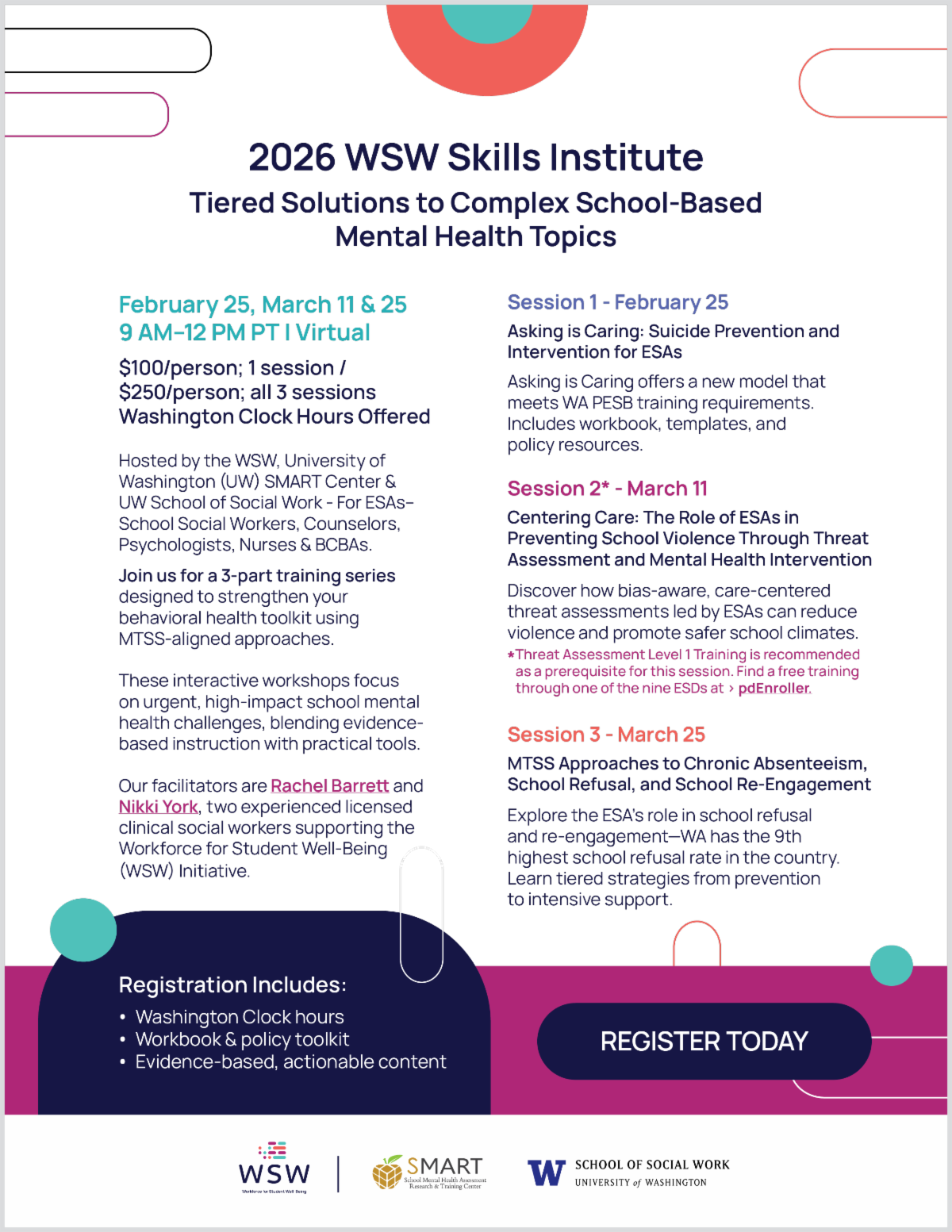
WSW Skills Institute | Tiered Solutions to Complex School-Based Mental Health Topics
Feb 25, March 11 & 25 | 9am – 12pm PDT
Virtual – $100/per session or $250/for all three sessions
Clock Hours Offered
Session 1 – February 25
Asking is Caring: Suicide Prevention and Intervention for ESAs
(PESB-approved)
Session 2* – March 11
Centering Care: The Role of ESAs in Preventing School Violence Through Threat Assessment and Mental Health Intervention
*Threat Assessment Level 1 Training is recommended as a prerequisite
for this session. Find a free training through one of the nine ESDs at
> pdEnroller.
Session 3 – March 25
MTSS Approaches to Chronic Absenteeism, School Refusal, and
School Re-Engagement
| | |
Brief Intervention for School Clinicians (BRISC)
BRISC is a research-based, engagement, assessment, brief intervention and triage strategy for mental health practitioners working in middle and high schools.
To meet the overwhelming demand for BRISC training and support, a
web-based self-paced BRISC e-learning with implementation supports
is now available to license by districts, communities or individual practitioners.
For more information contact us at brisc@uw.edu.
| | |
FAST Program Offers Free Training to WA School-Based Mental Health Clinicians
The First Approach Skills Training (FAST) Program is a WA State-funded initiative operated by Seattle Children's Hospital focused on evidence-based child and teen mental health treatment.
FAST has partnered with the SMART Center on a number of training events for school-based mental health clinicians. This year, Seattle Children’s is offering even more free training opportunities. The following 2-3 hour workshops teach you how to use FAST workbooks for anxiety, disruptive behavior, depression, trauma & more:
Register for upcoming FAST trainings:
FAST-Depression (Jan 26)
FAST-Parenting Teens (Jan 29)
FAST-Trauma (Feb 2)
FAST-Behavior (Feb 11)
FAST-Anxiety (Feb 17)
FAST-Early Childhood (Feb 26)
Reserve > your spot before they fill up!
For clinicians outside of WA, you can access > FAST training workshops through the UW AIMS Center.
Here’s what one FAST-trained school clinician shared:
“I'm super impressed by the content, the layout, the accessibility. A 100 million thanks. I've been a school counselor for over 20 years now and am always looking for tools and resources. This is really great!”
| | |
Mental Health Implementation in Action: A Team-Based Approach to Lasting Change
This 10-session learning community, sponsored by the UW Center for Mental Health Implementation Support, brings behavioral health leaders together to address real-world challenges using proven implementation strategies and collaborative support.
The series begins Thursday, January 29th and runs through April 30th.
Team and Project Learning Objectives:
- Articulate specific implementation barriers and facilitators.
- Apply evidence-based implementation frameworks and strategies.
- Identify and utilize tools and resources to plan, implement and/or sustain change efforts.
- Problem-solve creatively with your team to address challenges.
- Identify actionable next steps for your current priorities.
Check Out > more information, including eligibility and how to apply.
| | |
|
Farquharson, K., Kittelman, A., Holmes, S., Barrett, C. A., & Lyon, A. R. (2025). Identifying and De-Implementing Low-Value Practices in Education: A Multi-Disciplinary Approach for District and School Leaders. Journal of School Leadership, 0(0). https://doi.org/10.1177/10526846251384766
Hugh, M. L., Martinez Cueto, A. P., Bruzios, K. E., Corbin, C. M., Gaias, L. M., Landa, Y., … Lyon, A. R. (2025). Exploring Fidelity Elements of a Motivational Interviewing-Based Implementation Strategy to Improve Adoption of Evidence-Based Practices in Schools. Journal of Educational and Psychological Consultation, 1–26. https://doi.org/10.1080/10474412.2025.2595110
Stuber J, Hullenaar K, Ehde C, Bruns E (2025). Asking is Caring: Integrating Families into School-Based Suicide Prevention Efforts.
School Mental Health, doi: https://doi.org/10.1007/s12310-025-09796-5
Youth suicide is a significant public health concern in the USA, ranking as the second leading cause of death for youth and young adults. Schools are increasingly being called upon to be involved in suicide prevention efforts, ideally in partnership with parents and caregivers; however, few school-based suicide prevention interventions incorporate families into their strategies. The current study evaluates the feasibility, acceptability, and short-term outcomes of Asking is Caring (AiC), a mental health promotion and suicide prevention program delivered by families to families in coordination with schools.
> Watch the video below
|
| UPCOMING EVENTS FEATURING SMART | | |
APBS | March 11-13 | Minneapolis, MN
NWPBIS | April 29 – May 1| Spokane, WA
Rooted in Relationships: Building Community for Sustainable PBIS
| | |
2026 Legislative Agenda
The 2026 regular session began on Monday, January 12. It is a short session, lasting up to 60-days, with an expected end date of Thursday, March 12.
SMART Center’s 2026 Legislative Agenda details our priorities for this session.
| | |
The UW SMART Center specializes in promoting high-quality, culturally-responsive programs to meet the social, emotional, and behavioral needs of all students. Stay informed and inspired by subscribing to our quarterly newsletter.
| | | | |