|
Daily Transportation News
August 12, 2026
| | | |
IATR Early Bird Pricing Until Aug 15
Hotel Block Rate Deadline Until Aug 14
AV City: Autonomous Mobility
Las Vegas, Nevada | September 14–17, 2026
Vdara Hotel at ARIA | 2600 W Harmon Ave, Las Vegas, NV
| |
This year’s IATR Conference will be held at the Vdara Hotel, a modern property located in the heart of the Las Vegas Strip. Known for its atmosphere and exceptional location, Vdara provides the ideal setting for an innovative and forward-looking conference experience built around multimodal safe and sustainable transportation.
The Vdara offers an excellent environment for government regulators, transportation professionals, technology companies and industry leaders to connect and collaborate.
After a full day of sessions and networking, attendees can enjoy the comfort of this beautifully designed hotel while remaining just minutes from everything Las Vegas has to offer. For our attendees, Vdara offers an ideal venue for a productive and enjoyable IATR experience.
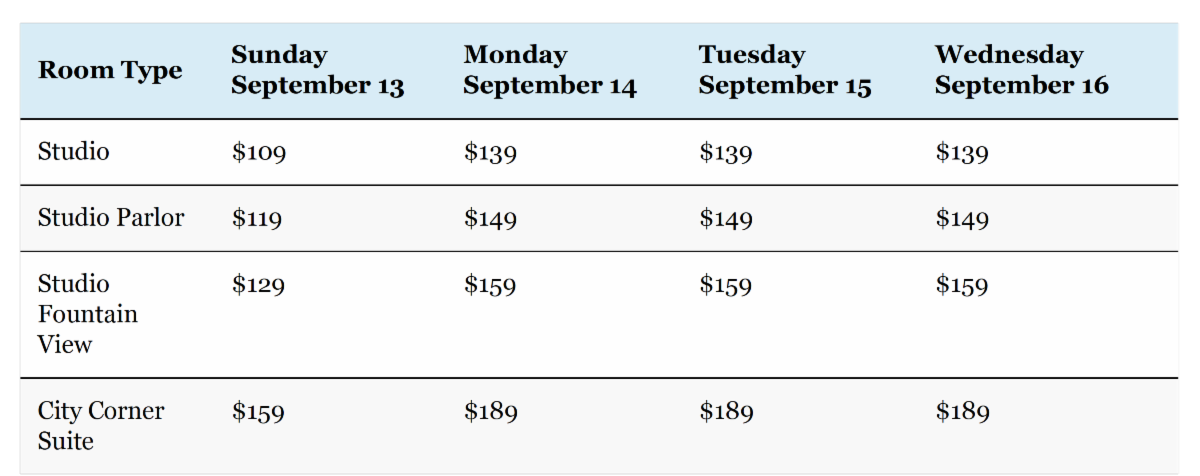
IATR has worked hard to secure the best possible rates for conference attendees, with a variety of room options available. However, the number of rooms in the IATR room block is limited, and the discounted hotel block rate is only available through this Friday, August 14. We encourage attendees to make their reservations soon to take advantage of the conference rate and ensure they have a room at Vdara during the conference.
| |
2026 Conference Hotel Block Pricing
Plus applicable resort fees and taxes
You can click here to access the hotel reservation portal, to see your options, and to book your room.
| | Uber Is Retiring South Africa’s Most Popular Ride Option | |
|
Uber is phasing out UberX in South Africa, ending one of the ride-hailing company’s oldest and historically most popular services in one of Africa’s biggest digital transport markets.
The company confirmed that UberX, its standard ride category, will be discontinued as it restructures its South African product offering and seeks to create clearer distinctions between its increasingly crowded range of services.
UberX was among the company’s earliest offerings when Uber entered South Africa in 2013 and subsequently became a central part of its expansion in the country.
Uber told News24 that the proliferation of ride categories over the years had made it increasingly difficult for customers to distinguish between some products, while also reducing the advantage enjoyed by drivers operating higher-specification vehicles.
The company said UberX drivers will not automatically lose access to the platform. Instead, they will be able to take trips through other Uber categories for which their vehicles meet the eligibility requirements.
The move effectively redraws Uber’s South African pricing ladder, with Uber Go occupying the lower-cost end of the market while products including Uber Comfort and Uber Black cater to customers seeking higher-specification vehicles and services.
Uber Go, which generally uses smaller and more fuel-efficient vehicles, first appeared in South Africa in 2017 before being rolled out more broadly in 2021. Uber described it at the time as a lower-cost option alongside UberX and Uber Black.
The significance of UberX’s withdrawal goes beyond the disappearance of another option from the app. As recently as 2023, Uber described UberX as its most popular ride option in South Africa.
Source: Business Insider Africa
Click Here to Read More
| | Eno Center for Transportation Gives Autonomous Vehicles Regulatory Landscape Update | |
Image: Eno Center for Transportation | |
Over the course of the summer, there have been a number of updates in the AV regulatory space as commercial autonomous vehicle deployments expand. These include announcements and ongoing regulatory changes from the National Highway Traffic Safety Administration (NHTSA), updates and discussions at the state and local level, and some movement on the Hill. Key questions around safety standards and expectations, impacts on labor, and the extent to which state and local governments should be preempted from AV regulation remain on the table.
As Congress considers these questions and a potential federal framework for AV deployments, NHTSA plans to move forward with guidance and updates to vehicle standards, and states will likely continue to update and debate their AV regulations, including states that currently do not permit commercial operations. The needs and experiences of cities and localities on the frontlines of deployments should inform the ongoing regulatory processes at both the state and federal level.
On July 30th, NHTSA announced its latest actions to accelerate the development of autonomous passenger vehicles. Under the second Trump Administration, NHTSA has clearly signaled its interest in providing the AV industry regulatory certainty needed to enable expanded deployments. NHTSA has emphasized both its excitement around the potential of the industry and that it is not afraid to call out the industry broadly when it sees issues emerging, such as letter sent out this month calling on autonomous vehicle companies to enhance their first responder interactions, or to utilize its recall authorities. This reflects the industry’s and Administration’s viewpoint that autonomous mobility should move forward quickly while also recognizing that the success of the autonomous vehicle industry is reliant on public trust and safety perceptions. There also appears to be growing awareness from the industry of the importance of creating better relations with first responders and other city officials on the front lines of deployments.
NHTSA has primarily been working to enable autonomous vehicle deployments through updating the Federal Motor Vehicle Safety Standards (FMVSS) to better align with the needs of AVs from a vehicle design standpoint. For example, in June, NHTSA released updates to FMVSS No. 135, removing requirements for foot-operated brakes in autonomous vehicles. NHTSA has indicated that updates to the FMVSS will continue.
Source: Eno Center for Transportation
Click Here to Read More
| | |
What’s Next? A View of the Future of NEMT
When transportation breaks down, so does care. That was the throughline of a recent Kinetik webinar panel discussion on The State of NEMT 2026: The Future of Healthcare Transportation. Moderated by Mohammad Hossain of Kinetik, the panel featured the CEO of United Healthcare New Mexico; Dr. Ainsley MacLean, a practicing neuroradiologist and former Chief AI officer at Kaiser Permanente who now leads carcompany.ai; and Tonya Copeland, Chief Growth Officer at Liberty Health and board chair of NEMTAC. Kinetik Co-Founder and CEO, Sufian Chowdhury, joined the conversation as well. Their shared message: non-emergency medical transportation isn’t a logistics problem. It’s a care problem.
Click Here to Read More
North Dakota Opens $2M Grant Competition to Buy Accessible Vehicles for Rural Patients
North Dakota Health and Human Services has launched a competitive funding opportunity aimed at expanding non-emergency medical transportation in rural communities, making roughly $2 million in federal money available to eligible providers to purchase accessible vehicles. The program — titled the Non-Emergency Medical Transportation Acquisition opportunity and administered through the North Dakota Rural Health Transformation Program — is intended to help rural hospitals, clinics and other qualifying health providers buy vehicles such as accessible vans and larger passenger vehicles equipped to carry wheelchair users. The state expects to award about four grants of roughly $500,000 each.
Click Here to Read More
Road Safety Experts to FMCSA and Fleet Managers: Look to the ‘High Performers’
Fleet managers and the Federal Motor Carrier Safety Administration can help improve road safety by following practices of “high performers” and using available tools to assess safety performance, according to a recent report. The report was authored by the Safe System Consortium, which includes experts from Johns Hopkins University, the FIA Foundation and the Institute of Transportation Engineers. The group recommends that, to help reduce crash-related deaths and injuries, fleets implement tools such as the FIA Road Safety Index, which uses a star-rating system to gauge “to what extent an organization is managing its safety impact.”
Click Here to Read More
| |
Transport Canada Says Sector Posted Worst G7 Productivity Growth in 25 Years
Transport Canada’s newly published annual report ranks the country’s transportation sector last among Group of Seven economies for productivity growth over the past 25 years, a gap officials expect to persist through the next decade. The report, titled Transportation in Canada 2025, traces the ranking to a sharp drop in sector productivity after 2017, even as productivity across the broader economy held roughly flat over the same stretch. The Bank of Canada forecasts the sector’s productivity will stay stagnant for at least another decade, even as officials pitch overseas markets as the answer to a shrinking US trade relationship.
Click Here to Read More
The Wish List Is Long and Money’s Short for Improving Montreal Transit
With $6 billion in new federal funding for Quebec’s public transit announced in June, experts and lobbyists say there is a long list of priorities for coming projects. However, everyone appears to agree maintaining aging and crumbling infrastructure should be the first priority for any new spending. Speaking to The Gazette on Friday, Prof. Ahmed El-Geneidy, the head of the Transportation Research at McGill (TRAM) group, explained the money must be contingent on a big investment by the province as well.
Click Here to Read More
Metro Vancouver Bus Operators to Launch Job Action after Rejecting 2nd Tentative Deal
The union representing Metro Vancouver transit bus operators says members have rejected a second tentative deal reached by negotiators. Unifor says in a statement that member workers will begin job action on Aug. 17 by launching a ban on wearing uniforms, but no transit services will be disrupted. The union and the Coast Mountain Bus Company had reached the latest deal in late July for union Locals 111 and 2200, after a previous tentative agreement reached on June 22 was rejected. Coast Mountain Bus operates more than 96 per cent of Metro Vancouver's bus services, as well as the SeaBus and community shuttles.
Click Here to Read More
| |
Department for Transport Confirms Plans for Smart Motorways in England under Andy Burnham
The Department for Transport has confirmed plans for smart motorways in England under Andy Burnham. The DfT has published its Road Safety Stategy under the Labour Party government. The aims of the huge reforms are to reduce road deaths, with the ambitious plan announced and launched back in January under then-Prime Minister Sir Keir Starmer. Now he is PM, Mr Burnham has inherited the strategy, which is looking at making changes from everything from seatbelts, mandatory car assistance technology and eyesight checks for drivers over the age of 70, to introducing a minimum learning period for learner drivers in the UK too.
Click Here to Read More
Deutsche Bahn Disruption Exposes Germany's Transport Infrastructure Crisis
Germany's new transport minister, Steffen Bilger, received a stark firsthand introduction to the systemic failures plaguing the nation's rail network when an air-conditioning failure forced him to evacuate his carriage during an official fact-finding mission. The incident, which occurred on a high-profile journey from Berlin to Hamburg on Monday, underscores mounting public frustration over Deutsche Bahn's operational reliability. The operational embarrassment for the state-owned operator arrives at a critical juncture for European infrastructure.
Click Here to Read More
Major European Airport Closes Runway Through 2026 — Disrupting 3,000 Flights
On August 10, Paris-Orly Airport officially closed one of its runways in order to carry out crucial improvements works. Airport officials announced that Runway 4 will be out of use until December 17, meaning a large number of flights expected to take place over the next five months will either be cancelled or diverted to another airport. Already, easyJet has shared that it was asked to cancel flights from August 10 to October 24. According to the airport, which happens to be the second busiest in France, the refurbishment will include renovating the pavements, upgrading lighting, and improving the aircraft stands.
Click Here to Read More
| |
Uzbekistan Opens New IRU-Accredited Professional Driver Academy
A new road transport training centre has opened in Uzbekistan, strengthening the skills of trainers and assessors to drive the sustainable professionalisation of the sector.
The opening of the new AIRCUZ Academy in Tashkent marks an important step in strengthening Uzbekistan’s capacity to train, examine and certify road transport professionals in line with international standards. It is accredited to provide ADR Driver, CPC Manager Freight and CPC Driver Freight programmes.
Click Here to Read More
South African Drivers Spend over 10 Days a Year Commuting
South African motorists spend an average of more than 10 days a year behind the wheel simply commuting, placing the country at the top of a global comparison of driving times.
South African drivers spend an average of 10 days, four hours and 48 minutes a year commuting, according to a global study commissioned by AutoTrader, the UK’s largest automotive marketplace.
Click Here to Read More
Bingo E2 Seeks to Be Africa’s “Airbnb” EV for Ride-Hailing
Cross-border collaborations between the Chinese and the Americans at a time when geopolitics is souring are increasingly difficult to maneuver. Yet, in the African electric vehicle (EV) space, these collaborations are seeing China’s EV technology reshape transportation across the continent. Kenya is emerging as an important market for testing new approaches to electric mobility. In this episode of The Africa EV Show, we look at Bingo, a U.S.-based startup taking a different approach to Kenya’s growing EV market. Rather than building an electric car primarily for private ownership, Bingo is designing its E2 around the needs of ride-hailing drivers — from operating costs and driving range to financing, battery swapping and data.
Click Here to Read More
| | Illinois Governor Pritzker Signs Law Allowing 100,000 Rideshare Drivers to Unionize | |
|
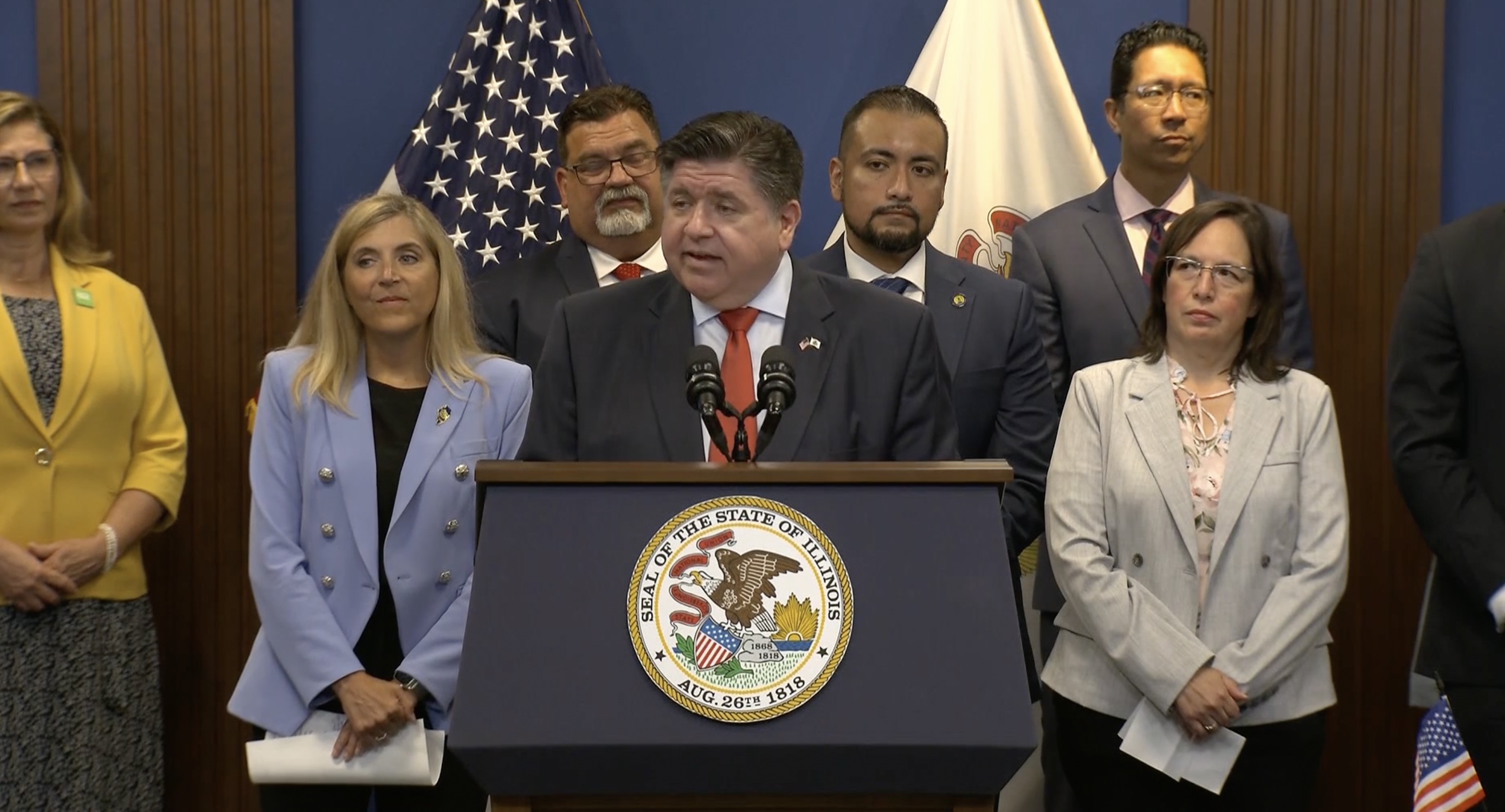
Illinois rideshare drivers will soon have the ability to unionize and collectively bargain under a new law signed by Gov. JB Pritzker, a measure supporters say will give more than 100,000 Uber and Lyft drivers a greater voice in pay, benefits and working conditions.
The legislation, House Bill 5090, creates the Transportation Network Driver Labor Relations Act, establishing a framework for drivers working through app-based transportation companies to organize, select bargaining representatives and negotiate industrywide agreements with rideshare companies.
State Sen. Ram Villivalam (D-Chicago), the bill’s chief Senate sponsor, said rideshare drivers have increasingly faced lower wages, rising vehicle costs and a lack of workplace protections despite playing a critical role in transportation across Illinois.
“Rideshare drivers are the back-bones of our communities, getting our neighbors to their job, school or doctors’ appointments,” Villivalam said in a statement. “So many of our residents rely on rideshare drivers – meanwhile those driving are facing decreased wages, increased vehicle costs and unfair working conditions.”
Supporters of the legislation say the growth of companies such as Uber and Lyft has transformed the transportation industry while leaving many drivers with limited recourse to challenge pay policies, deactivations or other workplace issues.
Source: My State Line
Click Here to Read More
| |
|
Message from IATR President Matthew W. Daus
At the International Association of Transportation Regulators (IATR), our regulators are at the forefront of addressing both the challenges and opportunities facing the mobility paradigm. Our IATR members, partner organizations, and regulated industries will continue on our shared quest to fulfill the mission of our non-profit educational organization - to bring about Multi-Modal Mobility Innovation for All! This mission can best be accomplished through information sharing, collaboration, identifying and promoting best practices, and educating our membership. These educational updates and electronic media clips are affectionately known as “IATR snips” and endeavor to cover all aspects of mobility around the globe - especially news and developments involving safety, technology innovation, multi-modal integration, automation, sustainability, electrification, accessibility, regulatory modernization, and equity.
If you would like more information about the IATR, you can visit our website at www.iatr.global. Current members can renew their memberships when you log in to your IATR portal on the top right-hand side of our website, or click here. If you forgot your membership password, please email our Membership Director, Eric Richardson, at erichardson@iatr.global.
| | | | | |
|
RENEW YOUR MEMBERSHIP FOR 2026:
Weekly news snippets
Access to the membership database
Videos and files from recent conferences
Discounted rates for future conferences, and more!
Renew your membership at http://www.iatr.global or email info@iatr.global for any questions!
| | | | |