Hello to you! Welcome to this week's edition of CDP Connect! This week, we're talking about budgets. Budgets are the best friend you never knew you needed. They give structure to spending, help accomplish planned activities, and keep everyone on the same page. Read on to learn how to develop them well and use them effectively.

✨Funder Highlight✨

This section of CDP Connect highlights a funder each week that supports the theme of the week. To research additional funders, visit https://grantstation.com


The BMO Foundation leverages its position as a financial services provider to drive community progress. BMO is committed to making progress for a thriving economy, a sustainable future, and stronger communities to help ensure they are vibrant, inclusive, and prosperous for everyone. Grants up to $25,000 are provided for capacity building, programs, and mission-aligned services.


The Foundation offers an open grant period in February and September of each year. The online application can be accessed during the open grant period here. For more information, visit BMO Gives.

A Budget Primer

When drafting your budget for the next fiscal year, enlist these three steps in the process.

Review the current budget.

What recurring expenses should be included, which will increase and which will stay the same. Think rental increases, salary increases.

Review the strategic plan. What new expenses are planned for next year, including new programs, services, staff additions, purchases or additional program expenses.

Consider revenue development. Check on donor development, planned fundraising events, and grant prospects. Loop your fundraising team into the budgeting process.


Benefits of Budgeting

Budgeting offers specific benefits:

1) Budgeting is the optimal tool for promoting solvency. A nonprofit's top economic priority should be staying solvent -- bringing in more money than it spends. A budget lays out the plan for how that will be done.


2) A detailed budget demonstrates an organization's capacity to insiders and outsiders. A budget is a snapshot that shows the amount of money anticipated and the planned expenses. It shows that an organization has order, a plan, and outlines where it spends its resources.


3) Budgets help manage spending. Expenditures are anticipated and approved, or they do not happen. Budgets keep everyone accountable and spending limited and controlled.


4) A budget lets staff know the resources available to accomplish tasks. It is permission granted for resourcing programs, services, and administrative needs.


5) A budget allows the Board of Directors to anticipate expenses and identify income to pay those expenses. It puts the responsibility for resourcing back on the Board to ensure the organization's staff has what it needs to operate.


If you need more information about budgeting, reach out. We are here to help.


Hey Budget Builders! Don't Forget to Include In-Kind


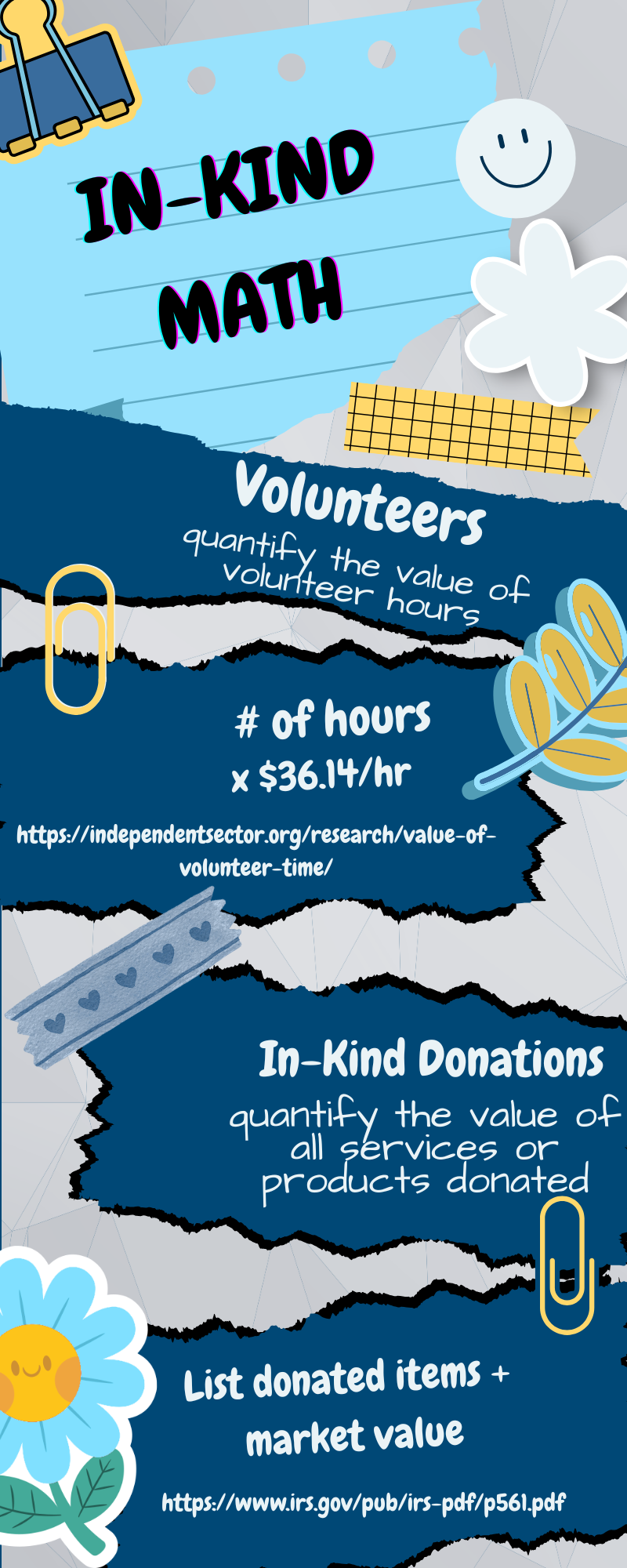
One of the most forgotten resources during budget season is in-kind contributions. These resources are HUGE for nonprofits. In-kind contributions offer resources other than cash. We all recognize how valuable cash is -- it's hard to get and challenging to manage. Nonprofits are epic in their ability to do more with less, and in-kind contributions, in many respects, are how that gets accomplished Volunteers, donations of supplies, materials, goods and services should not be neglected in the budgeting process.


Here's why that matters:


In-kind has real value. If you had to pay for all of the unpaid labor, all services, products and material supplies, how much would the budget increase? For-profit businesses have to pay for everything. One advantage of being a nonprofit is receiving donated time and materials. Don't neglect the quantifiable value of these contributions when you enter budget season. Account for them.


Leveraging. One of the most powerful bargaining chips nonprofits have is leveraging cash with contributions of time, service, and materials. Every $1 in cash received is matched with $X in in-kind contributions. Know your numbers. Every donor dollar stretches further than it otherwise would because of in-kind contributions. Unless you have quantified the value of in-kind, you can't do the math.


Meaningful contributions. Not every contribution that matters comes in the form of money. Time is precious, and volunteers give of it freely. Services and products save you money and provide businesses and individuals with the opportunity to come alongside and support your work. Do not elevate cash as the only meaningful contribution.


Collect the data. Do the math. Know your numbers. Need help quantifying in-kind contributions? Reach out. We are happy to help.

Upcoming Events

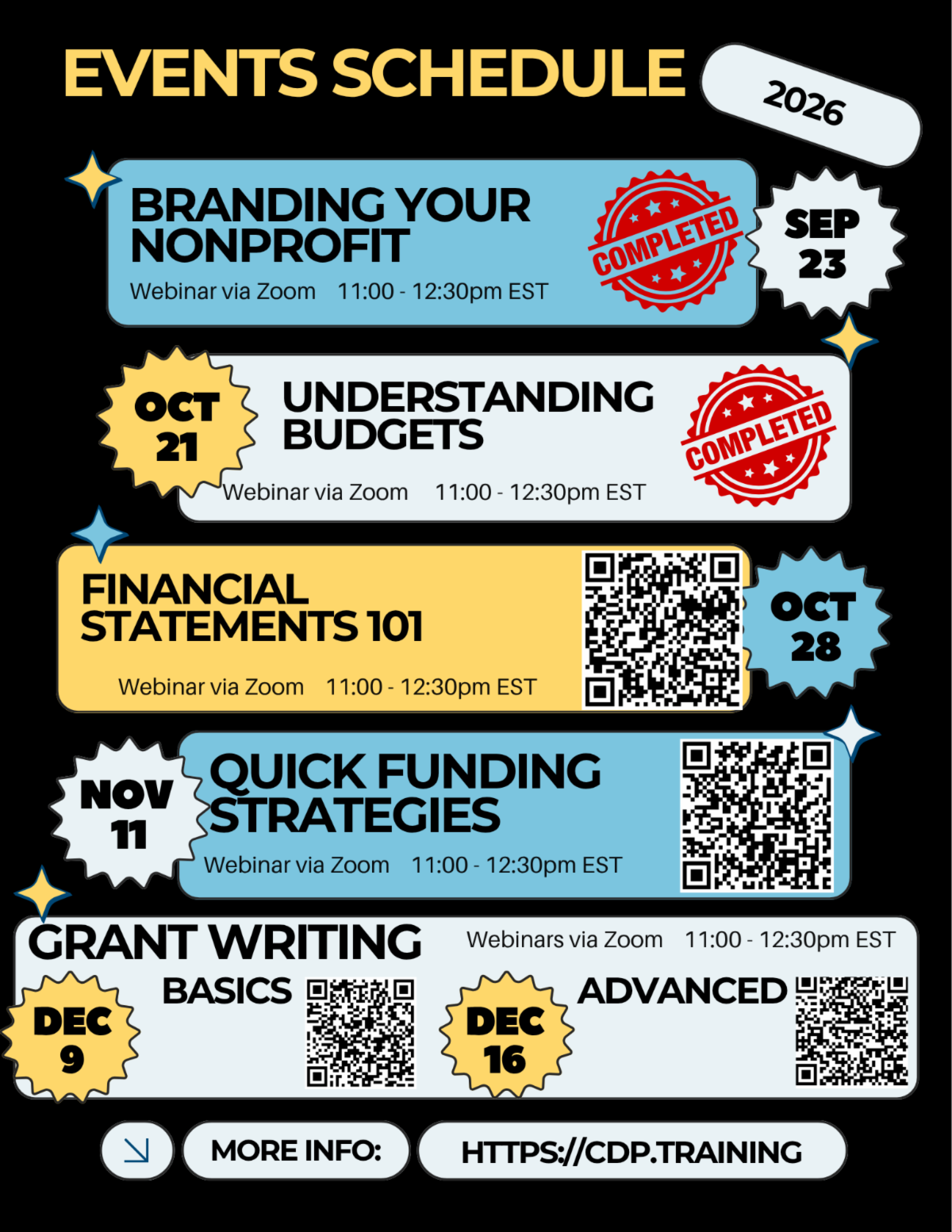
For the full calendar of upcoming events visit here. For CDP-sponsored events, there is no cost to attend, but registration is required. Register today!

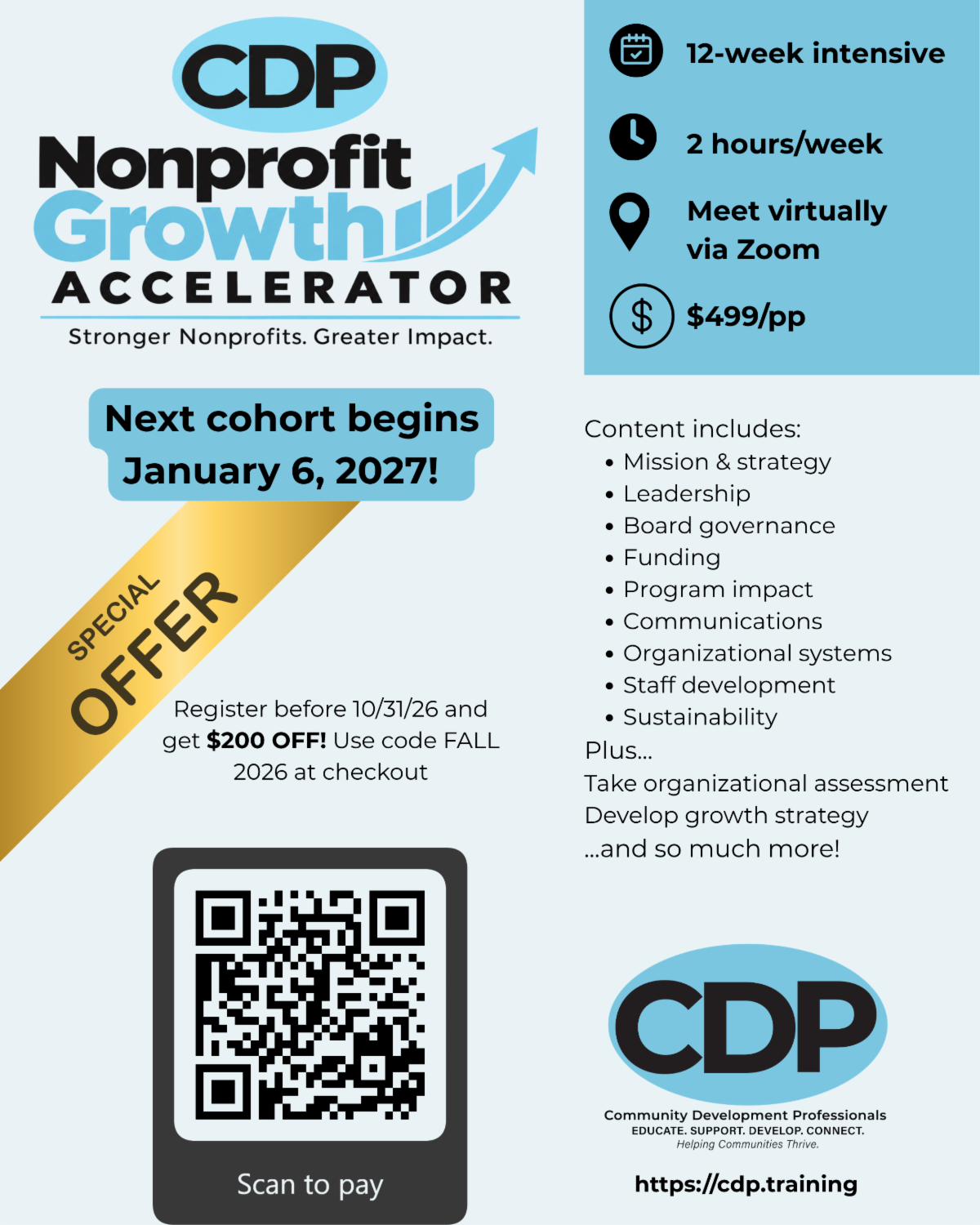
Join us for this exciting learning series! Get the skills you need to run a nonprofit. Space is limited! $200 discount through the end of the month! Don't delay! →→→→

Each week, GrantStation Insider’s edition highlights funding opportunities for nonprofits across the U.S., regional grants, federal funding updates, partner resources, research insights, online education events, and new GrantStation membership benefits. Get organized with CDP and get funded with GrantStation.


See this week’s newsletter now

Your CDP membership includes a discounted rate to GrantStation. You can join GrantStation for less than 40¢/Day


Explore more of what CDP offers....

NEWTrainingPackages.png
WEBSITE_SERVICES3.png
WEBSITE_SERVICES.png

Follow us on social media!

Facebook  X  Instagram  LinkedIn  Pinterest  YouTube  Web  Email
X Thread on X
LinkedIn Share To Your Network
Pinterest Pin This Email